Squamish people
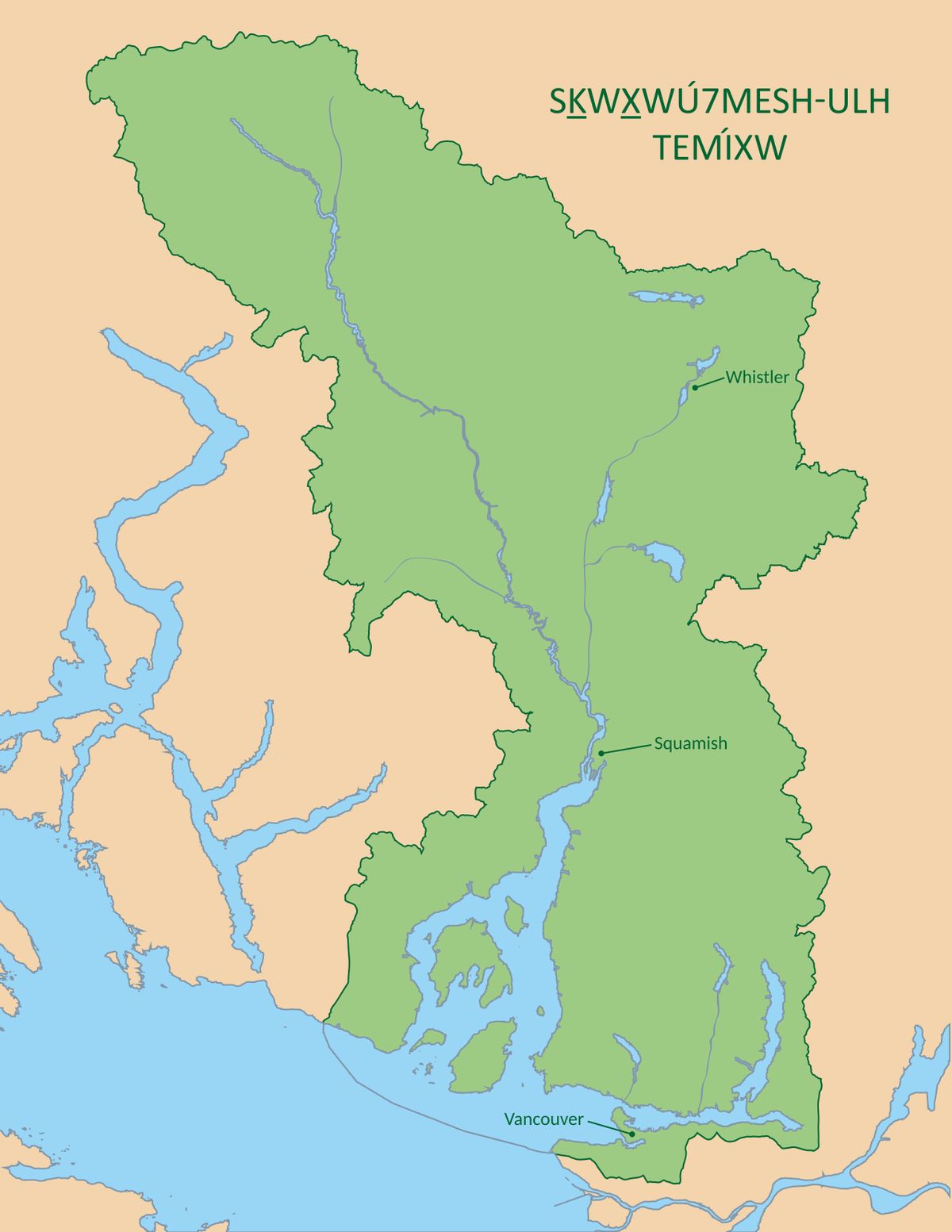
The Squamish people, known in their language as Sḵwx̱wú7mesh, are a Coast Salish Indigenous nation whose traditional territory spans a vast area of southwestern British Columbia. Their ancestral lands extend from Point Grey in Vancouver north to Roberts Creek on the Sunshine Coast, up Howe Sound, and include the river valleys around Whistler. With a history in the region spanning more than a thousand years, the Squamish have a rich cultural heritage rooted in oral tradition, a complex social structure, and a deep connection to the land and waters. Today, the Squamish Nation governs its communities from reserves primarily located on the North Shore of Vancouver and along the Squamish River, actively working to preserve their language and culture while engaging in contemporary governance and economic development.
History and Oral Tradition
The history of the Squamish people is fundamentally transmitted through oral tradition, a responsibility held by respected elders. Stories passed down through generations explain the origins of the world and the people, beginning with ancestral figures like X̱i7lánexw, who was given the first tools and a wife to repopulate the land. Other foundational narratives describe the emergence of the first men at locations like Sch'enḵ and Chekw'élhp, near present-day Gibsons. Oral histories also recount cataclysmic events such as the Great Flood, with stories set at Chʼiyáḵmesh (Cheakamus) telling of a survivor aided by the Thunderbird. These narratives, which include tales of the Transformer brothers who shaped the world, form the living historical record and cultural bedrock of the Squamish people, continuing to be shared today as a primary means of educating the young and preserving identity.
European documentation of this oral history began in the late 19th century with ethnographers like Charles Hill-Tout, who interviewed elders such as the centenarian Mel̓ḵw's. These early records provide crucial written accounts of Squamish cosmology and historical memory. The practice of oral transmission was not merely storytelling but a formal education system where knowledge of history, law, and tradition was a mark of aristocracy. As noted by Squamish leader Andy Paull, those who possessed and could impart this knowledge were highly respected, and it was the duty of responsible elders to ensure it was properly handed down. This system functioned effectively for countless generations prior to European contact, structuring society and preserving a complex understanding of the people's place in their territory.
Impact of Epidemics and European Contact
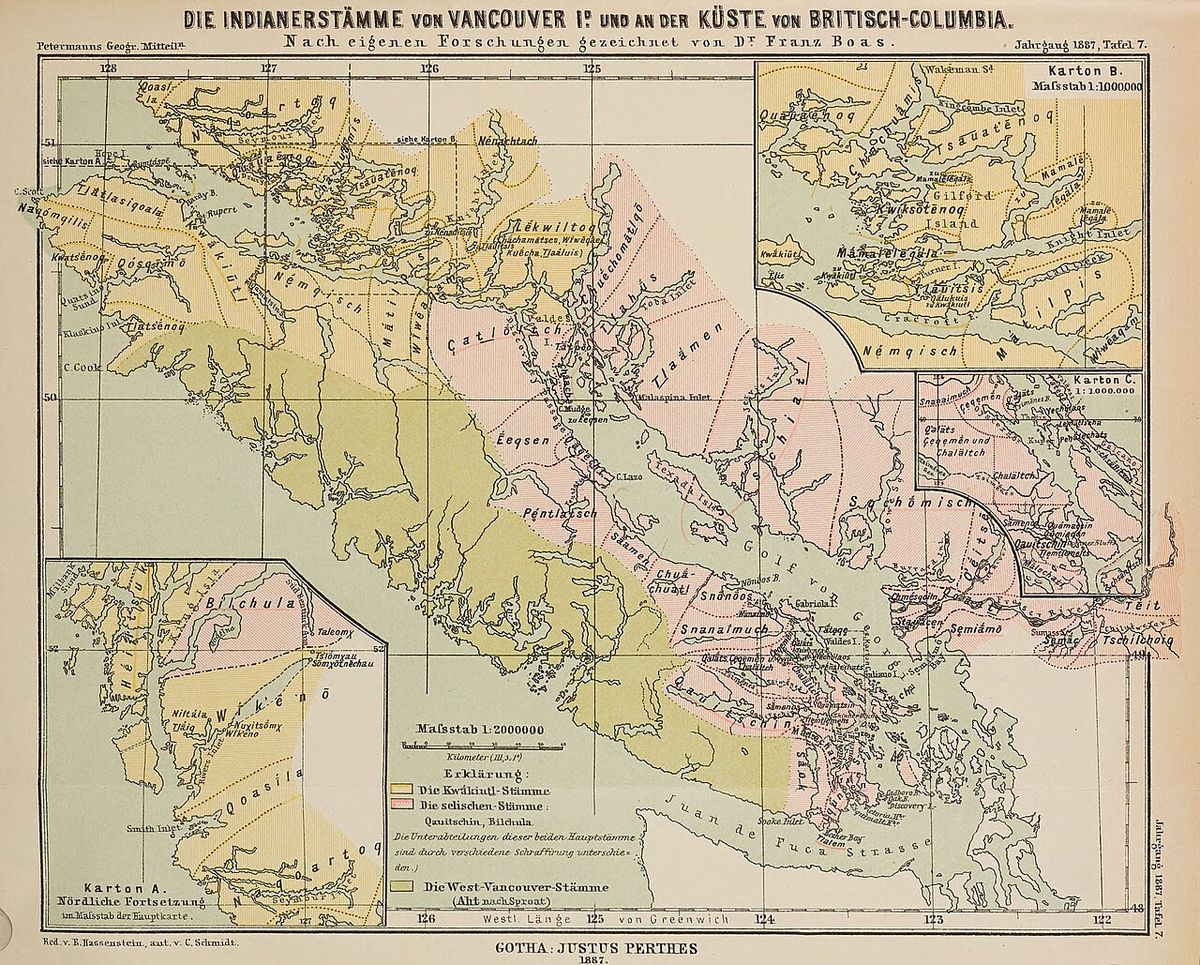
The relative isolation of the Squamish and other Northwest Coast nations ended catastrophically in the late 18th century with the arrival of Old World diseases. A major smallpox epidemic in the 1770s is estimated to have killed at least 30 percent of the Indigenous population in the region. Squamish oral histories collected in the 1890s describe a dreadful skin disease that coincided with a season of diseased salmon, leading to widespread death and the desertion of many villages. This first epidemic was followed by successive waves of illness, including further smallpox outbreaks in 1800 to 1801 and 1862, influenza in 1836 to 1837, and measles in 1847 to 1848, which collectively decimated communities over an 80-year period.
The first recorded contact with Europeans occurred in 1792 when the expeditions of Captain George Vancouver and Captain José María Narváez sailed into Burrard Inlet. However, by this time, the population had already been severely reduced by the earlier epidemics. The subsequent influx of settlers during the Fraser Canyon Gold Rush of 1858 to 1859 and the completion of the Canadian Pacific Railway accelerated colonization. The Squamish, now a minority in their own territory, faced displacement from their lands, intensive missionary activity, and the imposition of foreign governance systems. These combined forces of disease, land loss, and assimilation policies precipitated a deep and traumatic shift in Squamish society, culture, and way of life within a remarkably short timeframe.
Land, Reserves, and Modern Governance
The traditional territory of the Squamish Nation encompasses approximately 673,540 hectares of dense coastal rainforest, rivers, and inlets in southwestern British Columbia. This territory is shared through overlapping relationships with neighbouring nations including the Musqueam (Xwmétskwiyam) and Tsleil-Waututh (Sel̓íl̓witulh) to the south, the Lil'wat (Lúx̱wels) to the north, and the Shishalh (Shishá7lh), with Roberts Creek marking a boundary. Major modern municipalities like Vancouver, North Vancouver, and West Vancouver are located within this unceded territory. Despite the vast expanse of their homeland, less than 0.5 percent of this land is currently held as reserve land allotted to the Squamish Nation.
The reserve system was imposed following the passage of the Indian Act in 1876. Plots of land were designated as Indian reserves, often at existing village sites, and placed under the control of federal Indian agents. This period saw the illegal and legal alienation of reserve lands, such as the expropriation of portions of the Sen̓áḵw (Kitsilano) reserve in 1886 and 1902, where families were forcibly removed. In response to these pressures, the Squamish took political action. A delegation of chiefs, including Squamish leader Joe Capilano, traveled to London in 1906 to seek an audience with King Edward VII regarding land rights, though they were denied. This activism culminated in 1923 with the amalgamation of several Squamish bands into a single governing entity, the Sḵwx̱wú7mesh Úxwumixw, marking the beginning of their modern centralized governance. The 100 year anniversary of this amalgamation was marked in 2023. The Nation is governed by the Nexwsxwníw̓ntm ta Úxwumixw (Council), which sets strategic direction and policy. The council holds an Annual General Meeting for members, such as the one scheduled for November 28 and 29, 2026, at the Chief Joe Mathias Centre. The Nation has approved a strategic plan for 2026 2030 to guide its administration, which delivers programs and services in education, language, and recreation to its members, most of whom live on reserves in North Vancouver, West Vancouver, and the Squamish River area.
Traditional Society and Cultural Practices
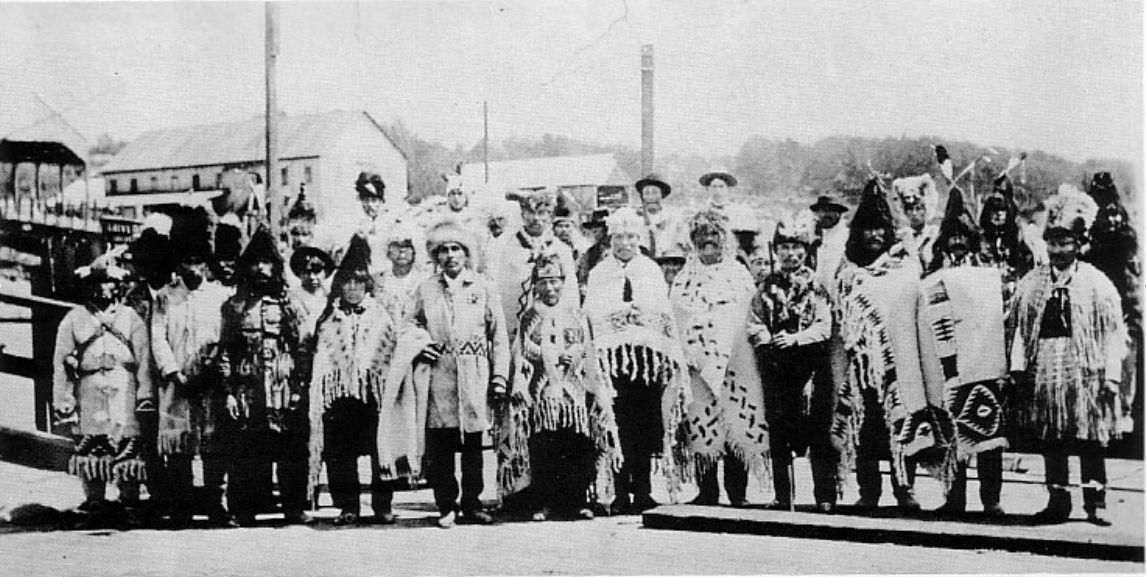
Traditional Squamish society was structured not as a pyramid but more like an inverted pear, with the nobility forming the largest class. Status as a siy̓ám̓ (a highly respected person or noble) was determined by wealth, the practice of core values like generosity and humility, and the possession of knowledge. Leadership was familial, with each family group represented by a siy̓ám̓ who made decisions based on family consensus. Key markers of nobility included the distribution of wealth, often through potlatch ceremonies, and specialized roles such as shamans, hunters, and weavers of mountain goat wool blankets. While class was significant, mobility was possible, and commoners or slaves could sometimes rise in status.
Central Squamish values emphasized respect, generosity, and the sharing of both material wealth and wisdom. Knowledge itself was a form of wealth, meticulously passed down through oral teachings. The concept of property extended beyond physical objects to include intangible assets, similar to modern intellectual property. This included names, stories, songs, ceremonies, and rights to specific fishing spots, hunting grounds, and berry patches. Ancestral names were particularly important property, passed down through bloodlines and bestowed upon youth after rites of passage. Resource access could also be obtained through marriage alliances with other villages or nations, facilitating shared use of the landscape. Kinship ties connected villages and neighbouring nations, with large extended families inhabiting longhouses that were community centres for daily life and ceremonies. Travel was primarily by cedar dug-out canoe, a tradition revitalized in 1992 with the carving of a 52-foot ocean canoe from a single cedar tree.
- Core values: Generosity, humility, respect, and wisdom sharing.
- Intangible property: Names, stories, songs, and ceremonial rights.
- Resource property: Fishing spots, trap lines, berry patches, and canoes.
- Leadership role: The siy̓ám̓ acted as a family representative, not a chairman.
- Physical custom: Flat foreheading, practiced as a sign of nobility, with Tim Moody noted as the last known practitioner.
Language and Cultural Revitalization
The Squamish language, Sḵwx̱wú7mesh sníchim, is a Central Coast Salish language. As of 2010, it was categorized as nearly extinct, with just 10 fluent speakers remaining. This precipitous decline is a direct result of colonial policies, including the residential school system, which actively suppressed Indigenous languages for generations. The loss of fluent speakers represents a critical threat to the transmission of unique cultural knowledge, stories, and ways of understanding the world that are embedded in the language. In response, the Squamish Nation has undertaken significant language revitalization efforts through formal education programs, community classes, and the development of learning resources.
Institutions like the Skwomesh Language Academy, led by educators such as Khelsilem, work to teach community members and the public. The correct pronunciation of the Nation's name, Sḵwx̱wú7mesh, is often a starting point for this outreach. Cultural centres are central to this work, serving as hubs for language use and cultural transmission alongside other forms of artistic and ceremonial expression. The Sḵwx̱wú7mesh Líl̓wat7úl Cultural Centre in Whistler, for example, integrates language into its tours, exhibits, and performances, creating immersive environments for learning and practice that support the Nation's cultural continuity. The BC Language Project of Randy Bouchard and Dorothy Kennedy helped devise the current writing system for the language. Language immersion programs, including the Xwemelch'stn Estimxwataxw School for kindergarten to grade 3, aim to teach children Squamish as a first language.
Contemporary Life and Public Engagement
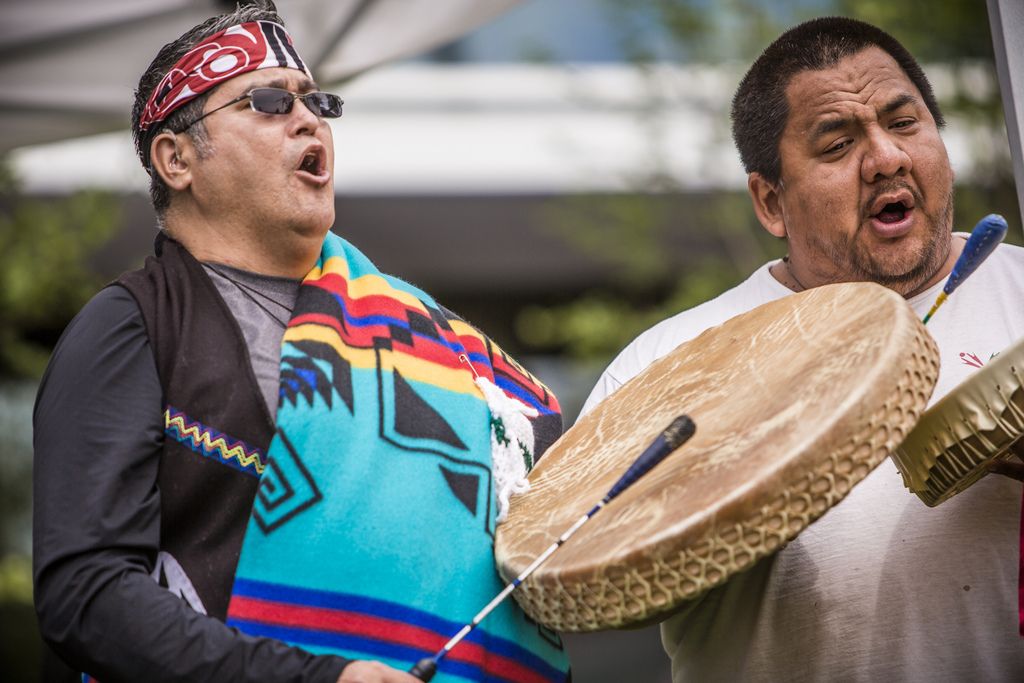
Today, many Squamish people live in or near major urban centres, with communities based on 26 reserves. A majority of the population resides on reserve, with significant communities in North Vancouver and West Vancouver, and a smaller population in the District of Squamish. The Nation actively engages in cultural promotion and public education, particularly through events like National Indigenous Peoples Day. Held annually on June 21, the summer solstice, this day is a time for celebration and renewal. In 2026, the day marks the 30th anniversary of its national observance, and the Squamish Lil’wat Cultural Centre is proud to be a heart of authentic connection in Whistler.
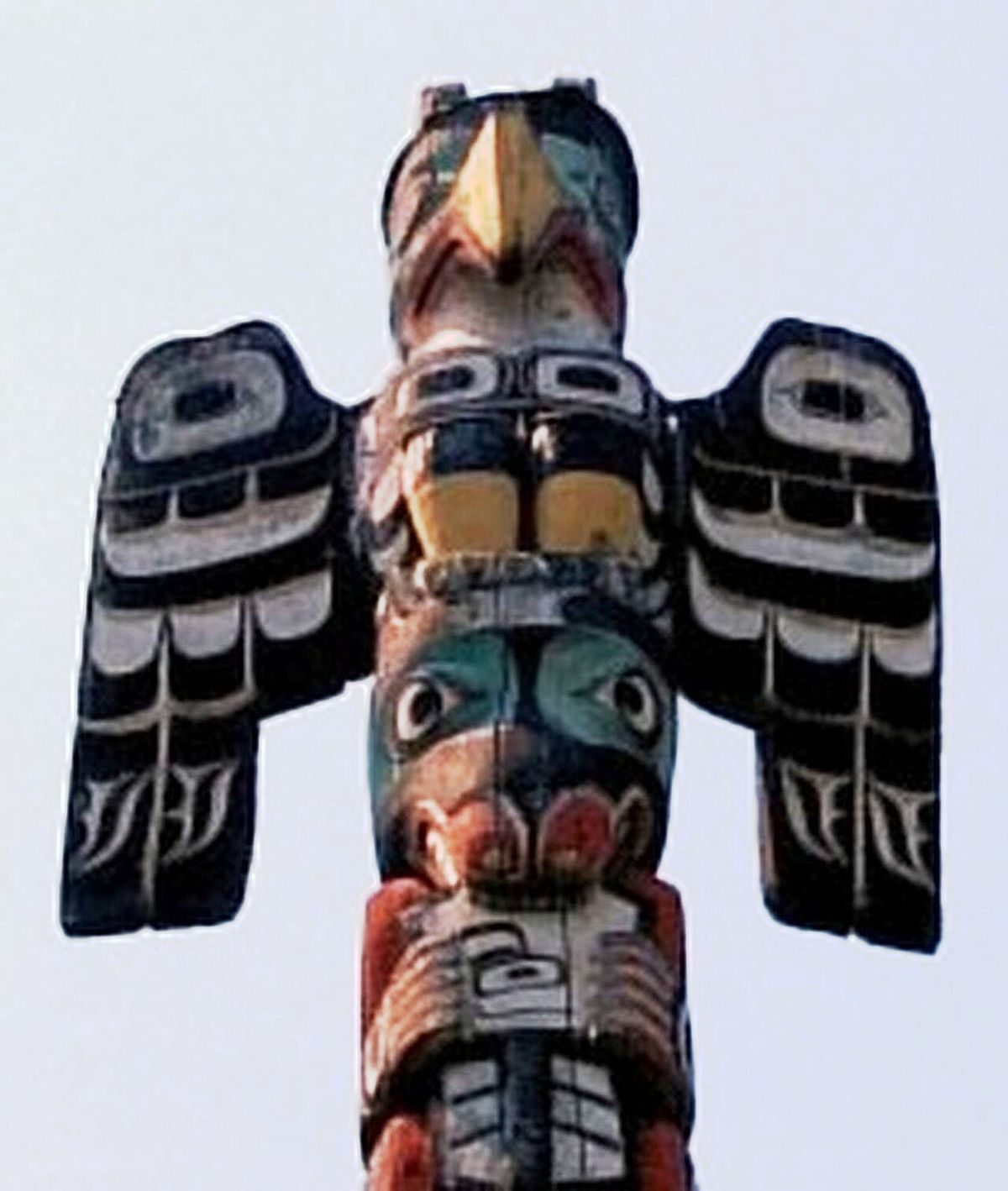
The Sḵwx̱wú7mesh Líl̓wat7úl Cultural Centre (SLCC) in Whistler, located on the shared territory of the Squamish and Lil'wat Nations, is a focal point for such celebrations. Its programming for National Indigenous Peoples Day often includes a diverse array of activities designed to share culture with both members and the public. These events, along with the ongoing work of the SLCC and Nation administration, demonstrate a dynamic contemporary culture that honours tradition while engaging with the wider community. The District of Squamish and other municipalities within their territory have formally acknowledged the harms of colonialism, reflecting a growing public recognition of the Squamish Nation's enduring presence and rights. Public art commissions, including totems in Vancouver, assert Squamish presence in urban spaces historically occupied by their ancestors.
- Cultural performances by groups like the Dancers of Damelahamid.
- Comedy shows by Squamish comedian Keith 'Bubbas' Nahanee.
- Spo7ez cultural sharing through song, drum, and dance.
- Artist markets featuring work from Squamish and Lil'wat artisans.
- Guided interpretive forest walks and traditional storytelling.
- Family friendly crafts and activities.
Demographic and Community Data
The Squamish Nation's demographic history reflects the deep impacts of colonialism and subsequent recovery. While precise pre contact numbers are unknown, the epidemics of the late 18th and 19th centuries caused catastrophic population loss. By 2012, the registered band membership was reported as 3,893 individuals. The community is geographically concentrated, with an estimated 2,252 members living on reserve lands. The population is distributed across several key reserve communities, which are typically located on historically significant village sites like the large longhouse recorded at X̱wáy̓x̱way in Stanley Park in the late 1880s, a structure that was 60 metres long and housed 11 families.
Squamish people live in communities on Indian reserves within their traditional territory. These communities are located in North Vancouver, West Vancouver, and along the Squamish River. The reserves are on long occupied village sites and historical locations. The traditional territory of the Squamish people is over 673,540 hectares. Currently, less than 0.5 percent of this territory is reserve land allotted to the Squamish Nation. There are communities on 9 of the 26 Squamish reserves. The vegetation of their homeland is a dense temperate rainforest of Douglas fir, Western red cedar and Western Hemlock, with areas of maple, alder, and swampland.
| Community Area | General Location |
|---|---|
| Capilano reserves | North Shore of Burrard Inlet |
| Mosquito Creek reserves | North Vancouver |
| Seymour River reserves | North Vancouver |
| Squamish River reserves | District of Squamish area |
| Former village sites (e.g., Sen̓áḵw) | Within Vancouver (Kitsilano) |
Questions about Squamish people
Where is the traditional territory of the Squamish Nation?
The traditional territory of the Squamish Nation spans approximately 673,540 hectares in southwestern British Columbia. It extends from Point Grey in Vancouver north to Roberts Creek on the Sunshine Coast, and includes Howe Sound, the Squamish, Cheakamus, Elaho and Mamquam river valleys, and lands past Whistler. The southern boundary encompasses Burrard Inlet, False Creek, English Bay, and Indian Arm. Major cities like Vancouver, North Vancouver, and West Vancouver are located within this unceded territory.
How many people are in the Squamish Nation?
In 2012, the Squamish Nation reported a registered band membership of 3,893 people. A majority of members live on reserve lands, with an estimated 2,252 residing on one of the Nation's 26 reserves. The communities are primarily located on the North Shore of Vancouver in areas like Capilano, Mosquito Creek, and Seymour River, as well as along the Squamish River. The population has recovered from devastating 18th and 19th century epidemics that once drastically reduced their numbers.
What is the Squamish language and is it still spoken?
The Squamish language is Sḵwx̱wú7mesh sníchim, a Central Coast Salish language. As of 2010, it was considered nearly extinct, with just 10 fluent elders remaining. This critical status is a direct result of colonial assimilation policies. The Squamish Nation is actively engaged in language revitalization through education programs, community classes, and institutions like the Skwomesh Language Academy, which teach both members and the public to speak and understand their ancestral language. A children's immersion school, Xwemelch'stn Estimxwataxw School, has been established.
When did the Squamish Nation form its modern government?
The modern Squamish Nation government, known as Sḵwx̱wú7mesh Úxwumixw, was formed in 1923 through the amalgamation of several Squamish bands into a single entity. This political consolidation was a response to the pressures of the reserve system and land alienation. The 100 year anniversary of this amalgamation was celebrated in 2023. The Nation is governed by the Nexwsxwníw̓ntm ta Úxwumixw (Council), which sets strategic direction and policy for the administration.
How can the public learn about Squamish culture?
The public can engage with Squamish culture through events and cultural centres. The Sḵwx̱wú7mesh Líl̓wat7úl Cultural Centre (SLCC) in Whistler is a primary venue, offering tours, exhibits, and performances. National Indigenous Peoples Day on June 21 features extensive programming, including dance performances, artisan markets, storytelling, and guided forest walks. The Squamish Nation also participates in public ceremonies and educational outreach, and local municipalities often issue acknowledgements of being on unceded Squamish territory. Public art installations in urban areas also show Squamish art.
What was the impact of smallpox on the Squamish people?
Smallpox and other European diseases had a catastrophic impact on the Squamish people beginning in the 1770s. The first major smallpox epidemic is estimated to have killed at least 30 percent of the Indigenous population on the Northwest Coast. Oral histories describe a dreadful skin disease that devastated villages. This was followed by successive outbreaks of smallpox, influenza, and measles over the next century, drastically reducing the population and destabilizing society well before sustained European settlement began in their territory. These epidemics occurred over an 80 to 100 year period.
Sources and further reading
- Squamish people (Wikipedia)
- Squamish Nation: Home (squamish.net)
- National Indigenous Peoples Day, June 21, 2026 (slrd.bc.ca)
- National Indigenous Peoples Day Celebrations June 21, 2026 (slcc.ca)
- Heritage, District of Squamish, Hardwired for Adventure (squamish.ca)
Checked by the Nosy Mag desk. Last updated 2026-10-27.