Squamish language
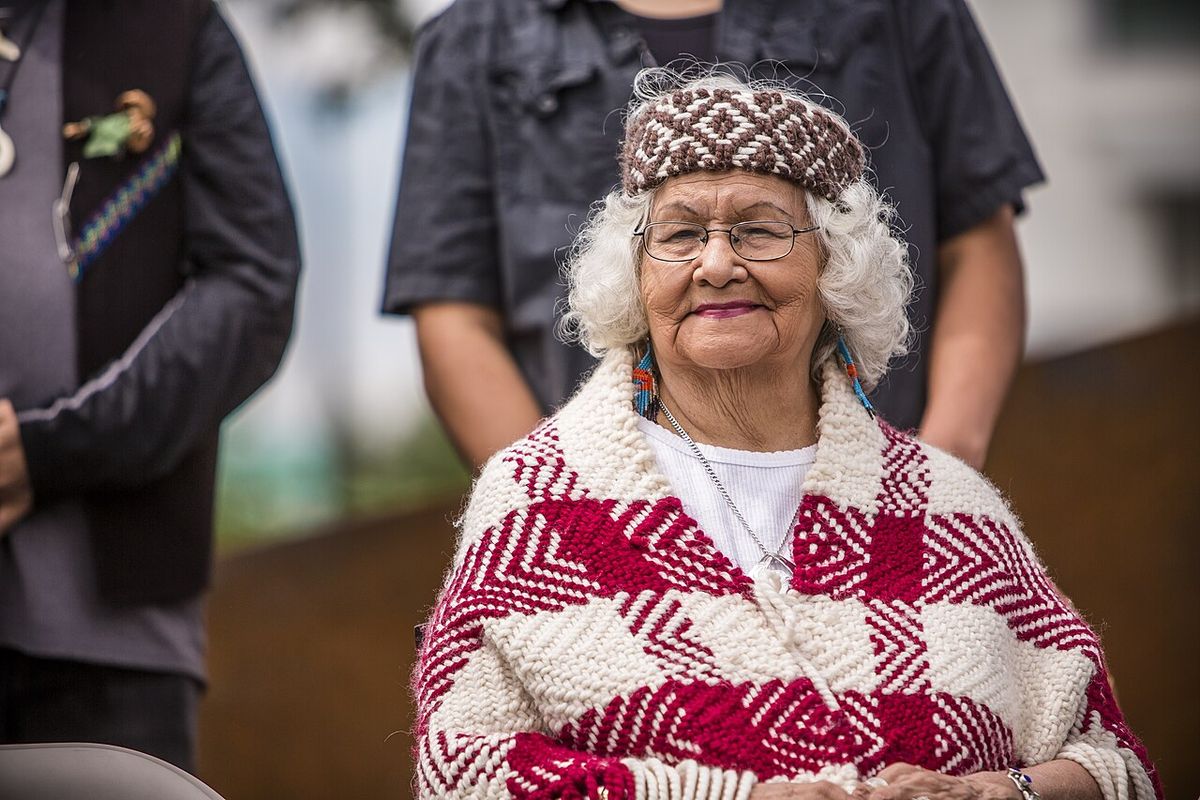
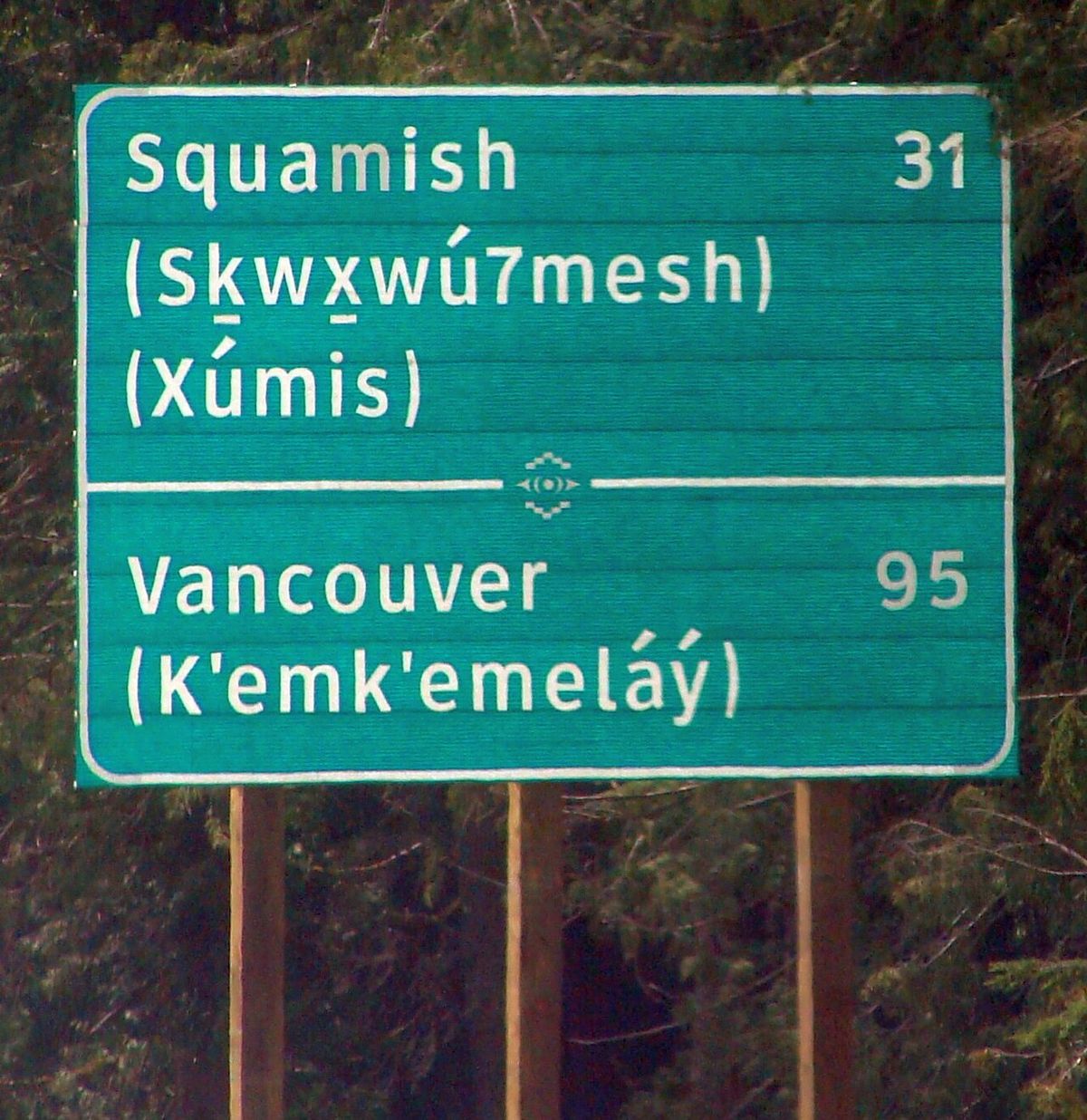
The Squamish language, known as Sḵwx̱wú7mesh sníchim, is a critically endangered Coast Salish language spoken by the Squamish Nation in southwestern British Columbia. It is an independent language within the Salish family, historically centred on the communities of Squamish, North Vancouver, and West Vancouver. The language, declared the official language of the Squamish people in 1990, is the focus of intensive revitalization efforts after reaching a crisis point with few fluent elders. Today, through dedicated immersion programs and community initiatives, the Squamish language is being actively learned and spoken by hundreds.
Historical Documentation and Orthography
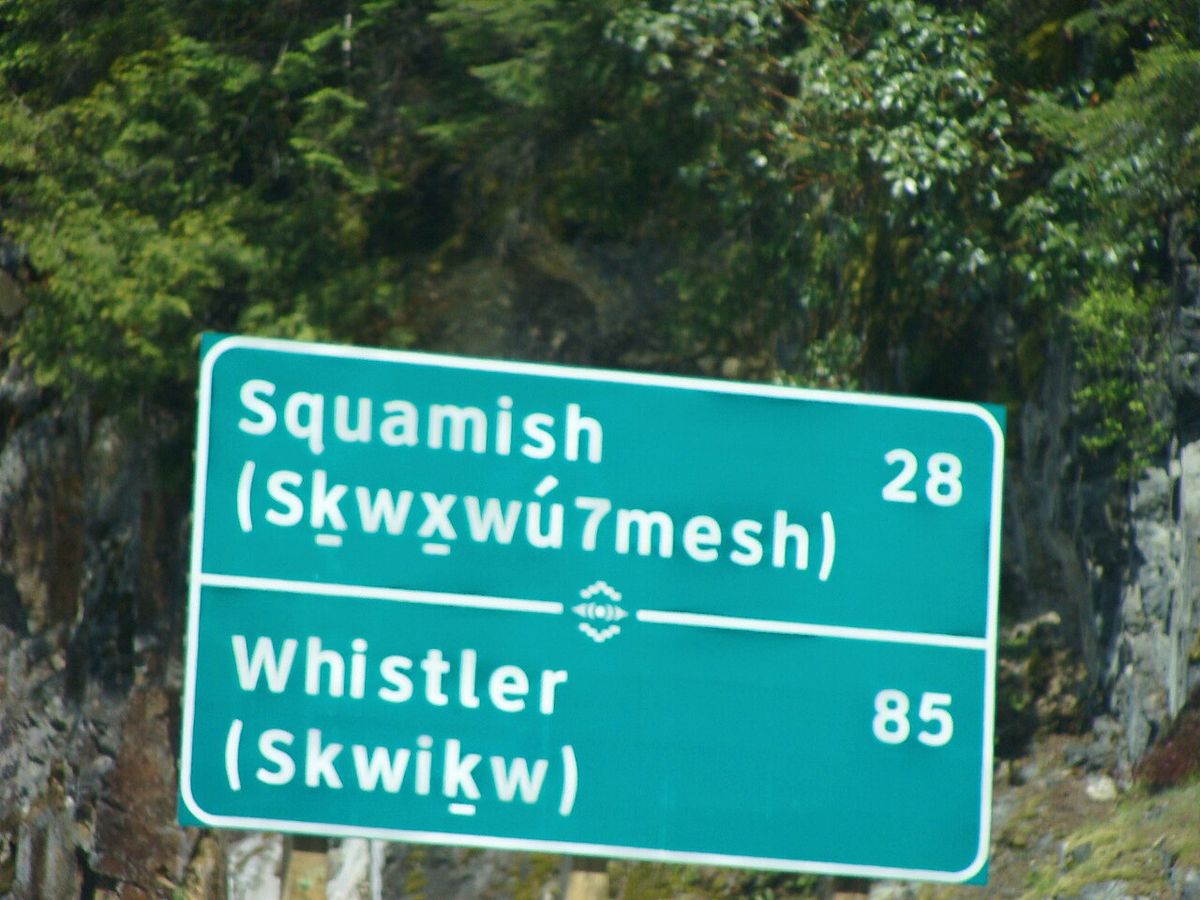
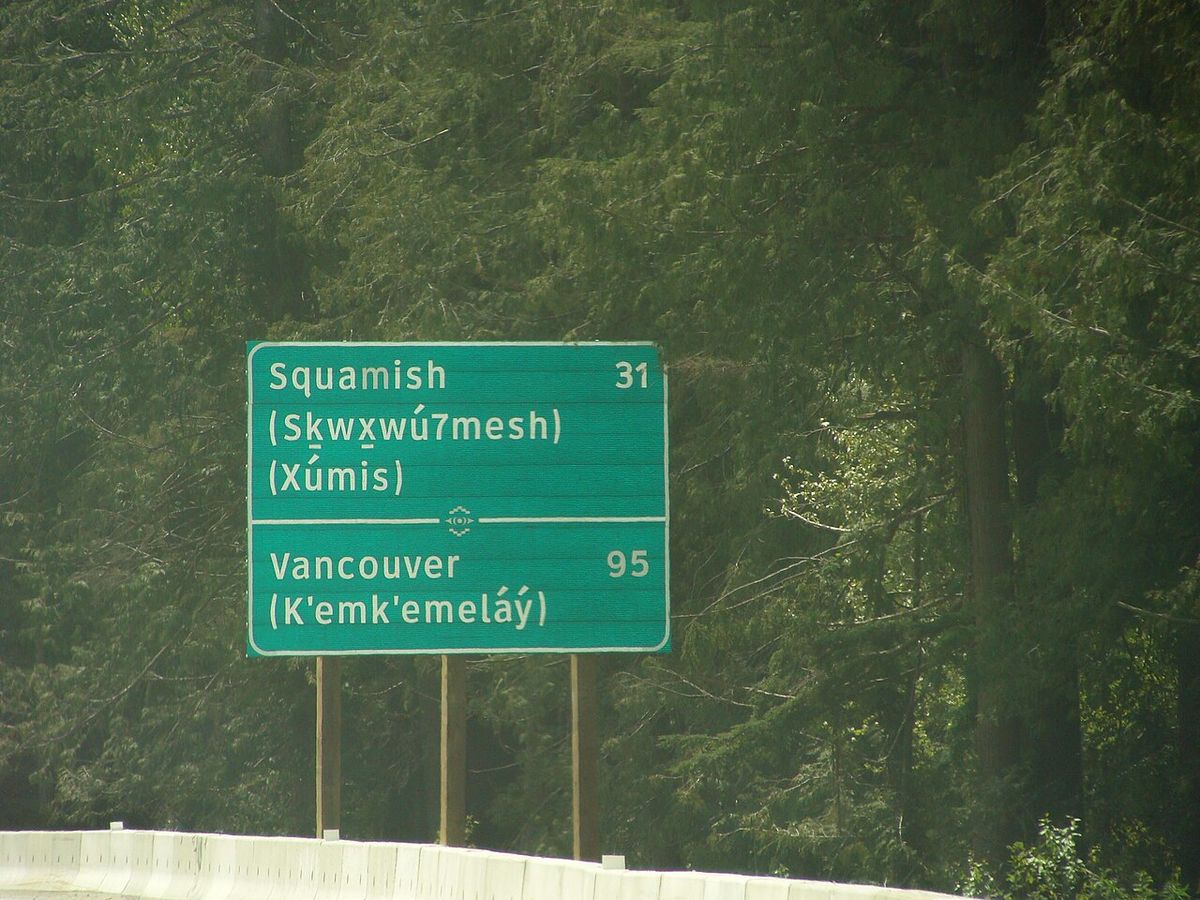
The systematic documentation of the Squamish language began in the 1880s with the work of German anthropologist Franz Boas, who was the first to collect Squamish words. Subsequent researchers, including anthropologist Charles Hill-Tout and later Homer Barnett working with community member Jimmy Frank in the 1930s, recorded sentences, stories, and cultural terms. The foundational linguistic analysis was undertaken by Dutch linguist Aert H. Kuipers in the 1950s, resulting in the first comprehensive grammar published as The Squamish Language in 1967. A major step in language preservation was the British Columbia Language Project in 1968, which led to the creation of the modern Squamish writing system. Linguists Randy Bouchard and Dorothy Kennedy, the main collaborators on that project, devised the orthography using a modified Latin script, which was finalized in 1990. This orthography represents the glottal stop, a critical sound in the language, with the numeral 7, a convention adopted due to the character's absence on early typewriters. A landmark achievement for learners and scholars was the publication of the first Squamish-English bilingual dictionary, edited by Peter Jacobs and Damara Jacobs, by the University of Washington Press in 2011.
Language Vitality and the Revitalization Crisis
In 1990, the Squamish Nation Chief and Council declared Squamish the official language of their people, a strategic move to secure funding and focus efforts on its survival. Despite this, the First Peoples' Heritage, Language and Culture Council assessed the language in 2010 as critically endangered and nearly extinct, with an estimated 10 fluent speakers remaining. The situation reached its most precarious point in 2016, when census counts revealed only seven first-language speakers of Squamish remained within a community of approximately 4,300 people. There were fewer than twenty individuals who had learned it as a second language with conversational fluency. This stark reality galvanized the community and its allies to pursue aggressive and innovative language revitalization strategies.
Modern Revitalization Programs and Successes
Contemporary Squamish language revitalization is characterized by structured, immersive educational programs and widespread community engagement. A central initiative is the Squamish Language Academy, launched in partnership with Simon Fraser University, which offers an intensive adult immersion program. Students in the early cohorts, such as those starting in 2016, committed to roughly 900 hours of immersion over eight months. This program has produced significant results, graduating 70 fluent second-language speakers in its first nine years. The program's teaching legacy is itself a success story, with early students like Char George (S7tsáliya) and Swú7wu Billy becoming the program's lead teachers. Parallel efforts include a Language and Culture Certificate program available at Capilano University since 2014. Community-based initiatives are equally vital, such as the Talking Dictionary event held in June 2024 at Totem Hall, designed to teach practical language skills. The Squamish Nation's Paháyikwup (Language Commission), with members serving terms into 2026, provides governance and strategic direction for these efforts. These combined programs have collectively increased the number of active language learners to 449.
- The Where Are Your Keys technique was used in teaching as of 2011.
- A Squamish language festival was held on April 22, 2013, featuring two fluent elders.
- Squamish Nation cultural workers provide families with lists of common Squamish phrases for use at home.
- A program involves 15 families in the Squamish area to encourage daily home use.
- The Squamish Lil'wat Cultural Centre partners with Whistler Blackcomb to promote language and art.
- The strategic goal is to produce 15 fluent Squamish language speakers annually.
The strategic plan guiding these efforts is formalized in the Squamish Nation Council's Strategic Plan for 2026 to 2030, ensuring continued institutional support. This council, known as Nexwsxwníw̓ntm ta Úxwumixw, is the decision-making body that sets the overall direction and policy agenda for the Squamish people. The ultimate aim of these revitalization efforts is for the growing number of second-language speakers to teach their children, thereby recreating a generation of first-language speakers. This long-term goal is central to reversing the language's critically endangered status and ensuring its survival.
Phonology and Orthographic System
The sound system of Squamish features a set of distinct consonants and vowels common to Salish languages. It has four vowel phonemes: /i/, /a/, /u/, and the schwa /ə/. These vowels have several phonetic variants, or allophones, that appear depending on their context. For instance, the /i/ sound can be realized as [e] in stressed syllables, as [ɛ] near uvular consonants, or as [ɛj] following a uvular consonant. The /a/ sound has allophones including [ɛ] or [æ] near palatal consonants and [ɔ] near labial consonants, while /u/ becomes [o] when stressed. The consonant inventory is notable for lacking voiced plosives, a typical feature of Salish languages. It includes a series of plain and ejective stops, affricates, fricatives, and sonorants like nasals and approximants. A critical element is the glottal stop, a consonant produced by closing the vocal cords, which is phonemic in Squamish and appears in many words. Glottalization can also occur on sonorant consonants like w, y, l, m, and n. The orthography, or writing system, uses the Latin alphabet with special adaptations to represent these sounds accurately. It conventionally represents the glottal stop with the number 7.
Key Features of Squamish Grammar
Squamish grammar shares structural characteristics with other Salish languages, emphasizing predicate-based sentence construction and extensive use of affixation. Words are broadly categorized into two types: clitics, which are short, unstressed forms that attach to other words, and full words. Clitics can function as articles or predicative elements. The language employs a rich system of prefixes and suffixes to modify word meaning and function. A common nominalizing prefix is /s-/, which combines with verb stems to create nouns. For example, from the verb root /t'iq/ meaning to be cold, the noun /s-t'iq/ meaning (the) cold is formed. Reduplication, the repetition of part or all of a word, is a highly productive grammatical process in Squamish. It serves various functions such as indicating plurality, creating diminutive forms, or expressing different aspects of an action. The prevalence of reduplication compensates for the language's lack of other inflectional devices to mark concepts like number. Syntactically, basic Squamish sentences typically follow a Verb-Subject-Object (VSO) order, meaning the action word comes first, followed by the initiator and then the goal of the action. Sentences can also begin with a predicate noun. This structure reflects the language's focus on the event or state being described before specifying the participants involved.
Cultural and Historical Context of the Squamish Nation
The Squamish language is inextricably linked to the history, culture, and governance of the Sḵwx̱wú7mesh Úxwumixw (Squamish Nation). The Nation traces its origins to ancestral communities, or úxwumixw, that have lived in the territory since time immemorial, encompassing the Greater Vancouver area, Gibson’s Landing, and the Squamish River watershed. Oral history begins with the story of two brothers, Ts̓ek̲ánchtn and Sx̲eláltn, whose descendants spread across the land. The modern Squamish Nation as a governmental entity was formed in 1923 through the amalgamation of several Indian Bands, marking the beginning of its contemporary political history. 2023 commemorated its 100-year anniversary. The Nation is governed by the Nexwsxwníw̓ntm ta Úxwumixw (Council), a decision-making body with a Chairperson and seven Councilors. The Squamish Nation's administration delivers a range of programs and services to its members, with language revitalization being a core priority. The territory is rich with original Squamish place names, such as Lheklhukwaytn (Burnaby Mountain) and Xa7élcha (Lynn Creek), which are enduring markers of the deep and continuous connection between the people, their language, and their land.
Current Status and Future Directions
The trajectory of the Squamish language has shifted from near extinction to active revival, though it remains classified as critically endangered. The current count of 449 active learners and the graduation of 70 fluent speakers from immersion programs represent a substantial recovery from the 2016 baseline of only seven first-language speakers. The Squamish Nation's strategic planning, including the Council-approved Strategic Plan for 2026 to 2030, institutionalizes the commitment to language growth. Future directions emphasize sustainability and intergenerational transmission. The explicit goal is to produce 15 fluent speakers each year, aiming to grow the speaker base. Success depends on continuing immersive education for adults and expanding language use into homes and daily life, encouraging parents to learn alongside children. The work of teachers like Char George and Swú7wu Billy, who transitioned from students to instructors, models the community-based leadership essential for long-term success. The Squamish approach to language revival demonstrates that with dedicated resources, pedagogical innovation, and deep cultural resolve, language revitalization is an achievable reality.
Questions about Squamish language
Why is there a number 7 in the Squamish language name Sḵwx̱wú7mesh?
The number 7 is used in the Squamish orthography to represent the glottal stop, a consonant sound produced by closing the vocal cords. This sound is phonemic, meaning it can change the meaning of a word. The symbol was adopted because the standard glyph for a glottal stop (ʔ) was not available on typewriters and in many early computer fonts. The orthography, devised in 1990, uses 7 as a practical and now conventional representation of this essential sound.
How many people speak Squamish today?
The number of fluent speakers has grown due to revitalization efforts but remains low. In 2010, it was estimated there were only 10 fluent speakers, and by 2016, only seven first-language speakers remained. The Squamish Language Academy at Simon Fraser University has graduated 70 fluent second-language speakers since 2016, and there are currently 449 active language learners. The strategic goal is to produce 15 fluent speakers each year to steadily rebuild the speaker community.
Where can I learn the Squamish language?
Formal educational opportunities for learning Squamish are available at post-secondary institutions and through community programs. Simon Fraser University hosts the Squamish Language Academy, which offers an intensive adult immersion program. Capilano University has offered a Language and Culture Certificate program since 2014. The Squamish Nation also organizes community events and classes, such as the Talking Dictionary session held in June 2024. Cultural workers provide resources for families to use the language at home.
What is the Squamish Language Commission?
The Squamish Language Commission is called Paháyikwup. It is a body established by the Squamish Nation to oversee and guide language revitalization efforts. The commission members serve set terms, with a recent cohort's term scheduled to end in 2026. Paháyikwup works within the Nation's governance structure to develop strategy, support programs, and ensure the language is integrated into the community's future.
When was the first Squamish dictionary published?
The first comprehensive Squamish-English bilingual dictionary was published in 2011 by the University of Washington Press. It was edited by linguists Peter Jacobs and Damara Jacobs. This dictionary was a monumental achievement in language documentation, providing an essential resource for learners, teachers, and linguists. Its publication marked a significant milestone in making the vocabulary and structure of the language more accessible for study and revitalization.
How is the Squamish Nation governed, and how does it support the language?
The Squamish Nation, or Sḵwx̱wú7mesh Úxwumixw, is governed by an elected council called Nexwsxwníw̓ntm ta Úxwumixw, consisting of a Chairperson and seven Councilors. The Nation has existed in this governmental form since its amalgamation in 1923. The council sets policy and strategic direction, including for language revitalization. In 1990, the Chief and Council declared Squamish the official language of the Nation, enabling dedicated funding and focus. The council supports initiatives like the Language Commission (Paháyikwup), educational partnerships with universities, and community programs.
Sources and further reading
- Squamish language (Wikipedia)
- Squamish Nation: Home (squamish.net)
- About Squamish Nation | Nch'ḵaỷ (nchkay.com)
- The Squamish blueprint for language revival (aptnnews.ca)
Checked by the Nosy Mag desk. Last updated 2026-10-27.