Regalia
Regalia, in the context of Indigenous cultures in Canada, refers to the traditional and often sacred clothing, accessories, and artifacts worn or carried during ceremonies, celebrations, and significant life events. It is a living art form that encompasses items such as ribbon skirts, beaded robes, headdresses, ceremonial masks, moccasins, and the Métis sash. These items are deeply significant to personal and cultural identity, telling stories, transmitting heritage, and serving as badges of honour. The wearing of regalia, especially in spaces like academic convocations, is increasingly recognized as an act of visual sovereignty and cultural reclamation after decades of colonial suppression.
Definition and Cultural Significance
Regalia is far more than decorative clothing. It is an expression of identity, authority, and community belonging. In Indigenous cultures across Canada, regalia refers to items worn by chiefs and spiritual leaders, such as headdresses and ceremonial masks, as well as honour-bestowing dress like jingle dresses or Métis sashes worn by community members. These items are incorrectly and reductively labeled as costumes in outdated literature, failing to capture their sacred and personal nature. There is no single standard practice, as regalia varies significantly among the diverse First Nations, Métis, and Inuit communities, each with distinct materials, styles, and protocols. Common across cultures is that regalia tells a story, connecting the wearer to ancestors, family, clan, and specific Indigenous nations. The creation of regalia is a labour-intensive act of love and skill, reflecting complex craft patterns passed down through generations, making each piece a unique artifact of living culture.
Historical Context and Suppression
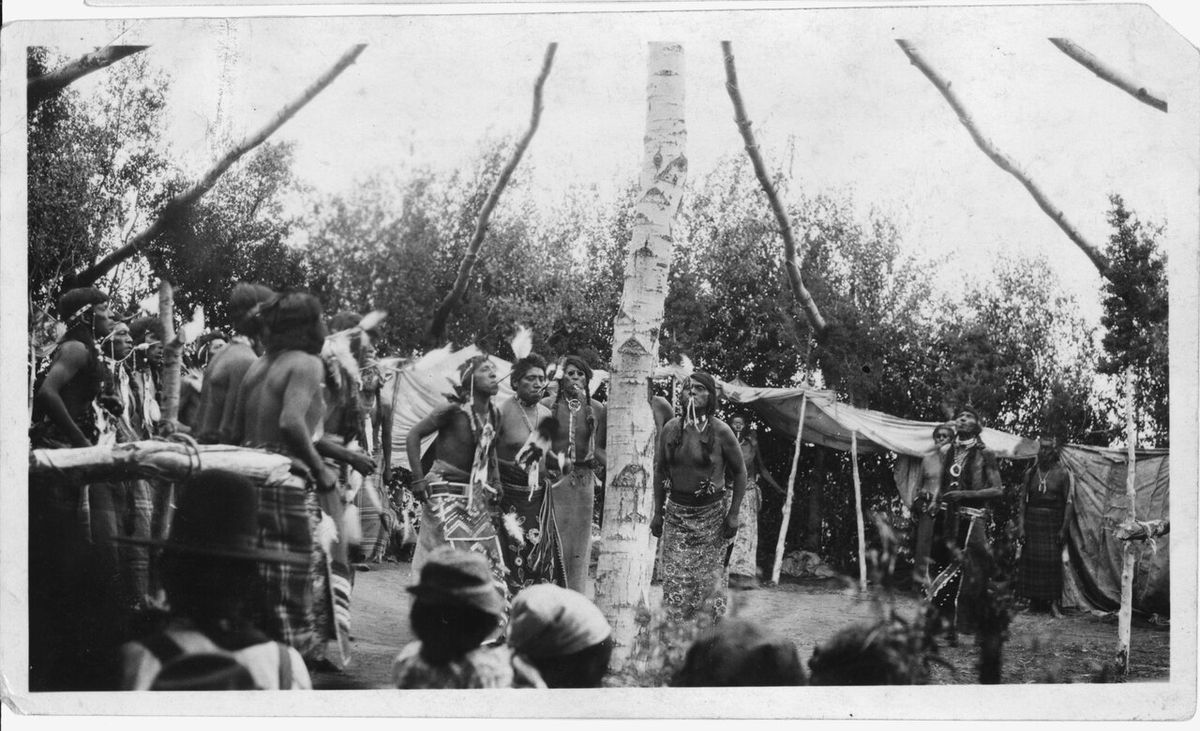
The wearing and celebration of Indigenous regalia faced severe legal and social restrictions for much of Canada's colonial history. From the late 19th century until amendments in 1951, the Indian Act prohibited central ceremonies like the potlatch and the Sun Dance, effectively banning the regalia integral to these events. In residential schools, traditional dress was expressly forbidden as part of a broader policy of cultural eradication. Even off-reserve, Indigenous peoples required permission from the federal Indian agent to appear in ceremonial dress, placing control over cultural expression in the hands of colonial administrators. This period of suppression aimed to dismantle Indigenous governance, spirituality, and social cohesion. The confiscation of regalia, such as the masks and goods taken from participants of the 1921 potlatch at Alert Bay, became a tangible symbol of this cultural theft. It was not until the rise of Indigenous rights activism beginning in the 1960s that concerted efforts were made to revive banned customs and ceremonies, leading to the reclamation of regalia as an act of political and cultural autonomy.
Regalia in Contemporary Ceremonies and Life Events
Today, regalia is worn with pride during a wide array of contemporary ceremonies and life events, symbolizing resilience and continuity. It is prominently featured at political gatherings, celebrations of life including births and marriages, and community events like powwows. A significant and growing practice is the wearing of Indigenous regalia at academic convocations, where graduates integrate their cultural identity into the formal recognition of their educational achievements. For example, the annual Yukon First Nations high school graduation ceremony, which began in 1975, sees graduates in handmade regalia featuring local materials and detailed beadwork. These pieces are often crafted by family and community members years in advance, embedding stories and community support into the garment. Universities like Queen's and the University of Manitoba have established protocols to gift Indigenous graduates with items like Blackfoot Peoples Mountain Blankets or feather fans and to welcome the wearing of traditional attire in lieu of standard academic gowns. This integration represents a powerful shift toward recognizing Indigenous sovereignty within institutional spaces. Regalia is also worn at events like the Indigenous Fashion and Regalia show during Indigenous Education Week and the Princess Contestants fashion show. The presentation of gifts like the Blackfoot Peoples Mountain Blanket or a feather fan occurs during university convocation ceremonies for Indigenous graduates. The wearing of regalia at funerals and naming ceremonies honours community members and traditions.
- Powwows, which are large intertribal social and cultural gatherings.
- The Yukon First Nations high school graduation ceremony, established in 1975.
- University convocation ceremonies across Canada.
- Political gatherings and assemblies of Indigenous governance.
- Celebrations of life events such as births, marriages, and naming ceremonies.
- Funerals and ceremonies honouring community members.
Materials and Artistic Practice
The creation of Indigenous regalia involves a diverse range of natural and crafted materials, each selected for its aesthetic, symbolic, and practical properties. Artisans utilize materials sourced from the land, such as cedar, buckskin, porcupine quills, and eagle feathers, alongside traded or contemporary materials like glass beads, cotton, ribbons, silver, brass, and copper. The specific materials and motifs used are often nation-specific, serving as identifiers of cultural affiliation. For instance, strawberry motifs may be used among the Kanien'kehá:ka (Mohawk), while floral patterns are common in Atikamekw regalia. The process is deeply personal and requires significant skill in techniques such as beadwork, quillwork, leatherworking, and sewing. This artistic practice is not merely decorative but is a means of preserving and transmitting technical knowledge, stories, and values. The exhibition 'Honouring Our Future: Yukon First Nations Graduation Regalia', curated by Lisa Dewhurst and on display until May 29, 2026, presents this artistry, with pieces where the effort of families and communities demonstrates collective pride and love.
- Beads, often made of glass or bone, used for detailed patterns.
- Ribbons of various colours, used prominently on items like ribbon skirts.
- Porcupine quills, dyed and woven into designs.
- Eagle feathers, which are sacred and carry specific protocols.
- Buckskin and other leathers for garments and moccasins.
- Cedar bark and roots for weaving.
- Precious metals like silver and copper for jewellery.
- Cotton and wool fabrics for base garments and blankets.
The Métis Sash and Ribbon Skirt
Two widely recognized elements of Indigenous regalia in Canada are the Métis sash and the ribbon skirt, each carrying deep historical and contemporary significance. The Métis sash, or ceinture fléchée, is a woven finger-braided belt traditionally used as a practical garment and now worn as a symbol of Métis identity and pride. Its colourful patterns are distinctive, and wearing it at events like convocations is a powerful statement of belonging, as demonstrated by scholar Laura Forsythe who advocated for her right to wear her sash during her university ceremony. The ribbon skirt, a garment consisting of a solid fabric skirt adorned with horizontal rows of colourful ribbons, is worn by women across many First Nations and Métis communities. It is a symbol of womanhood, resilience, and connection to the earth. Social worker and scholar Pahan PteSanWin, for example, wore a handmade ribbon skirt and bandolier bag to her convocation as a way to honour her promise to not let the university change her Métis Niheyaw identity. Both the sash and the ribbon skirt exemplify how regalia serves as everyday resistance and a celebration of cultural continuity.
Issues of Cultural Appropriation and Respect
The wearing and commercialization of Indigenous regalia by non-Indigenous people remains a contentious issue, widely viewed by Indigenous communities as a harmful form of cultural appropriation. This is particularly acute when inauthentic, mass-produced imitations are worn in contexts where such regalia is not traditionally used, such as at music festivals or sports games. The wearing of imitation Plains-style headdresses, which are earned symbols of great honour and respect within specific nations, at casual public events is considered especially disrespectful. In response to advocacy, many Canadian institutions have implemented policies to address this. Several major music festivals, including the Edmonton Folk Music Festival and Montreal's Osheaga festival, have banned the wearing of headdresses by attendees. Similarly, the Winnipeg Jets NHL team instituted a ban on headdresses at games. These actions acknowledge that regalia is not a costume but a sacred element of cultural practice. Respect involves understanding that these items carry protocols, histories, and meanings that are not transferable, and that their misuse commodifies and trivializes living cultures.
Key examples of institutional responses to cultural appropriation include the Edmonton Folk Music Festival ban on attendee headdresses. Another example is the Osheaga Music and Arts Festival in Montreal ban on headdresses. The Winnipeg Jets NHL team also has a policy banning headdresses at games. There is widespread criticism of the sale of mass-produced imitation regalia. These policies reflect a growing public awareness of the need to protect Indigenous cultural expressions from misuse and commercialization.
Regalia as Educational and Visual Sovereignty
In academic and other formal settings, the choice to wear Indigenous regalia is increasingly framed as an act of educational and visual sovereignty. This concept, articulated by scholars like Laura Forsythe, asserts the right of diverse Indigenous peoples to visibly occupy and transform institutional spaces on their own terms. When Indigenous graduates wear beaded caps, ribbon skirts, or sashes at convocation, they are asserting that their identities and knowledge systems belong in halls of higher learning. Universities have begun to formally support this through dedicated protocols, such as the University of Manitoba's engagement with Indigenous artists to update ceremonial robes and Queen's University's gifting of blankets and fans to Indigenous graduates. The process requires graduates at some institutions to fill out a specific form, such as the Indigenous Traditional Regalia and Gifting at Convocation Form, at least two weeks prior to their ceremony. This institutional recognition, though formalized, stems from decades of grassroots advocacy by students and staff, influenced by the work of the Truth and Reconciliation Commission. The result is a growing visibility that challenges historical erasure and celebrates Indigenous achievement within a framework of cultural integrity.
Notable examples of academic recognition include Queen's University gifting Blackfoot Peoples Mountain Blankets or feather fans to Indigenous graduates. The University of Manitoba updated chancellor's and president's convocation robes in collaboration with Indigenous artists. Simon Fraser University and other institutions offer stoles for Indigenous graduates. Some universities require graduates to submit an Indigenous Traditional Regalia and Gifting form prior to convocation. These practices mark a significant departure from past policies that often resisted such expressions of identity.
Regional Practices and Exhibitions
The diversity of Indigenous regalia is reflected in distinct regional practices and through exhibitions that bring these artworks to the public. The Yukon First Nations graduation ceremony is a prime example of a localized tradition where regalia creation is a community endeavour, with garments planned and crafted years in advance by mothers, aunties, and clan members. An exhibition titled 'Honouring Our Future: Yukon First Nations Graduation Regalia', on loan from the Yukon Arts Centre, presents this tradition and has been displayed at the Canada House in London, the Nordamerika Native Museum in Zurich, and at the Embassy of Canada in Washington, D.C. until May 29, 2026. The exhibition, curated by Lisa Dewhurst of the Nlaka'pamux First Nation, focuses on the stories and artistry behind each piece, framing them within narratives of continuity and resilience in the North. Such exhibitions serve an educational purpose, moving public understanding beyond stereotypes and toward an appreciation of regalia as a sophisticated, meaningful, and evolving art form that connects individuals to their heritage and to the land.
Key venues that have hosted the 'Honouring Our Future' exhibition on Yukon First Nations graduation regalia include the Canada House in London, England. Another venue is the Nordamerika Native Museum in Zurich, Switzerland. The exhibition is also at the Embassy of Canada art gallery in Washington, D.C., where it is open to the public until May 29, 2026. The exhibition features handmade pieces like graduation dresses, vests, and moccasins. These pieces connect students to their communities and affirm their cultural and academic achievements.
Questions about Regalia
What is Indigenous regalia?
Indigenous regalia refers to the traditional and often sacred clothing, accessories, and artifacts worn or carried by First Nations, Métis, and Inuit peoples during ceremonies, celebrations, and significant life events. It includes items like ribbon skirts, beaded robes, headdresses, ceremonial masks, moccasins, and the Métis sash. Regalia is a living art form, deeply connected to personal and cultural identity, and is distinct from a costume due to its spiritual and communal significance. The materials, designs, and protocols associated with regalia vary widely among the diverse Indigenous nations across Canada.
Is it okay for non-Indigenous people to wear Indigenous regalia?
Generally, the wearing of Indigenous regalia by non-Indigenous people is considered cultural appropriation, especially when it involves mass-produced imitations or items worn outside of their traditional ceremonial context. Specific items like headdresses carry deep earned honour within certain nations, and their casual use is deeply disrespectful. In response, many Canadian music festivals and sports teams have banned the wearing of such items by attendees. Respect involves appreciating regalia from a distance, supporting authentic Indigenous artists, and understanding that these are not costumes but elements of sacred cultural practice with specific protocols.
Can Indigenous graduates wear their regalia at university convocation?
Yes, an increasing number of Canadian universities formally permit and even encourage Indigenous graduates to wear their traditional regalia at convocation ceremonies. Institutions like Queen's University and the University of Manitoba have established protocols where graduates can wear traditional attire in lieu of or alongside standard academic gowns. Some universities also gift graduates with items like blankets or fans. Graduates are typically required to notify the university in advance, often by filling out a specific form. This practice is seen as an act of visual sovereignty, affirming the place of Indigenous identities in academic spaces.
What is the historical significance of the Métis sash?
The Métis sash, or ceinture fléchée, is a woven finger-braided belt with a history as a practical garment used by voyageurs. Today, it is a powerful symbol of Métis identity, culture, and pride. Wearing the sash at events like convocations or cultural gatherings is a deliberate statement of belonging and heritage. Scholar Laura Forsythe's experience of advocating to wear her sash at a university ceremony highlights its personal and political significance. The sash's colourful patterns are distinctive, and it represents the resilience and continuity of the Métis people as a distinct Indigenous nation in Canada.
What was the 'Honouring Our Future' exhibition about?
'Honouring Our Future: Yukon First Nations Graduation Regalia' was an exhibition presenting handmade graduation attire created by and for Yukon First Nations students. It highlighted the artistry and community effort behind each piece, often involving family and clan members who plan and craft the regalia years in advance. Curated by Lisa Dewhurst, the exhibition was on display at the Embassy of Canada and previously at venues in London and Zurich. It ran until May 29, 2026, and served to educate the public on how regalia connects students to their heritage and celebrates academic achievement within a framework of cultural continuity and resilience.
How were Indigenous ceremonies and regalia restricted in Canadian history?
From the late 19th century until 1951, the Canadian Indian Act prohibited important Indigenous ceremonies such as the potlatch and the Sun Dance. This legal ban effectively outlawed the creation and wearing of the regalia integral to these events. In residential schools, traditional dress was forbidden as part of forced assimilation policies. Even off-reserve, Indigenous people needed permission from a federal Indian agent to wear ceremonial dress. This period of suppression aimed to destroy Indigenous cultural and governance structures. The revival of these ceremonies and the reclamation of regalia gained momentum during the Indigenous rights activism of the 1960s, symbolizing a reclaiming of autonomy and heritage.
Sources and further reading
- Regalia (Wikipedia)
- Indigenous grads wear regalia to claim their place (cbc.ca)
- Convocation and Regalia | Indigenous Initiatives (queensu.ca)
- Indigenous Regalia in Canada (thecanadianencyclopedia.ca)
- Yukon First Nations Graduation Regalia (international.gc.ca)
Checked by the Nosy Mag desk. Last updated 2026-11-01.