Mukluk
Mukluks are soft boots traditionally crafted from animal hides like caribou and sealskin, originating with Indigenous Arctic and Subarctic peoples including the Inuit, Iñupiat, and Yup'ik. The word 'mukluk' derives from the Yup'ik term 'maklak', meaning bearded seal, while the Inuit term is 'kamik'. These boots were designed for warmth, quiet movement, and survival in extreme cold. In contemporary Canada, mukluks have evolved from essential survival gear into globally recognized footwear, blending traditional design with modern fashion through companies like Manitobah Mukluks.
Traditional Origins and Design
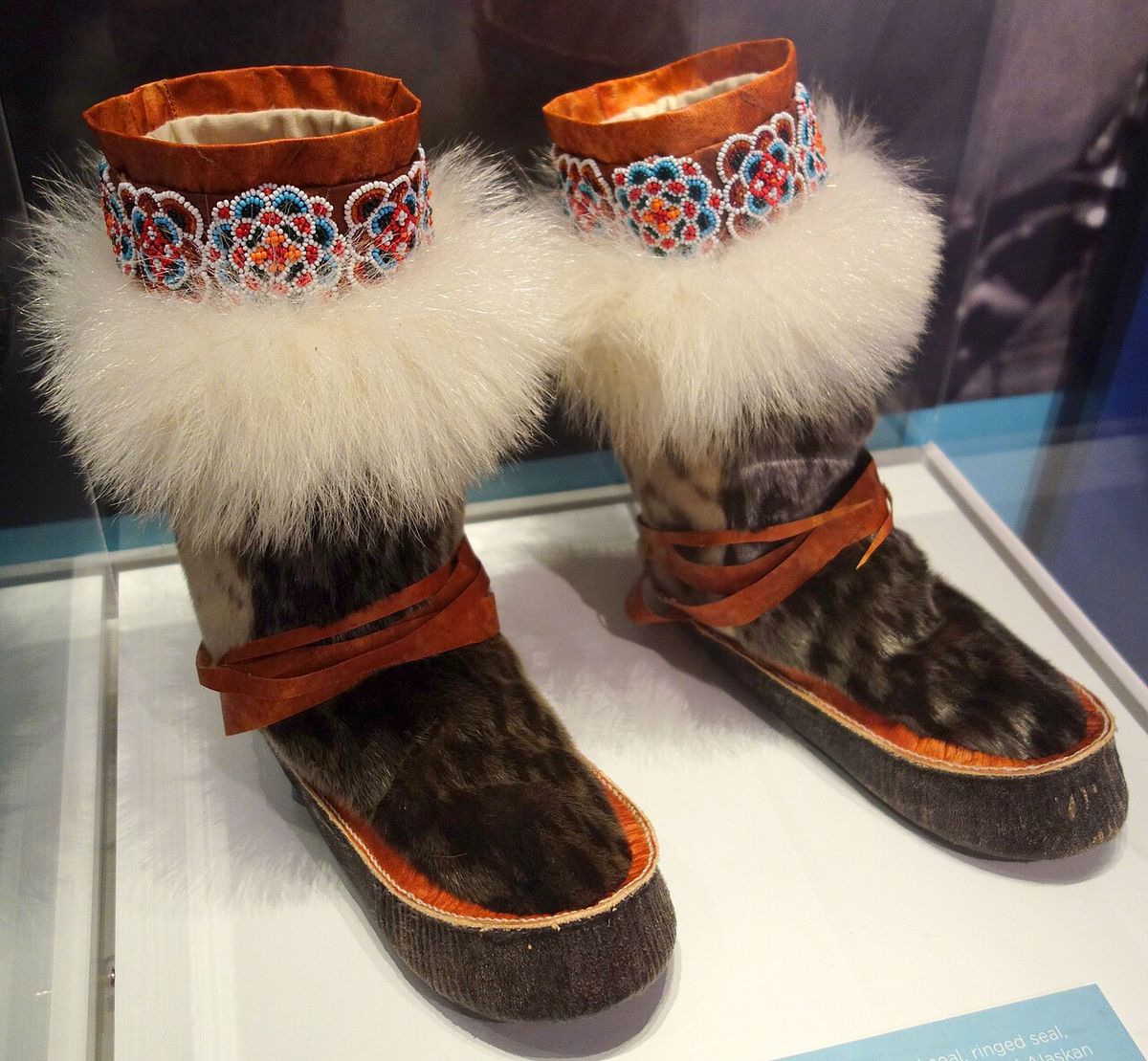
The mukluk is an ancient footwear design developed by Indigenous peoples across the North American Arctic and Subarctic, including the Inuit, Iñupiat, Yup'ik, and various First Nations. Traditionally, these boots were crafted from locally sourced materials such as sealskin and caribou skin, chosen for their insulating properties and durability. The soft, flexible sole is a defining characteristic, allowing hunters to move quietly across the tundra. This design was perfectly adapted for life on snowshoes in winter, where agility and a light step were crucial. The boots typically rose to the ankle or mid-calf and were often insulated with fur for added warmth during the harsh winter months.
Construction techniques were highly specialized and labour-intensive, requiring skilled preparation of hides. Sealskin was commonly used for the uppers and tougher bearded seal skin for the soles. A critical aspect of traditional kamik (Inuit mukluk) manufacture was the precise alignment of the fur grain on the sole, with the seal's flipper end facing the toes to prevent slipping. Boots were often stitched with animal sinew using a blind-stitch technique that shrank when wet, helping to keep them watertight. For wet conditions, waterproof sealskin was finely stitched, while winter boots for dry snow might feature exterior fur. The top of the boot was designed to stand up stiffly, sometimes open at the top to allow moisture to escape.
The care and maintenance of traditional mukluks were as important as their creation. To prevent rot and extend their lifespan, wearers would allow the boots to dry thoroughly between uses, often rotating between multiple pairs. In modern homes with forced-air heating, fur garments including kamiks are stored in unheated spaces to prevent the warm, dry air from causing the skins to deteriorate quickly. After seasonal storage, traditional skin boots would stiffen and require working and stretching to make them pliable again. The entire process, from hunting the animal to the final decorative touches like beads or pom-poms, represented a significant investment of time and energy. Mukluks may be adorned with embroidery and other techniques, and the design often uses a wrapped sole so the seam is on the top and sides, not the bottom edge, to avoid leaks and wear.
Historical Evolution and Cultural Exchange
With the arrival of European fur traders, the design and crafting of mukluks and the closely related moccasin began to evolve through cultural exchange. Western explorers adopted this traditional footwear for survival in the Canadian wilderness, recognizing its superior functionality. Indigenous women, particularly those in contact with trading posts, played a central role in integrating new materials and sewing techniques into their work. The introduction of ready-made fabrics and new tools offered practical advantages, reducing the laborious steps of preparing hides. This adoption of foreign innovation was driven largely by practicality and the changing demands of daily life.
The fur trade itself accelerated design changes, as traders encouraged a shift in hunting practices and fashion. By promoting European styles, traders hoped Indigenous hunters would focus more on trapping furbearing animals for trade. Despite these pressures, Indigenous craftsmanship flourished, with new decorative elements like elaborate beadwork and embroidery being incorporated. The foundational design principles of warmth, flexibility, and quiet movement remained, but the aesthetic possibilities expanded. This period marked the beginning of mukluks transitioning from purely functional gear to items that also expressed cultural identity and artistry within a changing world. Similar soft-soled boots are traditionally worn in the European Arctic and Siberia, showing a wide geographic range for this footwear technology.
Manitobah Mukluks: A Modern Social Enterprise
Founded by Métis entrepreneur Sean McCormick, Manitobah Mukluks has grown from a local trading post idea into a global social enterprise. McCormick's journey began in his youth, working in a tannery and later establishing a trading post where Indigenous artisans traded handmade mukluks and moccasins for leather and furs. Seeing the growing demand for authentic Indigenous footwear, he developed a business plan. The company was founded in 1997 and by 2021 reported a three-year revenue growth of 50 percent. A core principle from the start has been baking social impact and Indigenous community benefit directly into the business model.
Manitobah Mukluks operates with a strong commitment to ethical practices and community reciprocity. In 2023, the company earned Certified B Corporation status, verifying its high standards of social and environmental performance, accountability, and transparency. The company employs an Aboriginal hiring policy. It also provides bursaries to the Centre for Aboriginal Human Resource Development (CAHRD) to support young graduates entering business. The company's growth strategy is intrinsically linked to its social mission. The company's manufacturing includes a line of 100 percent Canadian-made moccasins, balancing scale with respect for tradition.
The company's retail presence has expanded dramatically from its origins as an online store. Manitobah products are now carried by over 1,500 retail stores worldwide. The United States is its largest market outside Canada and its fastest-growing segment. Despite this global scale, the company's online store at Manitobah.ca remains its flagship, crucial for telling its story and connecting directly with a worldwide customer base. The classic 'Gatherer' mukluk style has been in production for over 15 years, featuring a traditional tall design with soft leather and sheepskin lining.
- 1997: Company is founded by Sean McCormick.
- 2008: Manitobah begins global operations.
- 2021: Ranked 448th on The Globe and Mail’s Top Growing Companies list.
- 2023: Achieves Certified B Corporation status.
- Key Fact: Mukluks weigh very little. For example, modern soft-soled boots can weigh less than a tenth of the 3.6 kg (8 lb) United States Marines extreme-cold-weather boots.
The Storyboot Project and Cultural Preservation
Central to Manitobah Mukluks' mission is the Storyboot Project, a program dedicated to uplifting Indigenous knowledge and supporting elders and artisans. The project offers opportunities for Indigenous people to learn or re-learn the traditional crafts of mukluk and moccasin making. Participants in the program have the chance to sell their handmade work through the Manitobah Mukluks website, with 100 percent of the proceeds returned directly to the artists. This model promotes entrepreneurship, economic prosperity, and the intergenerational transfer of skills within Indigenous communities. The project embodies the company's foundational belief that the design of Indigenous footwear belongs to the collective Indigenous community.
Through the Storyboot School, Aboriginal artisans and students work together to ensure that specialized knowledge is passed from generation to generation, combating the erosion of traditional practices. The company's Indigenous Market collection further extends this support, featuring a curated selection of one-of-a-kind footwear, accessories, and artwork where all profits go back to the Indigenous artists and creators. These initiatives address a key challenge noted by founder Sean McCormick: ensuring that the global popularity of mukluks benefits the Indigenous communities who are the original owners and creators of the design. The inner boots of traditional kamiks are often made with the fur facing inwards and are worn without socks, as socks absorb and hold sweat.
Materials, Manufacturing, and Modern Adaptations
While traditional mukluks relied entirely on natural materials, modern manufacturing incorporates both heritage and contemporary components to meet diverse needs. Traditional winter kamiks were often made from caribou leg fur, as caribou rely on fur for insulation, making it exceptionally warm. Summer or wet-weather boots were meticulously stitched from waterproof sealskin. Today, commercial mukluks may use soft grain leather, sheepskin linings, and durable synthetic soles like Vibram, designed for urban wear. Insulation materials have also expanded to include modern imports like raccoon or rabbit fur, commercial sheepskin, and synthetic materials.
The manufacturing process balances scale with respect for tradition. Although some components may be sourced globally, the company maintains a line of 100 percent Canadian-made moccasins. Modern designs aim to retain the key functional advantages of the original mukluk: lightness, breathability to manage perspiration, and flexibility. However, adaptations have been made for different environments. The traditional design's poor performance in wet slush has led to the use of waterproof membranes and rugged outsoles for casual winter wear in variable conditions. The skin requires laborious preparation including skinning, washing, scraping, and stretching before it can be used.
| Component | Traditional Material | Modern Adaptation |
|---|---|---|
| Upper | Ringed seal skin, caribou skin | Soft grain leather, textiles |
| Sole | Bearded seal skin | Vibram rubber, synthetic composites |
| Lining/Insulation | Caribou fur, Arctic hare, fox | Sheepskin, raccoon, polyester, down |
| Stitching | Animal sinew (shrink-when-wet) | Synthetic thread, sealed seams |
| Inner Boot/ Liner | Textile or wool felt, fur facing inwards | Textile, wool felt, synthetic liners |
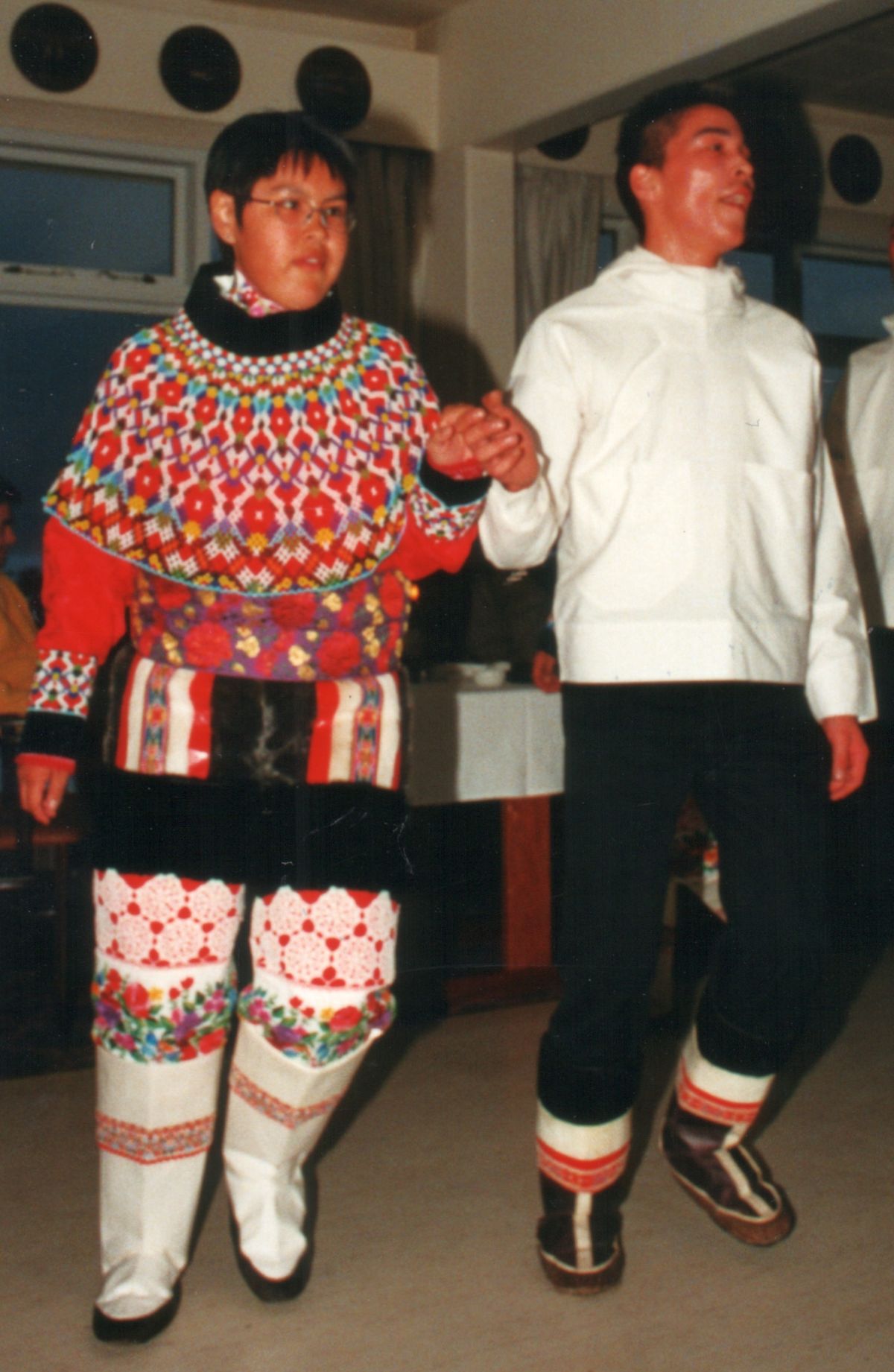
Cultural Significance and Contemporary Appreciation
Mukluks carry cultural significance as an example of Indigenous innovation and adaptation over millennia. They are artefacts of a deep and evolving story of cultural survival, connecting wearers to a history of resilience in some of the world's harshest climates. For many Indigenous peoples, they remain an important part of ceremonial and everyday dress, often adorned with culturally specific beadwork, embroidery, and patterns that denote community identity. The very act of creating them involves knowledge passed down through families, making each pair a carrier of cultural memory and technical skill.
In the wider Canadian and global context, wearing mukluks has become an act of cultural appreciation when done with respect and through support of authentic Indigenous businesses. Companies like Manitobah Mukluks explicitly welcome non-Indigenous customers, framing purchases as a way to directly support Indigenous communities and celebrate Indigenous culture. The company stresses that buying from an Indigenous-owned enterprise that shares profits with artists is participation in cultural appreciation. This perspective has resonated with consumers who increasingly demand that the brands they support align with their social values. The design is also used for the industrial manufacture of other cold-weather boots, often paired with a rugged contemporary sole.
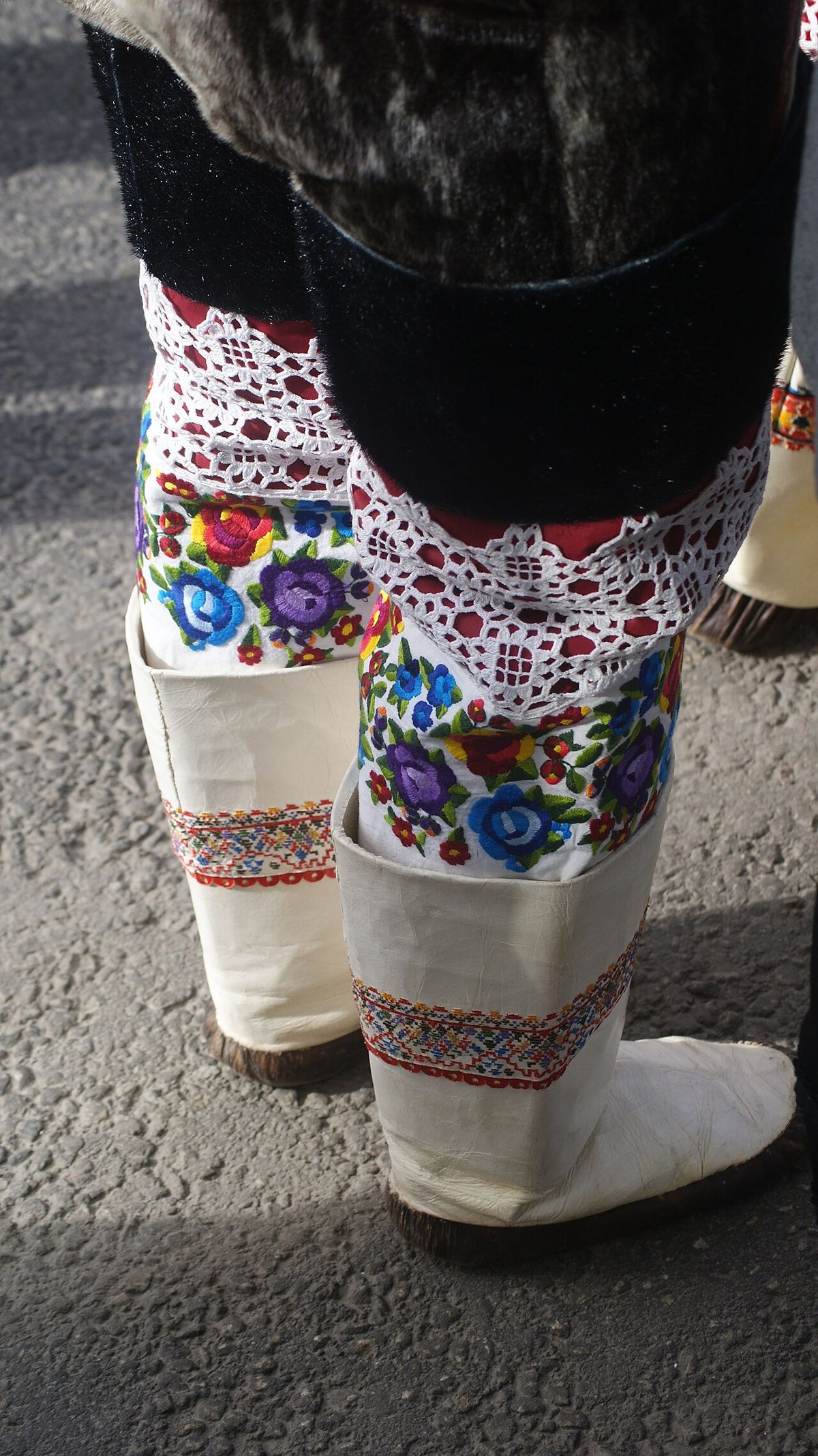
Another type of boot, sometimes called an Inuit boot, originates in Greenland and eastern Alaska and is made by binding with animal sinew, featuring a centre seam running down to the foot. Mukluks are often worn over an inner boot liner and under a protective overshoe. The term mukluk is now often used for any soft boot designed for cold weather. Their light weight means they often do not require heavy lacing. Friction is enough to hold them on the foot, which helps avoid constricting circulation.
Questions about Mukluk
What is the difference between mukluks and moccasins?
Mukluks and moccasins are both soft-soled Indigenous footwear, but mukluks are specifically a boot style designed for cold weather, typically rising to the ankle or mid-calf. Moccasins are a more general term for a soft shoe, often lower-cut. Both share a heritage of being handmade from animal hides, but mukluks were traditionally more heavily insulated for Arctic and Subarctic winters. The word 'mukluk' comes from the Yup'ik language, while 'moccasin' has origins in Algonquian languages. Another key difference is that mukluks are often worn with a liner and an overshoe.
Are mukluks waterproof?
Traditional mukluks made for wet conditions are finely stitched from waterproof sealskin. Kamiks for slushy or open-ocean conditions are made this way. However, traditional designs for dry, powdery snow are not intended for wet conditions. Modern commercial boots may require seam-sealing after purchase to be fully waterproof. The short overshoes worn with mukluks may also be made waterproof for wet conditions.
Who owns Manitobah Mukluks?
Manitobah Mukluks was founded by Métis entrepreneur Sean McCormick in 1997. The company remains Indigenous-owned and operated, with a strong commitment to social enterprise principles. It became a Certified B Corporation in 2023, reflecting its dedication to social and environmental standards. McCormick developed the initial business plan after participating in the Manitoba Aboriginal Youth Entrepreneurship Training Program.
How does Manitobah Mukluks support Indigenous communities?
Manitobah Mukluks supports Indigenous communities through multiple initiatives. Its Storyboot Project teaches traditional craft skills and returns 100 percent of sales proceeds from artisan-made items directly to the artists. The company employs an Aboriginal hiring policy. It also provides bursaries to the Centre for Aboriginal Human Resource Development and operates as a social enterprise where community benefit is considered in business decisions. The company's Indigenous Market collection ensures all profits go back to the creators.
Can anyone wear mukluks?
Yes, companies like Manitobah Mukluks design their products for everyone. They state that purchasing from them is a form of cultural appreciation. By buying these products, customers directly support Indigenous people and celebrate Indigenous culture. The company welcomes non-Indigenous customers as partners in supporting Indigenous communities and preserving cultural traditions.
Where can I buy authentic mukluks?
Authentic mukluks are available from companies like Manitobah Mukluks. Their products are sold online and in retail locations worldwide. The company also has an Indigenous Market collection that sells items made by Indigenous artists. All profits from this collection go back to the creators. Authentic traditional mukluks are also made and sold directly by Indigenous artisans in Arctic communities.
Sources and further reading
- Mukluk (Wikipedia)
- 100% Canadian Made Moccasins, tagged "Mukluks" (whetung.com)
- Our Story Manitobah (manitobah.ca)
- Manitobah Mukluks growth fuels support of Indigenous artists (theglobeandmail.com)
- Manitobah Mukluks fuses aboriginal culture and fashion (cira.ca)
Checked by the Nosy Mag desk. Last updated 2026-11-02.