Mohawk Warrior Society
The Rotisken’rakéhte, commonly known as the Mohawk Warrior Society, is a Kanien'kehá:ka (Mohawk) group united around the care, preservation, and defence of the Mohawk people and their land. It represents a traditional component of decentralized Haudenosaunee governance under the Great Law of Peace, rekindled in the late 1960s after decades of colonial assimilation. The society gained widespread public attention during major land defence standoffs, notably the 1990 Oka Crisis, becoming a symbol of Indigenous sovereignty and resistance. Its members, known as Warriors, undertake responsibilities ranging from community service to direct action, guided by a commitment to cultural survival and self-determination.
Origins and Philosophical Foundation
The Mohawk Warrior Society is not a modern invention but a revival of ancient duties within Kanien'kehá:ka society. Its foundation is the Great Law of Peace, known as Kaianere’kó:wa, which provides the constitutional framework for Haudenosaunee Confederacy governance. Under this law, the Rotisken’rakéhte represents the traditional vanguard responsible for the people's welfare and defence. In the late 1960s, a group of young Mohawk people committed to reviving traditional teachings and language rekindled the society in its contemporary form. This revival was part of a broader cultural renaissance that sought to reconnect the people with the sources of their existence as Indigenous nations.
The society's re-emergence is understood as one element of a larger struggle for Indigenous survival against ongoing colonization. Its philosophical basis is deeply rooted in concepts of autonomy, freedom, and responsibility to the community and the land. The society operates as a decentralized part of Indigenous governance rather than a formal, hierarchical organization. Its primary aim is to defend the people against state violence and the deprivation of their rights, acting on the principles of the Great Peace. This auto-history and philosophical grounding were later documented extensively in writings by society members, providing a counter-narrative to state-sponsored portrayals.
Structure, Roles, and Revival
The structure of the Mohawk Warrior Society is based on traditional roles rather than a rigid command hierarchy. Members are known as Warriors, a term derived from the society's Mohawk name, Rotisken’rakéhte, which translates to 'he carries the burden of peace.' Their duties are varied and responsive to community needs, covering a wide range of activities from everyday acts of service to organized political actions. These responsibilities can include chopping wood for elders, erecting roadblocks, initiating evictions, or leading land occupations. The society acts as the traditional vanguard, stepping forward in times of need to aid their people, and its actions are guided by the community's requirements for care and defence.
The contemporary revival began with a core group in the late 1960s when the Warrior Society was rekindled by seven original members who vowed to defend their people. Their commitment quickly inspired others, leading to rapid growth as they were joined by hundreds throughout Mohawk territories and eventually thousands across the Haudenosaunee Confederacy. This movement garnered supporters from Indigenous communities across North and South America. Similar groups aligned with the same principles exist for all peoples within the Haudenosaunee Confederacy, though the Mohawk society is among the most prominent. The society's activities are guided by internal documents and oral tradition, including the key text The Warrior’s Handbook written by Louis Karoniaktajeh Hall in 1979.
This handbook, along with other writings like Rebuilding the Iroquois Confederacy, provides ideological and practical guidance for members. The society's constitution is the Great Peace itself, which directs their commitment to freedom and independence. The revival in the 1970s is preserved through new oral histories from key participants. These oral histories ensure the transmission of knowledge to future generations. They maintain the continuity of traditional governance roles within the modern context of Indigenous resistance.
Major Actions and Land Defence
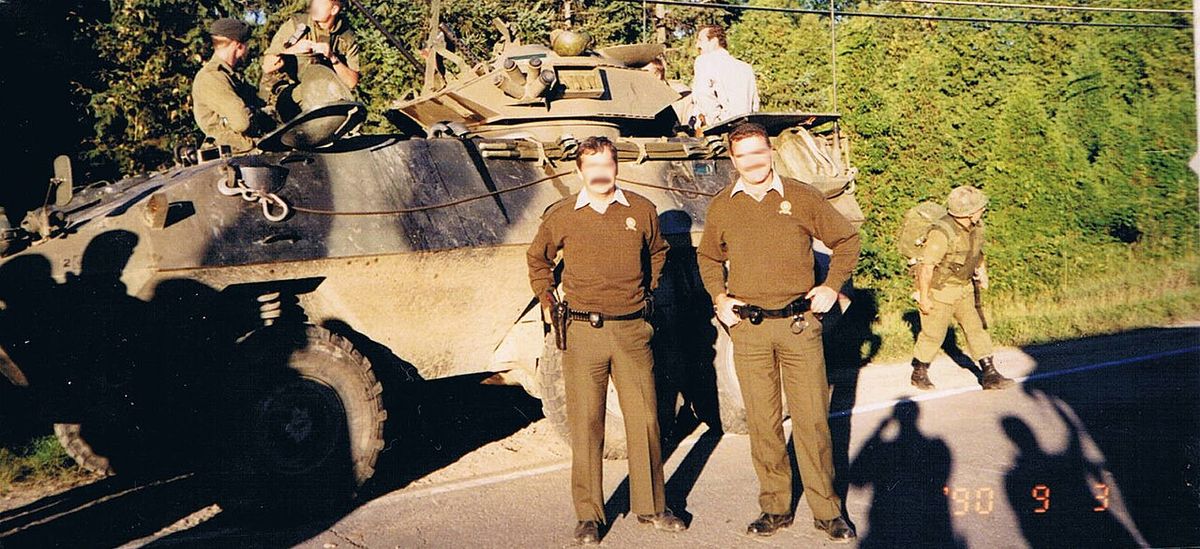
The Mohawk Warrior Society has been involved in several important actions that brought Indigenous land rights and sovereignty to national and international attention. These events demonstrated the society's role as a militant organization dedicated to direct action against dispossession. The society gained notoriety in 1973 when they, along with American Indian Movement activists, held a standoff with the Quebec Provincial Police at Kahnawake. In 1974, Warriors undertook an armed occupation of land in the Adirondack Mountains of upstate New York to create the new settlement of Ganienkeh, which remains sovereign Mohawk land today. The most defining moment was the 1990 Oka Crisis, a 78-day armed standoff that began on July 11 over the proposed expansion of a golf course on contested land known as the Pines near Kanesatake.
- 1973 Kahnawake Standoff: The society, alongside activists from the American Indian Movement, engaged in a standoff with the Quebec Provincial Police at Kahnawake.
- 1974 Ganienkeh Occupation: Warriors undertook an armed occupation of land in the Adirondack Mountains of upstate New York to create a new settlement. This reclaimed territory remains sovereign Mohawk land today.
- 1990 Oka Crisis (Kanehsatake): This 78-day armed standoff was the society's most defining moment. It began on July 11, 1990, over the proposed expansion of a golf course on contested land known as the Pines near Kanesatake.
- 1990 Mercier Bridge Blockade: In solidarity with Kanesatake during the Oka Crisis, the Kahnawake community, supported by Warriors, blockaded the Honoré Mercier Bridge connecting Montreal to the South Shore.
The Oka Crisis revived the warrior culture and fighting spirit of Indigenous peoples across North America. It placed the Kanien'kehà:ka struggle for human rights on the global stage. The crisis defined the public perception of the Warrior Society for decades. It highlighted the society's capacity for organized resistance and its deep connection to community-led defence of territory. These actions are documented as part of the society's auto-history. This documentation emphasizes their perspective on events often narrated by state authorities or media.
The Mohawk Warrior Flag
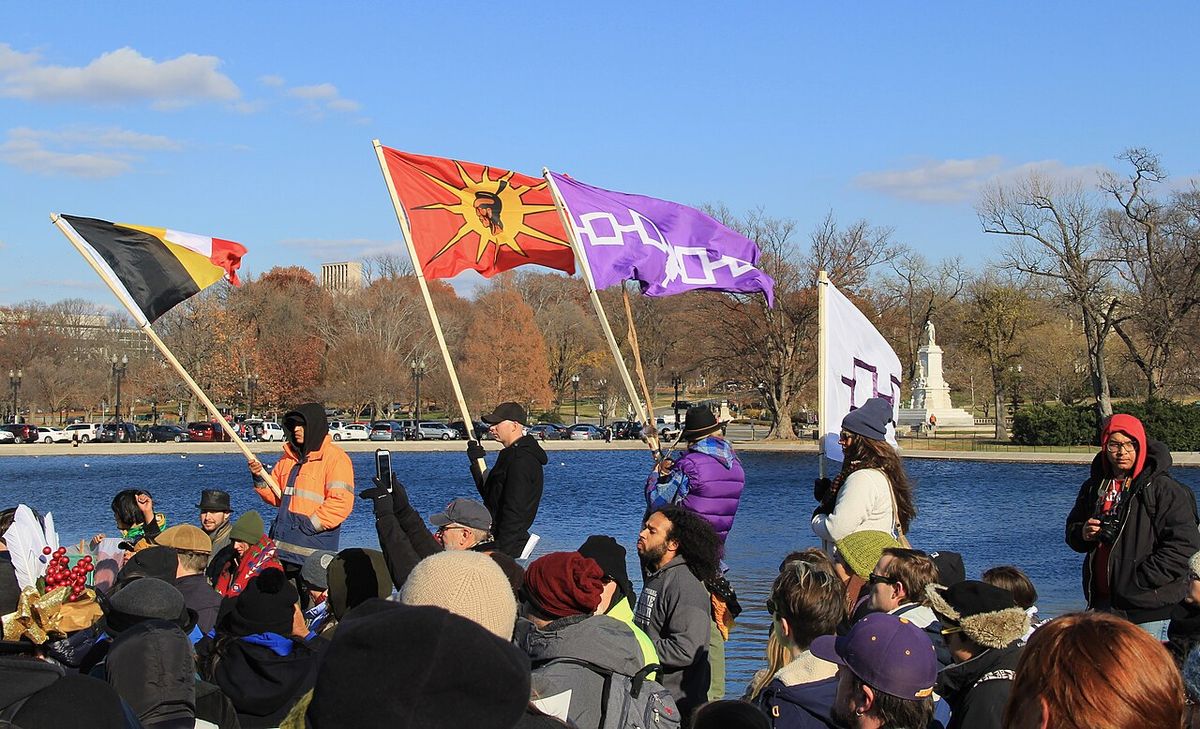
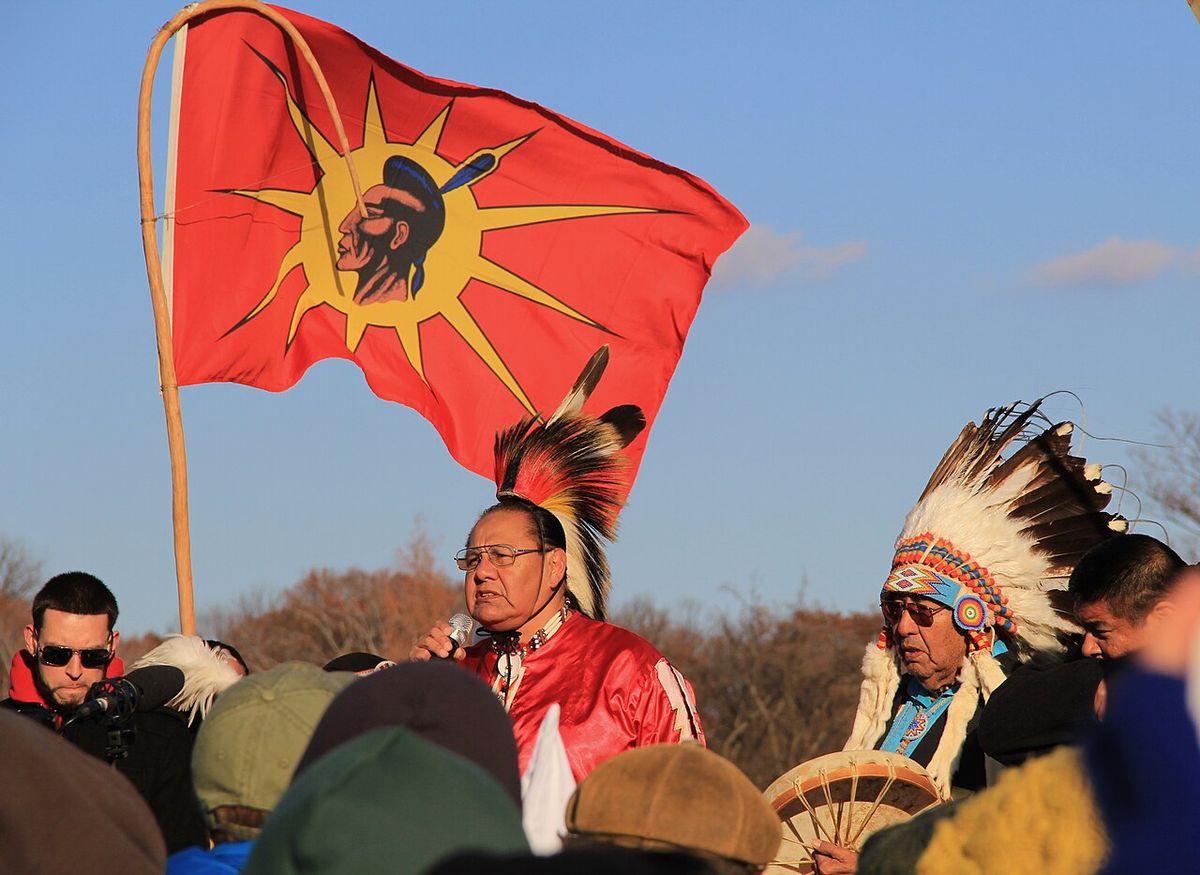
The most recognizable symbol of the society is the Mohawk Warrior Flag, a powerful emblem of Indigenous resistance designed in 1974 by Louis Karoniaktajeh Hall, an artist, writer, and activist from Kahnawake. Hall initially called it the 'unity flag' or 'Indian flag,' intending it as a symbol for all Indigenous peoples, and the original design featured a long-haired Indigenous man superimposed over a yellow sunburst on a red banner. In the 1980s, Hall revised the flag, replacing the generic figure with a distinct Kanien’kehá:ka warrior, creating the version specifically for the Rotisken’rakéhte that is most recognizable today. The flag's prominence exploded during the 1990 Oka Crisis as media coverage zeroed in on the image of Warriors carrying the bright red-and-yellow flag.
This coverage amplified the flag's fame, transforming it from a society symbol into a broader icon of Indigenous unity and resistance. Consequently, other Indigenous nations began using the flag at blockades and rallies against colonial oppression. The flag has been mass-produced on various items, including clothing, stickers, and decals, fulfilling Hall's desire to foster pride in Indigenous identity. Academic analysis, such as Kahente Horn-Miller's 2010 article 'From Paintings to Power,' explores the flag's significance, arguing that Hall sought to activate a sense of pride and communicate Kanien’kehá:ka identity. Horn-Miller and others note that the English term 'warrior' and the flag's association with the Oka Crisis have led to misrepresentation, often conflating it with violence, while in Mohawk philosophy, Rotisken’rakéhte means 'he carries the burden of peace,' a concept starkly different from the vilified image sometimes portrayed in media.
Cultural and Political Impact
The Mohawk Warrior Society has had a significant impact on Indigenous political organizing and cultural revitalization across Canada. Its actions during the Oka Crisis served as an inspiration for future generations struggling for land and self-determination. The society demonstrated that direct action and a militant stance could force national conversations on Indigenous rights and bring international scrutiny to Canada's colonial practices. The 1990 standoff is frequently cited as a catalyst that renewed the warrior ethic and resistance spirit in Indigenous communities nationwide. Academics like Taiaiake Alfred, a Kanien’kehaka professor, have analyzed the society's role within contemporary Indigenous nationhood, discussing the regeneration of the warrior ethic as part of a broader movement for Indigenous sovereignty in works such as Wasáse. The society is integral to sovereignty struggles, representing a means for Indigenous peoples to take direct action against historical dispossession. Its existence challenges the Canadian state's monopoly on authority and presents an alternative model of governance based on the Great Law of Peace.
The society contributes to a hidden history of Indigenous revolutionary organizing. An anthology provides extensive documentation, context, and analysis from the Warriors' own perspectives. The collection includes Hall's writings and oral histories from key figures. It also includes a Mohawk history timeline, a glossary of political philosophy, and a map of Iroquoia in the Mohawk language. By telling their own story, the society aims to correct biased narratives. It also aims to serve as an example of autonomous organization and commitment to cultural survival. The book's publication represents a significant effort to provide factual information on warrior societies from an Indigenous viewpoint.
The Mohawk Context and Demographics
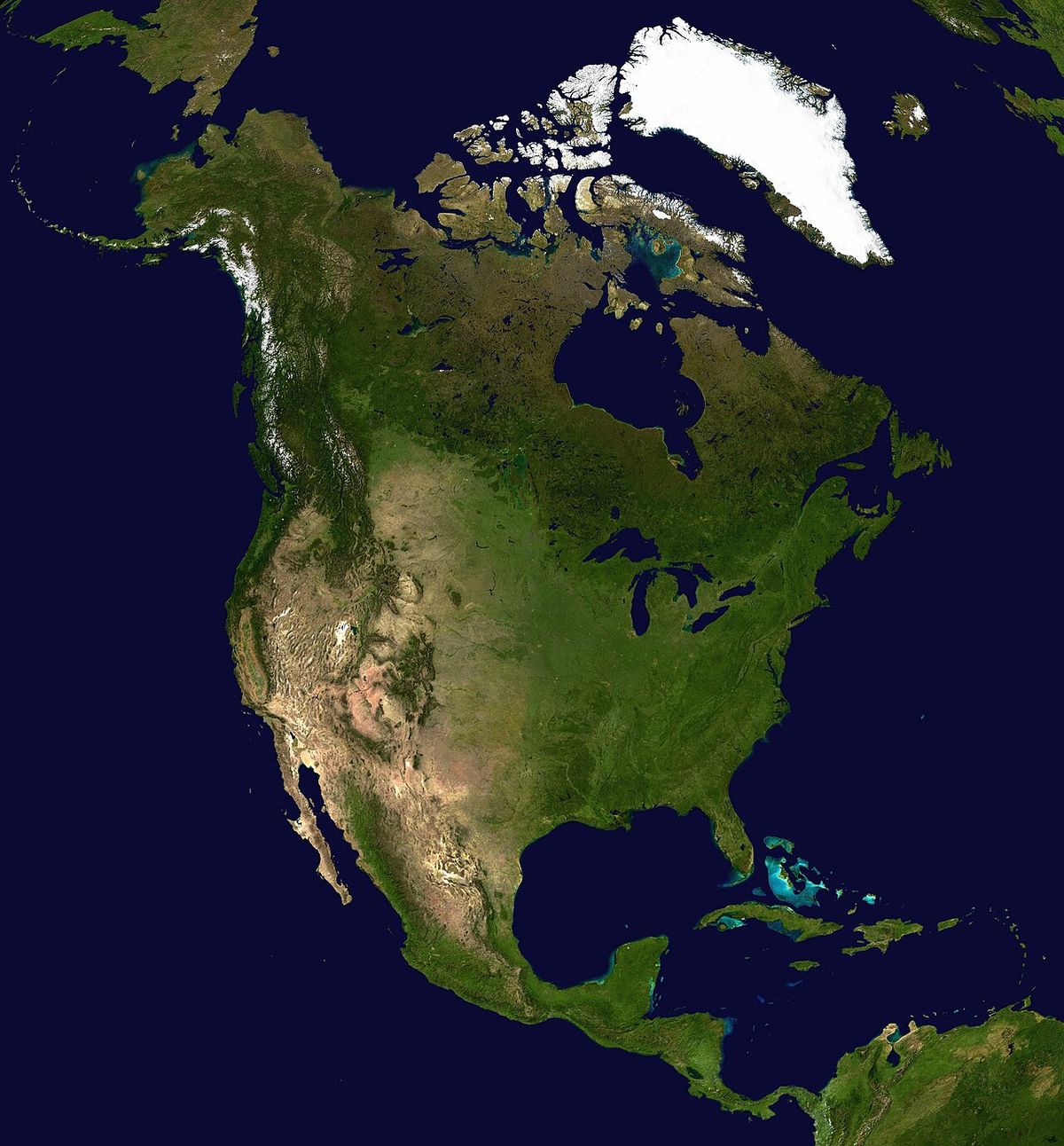
The Mohawk Warrior Society operates within the specific context of the Kanien'kehá:ka Nation, which is one of the most populous Indigenous nations in Québec. Their traditional territory, Iroquoia, spans across the Canada-United States border. This bifurcation by an international border is unique, meaning the Mohawk struggle for sovereignty inherently involves cross-border issues unlike many other Indigenous groups in Canada. The society's activities are deeply connected to these communities. Kahnawake, meaning 'Land Where the Partridge Drums,' is the birthplace of the modern Warrior flag and the site of the 1973 standoff. Kanesatake was the epicentre of the Oka Crisis. The society's cross-border nature is a historical reality, as their territory predates the imposition of the border. Their political actions sometimes involve coordination across it, distinguishing them from other warrior societies whose activities are generally contained within a single nation-state's boundaries. The following table outlines the key Mohawk communities in Québec and their association with major Warrior Society events.
| Community | Significance to Warrior Society | Notable Event |
|---|---|---|
| Kahnawake | Birthplace of the society's revival and the Warrior Flag. Site of 1973 standoff. | 1973 police standoff. 1990 Mercier Bridge blockade. |
| Kanesatake | Site of the Pines and the 1990 Oka Crisis standoff. | 78-day Oka Crisis (1990). |
| Akwesasne | Straddles Ontario, Québec, and New York. A community within the traditional territory. | Involved in broader sovereignty issues and cross-border activism. |
The society's existence is a direct response to the pressures faced by these communities. These pressures include land encroachment, environmental degradation, and challenges to their jurisdiction. Their defence of the land is therefore inseparable from the defence of the people and their future as a distinct nation. The community of Kahnawake has deep ancestral roots along the St. Lawrence River. The society's work in all communities is part of ensuring the continuity of Mohawk life and governance in their homeland.
Representation and Media Narratives
The public perception of the Mohawk Warrior Society has been heavily shaped by media coverage, particularly during the Oka Crisis when news reports often focused on dramatic images of armed, camouflaged Warriors, framing the conflict in a way that emphasized confrontation. This coverage, according to scholars and community members, created an image designed to vilify the Mohawk people and their legitimate defence of land. The term 'warrior' itself, with its English connotations of violence, was applied instead of the Mohawk concept Rotisken’rakéhte, which centres on carrying the burden of peace. This linguistic and narrative framing has had a long-term impact, often obscuring the society's roles in community care and its philosophical foundation. Prior to the publication of the society's own auto-history, most available information was journalistic or came from government and police reports biased toward criminalizing Indigenous resistance.
Despite negative portrayals, the Warrior Society and its flag have been reclaimed as potent symbols of pride and resistance. Within Kanien'kehá:ka communities and among wider Indigenous circles, the flag represents unity, survival, and the ongoing fight for self-determination. It is commonly seen at blockades and rallies across Turtle Island. This demonstrates the enduring power of its message. The society's example continues to inspire contemporary movements. It shows the effectiveness of organized, principled defence of Indigenous rights and lifeways. Its history provides a clear lesson on non-hierarchical political organization and the care of the land for all people.
Questions about Mohawk Warrior Society
Who designed the Mohawk Warrior flag and why?
The Mohawk Warrior flag was designed by Karoniaktajeh Louis Hall in 1974. Hall was an artist, writer, and activist from Kahnawake. He first created it as a 'unity flag' or 'Indian flag' for all Indigenous peoples, featuring a long-haired Indigenous man over a sunburst. In the 1980s, he revised it specifically for the Rotisken’rakéhte, replacing the figure with a distinct Kanien’kehá:ka warrior. Hall intended the flag to foster pride in Indigenous identity. Its widespread use during the 1990 Oka Crisis made it an international symbol of Indigenous resistance and unity.
What was the society's role in the Oka Crisis?
During the 1990 Oka Crisis, members of the Mohawk Warrior Society were at the forefront of the 78-day armed standoff at Kanesatake. They, alongside community members, defended a contested area of land known as the Pines from expansion by the town of Oka. In solidarity, the Kahnawake community, supported by Warriors, blockaded the Honoré Mercier Bridge. The society's highly visible role, marked by their camouflage attire and warrior flag, defined media coverage of the crisis. This event brought the Mohawk fight for land and sovereignty to international attention.
Is the Mohawk Warrior Society a violent organization?
The Mohawk Warrior Society's actions are guided by the Great Law of Peace and its duty to defend the people. While it has engaged in armed standoffs when community land and rights are threatened, its scope of work is much broader. Responsibilities include chopping wood for elders and community aid. The term 'warrior' is a translation of Rotisken’rakéhte, which means 'he carries the burden of peace.' Media narratives have often emphasized confrontation, but the society's own writings frame its actions as necessary for cultural survival and self-defence against colonial dispossession.
How is the society connected to the Haudenosaunee Confederacy?
The Mohawk Warrior Society is a specific manifestation of a traditional role within the Haudenosaunee Confederacy's governance system. The Confederacy operates under the Great Law of Peace (Kaianere’kó:wa), which provides for decentralized governance. The Rotisken’rakéhte represents one part of this system, fulfilling duties for the Mohawk people. Similar traditional warrior societies exist for all nations within the Haudenosaunee Confederacy. The society's constitution is the Great Peace itself. Its revival in the late 1960s was part of a broader effort to rebuild traditional Iroquois political structures.
What does Rotisken’rakéhte mean?
Rotisken’rakéhte is the Mohawk name for the Mohawk Warrior Society, and it translates directly to 'he carries the burden of peace.' This term defines the group's core responsibility within the traditional governance of the Great Law of Peace, which is the care, preservation and defence of the Mohawk people and their territory. The society represents the duties of Mohawk men in this system. Its current form was rekindled in the late 1960s after colonial policies disrupted traditional governance. The term shows a concept of peacekeeping that is central to their identity.
Sources and further reading
- Mohawk Warrior Society (Wikipedia)
- La Mohawk Warrior Society : Manuel de souveraineté ... (goodminds.com)
- The Mohawk Warrior Society (btlbooks.com)
- Warrior Societies in Contemporary Indigenous Communities (uppingtheanti.org)
- Oka Crisis: The legacy of the warrior flag (newsinteractives.cbc.ca)
Checked by the Nosy Mag desk. Last updated 2026-10-29.