Coast Salish languages
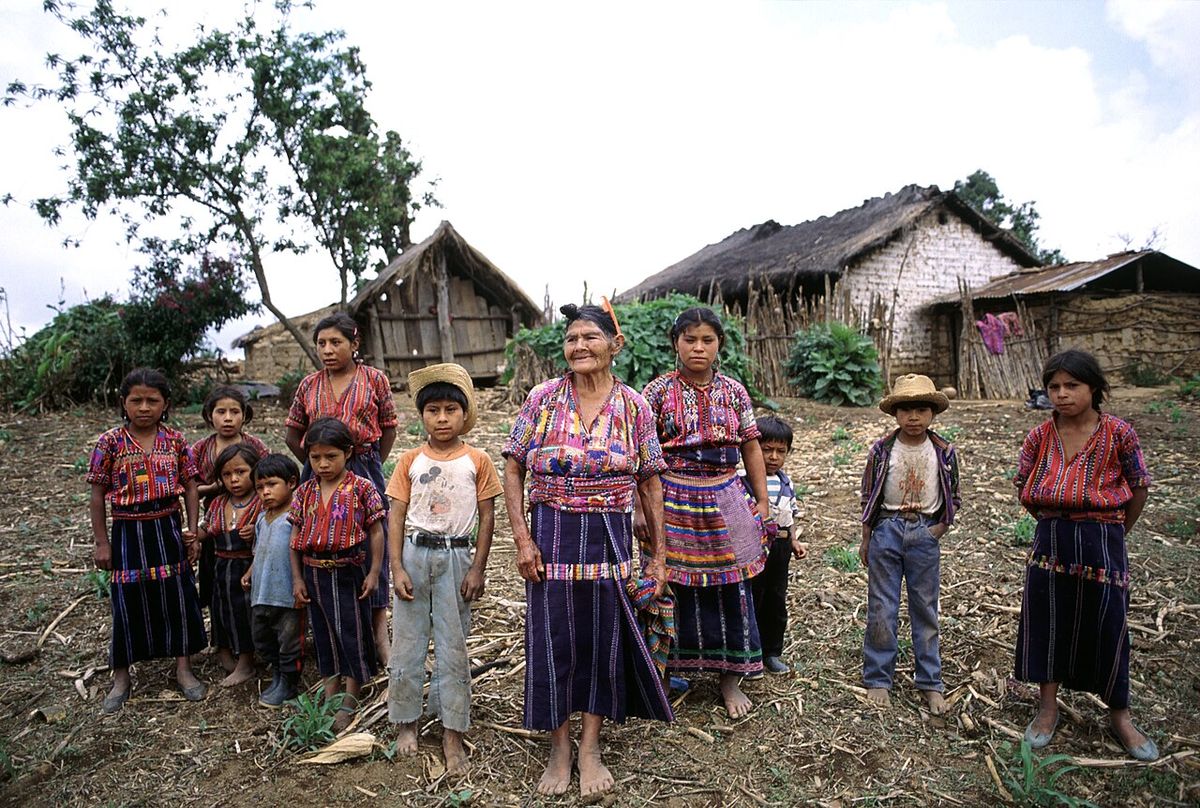
The Coast Salish languages are a branch of the Salishan language family, spoken by Indigenous peoples across the Pacific Northwest region spanning southwestern British Columbia and northwestern Washington State. This language family encompasses many distinct languages and dialects, historically centred around the Strait of Georgia and Puget Sound basins. These languages are integral to the cultural identity and heritage of numerous First Nations and tribes, including the Musqueam, Squamish, Tsleil-Waututh, Cowichan, and Sto:lo in Canada. Today, Coast Salish languages are critically endangered, with revitalization efforts underway to preserve and teach them to new generations of speakers.
Geographic and Historical Context
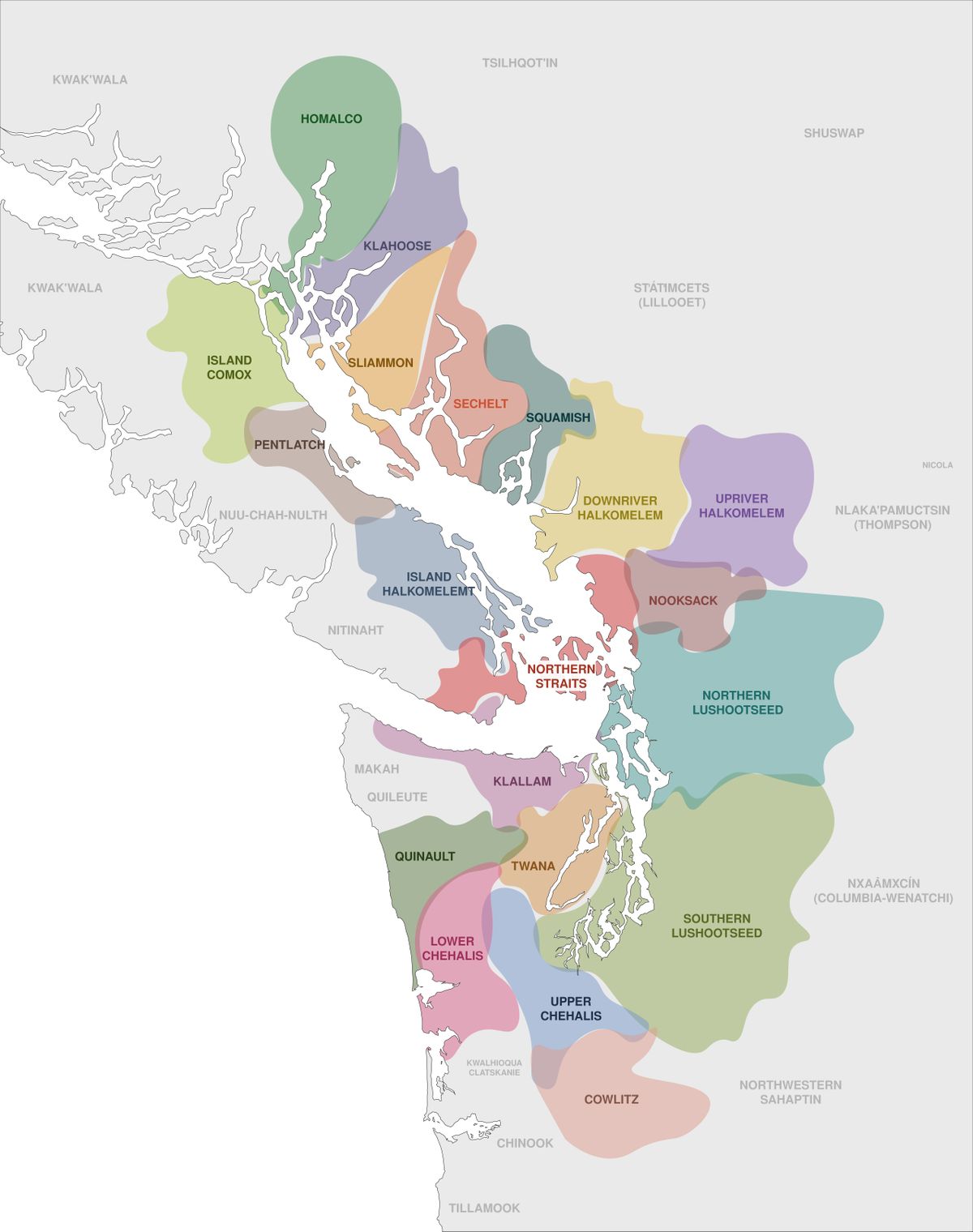
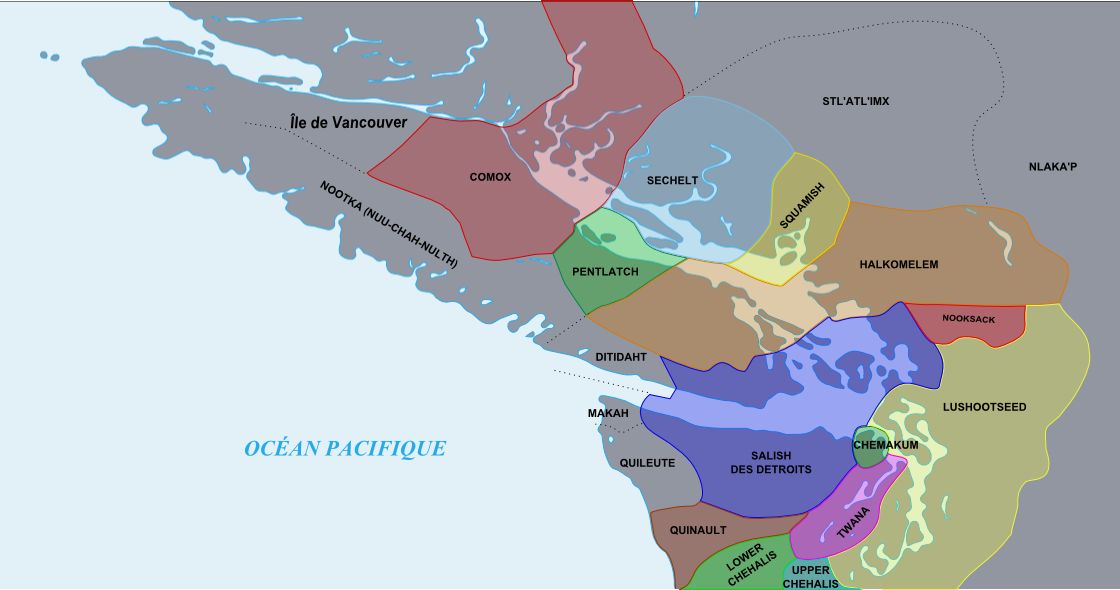
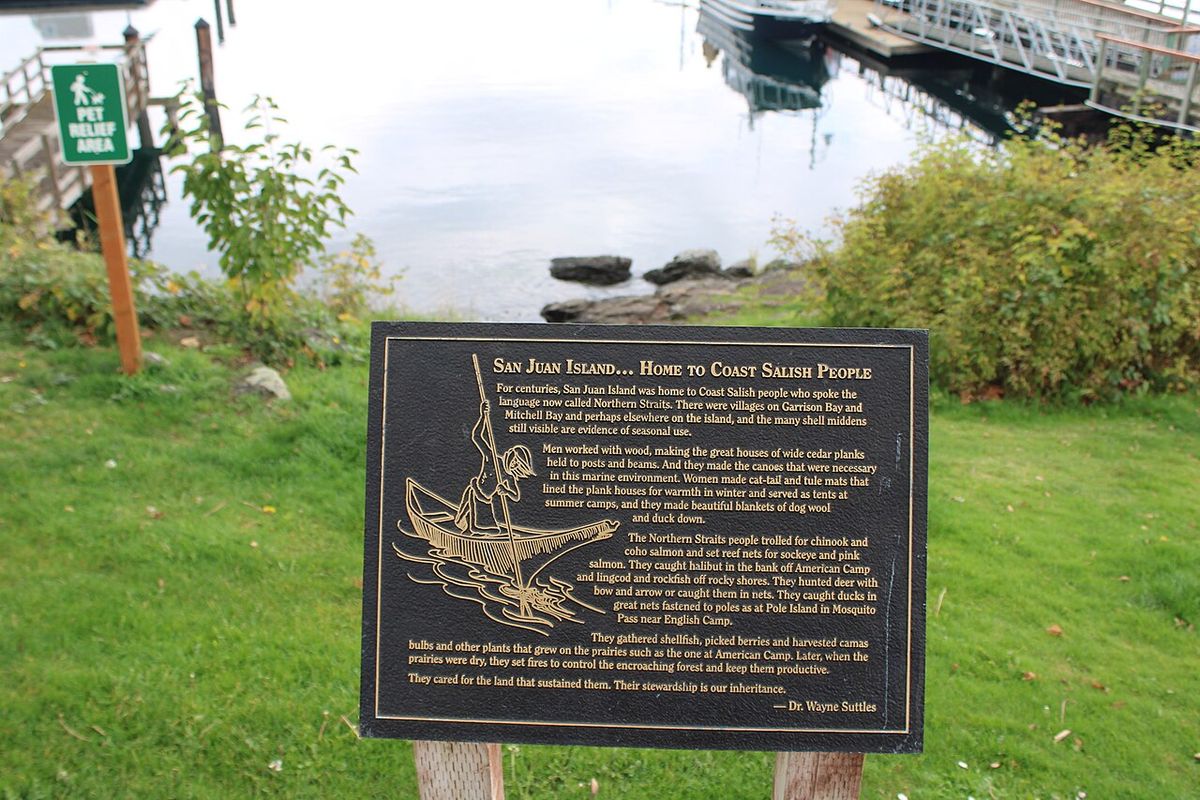
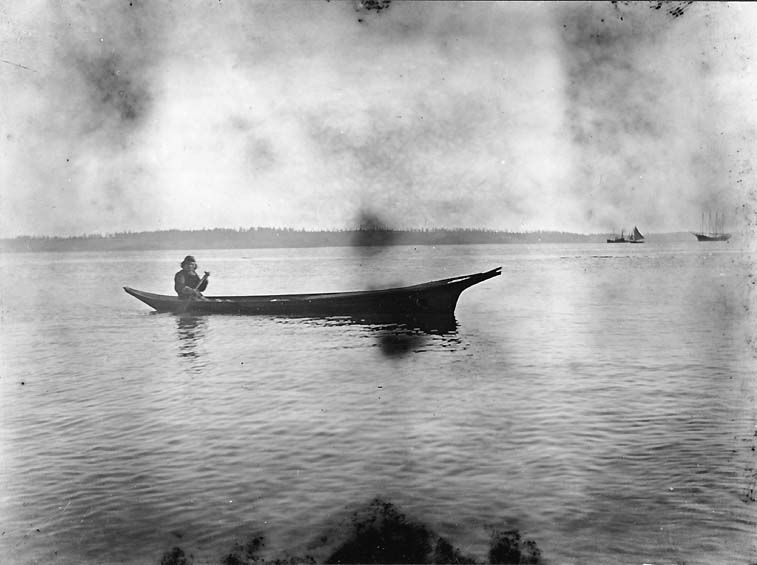
The traditional territory of the Coast Salish languages encompasses the coastal regions and inland waterways of the Pacific Northwest. In Canada, this includes much of the southwest coast of British Columbia, particularly around the Strait of Georgia, Vancouver Island, and the Lower Mainland. In the United States, the languages are spoken around Puget Sound in Washington State. This area includes the sites of modern cities such as Vancouver and Seattle. Archaeological evidence indicates that Coast Salish peoples have inhabited this region for millennia, with some sites showing continuous occupation since around 9000 BCE. The environment, rich in resources like salmon and cedar, deeply shaped the cultures and subsistence patterns of these communities. Historically, people lived in permanent winter villages in large shed-roofed cedar plank houses and moved to temporary camps for summer resource gathering. The Coast Salish languages are also known as the Central Salish languages. The term Coast Salish refers to both the languages and the cultures of the peoples who speak them.
Linguistic Classification and Diversity
The Coast Salish languages form one primary branch within the broader Salishan language family, which also includes Interior Salish languages spoken farther inland. Linguists sometimes debate the inclusion of the Tsamosan and Tillamook languages within the Coast Salish branch, with some classifying them as separate branches. The Coast Salish group itself is not a single language but a family of many related languages and dialects. Major language groups within Coast Salish include Halkomelem, Squamish, Sechelt, and the Northern Straits Salish cluster. To the south, Lushootseed is a major branch encompassing dialects spoken by tribes around Puget Sound. The Nuxálk language of British Columbia's Central Coast has also been considered Coast Salish, as it shares at least one phonological change with the branch, but it also displays similarities to Interior Salish languages. If it is a member, it was the first to split off from the rest. The languages and dialects within the Coast Salish branch are numerous, with some now having no living native speakers, a status often marked in linguistic surveys with a dagger symbol.
Contemporary Speaker Statistics and Vitality
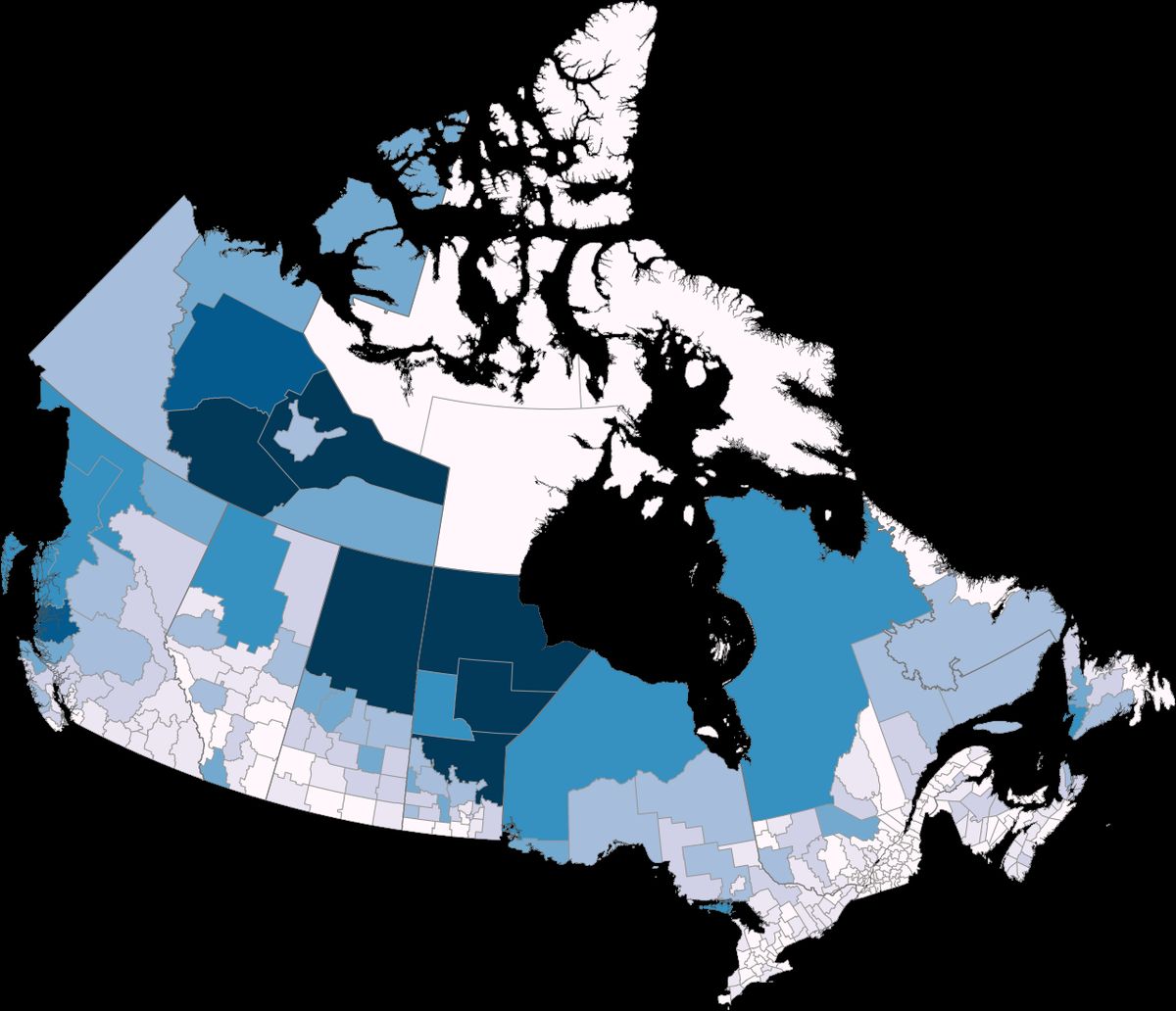
According to data from the 2021 Census of Population, the vitality of Salish languages in Canada presents a mixed picture of ongoing challenge and resilience. A total of 5,305 people in Canada reported being able to speak a Salish language well enough to conduct a conversation. However, only 1,720 people reported a Salish language as their mother tongue, meaning the first language learned in childhood and still understood. This discrepancy indicates significant second-language acquisition. The vast majority of Salish language speakers, 97.0 percent, reside in British Columbia. The average age of Salish language speakers is 40 years. The average age of those with a Salish mother tongue is 50 years, suggesting that transmission within families remains a critical challenge. The second language index shows that for many Salish languages, more people can speak the language than learned it as a first language, pointing to successful adult education programs. The total number of people in Canada speaking any Salishan language was 5,305 in 2021, with about 1,095 speaking one as a mother tongue according to one analysis. The following table shows speaker and mother tongue data for the most commonly reported Salish languages in the 2021 Canadian census.
| Language | Speakers | Mother Tongue |
|---|---|---|
| Halkomelem | 1,410 | 415 |
| Secwepemctsin (Shuswap) | 1,090 | 420 |
| Syilx (Okanagan) | 710 | 240 |
| Ntlakapamux (Thompson) | Data included in aggregate | Data included in aggregate |
| Lillooet | Data included in aggregate | Data included in aggregate |
British Columbia is home to almost all speakers of specific Salish languages. For example, 99.3 percent of Halkomelem speakers live in the province. Similarly, 98.3 percent of Lillooet speakers and 97.9 percent of Syilx speakers reside in British Columbia. The category 'Salish languages, not included elsewhere' also had 91.5 percent of its speakers living in the province. The Salish languages are most commonly spoken in the province of British Columbia. The distribution of Salishan languages at the beginning of the 19th century showed a wide geographic spread.
Causes of Language Endangerment
The endangered status of Coast Salish languages is a direct result of colonial policies and historical trauma. The arrival of European explorers and traders in the 18th century began a period of deep change. The establishment of trading posts like Fort Langley in Halkomelem territory and Fort Victoria in Lekwungan territory by the Hudson's Bay Company drew settlers into the region. Devastating smallpox epidemics in the 18th and 19th centuries caused catastrophic population decline, disrupting communities and knowledge transmission. One epidemic in 1862 killed an estimated 14,000 Northwest Coast Indians from April to December that year alone. In the mid-19th century, the Douglas treaties were signed on Vancouver Island between 1850 and 1854. The most damaging policy was the Canadian federal Indian residential school system, which actively sought to assimilate Indigenous children by forbidding them from speaking their ancestral languages. This systematic suppression across generations created a rupture in intergenerational language transfer. The potlatch ceremony was also banned by Canadian law, suppressing a key ceremonial context for language use.
Revitalization and Preservation Efforts
In recent decades, concerted efforts by First Nations, educational institutions, and community organizations have aimed to reverse language loss. Revitalization programs operate at multiple levels, from early childhood immersion to adult language classes. Many communities have developed dictionary and grammar projects, as well as recorded oral histories with Elders to preserve linguistic knowledge. Universities and colleges, such as the University of British Columbia and Simon Fraser University, offer courses in languages like Halkomelem. Digital technology plays an increasingly important role, with online courses, mobile apps, social media groups, and audio-video archives making learning resources more accessible. Notable initiatives include the work of the Upper St̓át̓imc Language Culture and Education Society for Lillooet and online platforms for learning Secwepemctsin and Nłeʔkepmxcín. Public performances, such as Carlyn Andres of the Katzie First Nation singing the Beatles song 'Blackbird' in hən̓q̓əmin̓əm̓ in June 2019, help raise awareness of these endangered languages. The internal classification of the Salishan family is complex, with linguists proposing different models ranging from one to three main branches for the coastal languages.
- University and college credit courses in Indigenous languages, such as those at Thompson Rivers University for Secwepemctsín.
- Community-based immersion programs for children and adults run by First Nations education authorities.
- Creation of dictionaries, textbooks, and orthographies, like the Lushootseed dictionary published by the University of Washington Press.
- Digital archives of Elder recordings and oral histories, including audio lessons on platforms like SoundCloud.
- Development of language learning apps and online modules for self-study.
- Use of social media and video platforms like YouTube for lessons and practice.
- Incorporation of language into public art, signage, and official ceremonies to normalize its use.
- Theoretical reconstruction of Proto-Salish syntax and phonology is an active area of linguistic research.
Cultural Significance and Practices
Coast Salish languages are deeply intertwined with the worldviews, legal traditions, and artistic expressions of their peoples. The potlatch ceremony, a complex system of governance and wealth distribution, relies on oratory in the ancestral language to confer names, status, and rights to hunting and fishing territories. Like other Northwest Coast Indigenous peoples, the Coast Salish are known for their art, with house posts and design motifs featuring animals and spiritual beings. Oral histories and legends are primary vehicles for transmitting cultural values and history. The story of how Old-Man-In-The-Sky created the world, animals, and humans is one example shared across many Coast Salish nations. These stories highlight the sacred importance of creatures like salmon and resources like red cedar. The languages themselves are considered sacred, embodying the unique relationship between the people and their territory. Traditional ecological knowledge about the environment and resource management is encoded within the language. The Coast Salish languages are spoken around most of the Georgia and Puget Sound Basins.
Notable First Nations and Communities
Numerous First Nations in British Columbia are Coast Salish peoples who speak or historically spoke languages from this family. These nations, while distinct, share strong cultural and familial ties. The Halkomelem language group is particularly widespread, encompassing many First Nations in British Columbia including the Sto:lo, Cowichan, Musqueam, and Tsleil-Waututh. The Northern Straits Salish language is spoken by the WSÁNEĆ peoples. Key Coast Salish First Nations in Canada include the Musqueam, Squamish, and Tsleil-Waututh, whose traditional territories are in the Vancouver area. Other significant nations are the Cowichan Tribes, the Sto:lo Nation, the Stz'uminus First Nation, and the Snuneymuxw First Nation. The term Coast Salish also specifically includes six First Nations on Vancouver Island: Cowichan, Chemainus, Penelakut, Lyackson, Halalt and Lake Cowichan. In Washington State, tribes such as the Suquamish, Tulalip, Swinomish, and Puyallup speak dialects of Lushootseed. These communities are at the forefront of contemporary language revitalization, legal battles for land rights, and the continuation of Coast Salish cultural practices.
The Salishan Language Family Structure
The Coast Salish languages belong to the larger Salishan language family, a subfamily of North American Indigenous languages spoken from the Pacific coast to the Rocky Mountains. The Salishan family is comprised entirely of endangered or highly endangered languages with low rates of fluent speakers. In Canada, Halkomelem, Shuswap, and Okanagan are the most spoken languages within this broader family. The total number of people in Canada speaking any Salishan language was 5,305 in 2021. The distribution of Salishan languages at the beginning of the 19th century showed a wide geographic spread. The internal classification of the Salishan family is complex, with linguists proposing different models ranging from one to three main branches for the coastal languages. The theoretical reconstruction of Proto-Salish syntax and phonology is an active area of linguistic research, helping to understand the historical relationships between languages like Coast Salish and Interior Salish. The Salishan family is a distinct linguistic family with no proven genetic relationship to other major North American language families.
Questions about Coast Salish languages
How many people speak Coast Salish languages today?
According to the 2021 Canadian census, 5,305 people reported the ability to speak a Salish language well enough to conduct a conversation. Of these, 1,720 people reported a Salish language as their mother tongue. The most spoken Salish language in Canada is Halkomelem, with 1,410 speakers. These numbers include both Coast Salish and Interior Salish languages. The number of people who can speak a Salish language is higher than the number who learned it as a mother tongue, indicating active second-language learning. The average age of Salish language speakers is 40 years.
What is the difference between Coast Salish and Interior Salish?
Coast Salish and Interior Salish are two primary branches of the larger Salishan language family. The key difference is geographic and cultural. Coast Salish languages are spoken by peoples inhabiting the Pacific Northwest coast, around the Strait of Georgia and Puget Sound. Interior Salish languages are spoken by peoples living farther inland, in the plateau regions of British Columbia and the northwestern United States. While related, the languages from these two branches are not mutually intelligible. Culturally, Coast Salish peoples have traditions more focused on maritime resources and cedar, while Interior Salish cultures are adapted to river and land-based resources of the interior plateau.
Are Coast Salish languages related to other Indigenous language families?
Coast Salish languages are part of the Salishan language family, which is considered a distinct linguistic family with no proven genetic relationship to other major North American language families like Athabaskan or Algonquian. The Salishan family is its own linguistic isolate within the continent. The family is divided into branches, with Coast Salish being one of them, alongside Interior Salish and possibly others like Tsamosan. The languages within the Salishan family share a common ancestral language, Proto-Salish, but have diverged significantly over time. Linguists study phonological changes to trace these historical relationships.
What are some examples of Coast Salish words?
Many Coast Salish words reflect the deep connection to the local environment. For instance, the Halkomelem word for 'thank you' is 'huy ch q'u'. Place names throughout British Columbia and Washington are often of Coast Salish origin. The name for the city of Seattle originates from the name of a Duwamish and Suquamish leader, Si'ahl. Learning and using these original words is a key part of language revitalization and acknowledging the Indigenous history of the land. Community language guides, such as the Kwikwetlem First Nation's Halq'eméylem Language Guide, provide accessible vocabulary for learners.
Why are Coast Salish languages endangered?
Coast Salish languages are endangered primarily due to the devastating impacts of colonialism. Historically, introduced diseases like smallpox caused massive population loss in the 18th and 19th centuries, with one 1862 epidemic killing an estimated 14,000 people. The forced assimilation policies of the Canadian and American governments, most notably the residential school system, actively punished children for speaking their languages, severing intergenerational transmission. The potlatch was also banned by Canadian law, suppressing a key ceremonial context for language use. Urbanization, displacement from traditional lands through treaties like the Douglas treaties, and the dominance of English in all spheres of life further marginalized these languages.
How can I support Coast Salish language revitalization?
You can support language revitalization efforts by educating yourself about the history and current status of the languages and the nations that speak them. Attend public cultural events and ceremonies when invited, and listen to the language being spoken. Support Indigenous-led organizations and artists who incorporate language into their work. If you are an educator, advocate for the inclusion of accurate Indigenous content and language resources in curricula. Follow the lead of the Indigenous communities themselves, respecting their protocols and intellectual property regarding their languages. Financial support for community language programs is also crucial. Using and promoting authentic educational resources helps sustain these vital projects.
Sources and further reading
- Coast Salish languages (Wikipedia)
- Salish Languages | Centre for Indigenous Knowledges and ... (yorku.ca)
- Coast Salish (thecanadianencyclopedia.ca)
- Indigenous Language Families: Salish languages (www150.statcan.gc.ca)
- Coast Salish, Indigenous Languages of Washington State (tacomacc.libguides.com)
Checked by the Nosy Mag desk. Last updated 2026-10-27.