Canoe
The canoe is a lightweight, narrow watercraft, typically pointed at both ends and open on top, propelled by paddlers using single-bladed paddles. It was developed by cultures worldwide and was an important means of transport, trade, and exploration, particularly across North America. For Indigenous peoples in what is now Canada, such as the Algonquin and Anishinaabe, the birchbark canoe was essential to daily life, trade networks, and cultural identity. Today, the canoe remains a symbol of cultural heritage and continuity, central to modern revitalization movements, recreational paddling, and Olympic sport.
Origins and Global Development
The origins of the canoe are ancient and global, with the earliest known examples being dugouts carved from single tree trunks. Archaeological discoveries include the Dufuna canoe in Nigeria, dating to 8500 to 8000 BC, and the Pesse canoe in the Netherlands from 8200 to 7600 BC. In the pre-Columbian Caribbean, dugout canoes were the only means for ancient Amerindian groups to colonize the islands from mainland South America around 3500 BC. These Caribbean canoes, potentially made from mahogany or cedar trees, ranged in size from small fishing craft to large vessels reportedly capable of carrying 40 to 50 people. The debate continues among archaeologists regarding whether these ocean-going canoes used sails, as no direct evidence has been found. Across the Pacific Northwest, Indigenous groups like the Quinault and Kootenai developed specialized dugout styles from western red cedar or yellow cedar for specific purposes such as river travel, whale hunting, and stability on windy lakes.
In Australia, Aboriginal peoples constructed bark canoes using sheets of bark from trees like red gum, which were shaped, fired, and stitched. These porous vessels typically lasted about two years and were used mainly for fishing and crossing waterways. A sewn or pleated variation was also made from stringybark gum. In the Amazon basin, Indigenous communities commonly used dugouts made from Hymenaea trees. The English word 'canoe' is believed to have entered the language from the Spanish 'canoa', which itself likely derived from the Taino word 'kanawa' used for dugout vessels, as recorded by Christopher Columbus in 1493.
Indigenous Canoe Cultures in North America
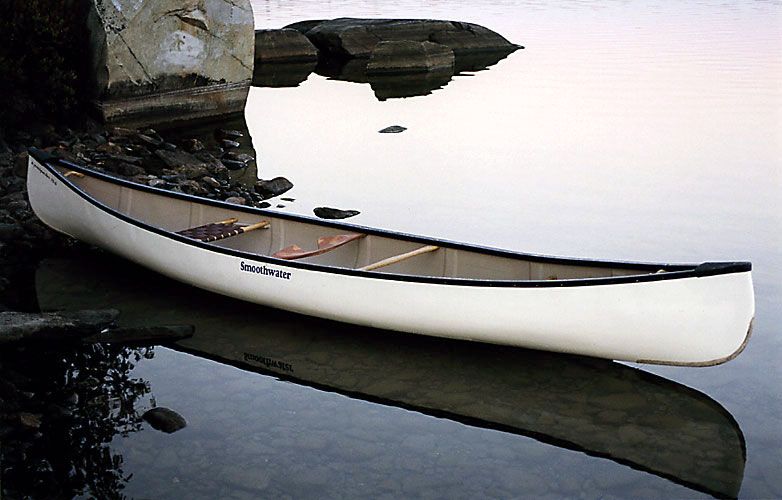
For millennia, the canoe was foundational to the lifeways of Indigenous peoples across North America. In the eastern woodlands, nations including the Algonquin and Anishinaabe engineered the birchbark canoe. Built with a frame of white cedar and ribs fastened with watap root lashings, the hull was skinned with waterproof bark from the paper birch, sealed with balsam fir pitch. This design resulted in a craft that was remarkably light, often around 23 kilograms, yet capable of carrying significant cargo through shallow waters and rapid streams. The specific design and build of a canoe could indicate tribal identity, serving as a marker of cultural distinction. These vessels were central to establishing extensive Indigenous trading networks long before European contact.
On the Northern Pacific Coast, cultures such as the Heiltsuk and Haida crafted massive dugout canoes from western red cedar for ocean travel. These canoes were designed for specific functions including war, trade, and hunting great whales, and were engineered for both open coastal waters and smaller channels. The sophistication of these watercraft was immediately recognized by early European explorers and settlers. French missionary René de Bréhant de Galinée, exploring the Great Lakes in 1669, praised their convenience for waters full of cataracts and rapids, where portaging was essential. The birchbark canoe became instrumental in the European exploration of the continent, used by figures like Samuel de Champlain, Alexander Mackenzie, and the Lewis and Clark Expedition.
The Canoe in the Fur Trade and Colonial Expansion
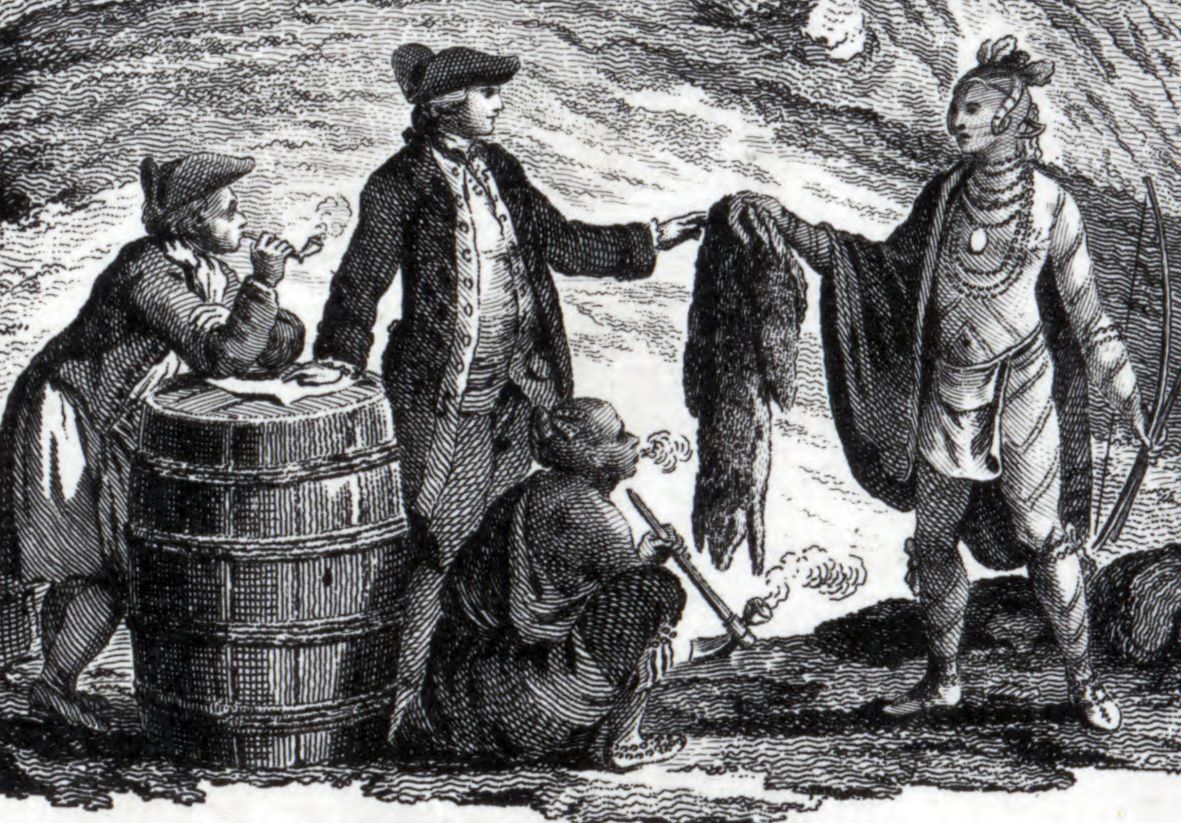
The North American fur trade of the 17th to 19th centuries was built on the efficiency of Indigenous canoe technology, which was adopted and adapted by European voyageurs. The Hudson's Bay Company relied on a hierarchy of canoe types designed for specific legs of the arduous supply routes. The largest was the rabaska, or canot du maître, measuring about 11 metres long. It was designed for the long haul from Montreal to Lake Superior and could carry 60 packs weighing 40 kilograms each, manned by a crew of eight or ten. Henry Schoolcraft described it as one of the most eligible modes of conveyance on the lakes. The workhorse of the interior trade was the canot du nord, about half the size of the rabaska. It could carry roughly 35 packs and was manned by four to eight men, and it was light enough to be portaged by two. For urgent communication, the express canoe or canot léger, about 4.6 metres long, was used to carry people, reports, and news. This canoe-based supply system extended over 6,500 kilometres from Montreal to the Pacific Ocean and the Mackenzie River. The demand from fur traders led to a commercial exchange where early settlers purchased canoes from Indigenous builders and hired Indigenous river guides, acknowledging their superior skill in managing the waterways.
Evolution of Materials and Recreational Canoeing
The 19th century saw the evolution of canoe construction in North America, moving from traditional Indigenous methods to new materials adopted by colonial boatbuilders. The birch-on-frame technique inspired the wood-and-canvas canoe, where a waterproofed canvas shell was fastened to internal planks and ribs by boat builders such as Old Town Canoe, E. M. White Canoe, Peterborough Canoe Company and at the Chestnut Canoe Company in New Brunswick. Though similar to bark canoes in the use of ribs, and a waterproof covering, the construction method is different, being built by bending ribs over a solid mold. With industrialization, the canoe's primary purpose shifted from essential transport to popular recreation. This transition was heavily influenced by figures like John MacGregor, whose writings popularized canoeing and led to the founding of the Royal Canoe Club in London in 1866 and the American Canoe Association in 1880.
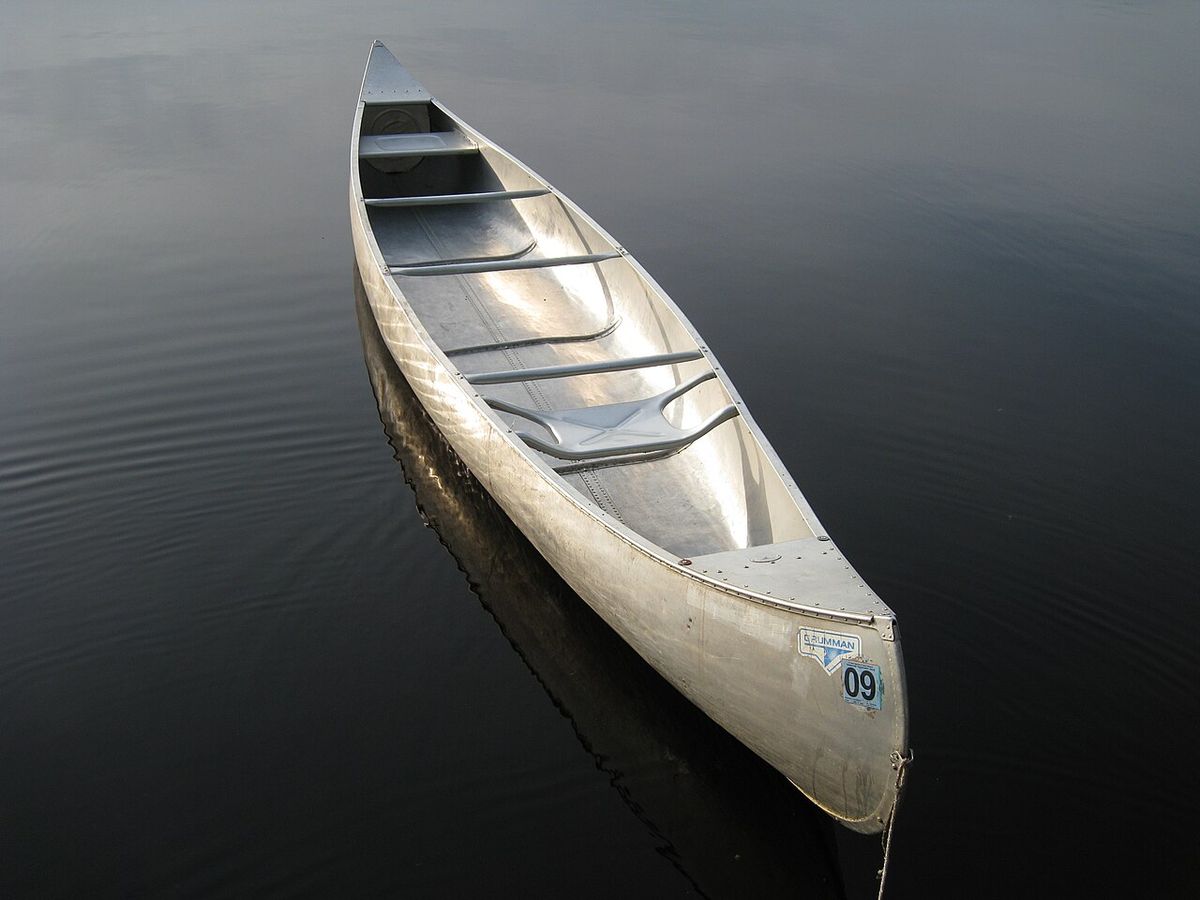
The 20th century introduced more durable and affordable materials, making canoeing accessible to the masses. Following the Second World War, the Grumman company began manufacturing canoes from the same aluminum used for airplane floats, producing vessels that were lighter, stronger, and more affordable than wood models. By the 1960s and 1970s, materials like fiberglass and new composites further advanced design. This period also saw a surge in whitewater canoeing as a sport, fueled by the first Slalom World Championships in 1949 and the inclusion of Canoe Slalom in the 1972 Munich Olympic Games. The commercial whitewater industry grew, with companies like Ontario's Madawaska Kanu Centre opening in 1972. Today, recreational paddling is a major industry.
Canoeing as Sport and Olympic Discipline
Canoeing has been formally organized as a competitive sport since the late 19th century, with national bodies like the Canadian Canoe Association founded in 1900. The sport gained Olympic status at the 1936 Berlin Games, following a demonstration at the 1924 Paris Olympics. The International Canoe Federation, formed in 1946, is the global governing body. Olympic canoeing is divided into two main disciplines under the umbrella terms Canoe Slalom and Canoe Sprint, each featuring separate events for canoes and kayaks. In official competition, the American distinction between a canoe and a kayak is adopted, where a canoe is typically paddled from a kneeling position with a single-bladed paddle.
- 1924 Paris Olympics: Sprint canoeing is featured as a demonstration sport.
- 1936 Berlin Olympics: Canoe Sprint becomes an official Olympic discipline.
- 1949: First Canoe Slalom World Championships are held.
- 1972 Munich Olympics: Canoe Slalom is introduced as an Olympic sport.
The performance of a racing canoe is heavily influenced by its hull design, which must meet different and often conflicting requirements for speed, carrying capacity, maneuverability, and stability. Key design elements include the length of the waterline, as a longer waterline relative to displacement allows a canoe to be paddled faster. The beam width is also crucial, where a wider boat provides more stability at the expense of speed. Racing regulations often use specific measurements like the 4" waterline beam, where the displacement is taken into account, to ensure fairness in competition classes. The hull shape, such as a flat bottom for stability or a V-bottom for speed, is another important factor for performance in racing.
Contemporary Cultural Revitalization and Events
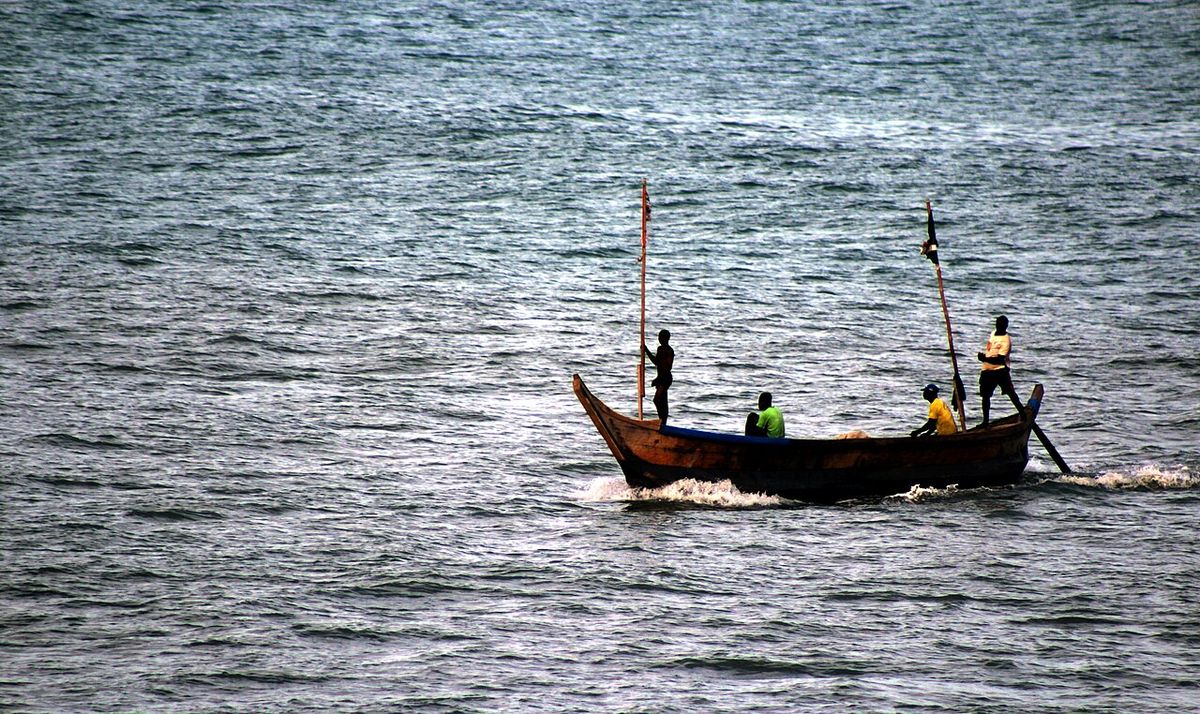
A powerful movement to revitalize Indigenous canoe traditions has been growing since the late 20th century, particularly among coastal First Nations in British Columbia and Washington State. Beginning in the 1980s, nations like the Heiltsuk and Haida were early leaders, organizing events such as the Paddle to Expo 86 in Vancouver. This culminated in the first Qatuwas canoe festival at Bella Bella in 1993, which drew canoes from across the coast. The movement has evolved into ongoing Tribal Journeys, where canoe families travel ancestral waterways to gather in host communities. These journeys are acts of cultural reclamation, supporting youth empowerment, community healing, and environmental stewardship.
Major contemporary events and exhibitions highlight this living tradition. In summer 2026, more than 100 Indigenous canoes will travel to the Nisqually homeland for the Paddle to Nisqually Medicine Creek. From June 20, 2026, to January 2027, the Canada Science and Technology Museum in Ottawa will host 'Sacred Journey', an immersive, Heiltsuk-led exhibition exploring the cultural and technological significance of ocean-going canoe traditions. The exhibition will also feature Anishinaabe Algonquin canoe culture. Organizations like the Pulling Together Canoe Society use canoe journeys to help Indigenous youth reconnect with culture and waterways, with a 2026 theme of 'Reclaiming Our Waters'. Cultural festivals also thrive, such as the Canoe Cultures Tatus Festival at the PNE Fairgrounds in September 2026, featuring Indigenous music, arts, and a marketplace with over 50 artisans.
Preservation and Major Collections
The preservation of canoe history and technology is a dedicated focus for several Canadian institutions. The premier organization is the Canadian Canoe Museum in Peterborough, Ontario, which stewards the world's largest and most significant collection of canoes, kayaks, and paddled watercraft. Housed at 2077 Ashburnham Drive, the museum is situated on Treaty 20 Michi Saagiig territory and acknowledges the contributions of First Nations, Inuit, and Métis peoples. Its mission is to honour and share the cultural histories within its collection. The museum's holdings include historic birchbark canoes, fur trade vessels like the rabaska, and modern racing craft, telling a comprehensive story of the canoe's evolution and cultural importance. Other museums also play key roles in interpreting canoe heritage. The Ingenium family of museums in Ottawa, which includes the Canada Science and Technology Museum, actively develops exhibitions like 'Sacred Journey' that position Indigenous canoe knowledge as a vital part of Canada's innovation landscape. These institutions highlight the sophisticated engineering and environmental expertise embedded in traditional canoe building. The resurgence of building traditions, once nearly lost, is also a form of living preservation. Artisans and communities continue to build canoes using both traditional and modern methods, ensuring the knowledge and skills are passed to new generations.
Questions about Canoe
What is the difference between a canoe and a kayak?
In modern recreational and Olympic contexts, the primary difference lies in the paddling position and paddle type. Canoeists typically kneel inside the open boat and use a single-bladed paddle, while kayakers sit with legs extended and use a double-bladed paddle. In British English, the term 'canoe' can sometimes refer to kayaks, leading to the use of 'Canadian canoe' or 'open canoe' for clarity. For official competition under the International Canoe Federation, the American distinction is adopted, with separate Olympic events for Canoe and Kayak in both slalom and sprint disciplines.
What were canoes originally made from by Indigenous peoples in Canada?
Indigenous peoples used materials available in their local environments. In the eastern woodlands, the birchbark canoe was constructed by stretching waterproof bark from the paper birch over a lightweight frame of white cedar, sealed with balsam fir pitch. On the Pacific Coast, nations like the Heiltsuk and Haida crafted large dugout canoes by hollowing out massive trunks of western red cedar. In some regions where birch was scarce, other types of bark or hide were used.
How did the canoe contribute to the exploration of Canada?
The canoe was essential to the European exploration of the Canadian interior. Early explorers and fur traders quickly adopted the efficient Indigenous designs. Samuel de Champlain used canoes to reach Georgian Bay in 1615. The fur trade's continent-spanning network, from Montreal to the Mackenzie River, relied entirely on canoes like the large rabaska and the agile canot du nord. Explorers such as Alexander Mackenzie, David Thompson, and the Lewis and Clark Expedition all depended on canoes for their historic journeys.
Is canoeing an Olympic sport?
Yes, canoeing has been part of the Olympic program since the 1936 Berlin Games. Olympic canoeing is governed by the International Canoe Federation and features two main disciplines: Canoe Sprint on flat water and Canoe Slalom on whitewater. Both disciplines hold separate events for canoes and kayaks. Canoe Slalom was first introduced at the 1972 Munich Olympics.
What is the significance of modern Indigenous canoe journeys?
Contemporary Indigenous canoe journeys are acts of cultural revitalization, reconnection, and resilience. Events like Tribal Journeys bring together canoe families from many nations to travel ancestral waterways. These journeys strengthen community bonds, empower youth by connecting them to traditional knowledge, and assert Indigenous presence and stewardship on the water. Major gatherings, such as the 1993 Qatuwas festival, have been central in reigniting this tradition across the Pacific Northwest.
Where can I see historic and cultural canoes in Canada?
The premier destination is the Canadian Canoe Museum in Peterborough, Ontario, which holds the world's largest collection of canoes and kayaks. Its exhibits present the full history from Indigenous birchbark canoes to modern racing craft. National museums like the Canada Science and Technology Museum in Ottawa host special exhibitions. One such exhibition is 'Sacred Journey' scheduled for 2026, which will focus on Indigenous canoe traditions. These institutions provide the main public venues for viewing historic and cultural canoes within Canada.
Sources and further reading
- Canoe (Wikipedia)
- Canada's History with Whitewater Canoeing (mkc.ca)
- New exhibition brings Indigenous canoe traditions to life at the ... (ingenium.ca)
Checked by the Nosy Mag desk. Last updated 2026-11-01.