Stadacona
Stadacona was a 16th-century St. Lawrence Iroquoian village located at the present site of Quebec City, Quebec. The village played a major role in the early history of New France, serving as the site of the first attempted permanent French settlement. Its name, through the Iroquoian word 'Kanata' meaning 'town', provided the origin for the name 'Canada'. Its eventual disappearance and the fate of its people remain significant subjects in the study of pre-colonial and early contact history in North America.
Village Life and Location
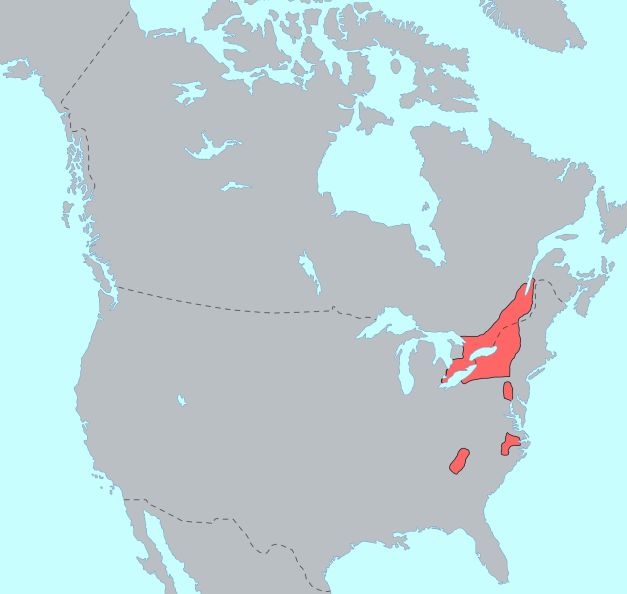
The St. Lawrence Iroquoian village of Stadacona was established sometime between 1300 CE and 1500 CE, flourishing for over two centuries before European contact. It was a sizable settlement with an estimated population ranging from 500 to 800 inhabitants. The village was strategically located near the confluence of the Saint Lawrence and Saint-Charles Rivers, a position that offered access to vital waterways for transportation, fishing, and trade. This location is in what is now the Vieux-Limoilou district of Quebec City. Despite its historical importance, no definitive archaeological evidence of the village has been discovered, leaving its precise layout and boundaries unknown. The community was part of a broader network of St. Lawrence Iroquoian peoples, which included the village of Hochelaga located further upriver near present-day Montreal.
First Contact with Jacques Cartier
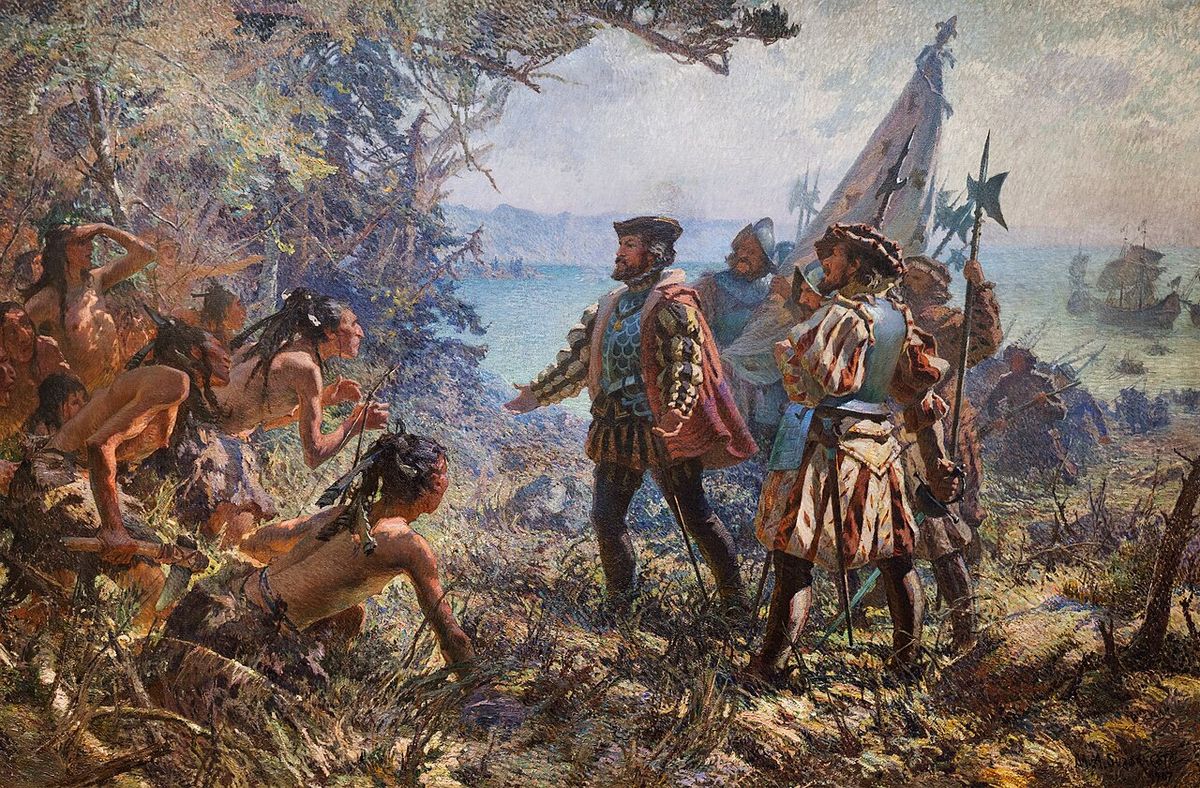
French navigator Jacques Cartier first reached Stadacona in July 1534 during his initial voyage of exploration. He was met by the village's chief, Donnacona, who demonstrated the community's ongoing conflicts by showing Cartier five scalps taken in a war with a neighbouring people, likely the Mi'kmaq, referred to as the Toudaman. Donnacona recounted that this group had attacked one of their forts the previous spring, killing 200 inhabitants. Despite initial hospitality, Cartier seized Donnacona and other villagers before later releasing the chief. Donnacona agreed to let his two sons, Taignoagny and Domagaya, accompany Cartier back to France for a year. This first encounter set a precedent for future relations, mixing exchange with coercion.
Cartier returned to Stadacona with Donnacona's sons on his second voyage in 1535. It was during this visit that Cartier recorded the linguistic moment where the Indigenous guides used the word 'Kanata' to refer to their home, a word meaning 'town' or 'village' in their language. This term would eventually be borrowed to designate the entire country. Cartier's decision to continue his journey up the Saint Lawrence to Hochelaga against the wishes of the Stadaconans created tension, as they sought to maintain a trading monopoly for European metal goods with upstream tribes. This act undermined their authority and economic position in the regional network.
The Winter of 1535 to 1536 and Its Consequences
Cartier and his crew decided to overwinter near Stadacona in 1535 to 1536, establishing a base at a safe distance across the Saint-Charles River. The winter proved devastating for both groups due to disease and malnutrition. Scurvy broke out among the French crew, ultimately killing a quarter of Cartier's men. The Stadaconans provided a cure, a vitamin C-rich broth made from the fronds of the white cedar tree, which effectively saved the remaining Europeans. In a tragic exchange, European viral and bacterial diseases to which the Indigenous population had no immunity swept through Stadacona, killing more than 50 inhabitants. This episode starkly illustrated the catastrophic health consequences of cross-cultural contact that would repeat across the continent.
Following this difficult winter, and before his return to France in 1536, Cartier committed a decisive act of betrayal. He seized Chief Donnacona, his two sons Taignoagny and Domagaya, and seven other inhabitants of Stadacona, taking them back to Europe against their will. Of the ten Indigenous people kidnapped, nine died in France, with only a young girl surviving. None of them ever returned to North America. This kidnapping removed the community's leadership and further poisoned relations between the Stadaconans and future European visitors, setting a pattern of exploitation.

Abandonment and Theories of Disappearance
Jacques Cartier returned to the region in 1541, establishing a short-lived settlement at Cap Rouge upstream from Stadacona. By the time he came back to Stadacona itself in 1543, he found the village completely abandoned and destroyed, likely by an unknown enemy. Samuel de Champlain noted that the valley was then travelled mainly by war parties of the Innu (Montagnais) and Haudenosaunee (Iroquois). Several theories have been proposed to explain the disappearance of the Stadaconans and their kin, with most historians citing a combination of factors rather than a single cause.
- Warfare with the Haudenosaunee: The village may have been destroyed by the Mohawk or other nations of the Iroquois (Haudenosaunee) Confederacy to the south, who were engaged in expansive warfare.
- Conflict with Northern Neighbours: They may have been driven out by the Innu (Montagnais-Naskapi) and Algonquin peoples from the north.
- Adoption by the Wendat (Huron): There is some evidence that refugees from Stadacona and Hochelaga were adopted by the Huron-Wendat Confederacy.
- Devastation by European Diseases: Epidemics introduced by Cartier's crews could have decimated the population, leaving them vulnerable to attack.
- Environmental Stress: Poor harvests caused by climatic changes may have undermined the community's stability and food security.
The most widely accepted explanation for the disappearance of the St. Lawrence Iroquoians is a combination of several factors. Warfare and disease are considered to have played primary roles in their dispersal. Some evidence suggests refugees from villages like Stadacona and Hochelaga were adopted by the Huron-Wendat nation. Theories also include that they were dispersed by the southern Haudenosaunee, such as the Mohawk, or succumbed to European diseases.
Historical Significance and Legacy
Stadacona holds a foundational place in Canadian history. Its encounter with Jacques Cartier represents one of the first sustained points of contact between European explorers and Indigenous societies in the region that would become New France. The village's name, through the word 'Canada', provided the eventual name for the entire country. The site of Stadacona was directly chosen by Samuel de Champlain in 1608 as the location for his settlement of l'Habitation, which grew into Quebec City, one of the oldest European cities in North America. This makes Stadacona a direct geographic and historical precursor to the modern capital of Quebec, physically linking Indigenous and colonial histories on the same ground.
The story of Stadacona is a poignant chapter in the broader history of Indigenous peoples in Quebec, which encompasses 11 distinct nations and 55 communities today. The village's fate shows the deep disruptions caused by early contact, including disease, warfare, and cultural dislocation. Its history is commemorated during events like National Indigenous Peoples Day, which celebrates the resilience and contributions of First Nations, Inuit, and Métis peoples across the country. The legacy of Stadacona continues to be a subject of reflection in understanding the deep history of the land upon which Quebec City stands.

Key Figures in Stadacona's History
The history of Stadacona is closely tied to a few individuals from both the Indigenous and European worlds. Chief Donnacona was the primary leader of the village at the time of Cartier's arrival. His interactions with the French explorer were initially diplomatic but ended in tragedy with his kidnapping and death in France. His sons, Taignoagny and Domagaya, acted as guides and interpreters for Cartier after their initial journey to Europe, though they too were ultimately kidnapped and died abroad. On the European side, Jacques Cartier is the central figure, whose voyages documented the village and whose actions directly impacted its destiny. Samuel de Champlain later founded Quebec City at the same site in 1608.
Questions about Stadacona
What does the name Stadacona mean?
The name Stadacona itself is the recorded name of the Iroquoian village. However, its significance is linked to the broader origin of the name 'Canada'. Jacques Cartier recorded that the Indigenous guides used the word 'Kanata' to refer to their home, which in their Iroquoian language meant 'town' or 'village'. This term was eventually applied by Europeans to the surrounding region and later to the entire country.
Where exactly was Stadacona located?
Stadacona was located near the confluence of the Saint Lawrence and Saint-Charles Rivers, in what is now the Vieux-Limoilou district of Quebec City, Quebec. No archaeological trace of the village has been found, so its precise location remains unknown to this day. It is assumed to have been situated on the site where French explorer Samuel de Champlain later chose to establish the colony of l'Habitation in 1608. This settlement eventually grew into the city of Quebec.
What happened to the people of Stadacona?
The people of Stadacona, along with other St. Lawrence Iroquoians, disappeared from the region between Cartier's last visit in 1543 and Champlain's arrival in 1603. Leading theories suggest they were dispersed or destroyed by warfare, likely with the Mohawk of the Haudenosaunee Confederacy or with northern Algonquian-speaking peoples. Other factors include devastating epidemics of European diseases and potential environmental stresses. Some evidence suggests survivors may have been adopted by the Huron-Wendat Confederacy.
How did Stadacona help Jacques Cartier's crew?
During the harsh winter of 1535 to 1536, Cartier's crew was stricken with scurvy, a disease caused by vitamin C deficiency, which killed a quarter of his men. The people of Stadacona provided a cure by showing the French how to make a medicinal broth from the fronds of the white cedar tree. This remedy, rich in vitamin C, saved the remaining crew members. In a tragic turn, the Stadaconans themselves suffered greatly from European diseases introduced by Cartier's men, with over 50 villagers dying that same winter.
Why did Jacques Cartier kidnap people from Stadacona?
Jacques Cartier kidnapped Chief Donnacona, his two sons, and seven other villagers in 1536 to take them back to France. His motivations were likely a combination of wanting to present 'proof' of his discoveries to the French king, to obtain guides and interpreters for future voyages, and to potentially use them as leverage in future dealings. This act was a grave betrayal of the hospitality he had received. Nine of the ten kidnapped individuals died in France, and none returned home.
How is Stadacona connected to modern Quebec City?
Stadacona is the direct Indigenous predecessor to Quebec City. French explorer Samuel de Champlain specifically chose the location of the former village to establish his permanent settlement, l'Habitation, in 1608. This settlement grew into Quebec City. Therefore, the modern city is built upon the same strategic site that the St. Lawrence Iroquoians selected centuries earlier. The legacy of Stadacona is acknowledged in the deep history of the area, though the village itself had been abandoned for over 60 years before Champlain's arrival.
Sources and further reading
- Stadacona (Wikipedia)
- Stadacona (thecanadianencyclopedia.ca)
- Indigenous communities in Quebec (sac-isc.gc.ca)
Checked by the Nosy Mag desk. Last updated 2026-10-29.