Peopling of the Americas
The peopling of the Americas describes the initial human migration from Asia into North and South America, a foundational event in the history of the continents. This process, which began during the last Ice Age, established the ancestral populations of all Indigenous peoples in the Americas, including the First Nations, Inuit, and Métis peoples of Canada. The timeline, routes, and origins of these migrations remain active areas of scientific research, with new archaeological and genetic discoveries continually refining our understanding. Academics generally believe that humans reached North America south of the Laurentide Ice Sheet at some point between 15,000 and 20,000 years ago.
The Beringia Land Bridge and Glacial Environment
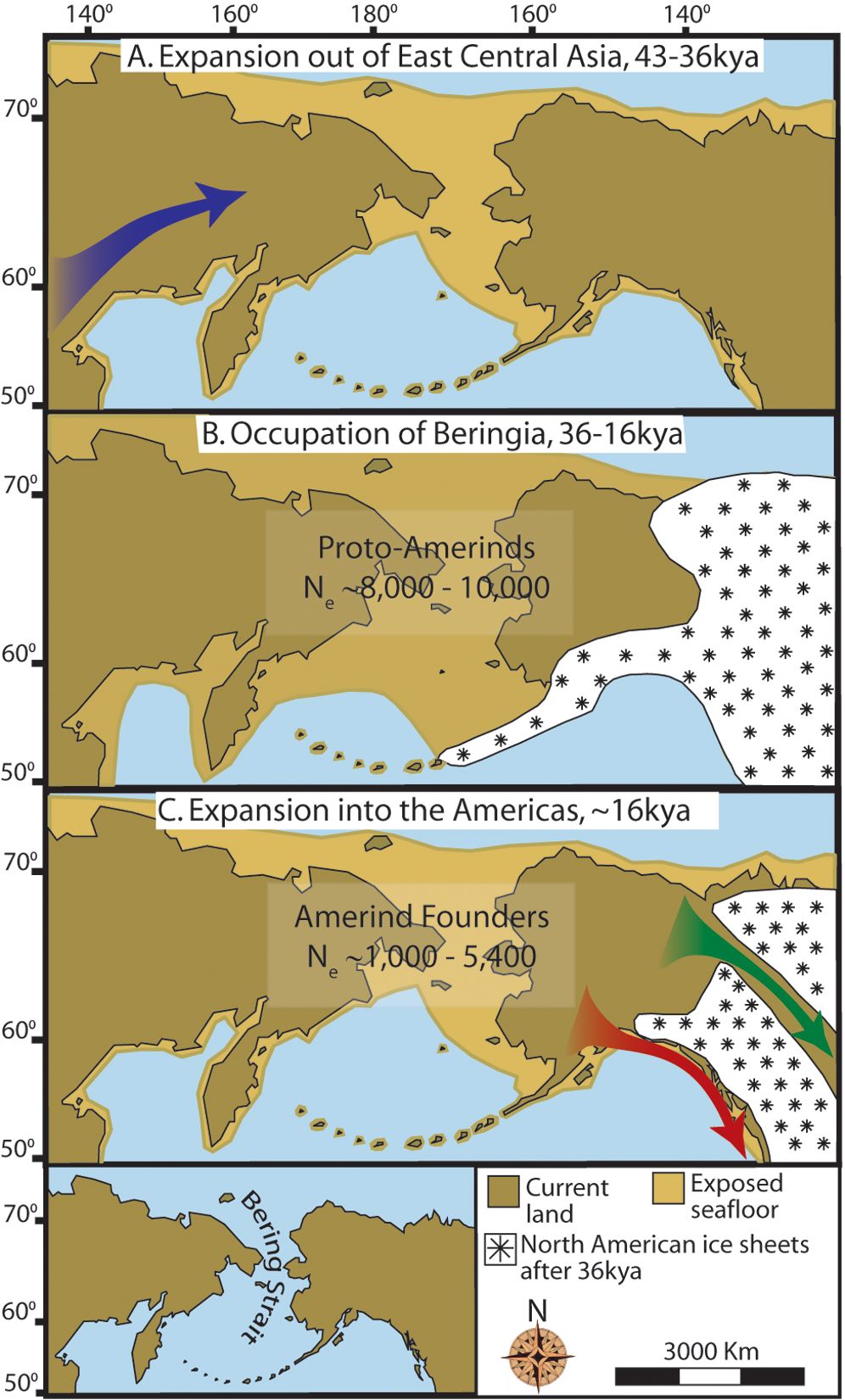
The story of human arrival in the Americas is linked to the environmental changes of the Pleistocene epoch. During the Last Glacial Maximum, vast quantities of Earth's water were locked in ice sheets, causing global sea levels to drop. This drop, estimated at 60 to 120 metres below present levels, exposed a wide plain connecting northeastern Siberia and western Alaska, a region known as Beringia. This land bridge emerged around 30,000 years ago and persisted for millennia. It provided a terrestrial pathway for animals and human hunter-gatherers. The interior of Beringia was a cold, dry grassland steppe, supporting megafauna like mammoths and steppe bison. Coastal areas offered refuges and marine resources. The warming climate caused sea levels to rise, culminating in the final submergence of the Beringian connection around 11,000 years ago.
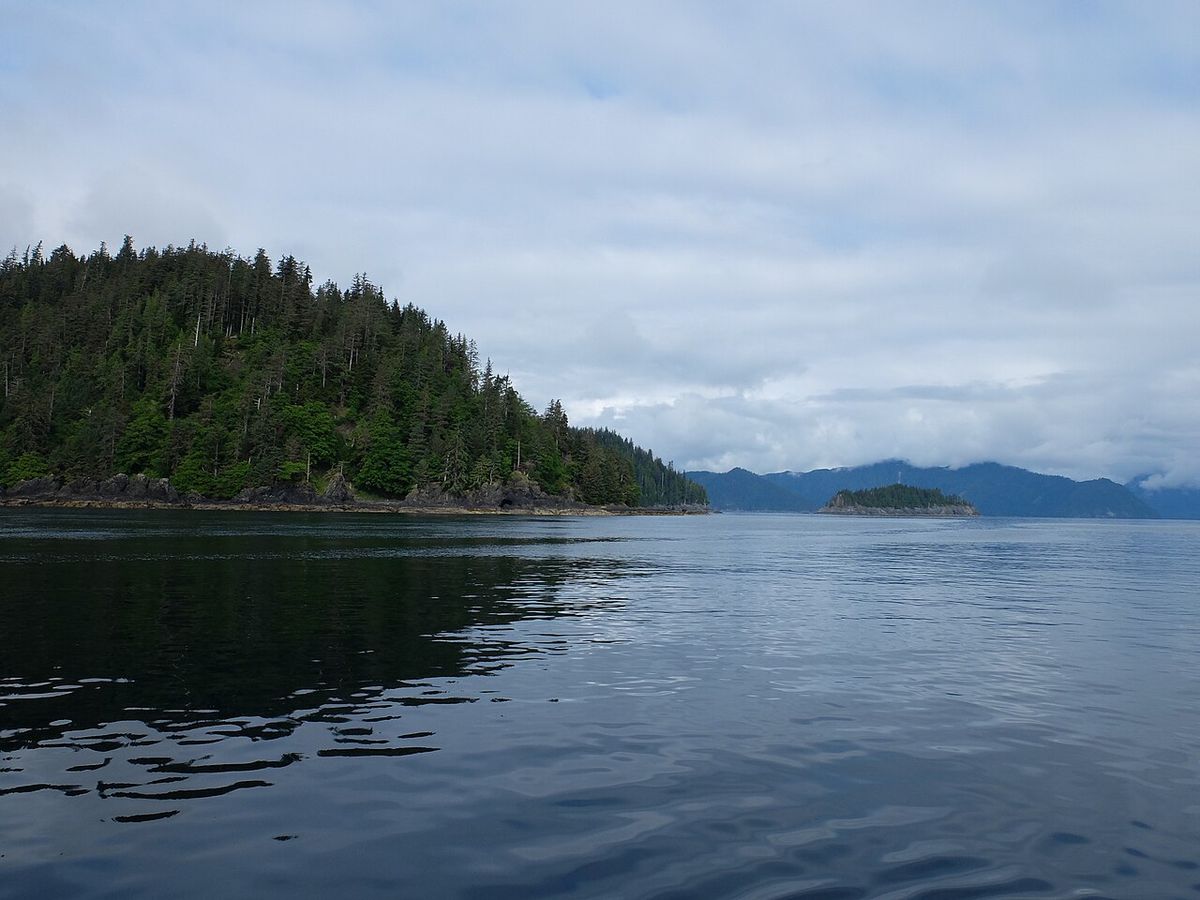
Access from Beringia into the continents was blocked by massive ice sheets. The Laurentide Ice Sheet covered most of Canada, while the Cordilleran Ice Sheet draped the western mountains. These sheets coalesced east of the Rocky Mountains, creating a barrier. For much of the Last Glacial Maximum, the interior route south was impassable. The Alaskan coastline was also heavily glaciated, with piedmont glaciers covering large stretches. However, unglaciated refugia persisted on present-day islands off the Pacific Northwest coast, such as Haida Gwaii, Prince of Wales Island, and outer islands of the Alexander Archipelago. These refugia supported terrestrial and marine mammals. The retreat of coastal glaciers began earlier than the interior ice, with the coast becoming largely ice-free by about 15,000 years ago. The inland ice-free corridor between the Cordilleran and Laurentide sheets did not open until after 13,000 to 12,000 years ago. Its early environment was dominated by glacial outwash and meltwater, with ice-dammed lakes, and was not biologically productive. Viability for human migration through this corridor is estimated at 11,500 years ago.
The Evolution of Migration Theories
For much of the 20th century, the Clovis First theory dominated scientific understanding. It proposed that the first people were the makers of distinctive fluted stone spear points found near Clovis, New Mexico, dating to about 13,250 to 12,800 years ago. This model held that these people entered via the Bering land bridge and then traveled south through an ice-free corridor as the glaciers retreated. The theory gained assent after discoveries in the 1930s at Blackwater Draw, New Mexico, where Clovis points were found alongside the remains of extinct animals. It became entrenched, setting a chronological benchmark of approximately 13,000 years for human presence. The theory was so dominant that claims of older sites were often met with skepticism.
Sites across the Americas yielded evidence of human occupation predating the Clovis horizon. Monte Verde in southern Chile is dated to approximately 14,500 years ago. Other key sites include the Paisley Caves in Oregon, with human coprolites dated to 14,300 years, and the Buttermilk Creek Complex in Texas, where stone tool fragments date back 15,500 years. The Arroyo Seco 2 site in Argentina has 14,000-year-old butchered animal bones. These discoveries forced a fundamental rethinking of the migration timeline. The narrative shifted from a single, late migration to the possibility of multiple, earlier entries by diverse groups. This evidence also supported alternative migration routes, particularly a coastal migration along the Pacific Northwest, which could have been feasible thousands of years before the interior corridor opened. The Clovis culture is now viewed not as the first Americans, but as a successful and widespread cultural adaptation that emerged later in the sequence.
Current Chronological Debates and Key Sites
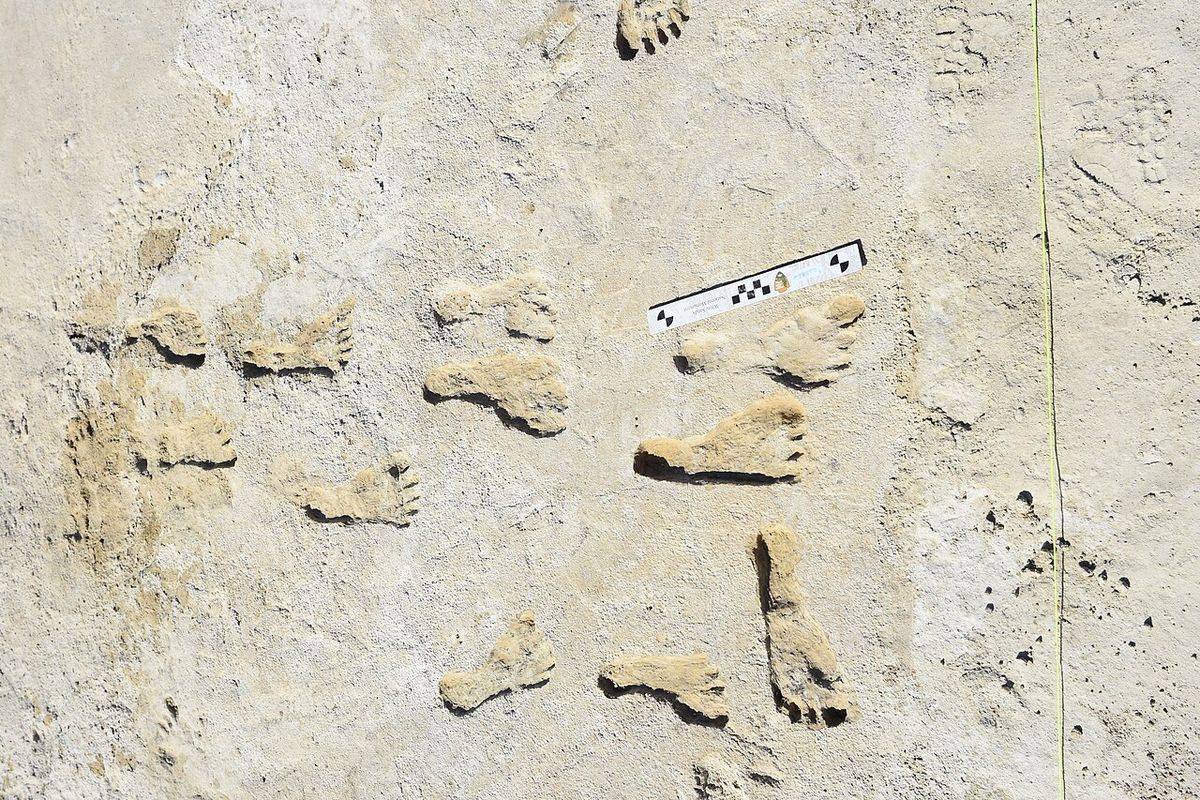
While a broad consensus exists that humans were present in the Americas by at least 15,000 years ago, vigorous debate continues about the possibility of an even earlier arrival. The archaeological community generally accepts a handful of sites as securely dated to around this time. These include Monte Verde in Chile, the Buttermilk Creek Complex in Texas, and Meadowcroft Rockshelter in Pennsylvania. The oldest undisputed evidence in Alaska comes from the Swan Point Archaeological Site, with artifacts and hearths dated to 14,000 years ago. These sites form the core of the short chronology model, which posits migration primarily after the Last Glacial Maximum. However, several controversial sites push for a long chronology, suggesting human presence may extend back 20,000 years or more. The White Sands National Park site in New Mexico features human footprints preserved in ancient lakebed sediments. Radiocarbon dating of seeds embedded in the footprint layers suggested an age of 21,000 to 23,000 years. This dating has been questioned due to potential carbon reservoir effects, but follow-up studies using radiocarbon dating of pollen and optically stimulated luminescence have supported the original findings.
Other proposed pre-Last Glacial Maximum sites face significant scholarly scrutiny. Chiquihuite Cave in north-central Mexico has yielded stones claimed to be human-made tools, associated with animal bone and charcoal dated to 26,000 years ago. The primary contention is whether these stones are genuine artifacts or naturally fractured rocks, as no human DNA or clear hearths have been found. In the Yukon, sites like Bluefish Caves and Old Crow Flats have also been proposed as evidence of very early occupation, with mammoth bones showing possible butcher marks dated from 25,000 to 40,000 BP. Mainstream scholars, including archaeologists like David J. Meltzer, emphasize that no site with unequivocal evidence older than about 16,000 years is universally accepted by the academic community. They note the methodological challenges of dating and verifying such ancient sites. The debate often centres on the interpretation of stone tools and the distinction between human-made artifacts and geofacts.
- Monte Verde, Chile: Dated to ~14,500 years ago, provided the first widely accepted evidence of pre-Clovis occupation.
- Buttermilk Creek Complex, Texas: Stone tool fragments dated to ~15,500 years ago.
- Paisley Caves, Oregon: Fossilized human coprolites dated to ~14,300 years ago.
- Swan Point, Alaska: Oldest undisputed site in Alaska, dated to ~14,000 years ago.
- White Sands, New Mexico: Human footprints dated to 21,000-23,000 years ago.
- Chiquihuite Cave, Mexico: Claimed lithic artifacts dated to ~26,000 years ago, but not widely accepted.
- Arroyo Seco 2, Argentina: Butchered animal bones dated to ~14,000 years ago.
Genetic Insights into Indigenous Origins
Genetic studies of contemporary and ancient Indigenous populations have provided a powerful independent line of evidence for understanding the peopling of the Americas. Analyses of mitochondrial DNA, Y-chromosomes, and whole genomes consistently show that all Indigenous peoples of the Americas descend from ancestral populations in Siberia. The genetic data indicates that the founding population that gave rise to Indigenous Americans became genetically isolated from their Siberian ancestors around 25,000 years ago, likely within Beringia itself. This period of isolation, sometimes called the Beringian standstill, lasted for several millennia, allowing for the accumulation of unique genetic markers. Subsequently, this population split into two main ancestral lineages, an event geneticists date to between 14,500 and 17,000 years ago. This split likely corresponds to the initial diversification and southward dispersal of populations into the continents. The genetic evidence generally supports a single major founding population for most Indigenous groups, but it also reveals complex patterns of later movement and interaction. For instance, studies suggest gene flow between North West Canadian Athabaskan populations and not only neighbouring Amerindians but also Siberian and Pacific Islander groups.
The classical three-wave migration model, proposed by linguist Joseph Greenberg, suggested separate migrations for Amerindians, Na-Dene (including Athabaskans), and Eskimo-Aleut peoples. Modern genetic research has complicated this neat picture. While Eskimo-Aleut and Na-Dene populations show more recent genetic connections to Siberia, consistent with later migrations, the deep ancestry of all groups traces back to the same ancient Beringian source population. Some genetic studies suggest the possibility of a minor later influx of genes from a population related to present-day Australo-Melanesians into some Amazonian groups, though this remains a topic of debate. Genetic evidence does not rule out the possibility of limited back-migration from the Americas into Asia. Analyses of the Human T cell Lymphotrophic Virus 1 (HTLV-1) also suggest a possible ancient connection between Jōmon populations in Japan and some Native American groups. Overall, genetics paints a picture of a primary founding event followed by a long period of isolation and diversification within Beringia, then a rapid expansion throughout the Americas.
The Coastal Migration Hypothesis
As the limitations of the ice-free corridor model became apparent, the coastal migration hypothesis gained prominence as a compelling alternative or complementary route for the first Americans. This theory proposes that early populations moved south along the Pacific coastline from Beringia, using boats or travelling on foot along the now-submerged continental shelf. A major advantage of this model is its compatibility with an earlier migration timeline. Geological evidence indicates that parts of the Pacific Northwest coast, including refugia on islands, were deglaciated and potentially habitable by 16,000 years ago or earlier, long before the interior corridor opened. This route would have provided a linear pathway rich in marine resources such as fish, shellfish, sea mammals, and nutrient-dense kelp forests. Such a resource base could have supported a rapid population movement without requiring adaptation to entirely new inland ecosystems. The coastal hypothesis also helps explain the early settlement of sites like Monte Verde in southern Chile and Taima-Taima in Venezuela, as a maritime-adapted population could have moved relatively quickly down the coast.
The greatest challenge for the coastal migration theory is the lack of direct archaeological evidence, as most of the Late Pleistocene coastline is now underwater due to post-glacial sea level rise of over 120 metres. Any campsites or artifacts from this early coastal journey would be submerged, making them extremely difficult to locate and excavate. Researchers therefore rely on indirect evidence, such as the early dates from coastal interior sites like the Paisley Caves, and on analogies with the maritime capabilities of contemporary human populations in other parts of the world. The kelp highway hypothesis is a variant that suggests kelp forests from Japan to South America provided a productive coastal ecosystem. Some scholars propose a mixed model, where some groups used the coastal route while others later used the interior corridor. The coastal migration hypothesis remains a leading and fertile area of research, driving underwater archaeology and refined paleoenvironmental reconstructions.
Contemporary Significance and Indigenous Presence
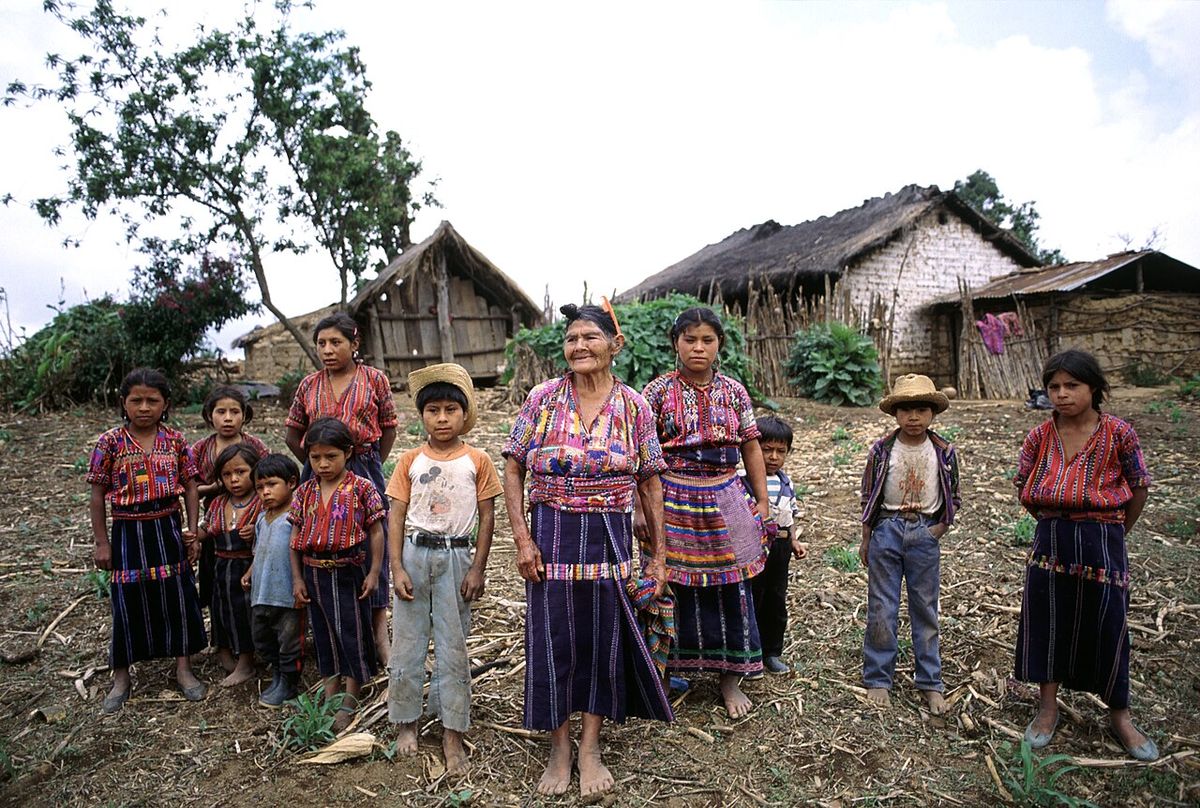
The study of the peopling of the Americas is fundamentally connected to the contemporary identities, sovereignty, and cultural vitality of Indigenous peoples across the continents. In Canada, this deep history shows the fact that First Nations, Inuit, and Métis communities are not immigrants but are descended from the original inhabitants whose presence spans millennia. This foundational truth is central to land rights discussions, treaty relationships, and the ongoing process of reconciliation. Public recognition of this long history has grown. In the United States, there are 574 federally recognized tribes, representing a vast diversity of cultures that trace their origins to these ancient migrations. Modern Indigenous communities actively engage with this history, often blending scientific findings with traditional knowledge. Museums and cultural institutions increasingly collaborate with Indigenous communities to present more accurate and inclusive narratives.
The growing recognition of this history also informs broader societal understanding, challenging outdated textbooks and promoting a more complete account of the continent's past. Physical anthropological studies of early skeletons, such as Kennewick Man and Luzia Woman, have contributed to debates about early physical diversity, though genetic studies firmly assign all early remains to a single ancient population from Beringia. The potential discovery of stemmed point technologies from coastal East Asia to South America is interpreted as a cultural marker related to source populations. From debates about ancient footprints to the analysis of ancestral DNA, the story of how people first came to the Americas continues to unfold, reminding all residents of the hemisphere of the deep depth of Indigenous heritage.
| Proposed Migration Route | Proposed Timeframe | Key Supporting Evidence | Major Challenges |
|---|---|---|---|
| Beringia Land Bridge & Ice-Free Corridor | After 13,000 BP | Clovis sites, geology of corridor opening | Corridor not viable until ~11,500 BP, after some early sites were occupied |
| Coastal Migration | 16,000 BP or earlier | Early Pacific coastal site dates, marine resource potential, kelp highway hypothesis | Most evidence submerged by 120+ m sea level rise |
| Pre-LGM Beringian Entry | Before 26,000 BP | Controversial sites (White Sands, Chiquihuite, Bluefish Caves) | Lack of widely accepted archaeological evidence, glacial barriers |
| Dené-Yeniseian Language Route | ~5,000 BP | Linguistic link between Na-Dené and Siberian Yeniseian, Arctic Small Tool tradition | May represent a much later migration wave |
Questions about Peopling of the Americas
How did the first people get to the Americas?
The primary route was via the Beringia land bridge, a vast expanse of dry land connecting Siberia and Alaska that existed when sea levels were lower during the last Ice Age. From Beringia, two main southward routes are proposed. The traditional inland route involved moving through an ice-free corridor between retreating glaciers in western Canada. The coastal migration hypothesis suggests people travelled south along the Pacific coastline, possibly using boats. An older interior route before the Last Glacial Maximum has also been proposed based on controversial site dates.
What is the Clovis First theory and is it still accepted?
The Clovis First theory was the dominant model for most of the 20th century. It proposed that the first Americans were the makers of distinctive Clovis spear points, entering the continent around 13,250 to 12,800 years ago via an ice-free corridor. This theory has been largely superseded. The discovery of several well-dated archaeological sites older than Clovis, such as Monte Verde, Chile, proved that humans were in the Americas before the Clovis culture emerged. Clovis is now seen as an early, widespread culture, but not the first.
What evidence is there for people in the Americas over 20,000 years ago?
The most prominent evidence comes from fossilized human footprints at White Sands National Park in New Mexico. Initial radiocarbon dating of seeds associated with these footprints suggested an age between 21,000 and 23,000 years ago, though this dating method has been questioned by some researchers. Other sites with claims of very early human presence include Chiquihuite Cave in Zacatecas, Mexico, where stones dated to 26,000 years ago are argued to be tools, and Bluefish Caves in the Yukon, which have mammoth bones with possible butcher marks dated from 25,000 to 40,000 years ago. However, the vast majority of scholars maintain that no archaeological site with clear and universally accepted evidence of human presence predates approximately 16,000 years, questioning the validity of these older claims.
What do genetic studies tell us about Indigenous origins?
Genetic studies of modern and ancient DNA confirm that all Indigenous peoples of the Americas descend from ancestral populations in Siberia. The data indicates that a founding population became genetically isolated from its Siberian ancestors around 25,000 years ago, likely within Beringia during a period called the Beringian standstill. This population then split into the main ancestral lineages between 14,500 and 17,000 years ago. While a single major founding population is supported, there is evidence of later, more complex movements, particularly for northern groups like the Na-Dene and Eskimo-Aleut.
Why does the peopling of the Americas matter to Canadians today?
This history establishes the deep and ancient connection of Indigenous peoples to the land now called Canada. It shows that First Nations, Inuit, and Métis are not immigrants but are descended from the continents' original inhabitants. This foundational truth is directly relevant to understanding Indigenous sovereignty, land rights, and treaty relationships. It also informs the national project of reconciliation, fostering a more accurate and respectful understanding of the deep history that precedes modern Canada.
When did humans first arrive in the Americas?
Humans first arrived in the Americas no later than 14,000 years ago, and likely between 15,000 and 20,000 years ago. This timeline is based on widely accepted archaeological evidence from sites such as Monte Verde in Chile and Buttermilk Creek in Texas. The oldest undisputed evidence comes from the Swan Point Archaeological Site in Alaska, dated to 14,000 years ago. While some studies suggest human presence could extend back to 26,000 years ago or more, as indicated by sites like Chiquihuite Cave in Mexico, these older dates are not broadly accepted. The precise timing remains an open question.
Sources and further reading
- Peopling of the Americas (Wikipedia)
- The Origin of Amerindians and the Peopling of the Americas ... (pmc.ncbi.nlm.nih.gov)
Checked by the Nosy Mag desk. Last updated 2026-11-01.