Little Norway
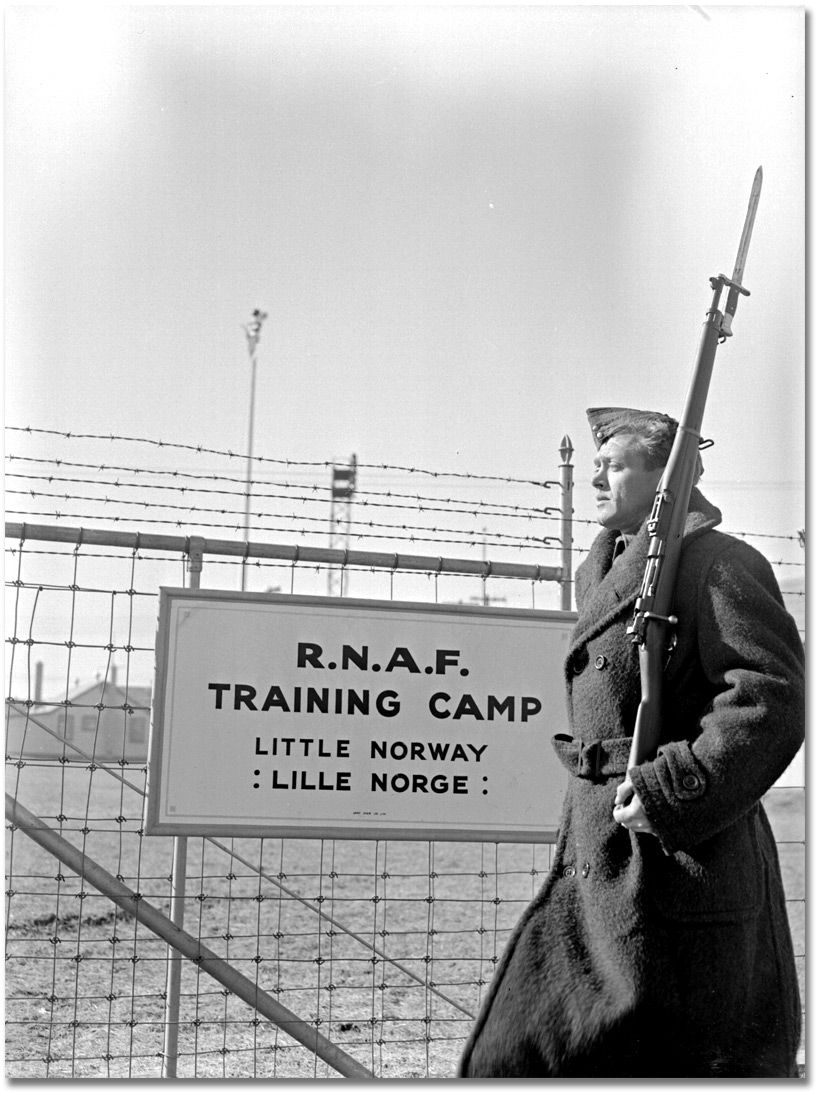
Little Norway, officially known as Flyvåpnenets Treningsleir (Air Force Training Camp), was a Norwegian Army Air Service and later Royal Norwegian Air Force training centre established in Canada during the Second World War. Operating from 1940 to 1945, it trained thousands of Norwegian airmen at locations in Toronto and Muskoka, Ontario, after Norway's occupation by Nazi Germany. The camp prepared pilots, navigators, and mechanics for service in Allied squadrons. Its existence forged a bond between Norway and Canada, a relationship commemorated in parks and memorials.
Origins and Establishment
The genesis of Little Norway lies in the German invasion of Norway on 9 April 1940, which overwhelmed the small Norwegian air services. Following the Allied withdrawal and Norway's occupation, King Haakon VII, Crown Prince Olav, and the government escaped to the United Kingdom in June 1940 aboard HMS Devonshire to form a government-in-exile. This government decided to establish an independent Norwegian air force unit outside of Europe. The Norwegian aviator Bernt Balchen, leveraging his dual citizenship and American contacts, was instrumental in early negotiations. He secured an agreement with Canadian officials to use facilities at the Toronto Island Airport on the Toronto Islands. The site was chosen for its proximity to the United States for aircraft procurement. Initial recruits, many of whom were young Norwegians who had escaped occupation, were housed in Toronto hotels like the Prince George while barracks were constructed on the waterfront.
The camp was formally established as the Flyvåpnenets Treningsleir, with its official opening ceremony held on 10 November 1940. The event was attended by dignitaries including Toronto Mayor Ralph Day, Lieutenant Governor Albert Matthews, and actress Mary Pickford. A flypast of eleven Norwegian aircraft in tight formation marked the occasion. In January 1941, Crown Prince Olav and Crown Princess Märtha visited the base during a tour of Norwegian installations in Canada. The camp's first commander was the renowned polar aviator Hjalmar Riiser-Larsen, with Major Ole Reistad taking over in early 1941. Colonel Oscar Klingenberg was chosen to head the training schools. The training operation provided a secure location far from the front lines to rebuild an air force.
Training Operations and Aircraft
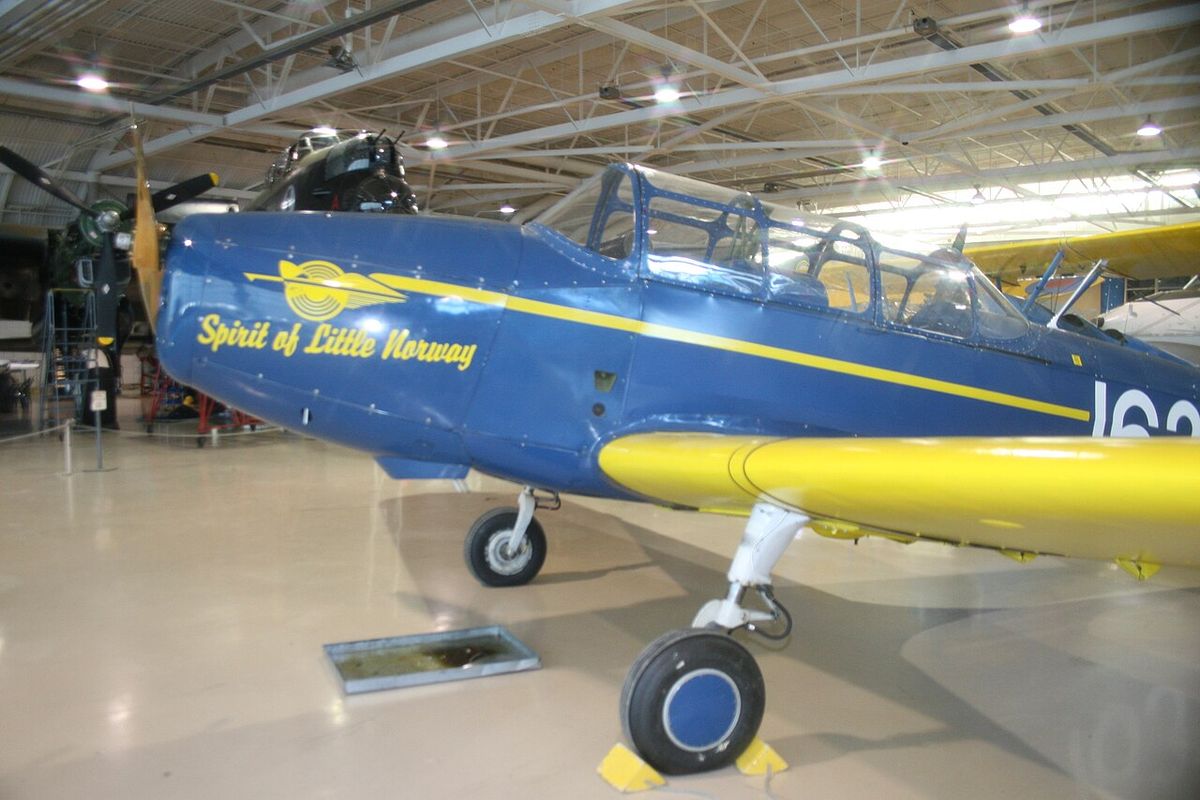
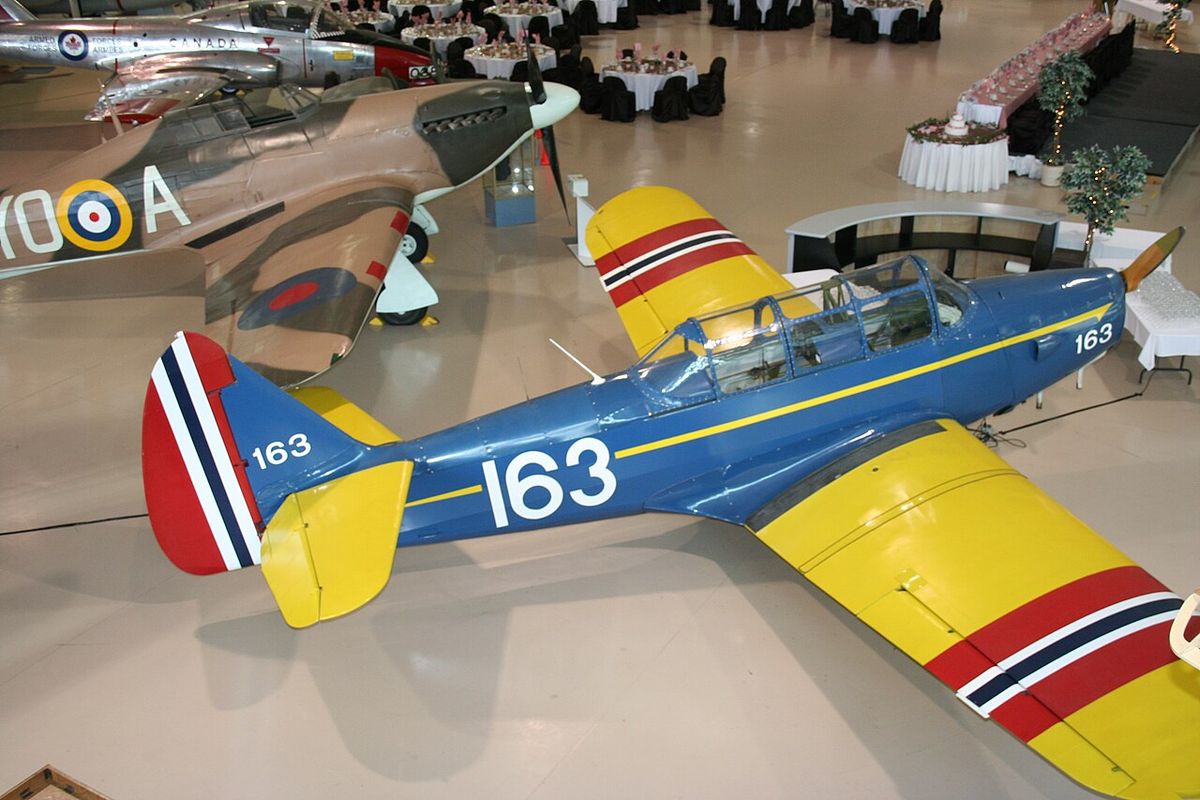
The primary mission of Little Norway was to train a new generation of Norwegian aircrew to fight for their country's liberation. The greatest initial need was for combat pilots. To meet this, orders were placed in the summer of 1940 for American aircraft, including 36 Fairchild PT-19s for primary training, with the first arriving on 23 November 1940. These were later retrofitted with canopies to become PT-26 Cornells. For advanced training, the camp utilized other aircraft on order for Norway, including 24 Northrop N-3PB seaplanes and 35 Curtiss Hawk 75-A8 fighters. Initially, training was conducted entirely at the Toronto Island base, but by 1941, a decision was made to integrate Norwegian pilots into the wider Allied training system. Student pilots selected for fighter training began receiving advanced instruction on North American Harvard aircraft at British Commonwealth Air Training Plan bases, such as the one in Moose Jaw, Saskatchewan. This shift towards standardization on British aircraft types led to some American-ordered planes, like 36 Douglas 8A-5s, being declared surplus and sold.
The training was rigorous and not without danger. The camp's original location at the busy Toronto Island Airport presented logistical and safety challenges. A notable accident occurred on 20 June 1941 when a Northrop N-3PB collided with the ferry Sam McBride during takeoff in Toronto Harbour, killing student pilot Tron Harsvik and instructor Lieutenant Finn Strand Kjos. This tragedy, coupled with the impracticality of military flight training in a shared civil aviation space, accelerated plans to relocate the camp to a more remote area. The need for consolidation also grew as the separate Norwegian Army and Naval air services began operating joint training courses, a step toward their formal unification into the Royal Norwegian Air Force in November 1944.
Relocation to Muskoka
In May 1942, the Little Norway training camp was moved to a 430-acre site at Muskoka Airport, approximately 127 kilometres north of Toronto. This new location offered ample space for both basic and advanced flight training away from urban centres. Under Lend-Lease agreements, an additional order for 50 Fairchild PT-26/PT-26B Cornell trainers was placed, with deliveries beginning in 1942. The Muskoka base became the primary training centre, though some advanced training continued at the Toronto Island Airport for a time. The camp at Muskoka operated until February 1945, when the entire training operation was transferred to Winkleigh in Devon, England, to be closer to the European theatre as the war neared its end. After the move, the Norwegian Training Base in England operated under the RAF's No. 23 Group, using Cornells shipped from Canada as well as British Oxfords and Harvards.
Training at Muskoka continued the dangerous work of preparing airmen. The first fatal accident at the new site occurred in August 1944 when a Fairchild PT-19 Cornell lost a wing and crashed south of Gravenhurst, killing both occupants. Another similar accident followed soon after, though the crew in that instance parachuted to safety. These incidents led to a temporary grounding of Fairchild aircraft until the cause was determined and repairs made. In total, the Little Norway operation in Canada experienced several fatal training accidents involving its various aircraft types. Overall, 23 personnel died in flying accidents in Canada, with an additional seven deaths from disease, car accidents, or drowning.
Personnel and Wartime Contribution
Over the course of the war, Little Norway trained more than 2,500 Norwegian personnel in all air force categories, including pilots, navigators, and mechanics. These men were part of a larger exodus of Norwegians who escaped occupation, often through perilous journeys via Sweden or the North Sea, to reach Canada and enlist. Their training was the prelude to active combat service. The earliest considerations were for a separate air force operating out of England, but by late 1940, the government-in-exile mandated all student pilots were destined for Norwegian-staffed RAF squadrons. Norwegian airmen went on to serve with distinction in various RAF squadrons, contributing directly to the Allied air war over Europe. The camp also became woven into the social fabric of Canadian life during the war. The Norwegian War Aid Fund Association of Toronto, organized by Vice Consul Karl Pintz, supported the effort. Many airmen were invited into Canadian homes for Christmas dinners through YMCA programs, and more than 10 percent of the trainees ultimately married Canadian women, creating lasting familial bonds between the two nations.
Postwar Moves and Legacy
After the war in Europe ended, the training operation was gradually wound down and repatriated to Norway. On 22 November 1945, training was transferred to Gardermoen air station near Oslo, focusing on primary training with the remaining 74 Cornell aircraft. The final move of the flight school was to Rygge, where it continued until 1952, when all military training was fully transferred to new units within Norway. The legacy of Little Norway in Canada is preserved through physical memorials and cultural remembrance. In 1986, the City of Toronto established Little Norway Park on the western waterfront near the original camp site, where a plaque commemorates the historic base. In 2007, the governments of Norway and Canada unveiled a memorial inside the terminal building of Muskoka Airport to honour the training that took place there. The story continues to resonate, as evidenced by a Norwegian documentary film crew shooting at historic sites in Muskoka and Toronto in September of a recent year, exploring the personal stories of the airmen and their descendants. The historical connection is also celebrated in community events, though not directly linked to the wartime camp. The Little Norway Festival in Petersburg, Alaska, held around Norwegian Constitution Day on May 17, celebrates the broader Norwegian immigrant heritage in North America. The enduring diplomatic relationship between Canada and Norway, solidified through wartime cooperation and continued partnership in NATO, Arctic affairs, and trade, has its roots in this chapter of shared history.
Aircraft Used at Little Norway
The training camp utilized a variety of American and some British aircraft. These planes were acquired through pre-war orders, Lend-Lease, and procurement deals handled by figures like Thor Solberg and Georg Unger Vetlesen. The Fairchild M-62, PT-19 and PT-26 Cornell served as the primary trainer. An initial order for 36 PT-19s was placed in summer 1940, later retrofitted to PT-26 standard with canopies. An additional 50 PT-26/PT-26B Cornells were received from 1942 under Lend-Lease. The Northrop N-3PB was a single-engine seaplane used by the Norwegian Naval Air Service for advanced training. The camp operated 24 of these aircraft, three of which were lost in fatal crashes in Canada. The Curtiss Hawk 75-A8 was an advanced fighter trainer. Thirty-five of these aircraft were on order, with only five of an original batch of 19 undelivered before the invasion. These were sent to Canada along with a new order for 36. The 30 surviving A-8s were sold back to the United States as P-36Gs in 1943. The Douglas 8A-5/A-33 was an advanced trainer. Thirty-six of these aircraft were turned over to the Norwegians in late 1940 but were later declared surplus and sold abroad as training shifted to British types. Utility aircraft included the Noorduyn Norseman and Stinson SR-9 Reliant used by the naval air services for transport and liaison duties. The North American Harvard was used for advanced fighter pilot training at BCATP bases like Moose Jaw after 1941.
- Fairchild M-62 / PT-19 / PT-26 Cornell: The primary trainer. An initial order for 36 PT-19s was placed in summer 1940, later retrofitted to PT-26 standard with canopies. An additional 50 PT-26/PT-26B Cornells were received from 1942 under Lend-Lease.
- Northrop N-3PB: A single-engine seaplane used by the Norwegian Naval Air Service for advanced training. The camp operated 24 of these aircraft, three of which were lost in fatal crashes in Canada.
- Curtiss Hawk 75-A8 (P-36): An advanced fighter trainer. Thirty-five of these aircraft were on order, with only five of an original batch of 19 undelivered before the invasion. These were sent to Canada along with a new order for 36. The 30 surviving A-8s were sold back to the United States as P-36Gs in 1943.
- Douglas 8A-5/A-33: An advanced trainer. Thirty-six of these aircraft were turned over to the Norwegians in late 1940 but were later declared surplus and sold abroad as training shifted to British types.
- Noorduyn Norseman & Stinson SR-9 Reliant: Utility aircraft used by the naval air services for transport and liaison duties.
- North American Harvard: Used for advanced fighter pilot training at BCATP bases like Moose Jaw after 1941.
Key Events and Timeline
The history of Little Norway is marked by several important events. Nazi Germany invaded Norway on 9 April 1940, triggering the need for an overseas training base. Little Norway was officially opened at the Toronto Island Airport on 10 November 1940. A Northrop N-3PB collided with the ferry Sam McBride in Toronto Harbour on 20 June 1941, a key factor in the decision to relocate. The main training camp moved to Muskoka Airport in May 1942. The training operation was transferred from Muskoka to Winkleigh, England in February 1945. Training transferred to Gardermoen, Norway on 22 November 1945. The City of Toronto established Little Norway Park as a memorial in 1986. Norway and Canada unveiled a joint memorial inside Muskoka Airport terminal in 2007.
- 9 April 1940: Nazi Germany invades Norway, triggering the need for an overseas training base.
- 10 November 1940: Little Norway is officially opened at the Toronto Island Airport.
- 20 June 1941: A Northrop N-3PB collides with the ferry Sam McBride in Toronto Harbour, a key factor in the decision to relocate.
- May 1942: The main training camp moves to Muskoka Airport.
- February 1945: The training operation is transferred from Muskoka to Winkleigh, England.
- 1986: The City of Toronto establishes Little Norway Park as a memorial.
- 2007: Norway and Canada unveil a joint memorial inside Muskoka Airport terminal.
Accidents and Fatalities
Flight training during the Second World War was inherently risky, and Little Norway experienced its share of tragedies. A total of 23 personnel died in flying accidents on Canadian soil during the camp's operation. The most notorious incident was the collision between a Northrop N-3PB and the Toronto ferry Sam McBride on 20 June 1941, which killed two and raised public safety concerns about training in the city harbour. Other fatal crashes involved Curtiss P-36 fighters near Toronto in April 1941, near Port Credit in July 1941, and into Lake Ontario in January 1942. The FTL lost three N-3PBs in Canada in fatal crashes, two near Vancouver at Jericho Beach and Patricia Bay. At the Muskoka base, a fatal crash of a Fairchild trainer in August 1944 was attributed to a structural wing failure, leading to a temporary grounding of the type. Beyond aviation accidents, seven more individuals associated with the camp died from other causes such as disease, automobile accidents, or drowning.
Notable Figures Associated with Little Norway
The establishment and operation involved many key individuals. Bernt Balchen was a Norwegian-American aviator who negotiated the initial agreement to use the Toronto Island Airport. Hjalmar Riiser-Larsen was the first commander of Little Norway, a famed Norwegian polar explorer and aviator. Oscar Klingenberg was a colonel who headed the training schools and served as military attaché in Washington. Georg Unger Vetlesen and Thor Solberg handled procurement and negotiations with U.S. aircraft manufacturers. Ole Reistad was a major who took over command of the camp in early 1941. Karl Pintz was the Norwegian Vice Consul in Toronto who organized the Norwegian War Aid Fund Association. Ralph Day was the Mayor of Toronto who attended the camp's opening and supported its establishment. Crown Prince Olav visited the Toronto base in January 1941 to inspect the Norwegian forces training there.
- Bernt Balchen: Norwegian-American aviator who negotiated the initial agreement to use the Toronto Island Airport.
- Hjalmar Riiser-Larsen: The first commander of Little Norway, a famed Norwegian polar explorer and aviator.
- Oscar Klingenberg: Colonel who headed the training schools and served as military attaché in Washington.
- Georg Unger Vetlesen and Thor Solberg: Handled procurement and negotiations with U.S. aircraft manufacturers.
- Ole Reistad: Major who took over command of the camp in early 1941.
- Karl Pintz: Norwegian Vice Consul in Toronto who organized the Norwegian War Aid Fund Association.
- Ralph Day: Mayor of Toronto who attended the camp's opening and supported its establishment.
- Crown Prince Olav: Visited the Toronto base in January 1941 to inspect the Norwegian forces training there.
Questions about Little Norway
What was Little Norway and where was it located in Canada?
Little Norway was the common name for the Norwegian Army Air Service and later Royal Norwegian Air Force's Second World War training camp in Canada. Officially called Flyvåpnenets Treningsleir, it operated from November 1940 to February 1945. It was initially located at the Toronto Island Airport on Lake Ontario. In May 1942, the main camp moved to a larger, more remote site at Muskoka Airport, about 127 kilometres north of Toronto, where it remained until the entire operation was transferred to England.
Why was the training camp established in Canada?
After Norway was occupied by Nazi Germany in April 1940, its government-in-exile needed a secure location to train a new air force outside Europe. Canada was chosen as a safe haven far from the conflict. The base at Toronto Island Airport was selected for its proximity to the United States for procuring aircraft. The Norwegian government-in-exile initially decided to keep escaped Norwegian pilots as an independent unit, so they were not allowed to participate in the Battle of Britain and were transferred to North America.
What types of aircraft were used for training at Little Norway?
The camp primarily used American aircraft acquired through orders and Lend-Lease. The Fairchild PT-19 and PT-26 Cornell served as the primary trainer. Advanced trainers included the Curtiss Hawk 75-A8, the Northrop N-3PB seaplane, and the Douglas 8A-5. Later, as training integrated with the British Commonwealth Air Training Plan, Norwegian pilots received advanced instruction on aircraft like the North American Harvard at bases such as Moose Jaw, Saskatchewan.
What is the connection between Little Norway and modern Canadian-Norwegian relations?
The wartime cooperation at Little Norway solidified a bond between the two nations. The training of over 2,500 Norwegian airmen in Canada from 1940 to 1945 created lasting personal and diplomatic ties. This shared history is commemorated by joint memorials, including Little Norway Park in Toronto (1986) and a memorial at Muskoka Airport (2007). It represents a foundational chapter in the relationship, which continues through partnership in NATO, Arctic affairs, and trade.
How many Norwegian airmen were trained at Little Norway?
Over 2,500 Norwegian airmen of all categories were trained at the various bases of Little Norway during the Second World War. This total includes pilots, navigators, and mechanics. The trainees were often young Norwegians who had escaped the German occupation to enroll in the Royal Norwegian Air Forces. Following their training, these airmen were primarily destined to serve in Norwegian-staffed squadrons within the Royal Air Force to continue the fight for Norway's liberation.
Are there any memorials to Little Norway in Canada today?
Yes, there are two main memorials. In 1986, the City of Toronto established Little Norway Park on the site of the original waterfront camp, with a commemorative plaque. In 2007, the governments of Norway and Canada unveiled a memorial inside the Muskoka Airport terminal building to honour the Muskoka training site. The legacy is also preserved through historical projects and documentaries.
Sources and further reading
- Little Norway (Wikipedia)
- Muskoka's Little Norway history to be featured in ... (myhaliburtonnow.com)
- Little Norway (thecanadianencyclopedia.ca)
- Historical Ties, Norway in Canada (norway.no)
- LITTLE NORWAY FESTIVAL (petersburg.org)
Checked by the Nosy Mag desk. Last updated 2026-10-31.