King-Byng affair
The King-Byng affair was a constitutional crisis in Canada in 1926. Prime Minister William Lyon Mackenzie King asked Governor General Lord Byng of Vimy to dissolve Parliament and call an election to avoid a vote of censure over a corruption scandal. Byng refused the request. King resigned, and Byng invited Conservative leader Arthur Meighen to form a government, which lasted only a few days before losing a confidence vote. The crisis was resolved by a general election in September 1926, which returned King to power. The affair redefined the role of the governor general and contributed to the constitutional reforms of the Balfour Declaration of 1926 and the Statute of Westminster 1931.
The 1925 Election and a Precarious Minority
The origins of the King-Byng affair lie in the federal election held on 29 October 1925. Prime Minister William Lyon Mackenzie King had advised Governor General Lord Byng to dissolve Parliament in September, leading to that vote. The results were unfavourable for King's Liberal Party, which won 101 seats in the House of Commons. Arthur Meighen's Conservative Party emerged as the largest single party with 116 seats, though this was eight seats short of a majority. The Progressive Party won 22 seats, and other parties and independents won 6 seats. As the incumbent prime minister, King was constitutionally entitled to meet the new House and test its confidence. He decided to attempt to hold onto power by continuing the informal alliance with the Progressives that had sustained his previous minority government. On 30 October, King informed Governor General Byng of his intention to carry on. Byng was uneasy with this arrangement, given the Liberals were no longer the largest party. The Governor General later stated he told King he must not ask for a dissolution of Parliament unless Meighen was first given a chance to govern, a point King subsequently denied.
King's minority government survived for several months, but its reliance on Progressive support was tenuous. The Progressives were already distancing themselves from the Liberals over issues like the transfer of natural resource control to Alberta. The 1925 election had seen the Progressive caucus shrink significantly from its strength of 58 seats after the 1921 election. This fragile parliamentary situation set the stage for the crisis that would erupt in early 1926, when a major scandal threatened to shatter the government's remaining support. Some Conservatives, while publicly outraged, privately believed King's attempt to govern would fail and deliver them a majority later.
The Customs Scandal and Parliamentary Maneuvering
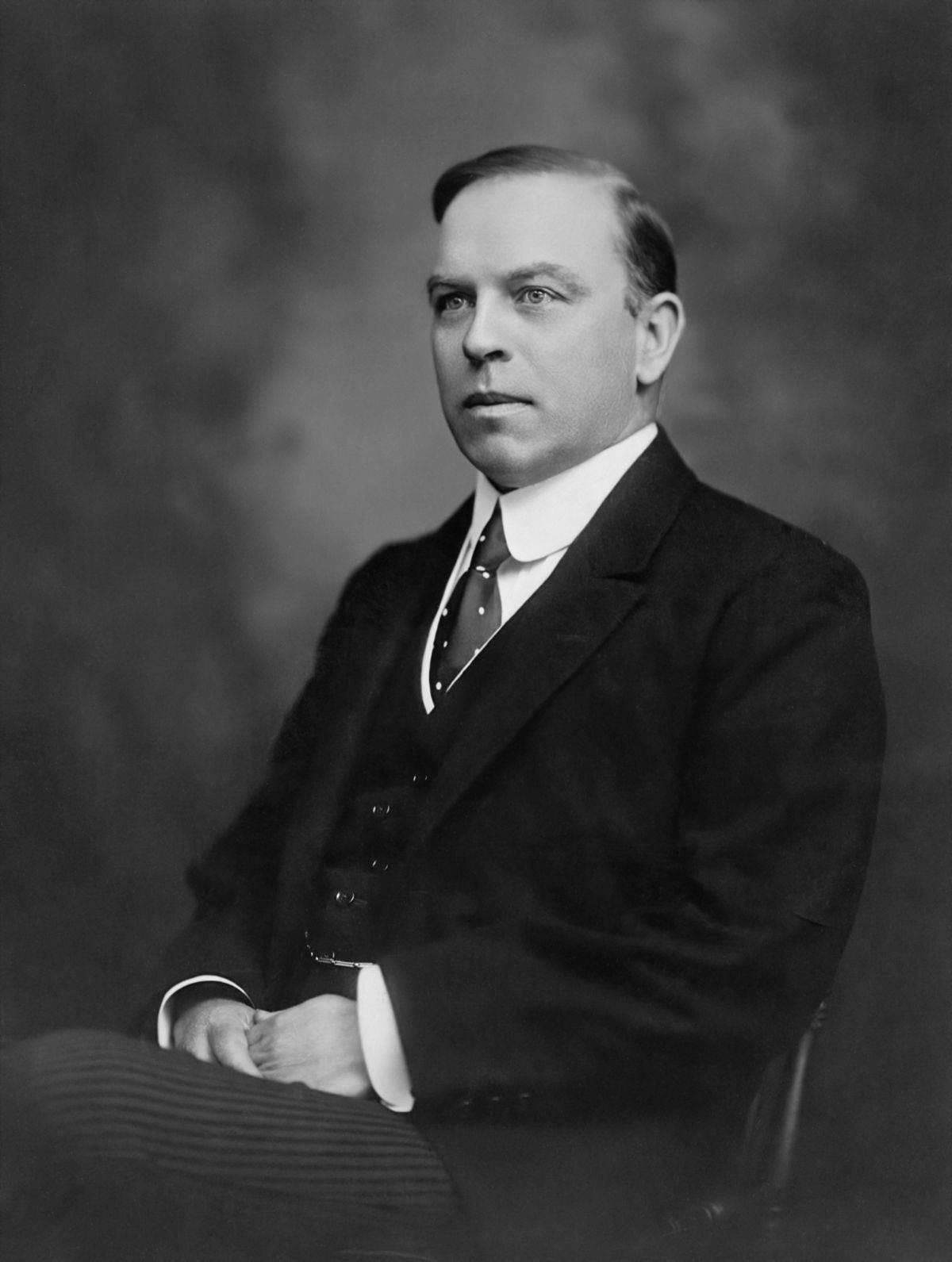
The stability of King's government was severely undermined in early 1926 by revelations of corruption in the Department of Customs and Excise. A senior official was found to have accepted bribes. King had already replaced the minister, Jacques Bureau, with Georges Henri Boivin, but he further alienated Progressives by recommending Bureau for a Senate appointment. A special parliamentary committee was formed to investigate. Its final report acknowledged widespread fraud in the department but did not specifically condemn the government. Conservative MP H. H. Stevens then proposed an amendment to the report that would censure the government. In a complex series of parliamentary maneuvers, Labour MP J. S. Woodsworth proposed amending Stevens's motion to remove the censure and instead create a Royal Commission. This was defeated. Progressive MP William Russell Fansher then proposed a motion combining a Royal Commission with the original censure of the government. The Speaker ruled this motion out of order, but the House overruled the Speaker. King, facing almost certain defeat on the Fansher amendment, then secured an adjournment. With a vote on the censure motion imminent, King determined his only escape was to seek a dissolution of Parliament. The scandal and the parliamentary maneuvers around it consumed the spring of 1926 and directly precipitated the constitutional clash.
The Refusal and the Fall of King's Government
On 26 June 1926, Prime Minister King went to Rideau Hall to ask Governor General Lord Byng to dissolve Parliament and call an election. Byng, citing his reserve powers, indicated he was inclined to refuse. He reminded King of their discussion the previous October and argued that Meighen, as leader of the largest party, should be given an opportunity to form a government. Over the next two days, the two men engaged in tense discussions. King twice requested that Byng consult the British government through the Colonial Office, but Byng refused. On 28 June, King formally presented an Order in Council requesting dissolution, which Byng declined to sign. King resigned as prime minister later that day. Byng then immediately invited Conservative leader Arthur Meighen to form a government. Meighen felt bound by convention to accept. He swiftly assembled a Cabinet, but faced an immediate constitutional hurdle. At the time, any MP appointed to the Cabinet was required to resign their seat and seek re-election in a by-election. Meighen circumvented this convention by appointing ministers without portfolio, whom he designated as 'acting ministers' for specific departments. The Liberals and Progressives denounced this as a violation of constitutional spirit.
- King requested dissolution on 26 June 1926.
- Byng refused, citing Meighen's right to try governing.
- King resigned on 28 June after Byng declined to sign the Order in Council.
- Byng invited Arthur Meighen to form a government the same day.
- Meighen formed a Cabinet but circumvented by-election rules by appointing 'acting ministers' without portfolio.
- Meighen's government included several acting ministers who avoided by-elections.
Meighen's government survived four parliamentary votes, including one that finally passed the censure motion against the previous King administration. However, on 2 July 1926, at 2 a.m., the government lost a vote of confidence by a single vote. The outcome was decided when Progressive MP Thomas William Bird violated a vote-pairing agreement. With his administration defeated, Meighen then requested a dissolution from Byng, which was promptly granted. The Meighen government had lasted only three days.
The 1926 Election and King's Return
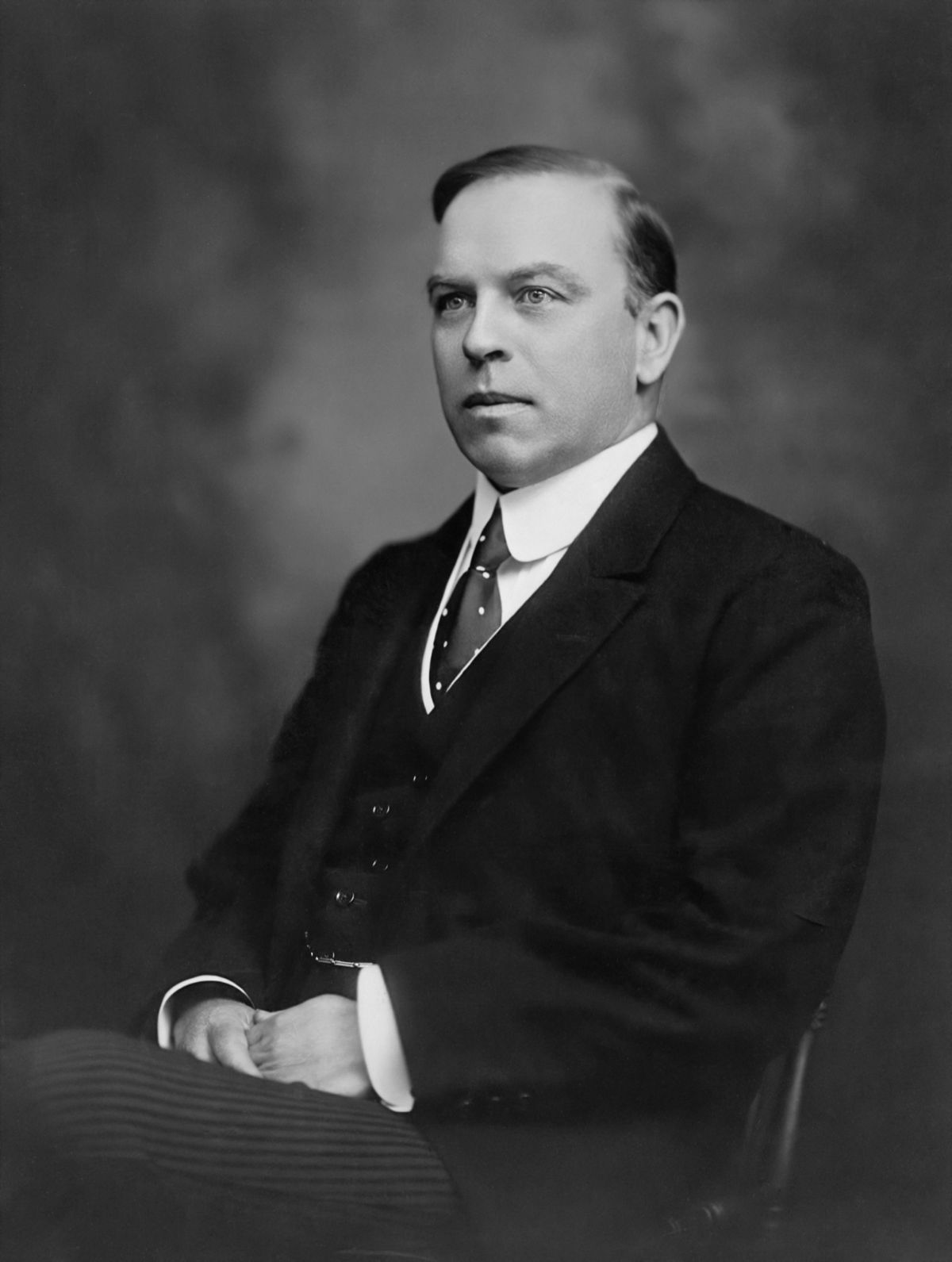
Governor General Byng dissolved Parliament on 2 July 1926, and a general election was called for 14 September. The campaign was fiercely fought on two fronts. Meighen and the Conservatives campaigned on the corruption revealed by the Customs scandal. King, however, masterfully shifted the focus to the constitutional issue. He framed Byng's refusal as an unprecedented interference by an appointed British governor general in the affairs of a sovereign Canadian government. The election results delivered a clear verdict. King's Liberals won a strong plurality of 128 seats out of 245. The Conservatives were reduced to 91 seats, and Arthur Meighen personally lost his own seat in Portage la Prairie. The Progressive Party won 11 seats, the Labour Party won 3 seats, and the United Farmers of Alberta won 11 seats. Other independents won 2 seats. The Liberals would go on to govern until their defeat in the 1930 election. The 1926 election solidified King's political recovery and demonstrated the potency of nationalist sentiment in Canadian politics. King's campaign effectively used the slogan 'King or Byng?' to personalize the constitutional issue.
| Party | Seats (1925 Election) | Seats (1926 Election) |
|---|---|---|
| Liberal Party | 101 | 128 |
| Conservative Party | 116 | 91 |
| Progressive Party | 22 | 11 |
| Labour Party | 2 | 3 |
| United Farmers of Alberta | Not a distinct bloc in 1925 | 11 |
| Others | 4 | 2 |
| Total Seats | 245 | 245 |
Constitutional Reforms and the Statute of Westminster
The King-Byng affair had major implications for the constitutional relationship between Canada and the United Kingdom. Upon returning to power, King's government made it a priority to address the ambiguities in the governor general's role at the next Imperial Conference, held in London in 1926. The Canadian delegation argued successfully that the governor general should be solely the personal representative of the monarch in his Canadian council, and not also a representative of the British government. This change was formalized in the Balfour Declaration of 1926, which stated that the United Kingdom and the Dominions were autonomous communities within the British Empire, equal in status. The principles of the Balfour Declaration required extensive legal drafting, which was undertaken at the 1929 Conference on the Operation of Dominion Legislation and the 1930 Imperial Conference. This work culminated in the Statute of Westminster, which was passed by the British Parliament on 11 December 1931. The statute granted Canada and the other Dominions full legal autonomy. It cemented the convention that the governor general must always follow the advice of the Canadian prime minister, effectively ensuring that a situation like the King-Byng refusal could not easily recur. The Statute of Westminster came into force immediately upon receiving royal assent.
Legacy and Historical Debate
The King-Byng affair remains the most significant constitutional crisis in Canadian history. It continues to be debated by historians and constitutional scholars. One school of thought, championed by scholar Eugene Forsey, argued that Byng was constitutionally correct. Forsey called King's request utterly unprecedented and tantamount to allowing a prisoner to discharge the jury trying him. He contended that Byng would have been complicit in contempt of Parliament had he granted the dissolution while a censure motion was pending. Others point to the relatively short lifespan of King's Parliament as further justification for the refusal. Another perspective agrees with King, asserting that by the conventions of responsible government, the governor general was obligated to heed the prime minister's advice. In 1997, New Zealand's governor general Sir Michael Hardie Boys expressed the opinion that Byng erred in not reappointing King as prime minister and then granting him the dissolution. The affair established a powerful precedent of non-interference. No Canadian governor general has since publicly refused a prime minister's request for dissolution. The crisis also had domestic policy legacies. The weakness caused by the convention of ministerial by-elections led R. B. Bennett's government to abolish them in 1931.
- The crisis is considered a foundational case study in Canadian constitutional law.
- Scholar Eugene Forsey defended Byng's decision as constitutionally necessary.
- New Zealand Governor General Sir Michael Hardie Boys believed Byng made an error.
- It led to the abolition of mandatory ministerial by-elections in 1931.
- It served as a key precedent for the Lascelles Principles in the UK, formulated in 1950.
- No Canadian governor general has since refused a dissolution request.
- The affair was a major precedent for the 1975 Australian constitutional crisis.
- Lord Byng served as Governor General from 1921 to 1926.
Lord Byng returned to the United Kingdom on 30 September 1926. In a letter to King George V, he wrote that he awaited the verdict of history with an easy conscience. The Colonial Secretary, Leo Amery, had privately informed Byng that the British government could not instruct him on his constitutional duties. Byng was later promoted to field marshal in 1932. The affair's centenary in 2026 was marked by lectures and historical reflections.
Questions about King-Byng affair
What was the King-Byng affair?
The King-Byng affair was a constitutional crisis in Canada in 1926. Prime Minister William Lyon Mackenzie King asked Governor General Lord Byng of Vimy to dissolve Parliament and call an election to avoid a vote of censure over a corruption scandal. Byng refused the request. King resigned, and Byng invited Conservative leader Arthur Meighen to form a government, which lasted only a few days before losing a confidence vote. The crisis was resolved by a general election in September 1926, which returned King to power.
Why did Governor General Byng refuse Prime Minister King's request?
Lord Byng refused for several constitutional reasons. He believed that Arthur Meighen, as leader of the largest party in the House of Commons, should first be given a chance to form a government before an election was called. Byng also felt that granting a dissolution to avoid a pending vote of censure was an abuse of parliamentary process. He later stated he had an understanding with King from October 1925 that Meighen would get a chance to govern, though King denied this. Byng insisted the matter be settled in Canada without consulting the British government.
What was the Customs scandal that triggered the crisis?
The Customs scandal involved widespread corruption and bribery within the Department of Customs and Excise under the Liberal government. A senior official was found to have taken bribes. A parliamentary committee investigated and confirmed fraud in the department. The scandal severely damaged the King government's credibility and led to a motion of censure in the House of Commons. King's fear of losing this vote was the immediate reason he sought a dissolution from the governor general in June 1926.
How did the King-Byng affair change the role of the governor general?
The affair was a major catalyst for redefining the governor general's role. After returning to power, King's government pushed for changes at the 1926 Imperial Conference. The resulting Balfour Declaration stated that the governor general was solely the personal representative of the monarch in Canada. This was cemented into law by the Statute of Westminster in 1931. The key convention established was that the governor general must almost always follow the advice of the Canadian prime minister, especially regarding the dissolution of Parliament.
Who won the election after the crisis and what was the result?
The election was held on 14 September 1926. William Lyon Mackenzie King's Liberal Party won a decisive plurality, taking 128 of the 245 seats in the House of Commons. Arthur Meighen's Conservative Party was reduced to 91 seats, and Meighen lost his own seat. The Progressive Party won 11 seats, the Labour Party won 3 seats, and the United Farmers of Alberta won 11 seats. Other independents won 2 seats. King successfully campaigned on the constitutional issue, framing Byng's refusal as British interference.
What were the immediate political consequences of the crisis?
The immediate consequence was the defeat of Arthur Meighen's Conservative government after only three days in office. The crisis also led directly to the 1926 federal election, which returned the Liberals to power. Domestically, the controversy highlighted the impracticality of the convention requiring ministers to seek re-election upon appointment, leading to its abolition in 1931. The affair also intensified debates about Canadian autonomy within the British Empire, setting the stage for the Balfour Declaration later that same year.
How is the King-Byng affair related to other constitutional crises?
The King-Byng affair is a key precedent for the reserve powers of governors general in Commonwealth fields. It directly influenced the formulation of the Lascelles Principles in the United Kingdom in 1950, which guide the monarch on granting dissolutions. It is also frequently compared to the 1975 Australian constitutional crisis, where Governor General Sir John Kerr dismissed Prime Minister Gough Whitlam. The Canadian crisis established a strong convention of non-interference that has been followed in Canada since 1926.
Sources and further reading
- King-Byng affair (Wikipedia)
- King-Byng Affair (thecanadianencyclopedia.ca)
- The Roaring Twenties:The King-Byng Affair 1926 (canadahistoryproject.ca)
- Today in Canada's Political History: September… (nationalnewswatch.com)
Checked by the Nosy Mag desk. Last updated 2026-10-31.