History of Prince Edward Island
The history of Prince Edward Island encompasses millennia of Indigenous habitation, European colonization, and political evolution leading to its status as a Canadian province. Known as Epekwitk to the Mi'kmaq people, the island saw French settlement as Île Saint-Jean before becoming the British colony of St. John's Island in 1769, later renamed Prince Edward Island in 1798. Its role in Canadian history was cemented by hosting the Charlottetown Conference in 1864, the first meeting on the road to Confederation, though the island itself did not join Canada until 1873. The province's story is marked by the Acadian deportation, the protracted struggle over absentee land ownership, and its eventual integration into Canada, which it now celebrates as the 'Birthplace of Confederation'.
Indigenous Foundations and Early European Contact
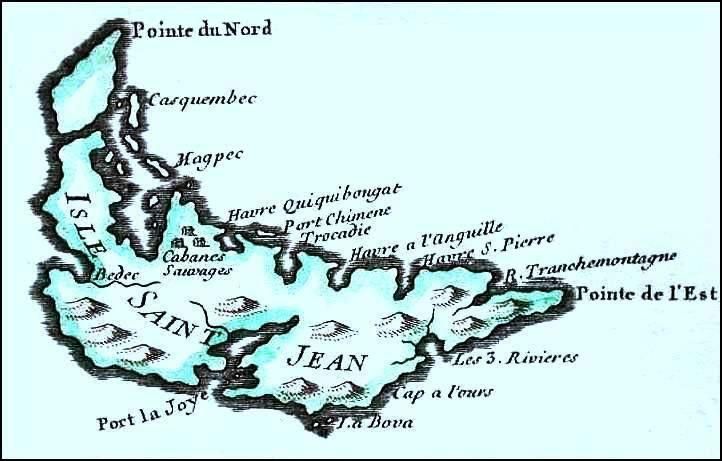
For thousands of years before European arrival, Prince Edward Island formed a part of Mi'kma'ki, the territory of the Mi'kmaq people. The Mi'kmaq named the island Epekwitk, meaning 'cradle on the waves', a name later adapted by Europeans to Abegweit. Their mythology describes the island's formation by a great spirit placing dark red clay shaped as a crescent on pink waters. The first European exploration occurred in the 16th century. France formally claimed the Maritimes, including the island, in 1604 as part of the colony of Acadia. Following the Treaty of Utrecht in 1713, which saw peninsular Acadia ceded to Britain, the island was designated Île Saint-Jean and remained under French control. The first permanent French settlers arrived in 1720 after a shipwreck at Naufrage, establishing primary communities at Port-LaJoye, the administrative seat, and Havre Saint-Pierre, also known as St. Peter's Harbour. Port-LaJoye housed a garrison and administrative unit detached from the French fortress at Louisbourg, which governed both Île Royale and Île Saint-Jean throughout the French occupation.
The French Colonial Era and Acadian Settlement
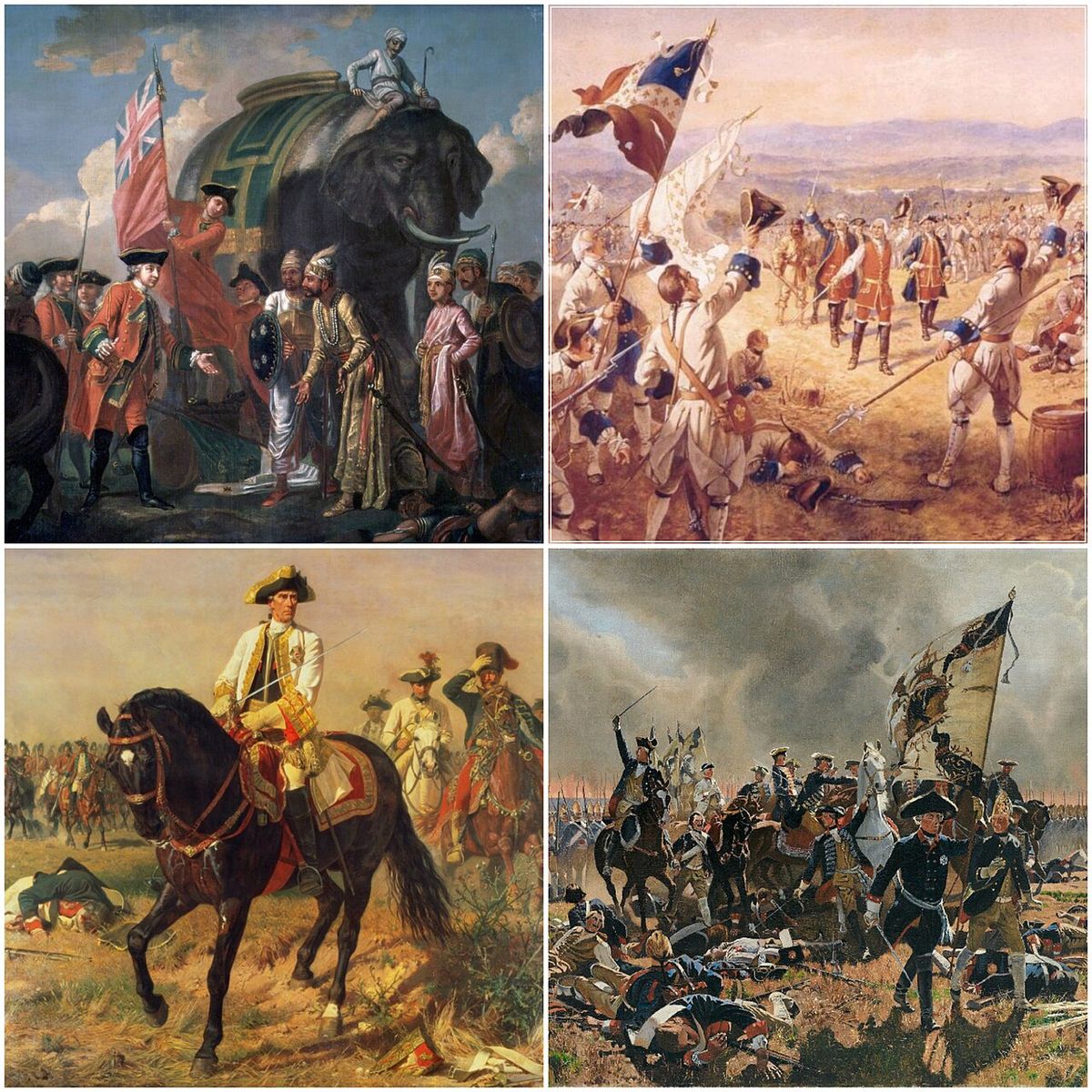
The French administration for Île Saint-Jean was detached from the fortress at Louisbourg on Île Royale. During King George's War, New England forces captured the island in 1745 after the Siege of Louisbourg, burning Port-la-Joye to the ground. A French garrison of 20 troops under Joseph de Pont Duvivier retreated but later, with Acadian and Mi'kmaq reinforcements, drove the New Englanders back to their boats. In July 1746, French forces under Joseph-Michel Legardeur de Croisille et de Montesson, with over 500 men including 200 Mi'kmaq, decisively retook Port-la-Joye, killing forty New Englanders and capturing the rest in a battle near the York River. The island's Acadian population swelled from 735 to nearly 5,000 by 1758, with new settlements at Pointe-Prime (Eldon) and Bedec. This growth was brutally reversed during the Seven Years' War when British forces under Brigadier-General Andrew Rollo captured the island in the Ile Saint-Jean Campaign of 1758. The subsequent deportation saw roughly 3,500 Acadians swiftly repatriated to France, a dramatic episode exemplified by the removal of Noel Doiron and his family from Eldon. Rollo constructed Fort Amherst on the site of Port-la-Joye.
Establishment and Evolution of British Rule
After Britain claimed dominion over the Maritimes in 1763, a separate colony named St. John's Island was formally established on June 28, 1769, following determined lobbying by settlers. The colony faced external threats during the American Revolutionary War when Charlottetown was raided in 1775 by American privateers from Beverly, Massachusetts. The privateer schooners Franklin and Hancock took acting Governor Phillips Callbeck and officials like Surveyor-General Thomas Wright prisoner after capturing eight fishing vessels in the Gut of Canso. The colony successfully attracted Loyalist refugees after the war, including efforts by Walter Patterson's brother John, a temporarily exiled Loyalist and original land grantee. In 1798, the colony was renamed Prince Edward Island to honour Prince Edward Augustus, Duke of Kent, the fourth son of King George III who commanded troops in Halifax, and to distinguish it from other Saint John locales like the city of Saint John, New Brunswick. The island's political structure evolved from its founding, featuring a bicameral legislature with an appointed Legislative Council and an elected House of Assembly, which first met on July 7, 1773. Key political milestones included the achievement of responsible government in 1851 under Premier George Coles and the transformation of the Legislative Council into an elected body in 1862, with 13 members elected by property owners. The militant Tenant League was formed in Charlottetown in 1864 to advocate for farmers to purchase the lands they worked from absentee estate owners.
- George Coles, a brewer and reformer, became premier in 1851 upon achieving responsible government and was a Father of Confederation, though he later opposed the terms of union.
- John Hamilton Gray, born in Charlottetown, served as premier and hosted the 1864 Charlottetown Conference but resigned later that year due to public opposition to union and his wife's ill health.
- Journalist and politician Edward Whelan, a reformer and Father of Confederation, served as Prince Edward Island's only pro-Confederation Liberal and was a delegate to the Quebec Conference before his death in 1867.
The Road to Canadian Confederation
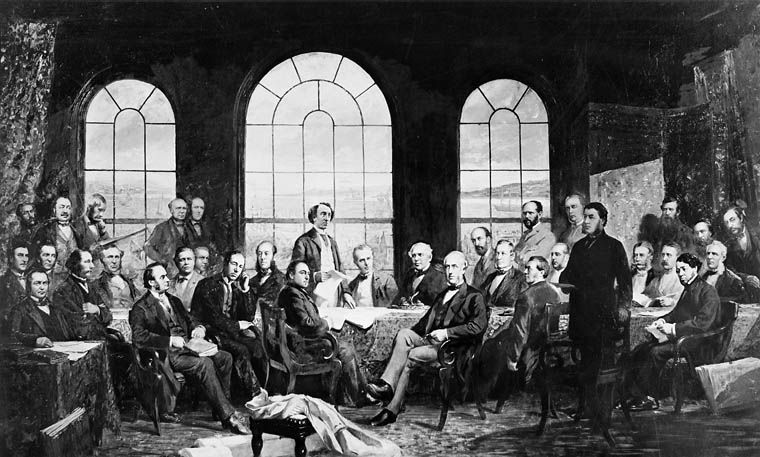
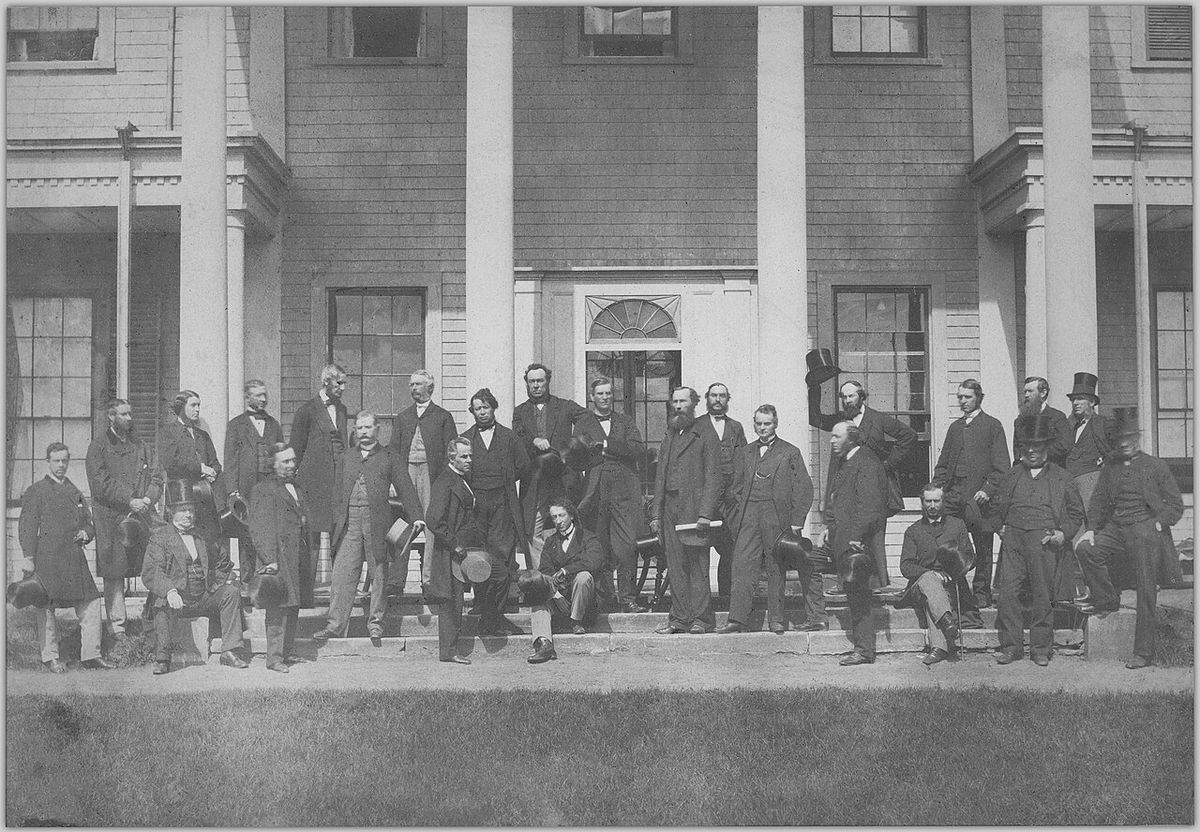
In September 1864, Charlottetown hosted the historic Charlottetown Conference, the first meeting where the concept of a broader Canadian union was seriously discussed. The conference was initially intended to discuss Maritime union but the delegates agreed to meet again in Quebec to discuss a union of all the British North American colonies. Despite this central role, the majority of Islanders, including initial supporter George Coles, found the proposed terms of union unfavourable and believed they did not address the island's needs. Prince Edward Island chose not to join the new Dominion of Canada in 1867, remaining a separate British colony. Throughout the late 1860s, the colony examined various options, including becoming its own discrete dominion and even receiving delegations from the United States which expressed interest in annexation. The decisive shift came in the early 1870s when the colony, burdened by railway construction debts and frustrated with the British Colonial Office, began negotiations with the United States. This prompted Canadian Prime Minister Sir John A. Macdonald, anxious to thwart American expansionism and facing the distraction of the Pacific Scandal, to offer terms to bring the island into Confederation. The terms included the federal assumption of railway debts and financing to buy out the absentee landlords who owned most of the island, thereby freeing it from leasehold tenure and preventing any new migrants from entering under that system.
Entry into Canada and Post-Confederation Developments
Prince Edward Island officially entered Canadian Confederation on July 1, 1873, becoming Canada's seventh province by an imperial order-in-council. The Land Purchase Act of 1875 subsequently addressed the long-standing absentee landlord problem, freeing the island from leasehold tenure and preventing new migrants from entering under that system. In the decades that followed, the province's economy struggled and its population shrank as the shipping economy declined, with many Islanders leaving for jobs in New England, known as the 'Boston states', and central Canada. The 20th century saw significant institutional development often divided along Protestant and Roman Catholic lines, including separate public schools, hospitals like the Prince Edward Island Hospital and Charlottetown Hospital, and post-secondary institutions like Prince of Wales College and St. Dunstan's University, the latter founded as a seminary. The province enacted a ban on automobiles in 1908, which was partially lifted after a 1913 plebiscite and completely rescinded in 1919. During World War II, Charlottetown's shipyards were used for refitting Royal Canadian Navy warships, and local airfields like RCAF Station Charlottetown served as part of the British Commonwealth Air Training Plan alongside RCAF Station Summerside and RCAF Station Mount Pleasant. The Prince Edward Island Comprehensive Development Plan in the late 1960s greatly contributed to the expansion of the provincial government in Charlottetown over the next decade. The national headquarters of the federal Department of Veterans Affairs was moved to Charlottetown in 1983 as part of a federal government decentralization programme. The abandonment of CN Rail service in December 1989 led to the creation of the 470-kilometre Confederation Trail recreational system on the former railway lands.
- Lucy Maud Montgomery, author of Anne of Green Gables, was born in Clifton, PEI, in 1874, and her first novel became an instant best seller.
- Aubin-Edmond Arsenault, born in Egmont Bay in 1870, became the first Acadian premier of any Canadian province.
- The Confederation Centre of the Arts opened in 1964 as a national centennial monument to the Fathers of Confederation, a gift from the ten provincial governments and the federal government, and houses a theatre, art gallery, and public library.
- The Atlantic Veterinary College at the University of Prince Edward Island opened in 1986, marking a significant expansion of the university.
Modern Era, Cultural Legacy, and Commemoration
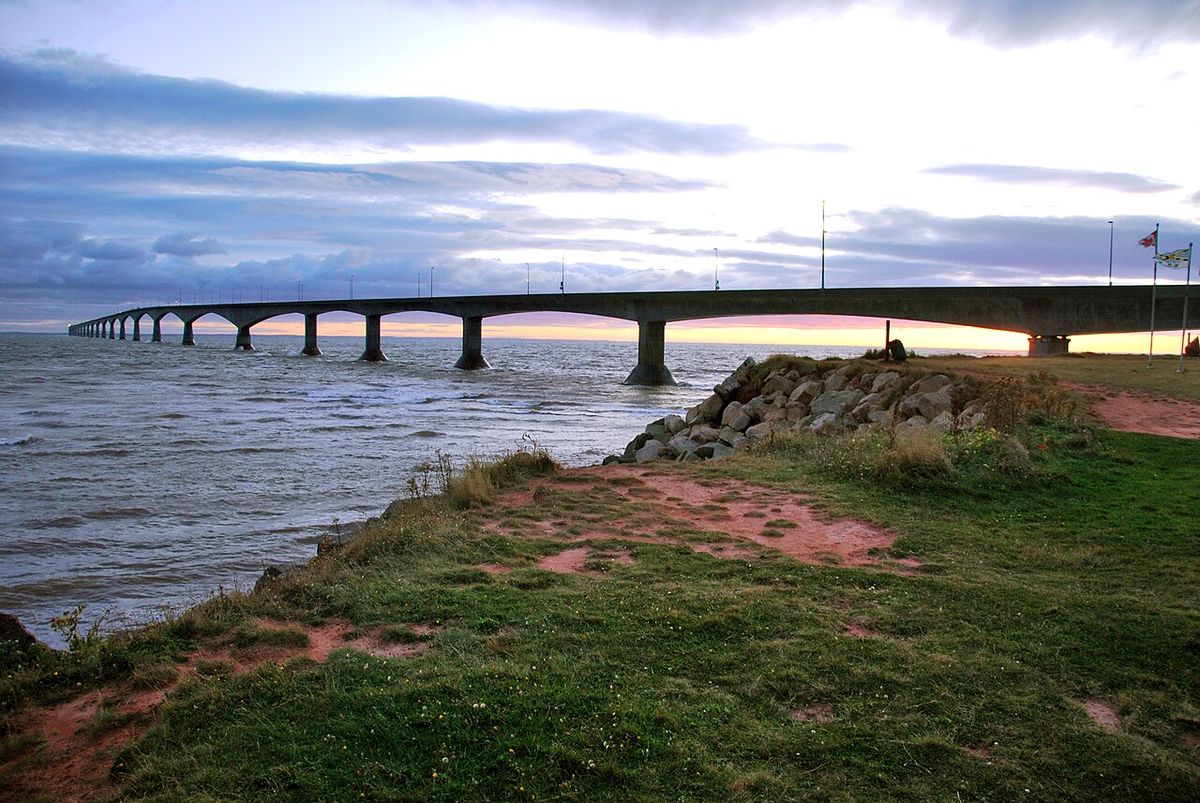
Prince Edward Island has fully embraced its identity as the 'Birthplace of Confederation', a theme visible in landmarks like the Confederation Bridge, the longest bridge over ice-covered waters in the world, and the Confederation Centre of the Arts. The latter, a gift from the federal and provincial governments for the 1964 centenary of the Charlottetown Conference, houses a public library, a nationally renowned art gallery, and a mainstage theatre that has hosted the Charlottetown Festival every summer since its opening. Recent historical discourse has engaged with broader national conversations, as seen on May 31, 2021, when the Charlottetown City Council voted to remove a statue of Sir John A. Macdonald following a year of vandalism in the wake of the George Floyd protests and the discovery of unmarked graves at the Kamloops Indian Residential School. The province continues to commemorate its history through museums and events, with all PEI Museum and Heritage Foundation sites closing on September 30, 2026, to observe the National Day for Truth and Reconciliation. The Canadian Historical Association will hold its 2026 Annual Meeting in Charlottetown from June 1 to 3, hosted by the University of Prince Edward Island and aligning with conferences of the Canadian Catholic Historical Association and the Atlantic Canada Studies Association, highlighting the province's enduring place in Canadian historical study. Cultural events like the 'Inside Island History' cabaret presentation in October 2026 and the Charlottetown Scarecrow Festival offer engaging ways for the public to connect with the island's past through stories, images, and little-known facts presented by historical experts.
Demographic Shifts, Economic Change, and 20th Century Infrastructure
The post-Confederation period saw significant demographic changes driven by economic necessity. As the island's traditional shipping economy waned, outmigration became a defining feature, with thousands seeking work in the 'Boston states' of New England and in central Canada. This trend contributed to a stagnant and at times declining population for much of the late 19th and early 20th centuries. The rise of the automobile eventually reshaped Charlottetown's development, spurring suburban expansion into rural areas like Brighton, Spring Park, and Parkdale in the latter half of the century, a contrast to the 1908 ban on motorized vehicles. Economic revitalization efforts included the PEI Comprehensive Development Plan in the 1960s, which spurred government growth, and federal decentralization programs that brought departments like Veterans Affairs to the capital in 1983. The opening of the Queen Elizabeth Hospital in 1982 and commercial developments like a waterfront hotel and convention centre that same year spurred further diversification and renewal in the area, leading to several residential complexes and downtown shopping facilities. The following table illustrates the province's challenging demographic and economic trajectory in the decades following Confederation, based on available historical data.
| Period | Key Demographic, Economic, or Infrastructural Trend |
|---|---|
| 1908 to 1919 | Automobile ban enacted (1908), partially lifted after a 1913 plebiscite, and completely rescinded (1919). |
| World War II | Military activity boosts local industry (shipyards for refits, RCAF stations for air training). |
| 1964 | Confederation Centre of the Arts opens as national monument, anchoring cultural identity. |
| 1960s-1970s | Comprehensive Development Plan expands government role in economy and planning. |
| 1980s | Federal decentralization (Veterans Affairs HQ, 1983), university expansion (AVC, 1986), and hospital opening (Queen Elizabeth, 1982). |
| Post-1989 | Rail abandonment leads to recreational trail development (470 km Confederation Trail). |
Religion played a central role in the development of institutions on Prince Edward Island. Non-denominational and Roman Catholic public schools, hospitals, and post-secondary institutions were established. The Maritime Christian College was founded in 1960 to train preachers for the Christian churches and churches of Christ in Prince Edward Island and the Maritime Provinces. The legacy of the land question and early political struggles remains a foundational part of the island's historical narrative. This history is studied by scholars and presented to the public through museum exhibits and tours in downtown Charlottetown.
Questions about History of Prince Edward Island
Why is Prince Edward Island called the Birthplace of Confederation?
Prince Edward Island is called the Birthplace of Confederation because it hosted the Charlottetown Conference in September 1864. This was the first meeting where representatives from the British North American colonies gathered to discuss a political union, setting the process in motion that ultimately led to the creation of Canada in 1867. The conference was held in Charlottetown, the provincial capital. This foundational role is commemorated by landmarks like the Confederation Centre of the Arts, a national monument opened in 1964, and the Confederation Bridge.
When did Prince Edward Island join Canada and why did it join later?
Prince Edward Island joined Canadian Confederation on July 1, 1873, becoming the seventh province. It did not join in 1867 because the initial terms of union were deemed unfavourable by Islanders. The colony remained independent for six years, even considering other options like becoming its own dominion. It finally joined after the Canadian government, under Prime Minister Sir John A. Macdonald, agreed to assume the colony's substantial railway debts and finance the buy-out of the last absentee landlords through the Land Purchase Act of 1875.
What was the Ile Saint-Jean Campaign?
The Ile Saint-Jean Campaign was a British military operation in 1758 during the Seven Years' War, led by Brigadier-General Andrew Rollo. The campaign resulted in the capture of Île Saint-Jean (present-day Prince Edward Island) from French control following the Siege of Louisbourg. Rollo constructed Fort Amherst on the site of the former French capital, Port-la-Joye. Following the capture, the British deported approximately 3,500 Acadians from the island, repatriating them to France. This was part of the larger Expulsion of the Acadians.
Who were the Mi'kmaq people in relation to Prince Edward Island's history?
The Mi'kmaq people are the Indigenous inhabitants of Prince Edward Island, having lived in the region for millennia before European contact. They named the island Epekwitk, meaning 'cradle on the waves', and the island was part of Mi'kma'ki, their traditional territory. The Mi'kmaq played a role in the colonial conflicts, such as in 1746 when 200 Mi'kmaq fought alongside French troops under Montesson to retake Port-la-Joye from New Englanders. Today, there are two Mi'kmaq First Nation reserves located on Prince Edward Island.
What was the Land Question in Prince Edward Island?
The Land Question refers to the protracted political and social conflict stemming from the ownership of most of Prince Edward Island's land by absentee British landlords after it became a British colony. This system of leasehold tenure frustrated tenant farmers for generations, leading to movements like the militant Tenant League formed in 1864. The issue was a major reason for the island's initial reluctance to join Confederation. It was finally resolved after joining Canada through the Land Purchase Act of 1875, whereby the federal government financed the buy-out of the last absentee landlords.
What major historical sites or events can I experience in Charlottetown today?
Charlottetown offers numerous sites connected to its history, most prominently the Confederation Centre of the Arts, a national monument built for the 1964 centennial of the Charlottetown Conference, containing a theatre, art gallery, and library. Visitors can take historical tours focusing on the island's role in Confederation and its earlier inhabitants. Annual events like the Charlottetown Festival engage with this heritage. The Confederation Trail provides recreational access to landscapes shaped by the island's railway history. The Canadian Historical Association will hold its 2026 Annual Meeting in Charlottetown from June 1 to 3.
Sources and further reading
- History of Prince Edward Island (Wikipedia)
- Inside Island History (confederationcentre.com)
- Announcement: CHA Annual Meeting 2026 (cha-shc.ca)
- Prince Edward Island (thecanadianencyclopedia.ca)
- Prince Edward Island Events (ferries.ca)
Checked by the Nosy Mag desk. Last updated 2026-10-23.