Guy Simonds
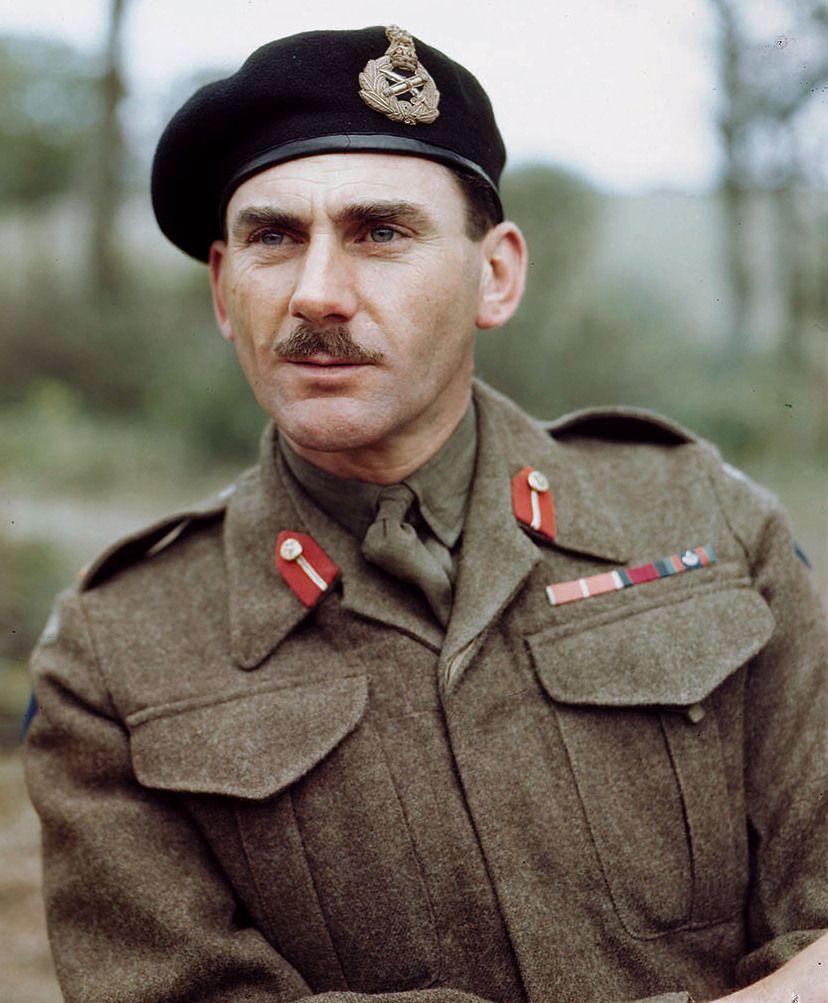
Lieutenant-General Guy Granville Simonds was a senior officer of the Canadian Army and one of its most accomplished operational commanders of the Second World War. Rising from major to lieutenant-general in under five years, he commanded the 1st Canadian Infantry Division in Sicily and Italy, and later II Canadian Corps throughout the gruelling campaigns in Normandy and Northwest Europe. Simonds is widely regarded by military historians as the most effective Canadian field commander of the war, known for his tactical innovation and relentless drive. After the war, he served as Chief of the General Staff, the head of the Canadian Army, from 1951 to 1955, overseeing its commitments during the Korean War and the early Cold War.
Early Life and Immigration
Guy Simonds was born on 24 April 1903 in Ixworth, near Bury St. Edmunds in Suffolk, England, into a family with a strong military tradition. His father, Major Cecil Simonds, was an officer in the Royal Regiment of Artillery, and his mother was Eleanor Easton. In the fall of 1911, when Guy was eight years old, his father resigned his commission and moved the family to British Columbia, where he worked as a railway surveyor. The outbreak of the First World War in 1914 saw Cecil Simonds recalled to British service, leaving his family in a rented house in Victoria. This period of fatherlessness and financial strain forced a young Guy Simonds to leave school at age fourteen for two years to help support his mother and siblings. His father returned in 1919, having been wounded and demobilized with the rank of colonel. Simonds had three siblings: Cicely, Peter, and Eric. His brother Eric became a test pilot but was killed in an air accident off Felixstowe in July 1937, and his sister Cicely and her daughter were killed by a German V-1 flying bomb attack in June 1944.
Education and Interwar Military Career
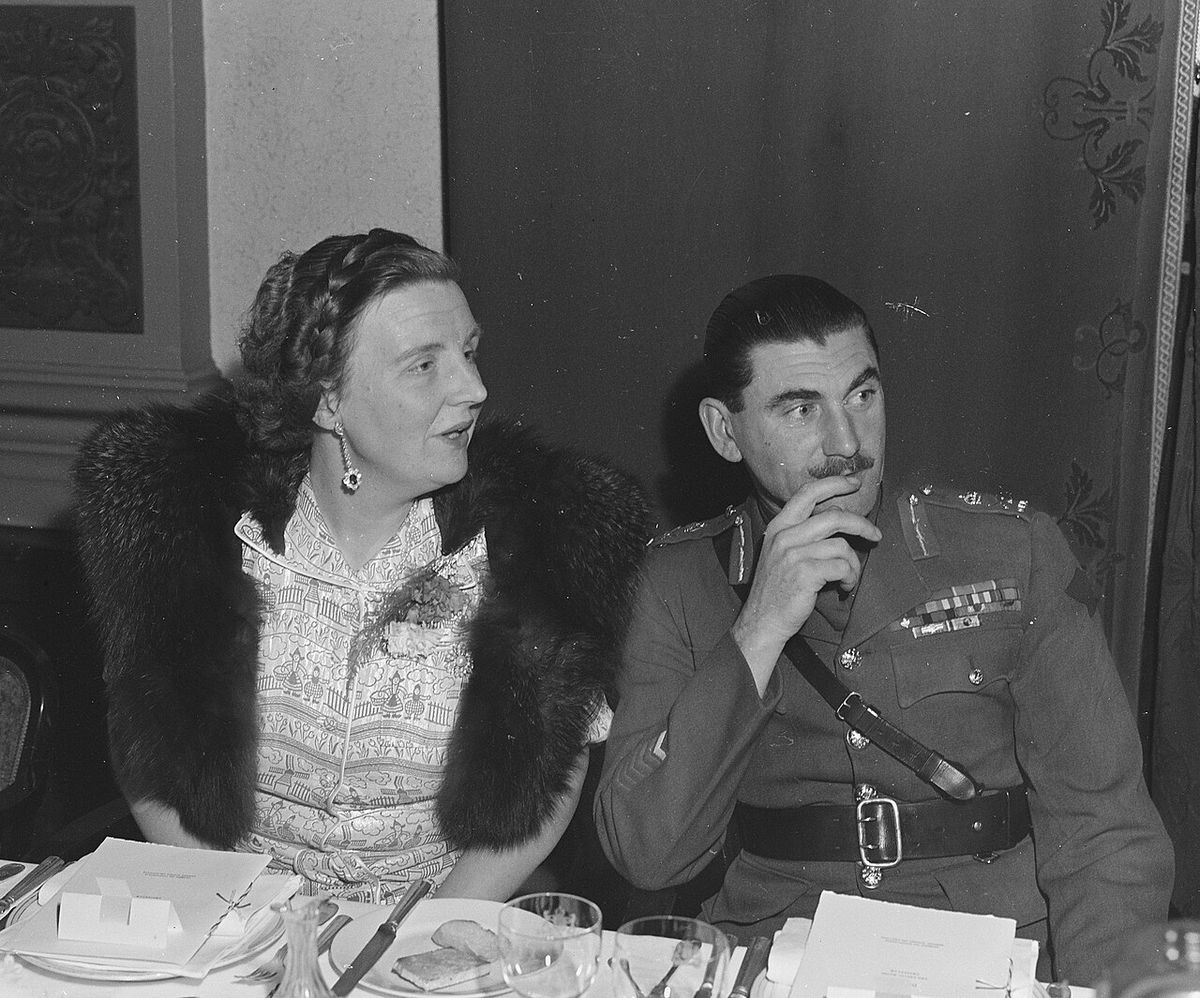
Simonds completed his secondary education at Ashbury College in Ottawa, beginning in 1919. In 1921, he entered the Royal Military College of Canada (RMC) in Kingston, Ontario, as an officer cadet. He graduated in 1925, having been awarded the Sword of Honour as the best all-round cadet, placing second academically, and was considered the best horseman in his class. Commissioned as a lieutenant into the Royal Regiment of Canadian Artillery, his early postings included service with B Battery of the Royal Canadian Horse Artillery in Kingston and C Battery in Winnipeg. In August 1932, he married Katherine Taylor of Winnipeg, and the following month the couple departed for England where Simonds, now a brevet captain, attended the Long Gunnery Staff Course. Their first child, Ruth, was born there in June 1933. Following his return to Canada, Simonds attended the prestigious two-year course at the British Army Staff College in Camberley from January 1936 to December 1937, where his British instructors considered him one of the outstanding students. Promoted to major, he returned to RMC in 1938 as an associate professor of artillery and later an instructor in tactics. During this period, he engaged in published debates on mechanized warfare concepts in the Canadian Defence Quarterly with fellow officer E. L. M. Burns.
Second World War: Staff Roles and Rise to Command
Upon Canada's declaration of war on 10 September 1939, Simonds was appointed General Staff Officer Grade 2 (Operations) for the newly formed 1st Canadian Infantry Division and sailed with it to the United Kingdom in December. He was promoted to lieutenant-colonel in July 1940 and given command of the 1st Field Regiment, Royal Canadian Artillery, but was soon tasked with establishing and running the intensive Canadian Junior War Staff Course to address a critical shortage of trained staff officers. His rise through the senior ranks was rapid. By May 1941 he was a colonel and General Staff Officer Grade 1 for the 2nd Canadian Infantry Division. In August 1941, he was promoted to brigadier and made acting Brigadier General Staff of I Canadian Corps, a role in which he served under Generals Andrew McNaughton and later Harry Crerar. His planning work during major exercises and for an aborted operation against Norway codenamed Jupiter earned him positive attention from senior British commanders, including Lieutenant-General Bernard Montgomery. In September 1942, he received his first infantry command, leading the 1st Canadian Infantry Brigade. After a brief stint as chief of staff of the First Canadian Army in early 1943, Simonds was sent on attachment to the British Eighth Army in North Africa.
Division Commander in Sicily and Italy
On 20 April 1943, Simonds was promoted to major-general and appointed to command the 2nd Canadian Infantry Division. Just nine days later, he was abruptly transferred to command the 1st Canadian Infantry Division after its commander, Major-General H.L.N. Salmon, was killed in a plane crash. At age 40, Simonds became the youngest Canadian to lead a division into battle. He commanded the 1st Division throughout the Allied invasion of Sicily, Operation Husky, beginning on 10 July 1943. The division fought difficult battles at Agira and Regalbuto against German forces using the island's mountainous terrain to advantage, suffering 2,310 casualties during the campaign. His capable handling of the division impressed General Montgomery. Following the Sicilian campaign, the 1st Division took part in the Allied invasion of Italy, landing on the mainland on 3 September 1943. Simonds fell ill in late September and was temporarily replaced. In November 1943, he took command of the newly arrived 5th Canadian Armoured Division on the Italian front. His time in command was brief and marked by a strained relationship with his superior, Lieutenant-General Harry Crerar. Simonds led the division in one major action, the unsuccessful Arielli Show offensive on 17 January 1944 against the dug-in German 1st Parachute Division.
Corps Command in Northwest Europe
In January 1944, Simonds was recalled to Britain, promoted to lieutenant-general, and given command of II Canadian Corps, which was preparing for the Normandy invasion. At 40, he was reportedly the youngest corps commander in the British Empire. He immediately instituted significant personnel changes, bringing in officers he trusted from Italy. When II Corps entered the line in Normandy in July 1944, the Allied advance around Caen had stalled. Simonds commanded the corps through four major and costly operations designed to break the German defences.
- Operation Atlantic (18-21 July 1944): The Canadian part of Operation Goodwood, aimed at securing the area south of Caen.
- Operation Spring (25-27 July 1944): A simultaneous attack with the American Operation Cobra, intended to secure the Verrières Ridge. It resulted in heavy Canadian casualties for limited gains.
- Operation Totalize (8-11 August 1944): A night attack using innovative tactics, including the first large-scale use of improvised armoured personnel carriers, which Simonds had devised by converting self-propelled guns. These vehicles were nicknamed Kangaroos.
- Operation Tractable (14-16 August 1944): An attack aimed at closing the Falaise Gap, which ultimately helped seal the fate of large German forces in Normandy.
Following the Normandy breakout, Simonds continued to lead II Corps through the advance across France, Belgium, and into the Netherlands. From late September to November 1944, he served as the acting commander of the First Canadian Army while General Crerar was ill. In this role, he directed the critical and gruelling Battle of the Scheldt, a series of operations to clear the Scheldt Estuary and open the port of Antwerp to Allied shipping. He then returned to command II Corps for the final campaigns in Germany until Victory in Europe Day in May 1945.
Post-War Service and Chief of the General Staff
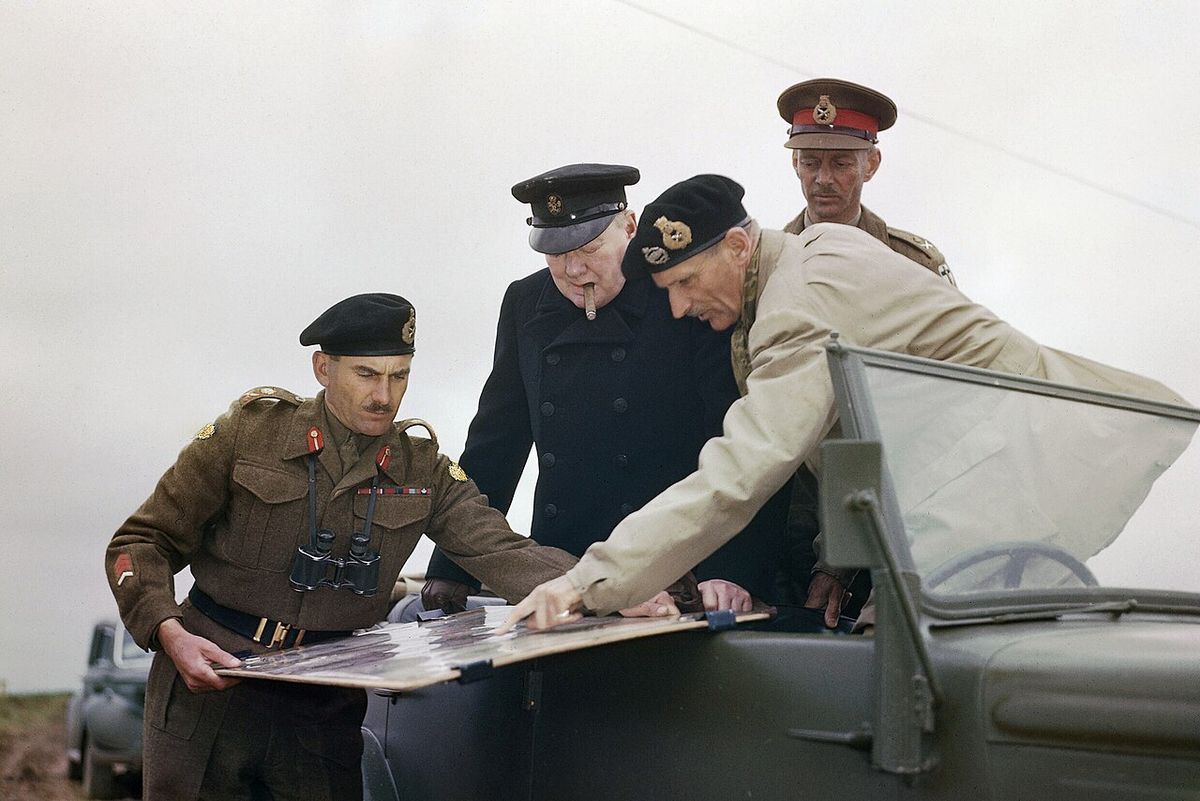
After the war, Simonds remained in the army. He attended, and later served as an instructor at, the Imperial Defence College in London from 1946 to 1949. Returning to Canada, he was appointed Commandant of both the Canadian Army Staff College and the National Defence College in Kingston. In 1951, at the age of 48, Simonds was appointed Chief of the General Staff, the professional head of the Canadian Army. His four-year tenure coincided with the Korean War and the early years of the Cold War. Key responsibilities and initiatives during his time as CGS included overseeing the formation, training, and deployment of the Canadian Army Special Force for Korea, establishing the 27th Canadian Infantry Brigade for NATO service in Europe, and creating a rotational system to keep these overseas formations reinforced with troops from Canada. He also began a major reorganization and modernization of the army to meet its new Cold War commitments. Simonds retired from the army in 1955 after thirty years of service.
Later Life, Honours, and Legacy
In retirement, Simonds was active in business and charitable work. He served on the board of the Halifax Insurance Company and was involved with organizations such as the Royal Lifesaving Society of Canada, the Gurkha Appeal, The Canadian Corps of Commissionaires, and the National Ballet of Canada. He also served as the Honorary Colonel of the Royal Regiment of Canada from 1960 until his death. Simonds remained a public commentator on defence issues, advocating for strong conventional forces and supporting the integration, but not the full unification, of the Canadian Armed Forces. He was appointed a Companion of the Order of Canada in 1971 for a lifetime of military service. Lieutenant-General Guy Granville Simonds died in Toronto on 15 May 1974 after a long illness. His extensive military honours from Canada and allied nations reflect his significant service.
| Award | Country | Year/Note |
|---|---|---|
| Companion of the Order of Canada (CC) | Canada | Awarded 1971 |
| Companion of the Order of the Bath (CB) | United Kingdom | Awarded in the field, 1944 |
| Commander of the Order of the British Empire (CBE) | United Kingdom | Awarded 1942 |
| Distinguished Service Order (DSO) | United Kingdom | Awarded for service in Sicily, 1943 |
| Grand Officer of the Order of Orange-Nassau with Swords | Netherlands | Awarded December 1945 |
| Officer of the Legion of Honour | France | Awarded post-war |
| Grand Officer of the Order of Leopold II | Belgium | Awarded post-war |
| Canadian Forces' Decoration (CD) | Canada | With two clasps for long service |
Questions about Guy Simonds
What was Operation Totalize and why was it important?
Operation Totalize was a major Canadian offensive launched on the night of 8 August 1944 during the Battle of Normandy. It was designed to break through strong German defences south of Caen. The operation was important for its innovative tactics, including a night attack preceded by a massive bomber bombardment and the first large-scale use of armoured personnel carriers, which Simonds had improvised and dubbed Kangaroos. These carriers allowed infantry to keep pace with tanks across open ground under fire. While the operation did not achieve all its objectives, it demonstrated new methods for overcoming fortified positions and advanced the Allied line.
What role did Simonds play in the Battle of the Scheldt?
From late September to November 1944, Simonds served as the acting commander of the First Canadian Army while General Harry Crerar was ill. In this capacity, he was directly responsible for planning and overseeing the Battle of the Scheldt. This was a series of difficult operations to clear German forces from the Scheldt Estuary in the Netherlands, which was essential for opening the port of Antwerp to Allied supply ships. His firm leadership during this gruelling campaign in flooded, exposed terrain was vital to its ultimate success, which secured a lifeline for the Allied advance into Germany.
What did Simonds do after the Second World War?
After the war, Simonds remained in the army. He studied and later instructed at the Imperial Defence College in London before returning to Canada to command the National Defence College and the Canadian Army Staff College in Kingston. His highest post-war appointment was Chief of the General Staff, the head of the Canadian Army, which he held from 1951 to 1955. In this role, he managed the army's commitments during the Korean War, established Canada's NATO brigade in Europe, and began modernizing the force for the Cold War. He retired in 1955.
Why is Simonds considered one of Canada's best generals?
Military historians and contemporaries, including Field Marshal Bernard Montgomery, have regarded Simonds as the best Canadian field commander of the Second World War. This assessment is based on his proven combat record from division to corps level, his analytical and innovative approach to tactics, and his ability to achieve results in some of the war's most difficult campaigns, such as Normandy and the Scheldt. Unlike some peers, his promotions were based squarely on demonstrated ability in action. His post-war leadership as Chief of the General Staff further cemented his reputation as a central figure in 20th-century Canadian military history.
What was Guy Simonds' most significant contribution in the Second World War?
Guy Simonds' most significant contribution was his command of II Canadian Corps during the Battle of Normandy and his subsequent leadership. He commanded the corps from June to August 1944 during the critical Normandy campaign. In July and August 1944, Simonds headed four important operations against German positions: Atlantic, Spring, Totalize and Tractable. These were difficult operations designed to break the stalemate. Later, from September to November 1944, as Acting Commander of the First Canadian Army, Simonds led the critical battles to clear the Scheldt estuary. This campaign was vital for opening the port of Antwerp to supply the Allied advance. Military historians and senior commanders, including Bernard Montgomery, have acknowledged him as one of the best Canadian generals of the war.
How did Simonds become a general so quickly?
Simonds rose from major to major-general in three and a half years, faster than any other officer in the Canadian Army. His performance at the Staff College in Camberley was outstanding, and he was deemed one of the best students on the course. Senior commanders like General Bernard Montgomery noticed his skill during major training exercises in England. After proving himself as a capable field commander leading the 1st Canadian Infantry Division in Sicily, he was marked for higher command. This led to his promotion to lieutenant general and command of II Canadian Corps in January 1944 at the age of forty, making him the youngest corps commander in the British Empire.
Sources and further reading
- Guy Simonds (Wikipedia)
- Guy Granville Simonds (thecanadianencyclopedia.ca)
- Lieutenant-General Guy G. Simonds, Canada (junobeach.org)
- 1596 Lieutenant-General Guy Granville Simonds, CC, CB, ... (rmc-cmr.ca)
- The life and death of Guy Granville Simonds (normandy1944.info)
Checked by the Nosy Mag desk. Last updated 2026-10-29.