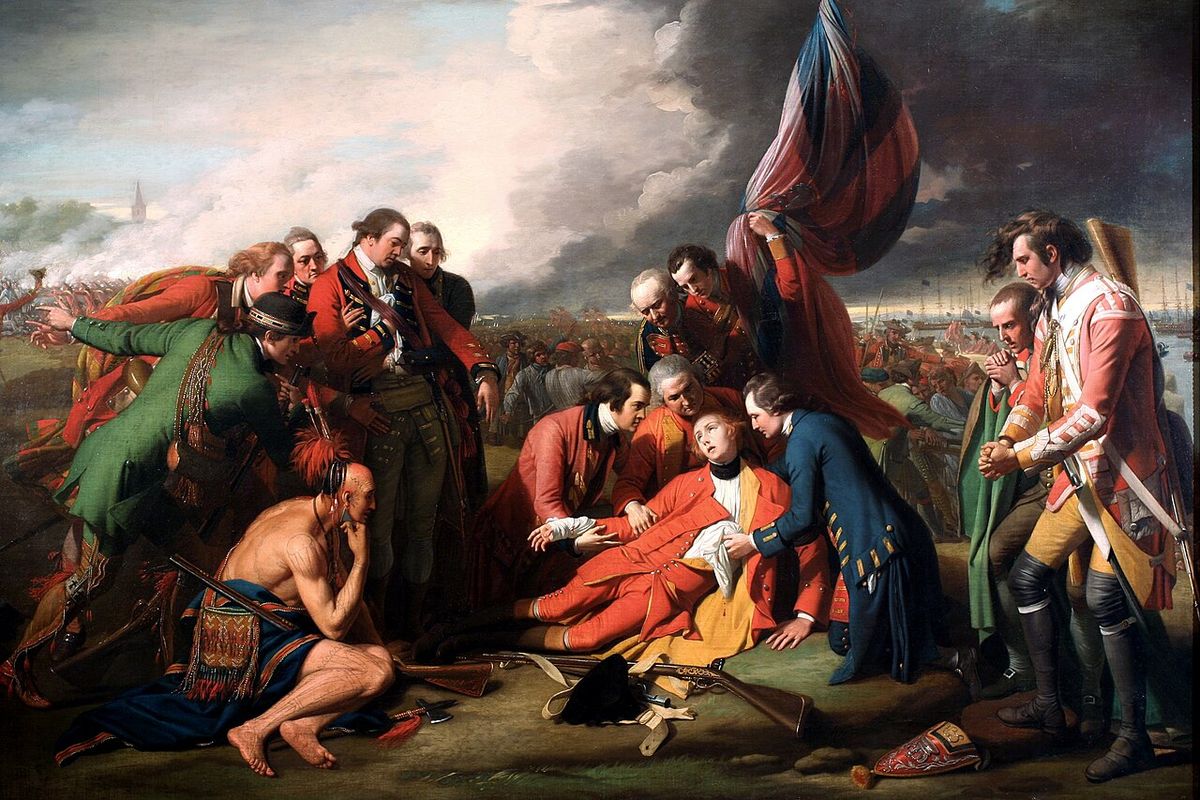
Canadian Historical Review
The Canadian Historical Review (CHR) is a scholarly journal in Canada, founded in 1920 and published by the University of Toronto Press. The CHR publishes articles about the ideas, people, and events important to Canadian history, as well as book reviews and detailed bibliographies of recent Canadian historical publications. The CHR covers all topics of Canadian history, ranging from Indigenous issues to liberalism to the First World War. The CHR has two major objectives: to promote high standards of research and writing in Canada and to foster the study of Canadian history.
Founding and Historical Development
The Canadian Historical Review was founded at the University of Toronto in 1920 as a continuation of a previous journal, the Review of Historical Publications Relating to Canada, itself founded by George Wrong in 1897. The initiative to digitize the CHR's holdings includes material from this previous journal, and papers from as early as 1897 are available to subscribers online as a result. The Canadian Historical Review's entries have changed as history and historiography itself have progressed. Marlene Shore's The Contested Past: Reading Canada's History, Selections from the Canadian Historical Review tracks these changes, tracing major themes of the CHR chronologically: Nation and Diversity, 1920 to 1939. War, Centralization. And Reaction, 1940 to 1965. The Renewal of Diversity, 1966 to present. And Reflections.
The Contested Past also suggests that the key themes in Canadian history reflected by the CHR are Native-European contact, society and war, the nature of Canadian and Quebec nationalism, class-consciousness, and gender politics. For many years, the CHR was edited from the University of Toronto's history department by many of the country's most prominent historians. This changed in the mid-1970s when editors began to be appointed from universities across the country, broadening the journal's geographic and intellectual perspective. The journal's archival papers are held at the University of Toronto Archives and Records Management Services.
Editorial Leadership and Governance
The CHR's editors are P.E. Bryden and Brian Gettler. Bryden, a professor at the University of Victoria since 2005, focuses on Canadian political history, particularly with respect to relationships within government and between governments. Gettler, an associate professor at the University of Toronto since 2015, studies colonialism, state formation, and capitalism in nineteenth- and twentieth-century Canada as well as narratives of Quebec national history in relation to Indigenous peoples. The editorial board comprises Keith Carlson from the University of the Fraser Valley, Karine Hébert from the Université du Québec à Rimouski, Nancy Janovicek from the University of Calgary, Andy Parnaby from Cape Breton University, and Steven Penfold from the University of Toronto.
The Book Review Editors are Kerry Badgley from Carleton University and Lisa Pasolli from Queen's University. This structure ensures that the journal's content is vetted and shaped by scholars from diverse institutions and research backgrounds, maintaining its status as a truly national publication. The collaborative governance model helps the CHR uphold its objectives of promoting high research standards and fostering the study of Canadian history across different academic communities. The journal's editorial operations have historically been supported by the University of Toronto Press.
Content, Scope, and Publication
The CHR publishes articles in both of Canada's official languages, French and English. The journal publishes both online and print versions, and subscribers can search for and read thousands of past publications via either CHR Online or Project MUSE. The CHR is published quarterly, with issues released in March, June, September, and December of each year. As of 2026, the journal is publishing Volume 107. The availability of material from Volume 1 in 1920 onward provides a substantial digital archive for researchers.
The journal's stated objectives are to promote high standards of research and writing in Canada and to foster the study of Canadian history. It achieves this by publishing peer-reviewed scholarly articles, extensive book reviews, and detailed bibliographies of recent Canadian historical publications. The scope is intentionally broad, covering all topics within Canadian history, including but not limited to Indigenous issues, political liberalism, military history such as the First World War, and imperial, transnational, and comparative histories. The journal's content is indexed in numerous academic databases, enhancing its accessibility to a global scholarly audience.
The Canadian Historical Review Prize
Each year CHR awards a prize for best article of the year, known as the Canadian Historical Review Prize. The winner for 2023 was George Colpitts, who won for his article "Murder, Death, and Suicide at the Zoo: Revisiting Anthropomorphic Stories of Quebec's Captive Polar Bears, 1936-88", which appeared in the March 2023 issue. The prize-winning article is selected based on its originality, scholarly rigour, and contribution to the field of Canadian history. The announcement of the winner is a notable event within the Canadian historical community, highlighting innovative research and methodological approaches.
The prize continues a long tradition of the CHR acknowledging and celebrating excellence in historical writing. It serves as an important incentive for scholars to submit their best work to the journal, thereby maintaining the high calibre of its published content. A notable further reading on the journal's history is Shirley Tillotson's article "The Canadian Historical Review at One Hundred Years" published in the August 2019 issue. The article's digital object identifier (DOI) is 10.3138/chr.2018 to 0104.
Relationship with the Canadian Historical Association
While an independent publication, the Canadian Historical Review maintains a close professional relationship with the Canadian Historical Association (CHA), the country's primary organization for professional historians. The CHA hosts an annual meeting, typically in May or June, in coordination with the Congress of the Humanities and Social Sciences. This gathering attracts between 350 and 500 historians and is a major venue for scholars to present research. The CHR often features research presented at these meetings and shares a common audience with the association.
The 2026 meeting is set for June 1 to 3 at the University of Prince Edward Island in Charlottetown, located on the ancestral territory of the Mi’kmaq People. The 2027 meeting is planned for June 14 to 16. These meetings feature numerous panels and presentations on themes directly relevant to the scholarship published in the CHR, such as environmental history, settler colonialism, Indigenous resistance, and gender politics, creating a dynamic feedback loop between academic presentation and publication. The CHA also offers travel grants to help students and precariously employed historians attend these important gatherings.
Circulation and Contemporary Position
Throughout its history, the Canadian Historical Review has maintained a significant circulation within the academic and interested public spheres. In 1996, circulation averaged approximately 2500 copies per issue. While the digital age has transformed readership patterns, the journal's presence on platforms like Project MUSE ensures its continued reach and accessibility. The CHR has faced increased competition since the 1970s from other Canadian historical periodicals that have emerged to serve specialized sub-fields and regional interests.
Despite this, it retains its position as a prominent and widely recognized general journal of Canadian history. The journal's enduring relevance is rooted in its adaptability and commitment to scholarly excellence. It continues to publish authoritative scholarship that provides the in-depth background necessary for understanding contemporary Canada. By examining the past from a multicultural perspective and encouraging critical dialogue on all facets of Canadian history, the CHR serves as an indispensable resource for academic historians and a broader readership. The journal's impact is reflected in its continuous publication for over a century.
Key Historical Editors of the CHR
The editorial leadership of the Canadian Historical Review has included many of the most influential figures in Canadian historiography. Their tenures often marked distinct periods in the journal's intellectual direction. For many years, editors were primarily drawn from the University of Toronto's history department, a tradition that began with the journal's founder. This changed in the mid-1970s when editors began to be appointed from universities across the country, broadening the journal's geographic and intellectual perspective. The efforts of these editors were supplemented by advisory boards representing different regions and specializations.
- George Wrong: Founder of the predecessor Review of Historical Publications Relating to Canada (1897) and a foundational figure.
- George Brown: A noted historian and long-time editor who helped shape the journal's mid-century direction.
- Donald Creighton: One of Canada's most famous historians, whose editorial work influenced national historical discourse.
- Ramsay Cook: A preeminent historian of Quebec and federalism who served as editor.
- J.L. Granatstein: A prolific military and political historian who edited the journal from York University.
- John English: A biographer of Prime Minister Lester B. Pearson who served as editor.
- Craig Brown: A respected historian who also took a turn leading the journal.
- G.P. de T. Glazebrook: An editor from the University of Toronto, contributing to the journal's long-standing reputation for scholarly rigour.
- John Saywell: An editor from the University of Toronto.
- J.R. Miller: An editor from a later period who further diversified the journal's editorial leadership.
- H.V. Nelles: An editor from a later period.
Recent and Upcoming Publication Volumes
The Canadian Historical Review maintains a rigorous quarterly publication schedule. The table below outlines the most recent volumes and issues, demonstrating the journal's ongoing output and the thematic range of its content. Each volume corresponds to a calendar year, comprising four issues released in March, June, September, and December. This consistent publication record provides a steady stream of new research and analysis for the academic community and other readers. The journal's ability to sustain this volume of high-quality peer-reviewed work for over a century confirms its central role in the Canadian academic ecosystem.
| Volume | Year | Issues Published |
|---|---|---|
| 107 | 2026 | Issue 1 (March), Issue 2 (June) |
| 106 | 2025 | Issues 1 (March), 2 (June), 3 (September), 4 (December) |
| 105 | 2024 | Issues 1 (March), 2 (June), 3 (September), 4 (December) |
| 104 | 2023 | Issues 1 (March), 2 (June), 3 (September), 4 (December) |
| 103 | 2022 | Issues 1 (March), 2 (June), 3 (September), 4 (December) |
The March 2023 issue contained the prize winning article by George Colpitts on captive polar bears in Quebec. The September 2024 and December 2025 issues continue the tradition of publishing diverse scholarship. The journal's importance as a record of the nation's historical scholarship is enhanced by its detailed bibliographies and book reviews. The CHR's external links include its page on the University of Toronto Press website and its presence on Project MUSE as journal 248. The journal's standard abbreviation is Can. Hist. Rev.
Questions about Canadian Historical Review
What is the Canadian Historical Review?
The Canadian Historical Review (CHR) is a scholarly journal in Canada, founded in 1920 and published by the University of Toronto Press. It publishes articles, book reviews, and bibliographies on all topics of Canadian history in English and French. Its objectives are to promote high standards of research and writing and to foster the study of Canadian history. The journal is published quarterly.
Who edits the Canadian Historical Review?
The CHR is co-edited by P.E. Bryden of the University of Victoria and Brian Gettler of the University of Toronto. The editorial board includes Keith Carlson, Karine Hébert, Nancy Janovicek, Andy Parnaby, and Steven Penfold. The Book Review Editors are Kerry Badgley and Lisa Pasolli. Historical editors have included figures like Donald Creighton, Ramsay Cook, and J.L. Granatstein.
How often is the Canadian Historical Review published?
The CHR is published quarterly, with issues released in March, June, September, and December. Each annual set of four issues comprises one volume. As of 2026, the journal is publishing Volume 107. The journal is available in both print and online formats, with a complete digital archive dating back to 1920.
What is the Canadian Historical Review Prize?
The Canadian Historical Review Prize is awarded annually for the best article published in the journal. The 2023 winner was George Colpitts for his article "Murder, Death, and Suicide at the Zoo: Revisiting Anthropomorphic Stories of Quebec's Captive Polar Bears, 1936-88". The prize recognizes outstanding scholarship based on originality, rigour, and contribution to the field. The winning article appears in the March issue.
Can I access old issues of the Canadian Historical Review online?
Yes, subscribers can access thousands of past publications of the Canadian Historical Review online. They can search for and read these materials via either the CHR Online platform or Project MUSE. The initiative to digitize the journal's holdings includes content from its predecessor, the Review of Historical Publications Relating to Canada, which was founded in 1897. As a result, subscribers have online access to papers published as early as that year. The journal's archival papers are held at the University of Toronto Archives and Records Management Services.
How does the CHR relate to the Canadian Historical Association?
The CHR maintains a close professional relationship with the Canadian Historical Association (CHA). Research presented at the CHA's annual meeting, which attracts between 350 and 500 historians, is often featured in the CHR. The 2026 CHA meeting is scheduled for June at the University of Prince Edward Island. The CHA also offers travel grants for attendees.
Sources and further reading
- Canadian Historical Review (Wikipedia)
- The Canadian Historical Review, Project MUSE (muse.jhu.edu)
- Canadian Historical Review (thecanadianencyclopedia.ca)
Checked by the Nosy Mag desk. Last updated 2026-11-02.