Canada-United States Automotive Products Agreement
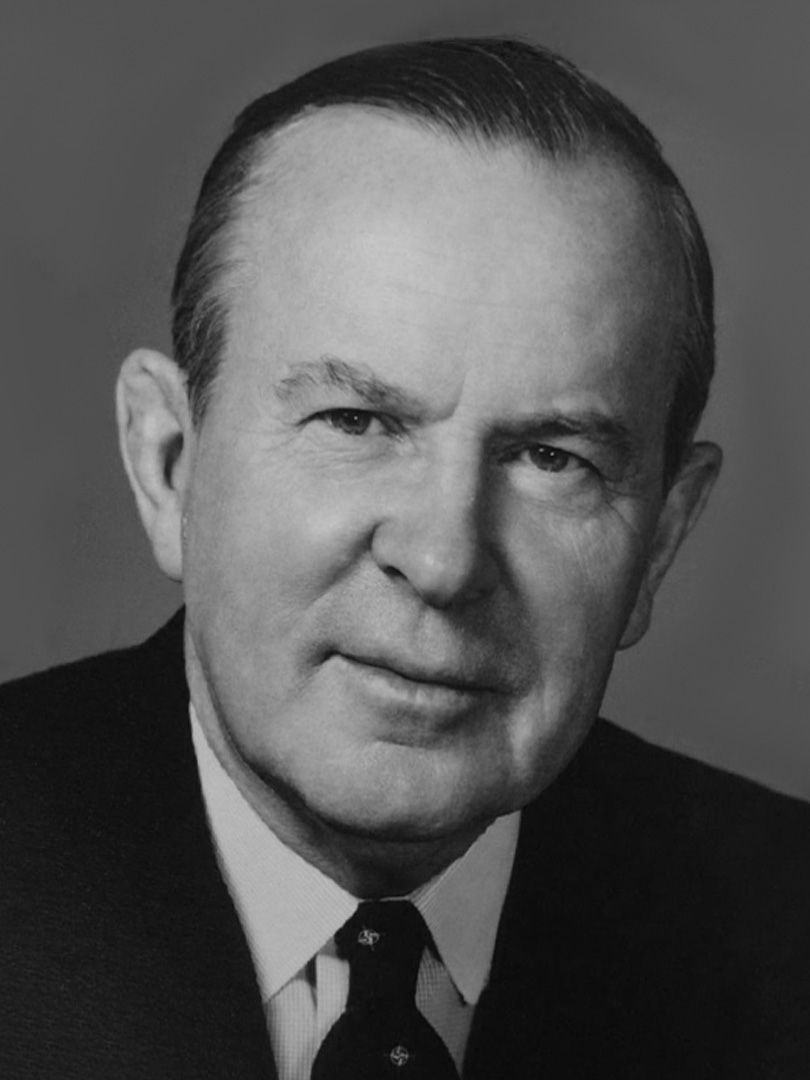
The Canada-United States Automotive Products Agreement, commonly known as the Auto Pact, was a bilateral trade agreement signed in January 1965. Prime Minister Lester B. Pearson and President Lyndon B. Johnson formalized the pact, aiming to integrate the automotive industries of the two nations. The agreement eliminated tariffs on vehicles and parts crossing the border, fundamentally restructuring North American auto manufacturing. It transformed Canada's automotive sector from a protected, inefficient branch-plant operation into a major export industry, though it also cemented American corporate control. The pact was ultimately ruled illegal by the World Trade Organization and formally terminated in 2001, having been superseded by broader free trade agreements.
Pre-Pact Industry Conditions and Tariffs
Before the Auto Pact, a series of tariffs were imposed on cars, trucks, buses, tires, and automotive parts moving between Canada and the United States. The automotive industry in Canada was highly segregated from the industry in the United States. Only three percent of vehicles sold in Canada were made in the United States, but most parts were manufactured there. This led to a large trade deficit for Canada in the automobile sector. American automobile companies produced models specifically for sale in Canada, assembled at branch plants behind the tariff wall. These models were similar to American ones but with cosmetic changes and sold under different names. The system resulted in low production volumes and inefficiency. Canadian productivity levels were only about 60 to 65 percent of American levels, with industry wages at about 70 percent of U.S. levels. Canadian consumers faced higher vehicle prices and less selection. The industry generated a persistent trade deficit for Canada, reaching roughly $600 million in 1964. The Canadian market was small compared to the much larger United States market.
Negotiation and Core Provisions
Motivated by the chronic trade deficit and an uncompetitive industry, the Canadian government began formal negotiations. These culminated in the signing in January 1965 under Prime Minister Lester Pearson's government. The Auto Pact was a managed trade agreement. Its central provision was the mutual elimination of all tariffs on original equipment automotive parts and finished vehicles traded between the two countries. In exchange for this access to the larger U.S. market, the American automakers and later Volvo agreed to two key production safeguards. They committed that automobile production in Canada would not fall below the levels achieved in 1964. They also agreed to ensure the same production-sales ratio in Canada. The two stated goals were to reduce production costs in Canada through more efficient production of a smaller range of vehicles and components and to lower vehicle prices for Canadian consumers. The agreement was implemented through legislation in both countries.
Immediate Economic Impact and Industrial Restructuring
The Auto Pact triggered a rapid restructuring of automotive manufacturing in Canada. Automakers consolidated production into larger plants producing fewer models for the entire continental market. This allowed for massive gains in efficiency and scale. Trade flows across the border increased dramatically. In 1964, only seven percent of vehicles made in Canada were exported to the United States, but by 1968, that figure had jumped to sixty percent. By the same date, forty percent of cars purchased in Canada were made in the United States. Automobile and parts production soon surpassed pulp and paper to become Canada's largest industry. The agreement created thousands of jobs and increased wages in the sector. These benefits were heavily concentrated in southern Ontario, home to approximately one-third of Canada's population. The newly created jobs were almost exclusively blue collar, while administration, research and development remained in the United States. Investment in new plant and equipment in Canada increased significantly after the pact.
The pact's impact on Canada's trade balance was complex. From 1965 to 1982, Canada's total automotive trade deficit with the U.S. was $12.1 billion. This combined a surplus of around $28 billion in trade of assembled vehicles with a deficit of around $40.5 billion in auto parts. This pattern highlighted Canada's role as a final assembly hub reliant on parts manufactured in the United States. The Canadian industry also remained firmly in the hands of the American Big Three companies, which maintained control over investment and strategic direction. Canada's share of North American vehicle production increased following the agreement.
Long-Term Consequences and Structural Dependencies
While the Auto Pact delivered substantial economic benefits, it also entrenched several long-term structural dependencies. The transfer of control to U.S. parent corporations substantially reduced the autonomy of Canadian operations. This affected vehicle and component specification, design, sourcing, manufacturing, branding, marketing, and corporate policy. The agreement locked Canada into a North American automotive bloc, preventing the country from pursuing free trade in automobiles elsewhere. This North American exclusivity influenced regulatory policy. Transport Canada adopted the U.S. Federal Motor Vehicle Safety Standards rather than participating in European-based international consensus development. The integration also made the Canadian industry vulnerable to shifts in American corporate strategy and broader trade disputes. This vulnerability was highlighted by the 1998 Chrysler-Daimler merger, which signalled the opening of the North American bloc to the global market. The pact also contributed to a regional concentration of industry wealth and political influence in Ontario.
The Path to Termination and the WTO Ruling
The Auto Pact's managed trade provisions, which granted duty-free benefits selectively to specific manufacturers, eventually conflicted with multilateral global trading rules. Other automobile manufacturers complained to the World Trade Organization that the agreement gave the Big Three and Volvo an unfair advantage in Canada. Canada and the United States, having joined the WTO in 1995, were subject to its rulings. The WTO declared the Auto Pact illegal under international trade rules. This ruling forced Canada to terminate the agreement, which it did in 2001. By that time, the pact's core function had been largely accomplished and was effectively superseded by the North American Free Trade Agreement, which had gone into effect in 1994 and included Mexico. The transition was smooth, as the integrated market structure remained intact. The WTO case was argued by other major automobile producing nations.
The Auto Pact in a Modern Trade Context
The legacy of the Auto Pact continues to shape Canada's automotive policy and its trade relationship with the United States. The deeply integrated supply chain means automotive trade remains a central issue in bilateral negotiations. This was demonstrated in 2026 when a series of escalating tariffs and counter-tariffs were imposed between the two countries. On July 20, 2026, United States President Donald Trump signed proclamations imposing additional 50% tariffs on a broad range of Canadian products, effective August 22, 2026. Canada announced tariffs of 15%, 25% and 50% on approximately C$27.6 billion of U.S. imports, effective September 8, 2026. The U.S. subsequently imposed a ban on the importation of nearly US$1 billion of select Canadian products, effective September 29, 2026. These measures occurred alongside other trade actions. The industry the Auto Pact helped integrate continues to produce around 13 million vehicles annually in North America, operating now under the Canada, United States, Mexico Agreement framework.
Key Figures, Documents, and Scholarly Work
The negotiation and implementation of the Auto Pact involved key political leaders and resulted in foundational trade documents. The primary signatories were Prime Minister Lester B. Pearson for Canada and President Lyndon B. Johnson for the United States. The formal treaty text, the Agreement Concerning Automotive Products, was signed in January 1965. Diplomatic notes exchanged in March 1965 between U.S. Secretary of State Dean Rusk and Canadian Ambassador Charles Ritchie clarified that automobile truck tractors were included among the duty-free articles. The scholarly work of historian Dimitri Anastakis provides a comprehensive analysis of the period. Simon Reisman was the chief Canadian negotiator for the Auto Pact.
- Lester B. Pearson: The Prime Minister of Canada who signed the agreement in January 1965.
- Lyndon B. Johnson: The President of the United States who signed the agreement.
- Vincent Bladen: The University of Toronto economist whose 1960 Royal Commission report on the automotive industry informed the pact's development.
- Simon Reisman: The Canadian deputy minister of finance and chief negotiator for the Auto Pact.
- Agreement Concerning Automotive Products: The formal treaty text, signed in January 1965.
- Exchange of Diplomatic Notes (March 1965): Between U.S. Secretary of State Dean Rusk and Canadian Ambassador Charles Ritchie, extending duty-free treatment to truck tractors.
- Anastakis, Dimitri (2005): Author of "Auto Pact: Creating a Borderless North American Auto Industry, 1960 to 1971," published by University of Toronto Press.
Comparative Trade Data and Outcomes
The economic effects of the Auto Pact can be illustrated through key trade statistics before and after its implementation. Prior to the pact, Canada's automotive industry was characterized by low productivity, high consumer prices, and a significant trade deficit. After implementation, the industry underwent rapid specialization and integration, leading to a dramatic increase in cross-border trade. The agreement scaled up Canadian production for export, with vehicle exports to the United States rising dramatically. However, the pact also revealed a persistent import dependency on auto parts from the United States. This dependency contributed to a long term sectoral trade deficit of $12.1 billion from 1965 to 1982. The Auto Pact fundamentally changed the role of the Canadian automotive sector within the broader North American economy.
| Metric | Pre-Pact (circa 1964) | Post-Pact (by 1968) | Long-Term Outcome |
|---|---|---|---|
| Canadian vehicles exported to U.S. | 7% of production | 60% of production | Established Canada as a major vehicle exporter |
| Canadian auto trade deficit with U.S. | ~$600 million (annual) | N/A (sectoral shifts) | $12.1 billion cumulative deficit (1965 to 1982) |
| Canadian share of North American vehicle production | Low | Increased | Became a significant production base |
| Canadian productivity vs. U.S. | 60-65% of U.S. level | Improved with specialization | Productivity gap narrowed |
| Industry status in Canada | Protected branch plants | Largest manufacturing sector | Remained a top exporter and employer |
| Vehicle assembly plants | Multiple, low-volume models | Consolidated, high-volume models | Industry structure permanently changed |
The data shows the pact successfully integrated the Canadian industry into a continental system. The value of two-way trade in automotive products between Canada and the U.S. grew substantially after 1965. For example, in 1964 only seven percent of vehicles made in Canada were sent to the United States, but by 1968 this figure had risen to sixty percent. Automobile and parts production soon became Canada's largest industry, surpassing pulp and paper, as a direct result of this new trade flow.
Questions about Canada-United States Automotive Products Agreement
What was the Canada-U.S. Auto Pact?
The Canada-U.S. Auto Pact was a 1965 trade agreement that eliminated tariffs on cars and automotive parts moving between the two countries. It was designed to integrate the North American automotive industry by allowing for specialized, large-scale production in Canada for the entire continental market. In exchange for tariff-free access, major automakers agreed to maintain minimum production and production-sales ratio levels in Canada based on 1964 figures. The pact transformed Canada's auto sector into a major export industry and the country's largest manufacturing sector. It was implemented through legislation in both countries.
Who signed the Auto Pact and when?
The Auto Pact was signed in January 1965. The signatories were Canadian Prime Minister Lester B. Pearson and U.S. President Lyndon B. Johnson. The chief Canadian negotiator was Simon Reisman. The agreement entered into force provisionally on the date of signing and definitively after both countries completed necessary legislative actions. Key diplomatic notes exchanged in March 1965 between Ambassador Charles Ritchie and Secretary of State Dean Rusk clarified that automobile truck tractors were also covered by the duty-free provisions.
Why was the Auto Pact ended?
The Auto Pact was terminated in 2001 after a ruling by the World Trade Organization declared it illegal under global trade rules. The WTO determined that the pact's provisions, which granted duty-free benefits only to specific manufacturers like the Big Three and Volvo, violated the principle of non-discrimination. The case was argued by other major automobile producing nations. By the time of the ruling, the pact had already been largely superseded by the North American Free Trade Agreement, which created a broader free-trade zone including Mexico in 1994. Canada complied to maintain its WTO membership.
How did the Auto Pact affect Canadian jobs and the economy?
The Auto Pact created thousands of manufacturing jobs and increased wages, making automotive production Canada's largest industry by the late 1960s. It spurred investment in large assembly plants, primarily in southern Ontario. The jobs created were predominantly blue-collar assembly positions, while higher-value administrative and research roles remained in the United States. The pact turned Canada's automotive trade with the U.S. into a surplus in assembled vehicles but a continuing deficit in auto parts, resulting in a net sectoral deficit of $12.1 billion from 1965 to 1982. Investment in new plants increased significantly after 1965.
What were the main drawbacks of the Auto Pact for Canada?
The main drawbacks included the loss of autonomy for Canadian auto operations, as strategic decisions on design and investment shifted to U.S. parent companies. It locked Canada into an exclusive North American automotive bloc, preventing trade with other countries and influencing regulatory policy to align with U.S. standards. The economic benefits were geographically concentrated in southern Ontario, exacerbating regional disparities. High-value head office and research functions remained in the United States, limiting Canada's role in innovation. The industry also became vulnerable to U.S. corporate decisions.
How is the Auto Pact relevant to current Canada-U.S. trade relations?
The Auto Pact created the deeply integrated North American automotive supply chain that exists today, making auto trade a perpetually sensitive issue. Modern trade disputes, such as the tariff escalations in 2026 where the U.S. imposed 50% tariffs and Canada responded with counter-tariffs on $27.6 billion of imports, directly impact this critical industry. The sector's health remains a top priority in negotiations under the Canada, United States, Mexico Agreement. The industry the pact helped build continues to produce about 13 million vehicles annually in North America, demonstrating its lasting structural impact on continental trade.
Sources and further reading
- Canada-United States Automotive Products Agreement (Wikipedia)
- The Canada-U.S. auto pact created the modern Canadian ... (canadianlabour.ca)
- U.S., Canada Tariffs: Timeline of Key Dates and Documents (blakes.com)
- View Treaty, Canada.ca (treaty-accord.gc.ca)
- Canada-US Auto Pact (thecanadianencyclopedia.ca)
Checked by the Nosy Mag desk. Last updated 2026-11-01.