Black Loyalist
Black Loyalists were people of African descent who sided with the British Crown during the American Revolutionary War, securing their freedom in exchange for service. Following the British defeat in 1783, over 3,000 Black Loyalists were evacuated to Nova Scotia, forming the largest free Black communities in North America at the time, including the settlement of Birchtown. Their story is a foundational chapter in Black Canadian history, marked by the struggle for promised land and equality amidst discrimination and harsh conditions. Today, their legacy is preserved through institutions like the Black Loyalist Heritage Centre and a significant archival collection added to the UNESCO Canada Memory of the World Register in 2026.
Origins and British Proclamations
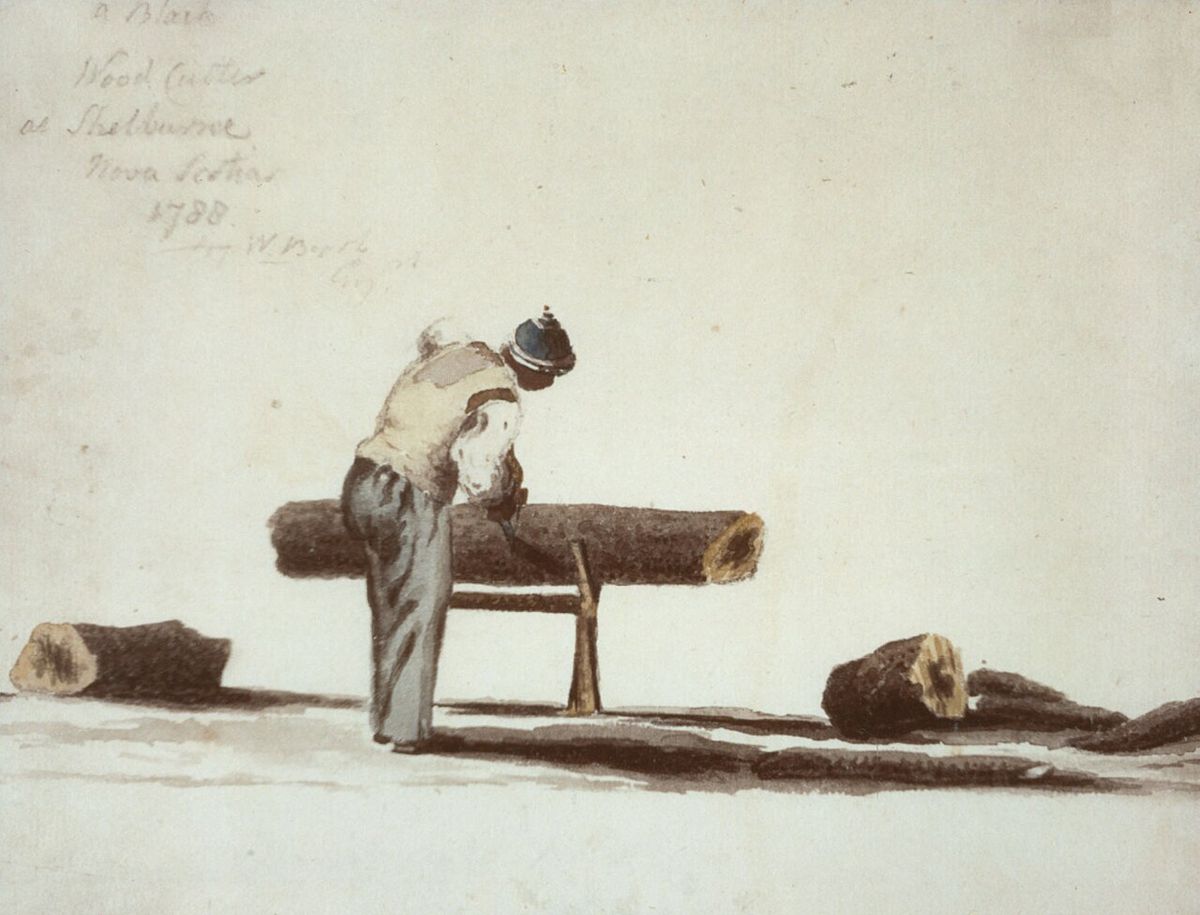
The origins of the Black Loyalists are rooted in the British promise of emancipation during the American Revolutionary War, a promise shaped by legal precedents in England. In 1772, the Somerset v Stewart case in England ruled that slavery had no standing under common law, though this did not apply to the colonies, it fostered a belief that the British Crown was a potential liberator. In November 1775, Virginia's royal governor, Lord Dunmore, issued his proclamation offering freedom to enslaved people owned by Patriots if they joined the British forces. This first mass emancipation in America prompted about 800 individuals to flee to Norfolk, Virginia, to enlist within a month, forming the basis of the Royal Ethiopian Regiment. The British strategy expanded in 1779 with Sir Henry Clinton's Philipsburg Proclamation, which extended the offer of freedom to any person enslaved by a Patriot. These proclamations were a direct response to the colonial rebellion and represented a calculated military and political manoeuvre, referenced indirectly in the American Declaration of Independence as a grievance against King George III for exciting domestic insurrections. The promise of liberty motivated thousands to escape plantations and seek refuge behind British lines, fundamentally altering their lives and the course of the war. In 1778, the Patriots also promised freedom to those enslaved by Loyalists, creating competing offers. As Black Loyalist Boston King noted in his memoir, both Patriots and Loyalists who captured escaped enslaved people often sold them back into slavery.
Military Service and Regiments
Black Loyalists served the British cause in various military capacities, though often in support roles rather than frontline combat, with several distinct regiments formed. The most famous unit was the Royal Ethiopian Regiment, organized by Lord Dunmore from about 800 volunteers, which saw action at the Battle of Kemp's Landing and the Battle of Great Bridge before disease decimated its ranks aboard ships, leaving only 300 survivors by the time Dunmore retreated to New York. The largest regiment was the Black Company of Pioneers, which performed essential manual labour such as building fortifications and roads for the British army from North Carolina to Philadelphia under General Clinton's command. In New Jersey, a small guerrilla unit known as the Black Brigade, led by the formerly enslaved Colonel Tye, conducted feared raids against Patriot forces from 1778 at the Battle of Monmouth until Tye's death from a gangrenous wound in 1780, after which command passed to Stephen Blucke. Other regiments included the Jersey Shore Volunteers, the Jamaica Rangers, the Mosquito Shore Volunteers, and the Black Dragoons of the South Carolina Royalists. Service in these units provided a pathway to certified freedom, which was crucial for evacuation and resettlement when the war ended. The Black Company of Pioneers did not sustain any casualties because they were never used in combat, but they could be called upon to work under fire building fortifications. In Philadelphia, their general orders were to attend the scavengers and clean the streets. Thousands of enslaved people escaped from plantations and fled to British lines, especially after the British occupation of Charleston, South Carolina in 1780.
- The Royal Ethiopian Regiment, formed in 1775 by Lord Dunmore, reduced to 300 men by smallpox and retreat by 1776.
- The Black Company of Pioneers, the largest labour and support regiment, later merged into the Guides and Pioneers.
- The Black Brigade, an unofficial combat unit of about 24 men in New Jersey led by Colonel Tye and later Stephen Blucke.
- The Jersey Shore Volunteers and the Black Dragoons of the South Carolina Royalists.
- The Jamaica Rangers and the Mosquito Shore Volunteers, operating in the Caribbean theatre.
- Jamaican Governor John Dalling drafted a proposal in 1779 for the enlistment of a regiment of mulattoes and another of free Negroes.
Evacuation and Resettlement in British Territories
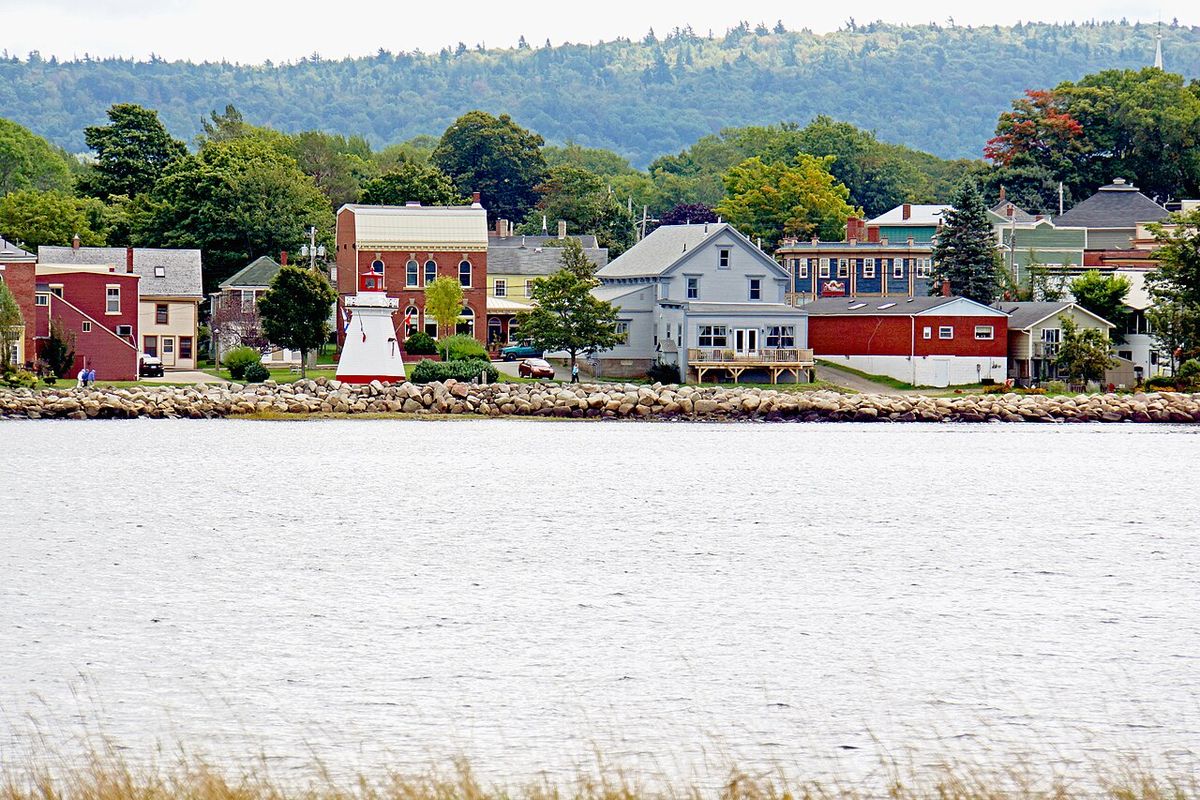
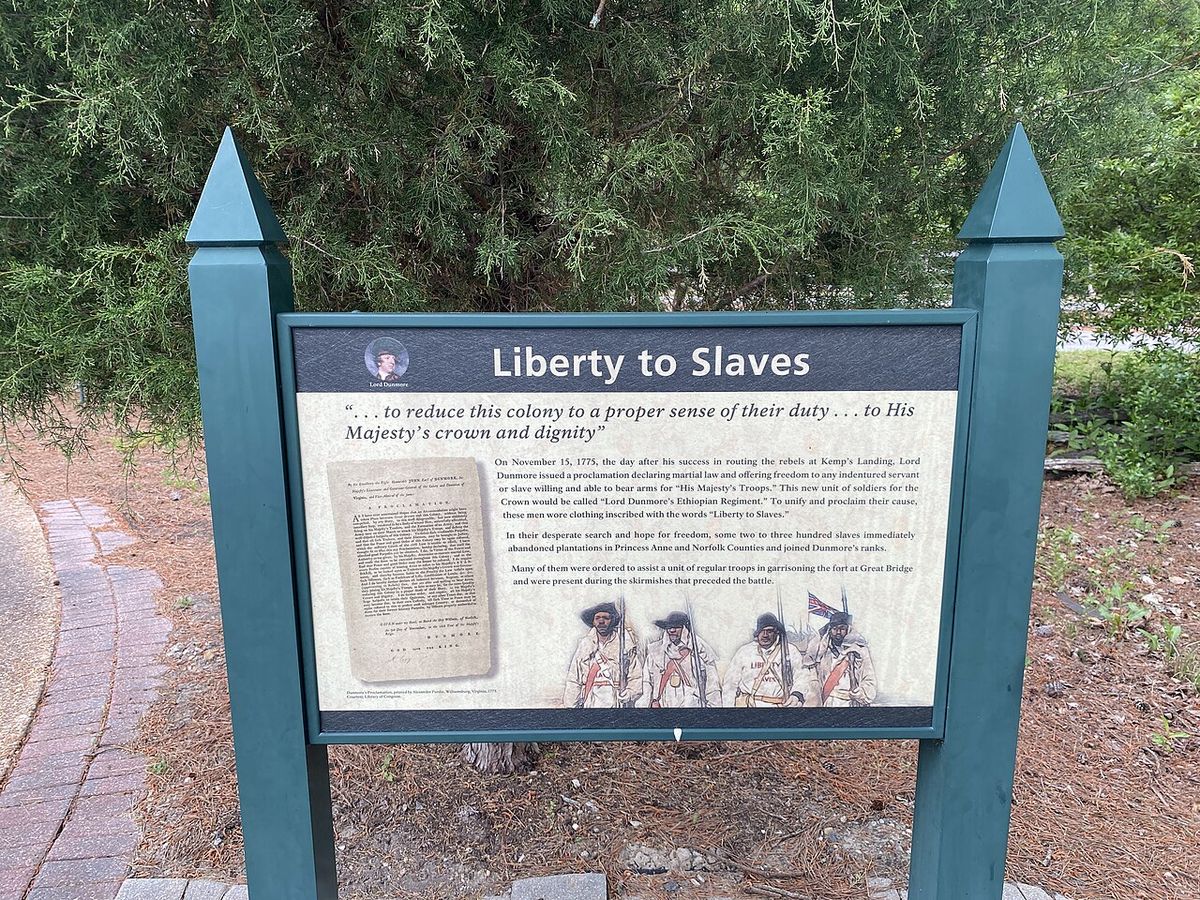
Following the Treaty of Paris in 1783, the British evacuated thousands of Black Loyalists, honouring their pledge of freedom against American demands for the return of property. Lieutenant General Guy Carleton oversaw the process, instituting a compromise where Black individuals could receive certificates of freedom if they could prove their service or status, as recorded in the Book of Negroes. More than 3,000 were transported to Nova Scotia, the greatest number of people of African descent to arrive there at any one time, joining a larger Loyalist migration of about 34,000 that increased the colony's population by almost 60 percent and led to the creation of New Brunswick in 1784. They established several communities, with Birchtown, next to Shelburne, becoming the largest free Black settlement in North America by the mid 1780s, while other significant settlements included Preston, Digby, Annapolis Royal, and areas within Halifax and Guysborough County. The British also resettled Black Loyalists in other territories, including Upper Canada (Ontario), London, England, where they became part of the Black Poor, and Caribbean colonies like Jamaica. Despite their freedom, Black Loyalists in Nova Scotia faced systemic discrimination from the colonial government and white Loyalist settlers, many of whom brought enslaved servants with them. The discrimination culminated in the Shelburne Riots of July 1784, the first recorded race riots in Canadian history, where white mobs targeted Black Loyalists and their property. Crown officials consistently granted Black Loyalists inferior, rocky, and less fertile land compared to white settlers, breaking promises of equitable allotment. In response to these persistent injustices and broken promises, Black Loyalists built resilient independent institutions, and by 1785 they had established their own Black churches and schools, creating the foundations for sustained community life and cultural preservation. Approximately 300 free Black people in Savannah refused to evacuate at the war's end, fearing re enslavement in the West Indies. They established an independent colony in swamps near the Savannah River, though by 1786 most were discovered and re enslaved as Southern planters ignored their British granted freedom.
Life in Nova Scotia and the Sierra Leone Exodus
Life for Black Loyalists in Nova Scotia was defined by a constant struggle for the rights and land they had been promised, a struggle documented in their own petitions and testimonies now preserved in archives. The archival collection added to the UNESCO register in 2026 includes materials highlighting this anti Black racism, such as land allotment maps showing poorer plots and court cases where Black Loyalists contested indenture agreements or testified against attempts to re enslave them by white settlers. The exodus to Sierra Leone in 1792 was a direct response to this disillusionment, with nearly 1,200 Black Loyalists, approximately half the community in Nova Scotia, departing on ships provided by the Sierra Leone Company which was established to manage the new colony's development. This migration included a disproportionate number of the community's teachers, preachers, and leaders, such as Baptist preacher David George and Methodist missionary Boston King, which significantly disrupted Black Loyalist institutions and community cohesion in Nova Scotia. In Sierra Leone, they established the community of Freetown, and alongside an earlier group of Black Poor resettled from London in 1787, they became the founders of the Sierra Leone Creole people, also known as Krios. The languages they brought, including Gullah from the Low Country and African American Vernacular English, heavily influenced the development of the Krio language as a lingua franca for the new settlement. Their descendants continue to live primarily in the Western Area of Freetown, and many can trace their lineage directly back to Black Loyalist ancestors like Harry Washington, a man formerly enslaved by George Washington who rebelled against colonial rule in Sierra Leone by 1800 and was tried by a military tribunal. The Creole population in Sierra Leone today makes up 5.8 percent of the nation's total, a direct demographic legacy of the Black Loyalist migration. The Sierra Leone Company was supported by British abolitionists concerned about the Black Poor in London. The nearly 2,000 Black Loyalists who left Nova Scotia and London helped found the new African colony.
Preservation, Commemoration and Modern Institutions
The history of the Black Loyalists is actively preserved and commemorated in Canada through several key institutions, projects, and academic endeavours. The Black Loyalist Heritage Society, established in 1989, is a charitable organization dedicated to discovering, interpreting, safeguarding, and promoting this heritage, operating the Black Loyalist Heritage Centre which opened in Birchtown in June 2015 and has welcomed over 40,000 visitors. The centre interprets the story of what was the largest free African population outside Africa in the late 18th century, and the site itself, the Birchtown settlement, was designated a National Historic Site of Canada in 1997, with a seasonal museum opening that year before being damaged by arson in 2008 and rebuilt. A major milestone was reached in March 2026 when the Black Loyalists in Canada archival collection was added to the UNESCO Canada Memory of the World Register, a project announced in alignment with the International Day for the Elimination of Racial Discrimination by partner institutions including the Nova Scotia Archives and the Canadian Commission for UNESCO. This collection, titled Black Loyalists in Canada: Autonomy, Advocacy, Community, Legacy, is held across four partner institutions and includes freedom certificates, land petitions, court testimonies, and community records from churches and schools that document the Black Loyalist experience in their own voices. Some materials are already digitized and available online through resources like the Nova Scotia Archives' Looking Back, Moving Forward webpage and the Provincial Archives of New Brunswick's Legislative Assembly Sessional Records site, while others are in the process of being digitized for wider access. The Society began plans for a major expansion of the museum to tell the story of the Black Loyalists in America, Nova Scotia, and Sierra Leone.
- The 2024 restoration of the Old Birchtown Schoolhouse, built in 1835 and believed to be among Nova Scotia's first integrated schools, which closed in 1961, for which the Heritage Society received a National Trust for Canada Governors' Award.
- The creation of an immersive exhibition on Black education within the restored schoolhouse, celebrating the legacy of Black education in Nova Scotia.
- The Black Loyalist Academic Conference of Knowledge (BLACK), held from July 31 to August 3, 2026, in Fredericton, New Brunswick, with the theme "Beyond the Archives," focusing on Black history, literature, and art in the Atlantic Provinces.
- Ongoing archaeological work in Birchtown that continues to uncover artifacts from the Black Loyalist period.
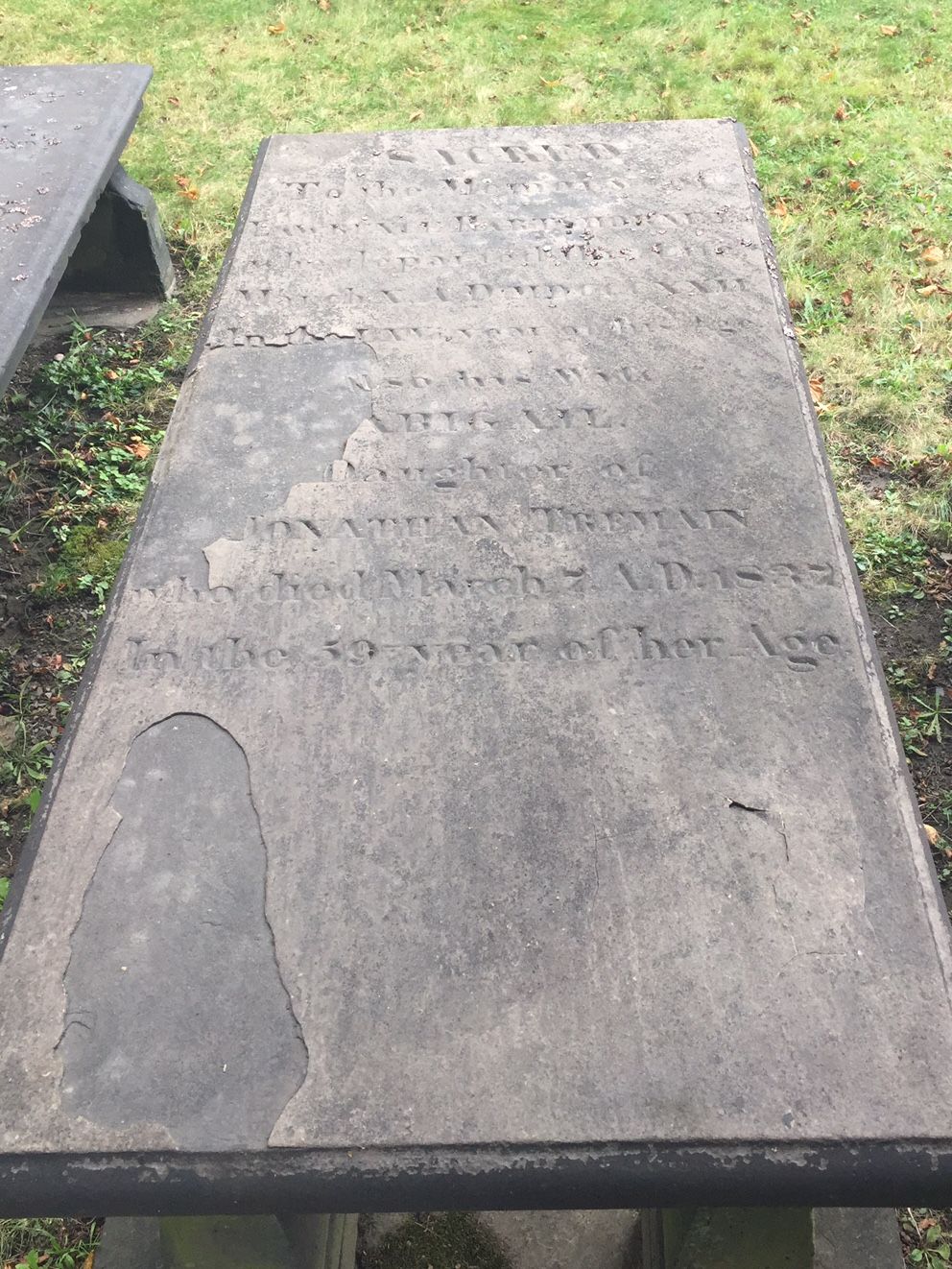
- A memorial has been established at the Black Loyalist Burying Ground in Birchtown.
- The story of the Black Loyalists inspired Lawrence Hill's 2007 novel The Book of Negroes, which won the 2008 Commonwealth Award for Fiction.
Notable Black Loyalists, Descendants and Lasting Impact
Several Black Loyalists emerged as prominent leaders during and after the resettlement, leaving a legacy through religious, educational, and community work that shaped both Canadian and Sierra Leonean society. Preachers like David George, an American Baptist preacher, and Boston King, who became the first Methodist missionary to Indigenous Africans in Sierra Leone, provided crucial spiritual leadership and chronicled their experiences in memoirs that offer vital firsthand accounts. Military and community leaders included Stephen Blucke, who commanded the Black Company of Pioneers and later the Black Brigade, and Colonel Tye, the guerrilla leader in New Jersey whose title was unofficial but widely recognized for his effectiveness. In Sierra Leone, figures like John Kizell, an American immigrant, and Cato Perkins, an American missionary, were instrumental as community founders and leaders in the new colony, helping to establish its social and religious institutions. Other notable individuals were Moses Wilkinson, an American Methodist preacher, John Marrant, a Methodist preacher, and Abraham Hazeley, a Nova Scotian settler in Sierra Leone. Thomas Peters was one of the Founding Fathers of the nation of Sierra Leone. Their descendants have continued to make significant contributions across centuries, linking the 18th century struggle for freedom to modern Canadian identity. In contemporary Canada, celebrated opera singer Measha Brueggergosman is a descendant of Black Loyalists who settled in Shelburne, Nova Scotia, tracing her lineage through her father's family to ancestors who were resettled with their first child born free behind British lines in New York. The physical legacy includes the Black Loyalist Burying Ground in Birchtown, where many are buried in unmarked graves, and the Old Burying Ground in Halifax. Many descendants have been able to track their ancestry using General Carleton's Book of Negroes.
Archival Significance and Contemporary Relevance
The archival record of the Black Loyalists provides a rare and invaluable account from the perspective of the community itself, challenging colonial narratives and highlighting their agency in the face of adversity. The collection inscribed on the Canada Memory of the World Register in 2026 is unique because it features first person accounts where Black Loyalists voiced concerns about unfulfilled promises and egregious living conditions, and gave life narratives in court when facing re enslavement. These materials include instances of social policing, such as harassment and assault cases involving racially mixed couples, and petitions where they advocated for their rights directly to colonial authorities, demonstrating a sustained tradition of legal and political advocacy. The significance of this collection lies not only in its historical value but in its contemporary relevance, offering documented lessons in self advocacy, political strategy, and community organizing that resonate today in discussions of racial justice and equity. The partnership between the Black Loyalist Heritage Centre, the Nova Scotia Archives, the Provincial Archives of New Brunswick, the Shelburne County Museum, and the Canadian Commission for UNESCO demonstrates a committed institutional effort to safeguard this heritage and make it accessible for research and education. The 2026 BLACK conference theme, "Beyond the Archives," explicitly invites scholars and community historians to explore how this history lives in place, memory, and creative practice, ensuring the story remains dynamic and engaged with current discourses on race, memory, and belonging in Canada. This ongoing work counters the limitation of Black Canadian history to a few notable heroes by presenting the broad, documented activism of an entire community from the moment of their arrival, thereby enriching the national historical narrative. External resources for further research include the Black Loyalist website, the Loyalist Institute documents, and the Nova Scotia archives virtual exhibition.
Questions about Black Loyalist
Who were the Black Loyalists?
Black Loyalists were people of African descent who sided with the British during the American Revolutionary War in exchange for promises of freedom. Primarily individuals enslaved by American Patriots, they served in military or support roles for the British following proclamations by Lord Dunmore in 1775 and Sir Henry Clinton in 1779. After the war, over 3,000 were evacuated to Nova Scotia, where they formed free Black settlements like Birchtown. Their story represents a foundational migration in Black Canadian history and a quest for liberty amidst broken promises and discrimination, with many later remigrating to found Sierra Leone. Thomas Jefferson, a slave owner, referred to them as the fugitives from these States.
Where did the Black Loyalists settle in Canada?
The majority of Black Loyalists were resettled in Nova Scotia following the war. The largest and most famous settlement was Birchtown, located next to Shelburne, which became the biggest free Black community in North America in the 1780s. Other significant communities were established in Preston, Digby, Annapolis Royal, Guysborough County, and parts of Halifax. They also settled in areas that would become New Brunswick, contributing to the population growth that led to its creation as a separate colony in 1784. Some Black Loyalists were also evacuated to Upper Canada (Ontario).
What is the Book of Negroes?
The Book of Negroes is a British military ledger that recorded the names, ages, physical descriptions, and origins of Black Loyalists evacuated from New York. It served as a certificate of freedom and a passenger list for those being transported to Nova Scotia and other British colonies. Some 3,000 Black Loyalists were evacuated from New York to Nova Scotia and were individually listed in the Book of Negroes. Many descendants have used this document to trace their ancestry.
Why did some Black Loyalists leave Nova Scotia for Sierra Leone?
Frustrated by systemic racism, denied the quality land grants they were promised, and facing economic hardship and violence like the Shelburne Riots of 1784, many Black Loyalists became deeply disillusioned with life in Nova Scotia. In 1792, the British government, through the newly formed Sierra Leone Company, offered them a chance to resettle in a new colony in West Africa. Nearly 1,200 Black Loyalists, about half of the community in Nova Scotia including most of its teachers and preachers, accepted and sailed to Sierra Leone. There they founded Freetown and, alongside other settlers, became the founders of the Sierra Leone Creole people, known as Krios.
Where can I learn about Black Loyalist history in Canada today?
The primary site for learning is the Black Loyalist Heritage Centre located at 119 Birchtown Road in Shelburne, Nova Scotia, which opened in June 2015 and offers guided tours and interpretive exhibits. The Birchtown settlement is also a National Historic Site designated in 1997. In 2026, the Black Loyalists in Canada archival collection was added to the UNESCO Canada Memory of the World Register, making historical documents like petitions, freedom certificates, and court testimonies more accessible online through partner archives. The Black Loyalist Heritage Society also hosts events like the Black Loyalist Academic Conference of Knowledge (BLACK) and has restored the Old Birchtown Schoolhouse as an educational site. External online resources include the Black Loyalist website and the Nova Scotia archives virtual exhibition.
Who are some famous descendants of Black Loyalists?
Notable descendants include Rose Fortune, a Black woman living in Nova Scotia who became a police officer and a businesswoman. Another descendant is Measha Brueggergosman, the Canadian opera and concert singer, who is a descendant of a Black Loyalist through her father. Her paternal ancestors were resettled in Shelburne after being evacuated from New York. In Sierra Leone, the descendants of the Black Loyalists are part of the Sierra Leone Creole people, who make up 5.8 percent of the nation's population. An example of a notable ancestor is Harry Washington, formerly enslaved by George Washington, who became a leader in Sierra Leone.
Sources and further reading
- Black Loyalist (Wikipedia)
- Black Loyalist Heritage Centre, A Part of the Nova Scotia ... (blackloyalist.com)
- The Black Loyalists in Canada Archival Collection Added ... (en.ccunesco.ca)
- Black Loyalist Heritage Centre (nationaltrustcanada.ca)
Checked by the Nosy Mag desk. Last updated 2026-10-28.