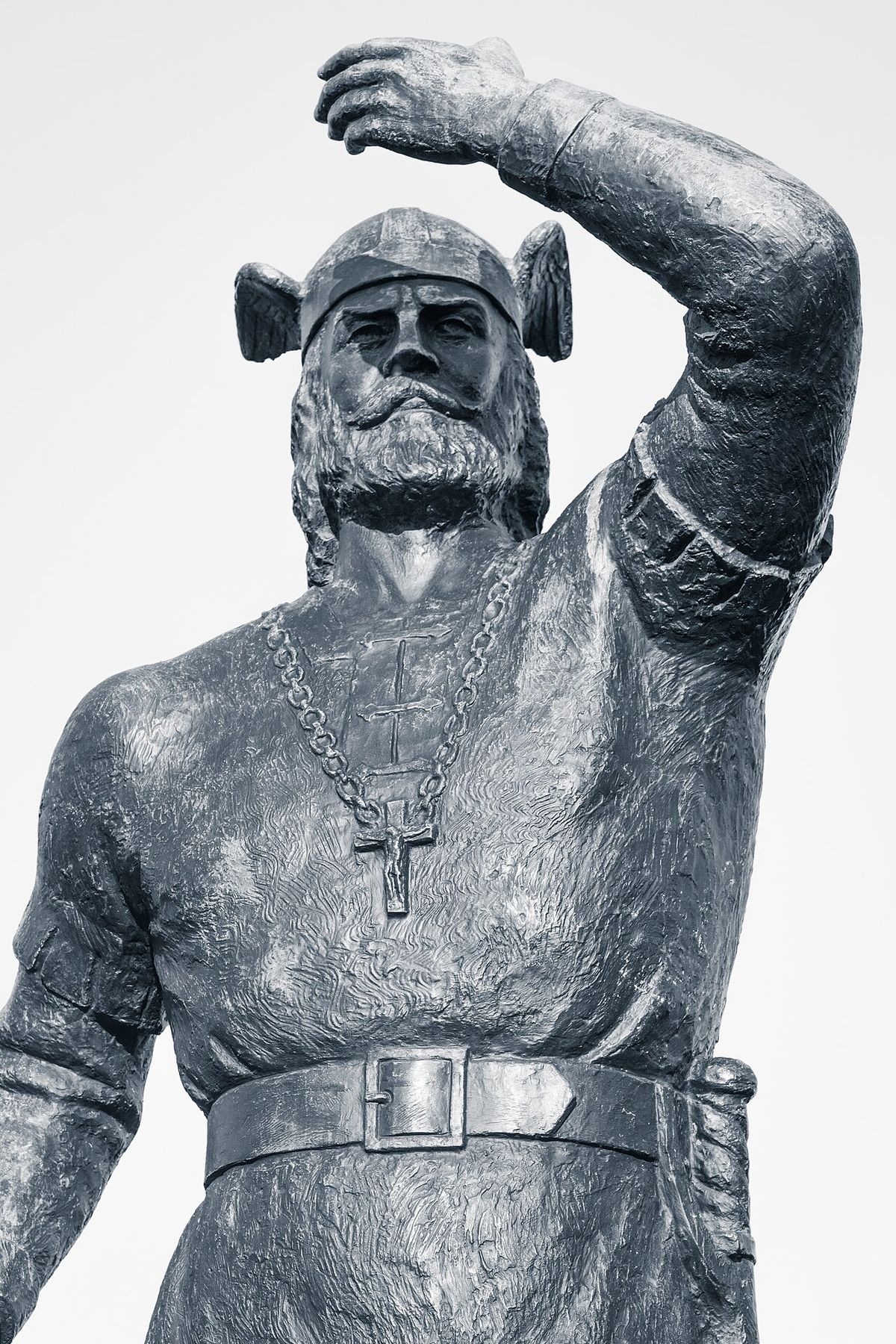
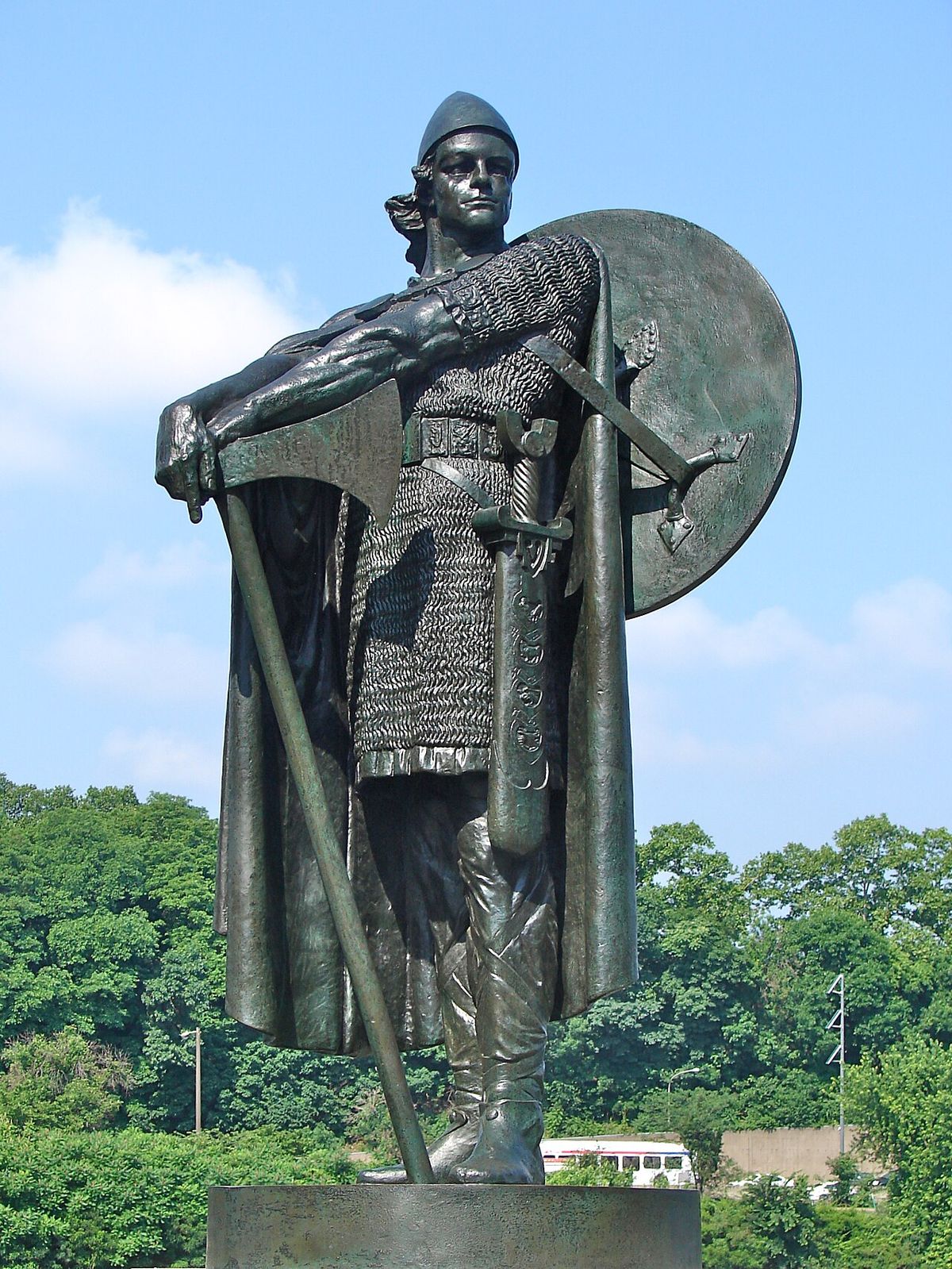
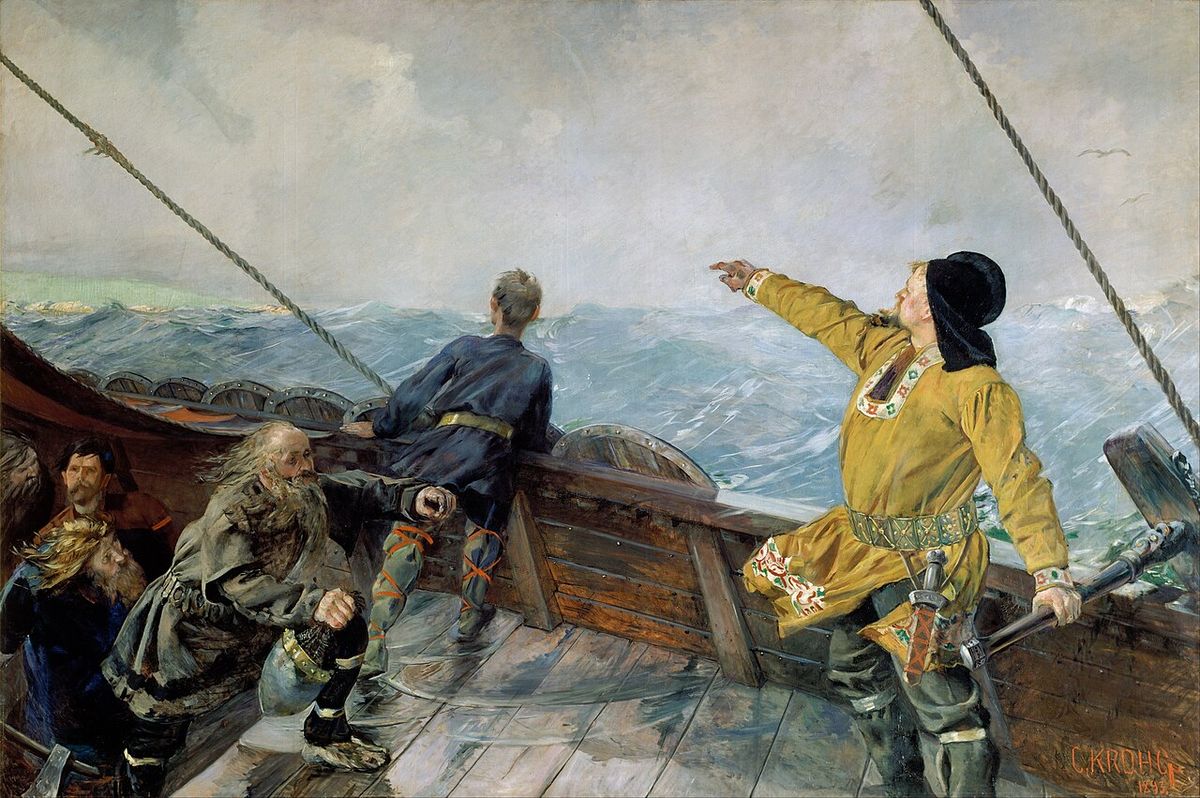
Bjarni Herjólfsson
Bjarni Herjólfsson was a 10th-century Icelandic merchant captain who is believed to be the first known European to sight the mainland of the Americas. His accidental discovery occurred in 986 when a storm blew his ship off course en route from Iceland to Greenland, revealing unfamiliar wooded shores to the west. Although he did not land, his reports of these new lands, later believed to be Newfoundland, Labrador, and Baffin Island, directly inspired the subsequent Norse expeditions to North America led by Leif Erikson. For Canadians, Herjólfsson's voyage represents the earliest documented European encounter with the continent's eastern coastline, setting in motion the first known European exploration and attempted settlement in the region, centuries before Columbus.
Early Life and Background
Bjarni Herjólfsson was born in Iceland to Herjólfr, son of Bárdi Herjólfsson, and Thorgerdr. In adulthood, Bjarni became a merchant captain, based in Norway, but visiting his father every summer in Iceland. He maintained strong family ties, making a habitual summer voyage from Norway to Iceland to visit his parents. This routine journey was part of the broader pattern of Norse maritime mobility that connected the Scandinavian homelands with the North Atlantic settlements. His life as a trader, rather than a dedicated explorer, is key to understanding the accidental nature of his later discovery.
The Accidental Discovery of 986
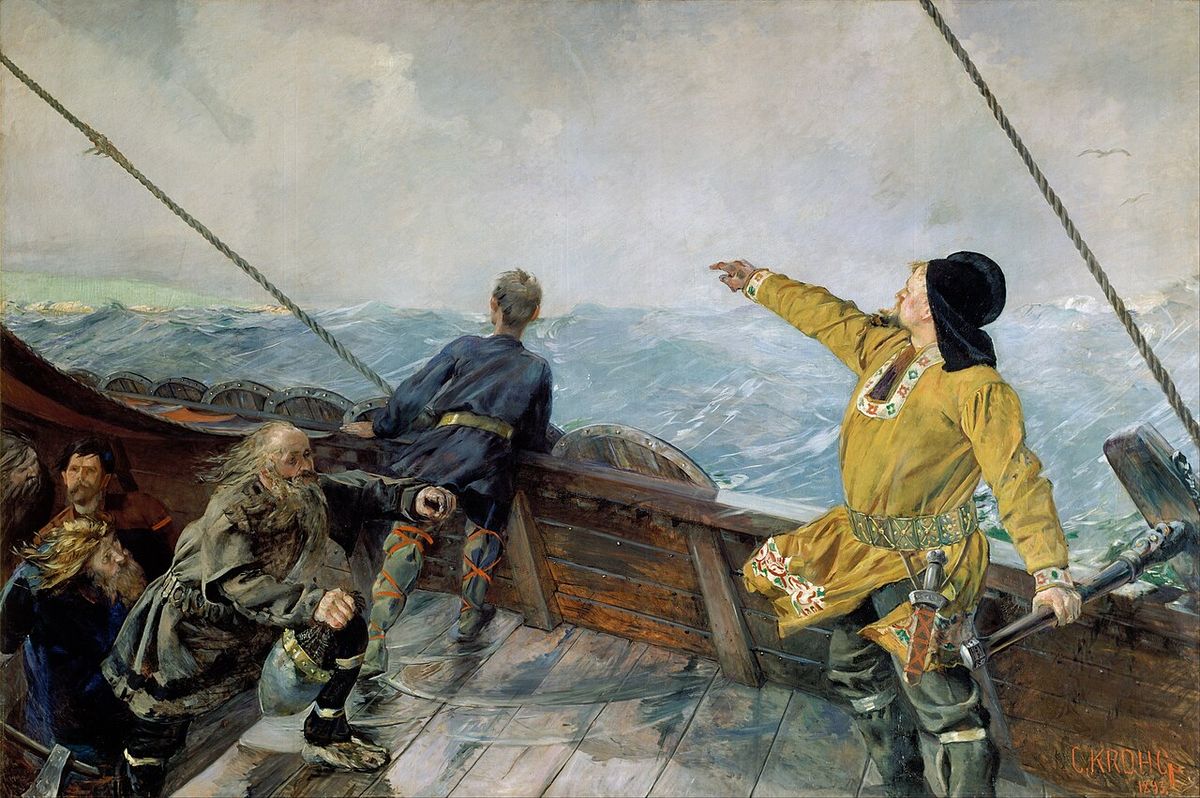
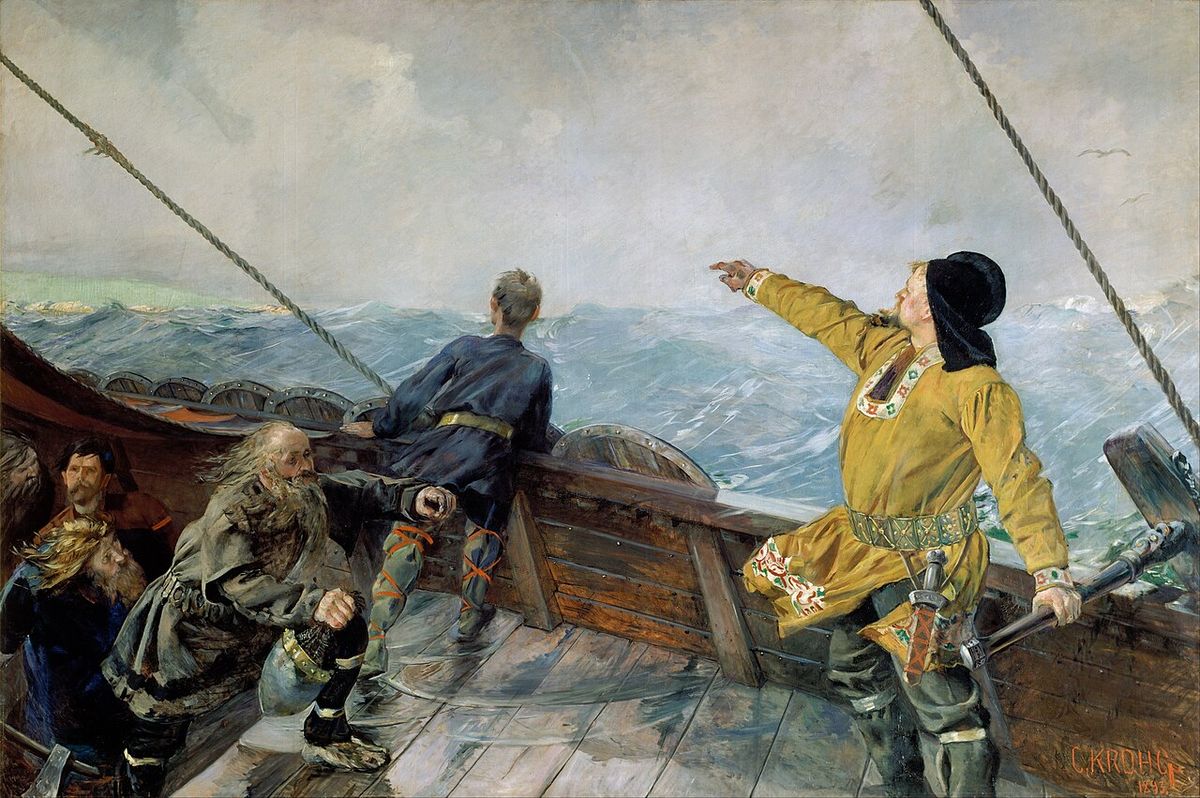
In the summer of 986, Bjarni set sail from Norway on his customary trip to visit his father in Iceland. Upon arrival, he learned that his father had departed with Erik the Red to join the new settlement in Greenland. Determined to reunite with his father, Bjarni made the decision to continue westward toward Greenland, a journey for which he and his crew were unprepared as none had been there before. During this voyage, his ship was caught in a severe storm and blown far off course to the southwest, losing sight of known landmarks. When the weather cleared, the crew sighted an unknown coastline to the west, which was markedly different from the icy, mountainous Greenland they sought.
The Grœnlendinga saga describes the land as being covered with trees and low-lying hills, appearing hospitable. Bjarni's crew urged him to land and investigate this new territory, but he refused, prioritizing the original mission of reaching his father in Greenland. He ordered the ship to turn north, eventually regaining their course and successfully reaching the Norse settlement at Herjolfsnes in Greenland. Bjarni reported his sightings of the wooded lands to the west, but the saga notes that his account initially generated little interest among the Greenlanders. It was only later, after his father's death and upon his return to Norway, that his story began to circulate more widely within the Norse world.
The Lands Bjarni May Have Seen
While Bjarni himself never set foot on the shores he sighted, later Norse explorers and modern scholars have attempted to identify these lands based on his descriptions. The sequence of lands he reported seeing has led to the prevailing scholarly theory that he glimpsed parts of what is now eastern Canada. Professor Tryggvi J. Oleson of the University of Manitoba argued that the three lands were likely Newfoundland, Labrador, and Baffin Island. This interpretation aligns with the geographical features described in the sagas and the known Norse exploration routes.
The first land, described as mountainous and glaciated, is commonly associated with Baffin Island. The second, a flat, wooded coast, matches the description of Labrador. The third land, which Bjarni believed was Greenland but was actually another distinct shore, is thought to be Newfoundland. This accidental reconnaissance provided the Norse with the first intelligence about the North American continent west of Greenland. The reported abundance of timber was of particular significance to the Greenland settlement, which existed above the tree line and relied on imported wood or driftwood.
Catalyst for Norse Exploration
Bjarni's report, though initially met with apathy, eventually became the catalyst for the first intentional European voyages to North America. The key figure who acted on this information was Leif Erikson, the son of Greenland's leader, Erik the Red. Intrigued by the tales of forested lands, Leif purchased the very ship Bjarni had used for his fateful voyage. He then assembled a crew of 35 people and set out to retrace Bjarni's route in reverse, systematically exploring the coasts Bjarni had only sighted from afar. This deliberate expedition, undertaken around the year 1000, led to the Norse naming and exploration of Helluland (stone-slab land), Markland (forest land), and Vinland (wine land).
The direct line from Bjarni's sighting to Leif's voyage shows the former's foundational role in Norse Atlantic expansion. Leif Erikson is credited as the first European to land and explore these areas, but his journey was fundamentally a follow-up to Herjólfsson's accidental discovery. Subsequent Norse expeditions, including those led by Thorfinn Karlsefni, also stemmed from this initial discovery. These voyages aimed at exploration and temporary settlement, representing Europe's first sustained, though ultimately unsuccessful, attempt to establish a foothold in North America.
Historical Sources and Legacy
The saga portrays Bjarni as a capable sailor but a reluctant explorer, more focused on familial duty than discovery. His legacy is thus a complex one. He was celebrated for the discovery but also criticized by contemporaries like Earl Eric for his failure to investigate the new lands. In the Norse world, his story exemplified both the perils and potential rewards of Atlantic voyaging. The 1960s discovery of L'Anse aux Meadows in Newfoundland, a UNESCO World Heritage site, provided physical proof of Norse presence in North America around the year 1000. While L'Anse aux Meadows is associated with Leif Erikson's expeditions, its existence validates the saga narratives that begin with Bjarni's sighting. For Canada, Bjarni Herjólfsson's voyage marks the prelude to the first documented chapter of European contact with its shores.
- Primary source is the Grœnlendinga saga (Greenlanders Saga).
- Criticized by Earl Eric for not landing and exploring.
- Inspired Leif Erikson to buy his ship and mount an expedition.
- His story validated by the 1960s discovery of L'Anse aux Meadows, Newfoundland.
- Subject of scholarly analysis by historians like Tryggvi J. Oleson.
- Considered a precursor to later Norse attempts at settlement in Vinland.
Bjarni Herjólfsson in Modern Culture
While not as widely known as Leif Erikson, Bjarni Herjólfsson has appeared in various works of modern fiction and popular history, often embodying the theme of accidental discovery. His story resonates as one of history's great unintended breakthroughs. In literature, author Clive Cussler references him in the novel Eye of Heaven, noting that Leif Ericsson journeyed westward after hearing of the new world from Bjarni. The humorous novel The Technicolor Time Machine features a main character named Barney Hendrickson who realizes he is a descendant of Bjarni, with the name having evolved over generations.
In video games, the character named Bjarni in the Cultures series is based on Herjólfsson. His narrative is frequently cited in articles and documentaries about Viking exploration, particularly around Leif Erikson Day, as the precursor who made later voyages possible. The enduring interest in his story lies in its irony: a man focused on a personal errand who inadvertently changed the geographical understanding of his world and set the stage for the first European footsteps on Canadian soil. His role is also highlighted in recent online historical content, such as a post from September 2026 that details his story as a merchant who was not an explorer by ambition.
The Norse Exploration Timeline
The voyage of Bjarni Herjólfsson fits within a broader sequence of Norse expansion across the North Atlantic. This movement was driven by a combination of migration, trade, and exploration over two centuries. The following table outlines key events in this expansion, showing Bjarni's role in the discovery of North American lands. This timeline illustrates how Norse exploration was a cumulative process, with each discovery enabling the next. Bjarni's accidental sighting was the critical link that connected the established Greenland colony to the unknown continent beyond. Without his report, the Norse exploration of North America might have been delayed by decades or even centuries. His story remains a foundational element in the history of transatlantic contact and continues to be a subject of public interest, as seen in historical content published as recently as 2026.
| Year (Approx.) | Event | Key Figure(s) |
|---|---|---|
| 861 | First sighting of Iceland | Naddod |
| 874 | First settlement of Iceland | Ingolfur Arnarson |
| 980s | Exploration and settlement of Greenland begins | Erik the Red |
| 986 | First European sighting of mainland North America | Bjarni Herjólfsson |
| c. 1000 | First European exploration and landing in North America | Leif Erikson |
| 1960s | Archaeological discovery of Norse site in Newfoundland | Anne Stine and Helge Ingstad |
Questions about Bjarni Herjólfsson
Who was Bjarni Herjólfsson?
Bjarni Herjólfsson was a 10th-century Icelandic merchant captain based in Norway. He is historically significant for being the first known European to sight the mainland of the Americas. This occurred in 986 when he was blown off course by a storm while sailing to Greenland. He reported seeing wooded lands to the west but did not land, making his discovery an accidental one.
What did Bjarni Herjólfsson discover?
In 986, Bjarni sighted a series of unknown lands to the west of Greenland. Based on later Norse exploration and modern scholarship, these lands are believed to have been parts of eastern Canada: Newfoundland, Labrador, and Baffin Island. He described a flat, wooded coastline, which was notably different from the icy terrain of Greenland. His discovery provided the first European knowledge of the North American continent.
Is there archaeological proof of Bjarni Herjólfsson's voyage?
There is no direct archaeological evidence of Bjarni's specific voyage, as he never landed. However, his story is recorded in the medieval Greenlanders Saga. The subsequent Norse presence he inspired is proven by the archaeological site at L'Anse aux Meadows, Newfoundland, discovered in the 1960s. This site confirms the saga narratives and validates the sequence of events beginning with Bjarni's sighting.
Why didn't Bjarni Herjólfsson land in North America?
Bjarni Herjólfsson did not land in North America because his primary goal was to find his father in Greenland. According to the Grœnlendinga saga, after being blown off course by a storm in 986, he sighted an unfamiliar wooded coastline. Although his crew begged him to stop and explore, he refused. Bjarni was eager to reach his parents and did not wish to delay, so he continued searching for Greenland. He was a merchant captain, not an explorer by ambition, and his focus remained on his original destination. Later, he was famously chided by Earl Eric for his lack of investigation into the new lands.
How did Bjarni Herjólfsson's discovery lead to Viking settlement?
Bjarni Herjólfsson's discovery led to Viking settlement because his reports of forested lands to the west created great intrigue in Greenland. The Greenlanders, who lacked timber, were particularly allured by his descriptions of a wooded coastline. Leif Erikson, the son of Greenland leader Erik the Red, bought the ship Bjarni had used for the voyage. Leif then hired a crew of 35 and set out to retrace Bjarni's journey. This expedition resulted in the Viking settlement at L'Anse aux Meadows in Newfoundland. This site is considered the first known attempt at settlement by Europeans in the Americas.
Why is Bjarni Herjólfsson important to Canadian history?
Bjarni Herjólfsson is important to Canadian history because he is believed to be the first known European to sight the mainland of the Americas. His accidental sighting in 986 was of the east coast of North America, later determined to be areas like Newfoundland, Labrador, and Baffin Island. This event set in motion the first European explorations of the continent. His reports directly inspired Leif Erikson's voyage, which led to the Norse settlement at L'Anse aux Meadows. This makes Bjarni a key figure in the prelude to the earliest documented European presence in what is now Canada.
Sources and further reading
- Bjarni Herjólfsson (Wikipedia)
- Browse "Atlantic" (thecanadianencyclopedia.ca)
- Viking Explorations and Settlements: Iceland, Greenland ... (historyonthenet.com)
Checked by the Nosy Mag desk. Last updated 2026-10-30.