1948 Newfoundland referendums
The 1948 Newfoundland referendums were a pair of plebiscites that determined the political future of the Dominion of Newfoundland, leading to its entry into Canada as the tenth province. Held on June 3 and July 22, 1948, the votes presented Newfoundlanders with a choice between returning to self-government, continuing under a British-appointed commission, or joining Canadian Confederation. The first referendum failed to produce a majority, but the second, a runoff between the top two options, resulted in a narrow victory for Confederation. This democratic decision culminated in Newfoundland officially joining Canada at midnight on March 31, 1949.
Historical Context and the Road to the Referendums
Newfoundland's path to the 1948 referendums was shaped by its unique political evolution and severe economic crises. The colony gained responsible government in 1855 and became a self-governing Dominion separate from Canada in 1907. However, by the 1920s and 1930s, Newfoundland was burdened with a debt of almost $40 million and stood on the verge of economic collapse. In response, a British commission recommended suspending party politics, leading to the establishment of the Commission of Government on February 16, 1934. This body, chaired by the British governor and consisting of three Newfoundlanders and three British officials, was implemented after the United Kingdom agreed to assume Newfoundland's debts. The Second World War brought a period of prosperity through the construction of American military bases, but the fundamental question of Newfoundland's long-term governance remained unresolved after the war. The British government, eager to reduce post-war expenditures, hoped Newfoundland would choose to join Canada, thereby ending the need for the commission. When Newfoundland first inquired about Canadian assistance for a return to responsible government, Ottawa made it clear that economic help was contingent on Newfoundland joining Confederation.
Several key factors influenced the political environment leading up to the referendums. The British did not want their colony to become an American possession, while the Canadian government, though unconvinced of economic benefit, saw annexation as preferable to being nearly surrounded by American territory. Although a movement for economic union with the United States existed, it was not offered as a referendum option. The United States, having secured leases for its military bases, had little interest in pursuing annexation, as it would antagonize key allies and face domestic political hurdles. To deliberate on the future, the British government called for a Newfoundland National Convention in 1946, chaired by Judge Cyril J. Fox and consisting of 45 elected members, including future premier Joey Smallwood. The Convention's work, which included sending delegations to London and Ottawa, set the stage for the decisive public votes that would follow.
The National Convention and Delegations
The Newfoundland National Convention, elected in June 1946, was tasked with studying the options for Newfoundland's future and recommending a course to the British government. Its deliberations were marked by intense debate between pro-confederate and anti-confederate factions. In October 1946, Joey Smallwood moved that the Convention send a delegation to Ottawa to discuss union, but his motion was initially defeated, receiving support from only 17 members. The Convention later decided to send delegations to both London and Ottawa to explore the possibilities. The London delegation, dominated by anti-confederates including Peter Cashin, left Newfoundland on April 25, 1947. They met with British officials led by Dominions Secretary Viscount Addison, who informed them that Britain would provide no economic aid if Newfoundland returned to responsible government. Cashin returned to St. John's and delivered an angry speech on May 19, 1947, accusing the British of a conspiracy to sell the country to Canada.
The Ottawa delegation, led by pro-confederates including Smallwood, began talks on June 24, 1947. The Canadian federal cabinet was initially reluctant, viewing the delegation as unofficial, but agreed to begin formal negotiations on July 18. By mid-August, draft terms for union were nearly complete, including Canada's assumption of most of Newfoundland's debt and outlines for provincial jurisdiction over services. Negotiations were interrupted by the death of federal minister Frank Bridges, prompting Prime Minister William Lyon Mackenzie King to halt discussions until New Brunswick had representation. The delegation returned to St. John's, and when the Convention reconvened on October 10, Smallwood presented his report, inflaming anti-confederates. The arrival of the draft terms from Ottawa during the debates provided a concrete proposal for Confederation, which the Convention would ultimately have to consider alongside the other options.
The Referendum Campaign and Factions
Following the National Convention's work, the British government agreed to hold a referendum, leaving it to the Convention to decide the ballot options. Initially, the Convention voted on January 28, 1948, to include only two choices: restoration of responsible government and continuation of the Commission of Government, defeating Smallwood's motion to add Confederation by a vote of 29 to 16. However, in March 1948, the British government intervened and overruled the Convention, insisting that Confederation with Canada be on the ballot. They argued it would not be right to deprive the people of Newfoundland of the opportunity to consider the issue. This set the stage for a heated campaign between three main factions, each with its own propaganda organ. The three main campaigning factions were the Confederate Association, the Responsible Government League, and the Economic Union Party.
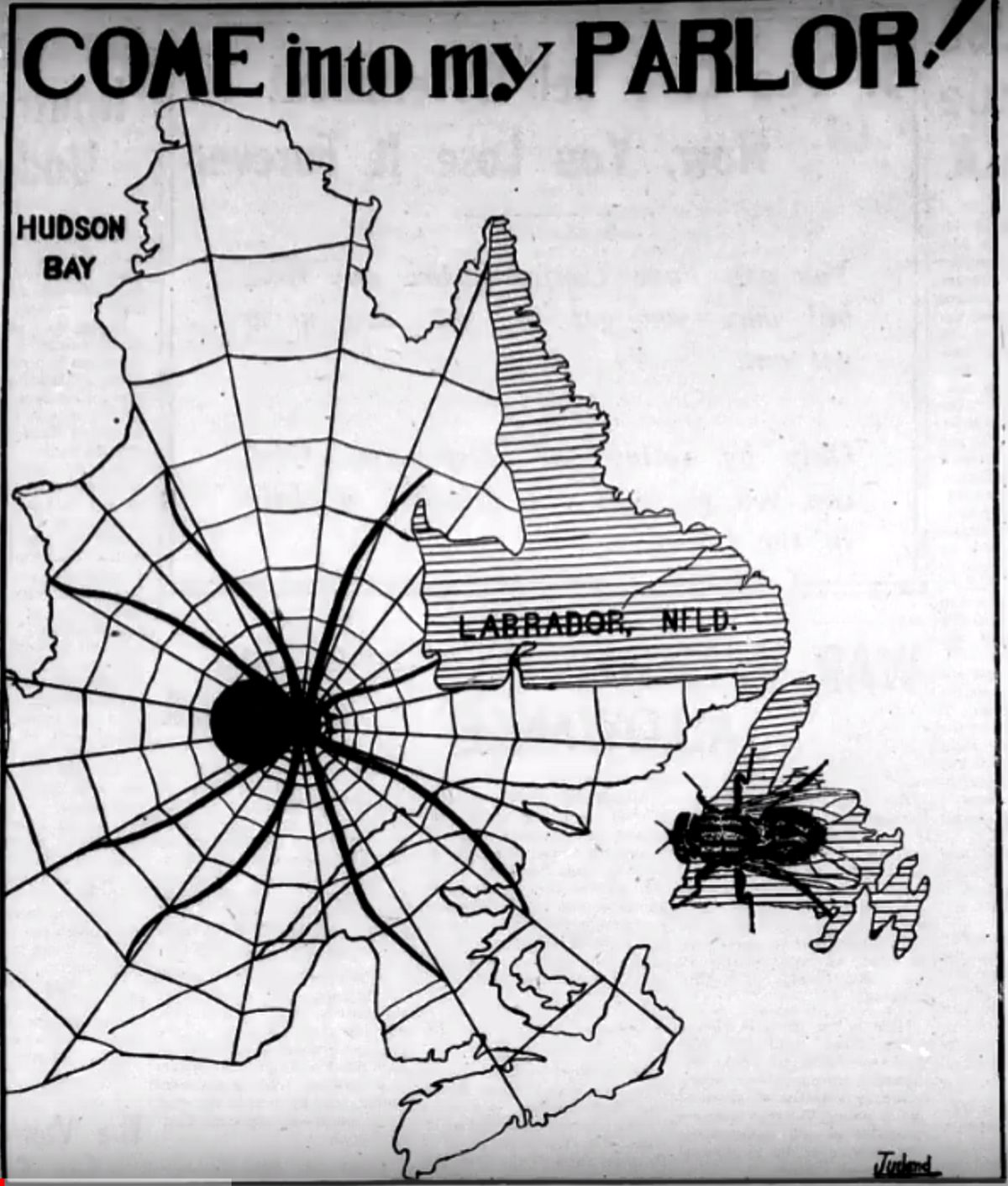
The campaign was characterized by passionate advocacy and strategic alliances. The Confederate Association (CA), led by Joey Smallwood and F. Gordon Bradley, advocated for entering Confederation and published its views in The Confederate newspaper. The Responsible Government League (RGL), led by Peter Cashin, campaigned for an independent Newfoundland with a return to responsible government through its newspaper, The Independent. The Economic Union Party (EUP), a smaller faction led by Chesley Crosbie, advocated for closer economic ties with the United States. Smallwood, an experienced radio broadcaster, ran a populist campaign, famously declaring that if you are not a millionaire, you should vote for Confederation, and promising that Canadian social security would end economic uncertainty. The anti-confederate camp was supported by the Roman Catholic Archbishop of St. John's, Edward Patrick Roche, who argued against Confederation through the archdiocesan newspaper, The Monitor. Religious and ethnic tensions were also exploited, with confederates publicizing Roche's opposition to persuade Protestant groups like the Loyal Orange Association to resist Catholic influence.
The Two Referendums and Results
The first referendum was held on June 3, 1948, presenting voters with three choices. The results demonstrated a deeply divided electorate. Responsible government received 69,400 votes (44.6 percent), Confederation received 64,066 votes (41.1 percent), and the Commission of Government received 14.3 percent of the vote. Since no option gained over 50 percent, a second runoff referendum was scheduled for July 22, 1948, featuring only the two most popular choices: Confederation and responsible government.
The campaign for the second vote saw the Responsible Government League and the Economic Union Party form an alliance against the Confederate Association. The confederates were encouraged by the fact that more people had voted against responsible government than for it in the first round. They successfully framed the choice as one between a British Union with Canada and a potentially unstable independent government, while anti-confederates countered with the slogan Confederation Means British Union With French Canada, playing on ethnic anxieties. The voting on July 22 revealed stark geographical and religious divisions. The Avalon Peninsula, home to the capital St. John's, supported responsible government in both referendums, while the rest of Newfoundland predominantly supported Confederation. A majority of districts with mostly Catholic voters also backed responsible government. The final result was exceedingly close, with Confederation securing 78,323 votes (52.34 percent) against 71,344 votes (47.66 percent) for responsible government. This margin of less than five percentage points reflected the deep and lasting split within Newfoundland society over the question of union with Canada.
Negotiations and Entry into Confederation
With the binding referendum result in favour of Confederation, formal negotiations between Newfoundland and Canada commenced to finalize the terms of union. The Canadian government, having accepted the referendum outcome, worked with Newfoundland representatives and the British government to draft the agreement. Key elements of the Terms of Union included Canada's assumption of Newfoundland's public debt, the establishment of a tax agreement, and the delineation of provincial and federal responsibilities. A significant guarantee was the confirmation that Labrador, as ruled by the Judicial Committee of the Privy Council in 1927, would remain under the jurisdiction of the new province. Other specific commitments included maintaining a ferry service between Channel-Port aux Basques and North Sydney, and allowing Newfoundland to continue manufacturing and selling margarine. The agreed-upon terms were embodied in the British North America Act, 1949 (later renamed the Newfoundland Act), which was passed by the British Parliament and received Royal Assent.
At midnight on March 31, 1949, Newfoundland officially joined Canada as its tenth province. The following day, April 1, Newfoundlander F. Gordon Bradley was sworn into the federal cabinet alongside Prime Minister Louis St-Laurent. Bradley proclaimed, We are all Canadians now. Within the new province, the first provincial election for the Newfoundland House of Assembly was held two months later, resulting in a victory for Joey Smallwood's Liberal Party, which would control the provincial government for the next two decades. The addition of Newfoundland and its massive Labrador territory significantly expanded Canada's geographic footprint.
Reactions and Immediate Aftermath
Reactions to Confederation were deeply mixed, reflecting the close referendum result. In the pro-Confederation outports, small celebrations marked the occasion. In St. John's, however, where the vote had been two-to-one in favour of responsible government, the mood was sombre, with some residents wearing black ties and flying black flags at half-mast to signify the loss of independence. The Canadian press overwhelmingly welcomed the new province. An editorial in The Globe and Mail on April 1, 1949, stated that union with Newfoundland rounds out the dream of the Fathers of Confederation and welcomed new fellow citizens with full hearts. The Montreal Gazette noted the expanded meaning of Canada's motto 'from sea to sea,' while The Vancouver Sun reflected that a dream of greatness... comes true. For Newfoundlanders, becoming Canadian citizens brought new rights, privileges, and access to federal social programs, which had been a central promise of the Confederate campaign.
The transition also involved integrating the province into Canadian federal systems for health, education, and governance. Despite the initial resistance and nostalgia for a separate identity, the union established a new political and economic framework for Newfoundland's development within Canada. The events of 1948 and 1949 remain a foundational, and sometimes contentious, chapter in the history of both Newfoundland and Labrador and Canada as a whole. The process demonstrated how economic pressures, strategic interests, and democratic deliberation could converge to alter the course of a nation's history.
Key Figures in the Confederation Debate
The referendum campaigns were driven by a number of influential and charismatic leaders whose efforts shaped the public debate and the final outcome. Their backgrounds, strategies, and public personas were critical in mobilizing voters on both sides of the issue. Joey Smallwood was the charismatic leader of the Confederate Association, a former radio broadcaster and journalist whose populist campaign promised economic security through Canadian social programs. He later became the first premier of Newfoundland. Peter Cashin was a former finance minister and fiery orator who led the Responsible Government League, denouncing Confederation as a Judas act and accusing the British of a conspiracy to force union with Canada.
Other key figures included F. Gordon Bradley, a key Confederate leader alongside Smallwood who, following Confederation, was sworn in as a member of the federal Cabinet on April 1, 1949. Chesley Crosbie was a businessman and leader of the Economic Union Party, which advocated for closer economic ties with the United States as an alternative to Confederation. Archbishop Edward Patrick Roche was the Roman Catholic Archbishop of St. John's who used the archdiocesan newspaper, The Monitor, to strongly oppose Confederation and argue for a return to responsible government. Cyril J. Fox was the judge who chaired the Newfoundland National Convention from 1946 to 1948, overseeing the initial deliberations on the colony's future. These individuals, through their speeches, writings, and political organizing, defined the contours of a debate that would determine the destiny of their homeland.
- Joey Smallwood: Leader of the Confederate Association and first premier of Newfoundland.
- Peter Cashin: Leader of the Responsible Government League and former finance minister.
- F. Gordon Bradley: Confederate leader sworn into the federal Cabinet on April 1, 1949.
- Chesley Crosbie: Leader of the Economic Union Party advocating for US economic ties.
- Archbishop Edward Patrick Roche: Roman Catholic Archbishop of St. John's who opposed Confederation.
- Cyril J. Fox: Judge who chaired the Newfoundland National Convention from 1946 to 1948.
- Viscount Addison: British Dominions Secretary who met with the London delegation in 1947.
- William Lyon Mackenzie King: Canadian Prime Minister during the negotiation period.
Major Events and Dates in the Confederation Process
The journey began when Newfoundland, almost $40 million in debt and on the verge of economic collapse in the 1920s and 1930s, suspended its self-government. The British-backed Commission of Government began on February 16, 1934. Prosperity returned during the Second World War when the Americans set up military bases from 1941 to 1945. After the war, an elected National Convention debated Newfoundland's future from 1946 to 1948, leading to two referendums in 1948 where voters decided to join Canada, achieving full provincial status on March 31, 1949.
- February 16, 1934: The Commission of Government is established, suspending responsible government.
- June 11, 1941: The American Bases Act becomes law in Newfoundland, allowing US military bases.
- June 1946: The Newfoundland National Convention is elected.
- April 25, 1947: The London delegation leaves Newfoundland to meet with British officials.
- June 24, 1947: The Ottawa delegation begins talks with the Canadian government.
- January 28, 1948: The National Convention votes 29-16 against including Confederation on the referendum ballot.
- March 1948: The British government overrules the Convention, adding Confederation to the ballot.
- June 3, 1948: The first referendum is held.
- July 22, 1948: The second and decisive referendum is held.
- March 31, 1949: At midnight, Newfoundland officially becomes a Canadian province.
- May 1949: The first provincial election is held, won by Joey Smallwood's Liberals.
Guarantees and Terms of Union
The Terms of Union were negotiated after the 1948 referendum decided Newfoundland would join Canada. Canada agreed to assume most of Newfoundland's debt and to negotiate a tax agreement. A significant guarantee was that Labrador, as ruled by the Judicial Committee of the Privy Council in 1927, would be under the jurisdiction of the new province. Other practical guarantees included a ferry service between Channel-Port aux Basques and North Sydney and the continuation of margarine production and sales in Newfoundland.
- Canada assumed responsibility for most of Newfoundland's public debt.
- Jurisdiction over Labrador, as confirmed by the 1927 Privy Council ruling, was secured for the province.
- A ferry service between Channel-Port aux Basques and North Sydney was guaranteed to be maintained.
- Newfoundland retained the right to continue manufacturing and selling margarine.
- A tax agreement was established between the federal and provincial governments.
- The division of powers and services between federal and provincial jurisdictions was outlined.
- The agreement was formalized in the British North America Act, 1949, passed by the British Parliament.
The terms were formalized in the British North America Act 1949, which was passed by the British Parliament and given Royal Assent. This act provided the legal foundation for Newfoundland to become Canada's tenth province. The guarantees ensured protections for the new province's territory and local industries. These provisions helped facilitate the transition of Newfoundland and its people into Canadian provincial status at midnight on March 31, 1949.
Questions about 1948 Newfoundland referendums
Why did Newfoundland hold two referendums in 1948?
Newfoundland held two referendums because the first vote on June 3, 1948, did not produce a clear majority for any of the three options on the ballot. In that initial vote, responsible government received 44.6 percent of the vote, Confederation received 41.1 percent, and the Commission of Government received 14.3 percent. Since none of these choices gained over 50 percent of the vote, a second runoff referendum was required. This second vote, held on July 22, 1948, featured only the two most popular choices from the first round, which were Confederation with Canada and a return to responsible government.
What were the main arguments for and against joining Canada?
Pro-confederates, led by Joey Smallwood, argued that joining Canada would provide economic stability and access to Canadian social security benefits, such as family allowances and old-age pensions, which would alleviate widespread poverty. They framed Confederation as a British Union that maintained ties to the Crown. Anti-confederates, led by Peter Cashin, advocated for a return to responsible government, emphasizing Newfoundland's right to self-determination and independence. They warned that union would mean domination by Ottawa and higher taxes, with some, like Chesley Crosbie's faction, preferring closer economic ties with the United States. Religious leaders like Archbishop Edward Roche also opposed Confederation, fearing the influence of a predominantly Protestant Canada.
How close was the final referendum result?
The final referendum result on July 22, 1948, was extremely close. Confederation received 78,323 votes, which represented 52.34 percent of the total valid votes cast. Responsible government received 71,344 votes, or 47.66 percent. This narrow win reflected the deep and passionate divisions within Newfoundland society over the question of its political future.
What role did Britain play in the referendum process?
Britain played a crucial and sometimes directive role throughout the process. Having governed Newfoundland through the Commission of Government since 1934, the British government was eager to reduce its post-war financial burdens. It convened the Newfoundland National Convention in 1946 to deliberate on the future but ultimately overruled the Convention in March 1948 by insisting that Confederation be placed on the referendum ballot, a choice the Convention had initially voted against. Britain also made it clear to Newfoundland delegations that it would not provide economic aid if the colony returned to responsible government, thereby subtly steering the outcome toward Confederation, which was its preferred solution.
When did Newfoundland officially become a Canadian province?
Newfoundland officially became a Canadian province at midnight on March 31, 1949. The terms of union, negotiated after the 1948 referendum, were passed by the British Parliament as the British North America Act, 1949, and received Royal Assent. The moment of union was marked by ceremonies, and on April 1, Newfoundlander F. Gordon Bradley was sworn into the federal cabinet. The province held its first provincial election two months later, in May 1949, which was won by Joey Smallwood's Liberal Party.
What were some of the key terms agreed upon when Newfoundland joined Canada?
The Terms of Union included several important guarantees for Newfoundland. Canada agreed to assume most of Newfoundland's public debt. The jurisdiction over Labrador, as confirmed by a 1927 Privy Council ruling, was secured for the new province. Specific commitments were made to maintain a ferry service between Channel-Port aux Basques and North Sydney. Notably, Newfoundland was also guaranteed the right to continue manufacturing and selling margarine, a product that was controversial and restricted in other parts of Canada at the time. The agreement also outlined the division of powers and responsibilities between the federal and provincial governments, similar to other provinces.
Sources and further reading
- 1948 Newfoundland referendums (Wikipedia)
- How the “Canadianized” Community of Newfoundland ... (thecanadianencyclopedia.ca)
- Newfoundland becomes a Canadian province | History (ebsco.com)
Checked by the Nosy Mag desk. Last updated 2026-10-29.