Structure of the Canadian Army
The structure of the Canadian Army is the organizational framework that defines how Canada's land forces are commanded, trained, and deployed. Following a comprehensive modernization plan released in 2025, the army restructured in September 2026 into four functional divisions, moving away from a purely geographic alignment. This new structure comprises a deployable manoeuvre division, a domestic defence division, a centralized support division, and a consolidated doctrine and training centre. The reorganization impacts how the army prepares for and conducts operations at home and abroad, addressing contemporary security challenges and aligning with Canada's defence priorities.
Background and the 2026 Restructure
In October 2025, the Commander of the Canadian Army, Lieutenant-General Michael Wright, released a strategic document titled "Inflection Point 2025" which outlined the vision for the army's future. The most significant change proposed was a complete organizational restructure, moving from four geographically based divisions to four functionally focused ones. This restructure was formally implemented in September 2026. The objective was to increase the army's agility and empower its soldiers by shifting operational leadership and authority to the divisional level. The old geographic divisions, numbered 2nd through 5th, were dissolved or renamed to form the new functional entities. This shift aimed to address long-standing challenges in training bottlenecks, supply chain inefficiencies, and the need for clearer lines between domestic and expeditionary missions. The new model represents the most substantial reorganization of the Canadian Army in decades, seeking to better prepare the force for the complex security environment of the 21st century.
1st Canadian Division, The Manoeuvre Division
The 1st Canadian Division, headquartered at Canadian Forces Base (CFB) Edmonton, is the army's primary high-readiness combat formation, structured for rapid deployment and decisive action in major combat or crisis scenarios abroad. It integrates all key operational functions, command, intelligence, manoeuvre, protection, and sustainment, under a single tactical headquarters. Its core combat power resides in three mechanized brigade groups: the 1st, 2nd, and 5th Canadian Mechanized Brigade Groups. A key new formation within the division is the 3rd Canadian Light Infantry Regiment, a high-readiness unit composed of the army's three Regular Force light infantry battalions, specifically designed for rapid global response and operations in complex terrain including the Arctic.
The division's combat support and sustainment capabilities are centralized under new brigade-level formations. The 6 Canadian Combat Support Brigade provides integrated combat support, while the newly created 1st Canadian Artillery Brigade centralizes and coordinates the division's deep and close fire support. For logistics, the 1st Canadian Sustainment Brigade is a new formation tasked with providing comprehensive logistics, maintenance, and supply functions to enable prolonged high-intensity operations. This structure allows the Manoeuvre Division to function as an operationally independent and deployable force, projecting Canadian military capability overseas and strengthening the country's credibility within alliances. The consolidation of these capabilities under one command is intended to streamline decision-making and enhance the speed and effectiveness of expeditionary force generation.
2nd Canadian Division, The Defence of Canada Division
The 2nd Canadian Division, with its headquarters at CFB Montreal, is the army's primary force for domestic operations and national mobilization. Its core mandate is defending Canadian territory and responding to domestic crises, including natural disasters and other emergencies. This division provides the command framework for the entire Canadian Army Reserve, overseeing all ten of the army's reserve brigade groups across the country. By centralizing command of the reserve force, the division aims to improve the army's ability to quickly generate capable forces within Canada. The division also commands the 1st Canadian Ranger Group, which consists of approximately 5,000 Rangers who provide a military presence in remote, coastal, and northern regions of Canada. The Defence of Canada Division's responsibilities extend to Arctic security, a consistently stated strategic priority for the Canadian government, and it is also tasked with integrated air and missile defence in cooperation with the Royal Canadian Air Force.
This formation allows the Canadian Army to maintain a dedicated, standing organization focused solely on domestic security challenges, separate from the expeditionary-focused Manoeuvre Division. The structure is designed to ensure a scalable and rapid response to any threat to Canadian territorial integrity, leveraging the nationwide footprint of the Army Reserve. The division's existence formalizes the domestic defence role, ensuring it receives dedicated command attention and resources distinct from overseas deployment preparations. The ten reserve brigades under its command are:
- 31 Canadian Brigade Group
- 32 Canadian Brigade Group
- 33 Canadian Brigade Group
- 34 Canadian Brigade Group
- 35 Canadian Brigade Group
- 36 Canadian Brigade Group
- 37 Canadian Brigade Group
- 38 Canadian Brigade Group
- 39 Canadian Brigade Group
- 41 Canadian Brigade Group
Canadian Army Support Division
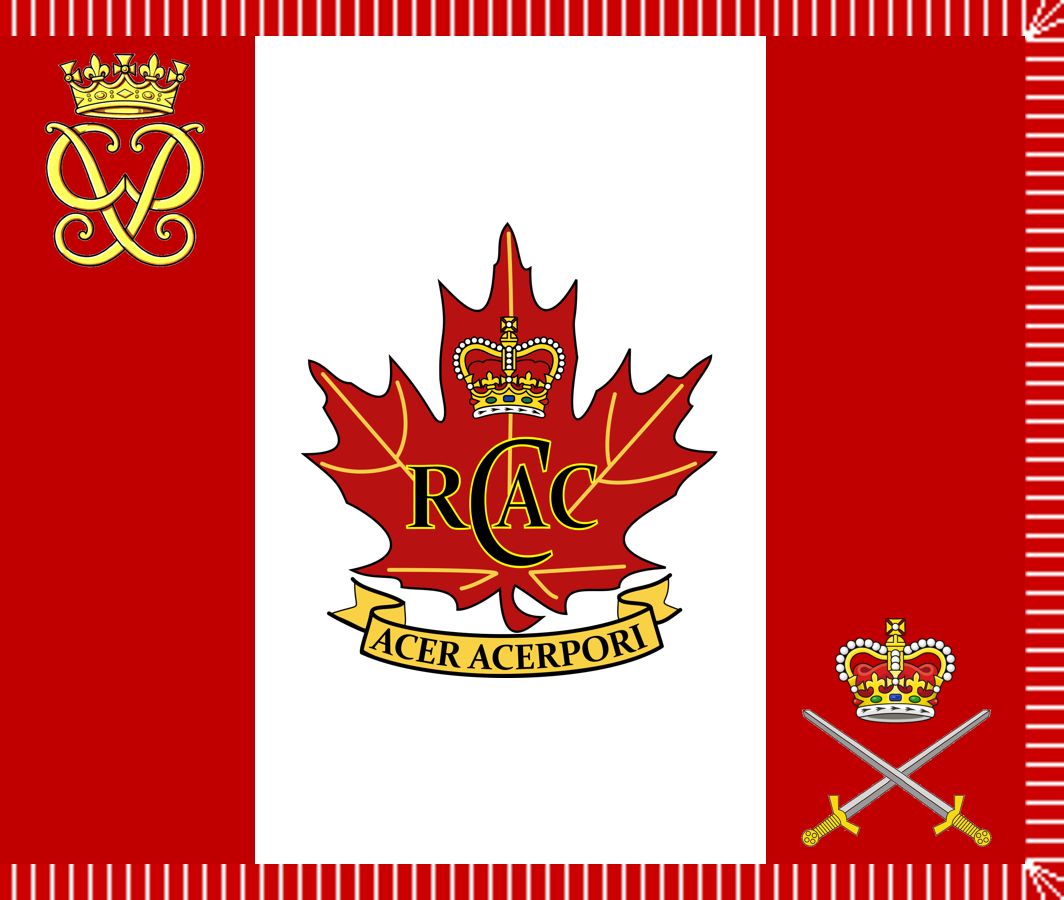
The Canadian Army Support Division is responsible for the foundational infrastructure, technical services, and regional support that enable all army operations. Its headquarters is located at Denison Armoury in Toronto. The division's primary objective is to maintain defence infrastructure, streamline procurement and supply, and ensure consistent readiness and effective mobilization support for both domestic and expeditionary missions. It achieves this through a network of four regional support groups that maintain direct links with Canada's national industrial and supply chains. This centralized model aims to address historical challenges with supply shortages that have undermined operational effectiveness by bringing army supply formations closer to their sources. The four regional groups under the Support Division command are the Canadian Support Group Atlantic, East, Central, and West, each overseeing a cluster of bases, garrisons, and detachments within its region.
- Canadian Support Group Atlantic (HQ at CFB Gagetown): Camp Aldershot, Garrison Sydney, Garrison St. John’s, Detachment Charlottetown, and the Atlantic Signals Squadron.
- Canadian Support Group East (HQ at CFB Valcartier): CFB Montreal and Garrison St-Jean.
- Canadian Support Group Central (HQ at CFB Petawawa): CFB Meaford, Garrison Toronto, and the Central Signals Squadron.
- Canadian Support Group West (HQ at CFB Edmonton): CFB Shilo, CFB Suffield, CFB Wainwright, and CFB Kingston.
Canadian Army Doctrine and Training Centre
The Canadian Army Doctrine and Training Centre (CADTC), headquartered at CFB Kingston, is the fourth pillar of the new army structure and serves as the consolidated authority for all individual and collective training. While its name remained unchanged after the 2026 restructure, its internal organization and scope expanded significantly. CADTC absorbed training organizations from across the former geographic divisions to create a unified "training backbone" for the army. This consolidation aims to address systemic bottlenecks in the training system, standardize instruction, and improve the army's capacity to process and train new recruits more efficiently. The commander of CADTC is a major-general, reflecting its importance as a division-level formation.
The most substantial new entity under CADTC is the Army Training Centre (ATC), officially established with its headquarters at CFB Gagetown in June 2026. The ATC consolidated the four former division training centres into a single command overseeing common soldier training across the Regular and Reserve Force. It comprises four regional branches, each with a centre of excellence. In September 2026, the ATC also assumed command of nine Primary Reserve battle schools, one for each of the reserve brigades (with two in Atlantic Canada consolidated). This move centralized the delivery of tailored reserve training under the same national umbrella. The four ATC regional branches and their specializations are:
- Army Training Centre-West at CFB Edmonton: Centre of excellence for uncrewed and counter-uncrewed aerial systems (drone operations).
- Army Training Centre-Central at CFB Meaford: Steward for the Canadian Army Soldier First Course (fundamental recruit skills).
- Army Training Centre-East at CFB Valcartier: Delivers all courses and courseware in French.
- Army Training Centre-Atlantic at CFB Gagetown: Centre of excellence for leadership development.
CADTC commands several other critical institutions alongside the Army Training Centre. These include the Combat Training Centre at CFB Gagetown for trades training and the Canadian Army Command and Staff College at Fort Frontenac. They also include the Canadian Manoeuvre Training Centre at CFB Wainwright and the Canadian Armed Forces Arctic Training Centre in Resolute Bay. Additional organizations under CADTC are the Army Doctrine Centre, the Canadian Army Simulation Centre, the Canadian Army Lessons Learned Centre, and the Peace Support Training Centre, all at CFB Kingston, and the Canadian Army Advanced Warfare Centre at CFB Trenton.
Composition and Personnel
The Canadian Army is a composite force of Regular (full-time) and Reserve (part-time) members, augmented by the Canadian Rangers and civilian employees. This figure included about 22,000 Regular Force soldiers, 20,000 Primary Reservists, 5,000 Canadian Rangers, and 3,500 civilian employees. The Regular Force forms the core of the high-readiness, deployable units, primarily found within the 1st Canadian Division's three mechanized brigade groups and supporting formations. The Army Reserve, organized into ten brigade groups under the 2nd Canadian Division, provides the bulk of the force for domestic operations and serves as a crucial augmentation and reinforcement pool for the Regular Force.
The army's command structure is led by a lieutenant-general, with Lieutenant-General Michael Wright assuming the role of Commander of the Canadian Army on 12 July 2024. A major-general serves as the deputy commander. Army Headquarters is divided into three main sections led by brigadier-generals: Army Operations, Army Strategy, and Army Reserve. Each of the four functional divisions is commanded by a brigadier-general, while brigade groups are commanded by colonels. In August 2025, the Government of Canada announced improvements to compensation and benefits for Canadian Armed Forces members, including recruiting allowances of up to $50,000 for certain in-demand occupations in the Regular Force, as part of an effort to bolster recruitment and retention amidst personnel challenges.
Key Formations and Units
Beneath the divisional level, the Canadian Army is built around brigade groups, which are combined-arms formations capable of independent operations. The three Regular Force mechanized brigade groups (CMBGs) are the army's principal heavy combat formations. Each CMBG typically includes an armoured regiment, an artillery regiment, a combat engineer regiment, a headquarters and signal squadron, three infantry battalions (a mix of mechanized and light), and a service battalion. Although not organic to the brigade, a field ambulance, a tactical helicopter squadron, and a military police platoon are permanently affiliated with each CMBG for training and operations. The 1st Canadian Mechanized Brigade Group is based in Western Canada, 2nd Canadian Mechanized Brigade Group is stationed in Ontario and New Brunswick, and 5th Canadian Mechanized Brigade Group is located in Quebec.
The ten Reserve Force brigades, known as Canadian Brigade Groups (CBGs), are geographically dispersed across the country and provide a wide range of light infantry, combat support, and combat service support capabilities. They are numbered 31 through 41 CBG. The Combat Training Centre (CTC) in Gagetown remains the army's central authority for individual trade qualification, housing schools for the armoured corps, artillery, infantry, military engineering, and communications trades. Other specialized units include the Canadian Army Trials and Evaluations Unit, the Canadian Army Advanced Warfare Centre, and various intelligence and military police units that support the divisions. This layered structure of brigades, schools, and specialist units provides the building blocks from which the functional divisions generate operational capability. Major training schools under the Combat Training Centre include:
- Royal Canadian Armoured Corps School at CFB Gagetown
- Royal Regiment of Canadian Artillery School at CFB Gagetown
- Royal Canadian School of Infantry at CFB Gagetown
- Canadian Forces School of Military Engineering at CFB Gagetown
- Canadian Forces School of Communications and Electronics at CFB Kingston
- Royal Canadian Electrical and Mechanical Engineers School at CFB Borden
- Canadian Army Tactics School at CFB Gagetown
- Canadian Army Learning Support Centre at CFB Gagetown
Questions about Structure of the Canadian Army
What are the four new divisions of the Canadian Army?
The four divisions established in the September 2026 restructure are the 1st Canadian Division (Manoeuvre Division), the 2nd Canadian Division (Defence of Canada Division), the Canadian Army Support Division, and the Canadian Army Doctrine and Training Centre. The Manoeuvre Division, based in Edmonton, is the high-readiness combat force for overseas deployment. The Defence of Canada Division, headquartered in Montreal, commands all ten reserve brigades for domestic operations. The Support Division, from Toronto, manages infrastructure and four regional support groups. The Doctrine and Training Centre, in Kingston, consolidates all army training and doctrine development.
Why did the Canadian Army restructure in 2026?
The restructure was driven by the modernization plan "Inflection Point 2025," released by Lieutenant-General Michael Wright in October 2025. The primary goals were to increase the army's operational agility and empower soldiers by shifting more authority to the divisional level. The new functional structure aims to clarify roles, separate domestic and expeditionary missions, streamline training and supply chains, and address long-standing bottlenecks in recruitment and training. It is designed to better prepare the army for contemporary security challenges, including Arctic security and commitments to alliances like NATO.
What is the 3rd Canadian Light Infantry Regiment?
The 3rd Canadian Light Infantry Regiment is a new high-readiness formation created under the 1st Canadian Division (Manoeuvre Division) during the 2026 restructure. It is composed of the Canadian Army's three existing Regular Force light infantry battalions. The regiment is specifically designed for rapid global response and operations in complex terrain, including the Arctic. Its establishment provides the Manoeuvre Division with a dedicated, agile infantry capability for crisis response and operations where heavier mechanized forces are less suitable.
What is the Army Training Centre (ATC)?
The Army Training Centre is a new headquarters established under the Canadian Army Doctrine and Training Centre in June 2026, located at CFB Gagetown. It consolidated the four former geographic division training centres into a single command responsible for common soldier training across both the Regular and Reserve Force. The ATC has four regional branches in Edmonton, Meaford, Valcartier, and Gagetown, each with a specialized focus such as drone operations, fundamental soldier skills, French-language training, and leadership development. It also oversees the nine Reserve brigade battle schools, including the consolidated 36/37 CBG Battle School.
Who commands the Canadian Army?
The Canadian Army is commanded by a lieutenant-general. Lieutenant-General Michael Wright assumed the position of Commander of the Canadian Army on 12 July 2024. He was the author of the "Inflection Point 2025" modernization plan that led to the 2026 restructure. The commander is supported by a deputy commander who is a major-general, and an Army Headquarters divided into sections for Operations, Strategy, and the Army Reserve, each led by a brigadier-general. Each of the four functional divisions is also commanded by a brigadier-general.
How many soldiers are in the Canadian Army?
This total includes about 22,000 Regular Force soldiers, 20,000 Primary Reservists, 5,000 Canadian Rangers, and 3,500 civilian employees. The Regular Force constitutes the full time, professional core of the army. The Army Reserve, commanded under the Defence of Canada Division, provides part time soldiers for domestic operations and to augment the regular force. The Canadian Rangers are a distinct component providing a military presence in remote, northern, and coastal regions of Canada.
Sources and further reading
- Structure of the Canadian Army (Wikipedia)
- The Coming Restructure of the Canadian Army (natoassociation.ca)
- Training consolidation (canadianarmytoday.com)
- Canadian Army Organization (thecanadianencyclopedia.ca)
Checked by the Nosy Mag desk. Last updated 2026-10-28.