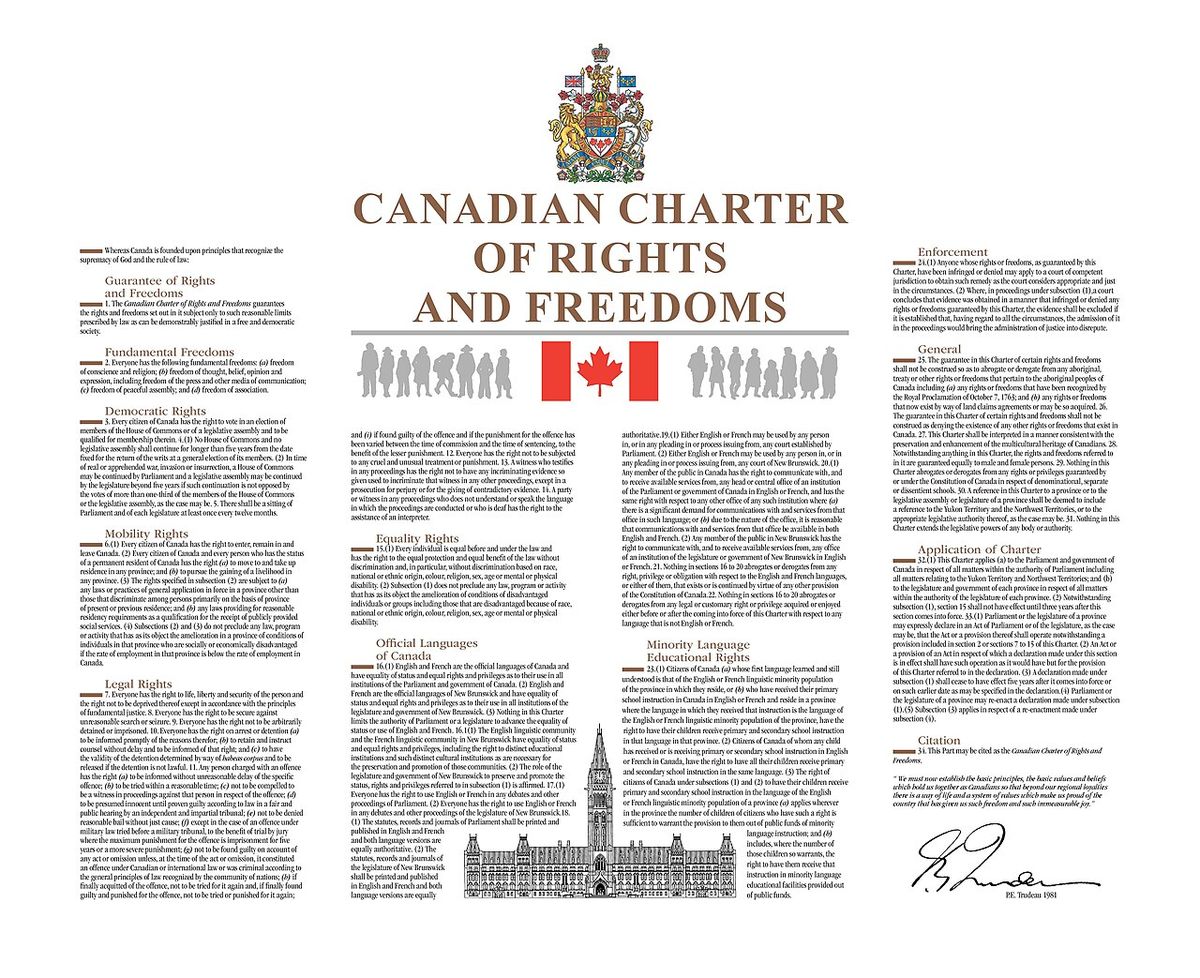
Section 8 of the Canadian Charter of Rights and Freedoms
Section 8 of the Canadian Charter of Rights and Freedoms protects against unreasonable search and seizure. This right provides those in Canada with their primary source of constitutionally enforced privacy rights against unreasonable intrusion from the state. Enshrined in the Charter's legal rights section, it balances an individual's right to be free from unjustified state intrusion against society's interest in law enforcement and public safety. Through decades of judicial interpretation, Section 8 has evolved to address modern challenges, including digital privacy and new investigative techniques.
Foundational Principles and Purpose
Section 8 of the Charter states that everyone has the right to be secure against unreasonable search or seizure. Although the word 'privacy' does not appear in the text, the Supreme Court of Canada has consistently interpreted this section as a constitutional shield for personal privacy against unjustified state intrusion. The landmark 1984 case Hunter v. Southam Inc. established that the purpose of Section 8 is to prevent unjustified searches before they happen, not merely to assess them after the fact. The court held that Section 8 protects people, not places, meaning the focus is on the individual's privacy interest rather than the physical location of a search. The underlying values protected by Section 8 are human dignity, personal integrity, and individual autonomy, which are considered essential to a democratic society. The right is part of the Charter's legal rights, which also include Section 7 (right to life, liberty, and security of the person) and Section 9 (right not to be arbitrarily detained or imprisoned).
The Reasonable Expectation of Privacy
The central concept determining the scope of Section 8 protection is whether a person has a 'reasonable expectation of privacy' in the circumstances. This is a contextual analysis that balances individual privacy interests against societal interests like crime prevention. The Supreme Court has ruled that not all information or places attract this expectation. For instance, utility records or heat patterns detectable from outside a building generally do not engage a reasonable privacy interest because they do not reveal intimate lifestyle details. Similarly, garbage placed at the curb for collection is considered abandoned and loses privacy protection. In contrast, the contents of a personal vehicle typically engage a reasonable expectation for the driver, though not necessarily for a passenger who is not the owner. The expectation can also vary based on control and use of a space, such as a hotel room where privacy may diminish if the occupant invites the public inside. A visitor to a dwelling house does not enjoy the same expectation of privacy as a permanent occupant. The test is objective, focusing on what a reasonable person in the individual's position would expect. Key factors courts consider when assessing a reasonable expectation of privacy include the subject matter of the search or seizure, the location where the search occurs, and the nature of the investigative techniques used by the state. Additional factors are whether the individual was present during the search and the individual's relationship to the place or item searched. This framework ensures a flexible and fact-specific application of Section 8 across diverse situations, from physical searches to digital surveillance.
What Constitutes a Search
Not every state examination constitutes a 'search' under Section 8. The determination hinges on whether the government's technique diminishes a person's reasonable expectation of privacy. The Supreme Court has provided guidance through specific rulings. For example, a police officer compelling someone to produce a driver's licence is not invasive enough to be a search, as established in R. v. Ladouceur. Similarly, a visual inspection inside a car is not a search, but questioning about the contents of a bag would be, according to R. v. Mellenthin. The use of technology significantly expands the definition. In R. v. TELUS Communications Co., the Court found that text messages stored on a third-party server are protected, applying Section 8 to modern digital communications. Warrantless entry into a private home is a clear violation, as confirmed in R. v. Feeney. The use of wiretapping is also considered a search, and while exigent circumstances may sometimes justify it without a warrant, police must provide prompt notification to the affected individual, as per R. v. Tse. The application of police dogs to gain probable cause has been ruled a search requiring additional justifying factors, established in R. v. A.M. and R. v. Kang-Brown. The application of section 8 is not limited to the criminal context, and has become an issue in civil forfeiture litigation, with some courts holding that the same Charter principles apply to the manner in which evidence is obtained.
Understanding Seizure
The meaning of 'seizure' under Section 8 is more straightforward than 'search'. The Supreme Court defined it in R. v. Dyment as the 'taking of a thing from a person by a public authority without that person's consent.' This definition has been subsequently narrowed to cover takings made in furtherance of administration or a criminal investigation, as clarified in Quebec (Attorney General) v. Laroche. A seizure occurs when police or other state agents take possession of an individual's property or personal information without consent. This can include physical items like documents or electronic devices, as well as intangible things like bodily samples for DNA analysis. The reasonableness of a seizure is analyzed under the same framework as a search, requiring authorization by law, a reasonable law, and a reasonable manner of execution. Any property found or seized by means of a violation of section 8 can be excluded as evidence in a trial under section 24(2) of the Charter.
The Test for Reasonableness
For a search or seizure to comply with Section 8, it must be reasonable. The Supreme Court set out a three-part test for reasonableness in R. v. Collins. First, the search or seizure must be authorized by law. This means there must be a statute, common law rule, or other legal authority permitting the specific state action. Second, the law authorizing the search or seizure must itself be reasonable. A law is generally reasonable if it requires prior authorization from an impartial party, like a judge issuing a warrant, based on reasonable and probable grounds that an offence has been committed and evidence will be found. Third, the search or seizure must be carried out in a reasonable manner. This means the execution must comply with the terms of the authorization and not be conducted in an abusive, arbitrary, or unnecessarily intrusive way. If any one of these three requirements is not met, the search or seizure is unreasonable and violates Section 8. This structured test provides a clear framework for courts to evaluate police conduct and for individuals to understand their rights.
Application in Criminal and Civil Contexts
While Section 8 is most frequently invoked in criminal trials, its application is not limited to the criminal law context. The Supreme Court has confirmed that the same Charter principles apply to the manner in which evidence is obtained in civil forfeiture proceedings. This means that if the state seeks to seize property through civil asset forfeiture laws, the investigative methods used must still comply with Section 8's reasonableness requirements. The protection also extends to corporations as legal persons, as established in Hunter v. Southam. Section 8 protections can overlap with other Charter rights. For instance, in R. v. S.A.B., the Court analyzed self-incrimination concerns related to DNA warrant powers under Section 8 rather than Section 7. The right is also related to Section 9, which protects against arbitrary detention, as a search often occurs during a detention.
Important Supreme Court Rulings
The interpretation and scope of Section 8 have been shaped by major decisions from the Supreme Court of Canada. Key cases have established that Section 8 protects people, not just places, against unjustified intrusions on their privacy interests. The Supreme Court has ruled that the purpose of Section 8 is to prevent unjustified searches before they happen. These cases have defined what constitutes a search or seizure and the concept of a reasonable expectation of privacy. The protection has been applied to modern communications like text messages, even when data is on a third-party server.
| Case | Year | Key Ruling on Section 8 |
|---|---|---|
| Hunter v. Southam Inc. | 1984 | Established that Section 8 protects people, not places, and its purpose is to prevent unjustified searches. |
| R. v. Collins | 1987 | Articulated the three-part test for determining if a search or seizure is reasonable. |
| R. v. Dyment | 1988 | Defined 'seizure' as the taking of a thing by a public authority without consent. |
| R. v. Plant | 1993 | Identified dignity, integrity, and autonomy as the values underlying the Section 8 privacy interest. |
| R. v. Tessling | 2004 | Clarified that a 'search' occurs where a person has a reasonable privacy interest in the subject of state action. |
| R. v. Tse | 2012 | Held that warrantless wiretapping in exigent circumstances requires prompt notification to the affected individual. |
| R. v. Fearon | 2014 | Held that a warrantless search of a cell phone during an arrest can be reasonable but set strict guidelines. |
| R. v. Ahmad | 2020 | Reaffirmed that Section 8 protects a sphere of individual autonomy where the state cannot intrude without permission. |
Remedies and Practical Implications
A finding that Section 8 has been violated does not automatically end a prosecution or legal proceeding. The primary remedy for an unreasonable search or seizure is the potential exclusion of evidence under Section 24(2) of the Charter. A court may refuse to admit evidence obtained through a Charter breach if its admission would bring the administration of justice into disrepute. This requires a separate analysis considering the seriousness of the breach, the impact on the accused's rights, and society's interest in a trial on the merits. In some cases, a stay of proceedings may be granted if the breach is particularly egregious. For individuals, understanding Section 8 is crucial when interacting with police. While police can conduct searches with a warrant based on reasonable grounds, or without a warrant in exceptional circumstances like hot pursuit, individuals have the right to know the reason for a search and to see a warrant when one is required. Legal advice is essential if one believes their rights have been violated, as timely arguments about admissibility of evidence must be made in court. The right is supported by external resources such as the CanLII section 8 digest for case law research.
Questions about Section 8 of the Canadian Charter of Rights and Freedoms
What does Section 8 of the Charter protect?
Section 8 of the Canadian Charter of Rights and Freedoms protects against unreasonable search and seizure. This right provides those in Canada with their primary source of constitutionally enforced privacy rights against unreasonable intrusion from the state. The protection applies when a person has a reasonable expectation of privacy in the circumstances. It is part of the Charter's legal rights, which also include Section 7 and Section 9.
What is a 'reasonable expectation of privacy'?
A reasonable expectation of privacy is the legal test used to determine if Section 8 applies to a specific search or seizure. It asks whether a reasonable person in the individual's position would expect privacy. This is a contextual analysis based on factors like the subject matter searched, the location, and the investigative techniques used. For example, a driver generally has a reasonable expectation of privacy in their car's contents, but a passenger who does not own the car may not. A visitor to a home does not have the same expectation as a permanent occupant.
Do I have a right to privacy in my text messages and emails?
Yes, the Supreme Court of Canada has ruled that Section 8 protects modern digital communications. In R. v. TELUS Communications Co., the Court found that text messages stored on a telecommunications company's server engage a reasonable expectation of privacy. This means police generally require judicial authorization, like a warrant, to access the contents of such messages. The protection extends to the informational privacy inherent in personal communications, recognizing that digital data can reveal intimate details of an individual's life.
Can police search my cell phone if I am arrested?
The Supreme Court addressed this in R. v. Fearon, ruling that a warrantless search of a cell phone incident to arrest does not automatically violate the Charter. However, the search must be truly incidental to the arrest, and the police must follow specific guidelines. These include making the search for a valid law enforcement purpose related to the arrest, limiting the search to the extent reasonably necessary for that purpose, and properly documenting the search. The ruling allows for such searches but imposes strict conditions to protect privacy.
What happens if police violate my Section 8 rights?
If a court finds that police conducted an unreasonable search or seizure in violation of Section 8, the primary remedy is the potential exclusion of the illegally obtained evidence from trial under Section 24(2) of the Charter. The court will decide whether admitting the evidence would bring the administration of justice into disrepute, considering the seriousness of the breach and its impact. In extreme cases, a stay of proceedings may be granted. It is crucial to raise a Section 8 challenge with the help of a lawyer during legal proceedings.
How is Section 8 different from the U.S. Fourth Amendment?
While both Section 8 of the Canadian Charter and the Fourth Amendment to the U.S. Constitution protect against unreasonable search and seizure, their interpretation differs. A key distinction is the central role of the 'reasonable expectation of privacy' test in Canadian law, which focuses on the individual's privacy interest. Canadian jurisprudence, beginning with Hunter v. Southam, emphasizes the purpose of preventing unjustified searches and protects 'people, not places.' The tests for reasonableness and the remedies for violation also operate within distinct Canadian constitutional frameworks and values.
Sources and further reading
- Section 8 of the Canadian Charter of Rights and Freedoms (Wikipedia)
- Charterpedia, Section 8, Search and seizure (justice.gc.ca)
- the Canadian Charter of Rights and Freedoms (bccla.org)
- In Brief: Section 8 of the Charter, The Right to be Secure ... (ojen.ca)
- What is Section 8 of the Charter? | Edmonton Criminal ... (criminalappeals.net)
Checked by the Nosy Mag desk. Last updated 2026-11-02.