Section 1 of the Canadian Charter of Rights and Freedoms
Section 1 of the Canadian Charter of Rights and Freedoms is the section that confirms the rights listed in the Charter are guaranteed. It is also known as the reasonable limits clause or limitations clause, as it legally allows the government to limit an individual's Charter rights. This limitation on rights has been used to prevent conduct such as child pornography, hate speech, and obscenity. It establishes that rights are not absolute but may be subject to legal limits that are demonstrably justifiable in a free and democratic society. The jurisprudence surrounding Section 1, most notably the Oakes test, is a fundamental part of Canadian constitutional law.
Text and Function
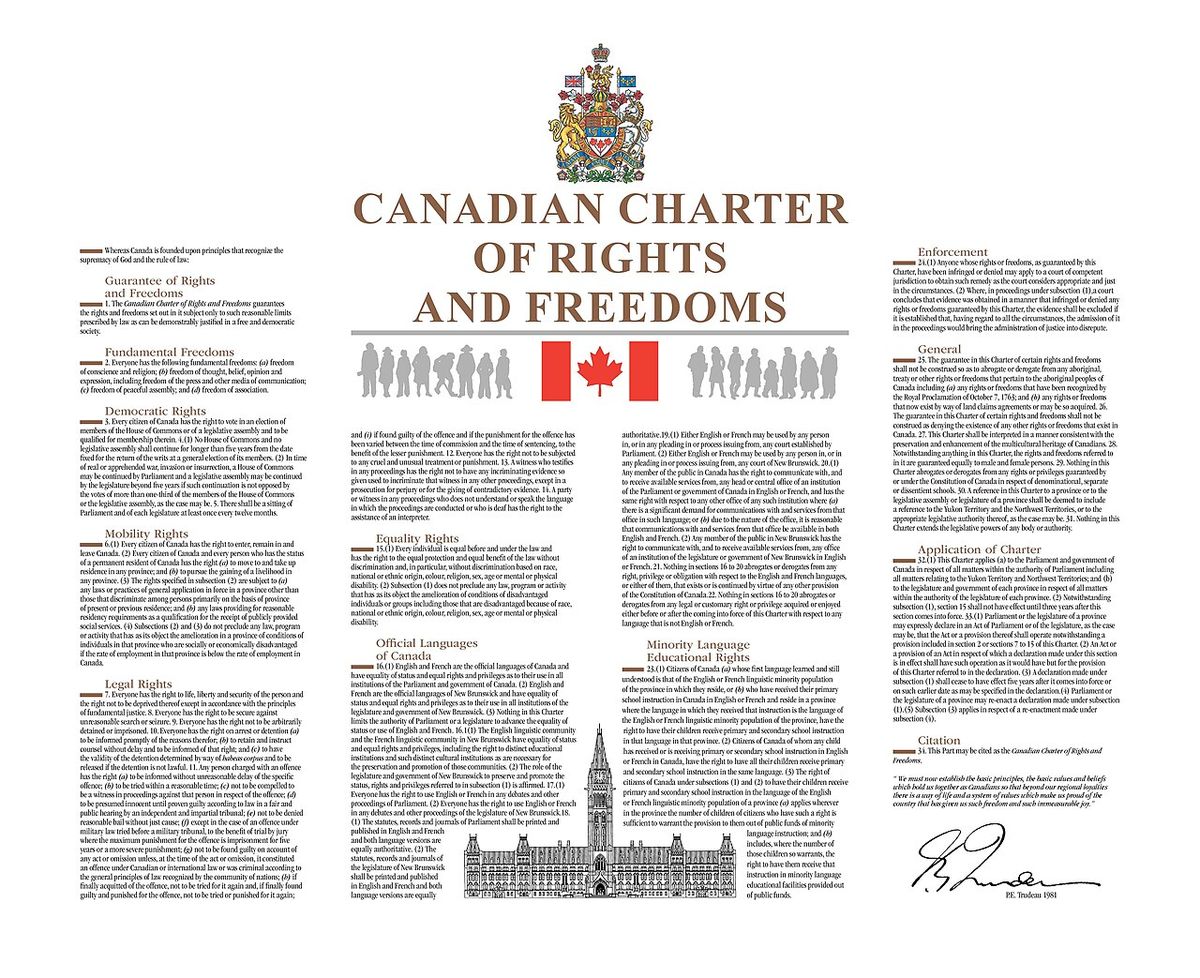
Under the heading of 'Guarantee of Rights and Freedoms', Section 1 states: 'The Canadian Charter of Rights and Freedoms guarantees the rights and freedoms set out in it subject only to such reasonable limits prescribed by law as can be demonstrably justified in a free and democratic society.' This single sentence performs two vital functions. First, it affirms that the rights listed in the Charter are guaranteed to everyone in Canada. Second, it explicitly acknowledges that these rights are not absolute and can be limited under certain conditions. The clause represents a deliberate constitutional choice to avoid an absolutist approach to rights, instead embedding a mechanism for balancing individual liberties with the needs of the community. When enacted as part of the Constitution Act, 1982, this general limitations clause was an innovation, distinguishing the Canadian Charter from instruments like the United States Bill of Rights, which lacks a similar overarching provision.

The Oakes Test
The primary legal framework for applying Section 1 is the Oakes test, established by the Supreme Court of Canada in the 1986 case R v Oakes. The test is applied only after a court has found that a Charter right has been limited or violated. The onus then shifts to the government to justify that limit under Section 1, and it must do so on the balance of probabilities. Chief Justice Brian Dickson, writing for a unanimous court, outlined a two-step process. The test requires the government to prove, firstly, that the law's objective is pressing and substantial in a free and democratic society. Secondly, it must prove that the means chosen to achieve that objective are proportional, which is analyzed through three further criteria. The three criteria for proportionality are that the law must be rationally connected to the objective, it must impair the right as little as reasonably possible (minimal impairment), and there must be a proportionality between the law's effects and its objective. The Oakes test is heavily founded in factual analysis and the criteria often overlap in practice. If the government fails to satisfy any one of these branches, the law is unconstitutional and will be struck down. Since its inception, the test has been modified slightly, such as softening the 'minimal impairment' requirement from 'as little as possible' to 'as little as is reasonably possible' in R v Edwards Books and Art Ltd (1986).
- Pressing and Substantial Objective: The government's goal must be of sufficient importance to warrant overriding a Charter right. Objectives that are themselves discriminatory or antagonistic to fundamental freedoms are insufficient, as seen in Vriend v Alberta where the government's explanation for not protecting gay employees was ruled insufficient.
- Rational Connection: The measure adopted must be logically connected to achieving the objective and cannot be arbitrary or unfair. An example of failure is found in R v Morgentaler (1988) where the process for approving therapeutic abortions was found to be irrational.
- Minimal Impairment: The law must impair the right no more than is reasonably necessary. This is often the most difficult criterion for governments to meet, as seen in Ford v Quebec (AG) (1988) where a less restrictive sign law was deemed possible.
- Proportionality of Effects: The benefits of the law must outweigh the seriousness of the rights infringement, ensuring the law does not produce effects so severe as to make the impairment unjustifiable.
Application in Key Cases
Section 1 and the Oakes test have been central to resolving some of Canada's most significant constitutional disputes. The test was applied in R v Sharpe (2001) to uphold laws against child pornography, balancing freedom of expression against the need to protect children from exploitation. In the context of administrative law, the Supreme Court in Doré v Barreau du Québec (2012) ruled that a different, more flexible framework than the full Oakes test should apply when reviewing discretionary decisions by administrative bodies that affect Charter rights. The Court held that decision-makers must proportionally balance Charter values with statutory objectives, with courts reviewing for reasonableness. Section 1 has been invoked to justify extraordinary measures during public emergencies. In September 2020, Justice Donald Burrage of the Newfoundland and Labrador Supreme Court ruled that a provincial travel ban during the COVID-19 pandemic violated the mobility rights in Section 6 of the Charter, but that the violation was justified as a reasonable limit under Section 1 given the pressing public health objective.

Comparison with Other Instruments
Section 1's general limitations clause makes the Canadian Charter distinct from many other human rights documents. Unlike the United States Bill of Rights, which treats most rights as absolute and subject only to internal balancing tests developed by courts, the Charter explicitly provides a textual basis for limiting rights. The Charter's approach is more aligned with international and comparative instruments. The European Convention on Human Rights contains specific limitation clauses attached to particular rights, such as privacy, freedom of religion, and freedom of assembly, which must be 'necessary in a democratic society.' Similarly, the International Covenant on Civil and Political Rights includes limitation provisions specific to certain rights. The closest analogue is found in Section 36 of the Constitution of South Africa, which requires that a limitation be 'reasonable and justifiable in an open and democratic society' and outlines a similar proportionality analysis. Within Canada, Section 9.1 of the Quebec Charter of Human Rights and Freedoms serves a comparable function, allowing limits on rights respecting democratic values, public order and the general well-being of the citizens of Quebec. In Ford v Quebec (AG), the Supreme Court held that the analysis under Quebec's Section 9.1 should be similar to that under the Canadian Charter's Section 1, though the Quebec provision also applies to private law disputes. The Oakes test has also influenced the development of tests for limiting other constitutional rights, such as the framework for justifying infringements of Aboriginal rights under Section 35 of the Constitution Act, 1982, established in R v Sparrow.
Historical Development and Drafting
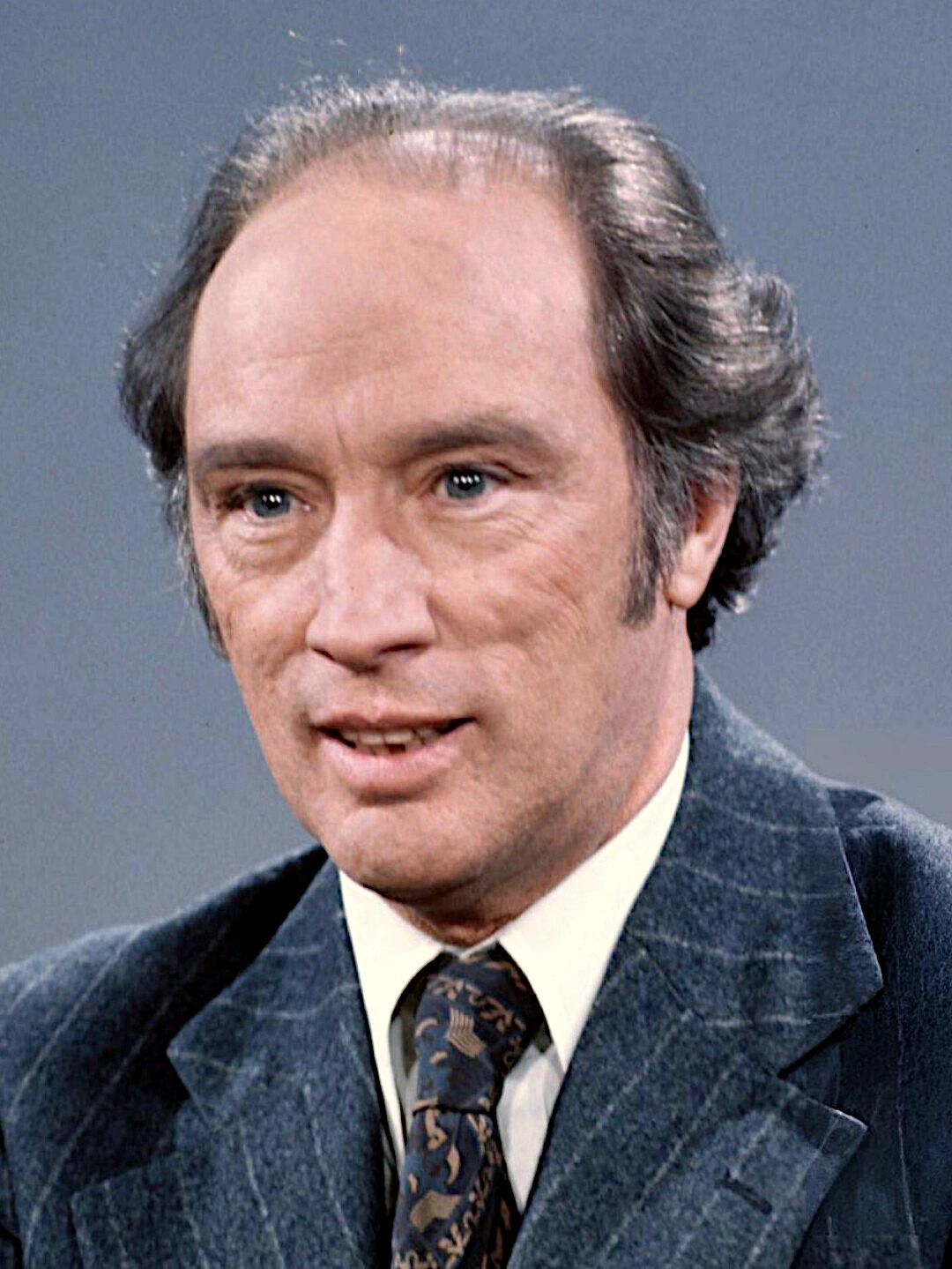
The inclusion of a limitations clause was a deliberate feature of the Charter from its earliest planning stages. At around the time of the centennial of Canadian Confederation in 1967, Liberal Attorney General Pierre Trudeau appointed law professor Barry Strayer to research enshrining rights into the Constitution. An early version of the clause guaranteed rights subject to limits 'generally accepted in a free and democratic society with a parliamentary system of government.' Civil libertarians criticized this wording as overly vague and weak, derisively calling it a 'Mack Truck' clause that would run over rights. In response to this criticism, the wording was changed to the current formulation, focusing less on parliamentary tradition and more on justifiability 'in a free and democratic society,' aligning with post-World War II international human rights developments. This change was intended to provide a more rigorous standard for courts to apply. However, provincial governments during the constitutional negotiations felt this judicial check was insufficient and insisted on the inclusion of the notwithstanding clause as a stronger legislative override.
Criticism and Debate
Section 1 has been a focal point of debate regarding the Charter's impact on Canadian democracy and the role of judges. Critics argue that the broad language of Section 1, combined with the detailed Oakes test, grants judges significant discretion in shaping public policy. In their book The Charter Revolution & the Court Party, academic Rainer Knopff and politician Ted Morton quote former Chief Justice Antonio Lamer stating that a Charter case, 'especially when one has to look at Section 1 ... is asking us to make essentially what used to be a political call.' They further allege that the Oakes test itself was heavily influenced by American constitutional law, purportedly drafted by then-law clerk Joel Bakan. Proponents of Section 1 contend that it embodies a pragmatic and principled approach to rights, recognizing that conflicts between individual freedoms and collective goods are inevitable. They argue the Oakes test provides a structured, transparent, and rigorous method for resolving these conflicts, forcing governments to provide clear justifications for limiting fundamental rights. The requirement for demonstrable justification ensures that rights are not limited lightly or arbitrarily. This framework is seen as reinforcing a culture of justification for state action.
Related Legal Frameworks and Tests
While the Oakes test is the dominant framework, the Supreme Court has recognized that it is not the only possible analysis under Section 1. In the early equality rights case Andrews v Law Society of British Columbia (1989), Justice William McIntyre argued that the Oakes standard was too high for evaluating limits on Section 15 equality rights. He proposed an alternative two-step test focusing on whether the government action pursued a desirable social objective and whether the importance of the infringed right was outweighed by the achievement of that objective. However, the majority of the Court continued to apply the Oakes test in equality cases. Other departures include the test developed for administrative law contexts in Doré, which requires a proportionate balancing rather than the full Oakes analysis. There has also been scholarly debate, notably by constitutional expert Peter Hogg, about whether Section 1 can apply to Section 12's protection against cruel and unusual punishment, with Hogg suggesting it may be an absolute right. The Court has developed tests modelled on the Oakes proportionality reasoning in other areas of law, such as the common law test for publication bans established in Dagenais v Canadian Broadcasting Corp. (1994).
| Case Name | Year | Charter Right Limited | Section 1 Justification Outcome |
|---|---|---|---|
| R v Oakes | 1986 | Presumption of innocence (s. 11(d)) | Not Justified. Law struck down |
| Ford v Quebec (AG) | 1988 | Freedom of expression (s. 2(b)) | Not Justified. Sign law invalid |
| Vriend v Alberta | 1998 | Equality rights (s. 15) | Not Justified. Law invalid |
| R v Sharpe | 2001 | Freedom of expression (s. 2(b)) | Justified. Child pornography law upheld |
| Doré v Barreau du Québec | 2012 | Freedom of expression (s. 2(b)) | Developed separate administrative law test |
Questions about Section 1 of the Canadian Charter of Rights and Freedoms
What is the main purpose of Section 1 of the Charter?
The main purpose of Section 1 is to confirm that the rights listed in the Charter are guaranteed, while also acting as a reasonable limits clause. It legally allows the government to limit an individual's Charter rights, but only if such limits are prescribed by law and can be demonstrably justified in a free and democratic society. This prevents an absolutist interpretation of rights and has been used to uphold laws addressing issues like child pornography, hate speech, and obscenity. The government bears the onus to prove any limitation meets the strict legal standard known as the Oakes test.
What is the Oakes test and how does it work?
The Oakes test is the legal framework established by the Supreme Court in 1986 to determine if a limit on a Charter right is justified under Section 1. It is a two-part test. First, the government must prove its objective in limiting the right is pressing and substantial. Second, it must prove the means are proportional, which involves three sub-steps: the law must be rationally connected to the objective, it must impair the right as little as reasonably possible, and there must be a proportionality between the law's effects and its objective. The government bears the burden of proof on the balance of probabilities.
Can Section 1 be used to justify any limit on rights?
No, Section 1 cannot be used to justify any limit. The limit must first be 'prescribed by law,' meaning it is authorized by an accessible and intelligible statute or regulation. Then, it must pass the rigorous Oakes test. The government's objective must be of sufficient importance, such as preventing harm or protecting public health, and cannot itself be discriminatory. The means chosen must be carefully tailored and proportionate. Many government actions have failed this test, leading laws to be struck down.
Does Section 1 apply to all rights in the Charter?
Section 1 generally applies to most rights and freedoms in the Charter, including fundamental freedoms, legal rights, and equality rights. Scholars like Professor Peter Hogg have questioned whether section 1 could ever apply to section 12 rights against cruel and unusual punishment, suggesting it may be an absolute right. In the 1987 case R. v. Smith, some Supreme Court justices felt section 1 could not apply to section 12, though the majority did employ it.
What does it mean that a limit must be 'prescribed by law' under Section 1?
A limit is 'prescribed by law' if the government's conduct is authorized by a law that is accessible and intelligible. This means the law must provide a clear standard and cannot grant officials a plenary discretion to do whatever they think is best. For example, in Little Sisters Book and Art Emporium v Canada, a border official's conduct of singling out homosexual materials failed because it was not authorized by any law. Police conduct without lawful authority would also fail at this stage. This requirement ensures that any limit on rights has a proper legal foundation.
How did the case of R v Oakes establish the test for justifying limits on rights?
The case R v Oakes from 1986 established the primary test for justifying limits under Section 1, known as the Oakes test. Chief Justice Dickson, writing for a unanimous Court, found that David Oakes' rights were violated by a presumption of guilt in a narcotics case. The Court ruled this violation was not justified, outlining a two-step process. First, the government must show a pressing and substantial objective. Second, the means used must be proportional, which includes being rationally connected to the objective, minimally impairing of rights, and having a proportional effect. This test places the burden of proof on the Crown.
Sources and further reading
- Section 1 of the Canadian Charter of Rights and Freedoms (Wikipedia)
- Charterpedia, Section 1, Reasonable limits (justice.gc.ca)
Checked by the Nosy Mag desk. Last updated 2026-11-02.