Royal Canadian Army Cadets
The Royal Canadian Army Cadets (RCAC) is a national youth program and Canada's oldest, with origins tracing back to drill associations formed in 1861. Sponsored jointly by the Canadian Armed Forces and the civilian Army Cadet League of Canada, the program aims to develop leadership, citizenship, and physical fitness in young Canadians aged 12 to 18. As of 2026, approximately 22,000 cadets are enrolled in about 429 corps across the country, forming a key part of the federally funded Canadian Cadet Organizations. While cadets wear uniforms and learn military-related skills, they are not members of the armed forces and there is no obligation to pursue a military career.
Program Aim and Structure
The stated aim of the Royal Canadian Army Cadets is to develop in youth the attributes of good citizenship and leadership, promote physical fitness, and stimulate interest in the land activities of the Canadian Forces. This aim is shared with the Sea and Air Cadets, with each branch focusing on its respective element. The program is federally funded through the Department of National Defence and administered by the Canadian Armed Forces, specifically by the Reserve Force sub-component known as the Cadet Organization Administration and Training Service. Day-to-day support and community-level supervision are provided by the civilian Army Cadet League of Canada, which was officially formed in 1971 to give the RCAC a partnership structure similar to the other cadet branches. Cadets are not members of the Canadian Armed Forces, and there is no fee to join a corps, though some local sponsors may request a voluntary registration fee for ancillary expenses. Uniforms, training manuals, and instruction are provided to all participants.
Youth of any nationality or country of origin can join provided they are residents of Canada and between the ages of 12 and 18. Cadets remain in the program until the day prior to their 19th birthday, at which point they age out. The program emphasizes values such as loyalty, professionalism, mutual respect, and integrity, and is designed to be accessible to all young Canadians regardless of income, race, religion, or culture. Many corps receive logistical and administrative support from affiliated Regular Force or Reserve Force units, and cadets may wear the badges of these affiliated units. The organization uses the rank system of the Canadian Army for its cadets, who are appointed to non-commissioned member ranks and take seniority amongst themselves. A few large school-sponsored cadet corps use Canadian Army commissioned officer designations from Lieutenant to Lieutenant Colonel, a practice that is not officially recognized.
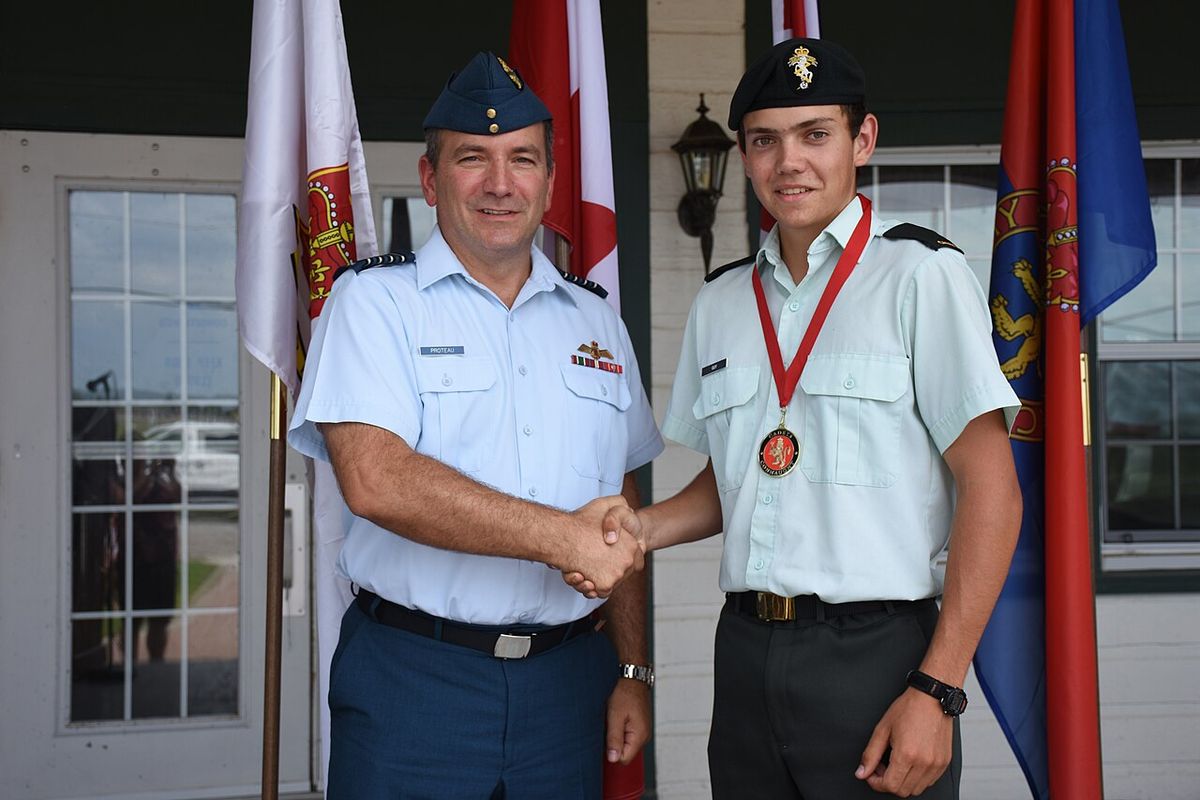
Historical Development
The roots of the Royal Canadian Army Cadets are found in the drill associations and militia companies authorized in 1861, six years before Canadian Confederation. Motivated by the American Civil War and the threat of Fenian Raids, these early groups were formed in educational institutions in Canada East and Canada West for males aged 13 to 60. The first officially recognized cadet corps emerged following Militia General Order 18 on July 25, 1879, which allowed the formation of 74 Associations for Drill in Educational Institutions. The oldest continuously active corps are No. 2 Bishop's College School Cadet Corps in Lennoxville, Quebec, originating in November 1879, and No. 7 Royal Canadian Army Cadets in St. Thomas, Ontario, originating in February 1880. The allocation of numbers to cadet corps was instituted in 1904, with the list that year showing corps numbered from 1 to 104.
Support grew following the Northwest Campaign of 1885, leading to improved issue of uniforms and equipment. A significant boost came in 1910 with the establishment of the Strathcona Trust by Sir Donald Alexander Smith, Lord Strathcona, which provided $500,000 to promote physical training, rifle shooting, and military drill to inspire citizenship and patriotism. The First World War saw approximately 40,000 former cadets serve, and by war's end, about 64,000 boys were enrolled in army cadet corps. In 1942, King George VI granted the Royal prefix in recognition of cadets' contributions to the war effort, with nearly 230,000 former army cadets estimated to have served. Post-war quotas reduced total cadet membership to about 75,000.
Major organizational changes followed the unification of the Canadian Forces in 1968, including the establishment of a directorate of cadets in Ottawa and the consolidation of officer cadres. A key moment came on July 30, 1975, when Parliament amended legislation to change the word boys to persons, formally permitting females to become full members. Females had participated unofficially almost from the beginning, with an all-female company called the Daughters of the Regiment formed in Guelph as early as 1882. The program celebrated its 125th anniversary in 2004, marked by Canada Post issuing a commemorative stamp and parades across the country. The Army Cadet League of Canada issued a 125th Anniversary pin to all army cadets.
Training Program
The core of cadet training is the Star Level Program, a five-level curriculum mandated by the Department of National Defence. This program teaches cadets a variety of subjects known as Performance Objectives, which include citizenship, physical fitness, healthy living, drill, marksmanship, map and compass, outdoor survival, eco-friendly camping, and military history and traditions. The levels progress from Green Star (Level 1) through Red Star (Level 2), Silver Star (Level 3), and Gold Star (Level 4). The Master Cadet (Level 5) level was removed in September 2024 and replaced by the Advanced Leadership Program. The National Star of Excellence ranking tool for senior cadets, introduced in the 2012-13 training year, was phased out as of August 4, 2023. The local cadet training year typically runs from September to June, with no regular local training during the summer months. Cadets also have access to a wide range of optional training activities that extend their mandatory corps training. These optional programs consist of:
- Military Band and Pipes Band
- Marksmanship
- Biathlon
- First Aid Program
- Drill Team
- Orienteering
- Rappelling
- Parachuting
A highlight for many cadets is the Summer Training program, which provides intensive courses at Cadet Training Centres across Canada. Training is divided into areas such as drill and ceremonial, expedition and outdoor skills, marksmanship, fitness and sports, and musicianship. Cadets progress through courses based on their Star level, with Red Star cadets eligible for introductory courses and Silver, Gold, and Master Cadets taking advanced leadership and specialist courses. Green Star cadets are not eligible for summer training. The program also offers selected cadets the opportunity for international exchanges to allied countries such as the United Kingdom and the United States.
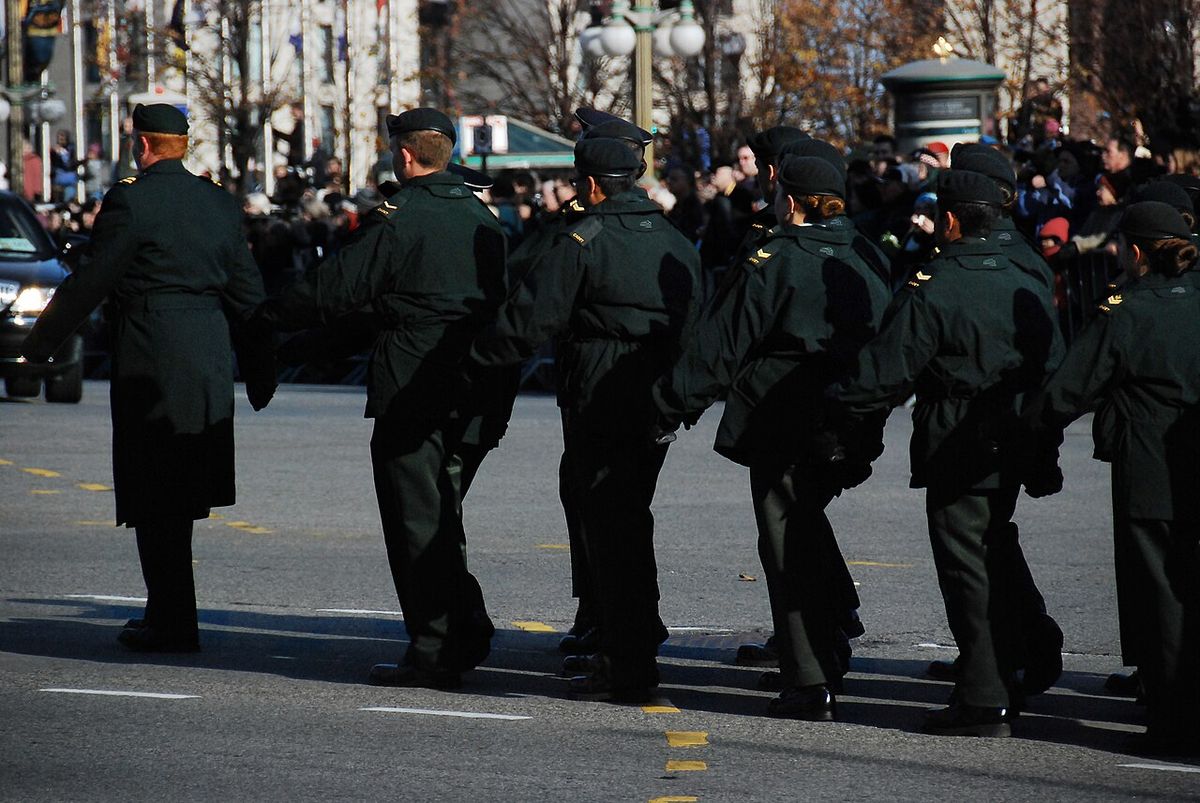
Adult Leadership and Support
Adult leadership within the Royal Canadian Army Cadets is primarily provided by officers of the Cadet Instructor Cadre branch, which is part of the Cadet Organization Administration and Training Service within the Reserve Force. These officers are specifically trained to administer and support the cadet training program and come from diverse civilian backgrounds. Some are former cadets themselves, while others may have prior Regular Force or Reserve Force service. The leadership of each corps can be supplemented by contracted Civilian Instructors, authorized adult volunteers, and occasionally officers and non-commissioned members from other Canadian Armed Forces branches. The Cadet Instructor Cadre has its origins in the first authority for cadet instructors to hold militia rank, established by Special General Order on October 21, 1903. The cadre was formally established as the Corps of School Cadet Instructors on May 1, 1909, composed of qualified male school teachers, and was redesignated the Cadet Services of Canada in 1924.
The civilian partner, the Army Cadet League of Canada, plays a support role. Formed in 1971, the League works in partnership with the Department of National Defence to support army cadets and has a branch office in each province and territory. It acts as the supervisory sponsor for more than 400 cadet corps across Canada. The League's responsibilities include ensuring financial, accommodations, and transportation support for programs and services not provided by the Department of National Defence. It also encourages public interest in the cadets and facilitates the formation of new corps. The League's arms, supporters, flag, and badge were registered with the Canadian Heraldic Authority on March 31, 1995.
Membership and Demographics
As of 2026, the Royal Canadian Army Cadets has an approximate membership of 22,000 youth spread across about 429 corps located in every province and territory. The program is free to join and open to all Canadian residents between the ages of 12 and 18, with no barriers based on income, race, religion, or culture. This open access is a fundamental aspect of the program, which actively embraces Canada's multiculturalism and provides opportunities for youth from diverse backgrounds to interact. The cadet training year aligns with the school year, generally running from September to June. For example, the 2026 to 2027 training year for returning cadets in some corps began on September 2, 2026, with open houses for new recruits held later in September. Applications submitted during the summer are processed when the training year begins in September.
Corps vary in size and some may implement caps on recruitment. For instance, the 105 Streetsville Royal Canadian Army Cadet Corps noted it would accept a limited number of recruits up to a cap of 175 before moving to a waiting list. Cadets who remain in the program until they age out on the day before their 19th birthday often participate in a special ceremony on their final parade night, where senior cadets may symbolically pass on items like a drill cane or corps flag to their successor. Upon departure, most of the personal kit issued to cadets must be returned. The service records for members are maintained until the age of twenty-five and can serve as a useful reference for any future military service, though joining the military is not an expectation of the program.
Symbols and Traditions
The official badge of the Royal Canadian Army Cadets is a central symbol of the organization. It is worn on the upper sleeve of the cadet uniform and on the breast of issue parkas. For cadets in non-affiliated corps or when not wearing an affiliated unit badge, it is also worn as a brass or cloth cap badge. The badge features the motto Acer Acerpori, which is Latin for as the maple, so the sapling, symbolizing the growth of youth within the program. In keeping with Commonwealth custom, the Royal Canadian Army Cadets hold a specific place in the order of precedence for cadet organizations, standing second after the Royal Canadian Sea Cadets and before the Royal Canadian Air Cadets.
The legacy of Lord Strathcona's 1910 trust is remembered through the Lord Strathcona Medal, awarded to one cadet in each corps and squadron who best exemplifies the qualities of a cadet. Historical battle honours are also part of the tradition for some corps with long lineages. For example, the Upper Canada College Rifle Company, a precursor unit, was called to active service during the Fenian Raids in 1866 and guarded the port and armouries of Toronto. For this service, the company carried the battle honour FENIAN RAID 1865-66 on its drums and colours, and students who stood guard were entitled to receive the Canadian General Service Medal with the Fenian Raid 1866 bar. The 125th anniversary in 2004 was commemorated with a special pin issued to all cadets, a postage stamp from Canada Post, and Freedom of the City parades in locations like Vernon, Oromocto, and Calgary.
Comparison with Other Programs
The Royal Canadian Army Cadets is one of three branches that constitute the Canadian Cadet Organizations, alongside the Royal Canadian Sea Cadets and the Royal Canadian Air Cadets. Together, they form the largest federally funded youth program in Canada. While all three branches share the same fundamental aim and are administered under the same military-civilian partnership model, each has a distinct element of focus: sea, land, or air activities. Internationally, the RCAC is considered the rough equivalent to several other national youth programs with military affiliations. These include the Junior Reserve Officers' Training Corps in the United States, the Army Cadet Force in the United Kingdom, and the Australian Army Cadets in Australia. These comparisons are based on similar structures, aims, and the use of military-themed training, though each operates within its own national context and legal framework.
Key Historical Dates and Events
The long history of the Royal Canadian Army Cadets is marked by several important dates and legislative changes that shaped the program. In 1904, the allocation of numbers to cadet corps was instituted. In 1909, a cadre of commissioned officers, as a Corps of School Cadet Instructors was established. In 1971, the Army Cadet League of Canada was formed. These milestones chart its evolution from early militia groups to a modern national youth organization.
- 1861: Drill associations and militia companies are authorized, forming the program's earliest roots.
- July 25, 1879: Militia General Order 18 allows the formation of 74 Associations for Drill in Educational Institutions.
- October 21, 1903: First authority for cadet instructors to hold rank in the Militia is established by Special General Order.
- 1910: Lord Strathcona creates the Strathcona Trust with $500,000 to support physical and military training.
- 1942: King George VI grants the Royal prefix to the Canadian Army Cadets.
- July 30, 1975: Parliament amends legislation, changing boys to persons and formally admitting females.
- 2004: The program celebrates its 125th anniversary with national commemorations.
- September 2024: The Master Cadet (Level 5) star level is removed and replaced by the Advanced Leadership Program.
These events demonstrate the program's adaptation to social changes and its enduring role in Canadian youth development. Following the unification of the Canadian Forces in 1968, a directorate of cadets was established in Ottawa. The Cadet Instructor List was redesignated the Cadet Instructor Cadre in July 1994. In 2009, the Reserve Force sub-component was renamed the Cadet Organization Administration and Training Service.
Earliest Cadet Corps and Formations
The first cadet corps in Canada emerged from the drill associations of the late 19th century. The Royal Canadian Army Cadets can trace its history to the creation of drill associations or militia companies in 1861. Several of these early formations have the distinction of being the oldest continuously active corps in the country. Canada's oldest continuously-active cadet corps is No. 2 Bishop's College School Cadet Corps in Lennoxville, Quebec and No. 7 Royal Canadian Army Cadets in St. Thomas, Ontario. Their histories provide a direct link to the program's founding era.
- Trinity College Volunteer Rifle Company: Formed on June 1, 1861 in Port Hope, Ontario.
- Bishop's College Drill Association: Formed on December 6, 1861 in Lennoxville, Quebec.
- No. 2 Bishop's College School Cadet Corps: Originated in November 1879 in Lennoxville, Quebec.
- No. 7 Royal Canadian Army Cadets: Originated in February 1880 in St. Thomas, Ontario.
- Highland Cadet Corps: Formed at the Guelph Grammar School in Guelph in 1882.
- Daughters of the Regiment: An all-female cadet company started in Guelph shortly after 1882.
These early corps, along with 14 other drill associations or rifle companies formed in Ontario and Quebec, laid the foundation for the national network that exists today. The Upper Canada College Rifle Company, though a militia sub-unit, also played a notable early role and was called to active service during the Fenian Raids in 1866. While the regiment marched to Ridgeway to confront the Fenian invaders, the UCC Rifle Company guarded the port, armouries and government buildings of Toronto. For this deed, the student company proudly carried the battle honour FENIAN RAID 1865-66 on its drums and colours. Students in the battalion who stood guard also were entitled to receive the Canadian General Service Medal.
Questions about Royal Canadian Army Cadets
What kind of activities do cadets do?
Cadets participate in a structured Star Level Program covering citizenship, leadership, healthy living, drill, marksmanship, map and compass, outdoor survival, eco-friendly camping, and military history. Optional activities include military band, biathlon, first aid, orienteering, rappelling, and parachuting. A major component is summer training at Cadet Training Centres, offering intensive courses in specialized fields. Cadets also learn music proficiency in military or pipe bands.
What is the cost to join the Royal Canadian Army Cadets?
There is no enrolment fee to join a Royal Canadian Army Cadet corps. Uniforms, training manuals, and instruction are provided by the program. Some local sponsors may request a voluntary registration fee to assist with community level expenses not covered by the Canadian Forces, such as hall rental. The program is federally funded through the Department of National Defence and receives additional financial support from its civilian partner, the Army Cadet League of Canada.
Do cadets have to join the military after the program?
No, cadets are not members of the Canadian Armed Forces, and there is no expectation to join the military at a later date. The program is a youth development initiative focused on citizenship, leadership, and physical fitness. However, former cadets who do decide to pursue a military career may find certain benefits, such as in basic training. Their service records, which are maintained until the age of twenty-five, can serve as a helpful reference for future military service.
What ages are eligible for the Army Cadets?
Youths of any country of origin, nationality and citizenship can join the Royal Canadian Army Cadets, provided that they are 12 to 18 years of age and are residents of Canada. There is no enrolment fee to participate. If a cadet remains in a corps until the day prior to their 19th birthday, they age out. This structure ensures the program is tailored to a specific youth demographic as part of a national program with approximately 22,000 army cadets in about 429 corps across Canada.
Can girls join the Royal Canadian Army Cadets?
Yes, females are full participants in the Royal Canadian Army Cadets. This became official on July 30, 1975, when the Parliament of Canada amended the relevant legislation by changing the word boys to persons. Historically, females were unofficial participants almost from the beginning, with an all female company formed in 1882, though they received no official support. Today, males and females are given equality of opportunity in all corps level functions and summer training programs.
How is the Army Cadet program administered and funded?
The Royal Canadian Army Cadets program is administered by the Canadian Armed Forces and federally funded through the Department of National Defence. It is run in partnership with the civilian Army Cadet League of Canada, which provides supervision of local corps and squadron sponsors and ensures financial, accommodations and transportation support at a community level. Adult leadership is primarily provided by officers of the Cadet Instructor Cadre, who are part of the Cadet Organization Administration and Training Service, a Reserve Force sub component. The program operates under the authority of the National Defence Act.
Sources and further reading
- Royal Canadian Army Cadets (Wikipedia)
- Army Cadet League of Canada | La Ligue des cadets de l ... (armycadetleague.ca)
- Kingston Army Cadets (kingstonarmycadets.ca)
- Army Cadets Barrie (armycadetsbarrie.com)
Checked by the Nosy Mag desk. Last updated 2026-10-28.