Prohibition in Canada
Prohibition in Canada was a ban on alcoholic beverages that arose in various stages, from local municipal bans in the late 19th century, to provincial bans in the early 20th century, and a temporary national prohibition as a wartime measure from 1918 to 1920. Driven largely by the temperance movement, which linked alcohol to crime, poverty, and family breakdown, prohibition significantly altered Canadian society and commerce. The policy was repealed unevenly across the provinces throughout the 1920s and 1930s, though its legacy persists in complex liquor regulations and, in some communities, local bans that continue to the present day. The relatively large and powerful beer and alcohol manufacturing sector, and the huge working class that purchased their products, failed to convince any of the governments to reverse their stance on prohibition during its height.
Origins and the Temperance Movement
Canadians drank heavily during the 19th century. The 1851 census of Upper Canada recorded 1,999 taverns or one to 478 people. Drunkenness, fighting, domestic abuse, and household impoverishment were rampant. The organized crusades against social evil launched by the temperance movement targeted drinking establishments, which they viewed as the source of societal ills and misery. Initially, the temperance movement in Canada, which began in the 1820s, was largely concerned with the consumption of strong liquor, while beer, wine, and cider were not considered to be a significant problem. However, by the 1840s, total abstinence temperance societies were the norm, and all alcoholic beverages were considered dangerous. Inspired by the Maine Law of 1851, which saw legal prohibition in the U.S. state of Maine, the temperance movement in Canada shifted to the strategy of legal coercion to advance the cause of sobriety.
The main temperance organizations that emerged at the beginning of the prohibition era in Canada were the Dominion Alliance for the Total Suppression of the Liquor Traffic and the Woman's Christian Temperance Union of Canada. Protestant denominations, including Baptists, Methodists, Presbyterians, and Congregationalists, generally supported prohibition and campaigned for it beginning in the late 19th century. Prohibition was an important aspect of the Protestant Social Gospel. Notable advocates included Archibald McKillop, a Scottish-Canadian blind poet and orator from the Eastern Townships who promoted sobriety through public speeches and verse.
The WCTU established itself throughout much of Canada and the United States as one of the largest and most influential contributors to the temperance movement. One way the WCTU attempted to spread the message of temperance was by pressuring provincial governments for temperance instruction in schools. In 1892, under pressure from the WCTU and other temperance organizations, Nova Scotia enacted legislation requiring schools to teach students about the effects of alcohol on the human body. By the end of the 19th century, through the efforts of the WCTU, most provinces had at least some temperance instruction in school. The WCTU also looked outside of the formal school systems to promote temperance ideals to children, and also spread their message to Sunday schools, and youth groups.
The Dominion Alliance was an umbrella organization that included representatives from most temperance and prohibition societies, including the WCTU. The group lobbied governments at various levels to enact prohibitory laws, and other legislation that advanced the cause of temperance. They submitted a memorial, or a written statement of principles, to the nineteenth session of the Huron Diocese's Anglican Synod in 1876. In this declaration, they argued that the liquor traffic increased crime, wasted resources, corrupted social habits, and destroyed the health and lives of the people.
Early Legislation and Local Bans
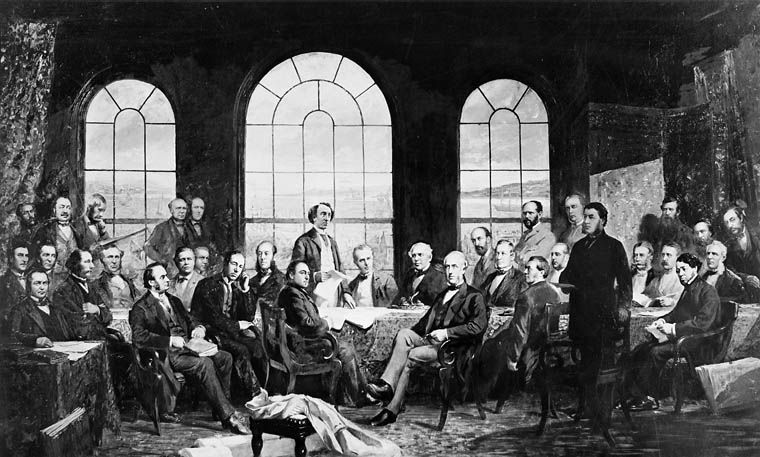
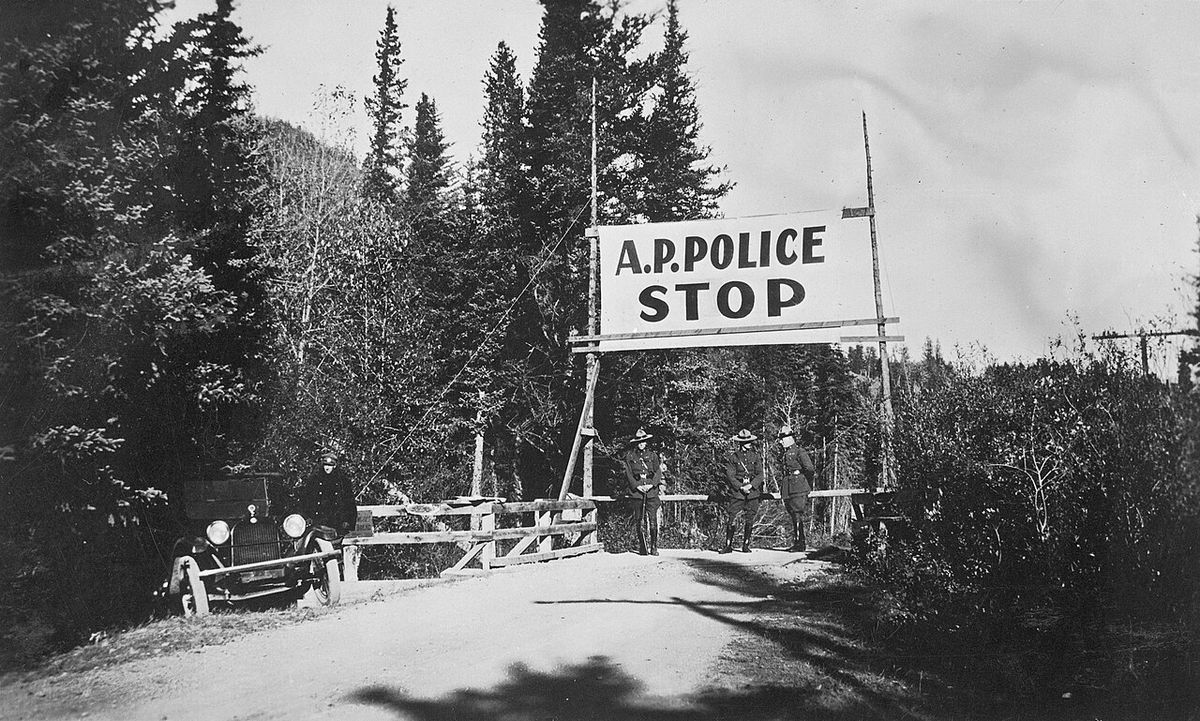
Some legislative steps toward prohibition were taken in the 19th century. The passage of the Canada Temperance Act of 1864, also called the Dunkin Act, after Christopher Dunkin, in the Province of Canada, allowed any county or city to forbid the sale of liquor by majority vote in a referendum. After Canadian Confederation, the power of local option votes was extended to the rest of Canada via the Canada Temperance Act of 1878. It was known as the Scott Act after its sponsor, Sir Richard William Scott. It allowed any county or city to opt into prohibition if it was supported by a majority in a local vote. Under the CTA, the sale of alcohol for sacramental, medicinal, or mechanical usage remained legal. Local option votes resulted in more than 240 places in Ontario being under local option prohibition by 1912. These early laws established the patchwork, locally-driven approach that would characterize much of Canada's prohibition experience.
The 1898 Referendum and Wartime Measures
An official, but non-binding, 1898 prohibition plebiscite was held with 51 per cent voting in favour of prohibition, and 49 per cent against. Voter turnout was low, at 44 per cent. Prohibition had a majority in all provinces except Quebec, where a strong 80 per cent voted against it. The main factor was religion. Pietistic Protestants, such as Methodists, Presbyterians and Scandinavian Lutherans, were strongly in support. Liturgical or high-church Protestants, such as Anglicans and German Lutherans were in opposition. The Catholic population, both French and Irish, were strongly opposed. Urban areas were more opposed than rural. Despite a prohibition majority, Prime Minister Wilfrid Laurier's government chose not to introduce a federal bill on prohibition, because of strong opposition in Quebec and low voter turnout.
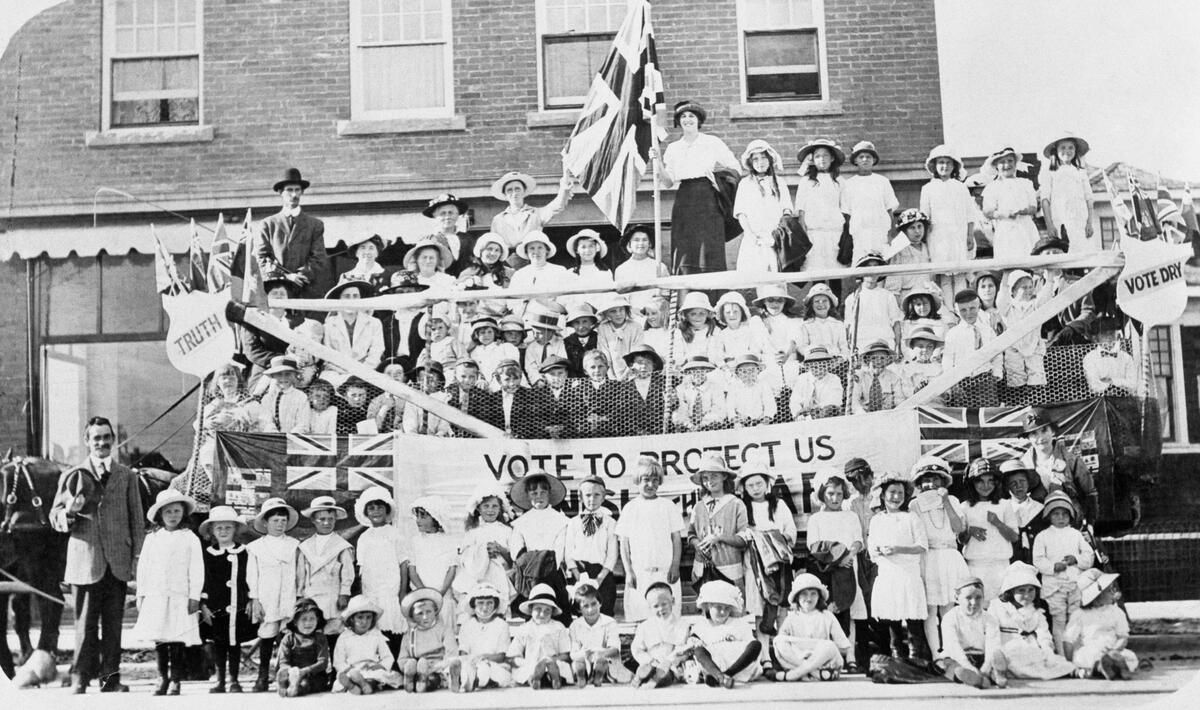
As a result, prohibition in Canada was enacted in a patchwork manner through laws passed at the provincial level during the first twenty years of the 20th century. The First World War was an important factor in the success of prohibition efforts in Canada at the beginning of the 20th century. Many believed that prohibition would create a Canadian society worthy of the sacrifices of soldiers overseas. The argument was also raised that prohibition would benefit the war effort since it would prevent waste and inefficiency. Some also considered the barroom a place where foreigners congregated and plotted against the British Empire, and therefore the war effort. As former opponents of prohibition became silenced, lest they be judged as unpatriotic, provinces began to implement prohibition.
Following the 1917 Canadian election, in March 1918 the federal government as a war measure made it illegal to manufacture intoxicating drinks. The federal government introduced national prohibition by an Order in Council that became effective on 1 April 1918. It prohibited the importation of alcohol of more than 2.5 per cent into Canada, the inter-provincial trade of alcohol, and included a ban on production. The wartime ban expired a year after the conclusion of the war. This was the first and last time that national prohibition on the production, distribution, and consumption of alcohol was enacted in Canada.
Provincial Implementation and Economic Realities
Provincial prohibition laws varied widely in their strictness, duration, and economic impact. Prince Edward Island implemented prohibition as early as 1901 and finally repealed it in 1948, the longest of any province. During the First World War more provinces joined PEI in having prohibition. Most of the provinces enacted prohibition during the First World War, and opted to extend the ban on alcohol following the end of the war. Quebec was unusual in that it adopted prohibition in 1919 and quickly repealed it due to intense public pressure. A 1919 referendum allowed the sale of light beer, cider, and wine in hotels, taverns, cafes, clubs, and corner stores, meaning full prohibition never truly took effect.
Enforcement and public compliance also differed greatly, shaped by local economies and geography. In Ontario, significant legal exceptions undermined the dry ideal. Wineries were exempted from closure, and various breweries and distilleries remained open for the export market. This loophole fueled a massive rum-running trade to the United States, with figures like Hamilton's Rocco Perri specializing in exporting liquor from companies like Seagram and Gooderham and Worts. In London, Ontario, Harry Low and his group of rum-runners bought the Carling Brewery, while the Labatt family left the operations to the manager Edmund Burke. The fact that the export might be by small boat from Windsor across the river to Detroit only helped the province's economy.
The elimination of alcoholic beverages made a difference in Canadian society. By the end of prohibition, nearly three quarters of beer breweries had closed. It was only in the second half of the 20th century that a significant number of new breweries opened again. The Ontario Alliance for the Total Suppression of the Liquor Trade stated in 1922 that the number of convictions for offences associated with drink had declined from 17,413 in 1914 to 5,413 in 1921.
- Prince Edward Island: 1901 to 1948
- Ontario: 1916 to 1927 (Ontario Temperance Act)
- Quebec: Law passed 1919, effectively nullified by 1919 referendum
- Nova Scotia: 1910 (except Halifax), province-wide 1916 to 1930
- British Columbia: Enacted during war, repealed mid-1920s
- Alberta: Enacted during war, repealed 1924
- Saskatchewan: Enacted during war, repealed 1924
- New Brunswick: Enacted during war, repealed 1927
- Manitoba: Enacted during war, repealed 1921
Social Impact, Crime, and Enforcement Challenges
Prohibition had measurable effects on Canadian society, particularly in a decline in certain alcohol-related offences. The Ontario Alliance for the Total Suppression of the Liquor Trade stated in 1922 that the number of convictions for offences associated with drink had declined from 17,413 in 1914 to 5,413 in 1921, and drunkenness cases had dropped from 16,590 in 1915 to 6,766 in 1921. However, prohibition also spawned significant unintended consequences that eroded its moral authority. Illegal production, smuggling, and speakeasies became commonplace. Organized crime networks grew to supply the demand, with figures like Hamilton's Rocco Perri building empires on rum-running.
The law was widely flouted, undermining respect for legal authority. This rampant circumvention, coupled with the loss of potential government revenue from alcohol sales, became a major argument for repeal. The barroom, which temperance advocates viewed as the source of societal ills, was largely replaced by clandestine drinking venues, shifting rather than eliminating the associated problems. The elimination of legal beverages did reduce some visible public drunkenness, but it created a vast underground economy that proved difficult and costly to police. Rum-running occurred in other provinces as well, not just Ontario.
The Repeal Process and New Control Systems
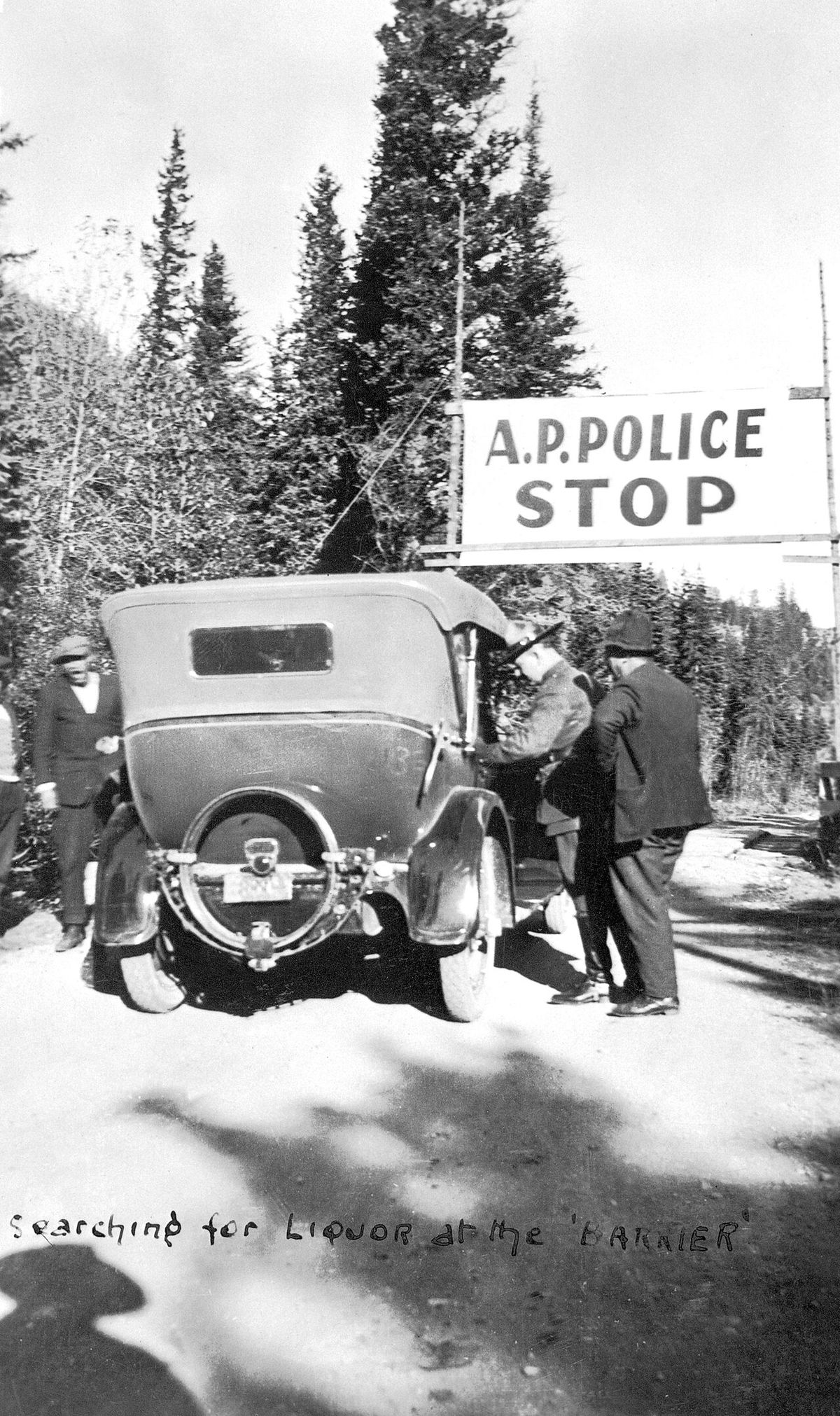
After the First World War, opponents of prohibition claimed that too many people were ignoring the law and drinking illegally, and that prohibition contributed to the expansion of organized crime and violence. The new slogans were Moderation and Government Regulation. The denominations of Presbyterianism, Methodism, and Congregationalism voted to merge as the United Church of Canada, to create a stronger liberal voice. The possibility of new revenue led several provinces to introduce government control on the sale of alcohol and by the mid-1920s prohibition was fighting a losing battle. Provinces began repealing their bans, usually after holding a referendum. Between 1921 and 1925, five provinces voted to end prohibition.
After the 1924 Ontario prohibition referendum narrowly upheld prohibition under the Ontario Temperance Act, the Ontario government led by Howard Ferguson permitted the sale of low-alcohol beer. Ferguson's successful re-election platform in 1926 included a repeal of the OTA. Prohibition was ended in 1927 following the election, and the Liquor Control Act was passed supplanting the OTA. The Liquor Control Board of Ontario was created to enforce the LCA by controlling the sale of liquor to the public and the regulation of the places in which people could drink their booze. The Liquor Control Act of 1927 allowed for the sale of alcoholic beverages for individual purchase, but public drinking of full strength alcohol remained illegal.
Subsequently, the Liquor Control Act of 1934 permitted public drinking, but only in hotel beverage rooms where beer was permitted, and dining rooms where beer and wine was permitted with meals. British Columbia's new law initially allowed only sale of liquor in special liquor stores. Public drinking remained illegal until 1925, when beer by the glass legislation permitted beer parlours to open in hotels. Alberta, after a plebiscite on 3 November 1923, replaced prohibition in 1924 with government-store sales of beer, wine and hard liquor, and licensed beer parlours selling beer under strict conditions. Saskatchewan held a referendum on 16 July 1923 and repealed prohibition in 1924, replacing it with government sale of liquor. Nova Scotia repealed its law in 1930 after a 31 October 1929 referendum.
| Province | Repeal Year | Key Replacement System | Referendum Date |
|---|---|---|---|
| Alberta | 1924 | Government stores and licensed beer parlours | 3 November 1923 |
| Saskatchewan | 1924 | Government sale of liquor | 16 July 1923 |
| British Columbia | Mid-1920s | Liquor stores (1925: beer parlours legal) | |
| Ontario | 1927 | Liquor Control Board of Ontario (LCBO) | 1924 (upheld OTA) |
| New Brunswick | 1927 | Government control | |
| Nova Scotia | 1930 | Repeal following 1929 referendum | 31 October 1929 |
| Prince Edward Island | 1948 | End of provincial prohibition | |
| Manitoba | 1921 | Government control |
Indigenous Peoples and Discriminatory Laws
First Nations were subject to prohibitory alcohol laws under the Indian Act of 1876. This was an attempt on the part of the Canadian government to facilitate assimilation, because for an indigenous person to possess alcohol they had to become a Canadian citizen through enfranchisement and to be eligible for enfranchisement indigenous people had to demonstrate sobriety. The laws also reflected a widespread false belief among North Americans, that indigenous peoples were more prone to alcohol dependency, known as the firewater myth. Sections of the Indian Act regarding liquor were not repealed for over a hundred years, until 1985. This contrasted sharply with the local option approach applied to non-Indigenous communities.
Historically, European colonizers had used alcohol as an exploitative tool during the fur trade, exchanging rum and brandy for furs, which contributed to addiction and economic disadvantage in some communities. This separate legal regime reflected and reinforced colonial control, contributing to lasting intergenerational trauma within Indigenous communities. The laws were an attempt to facilitate assimilation by tying citizenship rights to sobriety, a condition not imposed on other Canadians. The Indian Act prohibitions remained in force long after provincial prohibitions had ended.
Lasting Legacy and Modern Regulatory Conflicts
The legacy of prohibition continues to shape modern Canada in direct and indirect ways. The provincial liquor control boards established in the 1920s, such as the LCBO, remain major retail monopolies and significant sources of government revenue. The regulatory framework created post-repeal, like Ontario's Liquor Control Act of 1927 which initially only allowed home consumption, evolved slowly. Ontario only permitted public drinking in hotel beverage rooms in 1934, and dining rooms could serve beer and wine with meals. Many communities, particularly in rural and religiously conservative areas, retained local prohibition through dry bylaws long after provincial repeal.
The Cardston, Alberta, licence district, which included the town and surrounding countryside, held a local option vote in 1902, and a majority voted in favour of prohibition. Cardston voted to uphold prohibition by plebiscite as recently as 2014. Prohibition was abolished in the last few prohibition areas in Alberta on 17 June 2020, but under new provincial legislation, those areas remained dry until their respective councils passed motions to allow liquor vendors. In a 2022 town survey in Raymond, Alberta, a majority of 52 per cent of the 885 respondents opted for the community to remain dry.
The federal Importation of Intoxicating Liquors Act, which made interprovincial transport of liquor illegal, persisted for decades. It was partially relaxed in 2012 when Bill C-311, tabled by MP Dan Albas, allowed for the interprovincial shipment of wine, subject to provincial laws. However, significant interprovincial trade barriers for beer and spirits remain, and provinces have opened their borders inconsistently. For example, Ontario and British Columbia permit the interprovincial transport of wine on the person up to one case, but have made no law or policy that allows interprovincial shipment of wine. Modern international trade tensions echo the economic conflicts of the prohibition era.
In 2026, the United States imposed additional duties and later an import ban on certain Canadian alcoholic beverages, citing discriminatory Canadian practices that led to a 63 per cent drop in U.S. spirit exports. A U.S. proclamation dated August 2026 stated that Canada had banned the purchase, distribution, or retailing of U.S. alcoholic beverages while not similarly restricting products from other countries. In response, the province of Saskatchewan announced a retaliatory 50 per cent levy on U.S. alcoholic beverages effective September 2026. These disputes show how alcohol regulation remains a complex point of intergovernmental and international negotiation, a direct consequence of the fragmented and controlled system born from the repeal of prohibition.
Cultural Memory and Historical Assessment
The story of prohibition in Canada is remembered as a complex chapter of moral crusade, unintended consequences, and lasting institutional change. It demonstrated the power of social movements to shape legislation, but also the limitations of law in changing deep-seated social habits. The era inspired cultural artefacts like the song Hello Montreal, which celebrated Quebec as a mecca for thirsty Americans during U.S. prohibition. Historians debate the exact end dates of prohibition in various provinces due to the gradual nature of repeal and the introduction of low-alcohol products like the non-intoxicating light beer allowed in Ontario in 1923.
The general consensus, however, marks 1927 as the end of prohibition in Ontario when the OTA was replaced. The period accelerated the decline of the old saloon culture and led to the highly regulated, government-controlled drinking environment that defines Canadian alcohol sales to this day. The historical patchwork of laws created a lasting regulatory complexity that continues to affect commerce, consumer access, and trade relations in the 21st century. The prohibition experiment reshaped the relationship between the state, commerce, and personal habit, establishing a framework of control that outlasted the ban itself.
Questions about Prohibition in Canada
When was prohibition in Canada?
Prohibition in Canada was not a single event but a series of overlapping bans. The first province, Prince Edward Island, enacted prohibition in 1901. Most other provinces adopted it during the First World War, between 1914 and 1918. The federal government imposed a nationwide ban as a wartime measure from 1 April 1918 until 1919, when it expired after the war. Provinces repealed their laws at different times, primarily throughout the 1920s, with Prince Edward Island being the last to repeal in 1948. Some local municipalities maintained dry laws long after provincial repeal.
Why did prohibition start in Canada?
Prohibition started due to the powerful temperance movement, which argued that alcohol consumption was responsible for crime, poverty, domestic violence, and social disorder. Religious groups, particularly Protestant denominations, were strong supporters. The First World War provided a decisive boost, as proponents argued that banning alcohol would conserve resources for the war effort and create a more morally upright society worthy of soldiers' sacrifices. Some also portrayed bars as unpatriotic spaces where foreigners congregated. Patriotism during the war helped silence many opponents, allowing prohibition laws to pass.
How did prohibition end in Canada?
Prohibition ended province by province, usually following a public referendum. Growing public frustration with widespread lawbreaking, the expansion of organized crime, and the desire for government tax revenue led to its demise. Between 1921 and 1930, provinces repealed their bans and replaced them with systems of government control. These systems involved creating provincial liquor boards to oversee sales, licensing specific establishments for consumption, and taxing alcohol. The last provincial prohibition, in Prince Edward Island, ended in 1948. The merger of major Protestant churches into the United Church also changed the religious support for the policy.
What was the Scott Act?
The Canada Temperance Act of 1878, commonly known as the Scott Act after sponsor Sir Richard William Scott, was a federal law that enabled local prohibition across Canada. It allowed any county or municipality to hold a local option referendum. If a majority voted in favour, the sale of alcohol could be banned in that jurisdiction. This act decentralized prohibition, leading to a patchwork of dry and wet communities for decades. It built upon the earlier 1864 Dunkin Act and contained exceptions, allowing alcohol to be sold for medicinal, sacramental, and mechanical purposes.
How did prohibition affect Indigenous peoples differently?
Indigenous peoples were subject to separate, more restrictive laws under the Indian Act of 1876, which made it illegal for any Indian to possess or consume alcohol. This policy was based on racist stereotypes and was used as a tool of assimilation, linking sobriety to eligibility for citizenship. These prohibitions remained in force for over a century, long after provincial prohibitions ended, and were not fully repealed until 1985. This contrasted with the local option system for other Canadians and reflected a colonial policy of control, contributing to significant harm and intergenerational trauma.
Are there any 'dry' towns in Canada today?
Yes, some communities in Canada still have local prohibition bylaws, often rooted in the local option provisions of the old Scott Act. These are typically small, rural, or religiously conservative communities. For example, the town of Cardston, Alberta, and its surrounding licence district upheld prohibition through a local plebiscite first held in 1902 and maintained it well into the modern era. While provincial liquor laws generally allow sales, these municipal bylaws can restrict or ban the sale of alcohol within their boundaries, creating modern-day dry zones that are a direct legacy of the prohibition era. As of 2025, there are also dry communities in the Northwest Territories and Nunavut.
Sources and further reading
- Prohibition in Canada (Wikipedia)
- Canada's Boozy History (cranbrookhistorycentre.com)
- Prohibition on the Purchase of Residential Property by Non ... (cmhc-schl.gc.ca)
- Prohibition in Canada (thecanadianencyclopedia.ca)
Checked by the Nosy Mag desk. Last updated 2026-10-26.