Rum-running
Rum-running, also known as bootlegging, is the illegal business of smuggling alcoholic beverages where such transportation is forbidden by law. This illicit trade was a major feature of North American history during the Prohibition era in the United States from 1920 to 1933. The practice had significant social and economic impacts, undermining alcohol bans, fueling organized crime, and spurring innovation in boat design. In Canada, where provincial prohibition laws were inconsistently applied, rum-running became a major cross-border enterprise, with operations from the Great Lakes to the Pacific Coast.
Origins and etymology
The terms 'bootlegging' and 'rum-running' have distinct origins tied to the practice of illicit alcohol trade. The Oxford English Dictionary records 'bootlegger' as in use from 1889. According to the 2011 PBS documentary Prohibition, the term was popularized when thousands of city dwellers sold liquor from flasks concealed in their boot legs. The term 'rum-running' was current by 1916, and was used during Prohibition to describe ships from Bimini in the Bahamas transporting cheap Caribbean rum to Florida speakeasies. However, rum's cheapness made it a low-profit item, and smugglers soon moved to smuggling Canadian whisky, French champagne, and English gin to major cities like New York City, Boston, and Chicago. It was said that some ships carried $200,000 in contraband in a single run. The smuggling of alcohol predates these specific terms, with British 'revenue cutters' attempting to stop smugglers as early as the 16th century. Pirates often made extra money running rum to heavily taxed colonies. There were also local prohibitions like the one on Prince Edward Island between 1901 and 1948.
Prohibition and the Canada-United States trade
The enactment of national prohibition in the United States on January 16, 1920, under the Eighteenth Amendment, created an unprecedented demand for illegal alcohol. Canada never had a true nationwide prohibition, but under the War Measures Act of 1914, provinces were empowered to enact their own bans. Most provinces and the Yukon Territory had local prohibition laws by 1918, and a federal cabinet order banned the interprovincial trade and importation of liquor. This created a complex two-year window before U.S. prohibition began, where American liquor flowed illegally into Canada, undermining support for the Canadian bans. Quebec and Yukon repealed their laws in 1919, and most other provinces followed by 1930. Prince Edward Island maintained prohibition until 1948. Crucially, Canada's version of prohibition never included a ban on the manufacture of liquor for export. This legal loophole allowed Canadian distilleries and breweries to legally produce alcohol that was then smuggled on a massive scale into the United States. The black-market trade reversed direction, with Canadian whisky and beer becoming primary contraband. It is estimated that 75% of all liquor smuggled into the United States during Prohibition came through Detroit, making the Windsor-Detroit corridor the busiest rum-running route on the continent. This period lasted until the amendment was repealed with ratification of the Twenty-first Amendment on December 5, 1933.
Methods and maritime operations
Rum-running operations employed sophisticated and often daring methods to evade law enforcement. The most famous tactic was the establishment of 'Rum Row,' an idea credited to Captain Bill McCoy. Large mother ships would anchor just outside U.S. territorial waters, initially at the three-mile limit, selling their cargo to smaller, faster 'contact boats' that could outrun Coast Guard cutters and dock in secluded inlets. These small, quick boats could more easily outrun Coast Guard ships and could dock in any small river or eddy and transfer their cargo to a waiting truck. They were also known to load float planes and flying boats. In response, the United States Congress extended the jurisdiction to a 12-mile limit by an act on April 21, 1924, making it harder for smaller craft. Rum Row was most prominent off the New Jersey coast near New York and Philadelphia, where up to 60 ships could be seen at one time. Other major routes included the Great Lakes and Saint Lawrence Seaway, the Gulf of Mexico from Mexico and the Bahamas to Galveston and the Louisiana swamps, and the Pacific Coast from British Columbia to San Francisco and Los Angeles. The French islands of Saint-Pierre and Miquelon, south of Newfoundland, served as a key transshipment base for well-known smugglers including Al Capone. On the Pacific, large steamers would load in Vancouver's Burrard Inlet and serve as floating liquor stores near the Farallon Islands off California.
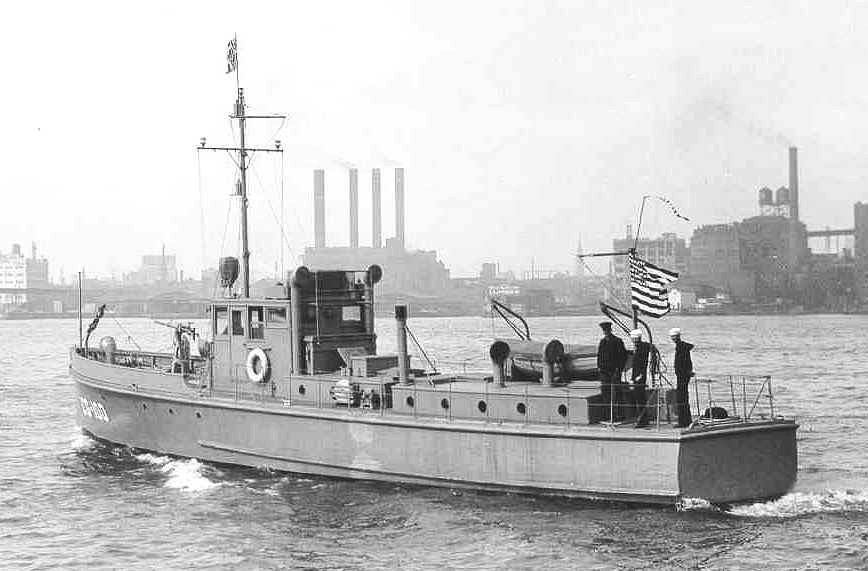
At the start of the Prohibition era, the rum-runner fleet consisted of a ragtag flotilla of fishing boats, excursion boats, and small merchant craft. As prohibition wore on, the ships became larger and more specialized. They were soon joined by small motor freighters custom-built in Nova Scotia for rum running, with low, grey hulls, hidden compartments, and powerful wireless equipment. Specialized high-speed craft, often luxury yachts and speedboats fitted with powerful aircraft engines, machine guns, and armor plating, were built for the ship-to-shore runs. Builders of rum-runners' ships also sometimes supplied Coast Guard vessels, such as Fred and Mirto Scopinich's Freeport Point Shipyard. Rum-runners often kept cans of used engine oil handy to pour on hot exhaust manifolds to create a smoke screen for escape.
- Early Fleet: Initially consisted of fishing boats, schooners like the Nellie J. Banks, and small merchant craft.
- Specialized Motherships: Converted vessels like McCoy's schooner Tomoka and custom-built, low-profile motor freighters from Nova Scotia, such as the Reo II, featured hidden compartments and powerful radios.
- High-Speed Contact Boats: Luxury yachts and speedboats were fitted with powerful aircraft engines, armour plating, and sometimes machine guns for the dangerous ship-to-shore runs.
- Government Vessels: The U.S. Coast Guard pursued rum-runners with an assortment of 75-foot patrol boats, inshore craft, and harbor cutters, most of which were slower than the smugglers' boats. The Commandant of the Coast Guard made $6,000 annually.
The technological arms race was intense. Rum-running captains could earn several hundred thousand dollars a year, a fortune compared to a Coast Guard seaman's wage of $30 per week, which incentivized extreme risk-taking. Crews often ran without lights in fog or darkness, risking life and limb. Shores could sometimes be found littered with bottles from a rum-runner who sank. The Coast Guard relied on reconnaissance and superior firepower, often shelling rum-runners to force surrender, as they did with the Tomoka on November 15, 1923. It was not uncommon for captured ships to be sold at auction back to their original owners.
Key figures and regional networks
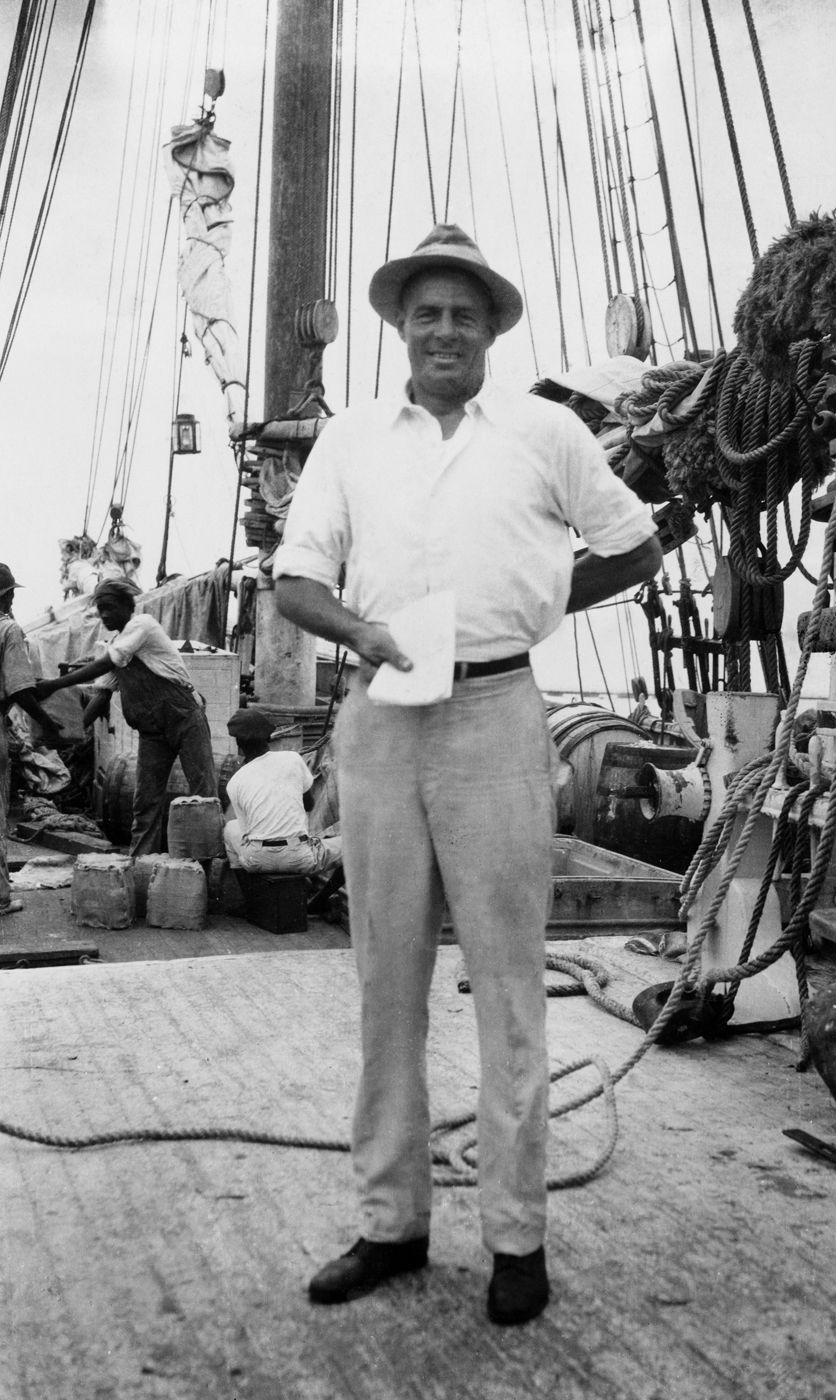
The rum-running trade attracted a colourful cast of characters, from entrepreneurial sea captains to organized crime syndicates. Captain Bill McCoy is one of the most legendary figures, known for selling unadulterated, high-quality liquor, which allegedly led to the phrase 'the real McCoy.' He operated out of Bimini before his capture by the U.S. Coast Guard cutter Seneca on November 15, 1923. Another notable New Jersey rum runner was Habana Joe, who used a flat-bottom skiff for running up on beaches in Raritan Bay. On the Pacific Coast, operations were highly organized. According to historian Rick James, the network centred on Vancouver and Victoria was a 'smooth-running, well organized criminal enterprise.' Vancouver's Ballantyne Pier and Victoria's Ogden Point housed government-bonded warehouses that supplied the fleet. Famous West Coast bootleggers included Johnny Schnarr of Victoria, who painted his boats black for night runs, and operators with nicknames like Legitimate Pete. In the San Juan Islands, the secluded geography provided perfect cover for smugglers running Canadian liquor into Washington State. The Detroit-Windsor corridor was dominated by organized crime, with figures like the Purple Gang controlling the flow. The trade was generally less violent than often portrayed, especially on the West Coast, where historian James notes there were 'rare hijackings, and only one incident of major violence.' With that much competition on Rum Row, suppliers often flew large banners advertising their wares and threw parties with prostitutes on board to draw customers.
Rum-running beyond North America
While most famously associated with North America, rum-running was also a significant phenomenon in Northern Europe during the 1920s and 1930s. Stringent alcohol laws in Finland, which had a total ban from 1919 to 1931, Norway, which prohibited liquor above 20% alcohol by volume from 1917 to 1927, and Sweden's restrictive Bratt System created a lucrative market for smugglers. The main product used for smuggling were rectified spirits produced in Central European countries like Germany, Poland, and the Netherlands. Alcohol was legally exported on large ships as tax-free produce via ports like Hamburg, Tallinn, Kiel and particularly the Free City of Danzig. Similar to the American Rum Row, these ships usually did not leave international waters and the alcohol was clandestinely loaded onto smaller boats that illegally brought it into Finland, Norway, and Sweden. Despite various efforts led by Finland to fight contraband, such as the 1925 Helsinki Convention for the Suppression of the Contraband Traffic in Alcoholic Liquors, the smugglers managed to bypass anti-smuggling laws through the use of flags of convenience and other tactics.
Modern legacy and cultural impact
The era of rum-running left a deep mark on North American culture, law enforcement, and historical memory. The failure of Prohibition demonstrated the limitations of legislating morality and the power of market forces. The illicit trade spurred lasting advancements in high-speed boat design and marine technology, innovations that later influenced both recreational boating and law enforcement patrol craft. Today, the history is preserved and celebrated through numerous channels. Museums, such as the Maritime Museum of British Columbia, host exhibitions and book launches. Historical societies, like the Western Lake Erie Historical Society in Toledo, Ohio, host dedicated 'Rum Runners Weekend' events. Popular tourism experiences, like 'The Rum Runners Tour' in Windsor, Ontario, which was in its 14th season in 2026, offer immersive live-action bus tours with costumed actors. Academic courses continue to study the period. Alcohol smuggling has not disappeared entirely. Modern issues include the smuggling of absinthe before its U.S. legalization in 2007, Cuban rum evading the trade embargo in existence since 1960, and ongoing tax evasion on alcohol. The Government of the United Kingdom fails to collect an estimated £900 million in taxes due to alcohol smuggling. The state of Virginia has reported annual losses of up to $20 million from illegal whiskey smuggling. In the Appalachian United States, an era of rampant bootlegging in dry areas continued into the 1970s.
Questions about Rum-running
What is the difference between rum-running and bootlegging?
Bootlegging is the broader term for the illegal trade in alcohol, a practice recorded as early as 1889. The term was popularized by individuals who sold liquor from flasks hidden in their boot legs. Rum-running is a more specific term for smuggling alcohol over water, which became current around 1916. This term was widely used during the Prohibition era in the United States from 1920 to 1933.
How did Canadian provinces influence rum-running during U.S. Prohibition?
Canadian provincial laws were crucial. While Canada had no national prohibition, most provinces enacted their own bans between 1916 and 1918 under the War Measures Act. However, these laws did not prohibit the manufacture of alcohol for export. This allowed Canadian distilleries like Hiram Walker to produce Canadian Club Whisky legally for smuggling into the United States, supplying an estimated 75% of the illegal alcohol that entered the country through routes like Detroit-Windsor.
What was Rum Row and where was it located?
Rum Row was the line of ships anchored just outside U.S. territorial waters to sell contraband alcohol. The largest was off the New Jersey coast, serving New York City and Philadelphia, where up to 60 ships gathered. This practice began at the three-mile limit, but an act of Congress on April 21, 1924, extended it to 12 miles. Other significant Rum Rows were located off Florida, in the Gulf of Mexico, and near San Francisco and Los Angeles.
Is rum-running still happening today?
Yes, illegal alcohol smuggling continues today, though on a smaller scale than during Prohibition. In the United States, Virginia loses an estimated $20 million annually due to illegal whiskey smuggling. The United Kingdom fails to collect about £900 million in taxes each year because of alcohol smuggling activities. Other examples include Cuban rum being smuggled into the U.S., circumventing the embargo in place since 1960, and absinthe being smuggled until its U.S. legalization in 2007.
What role did Captain Bill McCoy play in rum-running?
Captain Bill McCoy was a key rum-runner who began by bringing rum from the Bahamas to Florida. He pioneered the 'Rum Row' tactic by anchoring his ship, the Tomoka, just outside U.S. territorial waters to sell to smaller contact boats. McCoy became famous for selling unadulterated, top-brand liquor, which is one of the false etymologies for the phrase 'The real McCoy'. He was eventually captured by the U.S. Coast Guard Cutter Seneca in November 1923.
How did rum-running operations work on the water?
Rum-running involved a two-tier system. Large mother ships, like converted fishing schooners or custom-built freighters, would wait on 'Rum Row' just outside U.S. territorial waters. From there, smaller, faster contact boats would ferry the contraband to shore, docking in remote rivers or beaches to transfer cargo to trucks. These fast boats were often luxury yachts or speedboats fitted with aircraft engines and sometimes armor plating or machine guns for evasion.
Sources and further reading
- Rum-running (Wikipedia)
- #TBT: Rum Running in the San Juan Islands (48north.com)
- New book drinks deep from B.C.'s history of rum running (cbc.ca)
- Rum Running and the Roaring Twenties: Prohibition on ... (amazon.ca)
Checked by the Nosy Mag desk. Last updated 2026-10-20.