Local government in Canada
Local government in Canada constitutes the level of public administration closest to the daily lives of most citizens, primarily through municipal governments. Established and governed by provincial and territorial legislation, these authorities are responsible for delivering essential services such as local policing, firefighting, road maintenance, public transit, land-use planning, and parks. With about 3,700 municipal governments across the country, this order of government manages a significant portion of public spending, funded largely through property taxes and other local revenues. While not granted independent constitutional status, these democratically elected councils are considered a distinct and vital tier of governance, accountable directly to their local electorates.
Constitutional and legal framework
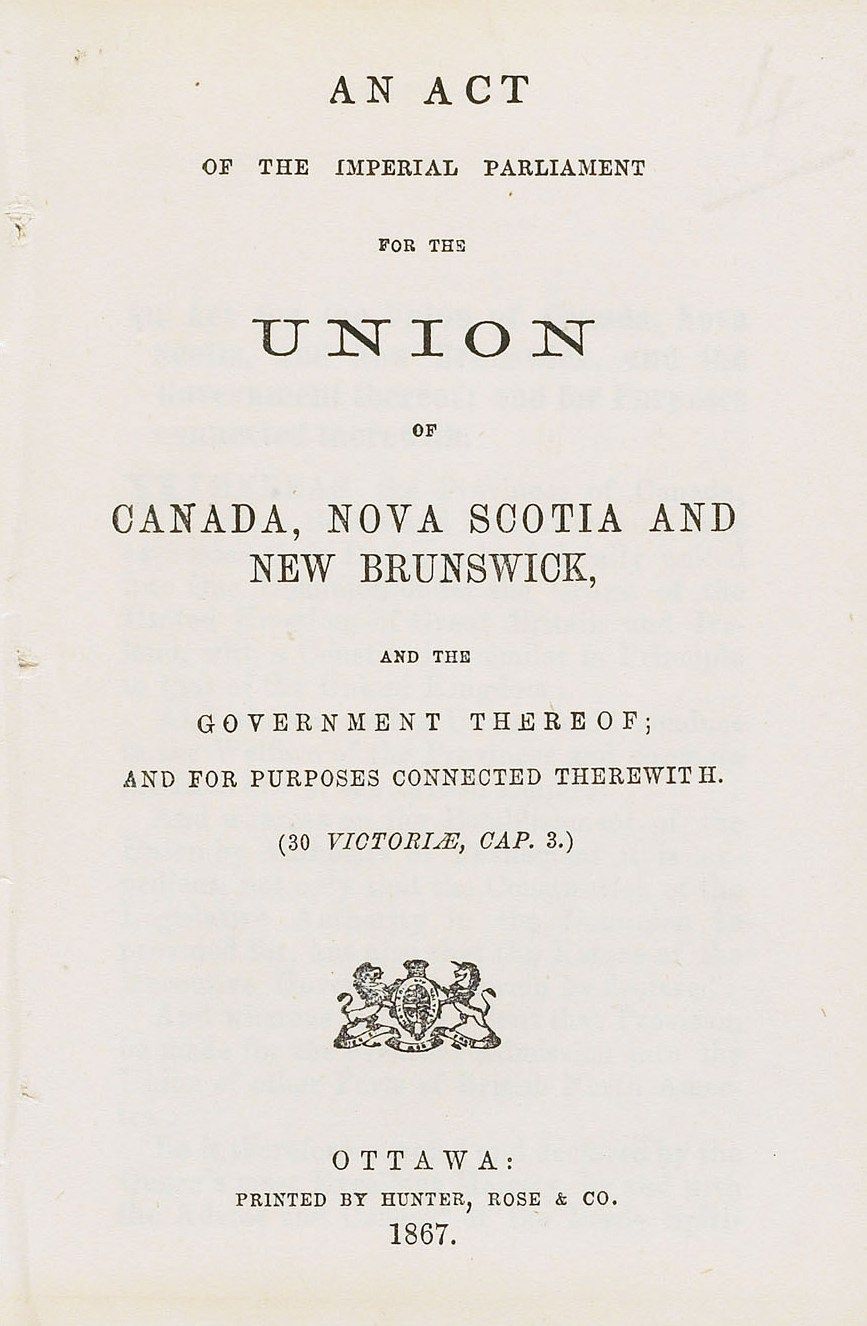
The legal foundation for local government in Canada is explicitly provincial. Section 92(8) of the Constitution Act, 1867 grants each provincial legislature exclusive authority to make laws in relation to municipal institutions within its borders. This constitutional arrangement means municipalities are creations of their respective provinces and territories, which delegate powers through specific statutes like Municipal Acts. Consequently, municipal by-laws are considered subordinate legislation, subject to provincial oversight. However, courts and political scholars recognize that municipalities are not mere administrative arms of the province. They are democratically elected bodies accountable to their local constituents, analogous in that accountability to provincial legislatures and Parliament. This grants them a recognized, though constitutionally subordinate, status as a separate order of government. Provinces retain the power to create, amalgamate, or dissolve municipal governments, an authority exercised periodically through restructuring processes.
Types and hierarchy of municipal government
The organization of local government in Canada is complex and varies significantly between provinces, but it generally follows a hierarchy established by historical precedent. The most prominent form is the municipal government, which serves as a local general-purpose authority for a defined geographic area. Municipalities are typically classified by size and function, with cities being the largest, followed by towns, villages, and rural municipalities such as townships, parishes, or districts. In some provinces, an upper tier of regional government exists to provide services across multiple lower-tier municipalities. These upper-tier bodies may be called regional municipalities, counties, regional districts, or regional county municipalities. For example, in Nova Scotia, regional municipalities are single governments covering an entire historical county. In Quebec, there is no legal distinction between cities and towns, as all hold the same status of 'ville'. Beyond general-purpose municipalities, there are also innumerable specific-purpose authorities, such as school boards, police commissions, and conservation authorities, which add layers to the local governance system.
The terminology for local divisions also varies. The term 'borough' was previously used in Metropolitan Toronto, Ontario, to denote suburban municipalities. In Quebec, the term borough is generally used as the English translation for 'arrondissement', denoting an administrative division within a larger city. Only eight municipalities in Quebec are divided into boroughs. Not all areas of Canada are incorporated into municipalities. Significant tracts of sparsely populated land remain unincorporated, where local services are provided either by provincial agencies or by quasi-municipal bodies like local service districts or local services boards. This patchwork results in a system where the structure of local government is uniquely tailored to the historical and demographic circumstances of each province and community.
Powers, functions and services
Municipal governments across Canada perform a core set of functions essential to community life, though the specific scope can vary between urban and rural settings and from province to province. A primary responsibility is public safety, often through the management of local police and fire services, though provincial police may serve some areas. Transportation infrastructure is another key area, with municipalities maintaining local roads and operating public transit systems, while major highways remain a provincial or federal responsibility. Land-use planning and development control are critical municipal functions, involving the creation of official plans, zoning by-laws, and building permits to guide community growth. Municipal finance is centred on the power to levy property taxes, which form the backbone of local revenue, used to fund the array of services they provide. Almost 10 percent of Canada's national GDP is spent on municipal government services.
Other common municipal services include the provision and maintenance of parks, recreation facilities, and in many cases, water and sewer systems. In some provinces like Quebec, Ontario, and Alberta, the range of local government services has historically been broadened to include utilities such as electricity, telephone and gas services. Education is typically managed by locally elected school boards, which are often funded through property taxes collected by the municipal government. This combination of responsibilities places municipal governments on the front lines of daily life, directly influencing the quality of life, economic development, and physical environment of their communities.
Structure, elections and funding
The internal structure of a municipal government is typically set out in provincial legislation. The most common model consists of a council headed by a mayor, reeve, or warden, and a set number of councillors often representing geographic wards. Council sizes vary, but commonly range between 10 and 20 members, with notable exceptions like Montreal, which has over 50 councillors. Municipal elections are usually held on fixed dates, as determined by each province, and terms of office vary across the country. Unlike provincial and federal elections, municipal elections are traditionally non-partisan, reflecting the historical view of council as a board of directors focused on administrative efficiency rather than partisan politics.
Funding for municipal operations is predominantly raised through their own sources, with approximately 83 percent of revenue coming from local taxation and service fees. The property tax is the single largest source of this independent revenue. Additional funding comes from the sale of goods and services, user fees, fines, and conditional transfers from provincial and federal governments. A key fiscal principle is that municipal governments are legally prohibited from running operating deficits, which protects provincial governments from implicitly guaranteeing municipal debt. Federal funding for municipal projects, such as major transit or infrastructure, is often delivered through specific programs like the Building Canada Fund or public-private partnership (P3) initiatives, but typically covers only a portion of total project costs.
- Council typically comprises a mayor and 10-20 councillors.
- Elections are usually held on fixed dates set by provinces.
- 83% of municipal revenue is raised from own sources.
- Primary revenue source is property tax.
- Municipal operating deficits are legally prohibited.
- Federal infrastructure funding often covers only a portion of project costs.
Historical development
The roots of Canadian municipal government lie in English medieval traditions, with the first formal municipality being the City of Saint John, New Brunswick, incorporated by royal charter in 1785. The modern system began to take shape in the Province of Canada with the passage of the Municipal Corporations Act in 1849, often called the Baldwin Act after its promoter, Robert Baldwin. This landmark legislation established a clear hierarchy of municipal types, cities, towns, villages, and townships, and delegated authority to councils to raise taxes and enact by-laws. It served as a model for other provinces as they developed their own local government systems. The late 19th and early 20th centuries were a period of municipal reform, emphasizing non-partisan, business-like administration. The idea of council as a corporate board of directors gained traction, influencing structures and attitudes. The Great Depression and post-war growth led to increased provincial funding and involvement in municipal affairs. Further reforms in the 1970s often focused on electoral boundaries, moving from large, multi-neighbourhood wards to smaller wards designed to better represent distinct communities and demographics. Throughout this history, the tension between local autonomy and provincial oversight has been a constant theme, with provinces ultimately holding the authority to reshape local governance structures as they see fit.
The Federation of Canadian Municipalities
The Federation of Canadian Municipalities (FCM) serves as the national voice for local government in Canada. Founded in 1901 as the Union of Canadian Municipalities, it merged with the Dominion Conference of Mayors in 1937 and was renamed the Federation of Canadian Municipalities in 1976. As of 2026, FCM's membership includes almost 2,000 municipalities of all sizes, from large cities to rural and northern communities, representing over 90 percent of the Canadian population. Its core mission is to advocate for municipal interests in federal policy and program development. The FCM engages in regular consultations with the federal government, opposition parties, and other stakeholders to ensure local perspectives are considered in national decisions on issues like infrastructure, housing, climate change, and economic development.
The organization also delivers programming and tools to help members tackle local challenges and administers funding for innovative municipal projects. It maintains a Legal Defense Fund to represent members' interests in federal cases that impact municipalities broadly. Through policy documents like 'Building better lives together', the FCM articulates a municipal call to action for federal partners, seeking to leverage local governments as efficient deliverers of shared national priorities. The federation's annual conference brings municipal leaders together to set collective policy, reinforcing its position as a crucial conduit between local communities and the federal sphere.
Contemporary challenges and evolution
Municipal governments are on the front lines of addressing major national issues such as the housing affordability crisis, climate change adaptation and mitigation, and the maintenance and expansion of aging infrastructure. Workforce pressures, including recruitment and retention, and the demands of digital transformation and artificial intelligence readiness are also prominent concerns, as highlighted in reports like the 2026 MNP Municipal Report. Municipalities must manage these challenges with a limited fiscal toolkit, reliant heavily on property tax, which is less responsive to economic growth than income or sales taxes. This creates a persistent gap between their responsibilities and their revenue-generating capacity.
Consequently, partnerships with other orders of government are increasingly critical. Municipalities actively seek federal and provincial funding for major capital projects through an array of grant programs. The dynamics of municipal-provincial relations remain a central feature of local governance, with provinces periodically reviewing and restructuring local government systems. Despite these pressures, municipal governments maintain a high degree of public trust, with surveys indicating that a majority of Canadians trust their local leaders to understand and deliver on quality-of-life needs. This trust shows the continued relevance and adaptability of local government as the order closest to the people.
Questions about Local government in Canada
How many municipal governments are there in Canada?
There are about 3,700 municipal governments across Canada. These range from large cities to small towns, villages, and rural municipalities. The exact number can fluctuate slightly due to provincial decisions to amalgamate or create new municipalities. This count represents the most prominent form of local government, but it does not include other local bodies like school boards or conservation authorities.
What is the constitutional status of municipalities in Canada?
Municipalities do not have independent constitutional status. They are created by and derive their authority from provincial and territorial legislatures, as outlined in Section 92(8) of the Constitution Act, 1867. This means provinces have exclusive jurisdiction over municipal institutions. However, because municipal councils are democratically elected and accountable to their residents, they are considered a separate, though subordinate, level of government rather than mere administrative departments of the province.
What are the main sources of funding for local governments?
The primary source of funding for Canadian municipalities is the property tax, which forms the backbone of their independent revenue. Overall, about 83 percent of municipal government revenue is raised through their own sources. Additional funding comes from user fees for services, fines, the sale of goods, and transfers from provincial and federal governments for specific projects or programs. Municipalities are legally prohibited from running operating deficits.
What is the Federation of Canadian Municipalities (FCM)?
The Federation of Canadian Municipalities is the national advocacy organization representing local governments in Canada. Founded in 1901, it had almost 2,000 member municipalities as of 2026, representing over 90 percent of Canadians. The FCM advocates for municipal interests at the federal level, provides tools and programming to members, and facilitates the sharing of best practices. It is central to securing federal partnerships and funding for local priorities like infrastructure, housing, and climate action.
What is the difference between a city, a town, and a regional municipality?
In Canada, the types of municipal government vary between provinces, but they all perform similar functions. Cities are typically the largest municipalities, while towns, villages, and townships are smaller forms. A regional municipality is an upper tier of municipal government that provides regionally oriented services and may encompass several lower-tier municipalities. In some provinces like Nova Scotia, a regional municipality is a single municipal government covering an entire historical county, where former city and town designations become informal.
Are all areas of Canada governed by a municipality?
No, not all land in Canada is incorporated into a municipality. Large, sparsely populated areas, particularly in the north and in some rural regions, remain unincorporated. In these areas, local services are provided directly by the provincial or territorial government, or by special purpose agencies like local service districts or improvement districts. These bodies do not have the same elected, general-purpose governance structure as formal municipalities.
Sources and further reading
- Local government in Canada (Wikipedia)
- Local Government (thecanadianencyclopedia.ca)
- About FCM (fcm.ca)
- Local governments in Canada: Building better lives together (decentralization.net)
- Municipal finance within complex systems of local governance ... (winnspace.uwinnipeg.ca)
Checked by the Nosy Mag desk. Last updated 2026-10-29.