Income tax in Canada
Income tax in Canada is a compulsory financial charge levied by the federal, provincial and territorial governments on personal and corporate earnings. It constitutes the largest source of annual revenue for the Government of Canada and the provinces, with personal income tax revenue far exceeding corporate tax revenue. In the fiscal year ending March 31, 2025, the federal government collected just over 2.5 times more revenue from personal income taxes than it did from corporate income taxes. The system is primarily administered by the Canada Revenue Agency (CRA) under the authority of the Income Tax Act, operating as a self-assessment regime where taxpayers calculate and report their own liability.
Historical Development
The introduction of a permanent federal income tax in Canada was a direct consequence of the financial pressures of the First World War. Prior to the war, Canadian governments, particularly the Conservative Party, actively avoided implementing an income tax, viewing a low-tax regime as a key incentive to attract immigrants, especially from the United Kingdom and the United States. Federal revenue was instead sustained through tariffs and customs duties under the National Policy, while provincial governments relied on natural resource management. The wartime expenses under Sir Robert Borden's government ultimately forced a reconsideration, leading to the passage of the Income War Tax Act in 1917. Despite initial resistance, the immense debt incurred during the conflict made the tax indispensable, and it remained in place after the war ended. The subsequent Liberal government under William Lyon Mackenzie King dismantled much of the National Policy, but the income tax became a permanent fixture of Canadian public finance.
Constitutional and Administrative Framework
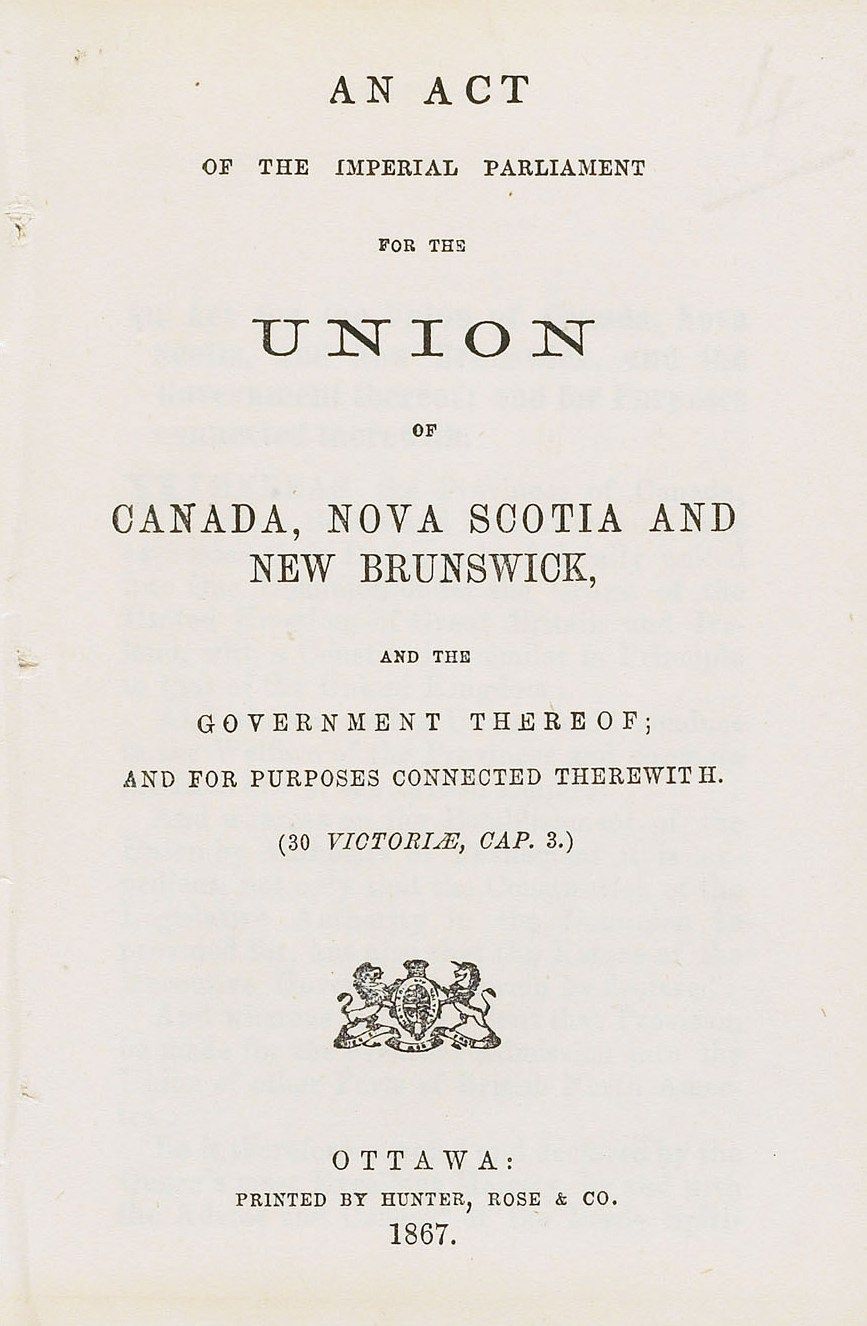
The legal authority to levy income taxes in Canada is divided between the federal and provincial governments by the Constitution Act, 1867. The federal Parliament derives its power from section 91(3), which grants it authority over the raising of Money by any Mode or System of Taxation. Provincial legislatures, under section 92(2), have the power of Direct Taxation within the Province in order to the raising of a Revenue for Provincial Purposes, with income tax being the most typical form of direct taxation. This division has led to a system of tax collection agreements designed to reduce complexity and administrative burden. The federal government, through the Canada Revenue Agency, collects personal income taxes on behalf of all provinces and territories except Quebec. It also collects corporate income taxes for all jurisdictions except Alberta and Quebec. These agreements require agreeing provinces to use the federal definition of taxable income as the basis for their own taxation, ensuring consistency. Quebec administers its own personal and corporate income tax systems, allowing it to set its own definitions and rates, though it often parallels federal rules for simplicity.
The Personal Income Tax System
Canada levies personal income tax on the worldwide income of individual residents in Canada and on certain types of Canadian-source income earned by non-resident individuals. The system is a self-assessment regime where individuals must file an annual T1 Tax and Benefit Return, typically by April 30 of the following year, with a June 15 deadline for self-employed individuals and their spouses or common-law partners. Any balance owing is due on or before April 30. The calculation of tax owed begins with an individual's total income, from which deductions are allowed to arrive at net income, a figure used to determine eligibility for social benefits. Further deductions yield taxable income, the amount actually subject to tax. Tax is calculated using progressive federal brackets, where income is taxed at increasing rates as it moves through different thresholds. Non-refundable tax credits are then applied to reduce the tax payable. These include a basic personal amount, which for 2026 is $16,452, effectively exempting that amount of income from federal tax. Credits are also available for dependents, Canada Pension Plan contributions, Employment Insurance premiums, tuition, medical expenses, and charitable donations. The value of most credits is calculated by multiplying the credit amount by the lowest federal tax rate. Certain credits, like those for dividends and foreign taxes, prevent double taxation. Tax is typically collected through deduction at source by employers, instalment payments, payment upon filing, or arrears payments. Individuals who have overpaid through the year receive a refund after filing their return.
Provincial and Territorial Personal Taxes
In addition to federal tax, individuals pay income tax to the province or territory where they reside on December 31 of the tax year. For business income, tax is paid to the province where the income was earned. All provinces and territories except Quebec use the federal definition of taxable income but set their own rates, brackets, and credits, which the CRA collects and remits. Quebec administers its own system and receives a 16.5% abatement on federal tax to compensate for opting to receive part of federal health transfers as tax points instead of cash. Provincial and territorial governments provide both nonrefundable and refundable tax credits to taxpayers for certain expenses. They may also apply surtaxes and offer low-income tax reductions. Prior to the 2024 tax season, the province of Prince Edward Island additionally charged a surtax. The provincial and territorial tax forms are distributed with the federal tax forms. Information on provincial rates can be found on the Canada Revenue Agency's website.
Corporate Income Taxation
Corporations resident in Canada are subject to tax on their worldwide income, while non-resident corporations are taxed on certain Canadian-source income. The federal corporate income tax rate is 15% for general income, with a reduced rate of 11% for Canadian-controlled private corporations (CCPCs) on the first $500,000 of active business income, known as the small business deduction. The type of corporation determines its tax treatment, with key categories including Canadian-controlled private corporations, other private corporations, and public corporations. A CCPC is a corporation that is resident in Canada, not controlled by non-residents or public corporations, and does not have its shares listed on a prescribed stock exchange. Corporate taxes include taxes on corporate income and other levies such as capital and insurance premium taxes, payroll levies, property taxes, and indirect taxes like the GST. The CRA collects corporate taxes for all provinces and territories except Alberta and Quebec, which administer their own corporate tax systems. Ontario's corporate income taxes have been collected by the CRA since 2009.
Tax-Exempt Income and Special Provisions
Not all income received by individuals is subject to tax in Canada. A variety of sources are explicitly exempt, providing relief or incentives in specific circumstances. The method of exemption varies. Some types are simply not declared, while others are declared and then deducted in full. Common examples of non-taxable income include gifts and inheritances, lottery and gambling winnings for recreation, strike pay, the Canada Child Benefit, and capital gains on the sale of a principal residence. Compensation for victims of crime or motor vehicle accidents, certain service pensions, and income earned within a Tax-Free Savings Account (TFSA) are also exempt. These exemptions are based on a mix of statutory law and common law principles defining what constitutes taxable income. Beyond exemptions, the system includes provisions like Registered Retirement Savings Plan (RRSP) contributions, which are a deduction from income, deferring tax until funds are withdrawn. The system also contains anti-avoidance rules, such as the Alternative Minimum Tax (AMT), which ensures high-income individuals with significant deductions pay a minimum level of tax. The 'kiddie tax' and rules restricting 'income sprinkling' to family members through private corporations tax certain passive or split income at the highest marginal rate to prevent erosion of the tax base.
Compliance, Appeals, and Recent Changes
The self-assessment system places the onus on taxpayers to accurately report income and claim deductions and credits. The CRA reviews filed returns, corrects obvious errors, and may conduct audits. If a taxpayer disagrees with a CRA assessment, they may file a formal objection using form T400A within the prescribed time limit. The objection must explain, in writing, the reasons for the appeal along with all the related facts. The CRA's appeals branch will review the case and may confirm, vacate, or vary the original assessment. If dissatisfied with the result, the taxpayer can appeal to the Tax Court of Canada and, subsequently, to the Federal Court of Appeal. Recent changes to the system focus on rate adjustments and bracket indexing. A significant change enacted for the 2025 and 2026 tax years is the reduction of the lowest federal personal income tax rate. It was lowered from 15% to 14.5% for 2025 and to 14% for 2026. Income brackets and the basic personal amount are adjusted annually for inflation. For 2026, the basic personal amount is $16,452, and the first federal tax bracket applies to income up to $58,523.
Integration of Corporate and Personal Income Taxes
Corporate income is subject to corporate income tax and, on distribution as dividends to individuals, personal income tax. To avoid this double taxation, the personal income tax system provides recognition for corporate taxes through the gross-up and dividend tax credit mechanisms. A dividend from a small business is grossed-up by 17%, meaning the shareholder includes 117% of the dividend amount in income. This income is taxed at the shareholder's personal income tax rate, but a part of the tax is offset by a dividend tax credit to reflect federal tax paid at the corporate level. For dividends from other Canadian corporations, known as eligible dividends, the gross-up is 38% and the dividend tax credit is 15.0198% for 2017, reflecting the higher corporate income tax rate paid by larger corporations. Provincial and territorial governments also provide dividend tax credits to reflect provincial corporate income tax.
Questions about Income tax in Canada
What is the deadline to file my personal income tax return in Canada for the 2025 tax year?
For most individuals, the deadline to file your T1 personal income tax return for the 2025 tax year is April 30, 2026. If you or your spouse or common-law partner are self-employed, the filing deadline is extended to June 15, 2026. Any balance of taxes owed for the year is due on or before April 30, 2026. Late payment will result in interest charges from the Canada Revenue Agency.
What is the basic personal amount for 2026 and how does it work?
The federal basic personal amount for the 2026 tax year is $16,452. This is an income threshold you can earn before owing any federal income tax. It functions as a non-refundable tax credit calculated by multiplying the amount by the lowest federal tax rate. The amount is adjusted annually for inflation.
What are the federal income tax brackets for 2026?
Canada uses a progressive federal income tax system. For 2026, the rates and income thresholds are 14% on taxable income up to $58,523, and 20.5% on income between $58,523.01 and $117,045. These brackets are indexed to inflation each year. These are marginal rates, meaning each rate applies only to the portion of your income within that specific bracket.
Do I have to pay provincial income tax in addition to federal tax?
Yes, all residents of Canada must pay both federal and provincial or territorial income tax. If you live in any province or territory except Quebec, the Canada Revenue Agency calculates and collects your provincial tax along with your federal tax using a single return. Quebec administers its own personal income tax system, so residents file a separate provincial return. Your provincial tax is based on the province where you resided on December 31 of the tax year.
What types of income are not taxed in Canada?
Several types of income are exempt from taxation in Canada. Common examples include lottery winnings and gambling proceeds for recreation, gifts and inheritances, the Canada Child Benefit, and capital gains from the sale of your principal residence. Strike pay, death benefits from a life insurance policy, and income earned within a Tax-Free Savings Account are also non-taxable. The legal basis for these exemptions varies.
What should I do if I disagree with an assessment from the Canada Revenue Agency?
If you disagree with a CRA assessment, you have the right to appeal. The process begins by filing a formal notice of objection, typically using form T400A, within the prescribed time limit. The objection must explain, in writing, the reasons for the appeal along with all the related facts. The CRA's appeals branch will review your case and may confirm, vacate, or vary the original assessment. If dissatisfied, you can appeal to the Tax Court of Canada and then to the Federal Court of Appeal.
Sources and further reading
- Income tax in Canada (Wikipedia)
- 2026 Canadian income tax brackets (fidelity.ca)
- Tax survival 101: your guide to filing in 2026 | Posts (scotiabank.com)
- Canada, Individual, Taxes on personal income (taxsummaries.pwc.com)
- 2026 Personal tax calculator | EY Canada (eytaxcalculators.com)
Checked by the Nosy Mag desk. Last updated 2026-11-02.