CFB Valcartier
2nd Canadian Division Support Base Valcartier, commonly known as Canadian Forces Base Valcartier or CFB Valcartier, is a major Canadian Armed Forces installation located in Saint-Gabriel-de-Valcartier, Quebec, approximately 15 kilometres northwest of Quebec City. Established in August 1914 as a training camp for the Canadian Expeditionary Force at the onset of the First World War, it is one of the oldest and most significant military training areas in Canada. Today, the base is the headquarters for the 2nd Canadian Division and serves as a vital centre for army operations, military research, and cadet training in Eastern Canada. Its substantial economic footprint and ongoing modernization projects, such as new residential buildings approved in 2026, show its continued importance to national defence and the regional community.
Historical origins and early development
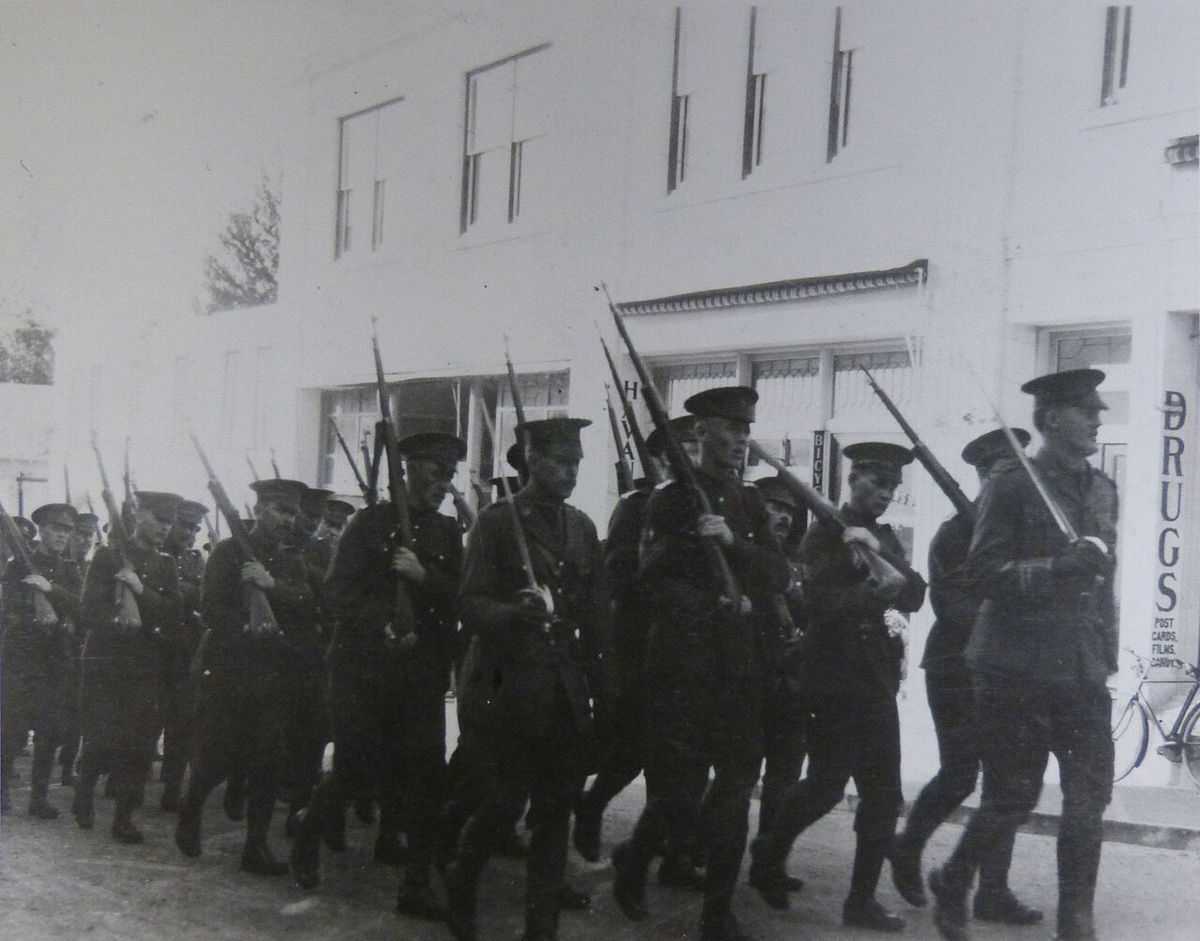
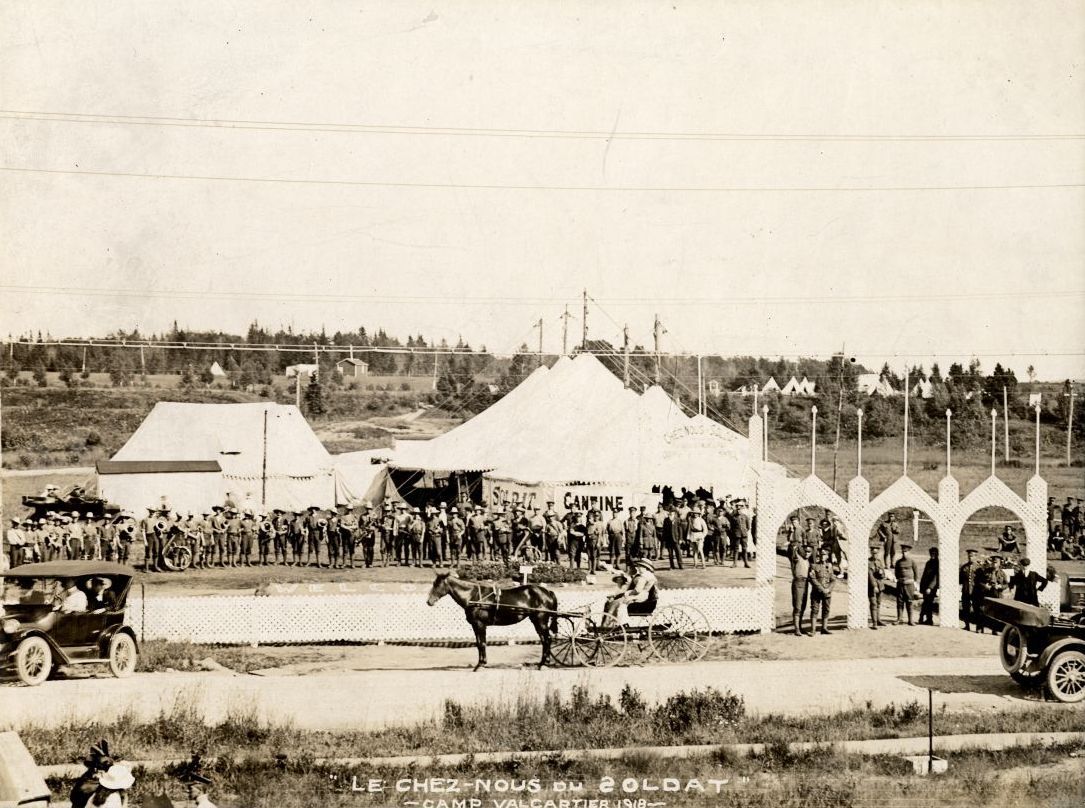
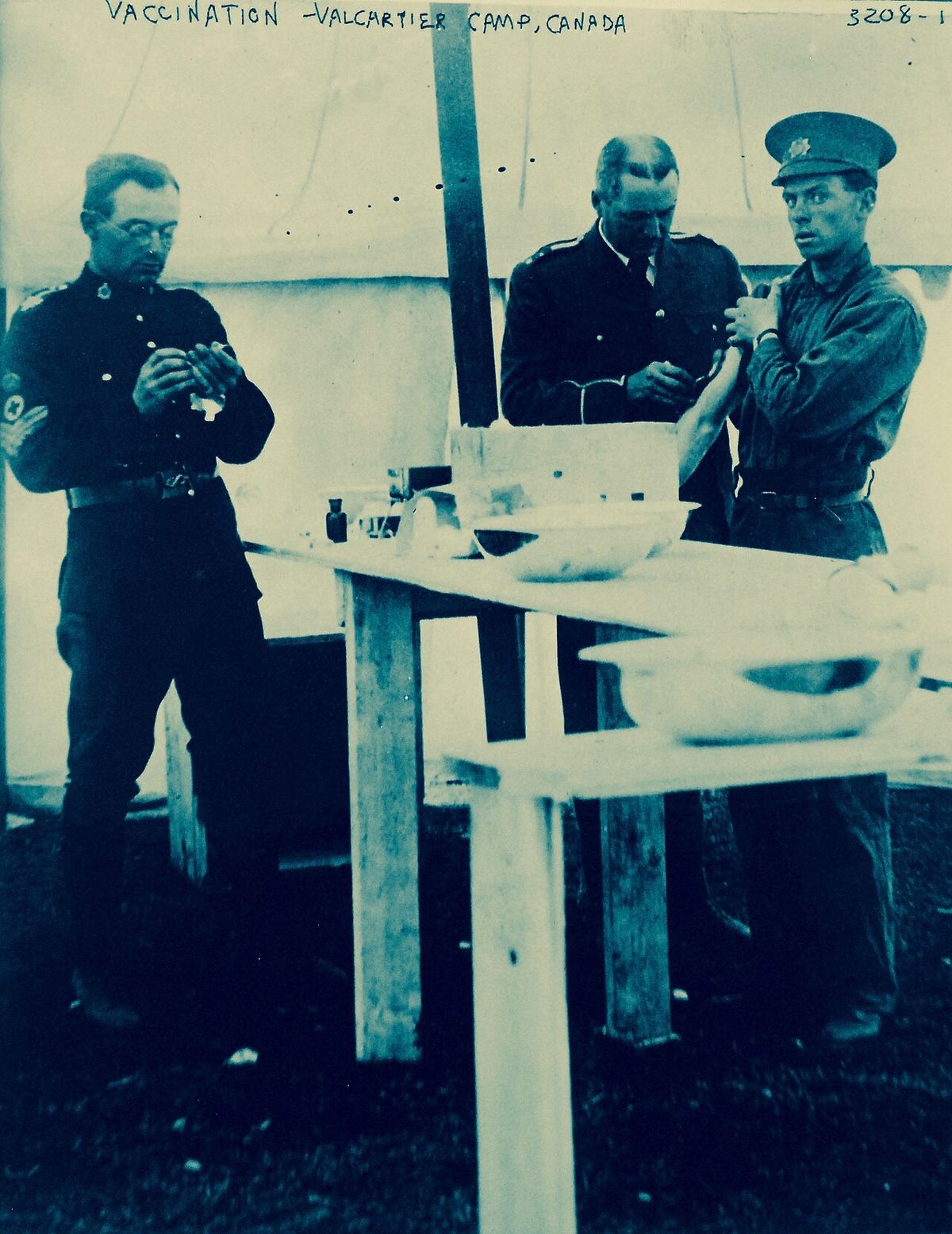
The establishment of CFB Valcartier was a direct and rapid response to the outbreak of the First World War. In August 1914, Minister of Militia and Defence Sam Hughes bypassed existing mobilization plans to create a large training camp for the newly formed Canadian Expeditionary Force. The government expropriated land from 125 farmers near the village of Saint-Gabriel-de-Valcartier. Construction began on August 8, 1914, and workers swiftly built infrastructure including roads, water lines, and a railway connection to Quebec City. The most notable early construction was a massive rifle range with 15,000 targets, completed on August 22, 1914, which was at the time the largest in the world. The first troops arrived for training just two days later, housed primarily in tents due to the lack of permanent structures. The camp also functioned as an internment camp for so-called enemy aliens, mainly individuals of Eastern European origin. By October 3, 1914, over 31,000 soldiers of the First Contingent had trained at Valcartier before sailing from Quebec City, constituting the largest armada to ever leave Canada at that time. The name Valcartier comes from the town, a large section of which was expropriated to create the military training camp. Due to its proximity to the Port of Quebec, Valcartier became the largest military camp on Canadian soil, including some 32,000 men, 8,000 horses, and one black bear.
Following the departure of the First Contingent, Valcartier's role diminished as basic training for overseas service was decentralized to camps across Canada. The number of soldiers training there fell dramatically from 33,644 in 1914 to just 1,811 by 1917, and the camp closed each winter. In the interwar period, the site was used for summer militia training and, during the Great Depression, was transformed into a relief camp for unemployed men under the Unemployment Relief and Public Works Construction Acts. Workers in these camps received lodging, food, clothing, a tobacco ration, and 20 cents per day for labour on military construction projects. One significant project begun during this era was the construction of a new Federal Arsenal plant for munitions manufacturing, expanding Canada's domestic production capacity. The camp's centennial was celebrated in 2014, with messages of recognition from Governor General David Johnston and Prime Minister Stephen Harper. A bronze statue of a First World War soldier by artist André Gauthier, inaugurated by Prime Minister Jean Chrétien in 1995, stands at the base entrance commemorating its foundational role.
Geography and facilities
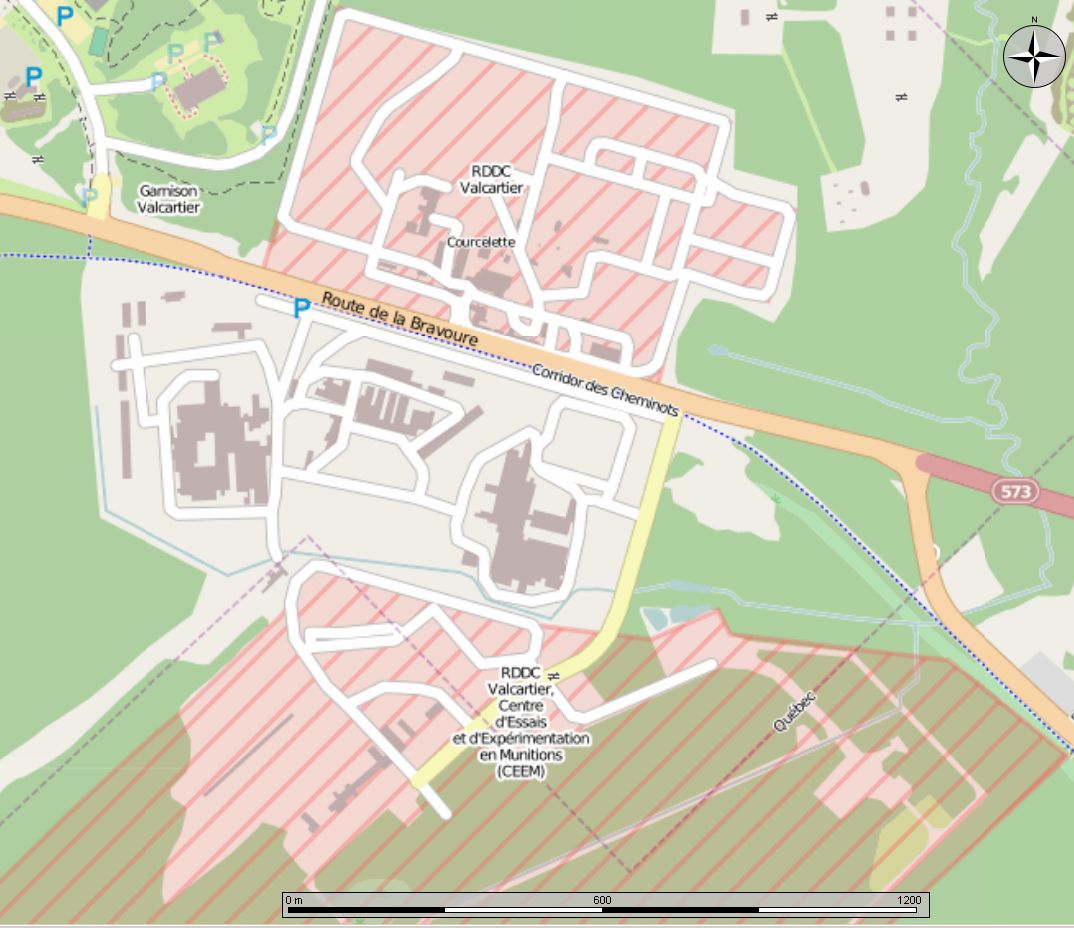
CFB Valcartier occupies a large, rectangular tract of land measuring 12 by 24 kilometres, situated in the Quebec City region. The base's extensive grounds accommodate a wide array of training areas, ranges, housing, and support facilities essential for a modern mechanized brigade group. It houses a significant Defence Research and Development Canada location conducting military research for the Canadian Armed Forces. The base also contains specialized facilities like the Myriam Bédard Biathlon Training Centre. In June 2026, the Department of National Defence officially inaugurated a new Research and Development pavilion complex on the base, highlighting ongoing investment in its infrastructure. The base provides a chapel for military personnel, the Saint Jeanne d’Arc Chapel, coordinated by Captain Titus Ndala. A military cemetery opened in 1914 contains the graves of nine Canadian Army personnel from both World Wars, maintained by the Commonwealth War Graves Commission. The Department of National Defence continues to modernize living accommodations on the base to support its personnel and their families.
In 2024, the Department of National Defence proposed a project to build a series of residential buildings containing 23 rooms on two levels, covering approximately 1,055 square metres to meet accommodation needs. After an environmental assessment, authorities issued a Notice of Determination on June 2, 2026, concluding the project was not likely to cause significant adverse environmental effects. This project is part of the base's continual evolution to support its military community. The base also operates the Valcartier Sports Centre, which hosts community events like the Military Community Day scheduled for September 19, 2026. These facilities and projects ensure the base can support the training, living, and recreational needs of the thousands of personnel and their families stationed there, maintaining its operational readiness and community cohesion.
Current military units and formations
CFB Valcartier is the headquarters for the 2nd Canadian Division, which comprises two primary formations: the 5 Canadian Mechanized Brigade Group and the 2nd Canadian Division Support Group. The assignment of the title 5 Canadian Mechanized Brigade Group to the Valcartier brigade occurred in 1968 following the unification of the Canadian Armed Forces. The brigade group expanded again in 1973 with the addition of several new units. The base hosts a wide range of regular force units, making it a central hub for Canada's army presence in Quebec and a primary location for the Royal 22nd Regiment, which has all three of its regular battalions stationed there.
The major units stationed at CFB Valcartier include the 5e Régiment d’artillerie légère du Canada and the 12e Régiment blindé du Canada. The base is also home to 5 Combat Engineer Regiment and the 5 CMBG Headquarters and signals squadron. All three battalions of the Royal 22nd Regiment are stationed there, along with 5 Service Battalion. Affiliated units present include 430 Tactical Helicopter Squadron, 5 Field Ambulance, and 5 Military Police Platoon.
- 5e Régiment d’artillerie légère du Canada (5 RALC)
- 12e Régiment blindé du Canada (12 RBC)
- 5 Combat Engineer Regiment (5 RGC)
- 5 CMBG Headquarters and Signals Squadron
- 1st Battalion, Royal 22nd Regiment
- 2nd Battalion, Royal 22nd Regiment
- 3rd Battalion, Royal 22nd Regiment
- 5 Service Battalion (also providing services from ASU Saint-Jean and CFB Montreal)
- 5 Field Ambulance (5e Ambulance de campagne)
- 5 Military Police Platoon (5e Peloton de police militaire)
- 430 Tactical Helicopter Squadron
- 1 Dental Unit Detachment, Valcartier
- Naval Fleet School (Quebec)
The base also houses the CI SQFT (Land Force Quebec Area Training Centre), in addition to providing training facilities for most Quebec-based reserve units. It is also home to the Myriam Bédard Biathlon Training Centre and 430 Tactical Helicopter Squadron. The base supports a wide range of training activities for regular and reserve forces within the province. These facilities show the base's ongoing role as a central training hub for the Canadian Armed Forces in Quebec.
Cadet training and community programs
CFB Valcartier serves as a major national centre for cadet training, hosting the Army Cadet Summer Training Centre Valcartier for the Eastern Region and Province of Quebec. The centre trains Royal Canadian Sea, Army, and Air Cadets in a variety of specialized summer courses. The training is organized into several thematic companies, each focusing on a specific set of skills. This structured environment aims to develop leadership, citizenship, and physical fitness in young Canadians through practical instruction and team-based activities that mirror military disciplines.
The summer training courses offered at the Valcartier Cadet Training Centre include a Basic Fitness and Sports course and a Fitness and Sports Instructor course for Sea, Army, and Air cadets within OLYMPUS Company. Army cadets can take a Basic Expedition course and an Expedition Instructor course within EVEREST Company. Courses for all cadets include a Basic Marksmanship Course and an Air Rifle Marksmanship Instructor Course within ENFIELD Company, as well as Basic Drill and Ceremonial and Drill and Ceremonial Instructor courses within TRIUMPH Company. Air cadets have access to Basic Survival and Survival Instructor courses, and all cadets can take military musician courses within CALIXA-LAVALLÉE Company.
- Basic Fitness and Sports and Fitness and Sports Instructor courses (OLYMPUS Company)
- Basic Expedition and Expedition Instructor courses for Army cadets (EVEREST Company)
- Basic Marksmanship and Air Rifle Marksmanship Instructor courses (ENFIELD Company)
- Basic Drill and Ceremonial and Drill and Ceremonial Instructor courses (TRIUMPH Company)
- Basic Survival and Survival Instructor courses for Air cadets
- All three military musician courses (CALIXA-LAVALLÉE Company)
The cadet program has faced tragedy, notably in July 1974 when an explosives safety training accident involving 'D' Company killed six cadets and injured over 50 others. A coroner's inquiry found the instructor criminally responsible for the incident. Beyond cadets, the base supports the wider military community through the Valcartier Military Family Resource Centre, which offers programming for families, with fall 2026 registration opening on August 25, 2026. The base also publishes a monthly newspaper, Adsum, which was created in 1972 and circulates 4,200 copies to active and retired military personnel and civilians associated with the base. The Adsum team also publishes an annual Military Community Guidebook for the Quebec Region, providing essential information and resources for the military community in the area.
Economic impact and environmental issues
CFB Valcartier represents a substantial economic engine for the Quebec City region and the province. The base operates with an annual budget of $687.4 million and directly employs 7,700 people, comprising 6,200 military personnel and 1,500 civilians. It is also linked to approximately 9,000 military reserve forces. Annual salary expenditures at the base total $558 million, which represents nearly half of the $1.2 billion spent on salaries by the Department of National Defence in Quebec each year. The base spends an additional $131 million locally every year on goods and services, injecting significant funds into the regional economy and supporting local businesses and contractors across various sectors.
The base has also been at the centre of a major environmental and health issue. In 1997, the chemical trichloroethylene, a known carcinogen linked to liver cancer, was discovered in the water supply of CFB Valcartier and the neighbouring town of Shannon. The solvent had been used for decades at the base for degreasing metal parts. In response to the contamination, the Shannon Citizens Committee launched a class-action lawsuit against the Department of National Defence in 2003, seeking accountability and remediation for the affected residents and personnel. This legal action highlights the long-term environmental responsibilities associated with maintaining a large military installation and its impact on surrounding communities.
Command, operations, and recent activities
The leadership of 2nd Canadian Division Support Base Valcartier is provided by a command team headed by a commanding officer and a sergeant major. As of 2026, the commander is Colonel J.L.S. Ménard and the sergeant major is Chief Warrant Officer Éric Normand. This team is responsible for the daily operation, administration, and readiness of all units and personnel stationed at the base. Their command oversees the integration of regular force units, reserve training, cadet summer programs, and community support services, ensuring the base fulfills its strategic and domestic roles effectively and maintains high standards of discipline and operational capability.
Recent activities demonstrate the base's ongoing operational tempo and community engagement. In 2026, the base hosted the CHEVALIER TRICOLORE 2026 joint exercise with French forces. The base's Military Family Resource Centre advertised its fall 2026 programming, and the Valcartier Military Community Day was scheduled for September 19, 2026. The base also conducted a community sale from October 19 to November 6, 2026. These events, alongside the ongoing construction of new residential accommodations and the inauguration of the new DRDC pavilion, illustrate that CFB Valcartier remains a dynamic and evolving institution within the Canadian Armed Forces, continuously adapting to new requirements and maintaining strong ties with its local and international partners to ensure national security and community welfare.
Questions about CFB Valcartier
What is the economic impact of CFB Valcartier?
The base has a substantial economic impact, with an annual budget of $687.4 million. It directly employs 7,700 people (6,200 military and 1,500 civilians) and is associated with about 9,000 reserve forces. Annual salary costs are $558 million, representing nearly half of the Department of National Defence's salary expenditures in Quebec. The base also spends $131 million locally each year on goods and services.
Where is CFB Valcartier located?
CFB Valcartier is located in the municipality of Saint-Gabriel-de-Valcartier, Quebec, Canada. It is situated 8 nautical miles, or about 15 kilometres, north northwest of Quebec City. The base itself covers a large area measuring 12 by 24 kilometres in the Quebec City region. Its proximity to the Port of Quebec was historically important, allowing it to become the largest military camp on Canadian soil during the First World War mobilization in 1914.
What units are stationed at CFB Valcartier?
CFB Valcartier is home to the 2nd Canadian Division, which comprises the 5 Canadian Mechanized Brigade Group and the 2nd Canadian Division Support Group. Major units stationed there include the 5e Régiment d’artillerie légère du Canada, the 12e Régiment blindé du Canada, 5 Combat Engineer Regiment, and all three battalions of the Royal 22nd Regiment. Affiliated units present are 430 Tactical Helicopter Squadron, 5 Field Ambulance, 5 Military Police Platoon, 1 Dental Unit Detachment, and the Naval Fleet School (Quebec). The base also houses a Defence Research and Development Canada location and provides training facilities for Quebec based reserve units.
What happened with the water contamination at CFB Valcartier?
In 1997, the cancer causing chemical trichloroethylene was discovered in the water supply of CFB Valcartier and the nearby town of Shannon, Quebec. This chemical, which has been linked to liver cancer, was used for decades at the base for degreasing metal parts. The contamination led to significant local concern and legal action. In 2003, the Shannon Citizens Committee launched a class action lawsuit against the Department of National Defence over the issue, seeking accountability for the environmental and health impacts.
What cadet training is offered at CFB Valcartier?
CFB Valcartier hosts the Army Cadet Summer Training Centre for the Eastern Region and Province of Quebec, training Royal Canadian Sea, Army, and Air Cadets. The centre offers a comprehensive range of summer courses including Basic Fitness and Sports, Fitness and Sports Instructor, Basic Expedition, Expedition Instructor, Basic Marksmanship, Air Rifle Marksmanship Instructor, Basic Drill and Ceremonial, Drill and Ceremonial Instructor, Basic Survival, Survival Instructor, and all three military musician courses. These programs are organized into specific companies such as OLYMPUS, EVEREST, ENFIELD, TRIUMPH, and CALIXA LAVALLÉE. A tragic accident in July 1974 during explosives safety training resulted in six cadet fatalities and over fifty injuries.
What new developments are happening at CFB Valcartier?
Recent developments at CFB Valcartier include the official inauguration of a new Research and Development pavilion complex by the Department of National Defence on June 8, 2026. A project to construct a series of residential buildings with 23 rooms to meet accommodation needs received a Notice of Determination on June 2, 2026, concluding it was not likely to cause significant adverse environmental effects. The base continues its active training role, recently hosting the joint military exercise CHEVALIER TRICOLORE 2026 with France. The base also regularly hosts community events, such as a Military Community Day scheduled for September 19, 2026.
Sources and further reading
- CFB Valcartier (Wikipedia)
- Bienvenue à la Base Valcartier, SBMFC (sbmfc.ca)
- MFRC | Valcartier (cfmws.ca)
- Canadian Forces Base Valcartier, Canada.ca (iaac-aeic.gc.ca)
- Base des Forces canadiennes Valcartier (thecanadianencyclopedia.ca)
Checked by the Nosy Mag desk. Last updated 2026-10-30.