CFB Borden
Canadian Forces Base Borden (CFB Borden) is the largest training establishment in the Canadian Armed Forces. Located on a glacial moraine west of Barrie, Ontario, the base is the historic birthplace of the Royal Canadian Air Force. It trains approximately 20,000 personnel annually across a wide array of technical, logistical, health, and combat support trades. As a fundamental part of Canada's defence infrastructure, CFB Borden supports both operational readiness and the well-being of military members and their families.
Historical Origins and Early Development
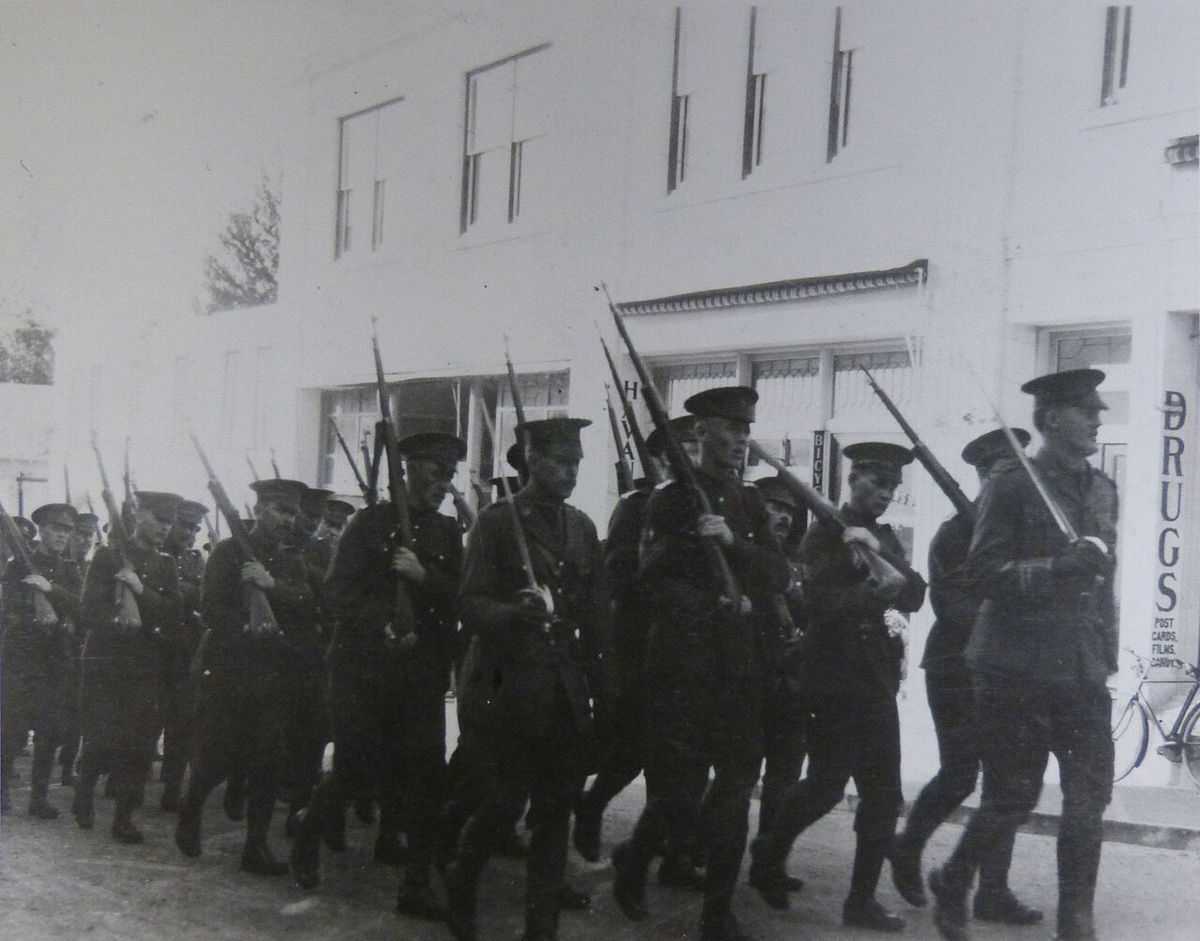
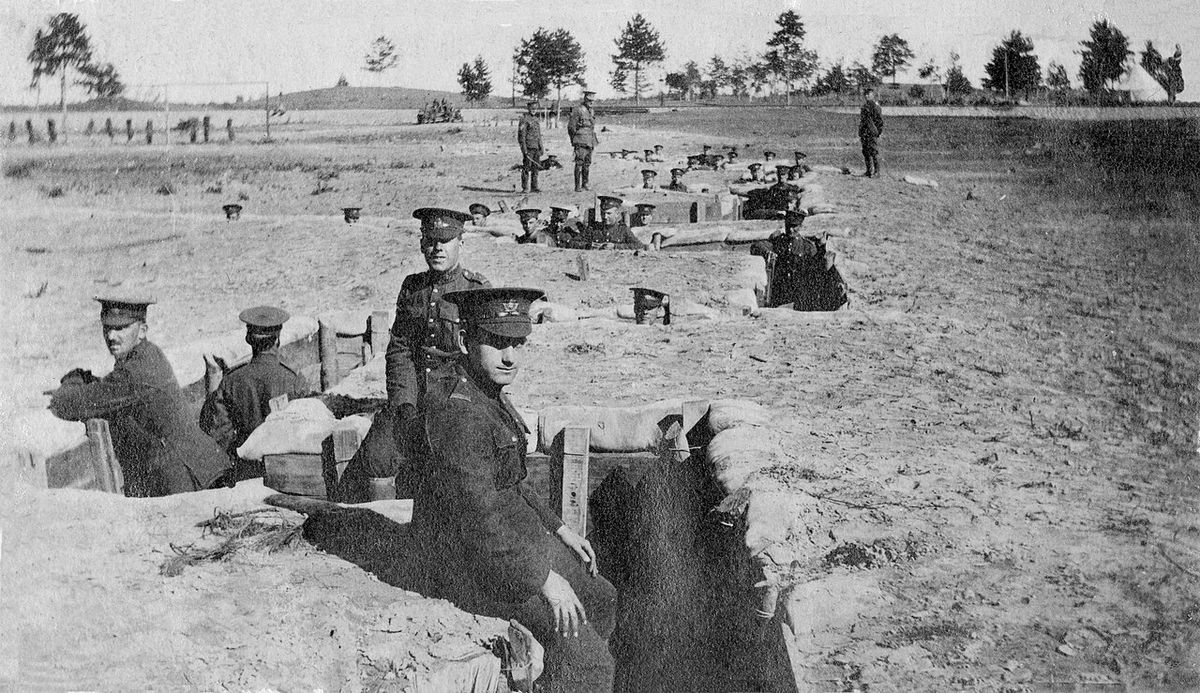
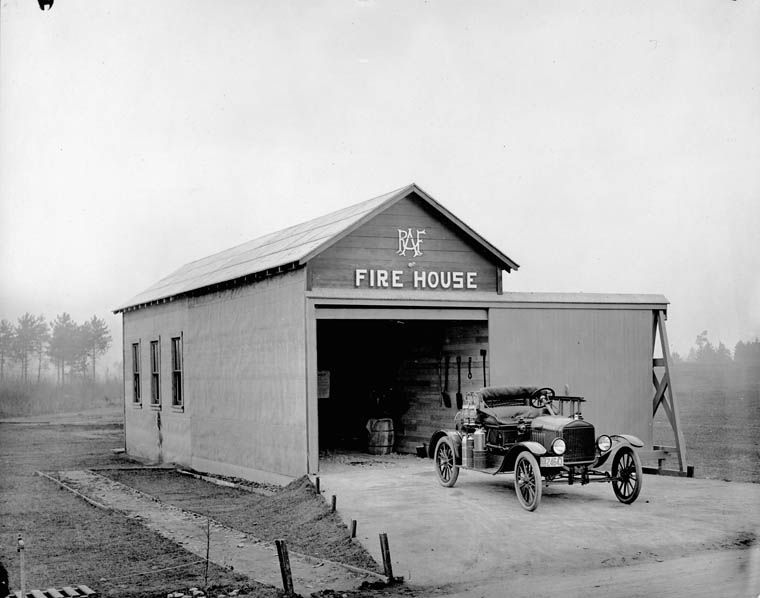
CFB Borden's origins are deeply rooted in the mobilization efforts of the First World War. In May 1916, construction began on a new military camp to train units for the Canadian Expeditionary Force. The Barrie and Collingwood companies of the 157th Battalion (Simcoe Foresters), under Lieutenant Colonel D.H. MacLaren, were the first to arrive and start building. The camp was officially opened by Sir Sam Hughes, the Minister of Militia and Defence, on July 11, 1916, and was named in honour of Sir Frederick William Borden, a former minister who championed militia modernization. The sprawling reserve, encompassing over twenty square miles, soon housed up to 32,000 troops. To prepare soldiers for the Western Front, the camp featured an extensive network of replica trenches. The following year, in 1917, the site was selected for an air training programme under the Royal Flying Corps Canada, leading to the construction of the first Canadian military aerodrome, which was regarded at the time as the finest military aviation camp in North America.
The inter-war period solidified Borden's aviation legacy. After the war, the aerodrome was used for veteran pilot refresher training by the part-time Canadian Air Force militia. This militia training scheme began in July 1920 and ended in March 1922. Although this specific scheme ended, pilot training resumed in May 1923 under the reorganized air force. When the air force received royal patronage in 1924, the station was renamed RCAF Station Camp Borden, cementing its status. The base also expanded its training scope during this era, establishing specialist schools for army co-operation, air armament, bombing, and technical training. The famous Siskins aerobatic flying team was formed at Camp Borden in 1929. Further diversification came in 1938 with the establishment of the Canadian Tank School, marking the beginning of significant army training at the location.
Second World War and Unification
During the Second World War, Camp Borden and its RCAF station became Canada's most critical training facility. It housed extensive army training alongside a massive flight training operation under the British Commonwealth Air Training Plan. The plan's No. 1 Service Flying Training School operated at Borden until 1946, utilizing relief landing fields at Alliston and Edenvale. A third, rudimentary landing field known locally as Leach's Field was also used from the 1920s through the 1950s for touch-and-go exercises. The base's infrastructure and population swelled to meet the wartime demand, training thousands of aircrew and soldiers for the Allied effort. This period represented the peak of Borden's combined arms training mission before post-war specialization.
The Cold War brought a shift in the base's focus. While its importance as a primary RCAF facility in Ontario declined relative to bases like Trenton, Uplands and North Bay, its army training role remained consistent until a major reorganization in 1970. That year, the combat arms schools, including the Infantry School and Armoured School, were transferred to CFB Gagetown in New Brunswick. The unification of the Royal Canadian Navy, Canadian Army, and Royal Canadian Air Force on February 1, 1968, led to the creation of the integrated Canadian Forces. Consequently, the army's Camp Borden and the air force's RCAF Station Camp Borden were merged under the new name Canadian Forces Base Borden. The aerodrome was closed in 1970, and the base transitioned to hosting tri-service, or 'purple,' training schools alongside regular and reserve army training.
Modern Training Mission and Key Organizations
Today, CFB Borden is the Canadian Armed Forces' premier training institution, delivering education across all environments and support functions. The base is commanded by the Military Personnel Generation Training Group, which oversees a vast network of schools. A major lodger unit is 16 Wing Borden, the Royal Canadian Air Force's primary technical and professional training wing. 16 Wing comprises its headquarters, the Canadian Forces School of Aerospace Technology and Engineering, the Royal Canadian Air Force Academy, and the Canadian Forces School of Aerospace Control located in Cornwall. The base's training area spans 22,300 acres, providing ample space for army manoeuvres and field exercises conducted by Regular Force and Primary Reserve units.
The breadth of training at CFB Borden is extensive, covering virtually every trade needed to sustain a modern military. Numerous dedicated schools operate on the base, each serving a critical function in force generation. These institutions include the Canadian Forces Logistics Training Centre, the Canadian Forces Health Services Training Centre, and the Canadian Forces Military Police Academy. Other schools are the Canadian Forces Fire and CBRN Academy, the Canadian Forces Chaplain School and Centre, and the Canadian Forces School of Music. These institutions ensure personnel are equipped with specialized skills before deploying on operations across Canada and around the world.
- Canadian Forces Logistics Training Centre (CFLTC)
- Canadian Forces Health Services Training Centre (CFHSTC)
- Canadian Forces Military Police Academy (CFMPA)
- Canadian Forces Fire and CBRN Academy (CFFCA)
- Canadian Forces Chaplain School and Centre (CFChSC)
- Canadian Forces School of Music (CFSM)
- Royal Canadian Electrical and Mechanical Engineering School
- Canadian Forces School of Aerospace Technology and Engineering (CFSATE)
- Royal Canadian Air Force Academy (RCAF Academy)
In addition to these core training establishments, CFB Borden hosts the headquarters of the Canadian Forces Recruiting Group, regional cadet support and instruction schools, and the Blackdown Cadet Training Centre. The base also supports local emergency services, with the Toronto Police Service's Emergency Task Force occasionally conducting training there. The base houses various other purple trades training facilities including medical, dental and language schools. It also supports local cadet and reserve units like The Grey and Simcoe Foresters and 400 Tactical Helicopter Squadron.
Community, Infrastructure, and Economic Impact
CFB Borden functions as a self-contained community supporting thousands of military members, civilian employees, and their families. The base offers a wide range of recreational and welfare facilities to promote well-being and resilience. These include the Terra theatre, the Circled Pine Bowling Centre, the Buell Fitness and Aquatic Centre, the Andy Anderson arena, soccer fields, baseball diamonds, and biking trails. For golf enthusiasts, the Circled Pine Golf Course, a par-72 regulation course that opened in 1952, is open to the public and serving personnel. The base previously operated the nine-hole Anderson Park course, which closed after the 2015 season. A voluntary Canadian military band, consisting of reservists from all services, is organized during the summer months at the Canadian Forces Logistics Training Centre.
The base is a significant economic driver for Simcoe County and the surrounding region. CFB Borden provides an estimated 5,158 direct jobs and supports a further 518 indirect jobs in the local economy. Ongoing infrastructure investments reflect a commitment to modernizing the base. A major project initiated in the 2020s is the construction of a new Canadian Armed Forces Transition Centre, a nearly 1,300 square metre facility valued at over $17 million. Designed as a net-zero building and featuring an Indigenous Benefits Plan, the centre will provide consolidated support services for members transitioning from active duty and is scheduled to be fully operational by June 2028.
Heritage, Museums, and Commemorations
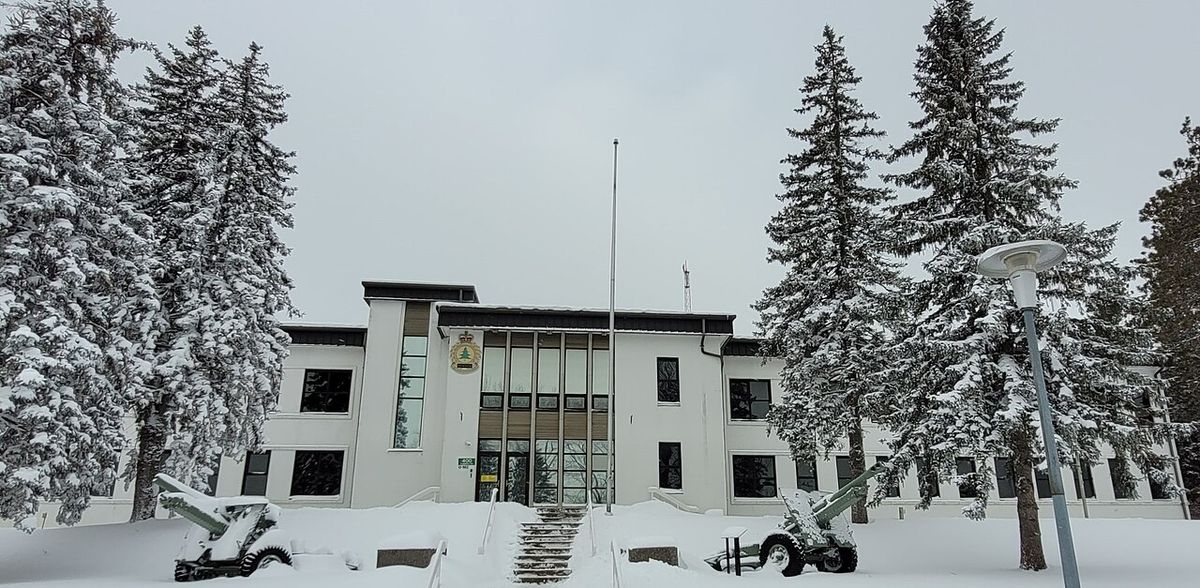
CFB Borden is a site of national military heritage, home to numerous designated historic structures and a major museum complex. The eight surviving Royal Flying Corps hangars, constructed during the First World War, have been collectively designated a National Historic Site of Canada. Many buildings on the base are listed on the Register of the Government of Canada Heritage Buildings, reflecting diverse architectural periods from the early camp to the post-Second World War modernization. Key recognized buildings include the Headquarters Building O-102, Croil Hall, Dyte Hall, the Maple Mess, and the series of historic hangars.
The Base Borden Military Museum is a central institution, combining four separate museums into one complex that preserves and displays artifacts from all eras of Canadian military service. The museum's outdoor exhibit, Worthington Park, is named after Major General F.F. Worthington, the father of the Royal Canadian Armoured Corps, who is buried there. The park features a large collection of historic armoured vehicles and aircraft. The Air Force Annex of the museum is dedicated to the memory of First World War Victoria Cross recipient Lieutenant Alan Arnett McLeod. The original aircraft control tower is dedicated to Royal Flying Corps Cadet James Harold Talbot, who became the first fatality at Camp Borden when his Curtiss J.N.4 'Jenny' crashed on April 8, 1917. The base also hosts commemorative events, including military parades and air shows, such as those held for the RCAF centennial in 2016 and Canada's 150th anniversary in 2017.
Education and Community Partnerships
Education services for families living on the base are provided through local public school boards. French-language education is offered on-post by Académie La Pinède (secular, via Conseil scolaire Viamonde) and École élémentaire catholique Marguerite-Bourgeois (Catholic, via Conseil scolaire catholique MonAvenir). English-language students are zoned to schools in the nearby community of Angus, including Angus Morrison Elementary School and Nottawasaga Pines Secondary School (secular), and Our Lady of Grace Catholic Elementary School and St. Joan of Arc Catholic High School in Barrie (Catholic). Historically, the base operated its own school board, the CFB Borden Board of Education, which ran schools named after Victoria Cross recipients like Alexander Dunn Public School and Frederick Campbell VC School until the board's dissolution in 2010.
CFB Borden actively pursues strategic partnerships with civilian educational institutions to enhance training and career pathways for military members. A significant agreement was formalized on March 31, 2026, when the base and Georgian College signed a Memorandum of Collaboration. This partnership establishes a framework to create enhanced educational pathways for military-connected learners, recognize prior military training and experience, and foster joint professional development and applied research. The collaboration includes the formation of a joint council to guide initiatives, reinforcing the base's commitment to supporting personnel throughout their careers and during transition to civilian life. This agreement builds on Georgian College's designation as a military-connected college in 2022 and aims to create efficient and supportive transitions for members.
Recent Developments and Future Outlook
CFB Borden continues to evolve to meet the future needs of the Canadian Armed Forces. The base celebrated its 110th anniversary in 2026, marking over a century as a fundamental part of military training in Canada. Current developments are focused on modernizing infrastructure and embracing new training technologies. The construction of the new Transition Centre is a flagship project, part of a national slate of such facilities aimed at improving support for departing members. This project, utilizing a modified design-build approach for efficiency, exemplifies the ongoing investment in the base's physical plant and personnel services. The partnership with Georgian College represents a forward-looking approach to education and workforce development, ensuring military skills are recognized and that members have efficient pathways for further learning. As the largest training establishment in the CAF, CFB Borden's role in generating capable, skilled personnel is assured. Its ongoing adaptation to new technologies, teaching methods, and infrastructure needs ensures it will remain a vital and dynamic institution for generations of Canadian Armed Forces members to come.
Questions about CFB Borden
Can the public visit CFB Borden or its museums?
Yes, the public can access certain facilities at CFB Borden. The Base Borden Military Museum, which includes Worthington Park with its outdoor display of aircraft and armoured vehicles, is open to visitors. The Circled Pine Golf Course on the base is also open to the public. The base occasionally hosts community events and air shows that are advertised to the public, though access to the operational areas of the base is restricted.
What is CFB Borden and where is it located?
Canadian Forces Base Borden is a Canadian Forces base located in Ontario. It is situated on a glacial moraine west of Barrie. Originally established as a military camp in 1916, it is the historic birthplace of the Royal Canadian Air Force and is now the largest training establishment in the Canadian Armed Forces. The base is run by the Military Personnel Generation and Training Group and reports to the Military Personnel Generation Group in Ottawa. Its extensive training area covers 22,300 acres.
Why is CFB Borden considered the birthplace of the Royal Canadian Air Force?
CFB Borden is considered the birthplace of the Royal Canadian Air Force because Camp Borden was selected in 1917 for a military aerodrome, becoming the first flying station of the Royal Flying Corps Canada. This established the site as a foundational air training location. Although pilot training paused briefly, it resumed in May 1923 and the station hosted various air force specialist schools. When the Canadian Air Force was granted the royal title in 1924, the station was renamed RCAF Station Camp Borden, marking a key moment in the institution's evolution into the RCAF.
How many people does CFB Borden train each year?
CFB Borden trains about 20,000 personnel annually. The base is home to the largest training wing in the Canadian Armed Forces, which is run by the Military Personnel Generation and Training Group. This training prepares members across various elements and trades, including army, air force, and tri-service or purple schools. The base's extensive facilities on its 22,300 acres support this high volume of instruction.
What are some of the key schools and units based at CFB Borden?
Key schools and units at CFB Borden include 16 Wing Borden, which encompasses the Canadian Forces School of Aerospace Technology and Engineering and the Royal Canadian Air Force Academy. Other major training establishments are the Canadian Forces Logistics Training Centre, the Canadian Forces Health Services Training Centre, and the Canadian Forces Military Police Academy. The base also hosts the Canadian Forces Fire and CBRN Academy, the Canadian Forces Chaplain School and Centre, and the headquarters of the Canadian Forces Recruiting Group. Army units like The Grey and Simcoe Foresters and 400 Tactical Helicopter Squadron are present.
What is the new Transition Centre being built at CFB Borden?
The new Transition Centre at CFB Borden is a purpose built facility designed to support Canadian Armed Forces members and their families as they transition from active duty. The nearly 1,300 square metre structure will provide a centralised one stop shop with interview rooms and counselling spaces. Construction on this over $17 million project was anticipated to begin in the Fall of 2022, with the centre expected to be fully operational by June 2028. It is being built to replace aging infrastructure and is part of a national slate of new transition centres. The project utilizes a modified design build approach and includes an Indigenous Benefits Plan.
Sources and further reading
- CFB Borden (Wikipedia)
- Construction begins on CFB Borden Transition Centre (dcc-cdc.gc.ca)
- Brief History of Borden (bordenbugler.ca)
- Georgian College and CFB Borden sign agreement to ... (georgiancollege.ca)
- Construction and Operation of a Transition Centre at CFB ... (iaac-aeic.gc.ca)
Checked by the Nosy Mag desk. Last updated 2026-10-29.