Canadian labour law
Canadian labour law is the body of law that governs the rights, duties, and relationships between workers, employers, and trade unions across the country. It is a complex framework divided between federal and provincial jurisdictions, with each level of government regulating different sectors of the economy. This system establishes minimum standards for wages, hours, and working conditions, protects the right to unionize and bargain collectively, and includes a constitutionally protected right to strike. Understanding these laws is essential for millions of Canadian employees and employers as they manage the evolving workplace, including new regulations on remote work, pay equity, and gig economy jobs.
Jurisdictional Division of Labour Law
The foundation of Canadian labour law is its division of powers between the federal government and the ten provinces and three territories. The federal government regulates specific industries, including banking, radio and television broadcasting, inland and maritime navigation and shipping, inland and maritime fishing, and all forms of transportation that cross provincial or international boundaries, such as aviation and railways. For all other industries and the vast majority of Canadian workplaces, employment law is a matter of provincial or territorial authority. The laws that apply are those of the province or territory where the work is performed, regardless of where the employer is headquartered or the employee resides. The territories exercise powers similar to provinces, though these are delegated through federal statute and can differ in scope between Yukon, the Northwest Territories, and Nunavut.
This division creates a patchwork of employment standards legislation across the country, with each province and territory enacting its own laws on minimum wage, hours of work, overtime, vacation entitlements, and job-protected leaves. Quebec's system is particularly distinct, being derived from the civil law tradition and featuring unique statutes like the Pay Equity Act. Despite these differences, several core principles are common across most jurisdictions. These include a statutory framework for certifying unions based on majority support in a defined workplace, a process for collective bargaining, and the widespread adoption of the Rand Formula. The Rand Formula, a landmark legal concept, allows employees in a unionized workplace to opt out of union membership but still requires them to pay dues to the union for its bargaining and representation services.

The Federal Framework: The Canada Labour Code
The Canada Labour Code is the central statute governing labour and employment for federally regulated industries. It is divided into three main parts: Part I covers industrial relations and the process for union certification and collective bargaining, Part II sets occupational health and safety standards, and Part III establishes minimum employment standards. The Code is regularly amended, with the current version incorporating changes up to December 12, 2025. Several significant amendments have recently come into force or are scheduled for the near future, directly impacting federally regulated employers and their hundreds of thousands of employees. One of the most substantial recent changes was the prohibition on the use of replacement workers, often called scabs, during strikes and lockouts. This ban, enacted through Bill C-58, took effect on June 20, 2025, and applies to any strike or lockout ongoing on or after that date. Limited exceptions exist only where there is an imminent threat to health and safety that cannot be averted with the existing workforce.
Another major reform is the new equal pay provision, set to take effect on October 20, 2026. This rule requires employers to pay part-time, casual, temporary, and seasonal employees the same wage as full-time employees when they perform substantially the same work in the same establishment. Permissible reasons for a pay difference are limited to seniority systems, merit pay, systems that measure earnings by quantity or quality of production, or any other factor prescribed by regulation. Other key amendments to the Canada Labour Code include a new job-protected leave related to pregnancy loss, providing up to 8 weeks following a stillbirth and up to 3 days for other pregnancy losses, with the first 3 days paid for employees with three months of service. The Code also extended bereavement leave to up to 8 weeks following the death of a child, while leave for other immediate family members remains at up to 10 days. The federal minimum wage is now indexed to inflation, resulting in a rate of $18.15 per hour as of April 1, 2026, and a new restriction allows employers to request a medical certificate only after an employee has been on a medical leave for at least five consecutive days. Further changes passed in 2024 but not yet in force include a requirement for employers to adopt a policy on disconnecting from work-related communications outside of scheduled hours and a new 16-week unpaid leave for the placement of a child through adoption or surrogacy. The Labour Program has also outlined a forward regulatory plan for 2026 to 2028, which includes consultations with Indigenous partners and stakeholders on proposed new regulations.
Provincial and Territorial Labour Law Variations
While the federal framework applies to a narrow set of industries, provincial and territorial laws govern the employment relationships for roughly 90 percent of Canadian workers. Each jurisdiction has its own employment standards act, labour relations code, and occupational health and safety legislation, leading to a diverse legal environment. Recent years have seen significant legislative activity at the provincial level, introducing new protections and modernizing dispute resolution systems. In 2024, Nova Scotia passed the Stronger Workplaces for Nova Scotia Act, which introduced several new provisions. These include a statutory duty for injured workers and employers to cooperate to support a safe and timely return to work, expanded unpaid leave entitlements such as up to 27 weeks for serious illness or injury, explicit recognition of psychological health and safety, and a requirement for employers to implement workplace harassment prevention policies.
Ontario has also been active, introducing the Digital Platform Workers' Rights Act to regulate the gig economy, joining British Columbia in providing platform workers with entitlements to minimum wage, information about their work, and regular pay periods. Ontario's civil justice system is undergoing a transformation through the Civil Rules Review, which proposes a new three-track system for claims to improve efficiency and access to justice, and the Human Rights Tribunal of Ontario made mediation mandatory for new applications starting June 1, 2025. Other provincial developments include ongoing judicial scrutiny of termination clauses in employment contracts, as seen in cases like Li v. Wayfair Canada Inc. and Bertsch v. Datastealth Inc. in Ontario. Alberta's legislative framework, which includes the Restoring Balance in Alberta’s Workplaces Act (Bill 32), allows for the averaging of overtime over extended periods and adjusts rules on scheduling and final pay. In Quebec, recent laws such as Bill 42 have strengthened protections against harassment from any person in the workplace, including clients, while Bill 101 aimed to accelerate the resolution of labour disputes. Yukon's Employment Standards Act provides baseline protections for most employees in the territory, including minimum wage, hours of work limits, and various job-protected leaves such as maternity and parental leave.
Constitutional Rights and the Right to Strike
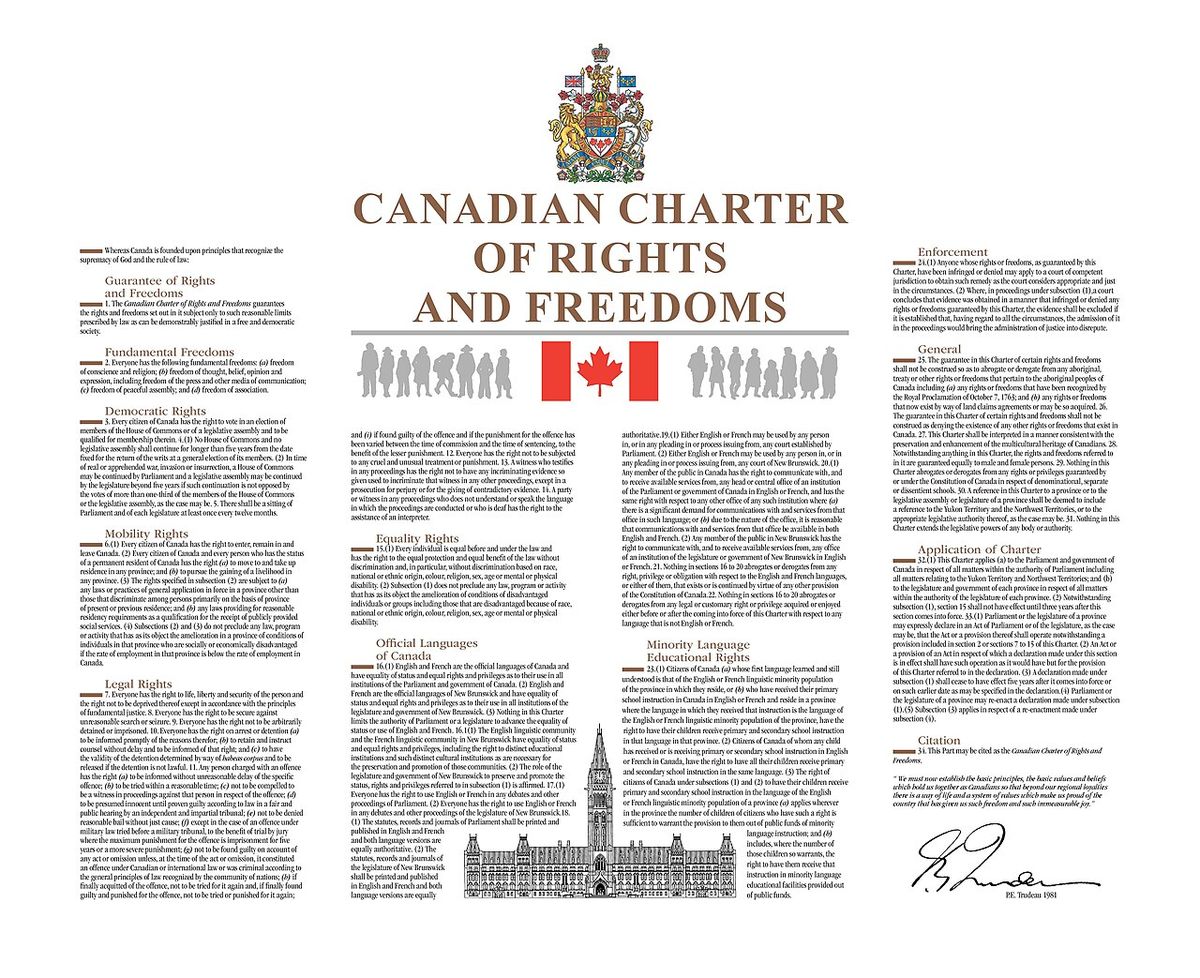
A fundamental element of Canadian labour law is the constitutional protection of collective bargaining and the right to strike. This protection was firmly established by the Supreme Court of Canada in its landmark 2015 decision, Saskatchewan Federation of Labour v Saskatchewan. In a 5-2 ruling, the Court held that the right to strike is an essential component of a meaningful collective bargaining process and is therefore protected by the freedom of association guarantee in section 2(d) of the Canadian Charter of Rights and Freedoms. The majority opinion, written by Justice Rosalie Abella, adopted the reasoning from Chief Justice Brian Dickson's dissent in a 1987 case, affirming that the ability to withdraw labour is a necessary counterbalance to the power of employers during negotiations.
This constitutional right is not absolute and can be subject to reasonable limits. Governments retain the ability to pass back-to-work legislation, which orders an end to a strike or lockout and often imposes a settlement through arbitration. This power has been used frequently throughout Canadian history, with the federal government invoking it over 30 times as of 2012 in sectors like postal service, railways, and air travel. Governments can designate certain services as essential, making strikes by those workers illegal. The precise scope of the right to strike, including what constitutes a reasonable limit, continues to be defined by the courts and labour relations boards on a case-by-case basis. The related activity of picketing is also subject to legal limits, with courts in each province applying common law principles to grant injunctions that restrict picketing when it causes undue harm or breaches the peace.
Key Legal Cases and Precedents
Canadian labour law has been shaped by a series of important court decisions that have defined the rights of workers and the limits of government and employer action. These cases interpret legislation and apply constitutional principles to real-world disputes, setting precedents that guide future conduct. The rulings span issues from the fundamental right to strike to the specifics of pay equity and the validity of employment contracts. They provide a crucial judicial gloss on the statutory framework established by Parliament and the legislatures. The following table outlines several major cases and their significance.
| Case Name | Year | Key Issue | Significance |
|---|---|---|---|
| Saskatchewan Federation of Labour v Saskatchewan | 2015 | Right to strike | Established that the right to strike is constitutionally protected under freedom of association. |
| Health Services and Support-Facilities Subsector Bargaining Association v British Columbia | 2007 | Collective bargaining | Found that legislation that substantially interfered with collective bargaining violated the Charter. |
| Ontario v Fraser | 2011 | Agricultural workers' unionization | Clarified the scope of constitutional protection for collective bargaining, finding no universal right to a particular model. |
| Reference Re Public Service Employee Relations Act (Alta) | 1987 | Right to strike (dissent) | Chief Justice Dickson's dissenting opinion laid the groundwork for the 2015 SFL decision. |
| Li v. Wayfair Canada Inc. | 2025 | Termination clauses | Ontario Superior Court upheld a termination clause with "at any time" language, clarifying it is not automatically void. |
| Bertsch v. Datastealth Inc. | 2025 | Termination clauses | Ontario Court of Appeal supported enforcement of clear, unambiguous termination provisions that comply with employment standards. |
These decisions demonstrate the dynamic interplay between legislatures and the courts. Governments set the statutory rules for labour and employment, while the judiciary interprets their meaning and ensures they align with constitutional guarantees. For example, Ontario courts provide ongoing scrutiny of employment contract termination clauses. This judicial review refines the practical application of employment standards legislation. It offers guidance to employers on drafting enforceable contracts that limit termination liability to statutory minimums. The courts examine whether clauses are clear, unambiguous, and compliant with the law when read as a whole.
Recent and Upcoming Regulatory Changes
The field of Canadian labour law is continually evolving, with governments at all levels introducing new regulations to address emerging workplace trends. The period from 2025 to 2027 is marked by a significant wave of changes, particularly at the federal level, where new rules on equal pay, temporary help agencies, and remote work are coming into effect. These amendments require employers to review and often revise their policies and practices to ensure compliance. Staying informed about these changes is a critical responsibility for human resources professionals and business owners across the country. A major set of amendments is encapsulated in the Regulations Amending Certain Regulations Made Under the Canada Labour Code (Equal Treatment and Temporary Help Agencies), registered as SOR/2026-75.
These regulations provide the detailed framework needed to implement the equal pay and temporary help agency reforms that take effect on October 20, 2026. They define key terms, outline the criteria for comparing job functions, and specify the obligations of clients who use temporary help agencies. Another important development is the federal government's Free Trade and Labour Mobility in Canada Act, set to take effect on January 1, 2026, which aims to facilitate worker mobility across provincial borders. For remote and hybrid work arrangements, the 2026 amendments to the Canada Labour Code also introduce specific documentation requirements for hiring remote workers in federally regulated sectors. Provincially, employers with employees working across different jurisdictions must carefully determine which province's employment standards apply, typically based on the location where the work is performed. Key compliance deadlines and changes for employers to monitor include the federal equal pay for equal work rules and temporary help agency protections becoming enforceable on October 20, 2026, and the Free Trade and Labour Mobility in Canada Act coming into force on January 1, 2026. The next scheduled adjustment to the federal minimum wage based on 2026 inflation data is set for April 1, 2027. The proclamation of the federal right to disconnect policy requirement and new adoption and surrogacy leave is still pending. Provincial changes are also ongoing, such as Ontario's mandatory mediation at the Human Rights Tribunal of Ontario which became effective in June 2025, and the requirement for employers to respond to pay review requests in writing within 90 days under the new federal equal pay rules. This complex regulatory environment shows the importance of accessing up to date resources and seeking expert advice to manage compliance successfully.
Questions about Canadian labour law
What is the difference between federal and provincial labour law in Canada?
The federal government regulates labour law for specific national industries, including banking, broadcasting, inland and maritime fishing, and interprovincial transportation. Provincial and territorial governments regulate labour law for all other workplaces, which constitute the vast majority of employment in Canada. The applicable law is generally determined by the province or territory where the work is performed, not by the location of the employer's head office. Territories have delegated powers similar to provinces, but these powers can differ and are subject to federal statute.
Do Canadian workers have a right to strike?
Yes, the right of workers to strike is constitutionally protected in Canada. The Supreme Court of Canada affirmed this right in its 2015 ruling in Saskatchewan Federation of Labour v Saskatchewan. The Court stated the right to strike is an essential part of a meaningful collective bargaining process. However, federal and provincial governments can pass back-to-work legislation to block or end a strike. Governments can also impose binding arbitration or a new contract, and can declare certain services as essential where strikes are illegal.
What is the Rand Formula in Canadian labour law?
The Rand Formula is a common feature in Canadian labour law that applies in unionized workplaces. It allows employees to choose not to become formal members of the union. However, if they benefit from the union's collective bargaining, they are still required to pay the equivalent of regular union dues. This ensures the union has the financial resources to represent all employees in the bargaining unit fairly, promoting stability in labour relations.
What is the federal minimum wage in Canada for 2026?
The federal minimum wage for workers in federally regulated industries is $18.15 per hour as of April 1, 2026. This wage is indexed to inflation and adjusted annually. For most Canadian workers, however, minimum wage is set by provincial and territorial governments. These rates vary, such as Alberta's minimum wage of $15 per hour for most workers. The applicable minimum wage is determined by the province or territory where the work is performed.
What are the new equal pay rules for federally regulated employers?
New equal pay rules for federally regulated employers take effect on October 20, 2026. These rules require employers to pay part-time, casual, temporary, and seasonal employees the same wage as full-time employees when they perform substantially the same work in the same establishment. Permissible reasons for a pay difference are limited to seniority systems, merit pay, systems that measure earnings by quantity or quality of production, or any other factor prescribed by regulation. The detailed framework is provided in regulation SOR/2026-75.
Sources and further reading
- Canadian labour law (Wikipedia)
- Looking Forward to 2026: Top 10 Canadian Labour & ... (labourandemploymentlaw.com)
- Annual Canadian Employment Law Guide (canadianpayrollservices.com)
- 2026 Canada Labour Code Changes: Remote Hiring Rules (teamed.global)
Checked by the Nosy Mag desk. Last updated 2026-11-01.