House edge
The house edge is the mathematical advantage built into every casino game, representing the percentage of each wager the casino expects to retain over the long term. For Canadian adults who choose to gamble, understanding this concept is crucial for making informed decisions about where to place their money. It directly determines a game's theoretical return to player (RTP) and varies dramatically, from near-zero on certain craps bets to over 10% on some slot machines. By knowing which games and specific bets carry the lowest house edge, players can better manage their bankroll and approach casino gaming with realistic expectations about their chances.
Defining the House Edge and Return to Player
The house edge is fundamentally the casino's expected profit margin, expressed as a percentage of each wager made. If a game has a published house edge of 5%, the casino expects to keep an average of $5 for every $100 wagered over a vast number of bets. This does not predict short-term results for an individual player, as variance can lead to significant wins or losses in a single session. The concept applies identically whether playing at a land-based venue or at a regulated online casino in Canada. Return to Player (RTP) is the direct inverse of the house edge, representing the percentage of wagered money a game is expected to pay back to players over time. A game with a 97.3% RTP has a house edge of 2.7%, meaning the casino's theoretical hold is $2.70 per $100 wagered. These figures are long-term mathematical averages derived from the game's rules and probability, not guarantees for any playing session.
How the House Edge is Calculated and Measured
The standard calculation for house edge is the ratio of the average loss to the player's initial bet. This convention makes it easier for players to estimate potential losses based on the money they first put down. For example, if a player knows the house edge in a specific blackjack game is 0.6%, they can estimate an average loss of 6 cents for every $10 of their initial wager. In games like blackjack or Let It Ride where players can increase their bet mid-hand, the additional money wagered is not included in the denominator for this standard calculation, which can make the risk appear higher. Some analysts prefer an alternative measurement called the 'element of risk,' which is the average loss divided by the total money actually wagered during the game. For games where the final bet always equals the initial bet, like roulette, the two figures are identical. The element of risk provides a different perspective for comparing games like Caribbean Stud Poker, where the standard house edge is 5.22% but the element of risk is only 2.56%. This measurement shows Caribbean Stud Poker to be a much better gamble than double-zero roulette, which has a 5.26% edge on both metrics.
House Edge Across Major Casino Games
The house edge is not a single number for an entire game but varies significantly based on the specific bet placed, the rules of the variant, and the player's strategy. Games of pure chance like roulette have fixed edges based on wheel layout, while games involving skill or decision-making, like blackjack or video poker, have a variable edge that depends on the player's actions. The following table lists the typical house edge for common bets and game versions, assuming optimal player strategy where applicable. These figures represent long-term averages and are drawn from authoritative mathematical analysis.
| Game or Bet | Typical House Edge | Key Conditions |
|---|---|---|
| Craps Odds Bet | 0.00% | Paid at true odds. Requires a Pass/Don't Pass line bet first. |
| Baccarat (Banker Bet) | 1.06% | Includes 5% commission on Banker wins. |
| European Roulette | 2.70% | Single-zero wheel. |
| American Roulette | 5.26% | Double-zero wheel. |
| Full-Pay Video Poker (Jacks or Better) | 0.46% | Assumes perfect play on a 9/6 paytable. |
| Slot Machines | 2% - 10%+ | Varies widely by machine. Some can exceed 11%. |
| Spanish 21 | 0.40% | With dealer standing on soft 17. |
| Ultimate Texas Hold'em | 2.19% | Of the initial Ante bet, with optimal strategy. |
It is critical to note that these are baseline figures. In blackjack, rules like dealer hitting on soft 17 or restrictions on doubling can increase the edge. For slot machines, the edge is programmed into the machine's random number generator and is reflected in its payout table, which is why checking a game's published RTP is important. A 2026 analysis of seven licensed Canadian gaming sites showed blackjack edges as low as 0.42%, baccarat at 1.06%, and slots with edges up to 11.5%.
Detailed Look at Games with the Lowest House Edge
For players seeking the best mathematical odds, focusing on games and bets with the lowest house edge is essential. Blackjack, when played with perfect basic strategy, consistently offers one of the lowest edges in the casino, potentially as low as 0.28% under ideal rules. The craps Odds bet is unique, offering a true 0% house edge, but it can only be placed after a Pass or Don't Pass line bet. Baccarat is favoured for its simplicity and low edge, particularly on the Banker bet at 1.06%. Other table games can also provide competitive odds when the correct bets are chosen and optimal strategy is followed. The following list details specific low-edge games and the conditions required to achieve their published advantages.
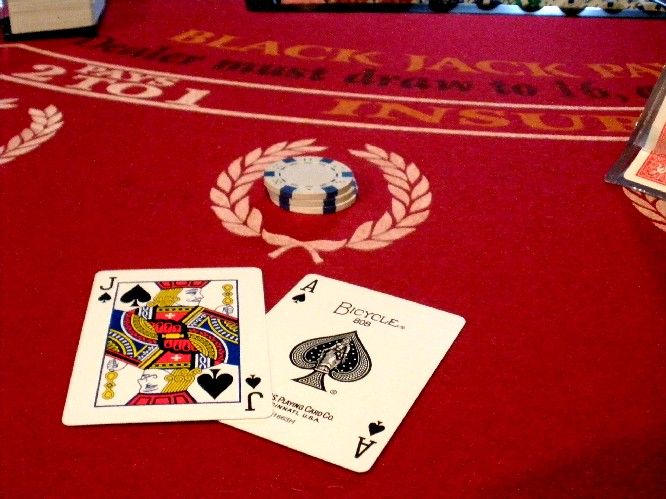
- Blackjack: Requires memorizing and executing basic strategy, a set of rules for when to hit, stand, double, or split based on your hand and the dealer's up-card. A card-counter can reduce the edge further, but casinos reserve the right to refuse play to card counters.
- European Roulette: The single-zero wheel halves the house edge compared to the American double-zero version, making it a better choice for roulette players seeking a 2.70% edge.
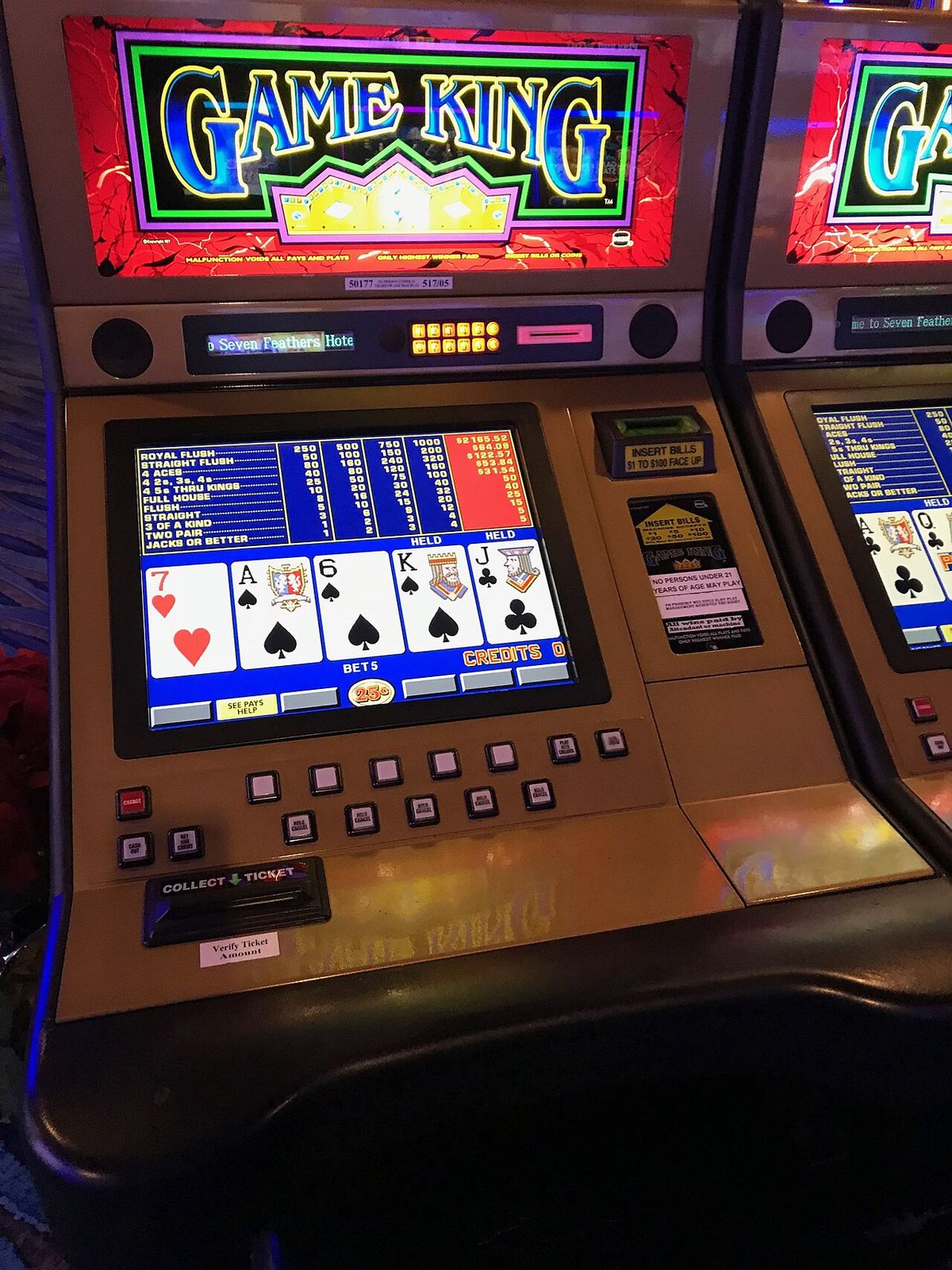
- Video Poker (Full-Pay): Games like 9/6 Jacks or Better offer a 0.46% edge with perfect play, but paytables vary and must be checked. Full-pay Jacks or Better is listed at 0.46% house edge.
- Spanish 21: This blackjack variant, with the dealer standing on soft 17, can have a house edge as low as 0.40% with optimal strategy.
- Pai Gow Poker: With optimal hand setting and a 5% commission on wins, the house edge is approximately 2.51%. Following the casino's 'house way' increases the edge to about 2.72%.
Discipline is key for players, as casinos profit when players deviate from optimal bets. In craps, the tempting proposition bets in the centre of the table carry high house edges. These proposition bets are among the worst bets in the entire casino. Very few players have the discipline to resist these prop bets during a long session. Casinos make money on craps largely because players are drawn to these high-edge wagers.
Games and Bets with Higher House Edges
While all casino games are designed with a house advantage, some categories and specific wagers are significantly more costly over the long run. Slot machines are the most prominent example, with house edges typically ranging from 2% to 10% and sometimes exceeding 11.5% as seen in 2026 site audits. The edge is built into the game's programming and payout structure, and unlike table games, player decisions cannot alter it. Within table games, certain side bets and proposition wagers dramatically increase the house's advantage. In Three Card Poker, the Pair Plus side wager is a separate bet with its own paytable and house edge, distinct from the main Ante bet which has a 3.37% edge with correct strategy. The important principle is that games offering the potential for large, infrequent payouts generally compensate for that by having a higher house edge on each wager. This includes most slot machine progressive jackpots and the Tie bet in baccarat.
The Critical Role of Strategy and Player Decisions
In games involving skill or decision-making, the house edge is not a fixed number but a range determined by the quality of the player's choices. Video poker operates similarly, where optimal play based on the specific paytable is required to achieve the published low edge. Poker-based table games like Three Card Poker, Ultimate Texas Hold'em, and Caribbean Stud also have published optimal strategies that minimize the house edge. For instance, the house edge on Ultimate Texas Hold'em is approximately 2.19% of the initial Ante when playing optimally. Using the casino's 'house way' in Pai Gow Poker instead of optimal hand-setting can increase the edge from about 2.51% to 2.72%. Therefore, for players interested in these games, studying and practicing the correct strategy is a necessary step to access the best available odds. The following list outlines key strategic considerations for popular decision-based games.
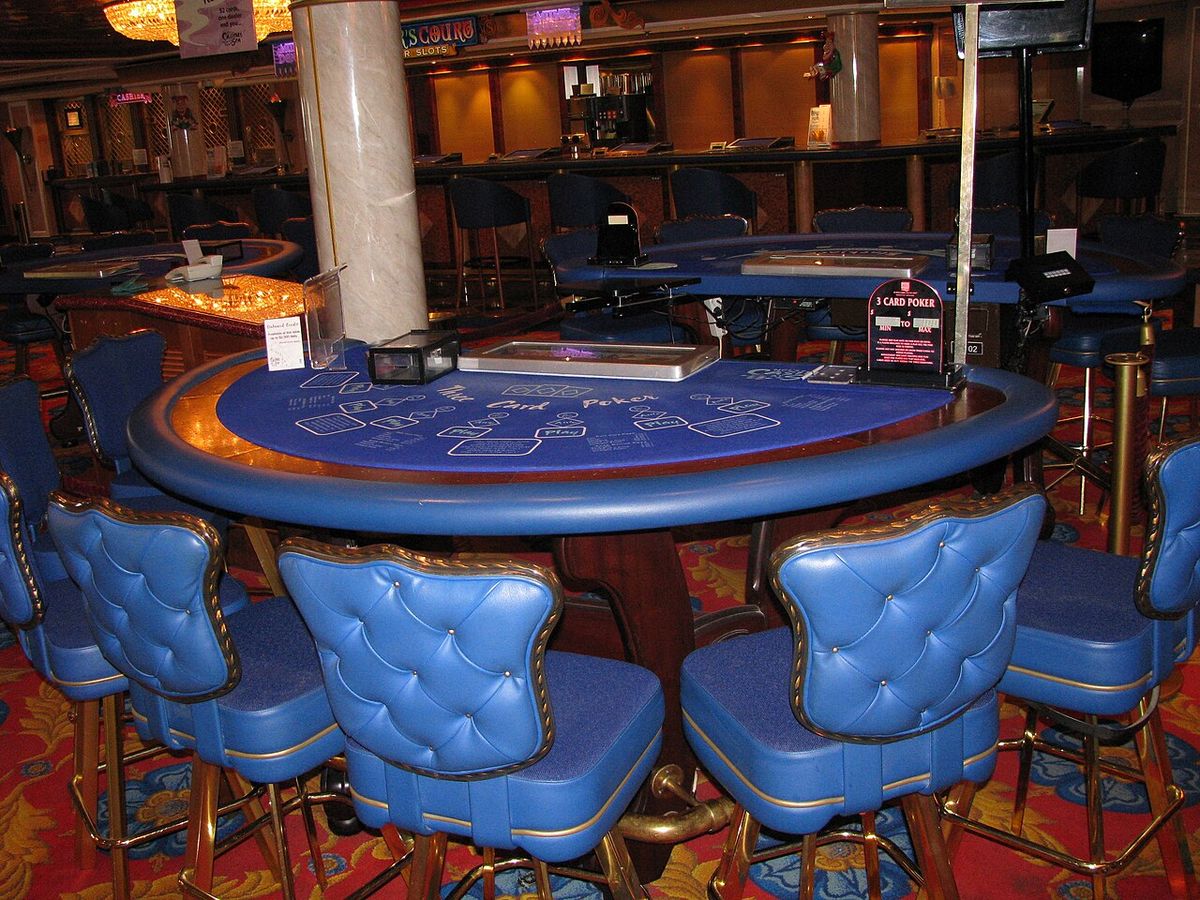
- Three Card Poker: The correct strategy is to place the Play bet with any pair or better, any ace-high or king-high hand, or a queen-high hand of queen-six-four or better. Fold queen-six-three, queen-five-four, and anything lower.
- Ultimate Texas Hold'em: Optimal strategy involves deciding when to place a Play bet of 3x or 4x the Ante pre-flop, 2x after the flop, or 1x after all community cards, or to fold.
- Blackjack Basic Strategy: A complete set of rules dictating every action (hit, stand, double, split, surrender) based on the player's hand total and the dealer's up-card. It must be memorized.
- Video Poker: Strategy changes with each paytable. For 9/6 Jacks or Better, it involves knowing which cards to hold from a dealt hand to maximize expected value.
- Pai Gow Poker: Optimal hand setting involves arranging seven cards into the strongest possible five-card high hand and two-card low hand, where the five-card hand must outrank the two-card hand.
- Craps Discipline: The strategic choice is to stick only to Pass/Don't Pass line bets with maximum odds and avoid all centre-table proposition bets.
Without applying optimal strategies, the house edge for the player increases substantially. This turns a game with a relatively low house edge into a poor one for the player. For instance, in blackjack, using basic strategy is essential to achieve a low house edge. In games like Caribbean stud poker, the conventional house edge figure can be a biased measure of risk if not understood properly. Players should look at the ratio of money lost to money wagered for a better comparison between games. Following a casino's 'house way' in Pai Gow Poker, instead of optimal strategy, can also increase the house edge.
The Canadian Regulatory Context and Player Resources
In Canada, gambling is regulated at the provincial level, and the house edge on games offered by licensed operators, whether online or in person, is subject to oversight and auditing. Provinces like Ontario, through iGaming Ontario and the AGCO, and Alberta, under the AGLC, regulate private online casino markets where game fairness and RTP are monitored. Alberta's open market began on 13 July 2026 under AGLC regulation. Other provinces are served by Crown corporation online casinos like PlayNow in B.C., Manitoba, and Saskatchewan, and PlayAlberta in Alberta. These regulatory bodies ensure that games operate as advertised and that the stated house edge or RTP is mathematically accurate. For players, this means seeking out licensed, regulated operators is the best way to ensure game integrity. All licensed Canadian gambling sites provide access to responsible gambling tools and links to support services, such as the National Problem Gambling Helpline Network at 1-800-522-4700. Understanding the house edge is a fundamental part of a responsible gambling approach, helping adults set realistic budgets and view gambling as a form of entertainment with a known cost. The legal age for gambling is 19+ in most provinces, and 18+ in Alberta, Manitoba, and Quebec.
Questions about House edge
What casino game has the best odds in Canada?
Blackjack, played with optimal basic strategy, is widely considered the casino table game with the best odds, with a house edge as low as 0.28% under favourable rules. The craps Odds bet technically offers a 0% house edge, but it requires an initial Pass or Don't Pass line bet. For consistent low-edge play, blackjack and baccarat (specifically the Banker bet at 1.06%) are the top choices. It is crucial to use correct strategy in blackjack and to avoid high-edge side bets in any game to maintain these odds.
What is the house edge in blackjack?
The house edge in blackjack is variable and depends heavily on the specific rules of the game and the player's skill. With perfect basic strategy under the most liberal 'Vegas' rules, the edge can be as low as 0.28%. Rules that increase the house edge include the dealer hitting on a soft 17, restrictions on doubling after splitting, or fewer decks in the shoe. A player who does not use basic strategy can face an edge of 2% or more.
What is the house edge on roulette?
The house edge on roulette is determined by the wheel type. European roulette, with a single zero, has a house edge of 2.70% on all bets. American roulette, with both a single and double zero (0 and 00), has a house edge of 5.26% on all bets. This means the American wheel is nearly twice as costly for players over the long run. The edge is fixed and cannot be changed by player strategy, as it is built into the wheel's layout and the payout odds for each type of bet.
Do slot machines have a high house edge?
Slot machines generally have a higher house edge than most table games, typically ranging from 2% to 10%, with some machines exceeding 11%. The exact edge is programmed into the game's software and is reflected in its theoretical Return to Player (RTP) percentage. Unlike table games, player decisions cannot lower the edge on a slot machine. The edge is averaged over millions of spins, meaning short-term results can vary wildly, but the long-term expectation is that the casino will retain the published percentage of all money wagered.
How can I find casino games with the best odds?
To find games with the best odds, focus on table games like blackjack, baccarat, craps (specifically Pass/Don't Pass line bets with odds), and European roulette. For blackjack and video poker, you must learn and use optimal basic strategy to achieve the published low edge. Always check the specific rules of a table game, as variations affect the edge. For slots or video poker, look for the published RTP percentage. A higher RTP means a lower house edge. Finally, play only at licensed, regulated casinos in Canada, as they are audited to ensure game fairness and accurate odds.
What is the house edge on the baccarat banker bet?
The house edge on the baccarat Banker bet is 1.06%. This figure is based on optimal play and includes ties in its calculation. The low edge is due to the Banker bet having a slightly higher probability of winning than the Player bet. To compensate for this advantage, casinos charge a standard 5% commission on winning Banker bets. This makes the Banker bet one of the mathematically best bets available in Canadian casinos.
Sources and further reading
- Casino House Edge Chart by Game (wizardofodds.com)
- 10 Casino Games with the Lowest House Edge in Canada (gambling.com)
- Dr Per Cap, Casino House Edge (firstnations.org)
- What is House Edge? Does the Casino Have an Advantage? (livescore.com)
- Online Casino Canada | Best Ontario Casino App 2026 | OLG (olg.ca)
- Online Casino Canada | Top 15 Real Money Casinos 2026 (casino.ca)
Checked by the Nosy Mag desk. Last updated 2026-11-19.