National symbols of Canada
National symbols of Canada are the emblems, icons, and cultural expressions that represent the country's identity, values, and heritage. These include official government emblems like the maple leaf flag and the beaver, and widely recognized cultural symbols such as hockey and the national anthem. They reflect Canada's natural environment, its history of pioneers and traders, and its modern civic institutions. Over centuries, these symbols have arisen as uniquely Canadian or have developed uniquely Canadian characteristics.
Official National Symbols and Government Recognition
The Government of Canada formally recognizes several symbols as official national emblems through legal and traditional designation. The most prominent of these is the maple leaf, specifically from the sugar maple tree, which has been associated with Canada since French colonists first used it in the 1700s. Under British rule in the 1850s, the maple leaf began appearing on military uniforms and was later engraved on the headstones of Canadian Armed Forces personnel. The beaver, declared the national animal due to its historical role in the fur trade, appears on the Canadian five-cent coin and represents industry and perseverance. The national coat of arms, granted by royal proclamation, includes symbols such as the maple leaf, the royal crown, and the motto A Mari Usque Ad Mare, which translates to From Sea to Sea.
Other official symbols include the national colours of red and white, the maple leaf tartan, and the Great Seal of Canada used on state documents. The maple leaf tartan consists of four colours reflecting the seasonal changes of the leaf: green for spring, gold for early autumn, red at the first frost, and brown after falling. The Order of Canada, the country's highest civilian honour, features a snowflake design and its own Latin motto, Desiderantes meliorem patriam, meaning They desire a better country. The Federal Identity Program governs the use of official government symbols like the Canada wordmark and specific corporate signatures to ensure a consistent visual identity across all federal communications. These identifiers appear on everything from government publications to the Canadarm and Canadarm2, the robotic arms used in the space program.

Prominent Cultural, Natural and Material Symbols
Beyond official emblems, a wide array of cultural and natural icons are deeply ingrained in Canadian identity through common usage and public affection. The Canadian wilderness, including features like the Canadian Rockies, is consistently cited in surveys as a defining national symbol, with an 83 percent association in a 2012 Ipsos Reid poll. Wildlife such as the Canada goose, common loon, moose, and Canadian horse are strongly associated with the country's natural heritage and appear frequently in art and media. The Royal Canadian Mounted Police, with their distinctive red serge uniforms, are an internationally recognized symbol of Canadian law and order, and 87 percent of Canadians in 2013 considered the RCMP an important national symbol. Architectural landmarks like the Parliament Buildings in Ottawa also serve as potent national symbols of democracy and governance.
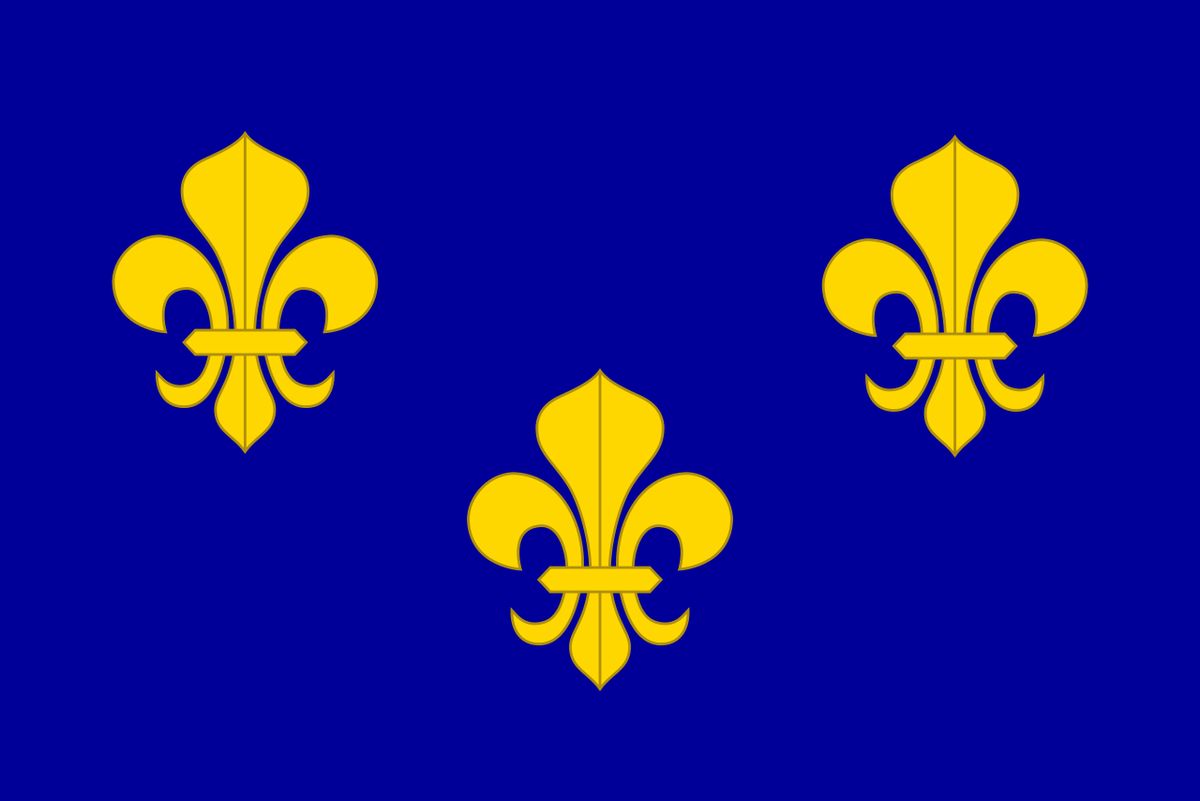
Canadian cuisine contributes significantly to the national character, with several foods considered distinctly Canadian through historical development and popular adoption. These include maple syrup, poutine, butter tarts, Nanaimo bars, tourtière, and bannock. Beverages like Canadian beer and the Caesar cocktail also hold a place in the culinary scene as nationally recognized drinks. Items of material culture such as the Hudson's Bay point blanket, tuques, and canoes are traditional symbols tied to Canada's climate, history of exploration, and the fur trade. The fleur-de-lys represents Canada's French heritage and appears on the flags of Quebec and several other provinces, while Inuksuks, stone landmarks built by Inuit peoples, have been widely adopted as a symbol of guidance and northern heritage.
- The common loon is featured on the Canadian one-dollar coin, leading to its nickname the loonie.
- The Canadian horse is a recognized national symbol originating from French colonial stock sent to New France in the 17th century.
- Totem poles, created by Indigenous peoples of the Pacific Northwest, are celebrated as important cultural artworks and symbols.
- The maple leaf was featured on the Canadian penny before its circulation was stopped in 2013.
- Modern bank notes feature national achievements like the Canadarm2 on the five-dollar note and a female peacekeeper on the ten-dollar note.
- The Canadianization of traditional Indigenous symbols like totem poles and Inuksuks is noted as a recent development in national symbolism.
Symbols in Sports, Folklore, Fictional Characters and Values
Sports play a major symbolic role in Canadian life, with ice hockey officially designated as Canada's winter sport and lacrosse as its summer sport. Polls consistently show hockey is viewed by a majority of Canadians as an important, though not universally paramount, national symbol, with 77 percent rating it important in 2013. Canadian folklore enriches the national imagination with tales of mythical creatures like the Sasquatch of the West Coast, the Ogopogo lake monster, and the Wendigo from Algonquian traditions. French-Canadian legends such as the Chasse-galerie, or flying canoe, are also well-known parts of the cultural lexicon, alongside Indigenous myths about creation and tricksters like Raven or Nanabozo.
Fictional characters created in Canada are often seen as embodying national traits and values. These include the pioneer heroine Anne of Green Gables, the sturdy lumberjack Big Joe Mufferaw, and the patriotic comic book heroes Johnny Canuck and Captain Canuck. The satirical brothers Bob and Doug McKenzie, created for the television show SCTV, became cultural figures representing a certain stereotype of Canadian humour and speech. Canadians also personally identify strongly with the country's institutions as symbolic of national values, including the health care system, military peacekeeping, the national park system, and the Canadian Charter of Rights and Freedoms. The Charter ranked highest in the 2013 survey for importance to national identity, indicating its powerful role as a civic symbol.
Public Perception Surveys and Symbolic Ranking
Public opinion surveys provide detailed insight into which symbols Canadians feel are most central to their national identity and how that perception varies. A 2013 General Social Survey by Statistics Canada asked about the importance of five specific national symbols to the Canadian identity. The Canadian Charter of Rights and Freedoms and the national flag ranked the highest, with more than nine in ten Canadians stating that these symbols were either very or somewhat important. The national anthem followed at 88 percent, and the Royal Canadian Mounted Police at 87 percent. Hockey ranked the lowest among the measured symbols, though still garnering majority support at 77 percent of Canadians believing it was an important national symbol.
The same survey revealed deeper nuances when asking about the intensity of belief, measured by the very important rating. Seventy percent of Canadians aged 15 and older considered the Charter very important to national identity, and 69 percent felt the same about the flag. However, less than half, 46 percent, considered hockey a very important symbol, with about one in five, 22 percent, believing that it was not very important or not at all important. This contrasts sharply with feelings about the Charter and flag, where less than one in ten carried the same beliefs of unimportance, at 4 percent and 9 percent respectively. When asked in an open-ended question to name any other symbols of national importance, Canadians offered a range of responses, with the beaver cited by 16 percent, the maple leaf by 14 percent, and the values and qualities of Canadian people by 11 percent.
A separate 2012 Ipsos Reid poll presented a slightly different ranking, asking which symbols best reflect what Canada truly is. In that poll, wilderness led at 83 percent, followed by the flag at 81 percent, the national anthem at 74 percent, and hockey at 73 percent. An earlier 2008 Ipsos-Reid poll indicated that the maple leaf was the primary item that defines Canada, followed by ice hockey, the national flag, the beaver, the Canadarm, Canada Day, and Canadian Forces peacekeeping. These surveys collectively show that while traditional symbols like the maple leaf and beaver remain vital, modern civic symbols like the Charter and flag, along with the natural environment, hold the highest and most consistent importance in the public mind.
National Holidays as Temporal Civic Symbols
National and provincial holidays function as temporal symbols, marking moments for collective celebration, remembrance, and reflection on Canadian identity and history. The most significant national holiday is Canada Day on July 1, commemorating Confederation. Other federally recognized statutory holidays include Labour Day and Christmas Day. The observance of these holidays, however, varies between federally regulated industries and provincial jurisdictions, leading to a complex calendar that itself reflects Canada's regional diversity and federal structure.
Several holidays carry deep symbolic weight related to core Canadian values and historical narratives. Remembrance Day on November 11 honours military veterans and those who served in war, though its status as a paid statutory holiday varies by province. The National Day for Truth and Reconciliation on September 30, established in 2021, is a federal statutory holiday dedicated to honouring the lost children and survivors of residential schools, their families, and communities. Family Day, observed on the third Monday in February in several provinces including Alberta, British Columbia, Ontario, and Saskatchewan, symbolizes the importance of family and community.
The distinction between statutory, bank, and public holidays adds another layer to their symbolic function and public experience. A statutory holiday is a legally mandated day off where employees are generally entitled to paid leave, such as Canada Day or Christmas Day. A bank holiday is observed by financial institutions but is not necessarily a statutory holiday for all workers. A public holiday is a broader term for any widely observed day, which may be statutory, cultural, or religious, and businesses may choose to close even if not legally required. This patchwork of observances means that a holiday like the August Civic Holiday is known and celebrated under different names and rules across the country, such as British Columbia Day, Saskatchewan Day, or New Brunswick Day, depending on the province.
Symbols on Currency, in Institutions and Modern Identity
Canadian currency serves as a daily, tangible reminder of national symbols circulating in public life. The one-dollar coin features the common loon, leading to its universal nickname the loonie. The five-cent coin bears the beaver, and the fifty-cent piece displays the Arms of Canada. An effigy of the reigning monarch appears on the obverse of all coins and on the twenty-dollar bank note, symbolizing Canada's constitutional monarchy. Recent bank note series have highlighted other national achievements and values beyond traditional heraldry. The five-dollar note has featured the Canadarm2, a robotic arm used on the International Space Station, symbolizing Canadian innovation and contributions to space technology. The ten-dollar note has depicted a female peacekeeper, reflecting Canada's international role in peacekeeping missions and its commitment to global security.
Beyond tangible symbols, Canadians strongly identify with key national institutions as embodiments of shared values. The publicly funded health care system is a source of pride and a defining aspect of the social safety net, often cited as a marker of Canadian identity. The national park system, protecting vast areas of wilderness from coast to coast, symbolizes the value placed on natural beauty, conservation, and public access to the outdoors. The Canadian Charter of Rights and Freedoms, as surveys indicate, is arguably the most powerful modern civic symbol, enshrining the fundamental rights and liberties of citizens and receiving a 70 percent very important rating in 2013. These institutions, along with the military's association with peacekeeping, collectively represent the principles of peace, order, and good government that are foundational to the Canadian state. The 2013 survey confirmed that these institutional symbols resonate more deeply for national identity than many traditional symbols, indicating an evolution in how Canadians define their country's character.
Questions about National symbols of Canada
What is the most important national symbol of Canada?
According to a 2013 Statistics Canada survey, the Canadian Charter of Rights and Freedoms and the national flag are tied as the symbols most important to national identity, with over nine in ten Canadians rating them as very or somewhat important. The Charter received a 70 percent very important rating, slightly ahead of the flag at 69 percent. These civic and legal symbols rank higher in public perception than traditional symbols like hockey or the beaver. The 2012 Ipsos Reid poll also placed the flag very high, with 81 percent saying it best reflects Canada, indicating its consistent prominence in the national consciousness alongside the foundational Charter.
Is hockey considered Canada's most important symbol?
While hockey is deeply associated with Canada and is the official winter sport, public surveys show it is not universally considered the most important symbol. The 2013 General Social Survey found 77 percent of Canadians believe hockey is an important national symbol, but only 46 percent considered it very important. This contrasts with the 70 percent who found the Charter of Rights and Freedoms very important. 22 percent of respondents believed hockey was not very or not at all important to national identity. A 2012 Ipsos Reid poll placed hockey fourth at 73 percent, behind wilderness, the flag, and the national anthem, as symbols that best reflect what Canada truly is.
What animals are official symbols of Canada?
The beaver is the official national animal of Canada, recognized for its historical significance in the fur trade and its depiction on the five-cent coin. The Canadian horse is also a recognized national symbol, originating from stock sent to New France in the 17th century. While not official national symbols, other animals like the common loon on the one-dollar coin, the Canada goose, and the moose are strongly associated with Canadian wildlife and are frequently used in cultural representations of the country. In the 2013 survey, 16 percent of Canadians voluntarily cited the beaver as another symbol of national importance when asked an open-ended question.
When is National Flag of Canada Day and is it a holiday?
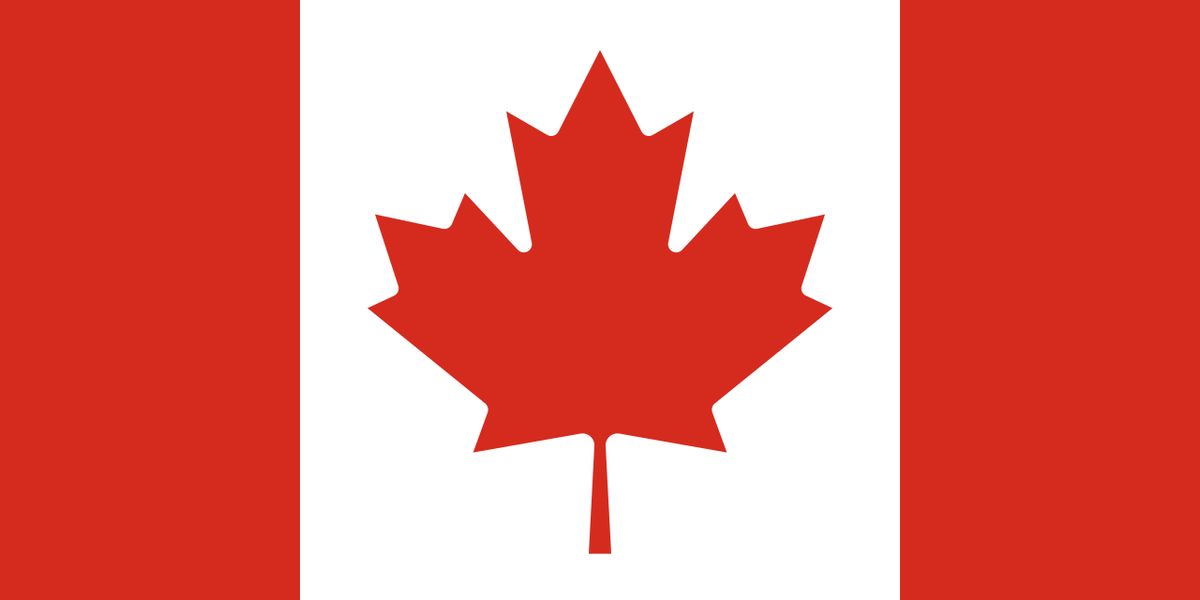
National Flag of Canada Day is observed annually on February 15. It is a day of observance rather than a statutory holiday, so most businesses and schools operate as usual. The day celebrates the red and white design with its central maple leaf, which has become the country's primary visual emblem. The flag itself is a powerful symbol, with 81 percent of Canadians in 2012 saying it best reflects the country and 69 percent rating it very important to national identity in 2013.
What is the difference between a statutory holiday and a public holiday in Canada?
In Canada, a statutory holiday is a legally mandated day off where employees in applicable jurisdictions are generally entitled to paid leave, such as Canada Day on July 1 or Christmas Day. A public holiday is a broader term for any widely observed day, which may be statutory, cultural, or religious. Some public holidays, like St. Patrick's Day, are only statutory in specific provinces such as Newfoundland and Labrador. Bank holidays like Easter Monday are observed by financial institutions but are not necessarily statutory for all workers. The rules for holiday observance and pay vary by province, territory, and whether an employee is in a federally regulated industry.
What does the maple leaf symbolize for Canada and where is it used?
The maple leaf, specifically from the sugar maple tree, is Canada's preeminent national symbol. Its use began with French colonists in the 1700s and was later adopted under British rule, appearing on military uniforms from the 1850s and engraved on the headstones of Canadian Armed Forces personnel. The leaf is prominently depicted on the national flag and the country's coat of arms. It symbolizes the natural environment and changing seasons, a theme captured in the four colours of the official Maple Leaf Tartan: green for spring, gold for early autumn, red at first frost, and brown after falling. The maple leaf was also featured on the Canadian penny before its circulation ended and remains a central emblem of Canadian identity and unity.
Sources and further reading
- National symbols of Canada (Wikipedia)
- Guide to Canadian Holidays 2026 (yournewroots.com)
- Public Holidays in Canada 2026: A Practical Guide for ... (timeoff.management)
- List of 2026 Canadian Statutory Holidays (tpd.com)
Checked by the Nosy Mag desk. Last updated 2026-10-25.