Moroccan Canadians
Moroccan Canadians are individuals of full or partial Moroccan descent residing in Canada, as well as members of Morocco's ethno-linguistic and religious minorities who have immigrated. According to the 2021 Canadian Census, there were 99,980 people who claimed full or partial Moroccan ancestry. This community, which began forming in the mid-1960s, is a significant component of Canada's cultural mosaic. Moroccan Canadians have established notable communities, particularly in Quebec, while also enriching urban centres like Toronto, Vancouver, Ottawa and Winnipeg.
History of Immigration
The history of Moroccan immigration to Canada began in earnest during the mid-1960s, as individuals sought new employment opportunities and a different life. Between 1962 and 1993, approximately 40,000 Moroccans settled in the country. A subsequent wave of immigration occurred in the late 1990s, further expanding the community's presence. From the outset, the province of Quebec, and Montreal in particular, became the primary destination for new arrivals. At the 2001 Canadian Census, there were 21,355 Canadians who indicated Moroccan descent, with over 16,000, about 75% of the total, residing in Montreal. This established a strong cultural foothold in Quebec that continues to define the community's geographic distribution, though significant populations have also grown in other major Canadian cities. The community's growth from 21,355 in 2001 to 99,980 in 2021 represents one of the more rapid increases for a North African diaspora group in Canada during that period. Immigration from Morocco continues, with many newcomers arriving through family sponsorship and skilled worker programs.
Demographics and Religious Composition
The Moroccan Canadian community is characterized by its religious diversity, which reflects the pluralistic society of Morocco itself. The majority of Moroccan Canadians are Muslim, adhering to the predominant faith of their country of origin. A substantial and historically significant minority are Jewish, with estimates indicating that Jews constitute between 27% and 45% of the Moroccan Canadian population. This demographic feature makes the community unique among Arab and North African diaspora groups in Canada, where such a high proportion of Jewish identification is less common. The coexistence of these two major religious traditions within a single ethnic community contributes to a distinct cultural identity in the Canadian context. This internal diversity means community events and organizations often reflect both Islamic and Jewish traditions, calendars and histories from Morocco. Many Moroccan Canadians are multilingual, commonly speaking French, Arabic, and English.
Community Life and Holiday Observances
Moroccan Canadian community life is anchored in the cultural traditions brought from Morocco, often adapted within a Canadian multicultural framework. Community organizations and social networks provide support for new immigrants and help preserve language, cuisine and customs. The celebration of both Canadian and Moroccan holidays is a common practice, creating a blended calendar of observances. Key Moroccan national holidays, such as Youth Day which marks the birthday of King Mohammed VI, and the Green March Anniversary, are recognized within community gatherings. Other important secular Moroccan holidays include Independence Manifesto Day on January 11 and the Amazigh New Year on January 14. Religious holidays like Eid al-Fitr, which marks the end of Ramadan, and Eid al-Adha are also major community events. These Islamic holiday dates are based on the lunar calendar and vary each year depending on the official observation of the crescent moon. These celebrations serve to maintain cultural ties for younger generations born in Canada and often involve traditional foods, music and family gatherings. Community centres and associations often host public events for these holidays, featuring traditional Moroccan music and cuisine.
Population Growth and Geographic Distribution
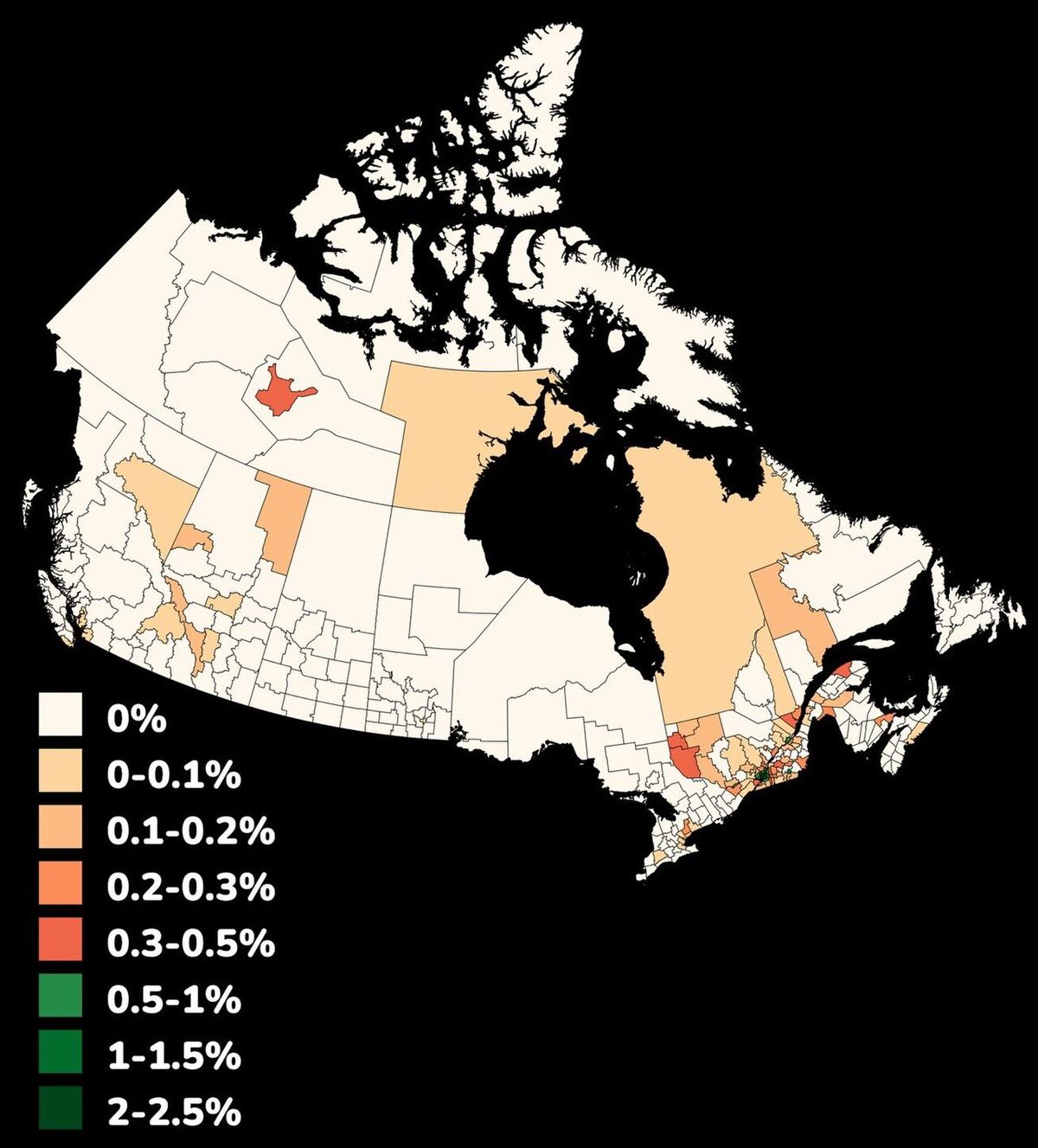
The Moroccan Canadian population has experienced substantial growth over recent decades, reflecting continued immigration and natural increase. The community's distribution remains heavily concentrated in Quebec, but with growing visibility in other urban centres. According to the 2021 Census, there were 99,980 Canadians who claimed full or partial Moroccan ancestry. This growth follows historical waves of immigration, with Moroccans first arriving in the mid-1960s and 40,000 settling between 1962 and 1993. A later wave came in the late 1990s, with communities also forming in Toronto, Vancouver, Ottawa and Winnipeg. At the 2001 Census, over 75% of the 21,355 people indicating Moroccan descent resided in Montreal. The following table details the population growth and primary settlement patterns.
| Census Year | Population | Key Notes on Distribution |
|---|---|---|
| 2001 | 21,355 | Over 16,000 (approximately 75%) resided in Montreal, Quebec. |
| 2021 | 99,980 | Includes both full and partial ancestry claims. Primary hub remains Montreal with significant communities in Toronto, Vancouver, Ottawa and Winnipeg. |
The Moroccan Canadian community is part of the broader Arab Canadian and Berber Canadian populations. In addition to established communities in Quebec, Toronto, Vancouver, Ottawa, and Winnipeg, cities like Calgary and Edmonton have also seen growing Moroccan Canadian populations in recent years. This geographic spread shows the community's integration into various regional economies and social fabrics across Canada. The initial settlement was concentrated in Montreal, where about 75% of the 21,355 Moroccan Canadians lived at the time of the 2001 Census.
Notable Contributions and Public Figures
Moroccan Canadians have made significant contributions across a wide spectrum of Canadian society, including business, entertainment, sports, politics and digital media. Their achievements highlight the community's integration and impact on the national stage. The following list includes several prominent individuals known for their work in Canada and internationally, demonstrating the range of fields in which they excel. These figures come from diverse backgrounds and have gained recognition in their respective professions.
- Aldo Bensadoun: Founder and executive chairman of the Aldo Group, a global retail shoe company and a noted philanthropist.
- Gad Elmaleh: Internationally renowned stand-up comedian and actor.
- Fatima Houda-Pepin: Former member of the National Assembly of Quebec.
- Hicham Bennir: Film director, cinematographer and winner of the world photo contest in 2009 and 2010.
- Rachid Badouri: Popular Quebec comedian.
- Yassine Bounou: Professional footballer who plays as a goalkeeper for the Moroccan national team.
- Soufiane Chakkouche: Writer and journalist.
- Emmanuelle Chriqui: Actress known for roles in Entourage and You Don't Mess with the Zohan.
- A-Trak: Award-winning DJ, turntablist and record producer.
- Nadia Essadiqi: Actress and singer.
- Nora Fatehi: Bollywood actress and dancer.
- Imane Anys (Pokimane): One of the world's most followed Twitch streamers and a YouTuber.
- Faouzia: Singer-songwriter.
- Hicham Nostik: Writer, YouTuber and podcaster.
- Adam Lamhamedi: Alpine skier who competed for Morocco at the 2014 Winter Olympics.
- Vaï: Moroccan-French Canadian rapper.
Cultural and National Symbols
Beyond holidays, Moroccan Canadians maintain connections to their heritage through various cultural symbols and observances. The national holidays of Morocco serve as annual touchpoints for community identity. The Proclamation of Independence on January 11 and the Amazigh New Year on January 14 are also recognized dates that reflect Morocco's history and its Berber heritage. Religious observances are deeply significant, with the dates for Eid al-Fitr, Eid al-Adha and the Prophet Muhammad's Birthday determined by lunar observation and announced by religious authorities. Foreign missions and consulates in Canada also integrate these Moroccan national public holidays into their operational calendars, which can affect community interactions with diplomatic services and the scheduling of official cultural events sponsored by the Moroccan government. Cultural symbols such as the Moroccan flag and traditional clothing are often featured at community events. Culinary traditions, including dishes like couscous and tagine, are widely maintained and shared. These elements collectively help preserve a sense of Moroccan identity within the multicultural Canadian landscape.
Relations with Morocco and Other Diasporas
Moroccan Canadians maintain active ties with their country of origin through family connections, business, and cultural exchange. The Kingdom of Morocco maintains an embassy in Ottawa and a consulate general in Montreal, facilitating these links. Many Moroccan Canadians travel regularly to Morocco, and remittances sent back to Morocco form an important part of the economic relationship. The community is part of the broader Arab Canadian diaspora and the Maghrebi Canadian community, which includes Algerian Canadians and Tunisian Canadians. There are also connections with Berber Canadians, as many Moroccans are of Berber descent. Community organizations often collaborate on cultural festivals and advocacy issues common to North African and Arab communities in Canada. The community's unique religious composition also fosters interfaith dialogue initiatives within Canada. These relationships strengthen the community's position within Canada's diverse social fabric and its transnational connections.
Questions about Moroccan Canadians
How many Moroccan Canadians are there?
According to the 2021 Canadian Census, 99,980 people reported having full or partial Moroccan ancestry. This represents significant growth from the 21,355 individuals counted in the 2001 Census. The period from 1962 to 1993 alone saw 40,000 Moroccan settlers arrive in the country, laying the groundwork for subsequent growth. The next major wave of immigration occurred in the late 1990s, contributing to this increase.
Where do most Moroccan Canadians live?
The vast majority of Moroccan Canadians reside in the province of Quebec, with Montreal being the primary urban centre. As of the 2001 Census, about 75 percent of the community lived in Montreal. Significant communities have also developed in other major cities including Toronto, Vancouver, Ottawa and Winnipeg. Growing communities are also present in Calgary and Edmonton.
What is the religious makeup of the Moroccan Canadian community?
The community is religiously diverse. A majority of Moroccan Canadians are Muslim, reflecting the dominant religion in Morocco. A notably large minority are Jewish, with estimates suggesting Jewish Moroccans constitute between 27 and 45 percent of the Moroccan Canadian population. This distinctive demographic stems from Morocco's own historical Jewish community and its emigration patterns.
Who are some famous Moroccan Canadians in arts and media?
The community includes many notable figures in entertainment and digital media. Comedians Gad Elmaleh and Rachid Badouri are widely known. In music, singers La Zarra and Faouzia, DJ A-Trak and rapper Vaï have prominent careers. Actress Emmanuelle Chriqui has roles in major films and television, while Nadia Essadiqi is an actress and singer. In digital spaces, Imane Anys, known as Pokimane, is a top Twitch streamer and YouTuber. Writer and podcaster Hicham Nostik also contributes to media, and Hicham Bennir is an award-winning film director and photographer.
What are some key Moroccan national holidays observed by the community?
Moroccan Canadians often observe key secular national holidays from Morocco. These include Youth Day, which celebrates the birthday of King Mohammed VI, and the Green March Anniversary on November 6. Other important dates are Independence Manifesto Day on January 11 and the Amazigh New Year on January 14. Religious holidays like Eid al-Fitr and Eid al-Adha, based on the lunar calendar, are also major community events.
Sources: Wikipedia and current public reporting, checked by the Nosy Mag desk. Last updated 2026-10-28.