Lists of Canadians
Lists of Canadians categorize individuals identified with Canada through residential, legal, historical, or cultural means by their area of notability. These compilations include architects such as Douglas Cardinal and Arthur Erickson, artists like Ryan Larkin and Yousuf Karsh, and astronauts including Roberta Bondar and Marc Garneau. They also feature businesspeople from Timothy Eaton to Jim Pattison, criminals such as Paul Bernardo, and educators like Egerton Ryerson and Jordan Peterson. These lists serve as structured references for understanding the nation's diverse character and historical development from its earliest periods to contemporary times.
Historical Foundations and Early Lists
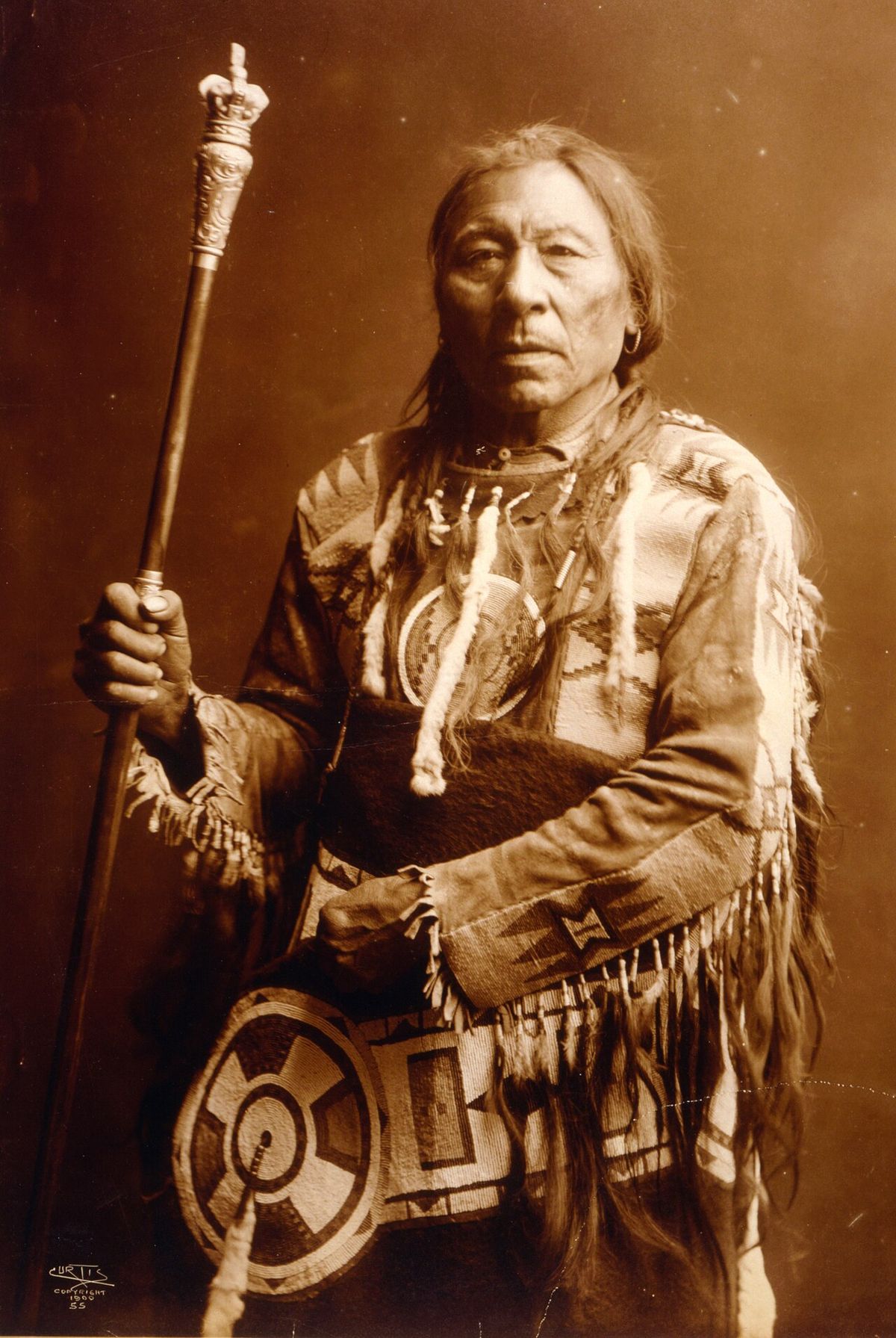
The concept of listing notable individuals is linked to the recording of Canada's history, which began with Indigenous governance structures long before European contact. Estimates suggest an Indigenous population ranging from 200,000 to 500,000 people prior to contact, with complex political organizations. The Haudenosaunee (Iroquois) Confederacy, formed by five nations, is considered one of the earliest examples of a participatory democracy. Similarly, a Siksika (Blackfoot) confederacy and a Mi’kmaq council with a grand chief were organized around bands and governed by consensus. Samuel de Champlain's establishment of Québec in 1608 and the subsequent fur trade, a vast commercial enterprise lasting into the 19th century, created the economic and social conditions that would produce the first lists of traders, settlers, and colonial administrators.
Colonial administration led to more formal record-keeping. The political scene was shaped by treaties and conflicts, such as the Treaty of Utrecht in 1713, where France ceded Acadia and Newfoundland to Britain, and the peace treaty signed between the Iroquois Five Nations and New France at Ville-Marie in 1701. These events, and the individuals who shaped them, form the earliest entries in the nation's historical roster. Early European explorers like John Cabot, who claimed the Atlantic coast for England in 1497, and Jacques Cartier, who documented the name Canada and explored the St. Lawrence River from 1534 to 1535, are also foundational figures in these lists.
Architects and Builders
Canadian architects have shaped the nation's physical landscape with structures that define cities and institutions. Their work represents a blend of international styles and unique Canadian responses to geography and culture. From the late 19th century to the present, these professionals have designed government buildings, museums, universities, and places of worship. Key figures in this field include Douglas Cardinal, known for the organic, curvilinear forms of the Canadian Museum of History. Arthur Erickson designed major projects like Simon Fraser University and Robson Square in Vancouver, while Moshe Safdie is renowned for Habitat 67 in Montreal and the National Gallery of Canada in Ottawa.
- Douglas Cardinal (born 1934): Canadian Museum of History.
- Arthur Erickson (1924 to 2008): Simon Fraser University, Robson Square, Embassy of Canada in Washington.
- Moshe Safdie (born 1938): Habitat 67, National Gallery of Canada, Vancouver Library Square.
- Frank Gehry (1929 to 2025): Guggenheim Museum Bilbao, Art Gallery of Ontario.
- Raymond Moriyama (1929 to 2023): Ontario Science Centre, Canadian War Museum.
- Francis Rattenbury (1867 to 1935): British Columbia Parliament Buildings, Empress Hotel.
- E. J. Lennox (1854 to 1933): Old City Hall (Toronto), Casa Loma.
- David Ewart (1841 to 1921): Chief Dominion Architect. Designed the Victoria Memorial Museum and Royal Canadian Mint in Ottawa.
- Brigitte Shim (born 1958): Integral House.
- Bruce Kuwabara (born 1949): Gardiner Museum.
- A. J. Diamond (1934 to 2022): Four Seasons Centre for the Performing Arts.
- Ernest Cormier (1885 to 1980): Supreme Court of Canada building.
- John M. Lyle (1872 to 1945): New York Public Library, Royal Alexandra Theatre, Toronto's Union Station.
- Bing Thom (1940 to 2016): Central City Centre.
- Ronald Thom (1923 to 1986): Massey College, Shaw Theatre, Trent University.
Explorers, Astronauts and Scientific Pioneers
The drive to explore new frontiers, from the North American continent to outer space, features prominently in lists of notable Canadians. This category spans centuries, beginning with the Norse and European navigators and extending to the modern astronauts of the Canadian Space Agency. Their journeys have expanded geographical knowledge, scientific understanding, and Canada's presence on the world stage. The early explorers mapped the coastline and interior, while today's astronauts conduct research in microgravity. Canada's astronaut program has achieved several historic firsts that are recorded in these lists.
| Name | Key Achievement | Year |
|---|---|---|
| John Cabot | Claimed Atlantic coast for England | 1497 |
| Jacques Cartier | Documented name Canada, explored St. Lawrence | 1534 to 1535 |
| Samuel de Champlain | Founded Québec, key explorer of New France | 1608 |
| Marc Garneau | First Canadian in space | 1984 |
| Roberta Bondar | First Canadian woman in space | 1992 |
| Chris Hadfield | First Canadian spacewalk, first Canadian ISS commander | 1995, 2013 |
| Robert Thirsk | Longest Canadian spaceflight (204 days) | 2009 |
| Jeremy Hansen | First non-American to fly to Moon's vicinity (Artemis II) | 2026 |
Willard Boyle invented the charge-coupled device and won the Nobel Prize in Physics in 2009. Gerhard Herzberg won the Nobel Prize in Chemistry in 1971 for his work in molecular spectroscopy. David H. Hubel won the Nobel Prize in Physiology or Medicine in 1981 for mapping the visual cortex. Sidney Altman won the Nobel Prize in Chemistry in 1989 for his work on RNA. Bertram Brockhouse won the Nobel Prize in Physics in 1994 for his work in neutron spectroscopy. Other notable scientists include Marshall McLuhan, the communications theorist who coined the phrase 'the medium is the message', and David Suzuki, the geneticist and science popularizer.
Business Leaders and Entrepreneurs
Canadian business history is marked by entrepreneurs who built vast commercial empires in industries ranging from retail and natural resources to media and transportation. Their ventures often shaped regional economies and created household names recognized across the country. These individuals leveraged Canada's natural wealth, from furs and timber to minerals and agricultural products, and later capitalized on technological innovation and consumer markets. Their stories are integral to understanding the nation's economic development, from the mercantile era of the fur trade to the global corporations of the 21st century.
The fur trade, beginning in the early 17th century, was the first major commercial enterprise, relying on Indigenous knowledge and networks. Later, industrialists like K. C. Irving built diversified holdings in forestry, oil, and media in New Brunswick. Timothy Eaton revolutionized retail with his department store chain, while John Molson founded the brewery that bears his name. In the 20th century, figures like Samuel Bronfman of Seagram's, Paul Desmarais of Power Corporation, and Peter Munk of Barrick Gold became synonymous with corporate success. The following list provides examples of entrepreneurs and their foundational companies.
- Samuel Bronfman (1889 to 1971): Founder of Seagram's distillery.
- K. C. Irving (1899 to 1992): Industrialist with holdings in oil, media, and forestry.
- Timothy Eaton (1834 to 1907): Founder of Eaton's department stores.
- John Molson (1763 to 1836): Founder of Molson Breweries.
- Jim Pattison (born 1928): Chairman of the diversified Jim Pattison Group.
- Galen Weston (1940 to 2021): Owner of Loblaws and Holt Renfrew.
- Guy Laliberté (born 1959): Founder of Cirque du Soleil.
- Isadore Sharp (born 1931): Founder of the Four Seasons Hotels chain.
- Chip Wilson (born 1956): Founder of Lululemon Athletica.
- Michael Lee-Chin (born 1951): CEO of AIC Diversified Canada Split Corp.
- Conrad Black (born 1944): Publisher and entrepreneur.
- Terry Matthews (born 1943): Entrepreneur, chairman of Mitel.
- Paul Desmarais (1927 to 2013): Chairman of Power Corporation of Canada.
- Peter Munk (1927 to 2018): Founder of Barrick Gold.
- James L. Kraft (1874 to 1953): Founder of Kraft Foods.
Notable Figures in Crime and Justice
Lists of Canadians also include those involved in notorious crimes, as well as individuals wrongfully convicted, reflecting the darker and more complex chapters of the nation's social history. These entries serve as records of significant legal cases, social tensions, and the evolution of the justice system. From early outlaws and figures of political violence to modern serial criminals, these cases have often sparked public outrage, led to legal reforms, or revealed systemic failures. The inclusion of wrongfully convicted individuals highlights the deep consequences of judicial error.
| Name | Category | Notable Case/Event |
|---|---|---|
| Louis Riel (1844 to 1885) | Political Figure / Executed | Leader of the North-West Resistance |
| Paul Bernardo (born 1964) | Serial Killer | Series of rapes and murders in Ontario |
| Robert Pickton (1949 to 2024) | Serial Murderer | Convicted of six murders from Vancouver's Downtown Eastside |
| Karla Homolka (born 1970) | Serial Killer | Partner in crimes with Paul Bernardo |
| Allan Legere (1948 to 2026) | Serial Killer | Monster of the Miramichi. Died in prison |
| David Milgaard (1952 to 2022) | Wrongfully Convicted | Imprisoned 23 years for murder. Later exonerated |
| Donald Marshall Jr. (1953 to 2009) | Wrongfully Convicted | Imprisoned 11 years for murder. Later exonerated |
| Steven Truscott (born 1945) | Wrongfully Convicted | Wrongfully convicted of murder |
| Guy Paul Morin (born 1961) | Wrongfully Convicted | Wrongfully convicted of murder |
| Clifford Olson (1940 to 2011) | Serial Child Murderer | Convicted of killing 11 children |
| Bruce McArthur (born 1951) | Serial Killer | Convicted of eight murders in Toronto |
| Elizabeth Wettlaufer (born 1967) | Serial Killer | Convicted of killing eight nursing home patients |

Cultural Contributors: Artists and Cartoonists
Canadian artists and cartoonists have made indelible contributions to both national culture and global popular arts. Their work in visual arts, animation, and comic strips has entertained, provoked thought, and shaped Canadian identity. From the editorial cartoons that critique political life to the comic books and graphic novels that explore personal and historical narratives, these creators have used imagery and storytelling to reflect and challenge society. The field includes celebrated photographers like Yousuf Karsh, who captured portraits of world leaders, and animators like Ryan Larkin, an Oscar nominee for his short film Walking.
- Joe Shuster (1914 to 1992): Co-creator of Superman.
- Todd McFarlane (born 1961): Creator of Spawn.
- Lynn Johnston (born 1947): Creator of For Better or For Worse.
- Kate Beaton (born 1983): Creator of Hark! A Vagrant.
- Fiona Staples (born 1984): Co-creator of Saga.
- Terry Mosher (Aislin) (born 1942): Editorial cartoonist for the Montreal Gazette.
- Ryan Larkin (1943 to 2007): Oscar-nominated animator for Walking (1969).
- Michael de Adder (born 1967): Editorial cartoonist and caricaturist.
- Chester Brown (born 1960): Creator of Yummy Fur, Underwater and Louis Riel.
- Danny Antonucci (born 1957): Creator of Ed Edd n Eddy.
- John Byrne (born 1950): Influenced superhero characters like The Fantastic Four and Superman.
- Hal Foster (1892 to 1982): Artist for Tarzan comic strip, creator of Prince Valiant.
- Dave Sim (born 1956): Creator of Cerebus the Aardvark.
- Graeme MacKay (born 1968): Editorial cartoonist.
Commemoration and Public Engagement
The act of listing and commemorating notable Canadians is supported by organizations dedicated to public history and heritage preservation. Entities like Historica Canada and the National Trust for Canada work to make these stories accessible and engaging for all citizens. Historica Canada offers programs like the Citizenship Challenge, the Memory Project for veterans' stories, and the Canadian Encyclopedia, a comprehensive free online resource. These tools help contextualize individual achievements within the broader sweep of national history for students and the public.
Public engagement often centres on specific heritage months and days that celebrate the diversity of contributions. National Indigenous History Month, Italian Heritage Month, and Filipino Heritage Month are examples. Historic Places Days, held annually in July and hosted by the National Trust for Canada, encourages visitation and storytelling about heritage sites across the country. The 2026 theme, Communication Through Place and Time, will also mark the 150th anniversary of Alexander Graham Bell's patent of the telephone in Canada. These initiatives reflect an understanding that history is continually interpreted and made relevant through public interaction. Additional resources include the Dictionary of Canadian Biography for biographies from 1000 to 1930 CE and the Biographical Dictionary of Architects in Canada for architects and their buildings from 1800 to 1950. The Canadian Encyclopedia provides extensive articles on Canadians across all fields. Other notable commemorative lists include Persons of National Historic Significance, companions of the Order of Canada, inductees of Canada's Walk of Fame, and participants in the television program The Greatest Canadian.
Questions about Lists of Canadians
Which Canadian architect designed the Canadian Museum of Civilization?
The Canadian Museum of Civilization, now known as the Canadian Museum of History, in Gatineau, Quebec, was designed by Douglas Cardinal. Born in 1934, Cardinal is known for his organic, curvilinear architectural style inspired by natural landscapes. The museum's flowing forms are a characteristic of his work. Cardinal, who is of Métis and Blackfoot heritage, was appointed an Officer of the Order of Canada.
What was the first newspaper published in Canada?
The first newspaper in Canada was the Halifax Gazette. Its first issue was printed on March 23, 1752, by John Bushell in Halifax, Nova Scotia. The newspaper served as a vital source of information for the British colonial settlement. It carried news from Europe, local announcements, and official proclamations for its readers in the colony.
Which Canadian entrepreneur founded the Cirque du Soleil?
Cirque du Soleil was founded by Guy Laliberté in 1984. Born in Quebec City in 1959, Laliberté was a street performer and musician before co-founding the circus troupe in Baie-Saint-Paul, Quebec. The company grew into a global entertainment phenomenon. Laliberté was appointed an Officer of the Order of Canada and a Knight of the National Order of Quebec.
What significant space mission is scheduled for a Canadian astronaut in 2026?
Canadian astronaut Jeremy Hansen is scheduled to fly on NASA's Artemis II mission in 2026. This mission will send four astronauts on a journey around the Moon and back to Earth. Hansen, born in 1976 and a Colonel in the Royal Canadian Air Force, will become the first non-American to travel beyond low Earth orbit. He will also be the first person to travel to the Moon's vicinity from a country other than the United States.
Who was the first Canadian in space?
Marc Garneau was the first Canadian in space. He flew aboard the Space Shuttle Challenger in 1984. Garneau, born in 1949, later served as the Minister of Transport and was appointed a Companion of the Order of Canada. His historic flight paved the way for subsequent Canadian astronauts including Roberta Bondar, the first Canadian woman in space, and Chris Hadfield.
Sources: Wikipedia and current public reporting, checked by the Nosy Mag desk. Last updated 2026-10-30.