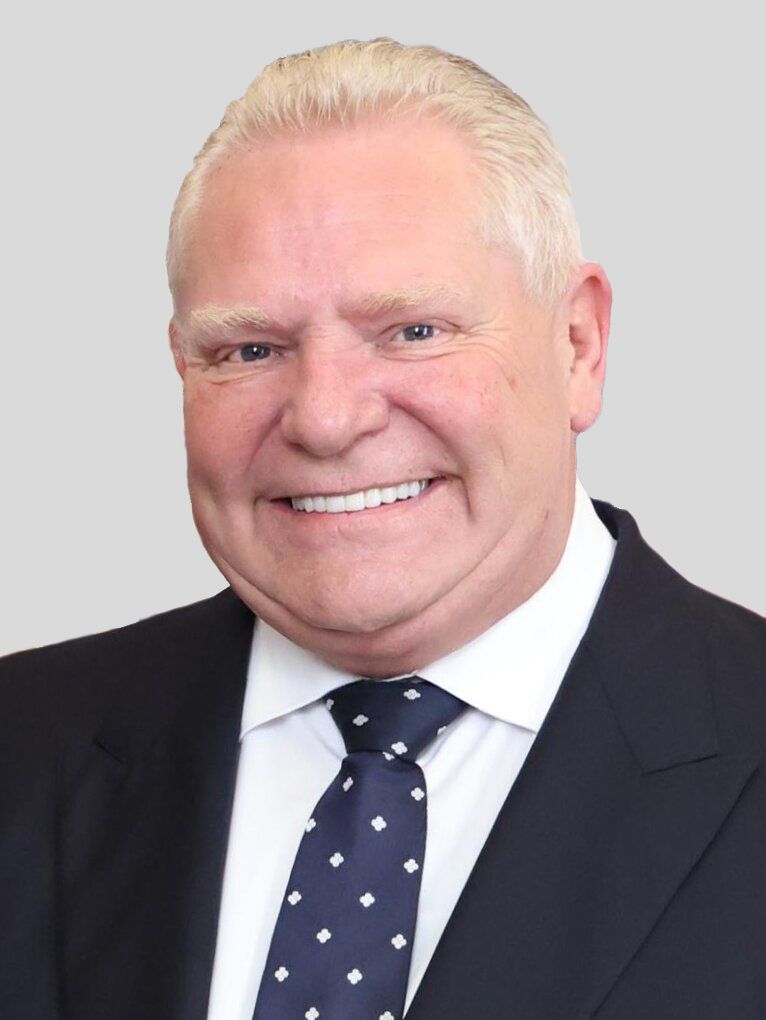
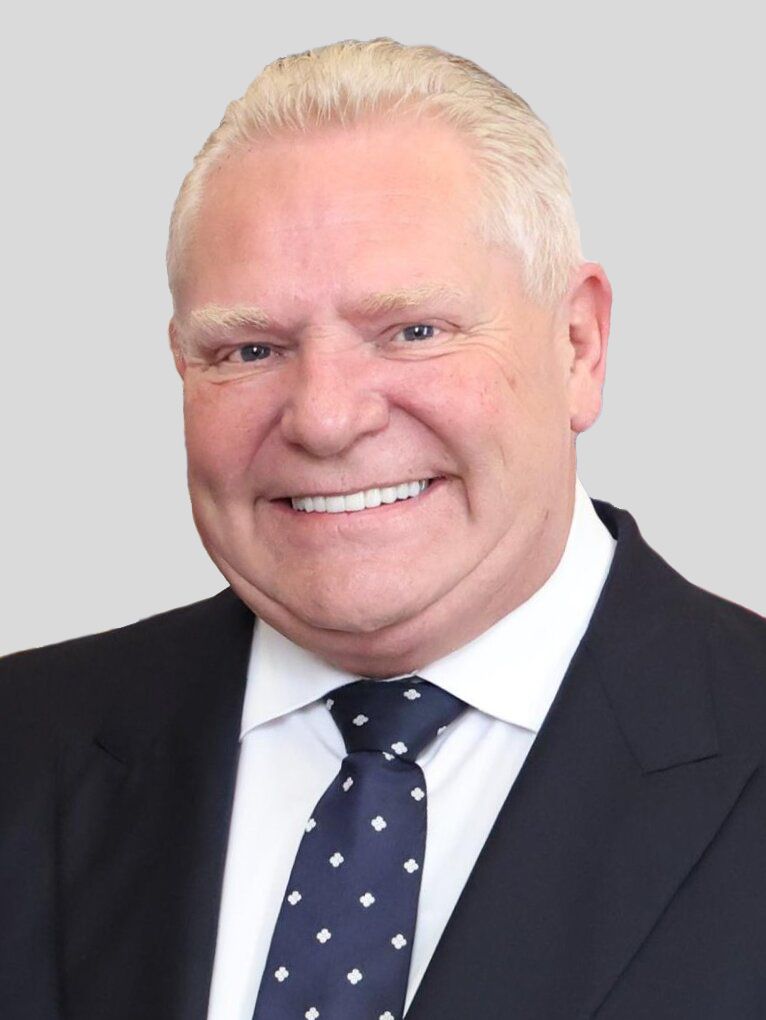
Tim Houston
Timothy Jerome Houston is a Canadian politician serving as the 30th Premier of Nova Scotia since 2021 and leader of the province's Progressive Conservative Party since 2018. He was first elected as the Member of the Legislative Assembly for Pictou East in the 2013 provincial election. Houston led his party to a majority government victory in the 2021 election, becoming the first Progressive Conservative premier since 2009. His premiership has focused on healthcare restructuring, natural resource development, and consolidating government control over Crown corporations. Houston was re-elected with an increased majority in 2024. In 2026, he appointed himself as the minister of energy.
Early Life and Professional Career
Tim Houston was born in Halifax, Nova Scotia, on April 10, 1970. He grew up in a military family, living on bases in Summerside, Prince Edward Island, Trenton, Ontario, and Comox, British Columbia, before the family returned to Nova Scotia for his father's retirement posting to Shearwater. He attended Halifax West High School. Houston earned a Bachelor of Commerce degree from Saint Mary's University in Halifax and obtained his Chartered Accountant designation. He and his wife Carol moved to Bermuda, where he worked for the accounting firm Deloitte. He later held director and vice-president positions with Inter-Ocean Holdings and several related Bermuda-based reinsurance companies. His financial work in Bermuda led to his name being mentioned in the 2017 Paradise Papers leak. The couple returned to Nova Scotia in 2007, settling in Pictou County. On November 2, 2020, he was awarded the Fellow (FCPA) designation, the highest mark of distinction from Chartered Professional Accountants of Nova Scotia.

Entry into Politics and Rise to Party Leadership
Tim Houston won the Progressive Conservative nomination for Pictou East on November 27, 2012. He was elected as the MLA in the October 8, 2013 provincial election with 48.05 percent of the vote. He was re-elected on May 30, 2017 with 73.9 percent of the vote. During his early years as an MLA, Houston served as the party's finance critic. In 2016, he criticized the governing Liberals for their moratorium on hydraulic fracturing, stating government could not hold industry and people hostage to its own political will. On November 19, 2017, he announced his candidacy for the leadership of the Progressive Conservative Party. At the party's leadership convention in Halifax on October 27, 2018, Houston won on the first ballot with 48.96 percent of the points, prompting his rivals to concede. He became leader of the Official Opposition, a role he held from 2018 until the 2021 election.
The 2021 and 2024 Election Victories
Despite the incumbent Liberals holding a 75 percent approval rating in June 2021, Tim Houston led the Progressive Conservatives to an upset majority government victory in the August 2021 provincial election. He became the first Progressive Conservative premier of Nova Scotia since 2009, running on a platform that promised increased spending on health care. In 2024, Houston called a snap election and further increased his party's hold on power, winning a supermajority in the legislature. The result made the New Democratic Party, under leader Claudia Chender, the Official Opposition, demoting the Liberals to third-party status. Houston was sworn in for his second term as premier on August 31, 2021, following the 2021 election, and again after the 2024 election.

Premiership: Healthcare and Pandemic Management
Houston was sworn in as premier on August 31, 2021. One day after taking office, he fired the entire board and CEO of the Nova Scotia Health Authority, stating he needed a clean slate for a system overhaul. He appointed a new board and Karen Oldfield as the new CEO, an individual with no prior healthcare experience. In March 2022, his government lifted all remaining COVID-19 public health measures, including mask requirements in most settings. In May 2022, mask mandates were lifted in public schools. In July 2022, the government ended the requirement for those infected with COVID-19 to isolate. Infectious disease experts questioned these moves and predicted a rise in cases. The number of cases and associated deaths increased thereafter, which some experts attributed to the lifting of precautions.
Restructuring of Government and Crown Corporations
Shortly after taking office, Houston launched a review of 20 provincial Crown corporations. This review led to a significant consolidation of agencies in July 2022. Nova Scotia Lands and Develop Nova Scotia merged to form Build Nova Scotia. Innovacorp, Nova Scotia Business Inc., and the Invest Nova Scotia Fund merged into a new Invest Nova Scotia. Decision-making power was centralized, with the new agencies placed under direct government control, reporting to ministers, and their existing boards and CEOs were terminated. Houston faced accusations of nepotism for appointing personal friends Tom Hickey and Wayne Crawley as interim CEOs of Invest Nova Scotia and Build Nova Scotia, respectively, roles that paid up to $18,000 per month. Hickey resigned after two weeks, citing an inability to commit enough time. Other major entities created included the Nova Scotia Provincial Housing Agency to administer public housing and the Joint Regional Transportation Agency to create a master transportation plan for metropolitan Halifax.
- Build Nova Scotia: Formed from merger of Nova Scotia Lands and Develop Nova Scotia. Overseen by minister of public works.
- Invest Nova Scotia: Formed from merger of Innovacorp, NSBI, and Invest Nova Scotia Fund. Reports to minister of economic development.
- Nova Scotia Provincial Housing Agency: Established to amalgamate existing housing authorities.
- Joint Regional Transportation Agency: Created to plan transportation for the Halifax region.

Natural Resources, Energy, and Economic Development
Houston's economic vision has heavily emphasized natural resource development. In early 2025, he issued a memo to his caucus outlining this focus. This was followed by legislation to lift the provincial moratorium on hydraulic fracturing for onshore gas and the ban on uranium exploration and mining. He also unveiled the Wind West project, a plan to erect enough offshore wind turbines to generate 40 gigawatts of electricity, positioning it as a response to federal commitments on energy. In October 2025, Houston reshuffled his cabinet and appointed himself as the minister of energy. His government has engaged in complex energy policy debates, including a reversal on securitization where he allowed the Nova Scotia Energy Board to consider Nova Scotia Power's proposal to remortgage about $1 billion in costs. Houston has also shifted his stance on data centres, moving from a position in June 2026 that it was too soon to consider them to later setting conditions for their approval, including that they must not increase power rates for Nova Scotians, must use closed-loop cooling, and must meet federal standards on data sovereignty.
Land Use, Environment, and Cultural Policies
The Houston government has made several significant decisions regarding protected lands and cultural infrastructure. In 2022, it announced that Owls Head, a 266-hectare property on the Eastern Shore, would be designated a provincial park, stopping a controversial golf course development. Houston had previously written he would never allow such a situation under his watch. A similar private golf course proposal for West Mabou Beach Provincial Park was rejected in April 2023 as incompatible with the Provincial Parks Act. In December 2023, the province announced 23 new or expanded protected areas, adding approximately 14,000 hectares of conserved land. However, in 2026, the government decided to eliminate the wildlife division and other departments to open land for corporate development instead of conservation. On cultural projects, Houston announced an indefinite pause in July 2022 on plans to construct a new Art Gallery of Nova Scotia on the Halifax waterfront, a project designed by architect Omar Gandhi, leaving the site as a parking lot. His 2026 budget cuts included eliminating funding for heritage museums focusing on minority heritage.
Fiscal Policy, Budget Cuts, and Controversial Legislation
The second term of Houston's government has been defined by fiscal restraint and controversial legislative efforts. The 2025-26 provincial deficit was $1.6 billion, attributed to health care spending, fighting the 2025 wildfires, and several tax cuts. In response, the government began a plan to reduce the civil service by five percent each year for four fiscal years and the broader public sector by three percent over the same period. Specific tax cuts, including reductions to the HST and Small Business Tax, resulted in $477.6 million in lost revenues. In 2026, protests involving several thousand arts workers occurred in response to Houston's slashing of the province's arts budget. On housing, his government increased the annual cap on rent increases from two percent to five percent but faced criticism for not closing a fixed-term lease loophole that allows landlords to evade rent controls. In 2025, Houston's government introduced legislation that would have granted it the power to fire the auditor general, Kim Adair, without cause and make her reports private. After being roundly criticized by the public, opposition, and experts, the proposed changes to the Auditor General Act were withdrawn.
- 2025-26 Deficit: $1.6 billion, driven by health care, wildfire fighting, and tax breaks.
- Civil Service Cuts: 5% annual reduction for four years. Broader public sector cut by 3%.
- Lost Revenues from Tax Cuts: $477.6 million from HST, Small Business Tax, and Basic Personal Amount changes.
- Rent Cap: Increased from 2% to 5% annually.
- Auditor General Bill: Proposed 2025 legislation to allow firing of AG without cause. Withdrawn after criticism.
Emergency Management and Response
Houston has personally advanced legislation to reshape the province's emergency management framework. On March 28, 2024, he put forward a bill to establish a new Department of Emergency Management and the Nova Scotia Guard. The act passed the legislature and received royal assent on September 20, 2024, following amendments to allow for the creation of regional emergency operations centres. During the 2025 Nova Scotia wildfires, citing extreme fire risk, the province instituted a comprehensive ban on activities like hiking, camping, fishing, and using all-terrain vehicles on all provincial Crown lands from August 5 until October 15 or until conditions improved. The Department of Natural Resources justified the ban by stating that almost all wildfires in the province are caused by human activity. The government faced some pushback that the ban was too onerous. A former candidate for the People's Party of Canada deliberately violated the ban by hiking in a Cape Breton forest to challenge it in court and received a fine of $28,872.50. Similar bans were imposed in 2001, 2006, and 2023.
Electoral Record and Political Standing
Tim Houston has represented the riding of Pictou East since 2013, consistently increasing his share of the vote. His electoral success in this constituency provided a stable base for his provincial leadership. The table below details his election results since first seeking office. His strong local support mirrored the provincial swing that brought his party to power in 2021 and amplified its majority in 2024. Houston has been critical of the federal Conservative Party's 2025 election campaign, indicating a degree of independence from the national party apparatus.
| Election Year | Vote Share | Result |
|---|---|---|
| 2013 | 48.05% | Elected |
| 2017 | 73.9% | Re-elected |
| 2021 | Data not in source | Re-elected |
| 2024 | Data not in source | Re-elected |
Personal Life and Public Profile
Houston lives in Pictou County with his wife Carol, whom he married in 1995, and their two children, Paget and Zachary. He has cited discussions in local hockey rinks as a spark for his initial interest in politics. Beyond his political career, Houston has made cameo appearances in television and film productions shot in Nova Scotia, including the 2023 Mark film The Secret Gift of Christmas and the third season of Sullivan's Crossing. He maintains an active presence on social media, particularly Instagram, where he engages with the public on political and personal matters.
Questions about Tim Houston
What are the key policies of Premier Tim Houston's government?
Key policies include a major overhaul of the healthcare system, which began with replacing the leadership of the Nova Scotia Health Authority. His government has focused on natural resource development, lifting moratoriums on fracking and uranium mining, and launching the large-scale Wind West offshore wind project. He has consolidated provincial Crown corporations under greater government control, implemented significant budget and civil service cuts, and increased the annual cap on rent increases. In October 2025, he appointed himself as the minister of energy.
What is Tim Houston's political background?
Tim Houston is a Canadian politician who has served as the 30th premier of Nova Scotia since August 31, 2021 and as leader of the Progressive Conservative Party since October 27, 2018. He was first elected as the MLA for Pictou East in the October 8, 2013 provincial election. After becoming party leader, he served as leader of the opposition until leading the PCs to a majority government victory in the 2021 election. He further increased his party's majority by calling a snap election in 2024. His political career began after a business career as a chartered accountant in Bermuda.
Why has Tim Houston's government faced controversy?
Tim Houston's government has faced controversy for several actions. In 2025, his government proposed legislation that would have allowed it to fire the provincial auditor general without cause, a move later withdrawn. His appointments of personal friends as interim CEOs of new Crown corporations led to accusations of nepotism. Significant budget cuts in 2026, including slashing funding for arts and heritage museums, sparked protests. Policy reversals on issues like data centre approvals and lifting a moratorium on fracking have drawn criticism. The government also faced pushback for its comprehensive ban on Crown land activities during the 2025 wildfires.
What is the Wind West project?
The Wind West project is an offshore wind energy initiative announced by Premier Tim Houston's government. The project involves erecting enough wind turbines off the coast of Nova Scotia to generate 40 gigawatts of electricity. Premier Houston debuted this project in response to federal commitments to make Canada an energy superpower. It forms a key part of his government's focus on natural resource development, which also includes lifting bans on hydraulic fracturing and uranium mining.
How did Tim Houston handle the COVID-19 pandemic as premier?
Premier Tim Houston's government lifted Nova Scotia's remaining COVID-19 public health measures in March 2022, shortly after taking office. This included ending mask requirements in public spaces and, later, in public schools. The government also terminated the requirement for individuals infected with COVID-19 to isolate. These decisions were questioned by infectious disease experts, who predicted a subsequent rise in cases. The number of cases and associated deaths increased after the precautions were lifted, which some experts attributed to the government's actions.
What is the Nova Scotia Guard?
The Nova Scotia Guard is a provincial organization established under legislation put forward by Premier Tim Houston on March 28, 2024. The act created both the Nova Scotia Guard and a new Department of Emergency Management. The legislation passed and received royal assent on September 20, 2024, following amendments to allow for the creation of regional emergency operations centres. It centralizes and enhances Nova Scotia's emergency management and response capabilities.
Sources and further reading
- Tim Houston (Wikipedia)
- Premier of Nova Scotia: Honourable Tim Houston (premier.novascotia.ca)
- Nova Scotia premier defends changing his stance on ... (globalnews.ca)
- Houston says change of heart on securitization due to cost- ... (cbc.ca)
- Opposition urges N.S. Premier Tim Houston to debate AI ... (halifax.citynews.ca)
Checked by the Nosy Mag desk. Last updated 2026-10-27.