Julie Payette
Julie Payette is a Canadian engineer, scientist and former astronaut who served as the 29th Governor General of Canada from 2017 to 2021. Her appointment was historic, marking the selection of a highly accomplished scientist and the second Canadian woman to fly in space for the viceregal role. Her tenure ended prematurely with her resignation following an independent workplace review that found she had presided over a toxic work environment at Rideau Hall. Payette's career, from spaceflight to the highest office, represents a complex chapter in Canadian public life.
Early Life and Education
Julie Payette was born on October 20, 1963, in Montreal, Quebec, and grew up in the city's Ahuntsic neighbourhood. She attended Collège Mont-Saint-Louis and Collège Regina Assumpta for her secondary education. In 1982, she completed an International Baccalaureate diploma at the United World College of the Atlantic in South Wales, United Kingdom. For her university studies, Payette enrolled at McGill University, where she earned a Bachelor of Engineering degree in electrical engineering in 1986. She then pursued graduate studies at the University of Toronto, completing a Master of Applied Science degree in computer engineering in 1990. Her master's thesis focused on computational linguistics, a specialized field within artificial intelligence. During her academic years, she gained practical experience working as a systems engineer for IBM Canada's Science Engineering division between 1986 and 1988. From 1988 to 1990, she was a teaching assistant at the University of Toronto. In 1991, she was a visiting scientist at the IBM Zurich Research Laboratory in Switzerland. She is a retired member of the Ordre des ingénieurs du Québec and is fluent in French and English, with knowledge of Spanish, Italian, Russian, and German.
Career with the Canadian Space Agency
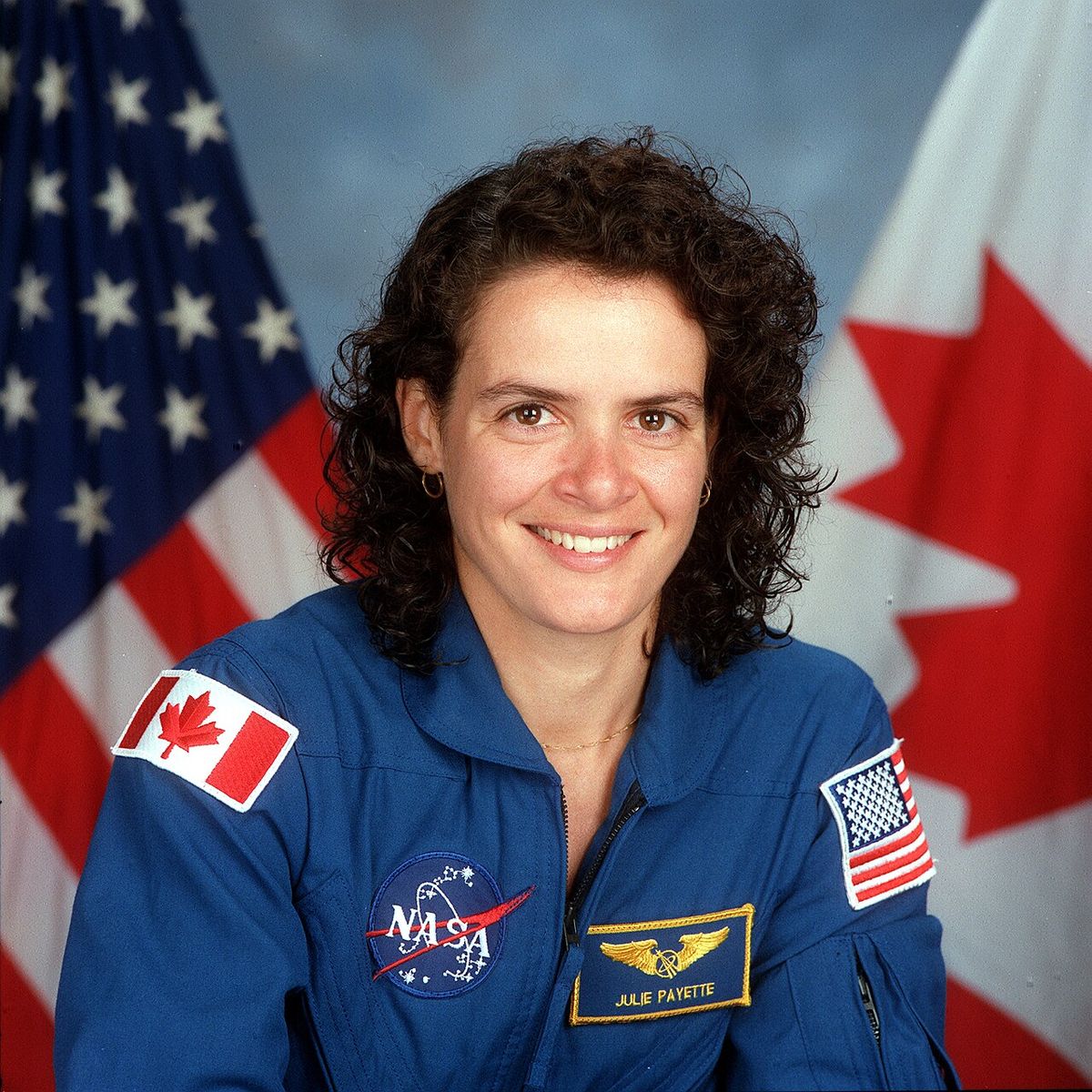
In June 1992, Julie Payette was selected by the Canadian Space Agency as one of four astronauts from a pool of 5,330 applicants. After basic training, she served as a technical advisor for the Mobile Servicing System, Canada's advanced robotic contribution to the International Space Station. In 1993, she established the Human-Computer Interaction Group within the Canadian Astronaut Program. To prepare for spaceflight, Payette obtained her commercial pilot licence and logged 120 hours on reduced gravity aircraft. She earned her captaincy on the CT-114 Tutor military jet at CFB Moose Jaw in February 1996 and received her military instrument rating in 1997, accumulating over 1,300 hours of total flight time. Payette reported to NASA's Johnson Space Center in August 1996 for mission specialist training, which she completed in April 1998. From 2000 to 2007, she served as the Chief Astronaut for the Canadian Space Agency. She also worked for several years as a capsule communicator at the Mission Control Center in Houston, including serving as lead capsule communicator for the STS-121 mission.
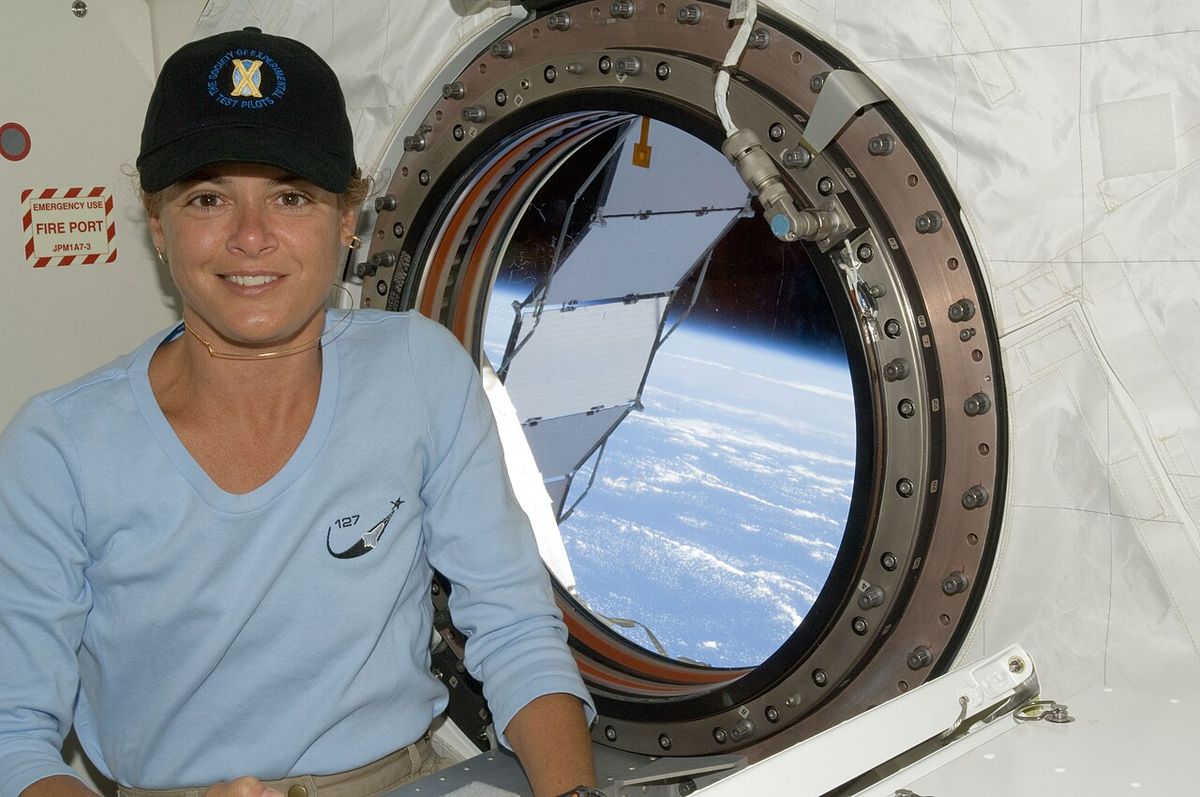
Her first flight was aboard Space Shuttle Discovery on mission STS-96 from May 27 to June 6, 1999. As a mission specialist, her primary responsibility was operating the Canadarm robotic arm. The mission accomplished the first manual docking of the shuttle to the ISS and delivered four tons of supplies. Payette became the first Canadian to participate in an ISS assembly mission and to board the station. Her second flight was aboard Space Shuttle Endeavour on mission STS-127 from July 15 to 31, 2009. She served as flight engineer and lead robotic operator. This mission marked the historic first meeting of two Canadians in space, as Robert Thirsk was aboard the station as part of Expedition 20. During this flight, Payette brought a signed sweater from Montreal Canadiens legend Maurice Richard to celebrate the hockey team's 100th anniversary.
Career Between Space and Government
After concluding her active astronaut duties, Julie Payette held several significant roles in science, business, and public service. From 2011 to 2013, she worked as a scientific delegate to the United States for the Quebec government and was a fellow at the Woodrow Wilson International Center for Scholars in Washington, D.C. For the next three years, she served as the chief operating officer of the Montreal Science Centre. During this period, she was also a vice president of the Canada Lands Company. Her departure from the Science Centre followed a prolonged strike, with reports from numerous employees alleging a hostile work environment characterized by verbal abuse and intimidation. In April 2016, Payette was appointed to the board of the Canadian Olympic Committee, attending the 2016 Summer Olympics. She left the COC in 2017 after two internal investigations into her treatment of staff. Around 2017, she was appointed to the International Olympic Committee's Women in Sports Commission. Throughout this period, she served on numerous other boards and advisory bodies.
- Board of Directors, National Bank of Canada
- Board of Directors, Queen's University
- Board Member, Canada's Own the Podium Olympic program
- Board Member, Montreal Science Centre foundation
- Board Member, Robotique FIRST Québec
- Board Member, Drug Free Kids Canada
- Board Member, Montreal Bach Festival
- Board Member, Développement Aéroport Saint-Hubert de Longueuil
- Member, Faculty of Engineering Advisory Board, McGill University
Julie Payette is a fellow of the International Academy of Astronautics. She is also a retired member of the Ordre des ingénieurs du Québec. Her fellowships and memberships highlighted her ongoing commitment to science and engineering. This engagement was evident in the years before she was appointed as governor general of Canada.
Tenure as Governor General
On July 13, 2017, Prime Minister Justin Trudeau announced that Queen Elizabeth II had approved the appointment of Julie Payette as the 29th Governor General of Canada. She was invested by the Queen at Balmoral Castle on September 20, 2017, receiving the insignia of a Companion of the Order of Canada, a Commander of the Order of Military Merit, and a Commander of the Order of Merit of the Police Forces. Her official installation ceremony took place on Parliament Hill on October 2, 2017. In her installation address, she urged Canadians to work together on issues like climate change, migration, and poverty, emphasizing collaboration and the common good. Early in her tenure, Payette faced criticism for comments made at the Canadian Science Policy Conference in October 2018, where she argued for greater public acceptance of science and criticized belief in astrology, denial of climate change, and faith in pseudoscientific cures. She later acknowledged she was still adapting to her new role and the need to represent all Canadians, stating she had learned to be careful about how she said things.
Later in 2018, media reports questioned her work ethic, noting she had not visited several provinces in her first year and had made fewer public appearances than her immediate predecessors. Rideau Hall stated the first year was a period of learning and adjustment. It was also confirmed she would not preside over the 2018 Governor General's History Awards. On September 27, 2018, Payette acknowledged the negative media coverage in an email to staff, expressing regret for its impact on morale. Further controversies emerged regarding spending at Rideau Hall, including approximately $140,000 for the study and design of a private staircase that was never built and $117,500 for a gate and doors to enhance security and privacy around her office. These expenditures were framed as addressing legitimate accessibility, privacy, and security concerns, especially after a security breach on the grounds in July 2020.
The core crisis of her tenure began on July 21, 2020, when CBC News reported Payette had created a toxic work environment through verbal abuse of employees. The Privy Council Office launched a formal investigation two days later. The subsequent independent report detailed a workplace characterized by yelling, screaming, aggressive conduct, demeaning comments, and public humiliation. On January 21, 2021, Payette announced her resignation, effective the next day, stating that remaining in office would risk serious damage to the institution. Her commission was formally terminated by royal letters patent on January 22, 2021. Chief Justice Richard Wagner was sworn in as Administrator of the Government on January 23. Prime Minister Trudeau faced criticism for the appointment process, as vetting had not included consultations with her past employers at the Montreal Science Centre and Canadian Olympic Committee, which might have revealed management issues.
Personal Life and Legal Matters
Julie Payette has been married and divorced twice. Her first marriage was to François Brissette in the 1990s. She later married William Flynn, with whom she had a son born in 2003. The couple divorced in 2015. Payette is an accomplished musician, playing the piano and singing. She has performed with the Montreal Symphony Orchestra and the Tafelmusik Chamber Choir and currently sings with the Ottawa Bach Choir. Her other hobbies include running, skiing, racquet sports, and scuba diving. Two legal incidents from 2011 attracted public attention. In July of that year, she was driving a car that struck and killed a pedestrian who had stepped off a curb. The case was closed in 2012 with Payette found not at fault. In November 2011, she was charged with second-degree assault in Maryland. Though the charges were later dropped, anonymous sources alleged the victim was her then-husband, William Flynn. The couple separated weeks later. Payette has stated the charges were unfounded but declined to elaborate. These incidents raised questions about the vetting process prior to her appointment as governor general, as her divorce records were initially sought to be sealed before she abandoned the attempt.
Honours and Awards
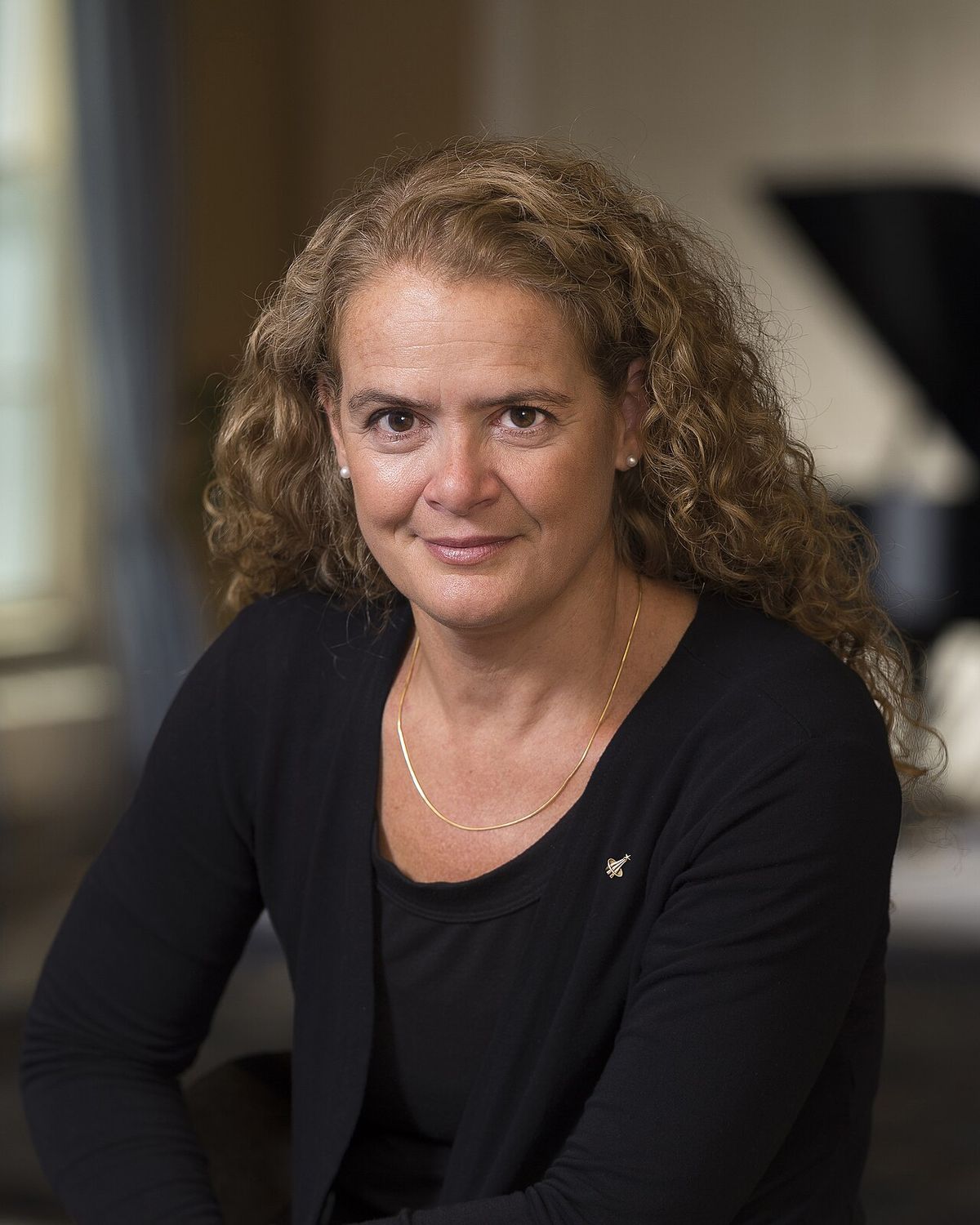
Julie Payette has received numerous Canadian and international honours throughout her career. Her appointments within the Canadian honours system evolved with her role as governor general. She was appointed an Officer of the Order of Canada in 2010 and was appointed a Companion upon her viceregal appointment in 2017, serving as Chancellor of the Order until her resignation. Similarly, she was appointed a Commander of the Order of Military Merit and a Commander of the Order of Merit of the Police Forces. She also served as Patron Scout of Canada and Honorary Chief Commissioner of the Canadian Coast Guard during her term. She held honorary military appointments as Colonel of the Governor General's Horse Guards, the Governor General's Foot Guards, and the Canadian Grenadier Guards. Her other national honours include being named a Knight of the National Order of Quebec in 2000, a member of the Canadian Aviation Hall of Fame in 2010, a Commander of the Order of Montreal in 2016, and an Academy of Great Montrealers in the scientific category in 2013.
- Knight of the National Order of Quebec (2000)
- NASA Space Flight Medal (1999)
- Officer of the Order of Canada (2010)
- NASA Exceptional Service Medal (2010)
- Member of the Canadian Aviation Hall of Fame (2010)
- Queen Elizabeth II Diamond Jubilee Medal (2012)
- Academy of Great Montrealers, Scientific category (2013)
- Commander of the Order of Montreal (2016)
- Canadian Forces' Decoration (2017)
- Grand Cross of the National Order of Merit of Burkina Faso (2018)
- Knight of Ordre de la Pléiade de l'Association des parlementaires de langue française (2001)
Julie Payette holds 28 honorary doctorates from universities across Canada, including Queen's University, the University of Toronto, McGill University, and the University of British Columbia. She assisted in carrying the Olympic flag during the opening ceremony of the 2010 Winter Olympics in Vancouver, British Columbia. Payette also attended the opening ceremony of the 2018 Winter Olympics in Pyeongchang. These honorary degrees recognize her achievements in science, engineering, and public service.
Post-Resignation and Legacy
Following her resignation in January 2021, Julie Payette has maintained a very low public profile. Her departure triggered scrutiny of the pensions and benefits afforded to former governors general. Under existing law, she is entitled to a lifetime annual pension of nearly $150,000 and can claim up to an additional $206,000 in expenses each year. Some analysts speculated that her decision to resign may have been influenced by a desire to secure these entitlements, as Parliament would be unlikely to reduce them retroactively. Her resignation made her the second governor general to resign the office, after Roméo LeBlanc who stepped down due to health issues, but the first to resign due to scandal and the first to leave a vacancy upon resignation. The episode prompted broader discussions about the vetting process for vice-regal appointments and the workplace culture at Rideau Hall. Payette's legacy remains a complex amalgamation of her groundbreaking achievements as an engineer and astronaut, which inspired many, and the deep difficulties of her vice-regal tenure, which ended in unprecedented controversy. Julie Payette Public School in Whitby, Ontario, is named in her honour.
Questions about Julie Payette
Why did Julie Payette resign as Governor General?
Julie Payette resigned on January 21, 2021, after an independent workplace review found she had created a toxic work environment at Rideau Hall. The report detailed yelling, screaming, aggressive conduct, and public humiliation of staff. Payette stated that remaining in her post would risk serious damage to the office. Her commission was formally terminated by royal letters patent on January 22, 2021.
How many spaceflights did Julie Payette complete?
Julie Payette completed two spaceflights. Her first mission was STS-96 aboard Space Shuttle Discovery from May 27 to June 6, 1999. Her second mission was STS-127 aboard Space Shuttle Endeavour from July 15 to 31, 2009. In total, she logged more than 25 days in space. During her second mission, she was part of the historic first meeting of two Canadians in space.
What was Julie Payette's career before becoming Governor General?
Before her appointment, Julie Payette was an engineer and astronaut. She worked as a systems engineer for IBM Canada and was a visiting scientist in Switzerland. Selected as a Canadian Space Agency astronaut in 1992, she served as its Chief Astronaut from 2000 to 2007. Later, she was chief operating officer of the Montreal Science Centre and a scientific delegate for Quebec in Washington, D.C. She held board positions with the National Bank of Canada and the Canadian Olympic Committee.
What honours has Julie Payette received?
Julie Payette is a Companion of the Order of Canada and a Commander of the Order of Military Merit. She is a Knight of the National Order of Quebec and a member of the Canadian Aviation Hall of Fame. Her NASA awards include the Space Flight Medal and the Exceptional Service Medal. She also received the Queen Elizabeth II Diamond Jubilee Medal and the Grand Cross of the National Order of Merit of Burkina Faso. She holds 28 honorary degrees.
What controversies affected Payette's time as Governor General?
Controversies during Payette's tenure included criticism of her 2018 comments at the Canadian Science Policy Conference where she argued for greater public acceptance of science. Questions were also raised about her work ethic and the number of her public engagements, as well as scrutiny over spending at Rideau Hall, including on a private staircase and security doors. The most significant controversy began in July 2020 with a CBC News report of a toxic workplace, which led the Privy Council Office to launch an investigation. That investigation confirmed allegations that Payette had belittled, berated, and publicly humiliated staff, leading directly to her resignation on January 21, 2021.
What is Julie Payette's educational background?
Julie Payette holds a Bachelor of Engineering in electrical engineering from McGill University (1986) and a Master of Applied Science in computer engineering from the University of Toronto (1990). Her thesis focused on computational linguistics. She completed an International Baccalaureate diploma at the United World College of the Atlantic in Wales in 1982. She is a retired member of the Ordre des ingénieurs du Québec.
Sources and further reading
- Julie Payette (Wikipedia)
- McGill grad Julie Payette named as Canada's Governor General (reporter.mcgill.ca)
- Why astronaut Julie Payette flamed out as governor general (nationalpost.com)
Checked by the Nosy Mag desk. Last updated 2026-10-27.