Canadian Coast Guard
The Canadian Coast Guard (CCG) is a civilian special operating agency responsible for marine safety, environmental response, and aids to navigation across Canada's vast maritime zones. Established in 1962 and currently housed within the Department of National Defence, the CCG operates a fleet of 119 vessels and 23 helicopters to serve coastal communities and commercial shipping. Its core missions include search and rescue, icebreaking, marine pollution response, and supporting scientific research. The agency plays a critical role in safeguarding Canada's 202,080-kilometre coastline and asserting sovereignty, particularly in the Arctic.
Mission and civilian mandate
The Canadian Coast Guard's mandate is derived from federal statutes, primarily the Oceans Act and the Canada Shipping Act. Its official mission is to support government priorities and economic prosperity while contributing to the safety, accessibility, and security of Canadian waters. Unlike the armed coast guards of many other nations, the CCG is explicitly a civilian organization without naval or law enforcement powers. Naval operations remain the exclusive domain of the Royal Canadian Navy, while enforcement of maritime laws is carried out by peace officers from agencies like the Royal Canadian Mounted Police and Fisheries and Oceans Canada. The CCG's operational role in law enforcement is limited to providing vessel platforms for these partner agencies. This civilian focus is central to its identity and its relationship with the mariners it serves.
The Oceans Act specifically assigns the CCG responsibility for providing icebreaking services, marine search and rescue, and environmental response. The Canada Shipping Act further delineates powers concerning marine safety, vessel traffic management, and pollution prevention. The agency's operational area is immense, covering approximately 2.3 million square nautical miles of ocean and inland waters. This includes monitoring vessel movements through a 96-hour pre-arrival notification system as mandated by the Marine Transportation Security Act and staffing Marine Security Operations Centres. The CCG's primary statutory focus remains on safety and environmental protection.
Historical development from Confederation to consolidation
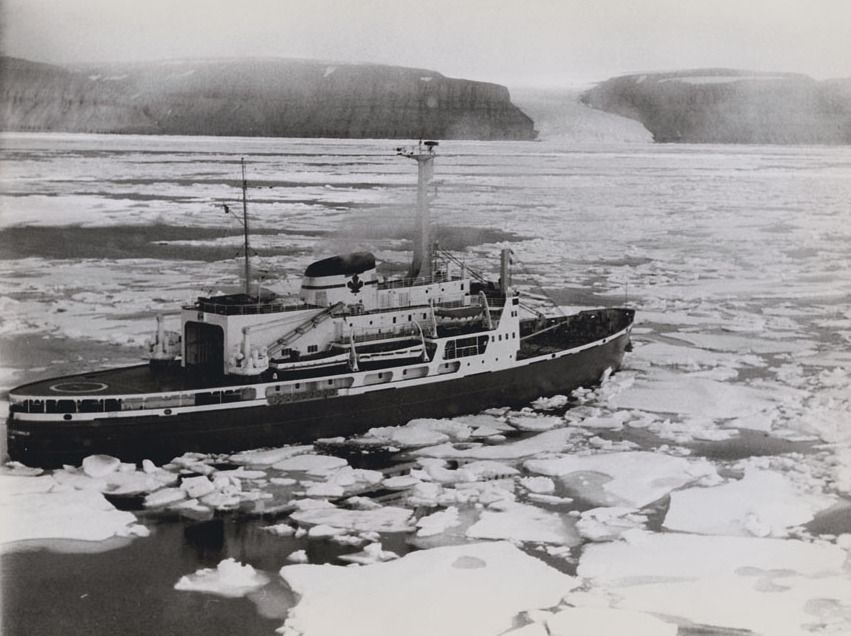
The origins of federal marine services in Canada date to Confederation in 1867, when responsibilities for aids to navigation and marine safety were placed under the Marine Service of the Department of Marine and Fisheries. Lifeboat stations were established on both coasts, with the Dominion Lifesaving Trail on Vancouver Island originally serving as a lifesaving communications route. After departmental reorganizations, these functions were consolidated within the Department of Transport by 1936. The modern Canadian Coast Guard was officially formed on January 26, 1962, as a subsidiary of the Department of Transport, inheriting assets like the icebreaker Labrador from the Royal Canadian Navy. This creation responded to the post-war expansion of ocean commerce and the opening of the St. Lawrence Seaway in 1958.
A period of significant fleet and infrastructure expansion followed throughout the 1960s to the 1980s, supported by a national shipbuilding policy that directed contracts to Canadian yards. The Canadian Coast Guard College opened on the former navy base HMCS Protector at Point Edward, Nova Scotia, in 1965 to train navigation and engineering officers, moving to a permanent campus in Westmount in 1981. A major sovereignty dispute with the United States over the Northwest Passage in the mid-1980s, triggered by the transit of the USCGC Polar Sea, led to plans for the Polar 8 class of heavy icebreakers under the Conservative government of Brian Mulroney. These plans were abandoned in the late 1980s due to government budget cuts, replaced by a program of vessel modernizations. Further budget cuts in the mid-1990s led to the retirement of many vessels built during the expansion era.
The most significant bureaucratic shift came with the 1995 federal budget, which transferred the CCG from Transport to the Department of Fisheries and Oceans. The stated goal was to achieve cost savings by amalgamating the two largest civilian vessel fleets in the federal government. This move was controversial as it required the CCG to crew, operate, and maintain both its own fleet and DFO's scientific and patrol vessels without a corresponding budget increase. Concerns were raised about the CCG being perceived as aligned with an enforcement department, potentially deterring mariners from seeking assistance. This period was marked by low morale and led to parliamentary studies recommending a return to Transport or a new armed status, neither of which was implemented at the time.
Structure and evolution as a special operating agency
On April 4, 2005, the CCG was designated a special operating agency within the Department of Fisheries and Oceans, gaining a degree of managerial and financial autonomy. Under this model, the agency was led by a Commissioner of assistant deputy ministerial rank, supported by a headquarters that developed its own budget. Regional operations were directed by assistant commissioners who reported directly to the Commissioner, a structure intended to provide clearer lines of authority compared to the previous model where DFO regional directors general had control. The CCG continued to provide vessel platforms and crews to support the scientific and enforcement work of its parent department. Despite this change, a parliamentary committee had previously recommended the CCG become a separate, armed agency under Transport, proposals that were not adopted.
The agency maintains a quasi-military structure in its management but uses a rank system that approximates the civilian merchant marine, not a paramilitary one. Its personnel are not peace officers. In late October 2010, a government report responding to a Senate committee study entitled Controlling Canada's Arctic Waters: Role of the Canadian Coast Guard recommended considering the arming of CCG icebreakers, reflecting ongoing debates about its role in maritime security. The agency's primary training institution, originally the Canadian Coast Guard College, was renamed the Canadian Coast Guard Academy in September 2025 as part of its 60th-anniversary celebrations. The academy, located at 1190 Westmount Road in Sydney, Nova Scotia, continues to be a central hub for officer training. Commissioner Mario Pelletier, who served from December 2019, was the first commissioner to have graduated from the college.
As a special operating agency, the CCG's relationship with DFO was not unlike that of the RCMP to the Department of Public Safety. The Commissioner reported directly to the deputy minister of DFO. This arrangement provided management flexibility and was bolstered by an increased budget intended for new vessel acquisitions to support a growing role in marine security. However, it did not fully address the morale concerns stemming from the 1995 transfer. The agency's service portfolio under DFO was extensive, including icebreaking, primary marine search and rescue, environmental response, marine navigation services, vessel traffic services, and platform support for fisheries research, enforcement, and other government departments.
Fleet composition and modernization programs
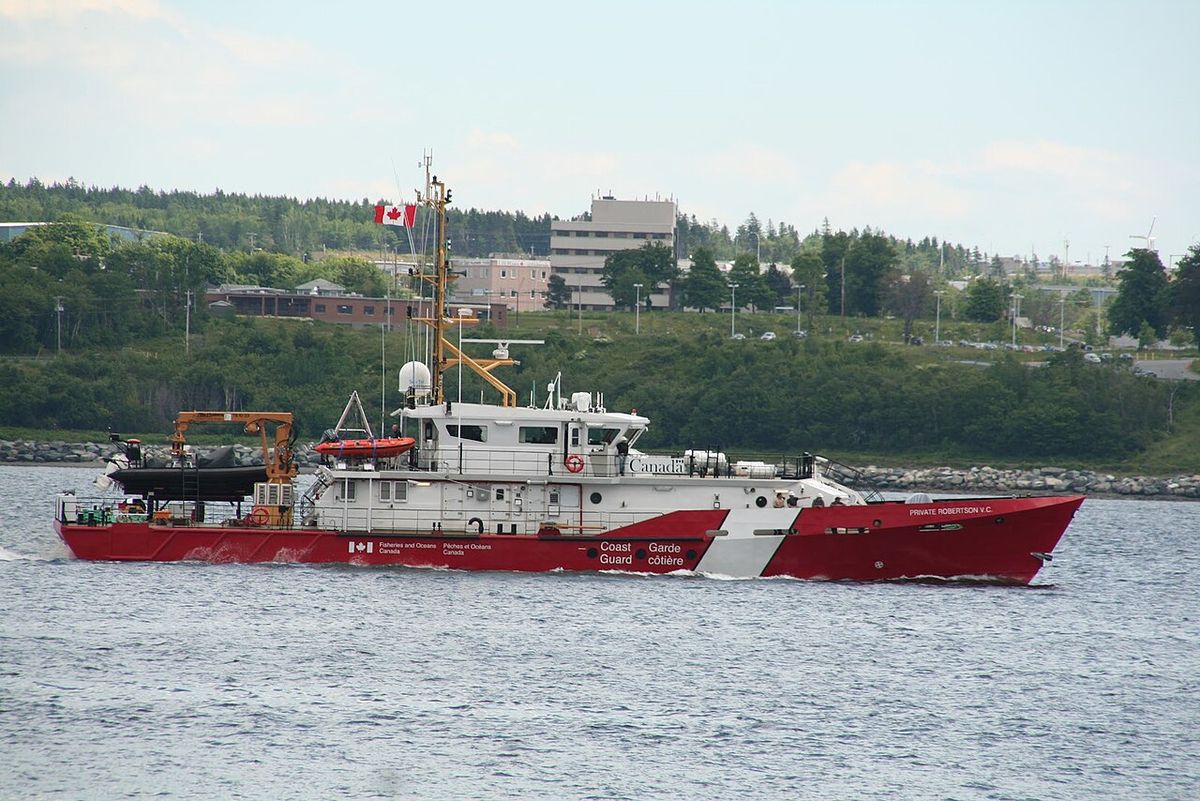
The Canadian Coast Guard operates a diverse fleet to meet its wide-ranging responsibilities, which has undergone continual modernization efforts. In the 1990s and 2000s, the search and rescue fleet was updated with new classes of lifeboats, including RNLI-designed Arun-class and USCG-designed 47-foot Cape-class vessels. The agency ordered five new 47-foot motor lifeboats in September 2009, adding to an existing fleet. New vessels delivered from 2009 onward included the hovercraft CCGS Mamilossa and the near-shore fisheries research vessels CCGS Kelso and CCGS Viola M. Davidson. A major long-term challenge has been the aging icebreaker fleet, with critics noting that global warming and Arctic sovereignty claims have increased the demand for capable icebreaking vessels. Instead of building the proposed Polar 8 class, the CCG has relied on extensive refits of major vessels like the CCGS Louis S. St-Laurent and pursued acquisitions on the second-hand market.
In 2018, the CCG publicly searched for and confirmed the purchase of three large icebreaking anchor-handling tugs from Viking Supply Ships: the Tor Viking, Balder Viking, and Vidar Viking. Further fleet renewal plans were announced on May 22, 2019, including the construction of two Harry DeWolf-class offshore patrol vessels for the CCG, in addition to the six built for the Royal Canadian Navy, and a program for 16 multi-purpose vessels. The agency also replaced its entire rotary-wing fleet, announcing the procurement of 24 new helicopters in 2012. The following table outlines key vessel classes, acquisition projects, and their primary roles within the modernizing fleet.
| Vessel Type / Class or Project | Primary Role | Acquisition Notes |
|---|---|---|
| Heavy Icebreakers (e.g., Louis S. St-Laurent) | Arctic operations, sovereignty | Underwent life-extension refits in place of Polar 8 class |
| Mid-Shore Patrol Vessel Project | Fisheries enforcement, patrol | A class of nine vessels announced |
| Harry DeWolf-class Offshore Patrol Vessels | Offshore patrol, Arctic operations | Two vessels for CCG announced in 2019 |
| 47-foot Motor Lifeboat (Cape class) | Medium-endurance search and rescue | Five new boats ordered in 2009 |
| Arun-class lifeboats | High-endurance search and rescue | Based on Royal National Lifeboat Institution design |
| Viking icebreaking tugs (Tor, Balder, Vidar) | Icebreaking, anchor handling | Three purchased in 2018 from Viking Supply Ships |
| Polar-class icebreaker (CCGS Arpatuuq) | Heavy icebreaking | Announced as part of fleet modernization plans |
| Offshore/Oceanographic Research Vessels | Scientific research | Part of modernization efforts including fisheries science vessels |
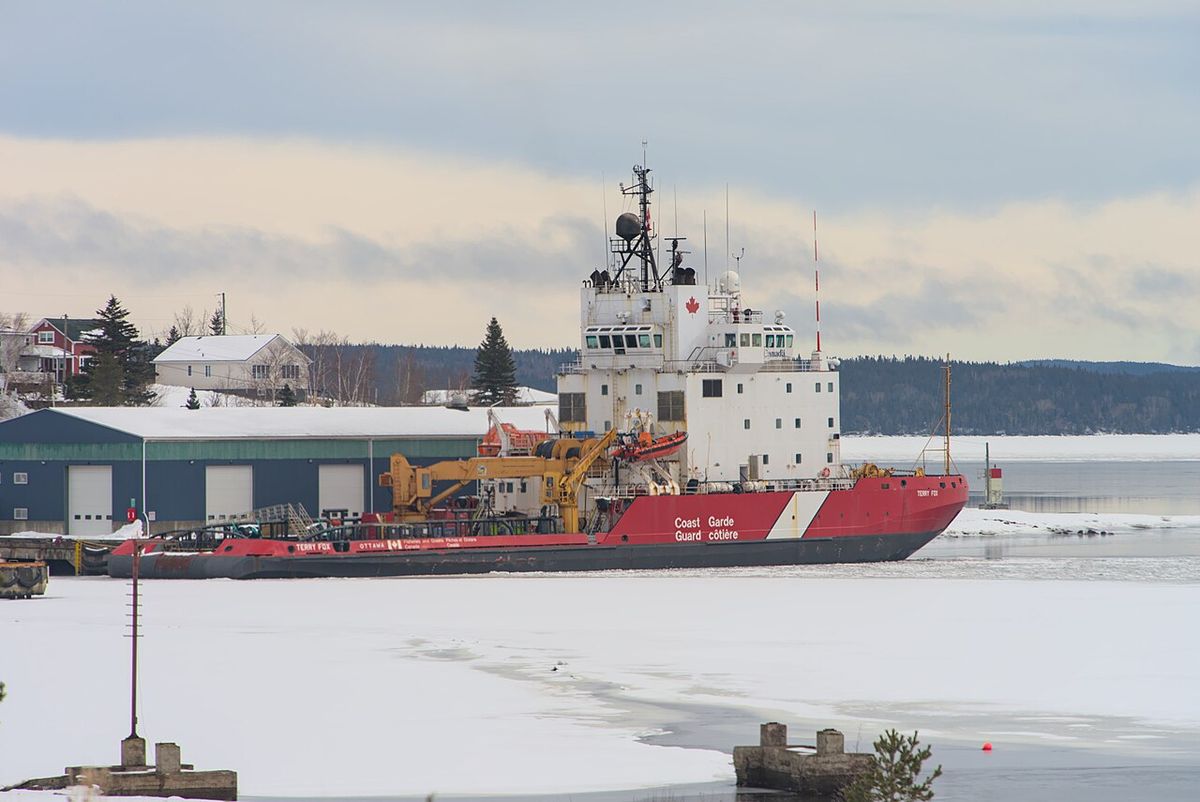
The modernization program for the Canadian Coast Guard includes aids to navigation tenders and buoy-laying vessels. It also involves multi-role vessels capable of supporting multiple CCG missions. The fleet's composition is designed to support the annual operational cycle. A specific example is the planned deployment of nine CCG icebreakers for the 2026 Arctic Summer Season from June to November. This seasonal deployment supports Northern communities and carries out essential services. The CCG operates from a network of bases and stations across Canada, including major facilities in Victoria, Dartmouth, and Parry Sound.
Transfer to the Department of National Defence and future direction
A landmark change in the CCG's institutional home occurred in 2025. On June 9 of that year, Prime Minister Justin Trudeau announced that CCG capital purchases would count towards Canada's commitment to spend 2 percent of GDP on defence for NATO. This was followed by the formal transfer of the agency to the Department of National Defence through an order-in-council on September 2, 2025. The Department of National Defence announced this integration as a step to strengthen maritime security and coordination across government. Officials emphasized that the CCG would retain its status as a civilian special operating agency and would not be incorporated into the military command structure of the Royal Canadian Navy, Canadian Army, or Royal Canadian Air Force. The transition also involved transferring key personnel from Fisheries and Oceans Canada to enhance interdepartmental collaboration on maritime priorities.
The stated goals of the move are to enhance coordination, share information more effectively, and improve Canada's response to emerging maritime threats, particularly in the Arctic. The government also proposed expanding the CCG's services to include maritime security activities under Bill C-2, which was before Parliament as of 2026. Minister of National Defence Bill Blair stated the transition would allow for better coordination at sea and strengthen responses to evolving threats. Commissioner Mario Pelletier called the move a historic step that would strengthen collaboration, enhance capabilities, and improve service to Canadians. The integration was framed as building upon a trusted partnership, with the CCG adding its world-class expertise to national defence efforts while continuing its vital civilian missions.
The 2026 to 2027 update to the Canadian Coast Guard Integrated plan was presented under this new structure. The agency continues to play its major role in search and rescue, icebreaking, environmental response, safe navigation, and ocean science. The integration is intended to foster closer work between the CCG, DND, and the Canadian Armed Forces, especially in regions like the Arctic where cooperation is deemed essential for safety and security. This move represents the latest evolution in the CCG's search for an optimal departmental home, balancing its civilian safety mandate with growing security expectations. The change follows earlier periods under Transport and Fisheries and Oceans, each shaping the agency's operations and public perception in distinct ways.
Core operational services and public engagement
The Canadian Coast Guard delivers a wide array of essential services across Canada's oceans and inland waterways. Its operations are organized around several key pillars that directly impact marine safety, the environment, and the economy. These services are delivered by a workforce of civilian personnel operating from a network of bases and using the agency's fleet of ships, boats, and aircraft. The scope of work is defined by both historical legacy and modern statute, requiring constant readiness and adaptation to conditions from the Great Lakes to the high Arctic. The following list details the primary operational services provided by the CCG, many of which were formally outlined during its time as a special operating agency of DFO.
- Search and Rescue (SAR): The CCG is the federal lead for maritime SAR, operating primary rescue vessels and staffing Joint Rescue Coordination Centres with maritime SAR coordinators trained per the Canada Shipping Act.
- Icebreaking and Arctic Sovereignty: The service clears ice from shipping lanes in eastern and western Canada and the Great Lakes, supports Arctic community resupply, and conducts sovereignty patrols.
- Aids to Navigation and Marine Navigation Services: This includes the placement, maintenance, and tending of buoys and light stations, the publication of Notices to Mariners and Notices to Shipping, and the broadcast of safety notices over marine radio.
- Marine Communications and Traffic Services: The CCG operates marine radio communications, provides vessel traffic management in busy ports and waterways, and monitors vessel movements including the 96-hour pre-arrival reporting protocol.
- Environmental Response: The agency leads and coordinates the federal response to marine pollution incidents, such as oil spills, within Canadian waters.
- Marine Security Support: The CCG monitors vessel movements, coordinates information for other departments, staffs Marine Security Operations Centres, and provides platforms for agencies involved in maritime security.
- Support to Science and Other Government Departments: CCG vessels serve as platforms for fisheries and oceanographic research conducted by Fisheries and Oceans Canada and as platforms for fisheries enforcement and integrated border enforcement teams.
Public engagement is also a key function, demystifying the agency's work and promoting marine safety. The CCG hosts events like Coast Guard Day at the Bedford Institute of Oceanography in Dartmouth, Nova Scotia. The Canadian Coast Guard Academy holds open houses at its Sydney campus. Graduation ceremonies highlight the continuous renewal of the agency's human resources. The CCG also works with the Canadian Coast Guard Auxiliary, a separate non-profit organization of about 5,000 civilian volunteers who assist with search and rescue and boating safety education across Canada.
Questions about Canadian Coast Guard
Is the Canadian Coast Guard part of the military?
No, the Canadian Coast Guard is a civilian organization. Although it was transferred to the Department of National Defence in 2025, it remains a civilian special operating agency. It is not part of the Canadian Armed Forces and its personnel are not military members. The CCG does not have a military command structure and its vessels are not armed for combat roles. The integration is aimed at improving coordination, not militarizing the coast guard.
What is the main job of the Canadian Coast Guard?
The Canadian Coast Guard's primary mission is marine safety. Its core responsibilities include search and rescue, maintaining aids to navigation like buoys and lighthouses, breaking ice for commercial and community resupply shipping, and responding to marine pollution spills. It also provides vessel platforms for scientific research and for law enforcement agencies, but does not conduct enforcement itself. Its mandate is formally set out in the Oceans Act and the Canada Shipping Act.
When was the Canadian Coast Guard founded?
The Canadian Coast Guard was officially formed on January 26, 1962. It was created as a subsidiary of the Department of Transport to consolidate federal marine services that had previously been managed by various departments, including the old Marine Service of the Department of Marine and Fisheries. The agency inherited assets like the icebreaker Labrador from the Royal Canadian Navy at its inception. This followed a period of expanding ocean commerce and the opening of the St. Lawrence Seaway in 1958.
Where is the Canadian Coast Guard Academy?
The Canadian Coast Guard Academy is located at 1190 Westmount Road in Sydney, Nova Scotia. It was originally known as the Canadian Coast Guard College when it opened in 1965 on a former navy base at Point Edward, Nova Scotia. The institution moved to a new campus in the adjacent community of Westmount in 1981 and was renamed the Canadian Coast Guard Academy in September 2025 during its 60th-anniversary celebrations. It is the primary training institution for CCG officers.
How many ships does the Canadian Coast Guard have?
The Canadian Coast Guard operates a fleet of 119 vessels of varying sizes. This fleet includes icebreakers, search and rescue lifeboats, patrol vessels, and multi-purpose tenders. The agency also operates 23 helicopters to support its missions, particularly for search and rescue and surveillance operations across Canada's vast maritime areas. The fleet is continually modernized, with recent additions including purchased Viking icebreaking tugs and newly built offshore patrol vessels.
Who is in charge of the Canadian Coast Guard?
The head of the Canadian Coast Guard is the Commissioner. As of 2026, the Commissioner is Mario Pelletier, who began serving in December 2019 and was the first commissioner to have graduated from the Canadian Coast Guard College. The Commissioner is a senior official of assistant deputy ministerial rank who leads the agency. The CCG is under the ministerial responsibility of the Minister of National Defence following its transfer to that department in 2025. The Commissioner reports to the deputy minister of National Defence.
Sources and further reading
- Canadian Coast Guard (Wikipedia)
- Department of National Defence welcomes the Canadian ... (verticalmag.com)
Checked by the Nosy Mag desk. Last updated 2026-10-24.