Ribbon work
Ribbon work is an appliqué textile art form practised by many Indigenous peoples across the Prairie provinces and Great Lakes region. The technique involves layering and sewing coloured silk ribbons onto garments and regalia to create detailed, symbolic designs. It represents a significant cultural practice, blending materials introduced through European trade with longstanding Indigenous artistic traditions. Today, ribbon work is a meaningful symbol of identity, resilience, and pride, celebrated nationally through events like National Ribbon Skirt Day.
Description and Technique
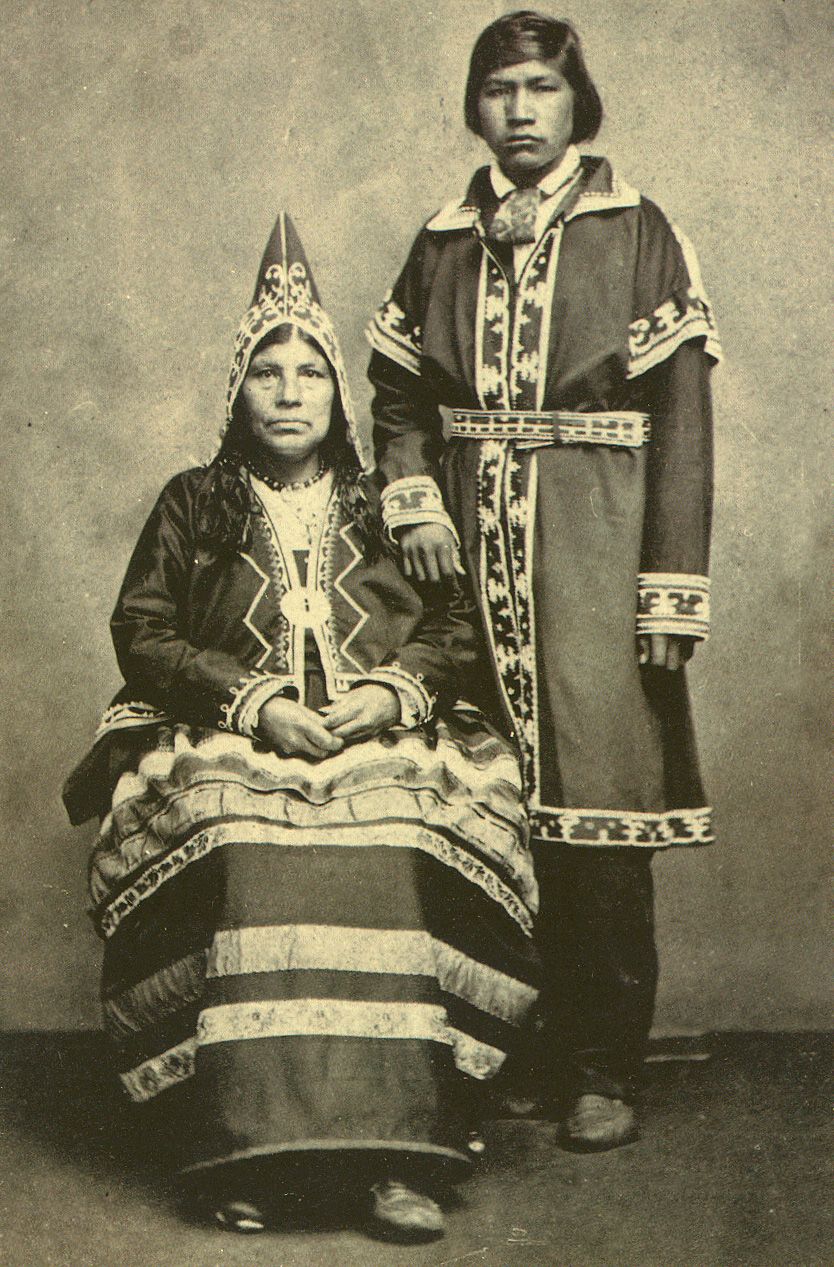
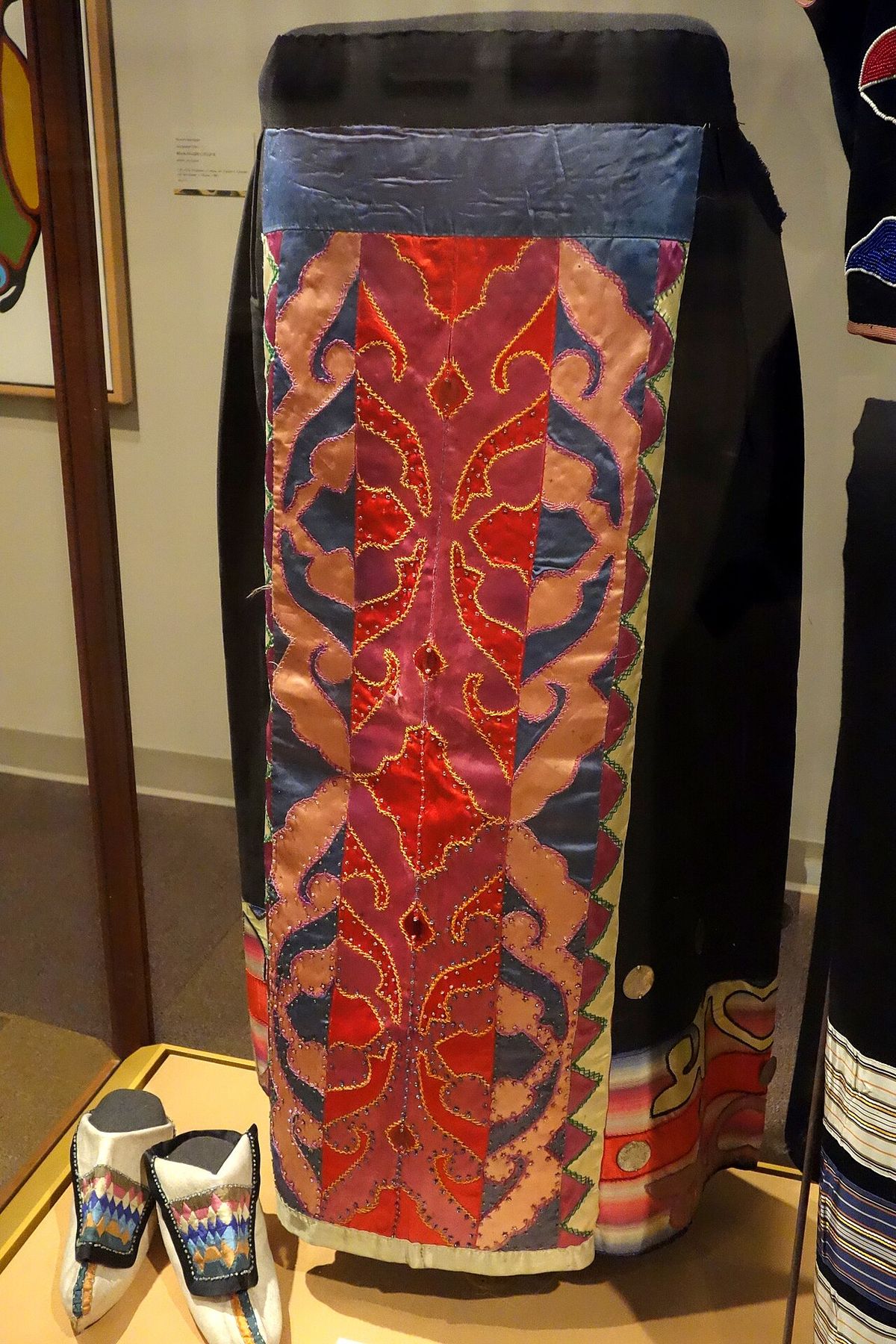
Ribbon work is characterized by its method of layering ribbons on top of one another and cutting out sections to create designs from both the positive space of the ribbon and the negative space of the background fabric. The edges of the ribbons are meticulously sewn down, traditionally with needles and cotton thread, and later with nylon thread. The resulting patterns are optically active and often carry deep cultural significance. Specific designs and colour combinations can be significant to particular clans or families, with knowledge of patterns traditionally passed from mothers to daughters. Common design elements found in ribbon work include floral motifs, diamonds, stepped diamonds, crescents, hearts, circles, and double-curves. These garments, particularly ribbon skirts, are worn during ceremonies and special events as expressions of a person's unique identity, diversity, and strength.
The artistry extends beyond skirts to a wide variety of items integral to Indigenous life and ceremony. Ribbon work is applied to both men's and women's clothing and is incorporated into leggings, blankets, shawls, breechclouts, purses, shirts, vests, and pillows. The technique transforms everyday and ceremonial items into carriers of cultural narrative and aesthetic beauty. For women, girls, and gender diverse people, wearing these items is an act of expressing pride and confidence in their Indigenous identity and heritage. The practice connects the wearer not only to their community but also to the Earth, with the skirt often seen as a direct connection to Mother Earth.
Historical Origins and Development
The art form originated following the introduction of silk ribbons to North America by European traders. These trade goods inspired a new, uniquely North American artistic tradition. The Mi'kmaq people are recorded as creating ribbon appliqué as early as 1611. Other nations with early contact with French traders, such as the Meskwaki (Fox), who were signatories to the 1701 Great Peace of Montreal, also began incorporating ribbons into their material culture. A significant boost to the availability of ribbons occurred in 1789 when the French Revolutionary regime decreed that clothing should be plain, causing silk ribbons to fall out of fashion in France and be exported in greater quantities to North America.
Consequently, the Indigenous peoples of the northern plains who traded furs with the French became particularly renowned for their ribbon work. This includes the Métis, Ojibwe, and Cree nations. The art form later spread to many other Indigenous communities. Initially, layers of ribbons were sewn onto the edges of cloth, effectively replacing the painted lines that had previously adorned hide clothing and blankets. By the close of the 18th century, Indigenous seamstresses had mastered the technique and were creating far more complex appliqué ribbon work designs, establishing a rich artistic legacy.
Modern Use and Institutional Recognition
In contemporary Canada, ribbon work remains highly visible on dance regalia at powwows and ceremonies. Its application continues on a wide range of clothing and accessories, sustaining its cultural relevance. Beyond community events, ribbon work and ribbon skirts have gained formal recognition within Canadian institutions. For example, the Blood Tribe Police Service in Alberta and the Anishinabek Police Service in Ontario have incorporated the ribbon skirt into their standard uniforms for situations that do not require a duty belt. This integration represents a meaningful step in acknowledging Indigenous identity within professional and public service contexts.
A landmark development occurred within the Royal Canadian Mounted Police (RCMP). The Women's Indigenous Network (WIN), started in 2021 by Sergeant Kelly Willis from the Cree community of Chisasibi, Quebec, advocates for Indigenous women and Two-Spirit employees. WIN successfully advocated for policy changes to allow cultural items like Eagle Feathers and Métis sashes to be worn with the uniform. On February 14, 2024, RCMP Commissioner Mike Duheme formally approved the addition of an RCMP Ribbon Skirt as an official uniform option. The navy blue skirt features four satin ribbons just below the knee in yellow, red, blue, and white, colours representing the four directions and echoing RCMP colours. The adjacent ribbons signify unity, and the skirt is a symbol of resilience, survival, identity, and hope for Indigenous Regular Members.
National Ribbon Skirt Day
National Ribbon Skirt Day is observed annually on January 4 across Canada. The day was established following an incident involving Isabella (Bella) Kulak, a 10-year-old member of Cote First Nation in Saskatchewan. On December 18, 2020, Kulak wore a handmade ribbon skirt to a formal dress-up day at her school, Kamsack Comprehensive Institute. An education assistant incorrectly told her the skirt was not appropriate formal wear. In response, family and community members escorted Kulak back to school on January 4, 2022, in a show of solidarity that garnered widespread national and international support, including from Puerto Rico and Germany.
Senator Mary Jane McCallum subsequently tabled Bill S-219 in Parliament to create a national day of recognition. The bill received unanimous support and Royal Assent on December 15, 2022. The first official National Ribbon Skirt Day was celebrated on January 4, 2023. The legislation acknowledges the leadership of Isabella Kulak, her family, Chief George Cote of Cote First Nation, Senator McCallum, and MP Jenica Atwin. The day provides an opportunity for all Canadians to recognize, learn about, and celebrate the importance of Indigenous traditions, identity, and culture. It honours the ribbon skirt as a symbol of womanhood, identity, resilience, and the revival of Indigenous traditions.
- December 18, 2020: Isabella Kulak is told her ribbon skirt is not formal wear at school.
- January 4, 2022: Community escorts Kulak back to school in solidarity.
- December 15, 2022: Bill S-219 receives Royal Assent.
- January 4, 2023: First official National Ribbon Skirt Day is celebrated.
Contemporary Designers and Evolution
As recognition of Indigenous fashion has grown, contemporary designers have played a role in the resurgence and evolution of ribbon work aesthetics. These artists modernize traditional forms while honouring their cultural roots, making the symbolism accessible to new generations and broader audiences. Their work demonstrates the dynamic and living nature of Indigenous artistic traditions, showing how they adapt and thrive in modern contexts. A prominent example is Bethany Yellowtail, a fashion designer who is a member of the Northern Cheyenne Tribe and a descendant of the Crow Tribe of Montana. Based in Los Angeles, California, her company B. Yellowtail is known for its Indigenous fashion designs that sell contemporary versions of ribbon skirts.
Yellowtail creates contemporary versions of ribbon skirts, often adding elements like fringe or shortening the silhouette. She has also incorporated the visual language of ribbon work into other garments such as pants and blazers. Through this innovative approach, she increases recognition of Native fashion styles and demonstrates the versatility of traditional design principles. Her commercial success highlights a growing market and appreciation for Indigenous-led fashion design that respects tradition while embracing modern style.
Cultural Significance and Symbolism
The ribbon skirt and ribbon work carry deep cultural weight within Indigenous communities. They are far more than decorative clothing. They are powerful expressions of strength, pride, and belonging. The skirts are seen as a symbol of womanhood, identity, and resilience, directly connecting the wearer's spirit to the Earth. The specific colours and patterns used in a garment often tell a personal or familial story, making each piece unique. As an emblem of endurance, the ribbon skirt represents the revival and steadfast continuation of Indigenous traditions and culture after centuries of colonial oppression and attempted assimilation.
This symbolism is actively taught and celebrated, particularly through educational resources developed for National Ribbon Skirt Day. Learning materials, such as those created by consultants for school divisions, help students explore the history and teachings of ribbon skirts and shirts. These resources encourage students to examine social and cultural diversity, the concepts of respect, and the influence of worldview on societal choices. They also guide students to analyze how arts expressions reflect diverse worldviews and can inspire change. The widespread adoption of this day in schools across Canada shows its role in advancing reconciliation and raising awareness of Indigenous traditions.
Ribbon Work in Broader Context
Ribbon work exists within a wider spectrum of Indigenous textile arts that utilize applied materials for adornment. A related tradition is the Dush-toh, a ribbon headdress created by Caddo women. Similar to the ribbon work of the Plains and Great Lakes, this practice incorporates layered ribbons into ceremonial attire, demonstrating the broader appeal and adaptation of ribbon materials across different Indigenous nations. The exchange of goods and ideas through trade networks allowed for the spread and localization of such artistic techniques. The visibility of ribbon work has also increased in the political sphere, as seen when United States politician Deb Haaland wore a ribbon skirt made by Agnes Woodward for her swearing-in ceremony as US Interior Secretary in 2021. In Canada, the Blood Tribe Police Service of Alberta and the Anishinabek Police Service of Ontario have made a ribbon skirt part of their standard uniform when circumstances do not require a police duty belt. The RCMP has also added a ribbon skirt to the official uniform options for Indigenous Regular Members. Canada established National Ribbon Skirt Day, which is held on January 4, to honour Indigenous culture, identity, and resilience.
Questions about Ribbon work
What is ribbon work?
Ribbon work is an appliqué textile art form where coloured silk ribbons are layered, cut, and sewn onto garments and regalia to create symbolic designs. Practised primarily by Indigenous peoples of the Prairie provinces and Great Lakes region, it is used to adorn items like skirts, shawls, leggings, and shirts. The technique blends introduced European materials with Indigenous artistic traditions, resulting in unique patterns that often carry familial or clan significance. It is a living art form that expresses cultural identity and resilience.
Why is National Ribbon Skirt Day on January 4?
National Ribbon Skirt Day is held on January 4 to honour Isabella (Bella) Kulak, a young girl from Cote First Nation in Saskatchewan. On January 4, 2022, she was escorted back to school by her community in solidarity after being shamed for wearing her ribbon skirt to a formal dress-up day in December 2020. This date was chosen to commemorate that show of support. The day was formally established by Bill S-219, which received Royal Assent in December 2022, with the first official observance on January 4, 2023.
Can RCMP officers wear ribbon skirts?
Yes, Indigenous Regular Members of the RCMP can now wear a ribbon skirt as part of their official uniform. Commissioner Mike Duheme approved the addition on February 14, 2024, following advocacy by the RCMP's Women's Indigenous Network (WIN). The approved skirt is navy blue with four satin ribbons in yellow, red, blue, and white, representing the four directions and RCMP colours. This policy change allows the ribbon skirt to be worn as an Indigenous cultural item of honour and distinction alongside other items like Eagle Feathers and Métis sashes.
What do the colours on a ribbon skirt mean?
The colours used in ribbon work and on ribbon skirts often carry specific symbolic meanings that can vary between communities, families, and individuals. In many Indigenous traditions, colours are associated with the four directions. For example, the RCMP's approved skirt uses yellow, red, blue, and white to represent the four directions. More broadly, the colours and patterns tell the story of the wearer, connecting her spirit to the Earth and signifying personal, familial, or clan identity. The choice of design and colour is deeply personal and culturally significant.
Who is a contemporary designer known for ribbon skirt designs?
A notable contemporary designer working with ribbon skirt aesthetics is Bethany Yellowtail. She is a member of the Northern Cheyenne Tribe and a descendant of the Crow Tribe of Montana. Through her Los Angeles-based company, B. Yellowtail, she creates modern Indigenous fashion. Yellowtail's designs include contemporary versions of ribbon skirts, often incorporating fringe or shorter lengths, and she has adapted the ribbon work motif onto items like pants and blazers. Her work helps increase the recognition and appreciation of Native fashion styles.
What was the incident that led to National Ribbon Skirt Day?
The incident involved Isabella Kulak, a 10-year-old from Cote First Nation, who wore a handmade ribbon skirt to a formal dress-up day at her Saskatchewan school on December 18, 2020. An education assistant mistakenly told her the skirt was not appropriate formal wear. This sparked widespread support for Kulak, leading her community to escort her back to school on January 4, 2022. The story gained national attention and inspired Senator Mary Jane McCallum to introduce Bill S-219, which established National Ribbon Skirt Day to promote understanding and celebration of Indigenous culture and identity.
Sources and further reading
- Ribbon work (Wikipedia)
- National Ribbon Skirt Day (hamilton.ca)
Checked by the Nosy Mag desk. Last updated 2026-10-30.