Indigenous music of Canada
Indigenous music of Canada encompasses the diverse musical traditions and contemporary creations of First Nations, Inuit, and Métis peoples across the country. Rooted in millennia of cultural practice, this music includes traditional forms like chanting, drumming, and throat singing, as well as modern genres that blend these roots with rock, folk, hip hop, and electronic music. It is a medium for language preservation, storytelling, and cultural continuity. Indigenous music has gained significant national recognition, with artists winning major awards like the Polaris Music Prize and the establishment of dedicated industry summits and residencies.
Historical Foundations and Traditional Forms
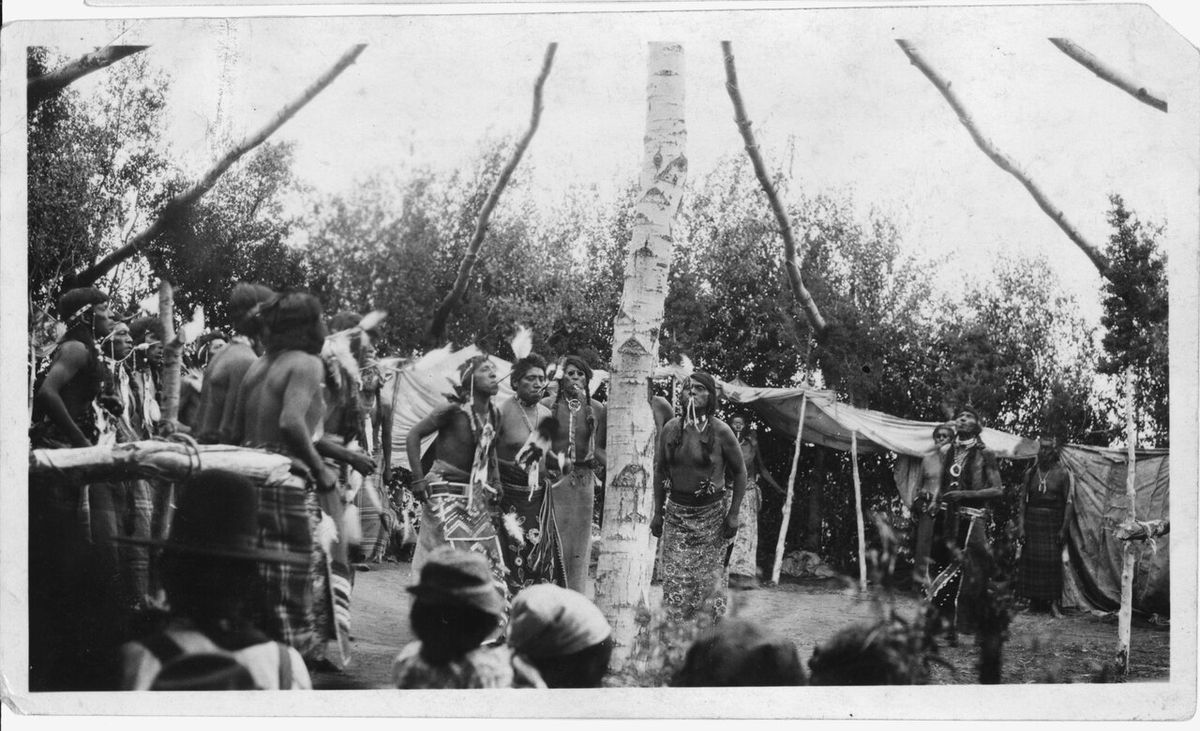
For centuries before European contact, Indigenous peoples across the land now called Canada developed rich musical traditions using materials from their environments. They crafted drums from carved wood and animal hides, rattles from gourds and animal horns, and flutes and whistles from wood and birchbark. These instruments provided the rhythmic and melodic foundation for songs, which were intrinsically linked to dance and ceremony. Many nations considered song and dance to be sacred, a perspective that made the colonial-era prohibitions against practicing ceremonies particularly damaging. This suppression contributed to a historical gap in widespread knowledge about these musical systems. A revival of cultural pride has since led to a recovery of this knowledge, with drums, often called the heartbeat of Mother Earth, remaining central. The human voice is the primary instrument across all traditions, with songs historically owned by individuals, clans, or societies, and rights to sing them could be formally transferred.
Distinct regional styles evolved based on geography and culture. In the Northeast Woodlands, music is characterized by antiphonal, or call-and-response, singing, complex rhythms tied to ritual dance, and the use of flutes and a wide variety of drums. The Plains area, extending into the Canadian Prairies, features high-pitched, nasal vocals with a terraced melodic descent and the prominent use of large double-sided skin drums. The music of the Northwest Coast, including the Kwakwaka'wakw and Nuu-chah-nulth nations, is noted for its complexity, with open vocals, rhythmic structures independent of the melody, and the unique presence of polyphony in North America. In the Arctic, Inuit music is recitative-like with complex rhythms, and is globally renowned for katajjaq, or throat singing, a unique vocal game traditionally performed by women.
Each musical area has specific technical characteristics. Northeast Woodlands music often uses short iterative phrases, anhemitonic pentatonic scales, and melodic movement that tends to gradually descend. Plains music, from tribes like the Blackfoot, Crow, and Dakota, frequently uses a melodic range averaging a tenth, a preference for perfect fourths, and tetratonic scales. Northwest Coast music features chromatic intervals, long melodies, and rhythms described as declamatory, deriving from speech. For the Inuit, the concept historically closest to music, nipi, includes music, speech, and noise, illustrating a holistic understanding of sound.
The Rise of Contemporary Indigenous Music
Pioneering figures like country-rock singer-songwriter Edward Gamblin are credited with building successful careers by focusing primarily on Indigenous audiences. Robbie Robertson, of Mohawk and Jewish descent, brought his musical roots from the Six Nations of the Grand River to global fame as a member of The Band and through solo albums that engaged with Indigenous themes, such as Music for the Native Americans. The Innu-aimun singing duo Kashtin achieved double-platinum status in Quebec and across Canada with their 1989 self-titled debut, proving that music in Indigenous languages could reach wide audiences. Fingerstyle guitarist Don Ross, of Mi’kmaq and Scottish heritage, gained international acclaim, winning the U.S. National Fingerstyle Guitar Championship twice. The 2014 compilation album Native North America, Vol. 1 played a role in archiving and reintroducing rare recordings from this foundational era of Indigenous rock, country, and folk. Mainstream recognition solidified with Indigenous artists winning Canada’s Polaris Music Prize: Inuk artist Tanya Tagaq won in 2014 for Animism, and Wolastoqiyik (Maliseet) artist Jeremy Dutcher won in 2018 for Wolastoqiyik Lintuwakonawa and again in 2024 for Motewolonuwok.
The contributions of other artists in this period were also formative. Donald Harvey Francks, also known as Iron Buffalo, was a Vancouver-born drummer, poet, and activist who performed in Toronto jazz clubs like George's Spaghetti House. Jerry Alfred, the Northern Tutchone "Keeper of the Songs" from Pelly Crossing, Yukon, used his 1994 recording Etsi Shon (Grandfather Song) to preserve language. Derek Miller, a singer-songwriter from Six Nations born on 29 October 1974, attracted attention from veteran musicians like Daniel Lanois and Buffy Sainte-Marie on his way to winning two Juno awards. These artists collectively built the infrastructure of a modern Indigenous music scene.
Major Awards and Industry Recognition
The Canadian music industry has developed specific awards and categories that recognize and celebrate Indigenous musical achievement. The Juno Awards introduced a category for Indigenous music, which has evolved into the Juno Award for Indigenous Music Album of the Year. Notable winners include Derek Miller, who won for Lovesick Blues and The Dirty Looks, and Leela Gilday from the Northwest Territories, who won the 2007 Juno for Aboriginal Recording of the Year for her album Sedzé. The Polaris Music Prize, awarded solely on artistic merit, has been a significant platform, with Tanya Tagaq and Jeremy Dutcher's wins highlighting the critical acclaim of Indigenous music. The Canadian Aboriginal Music Awards, now part of the Canadian Aboriginal Festival, were also an important venue for recognition, with Gilday winning three awards there in 2002 for Best Female Artist, Best Folk Album, and Best Songwriter. These award structures have helped raise the profile of Indigenous artists within the national cultural scene.
Other honours have marked individual careers. Buffy Sainte-Marie received a medal from Queen Elizabeth II, was named Best International Artist of 1993 by France, and won a Lifetime Achievement Award at the 1998 National Aboriginal Achievement Awards. Don Ross made history as the first Canadian and first Indigenous person to win the U.S. National Fingerstyle Guitar Championship in 1988. The Polaris Prize history also includes the 2017 win by Lido Pimienta for La Papessa. Pimienta is of South American Indigenous descent. Buffy Sainte-Marie's 2015 Polaris win for Power in the Blood was revoked in 2025 following reporting that contested her claimed First Nations heritage.

Key Supporting Institutions and Programs
A strong ecosystem of organizations and programs has emerged to support the creation, promotion, and professional development of Indigenous music in Canada. The International Indigenous Music Summit (IIMS) is a major gathering rooted in ceremony, community, and connection that brings together Indigenous artists and industry professionals from across Turtle Island and globally. IIMS fosters collaboration through cultural programming, Elder teachings, workshops, and networking. In 2026, IIMS is deepening its regional and national activities and will host a major event called Mina Nowewinan (Good Sounds) at The Carlu in Toronto on November 26. The summit regularly presents over 50 Indigenous artists or groups from around the world annually.
Another central initiative is Reverie: The Indigenous Music Residency, a partnership between CBC and the SOCAN Foundation. This month-long immersive program supports emerging First Nations, Inuit, and Métis music creators. The 2026 edition will run from October 1 to 31 in Toronto, offering four selected artists accommodation, a $2,000 honorarium, mentorship, studio access, and the chance to write and present new work. Past participants have included Logan Staats, Ashley Ghostkeeper, and Beaatz in 2024, followed by Sara Kae, Jessa Sky, and Big Tones in 2025. The program requires participants to spend a minimum of two days per week at CBC facilities. Selected artists receive Canadian Federation of Musicians (CFM) scale rates for creative work, a $150 transit stipend, access to a dedicated CBC producer, and education sessions curated by SOCAN Foundation. Applications for the 2026 program closed on May 31, 2026.
Notable Artists and Their Contributions
A diverse array of artists has shaped the field of Indigenous music in Canada. Key figures include country rock singer-songwriter Edward Gamblin, who is widely credited as one of the first artists to build a successful career focusing on First Nations audiences. Other influential artists are Robbie Robertson, a guitarist with The Band who was raised with Mohawk heritage at Six Nations, and Jerry Alfred, the Northern Tutchone "Keeper of the Songs" from Pelly Crossing, Yukon. The list also includes performers like Buffy Sainte-Marie, who helped create a Juno Awards category for Indigenous musicians, and the Innu-aimun language duo Kashtin, whose 1989 debut album went double platinum.
| Artist | Nation/Heritage | Key Contribution |
|---|---|---|
| Edward Gamblin | First Nations | Pioneering country-rock singer-songwriter who built a career focusing on First Nations audiences. |
| Robbie Robertson | Mohawk and Jewish | Guitarist and songwriter for The Band. Solo work engaged with Indigenous themes. |
| Kashtin (Claude McKenzie, Florent Vollant) | Innu | Duo whose 1989 self-titled Innu-aimun album went double platinum in Canada. |
| Don Ross | Mi’kmaq and Scottish | Fingerstyle guitarist. Only person to win the U.S. National Fingerstyle Guitar Championship twice (1988, 1996). |
| Buffy Sainte-Marie | Italian American (adopted into Piapot First Nation) | Songwriter and performer. Helped create the Juno category for Indigenous music. 2015 Polaris win revoked in 2025. |
| Jerry Alfred | Northern Tutchone | "Keeper of the Songs" from Pelly Crossing, Yukon. Preserved language through albums like Etsi Shon (Grandfather Song) (1994). |
| Leela Gilday | Dene | Singer-songwriter from Yellowknife. Won 2007 Juno for Aboriginal Recording of the Year for Sedzé. |
| Derek Miller | Six Nations of the Grand River | Two-time Juno winner for Indigenous Music Album of the Year (born 29 October 1974). |
| Tanya Tagaq | Inuk | Throat singer. Won the 2014 Polaris Music Prize for Animism. |
| Jeremy Dutcher | Wolastoqiyik (Maliseet) | Singer and musicologist. Won the Polaris Music Prize in 2018 and 2024. |
| Donald Harvey Francks (Iron Buffalo) | First Nations | Vancouver-born drummer, poet, and activist who performed in Toronto jazz clubs. |
| Glen Meadmore | First Nations | Actor and performance artist. Co-founded the early queer punk band Pedro, Muriel and Esther (PME). |
Cultural Significance and Modern Role
Indigenous music in Canada is a fundamental medium for cultural transmission, resilience, and identity. It carries languages, histories, and worldviews, acting as a living archive for communities. Traditional songs are often tied to specific ceremonies, stories, and social functions, from healing to warrior songs to round dances. The contemporary music scene continues this role, with artists consciously using their platforms to address social issues, celebrate heritage, and educate broader audiences. The act of creating and performing music is a powerful form of cultural sovereignty.
The growth of dedicated industry structures like the IIMS and the Reverie residency signals a maturation of the sector, focusing on sustainable career development and international networking for Indigenous musicians. These initiatives recognize Indigenous artists as powerful world-builders and change makers. As the community continues to grow, Indigenous music remains a dynamic and essential force in Canadian culture, honouring deep traditions while constantly innovating. The planned events for 2026, including the Reverie residency and the Mina Nowewinan celebration, highlight the ongoing vitality of this artistic field.
The music also plays a role in national events and education. For National Indigenous History Month, Indigenous artists are often asked to curate playlists promoting local music. The music carries stories across generations. From the ceremonial Sun Dance songs of the Arapaho to contemporary genres, the music forms a continuous thread. It is a field where ancient instruments like box drums and tambourine-shaped hand drums exist alongside digital production.
Questions about Indigenous music of Canada
What is Inuit throat singing?
Inuit throat singing, known as katajjaq, is a traditional vocal game primarily practiced by women in Inuit cultures. It involves two singers facing each other, using breath control, guttural sounds, and rhythmic patterns to create a performance that is often competitive. It is distinct from the throat singing of Mongolia or Tibet and was traditionally used as a playful pastime during the long winter months. This unique art form is a celebrated part of Canada's Indigenous musical heritage.
Which Indigenous artists have won the Polaris Music Prize?
Two Indigenous artists have won Canada's Polaris Music Prize, awarded for the best Canadian album based on artistic merit. Inuk artist Tanya Tagaq won the prize in 2014 for her album Animism . Wolastoqiyik (Maliseet) artist Jeremy Dutcher won the prize in 2018 for his album Wolastoqiyik Lintuwakonawa and again in 2024 for his album Motewolonuwok . Lido Pimienta, of South American Indigenous descent, won in 2017.
What is the Reverie Indigenous Music Residency?
Reverie: The Indigenous Music Residency is an immersive, month-long creative program run by CBC and the SOCAN Foundation to support emerging First Nations, Inuit, and Métis music creators. The 2026 edition will take place in Toronto from October 1 to 31. It selects four artists to live, write, collaborate, and record while receiving mentorship, studio access, and an honorarium. The program aims to provide dedicated time and resources to help artists develop their craft and careers.
What is the International Indigenous Music Summit (IIMS)?
The International Indigenous Music Summit (IIMS) is a major annual gathering that celebrates Indigenous music from Canada and around the world. Rooted in community and ceremony, it brings together artists, industry professionals, and knowledge keepers for cultural programming, workshops, and performances. In 2026, IIMS is hosting a special event called Mina Nowewinan (Good Sounds) in Toronto on November 26. The summit's goal is to foster collaboration and strengthen the global Indigenous music community.
What was the significance of the album 'Native North America, Vol. 1'?
The album Native North America, Vol. 1 is a significant compilation that collects rare and out of print songs by First Nations and Inuit musicians. Released by Light in the Attic Records in 2014, it documents a key era when rock, country, and folk genres began to emerge as major influences on Indigenous music in Canada. This collection preserves works from musicians who were active during that formative period. It acts as an important historical archive for these musical contributions.
Who was Edward Gamblin and why is he important?
Edward Gamblin was a country rock singer songwriter who holds a key place in the history of First Nations music. He is widely credited as one of the most influential artists in the development of First Nations music as a distinct genre. Gamblin's importance stems from his pioneering career focus on First Nations audiences rather than seeking mainstream crossover appeal. By doing so, he helped validate and build a dedicated market for Indigenous artists.
Sources and further reading
- Indigenous music of Canada (Wikipedia)
- International Indigenous Music Summit | Discover Indigenous ... (indigenousmusicsummit.com)
- Reverie: The Indigenous Music Residency Returns in 2026 (mediacentre.cbc.ca)
- Reverie: The Indigenous Music Residency, empowered by ... (socanfoundation.ca)
Checked by the Nosy Mag desk. Last updated 2026-10-28.