Cayuga people
The Cayuga, known as Gayogo̱hó꞉nǫˀ or 'People of the Great Swamp', are one of the five original nations of the Haudenosaunee (Iroquois) Confederacy. Their traditional homeland is in the Finger Lakes region of what is now New York State, centred around Cayuga Lake. Today, Cayuga people belong to the Six Nations of the Grand River in Ontario, and the federally recognized Cayuga Nation of New York and the Seneca-Cayuga Nation of Oklahoma. Some also live at the Cattaraugus Reservation among the Seneca Nation.
Historical Homeland and Traditional Life
The Cayuga Nation's ancestral territory was located in the Finger Lakes district of New York, with Cayuga Lake as a central feature. They were flanked by their Haudenosaunee allies, the Onondaga to the east and the Seneca to the west. Their territory also extended to the north shore of the St. Lawrence River. Their name, Gayogo̱hó꞉nǫˀ, translates to 'People of the Great Swamp', reflecting the geography of their homeland. Like all Haudenosaunee nations, Cayuga society was organized around a matrilineal clan system. The six Cayuga clans are Wolf (Honǫtahyǫ́꞉ni꞉), Bear (Hadihnyagwái), Turtle (Hadinyáhdę꞉), Sandpiper (Hodiˀnehsí:yoˀ), Heron (Degaǫhyága̱hne:ˀ), and Hawk (Hodihswę̱ˀgáiyoˀ). Clan Mothers lead these clans and hold significant political and social authority, including selecting the male chiefs. Within the Haudenosaunee Grand Council, the Cayuga formed the Younger Brother moiety alongside the Oneida, sending ten chiefs, known as Rotiyanehson, to represent their nation.
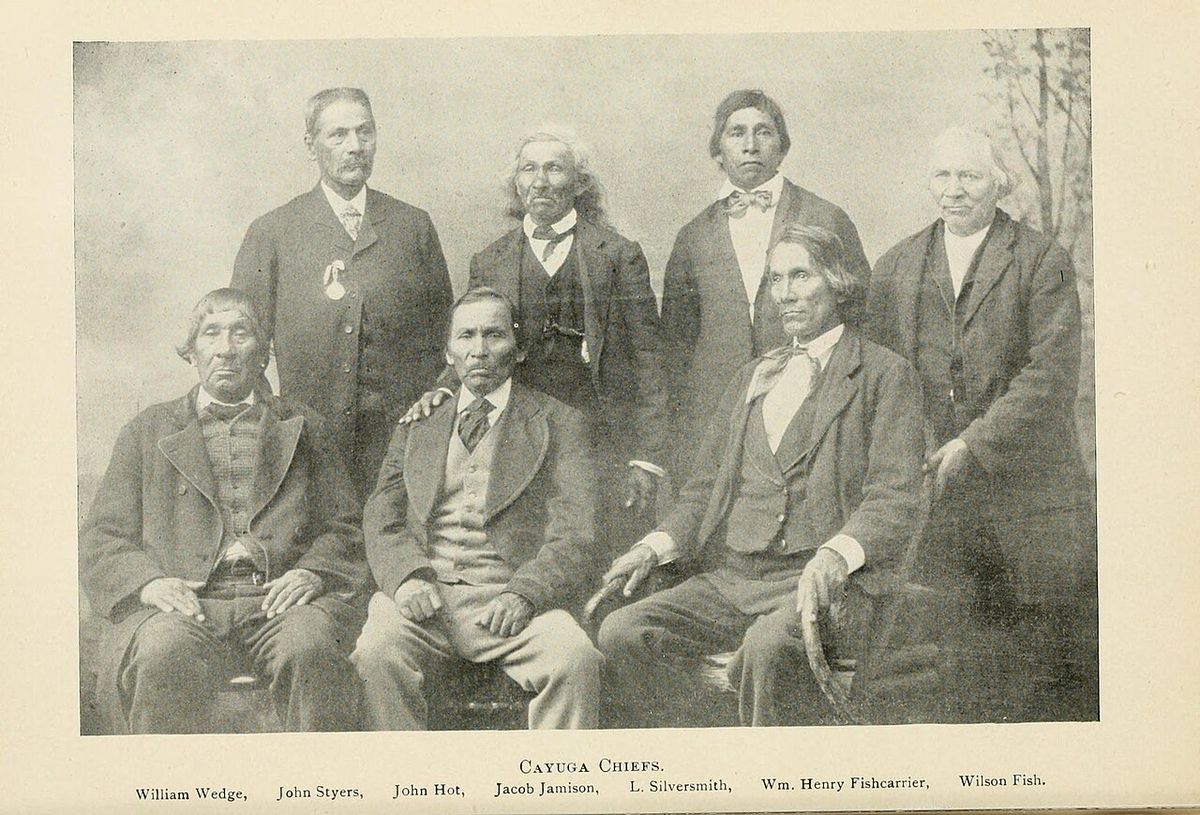
The American Revolution and Displacement
The American Revolutionary War was a catastrophic turning point for the Cayuga. While Haudenosaunee nations had complex and varied alliances, many Cayuga fought alongside the British, hoping to stem the tide of colonial encroachment on their lands. In 1778, various Haudenosaunee bands, often allied with Loyalists, conducted raids along the frontier from Connecticut to Pennsylvania. In 1779, General George Washington ordered the Sullivan Expedition in retaliation. Led by General John Sullivan and James Clinton, this campaign mobilized 6200 troops and devastated Cayuga and other Haudenosaunee homelands, destroying between 40 and 50 villages, including major Cayuga settlements like Cayuga Castle and Chonodote (Peachtown). The expedition systematically burned crops and winter food stores from spring through fall. Survivors fled north to other Haudenosaunee nations or to Upper Canada, where the British granted them land under the Haldimand Proclamation in recognition of their loyalty. By the war's end, a significant portion of the Cayuga population had moved to the Grand River area. Some Cayuga had already migrated west earlier in the century, joining groups in Western Pennsylvania and the Ohio Country who became known as the Mingo.
In the aftermath of the war, the new State of New York moved rapidly to acquire Haudenosaunee lands to grant land bounties to veterans. The Central New York Military Tract was established, which originally included a Cayuga reservation around the north end of Cayuga Lake, but this was soon given up. On November 11, 1794, the Cayuga, along with other Haudenosaunee nations, signed the Pickering Treaty (Treaty of Canandaigua) with the United States, ceding much of their territory in New York. This treaty, the second ever entered into by the U.S., recognized Haudenosaunee sovereignty and includes an annual payment of muslin fabric, an obligation still fulfilled. New York subsequently made additional treaties and land sales without federal Senate approval, actions later deemed illegal. These transactions opened over five million acres of former Haudenosaunee land to settlers from New England and Europe.
Modern Cayuga Communities and Governance
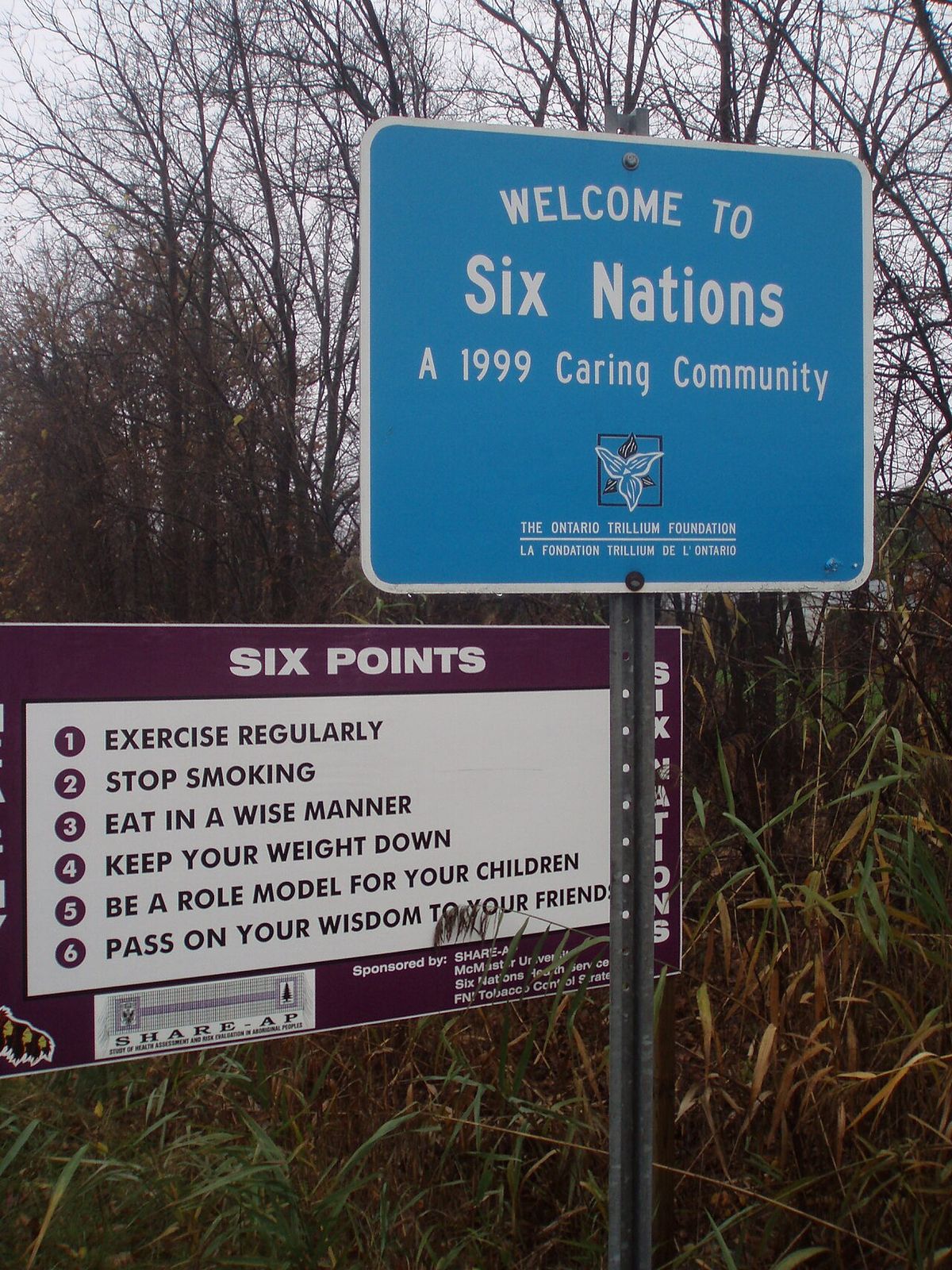
Today, the Cayuga people are organized into three main bands across two countries, known as the Lower Cayuga, Upper Cayuga, and the United States bands. In Canada, the majority of Cayuga live at the Six Nations of the Grand River reserve in Ontario, which is comprised of the Upper Cayuga and Lower Cayuga First Nations. According to federal figures from November 2023, the registered population of Upper Cayuga was 4,045, while Lower Cayuga had 3,920 members. The Six Nations reserve, also known as Six Nations Indian Reserve No. 40, was established in 1842 on the Grand River Tract. In the United States, there are two federally recognized tribes. The Cayuga Nation of New York is based in Seneca Falls but does not have a federal reservation, with many members having lived among the Seneca Nation on the Cattaraugus Reservation. The Seneca-Cayuga Nation of Oklahoma, formed from those removed to Indian Territory in 1831, had about 4,892 combined members in the early 21st century. These communities maintain their distinct governance while upholding their place within the Haudenosaunee Confederacy.
Land Claims and the Return to Homeland
For over two centuries after the Sullivan Expedition, the Cayuga in New York were landless within their ancestral territory. This changed in the late 20th century through determined legal action and land reacquisition. On November 19, 1980, the Cayuga Nation of New York filed a landmark lawsuit in the United States District Court for the Northern District of New York seeking restitution for lands illegally taken by New York State after the 1794 Treaty of Canandaigua. The Seneca-Cayuga Nation joined as a plaintiff in 1981. The state had entered into land sales and leases without U.S. Senate approval. After years of pre-trial motions, a jury trial on damages was held from January 18 to February 17, 2000. The jury returned a verdict in favour of the Cayuga nations, finding current fair market value damages of $35 million and total fair rental value damages of $3.5 million. After a credit for prior state payments of about $1.6 million, the total was set at approximately $36.9 million. On October 2, 2001, the court issued a decision awarding a prejudgment interest of $211 million, bringing the total award to $247.9 million.
Both parties appealed. On June 28, 2005, the United States Court of Appeals for the Second Circuit reversed the judgment, ruling in favour of the State of New York and Seneca and Cayuga counties based on the doctrine of laches, arguing the plaintiffs had waited too long to sue. The Cayuga Indian Nation of New York sought review by the Supreme Court of the United States, which was denied on May 15, 2006. Concurrent with the lawsuit, the Cayuga Nation began physically reclaiming land. On July 17, 1996, they purchased 14 acres in Seneca Falls, within their 64,000-acre claim area. At a dedication in August 1997 attended by members of all Haudenosaunee nations, Cayuga elder women broke ground and planted a pine tree. In December 2005, the nation acquired the 70-acre S.H.A.R.E. Farm in Aurora, New York, through a gift from U.S. citizens. This was the first property the Cayuga owned in their homeland in over 200 years. The nation has developed projects there focused on indigenous planting, medicinal herbs, and a seed saving program, while debating having the Bureau of Indian Affairs take the land into trust.
Culture, Language, and Contemporary Life
Cayuga culture is deeply intertwined with the laws, ceremonies, and social structures of the Haudenosaunee Confederacy. The clan system remains a vital part of identity and governance. The Cayuga language is a Northern Iroquoian language closely related to Seneca. It is considered endangered, with the 2021 Canadian census reporting only 115 people with Cayuga as their mother tongue. Concerted efforts at language revitalization are ongoing within Cayuga communities in both Canada and the United States. The Cayuga were involved in the 17th-century Iroquois Wars. In 1687, French governor Brisay de Denonville's invasion led to the capture of Cayuga hunters, who were imprisoned, tortured, and sent to France as galley slaves. The Cayuga also have a history of welcoming other nations into the confederacy framework. The Tuscarora, who migrated from North Carolina in the early 1700s, were admitted, and other nations like the Delaware and Wyandot have had matters brought forward through the Cayuga within the Grand Council.
The Cayuga people have made significant contributions in various fields. Notable Cayuga individuals include physician George Edward Bomberry, the first Indigenous graduate of McGill University's medical school in 1875. Musician Robbie Robertson was the lead guitarist and songwriter of The Band. Actor Gary Farmer is known for roles in films like 'Dead Man'. Actress Jenna Clause and American politician Annessa Hartman are contemporary figures. Historical leaders include Ourehouare, an 18th-century tribal leader, and Ottrowana, a Cayuga chief who provided intelligence to the British during the American Revolution. In Ontario, the Cayuga First Nations, as part of Six Nations, continue to negotiate land claims concerning their traditional territories. The Splitlog Church in Cayuga, Oklahoma, was founded by a Cayuga member.
Population and Demographic Overview
The total Cayuga population is distributed across multiple jurisdictions and communities, making a single precise count difficult. The majority of Cayuga live in Canada. In 2023, the Upper Cayuga First Nation had 4,045 registered members and the Lower Cayuga First Nation had 3,920. Many of these members live off the Six Nations reserve. In the United States, population figures are tracked by tribal enrollment. In 1995, there were nearly 450 enrolled members of the Cayuga Nation of New York. The Seneca-Cayuga Nation of Oklahoma reported about 4,892 combined members in the early 21st century. These numbers represent only those officially enrolled and do not encompass all individuals of Cayuga ancestry. The broader Haudenosaunee population provides context. In 1995, about 45,000 Haudenosaunee lived in Canada, with over 39,000 in Ontario. Total tribal enrollment in the U.S. for the six nations was about 30,000. The 2000 U.S. Census reported 45,217 people identifying solely as Iroquois and 80,822 claiming Iroquois ancestry.
Key Historical Events and Treaties
The Cayuga journey through history is marked by specific events and agreements that shaped their present reality. Their early history involved conflicts with neighbouring nations like the Susquehannock in the 1660s. The 18th century brought the trauma of the Sullivan Expedition and the consequential land cessions. The 19th century saw forced removal to Oklahoma and the establishment of the reserve in Canada. The 20th and 21st centuries have been defined by legal battles to reclaim land and sovereignty. These events chart a course from sovereignty to displacement and back toward a modern assertion of rights and presence.
- 1660s: Conflict with the Susquehannock leads some Cayuga to settle briefly along the north shore of Lake Ontario.
- 1687: French governor Brisay de Denonville's invasion leads to the capture and enslavement of Cayuga hunters.
- 1779: The Sullivan Expedition devastates Cayuga homelands, destroying between 40 and 50 villages and food stores.
- November 11, 1794: Cayuga sign the Pickering Treaty (Treaty of Canandaigua) with the United States, ceding lands in New York.
- Late 18th Century: Many Cayuga relocate to the Grand River Tract in Upper Canada under the Haldimand Proclamation.
- 1831: Remnants of Cayuga and other groups in the east are forcibly removed to Indian Territory, forming the Seneca-Cayuga Nation in Oklahoma.
- November 19, 1980: Cayuga Nation of New York files its major land claim lawsuit against the State of New York.
- July 17, 1996: The Nation purchases 14 acres in Seneca Falls, NY, its first land reacquisition in its homeland.
- June 28, 2005: U.S. Court of Appeals for the Second Circuit reverses the 2000 land claim victory based on laches.
- December 2005: Acquisition of the 70-acre S.H.A.R.E. Farm in Aurora, New York.
Cayuga within the Haudenosaunee Confederacy Structure
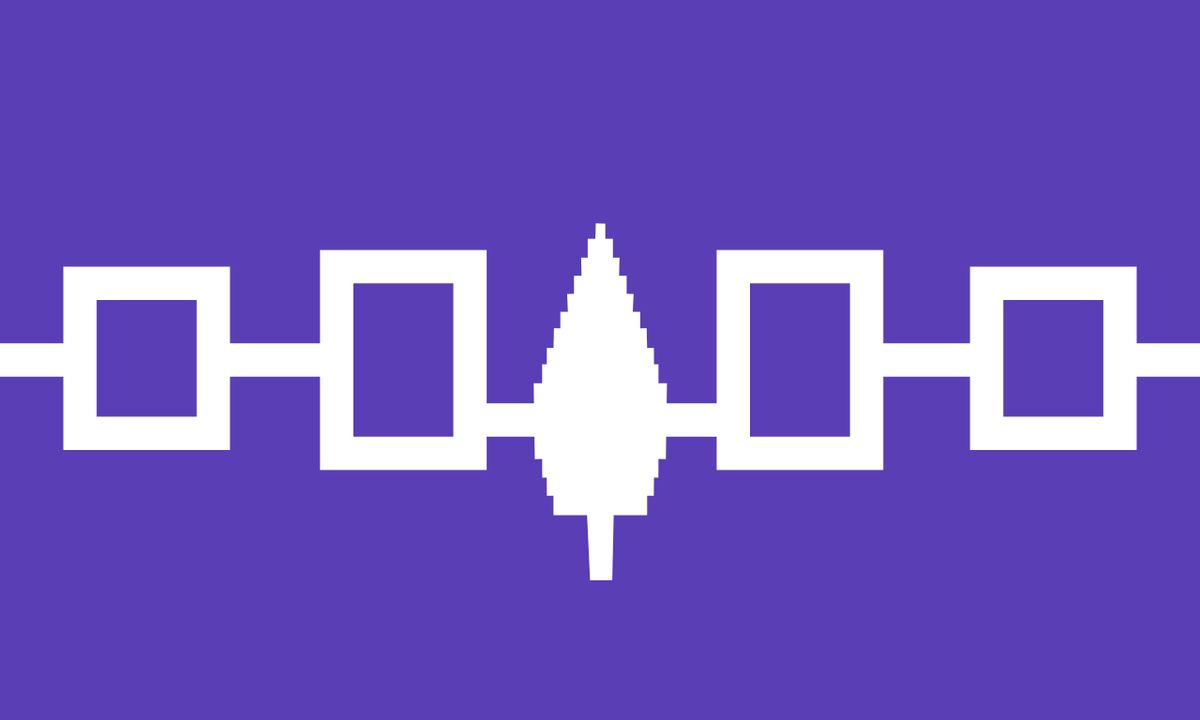
The Haudenosaunee Confederacy, meaning 'They made the house', is a union of nations that maintains a sophisticated governance system established long before European contact. The Cayuga are one of the five original nations, alongside the Mohawk, Oneida, Onondaga, and Seneca, with the Tuscarora joining in the early 18th century to form the Six Nations. The confederacy is organized into two moieties: the Elder Brothers (Mohawk and Seneca) and the Younger Brothers (Oneida and Cayuga), with the Onondaga serving as Firekeepers who maintain the council fire. The Cayuga's position as a Younger Brother defines their role and responsibilities in council deliberations. Each nation sends a set number of chiefs to the Grand Council. The Cayuga send ten Rotiyanehson. This system of alliance and diplomacy, governed by the Great Law of Peace, enabled the Haudenosaunee to become a major political and military force. The structure also allowed for the incorporation of other nations beyond the original six. The Tuscarora, Delaware, Wyandot, and Tutela nations have been welcomed, with these groups bringing their issues forward through the Cayuga nation within the council framework.
Notable Cayuga People and Contributions
Cayuga individuals have achieved recognition in diverse fields from medicine to the arts, contributing to broader society while maintaining their cultural identity. Their accomplishments span from the 19th century to the present day. These figures represent the resilience and talent of the Cayuga people. Their work in various sectors helps to educate the broader public about Indigenous perspectives and histories. The legacy of these individuals is carried on by countless community members working to sustain their culture.
- George Edward Bomberry: Physician, first Indigenous graduate of McGill University's Faculty of Medicine (M.D. C.M. 1875).
- Robbie Robertson: Canadian musician, songwriter, and lead guitarist of the influential rock group The Band.
- Gary Farmer: Prolific actor known for roles in films such as 'Dead Man' and 'Smoke Signals', and an advocate for Indigenous rights.
- Jenna Clause: Contemporary actress contributing to Indigenous representation in film and television.
- Annessa Hartman: American politician.
- Ourehouare: 18th-century tribal leader involved in relations with European powers.
- Ottrowana: Cayuga chief during the American Revolution who provided critical intelligence to British forces.
Questions about Cayuga people
Where is the traditional territory of the Cayuga Nation?
The traditional homeland of the Cayuga is in the Finger Lakes region of what is now New York State, specifically centred around Cayuga Lake. Their name, Gayogo̱hó꞉nǫˀ, means 'People of the Great Swamp', describing this area. This territory lies between the lands of their Haudenosaunee neighbours, the Onondaga to the east and the Seneca to the west. Historically, their territory also extended to the north shore of the St. Lawrence River.
Where do Cayuga people live today?
Cayuga people live in several distinct communities in Canada and the United States. In Ontario, most belong to the Upper Cayuga and Lower Cayuga First Nations at the Six Nations of the Grand River reserve, established in 1842. In the United States, there are two federally recognized tribes: the Cayuga Nation of New York, based in Seneca Falls, and the Seneca-Cayuga Nation of Oklahoma, formed after removals in 1831. Some Cayuga also live among the Seneca Nation on the Cattaraugus Reservation in New York.
What was the Sullivan Expedition and how did it affect the Cayuga?
The Sullivan Expedition was a massive American military campaign in 1779, ordered by General George Washington in retaliation for Haudenosaunee and Loyalist raids. Led by Generals John Sullivan and James Clinton, it mobilized 6200 troops and targeted Haudenosaunee homelands in New York. For the Cayuga, it was devastating. The campaign destroyed between 40 and 50 villages, including major Cayuga settlements like Cayuga Castle and Chonodote (Peachtown). Soldiers burned crops and winter food stores from spring through fall to force starvation and displacement. This event directly caused the dispersal of the Cayuga people to Canada and later to Oklahoma.
What is the status of the Cayuga land claim in New York?
The Cayuga Nation of New York filed a major land claim lawsuit in 1980, arguing that New York State illegally acquired over 64,000 acres of their lands after 1794 without federal approval. A jury awarded them $247.9 million in damages and interest in 2001. However, in 2005, the United States Court of Appeals for the Second Circuit overturned the award, ruling the nation waited too long to sue under the doctrine of laches. The U.S. Supreme Court declined to hear the case in 2006. Despite this, the nation has repurchased land, including 14 acres in Seneca Falls in 1996 and a 70-acre farm in Aurora in 2005.
How is the Cayuga Nation governed within the Haudenosaunee Confederacy?
The Cayuga are one of the five original nations of the Haudenosaunee Confederacy. They hold the position of Younger Brothers alongside the Oneida within the confederacy's two moieties. The Cayuga send ten chiefs, called Rotiyanehson, to the Haudenosaunee Grand Council, where they help govern according to the Great Law of Peace. Internally, Cayuga society is organized into six matrilineal clans (Wolf, Bear, Turtle, Sandpiper, Heron, Hawk). Clan Mothers lead these clans and are responsible for selecting the male chiefs who represent the nation.
Is the Cayuga language still spoken?
The Cayuga language is a Northern Iroquoian language that is currently endangered. According to the 2021 Canadian census, only 115 people reported Cayuga as their mother tongue. This low number reflects the impacts of colonization and assimilation policies. However, Cayuga communities in both Canada and the United States are actively engaged in language revitalization efforts to preserve and teach Gayogo̱hó꞉nǫˀ. These efforts include educational programs and community classes to ensure the language's survival for future generations.
Sources and further reading
- Cayuga people (Wikipedia)
- Cayuga (thecanadianencyclopedia.ca)
- Cayuga Nation (HC). Indigenous Peoples (Real Voices ... (goodminds.com)
- Cayuga Nation (data.nativemi.org)
Checked by the Nosy Mag desk. Last updated 2026-10-25.