Aboriginal land title in Canada
Aboriginal title in Canada is a unique, collective legal right held by Indigenous peoples to their traditional territories, arising from their historic occupation and use of the land prior to European sovereignty. Recognized as a sui generis interest, it is distinct from common law property concepts like fee simple ownership. The content of Aboriginal title includes the right to exclusive use, occupation, and economic benefit of the land, though its exercise must be consistent with the Indigenous group's attachment to that land. Recent court decisions, particularly in British Columbia, have brought this legal doctrine into sharp focus, raising complex questions about its relationship with private property rights and Crown land management across the country.
Legal Foundations and Historical Source
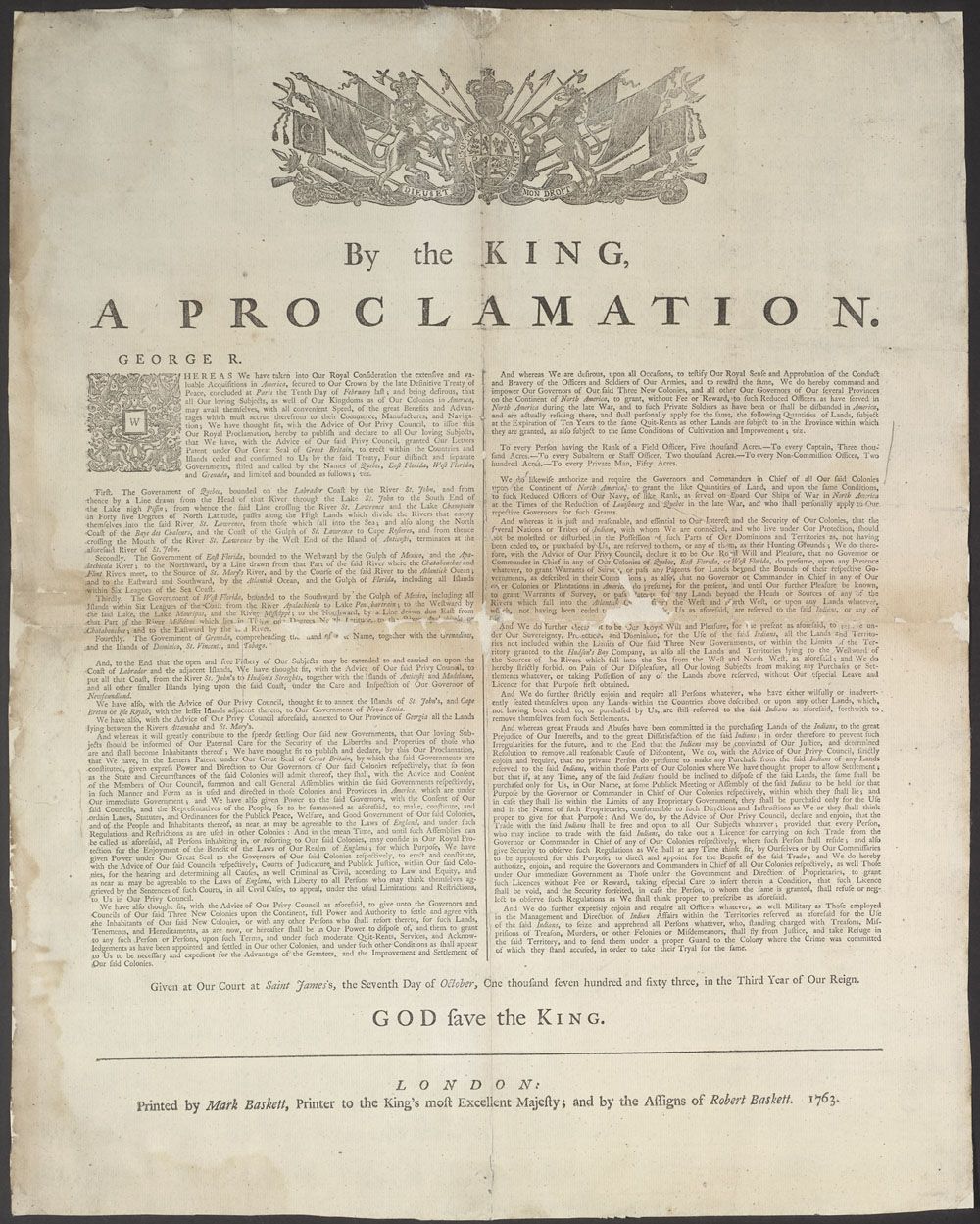
The legal foundation for Aboriginal title in Canada rests on the principle that Indigenous peoples were in exclusive possession of their lands long before the assertion of European sovereignty. The doctrine of terra nullius, which declared land empty and freely available for claiming, was explicitly rejected in Canadian law. Instead, the courts have affirmed that Aboriginal title originates from the historic relationship between Indigenous groups and their territories. The Royal Proclamation of 1763 issued by King George III is a historic document that recognized the existence of Aboriginal title during European settlement. The Proclamation stated that Aboriginal land could only be ceded to the Crown, not directly to settlers, and that title could only be extinguished by treaty. This established the Crown's fiduciary duty and the concept that Aboriginal interest is a burden on the Crown's underlying title. Over time, the Supreme Court of Canada has moved from viewing title as a mere personal right derived from the Proclamation to understanding it as a right inherent in Indigenous peoples' prior occupation. This evolution shows the sui generis nature of the title, meaning it is unique and cannot be fully explained by common law property rules alone.

Content and Characteristics of the Title
Aboriginal title confers a strong bundle of rights upon the Indigenous group that holds it. The primary characteristic is the right to exclusive use and occupation of the claimed territory. This exclusivity means the group has the authority to control access and use, a right the Supreme Court has described as the right to the land itself. The uses to which the land can be put are not limited to historic, traditional practices like hunting or fishing. Instead, title encompasses modern economic development, including the use and benefit of natural resources on and under the land. The title holders have the right to decide how the land will be used, managed, and enjoyed, and to benefit economically from those decisions. However, this right is not absolute and contains an inherent limit. The land cannot be used in a way that is irreconcilable with the nature of the group's attachment to it. For example, uses that would destroy the land's ability to sustain the community's culture and connection would be prohibited. This limit ensures the title reflects its source in the specific historic relationship between the people and their land.
Key Judicial Decisions Defining Title
A series of landmark Supreme Court of Canada decisions have progressively defined the scope and content of Aboriginal title. The 1973 Calder case was the first to acknowledge that Aboriginal title had existed in law, though the court was split on whether it continued to exist in the modern day. This decision forced the federal government to establish a comprehensive land claims process. In Guerin v The Queen (1984), the Court clarified that title derives from historic occupation and possession, establishing a fiduciary duty for the Crown in its dealings. The most definitive modern ruling came in Tsilhqot’in Nation v. British Columbia in 2014, where the Supreme Court granted a declaration of Aboriginal title for the first time in Canadian history. The Court stated that title flows from the special relationship between the Crown and the Aboriginal group and confirmed it includes the right to the economic benefits of the land. This decision set a powerful precedent for future claims and established that government incursions on title land require both consent and a compelling justification.
Major court decisions that have shaped the definition of Aboriginal title include St. Catherine’s Milling and Lumber Co. v. The Queen (1888), which initially described the title as a personal and usufructuary right. In Guerin v The Queen (1984), the Supreme Court described Aboriginal title as a right deriving from indigenous people's historic occupation and possession. The Supreme Court further clarified the unique, or sui generis, nature of Aboriginal title in Delgamuukw v. British Columbia. The landmark Tsilhqot’in Nation v. British Columbia decision in 2014 stated that the characteristics of Aboriginal title flow from the special relationship between the Crown and the Aboriginal group. More recently, the Cowichan Tribes v. Canada decision in 2025 declared Aboriginal title over an area including privately held lands, while the New Brunswick Court of Appeal in JD Irving Limited et al. v. Wolastoqey Nation held such a declaration could not extend to privately owned lands.
- St. Catherine’s Milling and Lumber Co. v. The Queen (1888): Initially described title as a personal and usufructuary right.
- Calder v. British Columbia (1973): First recognition of the legal concept of Aboriginal title.
- Guerin v The Queen (1984): Established title arises from historic occupation and the Crown's fiduciary duty.
- Delgamuukw v. British Columbia: Clarified the sui generis nature and test for proving title.
- Tsilhqot’in Nation v. British Columbia (2014): First declaration of Aboriginal title, confirming rights to benefits and jurisdiction.
The Contemporary Challenge of Private Property
Recent court cases have brought the relationship between Aboriginal title and privately held land, known as fee simple property, to the forefront of legal and political debate. The August 2025 Cowichan Tribes decision by the British Columbia Supreme Court was a landmark ruling. It declared that the Cowichan Tribes had established Aboriginal title to an area including lands held in fee simple by third parties in the Cowichan Valley, not Richmond. The court reasoned that the fee simple interests were granted without proper authority and that a historic promise of justice to the Cowichan had been breached. The court declared the government's fee simple titles defective and invalid, but for privately held lands, it ordered the Crown to negotiate reconciliation in good faith, which could involve expropriation, compensation, or a mix. This ruling directly contrasted with a 2026 decision by the New Brunswick Court of Appeal in the Wolastoqey Nation case, which held that a declaration of Aboriginal title could not extend to privately owned lands, as it would create irreconcilable competing ownership rights. This conflict in judicial approaches highlights the unsettled state of the law. In response to the Cowichan ruling, both federal and provincial governments have faced criticism for litigation guidelines established in 2018 that restrict government lawyers from arguing that fee simple interests extinguish Aboriginal title claims, prioritizing reconciliation arguments instead.
Treaties, Extinguishment, and the BC Context
The history of treaty making is central to understanding the modern state of Aboriginal title. In Canadian law, historic treaties were often interpreted by the Crown as extinguishing Aboriginal title. However, many Indigenous signatories did not understand them this way, a perspective later supported by courts requiring treaties to be interpreted in their favour. The situation is distinct in most of British Columbia, where, with few exceptions, treaties were not historically negotiated. This legal vacuum meant Aboriginal title was not officially extinguished, leading to the numerous court cases that define the law today. Modern treaties and land claims agreements, like the Nisga'a Final Agreement, now resolve title through negotiated settlements that often grant title over Crown lands while respecting existing private property. The ongoing litigation reflects this complex backdrop. For instance, the Mowachaht/Muchalaht First Nation has a title claim to 4,300 square kilometres of public land on Vancouver Island scheduled for trial in 2029, seeking control over resource extraction. Similarly, the Nuchatlaht First Nation recently won a title declaration from the B.C. Court of Appeal over 210 square kilometres of Crown land. These cases demonstrate the continuing push to convert unresolved claims into recognized title, primarily over public lands.
Proving Aboriginal Title in Court
For an Indigenous group to obtain a court declaration of Aboriginal title, they must meet a stringent legal test established by the Supreme Court in the Delgamuukw case. The burden of proof rests entirely on the claimant group. They must demonstrate exclusive occupation of the territory in question at the time the Crown asserted sovereignty. This exclusivity does not require proof that others were physically excluded at every moment, but that the group had effective control over the land. Occupation must be proven for a sufficient, continuous period, though continuity can be established even if the nature of occupation evolved over time. Crucially, courts accept oral history from the community as evidence equal in weight to documentary records. The group must also show a historic and present attachment to the land. If title is proven, any government infringement on it must be justified. Justification requires demonstrating a compelling and substantial legislative objective, such as environmental protection or economic development, and that the infringement is consistent with the Crown's fiduciary duty. This includes consultation, accommodation, and in some cases, the consent of the title holding group. The high threshold for proof explains why, despite many claims, only a handful of declarations have been granted.
Government Policy and the Path Forward
Government policy on Aboriginal title has evolved significantly, particularly following major court losses. The federal comprehensive land claims process was created after the Calder decision to negotiate settlements where title had not been addressed by treaty. A more recent and contentious policy shift involves litigation guidelines. In 2018, both federal and British Columbia governments adopted directives that require Crown lawyers to recognize Aboriginal rights and title in litigation. These guidelines prohibit lawyers from arguing that fee simple interests effectively extinguish Aboriginal title claims, a position critics argue ties the government's hands in defending private property interests. Proponents view the guidelines as necessary for honourable reconciliation and avoiding protracted legal battles. The path forward is likely to involve a combination of continued litigation, treaty negotiations, and political negotiation. The differing outcomes in Cowichan and Wolastoqey Nation suggest the Supreme Court of Canada may need to provide a definitive ruling on title and private land. Simultaneously, large scale claims like that of the Mowachaht/Muchalaht continue to advance, ensuring that Aboriginal title will remain a central and dynamic issue in Canadian law, resource governance, and Crown Indigenous relations for years to come.
Questions about Aboriginal land title in Canada
What is the difference between Aboriginal title and fee simple ownership?
Aboriginal title is a unique, collective right held by an Indigenous group to their traditional territory, stemming from historic occupation prior to European sovereignty. It is sui generis, meaning it does not fit neatly into common law categories. Fee simple is the most common form of private land ownership in Canada, granting an individual or corporation broad rights to use and sell the property. Key differences include that Aboriginal title is a collective right, it is alienable only to the Crown, and its use must be consistent with the group's attachment to the land, whereas fee simple is an individual right with fewer inherent limits on use and can be sold to anyone.
Can Aboriginal title be claimed over privately owned land?
This is a currently unsettled and contentious area of law. In 2025, the B.C. Supreme Court in the Cowichan Tribes case declared Aboriginal title over an area that included privately held fee simple lands in the Cowichan Valley, ordering the Crown to negotiate reconciliation which could lead to expropriation. However, in 2026, the New Brunswick Court of Appeal in the Wolastoqey Nation case ruled that such a declaration could not extend to privately owned lands, as it would create competing, irreconcilable ownership rights. These conflicting rulings indicate the issue may ultimately require a definitive decision from the Supreme Court of Canada to resolve.
How does an Indigenous group prove Aboriginal title in court?
An Indigenous group must prove three key elements to the court. First, they must demonstrate exclusive occupation of the territory at the time the Crown asserted sovereignty. Second, they must show continuity of occupation from that time to the present, though the nature of use can evolve. Third, they must establish a historic and ongoing attachment to the land. Courts accept oral history from the community as valid evidence alongside documentary records. The burden of proof rests entirely on the claimant group, and the legal test is stringent, which is why successful declarations have been rare despite many claims.
What was the significance of the Tsilhqot'in Supreme Court decision?
The 2014 Tsilhqot'in Nation v. British Columbia decision was a landmark ruling by the Supreme Court of Canada. It was the first time the Court granted a declaration of Aboriginal title to a specific territory. The decision confirmed that title includes the right to use, manage, and benefit economically from the land, including its resources. It also strengthened the requirement for government to justify any infringement on title land, mandating both a compelling objective and, in many cases, the consent of the title holding group. This ruling set a powerful precedent for other Indigenous nations seeking to have their title legally recognized.
Why is Aboriginal title a bigger issue in British Columbia than elsewhere?
Aboriginal title is particularly prominent in British Columbia because, unlike most of Canada, the province was largely not covered by historic treaties that the Crown interpreted as extinguishing title. With exceptions like the Douglas Treaties and Treaty 8, most First Nations in B.C. never ceded their land through treaty. This created a legal vacuum where Aboriginal title was neither extinguished nor recognized, leading to decades of political advocacy and litigation to address the issue. This history explains the high number of ongoing title claims and court cases in B.C., such as those by the Cowichan Tribes, Nuchatlaht, and Mowachaht/Muchalaht.
What are the government's litigation guidelines on Aboriginal title?
In 2018, both the federal and British Columbia governments adopted litigation guidelines that direct Crown lawyers on how to handle cases involving Aboriginal rights. The guidelines require lawyers to recognize Aboriginal rights and title, avoid positions that deny them, and ensure their legal arguments do not undermine Indigenous rights or self determination. Critically, they prohibit government lawyers from arguing that existing fee simple private property interests extinguish Aboriginal title claims. Supporters see this as a commitment to reconciliation, while critics argue it prevents the government from mounting a full legal defence of private property interests and places an unfair burden on non Indigenous landowners.
Sources and further reading
- Aboriginal land title in Canada (Wikipedia)
- Aboriginal land disputes continue in B.C., and federal and ... (thehub.ca)
- Can Aboriginal title be declared in respect of privately-held ... (torys.com)
- Aboriginal Title | indigenousfoundations (indigenousfoundations.arts.ubc.ca)
- New Aboriginal title court case threatens huge swath of ... (fraserinstitute.org)
Checked by the Nosy Mag desk. Last updated 2026-10-29.