Ku Klux Klan in Canada
The Canadian branch of the Ku Klux Klan was an expansion of the second Ku Klux Klan established in the United States in 1915. It operated as a fraternity, with chapters established in parts of Canada throughout the 1920s and early 1930s. The first registered provincial chapter was registered in Toronto in 1925 by two Americans and a Canadian. The organization was most successful in Saskatchewan, where it briefly influenced political activity and where its membership included a member of Parliament, Walter Davy Cowan.
Origins and Establishment in Canada
The Canadian Ku Klux Klan emerged from the second iteration of the American Klan, revived in Georgia in 1915. The 1915 release of D.W. Griffith's film The Birth of a Nation helped popularize the group's imagery and ideology. The first formal steps to organize in Canada were taken on 1 December 1924, when Americans C. Lewis Fowler and John H. Hawkins partnered with Torontonian Richard L. Cowan to sign an agreement establishing the Knights of Ku Klux Klan of Canada. Fowler travelled to Canada on 1 January 1925 to officially launch the organization, with Cowan serving as Imperial Wizard, Hawkins as Imperial Klaliff, and Fowler as Imperial Kligrapp. This Toronto-based provincial chapter became the first registered Klan organization in Canada. While earlier, informal Klan activity was reported in Montreal and West Vancouver in 1921, the 1925 registration marked the beginning of a structured, nationwide effort.
Ideology and Canadian Adaptation
The Canadian Klan adhered to the core tenets of white supremacy, Protestantism, and nativism. Organizers stated the Klan was a Christian organization with first allegiance to Canada and the Union Jack. Membership was restricted to white, gentile Protestants, explicitly barring Jews and Roman Catholics. Historian James Pitsula notes the Canadian branches had a narrower focus on preserving the Britishness of Canada regarding ethnicity and religious affiliation. The Klan promoted a 100 percent Canadian policy, opposing immigration from Eastern and Southern Europe. In a 1928 letter, Saskatchewan Imperial Wizard J. W. E. Rosborough outlined the Klan's creed, which included belief in Protestantism, separation of church and state, a single public school system, racial purity, and restrictive immigration. The organization made efforts to publicly distance itself from the violent reputation of the American Klan.
Growth and Operations Across Canada
Throughout the mid 1920s, Klan chapters, or klaverns, were established across Canada, from the Maritimes to British Columbia. The organization sold memberships, typically for CA$13, and announced new chapters with ritual cross burnings. It presented itself as a fraternal social organization, holding large rallies that could draw thousands of spectators. Despite its public denials of violence, the Klan in Canada was linked to intimidation, property damage, and several major incidents. Before its official establishment, Catholic churches were targets of arson, including the Cathedral-Basilica of Notre-Dame de Québec in Quebec City in 1922, attacks blamed on the Klan. In 1926, dynamite was detonated at St. Mary's Roman Catholic Church in Barrie, Ontario, with the perpetrator admitting he acted on Klan orders. The Klan was also blamed for the razing of Saint-Boniface College in Winnipeg, which caused ten deaths. These acts drew condemnation from media, politicians, and religious leaders, contributing to a decline in Klan membership in Ontario by the winter of 1926.
The Klan's activities and propaganda often focused on specific local grievances. This included organizing boycotts of Catholic-owned businesses in Alberta and campaigning against the display of religious symbols like crucifixes in public schools. They also opposed the hiring of nuns as teachers in public schools and the teaching of French, while influencing municipal elections to oust politicians deemed sympathetic to Catholicism. The group published newspapers like The Liberator in Edmonton to spread its message. A 1925 photograph of garbed Canadian Klansmen demonstrated that the Klan robes in Canada differed from those in the United States by including a maple leaf opposite the cross insignia.
The Klan in Saskatchewan: Political Influence
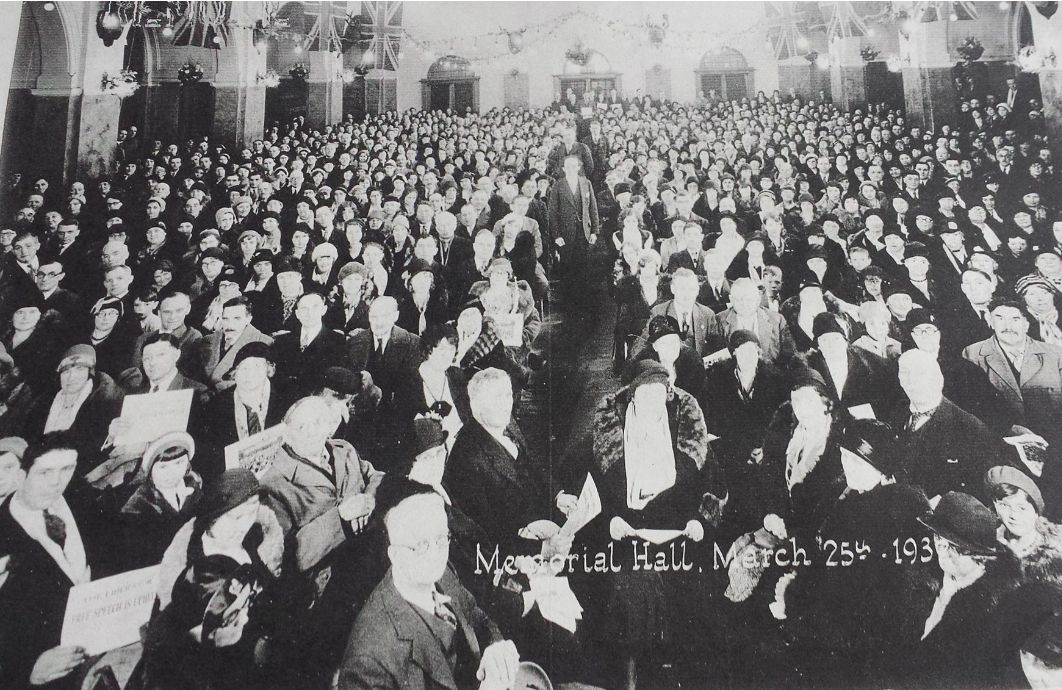
The Ku Klux Klan found its greatest Canadian success in Saskatchewan, where by the late 1920s membership exceeded 25,000. Historian Allan Bartley attributes this to opposition to the entrenched Saskatchewan Liberal Party government and its policies. American organizers Hugh Finlay Emmons and Lewis A. Scott from Indiana established the Saskatchewan Klan in 1926, touring the province to sell memberships for CA$13. They soon absconded with the funds, but the organization was revived by John H. Hawkins and John James Maloney. Under their leadership, the Klan raised over CA$50,000 and became increasingly anti-Catholic and anti-French, campaigning against the separate school system with the slogan one nation, one flag, one language, one school. The Klan falsely blamed Quebec for attempting to make Saskatchewan a second French-speaking province. The organization's influence became a significant issue in the 1929 provincial election. The Klan appeared at rallies for Liberal Premier J.G. Gardiner, burning crosses. The election resulted in a Conservative-led coalition government under J.T.M. Anderson, ending 24 years of Liberal rule.
The Klan's membership included Conservatives, Liberals, and Progressives. Its provincial treasurer, or Klabee, was Walter Davy Cowan, who was also the Conservative Member of Parliament for Long Lake from 1930 to 1935. Once in power, the Anderson government officially condemned the Klan but proceeded to enact policies aligning with some of its goals. The government amended the School Act to ban religious insignia in schools, terminated recognition of teaching certificates from Quebec, and changed provincial immigration policy. Political opponents continued to link the Conservatives to the Klan until the 1934 provincial election.
The Alberta Klan and the Role of John James Maloney
After feeling sidelined, John James Maloney moved to Alberta in 1930. He found a Klan organization that had been established in 1923 but was poorly managed. Declaring himself Imperial Wizard, Maloney revived the Alberta Klan, sending for experienced organizers from British Columbia and Saskatchewan. He began an intense recruitment drive in rural areas, sometimes facing violent opposition that required police protection. The Alberta Klan's activities mirrored those elsewhere, focusing on marginalizing Catholic, Jewish, and non-Anglo-Saxon communities through boycotts and intimidation. They celebrated political victories, such as the 1930 election of Conservative MP Ambrose Bury and the 1931 election of Edmonton Mayor Dan Knott, with cross burnings. Mayor Knott granted the Klan permission to hold events and burn crosses on the Edmonton Exhibition grounds on three occasions. The Alberta Klan achieved a unique legal status when it was incorporated as a society in September 1932, the only jurisdiction in the British Empire to grant the Klan such recognition. Maloney's downfall began soon after. In early 1933, he faced criminal charges. On 25 January 1933, he was found guilty of stealing legal documents from a lawyer who opposed the Klan's incorporation, and on 3 February he was convicted of insurance fraud. Maloney's disgrace was chiefly responsible for the discontinuation of the Klan in Alberta.
Decline, Resurgence, and Later Legacy
The Canadian Klan declined rapidly in the 1930s due to scandals, internal strife, and the Great Depression. Historian Allan Bartley notes that some former members turned to the emerging Nazi movement before it fell out of favour during the Second World War. A brief resurgence occurred between the 1960s and 1980s, coinciding with the Civil Rights Movement in the United States and Canada's adoption of official multiculturalism. American Klan Imperial Wizard David Duke attempted recruitment in Canada during this period. In 1981, a new Toronto chapter was established under the leadership of James Alexander McQuirter. However, McQuirter and his followers were later jailed for various criminal activities, leading to another organizational decline. In the early 21st century, remnant Klan members and sympathizers largely migrated to other white supremacist groups and online forums. In 1991, Carney Nerland, a professed white supremacist and Klan member who led the Saskatchewan branch of the Church of Jesus Christ Christian Aryan Nation, killed Cree man Leo LaChance with an assault rifle in his Prince Albert pawn shop. Nerland served three years of a four-year sentence for manslaughter.
Membership and Financial Operations
The Ku Klux Klan in Canada operated primarily as a membership-driven fraternity, with finances centred on initiation and annual fees. Organizers acted as salesmen, touring communities to recruit new members. The standard membership fee in Saskatchewan and Alberta was CA$13, though in Saskatchewan it was later raised to $15 annually under John James Maloney's leadership. The organization claimed impressive, though often inflated, membership numbers. In July 1927, a Klan organizer claimed Saskatchewan had 46,500 members, and by late 1927, the city of Moose Jaw alone reported 2,300 members. At its height in the late 1920s, the Saskatchewan Klan raised over CA$50,000 in fees. Financial mismanagement and fraud were recurring issues. The initial Saskatchewan organizers, Emmons and Scott, fled with collected funds in 1927. Similarly, in Alberta, questions about missing funds preceded Maloney's criminal convictions for fraud and theft in 1933.
| Province | Peak Era | Claimed Membership | Key Financial Note |
|---|---|---|---|
| Saskatchewan | Late 1920s | Over 25,000 (verified). Claimed over 70,000 | Raised >CA$50,000. $15 annual fee |
| Alberta | Early 1930s | 5,000-8,000 (estimated) | $13 membership fee. Incorporated 1932 |
| Ontario | Mid 1920s | 5,000-8,000 (estimated) | Declined after 1926 church bombing |
These funds, which included membership fees set at $13 or $15 per individual, supported organizers' salaries, the production of propaganda, the costs of rallies, and legal fees. The Ku Klux Klan was incorporated as a society in Alberta in September 1932, which was the only jurisdiction in the British Empire to give it that legal status. This incorporation provided a brief veneer of legitimacy for its financial operations before its collapse. However, questions about the organization's funds arose, and leader John James Maloney faced criminal charges for insurance fraud and stealing documents in early 1933.
Questions about Ku Klux Klan in Canada
Where was the Klan most influential in Canada?
The Ku Klux Klan was most successful and politically influential in Saskatchewan. By the late 1920s, its verified membership there was over 25,000. The Klan's anti-Catholic and anti-immigration rhetoric resonated, helping to sway the 1929 provincial election that ended 24 years of Liberal rule. Its provincial treasurer was a sitting Member of Parliament, Walter Davy Cowan. The Klan also had significant, though smaller, memberships in Alberta and Ontario during its peak years.
Was the Canadian Klan as violent as the American Klan?
The Canadian Klan publicly distanced itself from the extreme violence of its American counterpart, claiming to be law-abiding. However, it was linked to acts of intimidation, property damage, and violence. Notable incidents include the 1922 arson at the Cathedral-Basilica of Notre-Dame de Québec, the 1926 dynamiting of St. Mary's Church in Barrie, and being blamed for the fire that destroyed Saint-Boniface College in Winnipeg. The Klan also engaged in cross burnings, boycotts of Catholic businesses, and efforts to influence elections.
What were the main goals of the Klan in Canada?
The main goals of the Ku Klux Klan in Canada were to preserve the Britishness of Canada with respect to ethnicity and religious affiliation. Its principles required members to be white, gentile, and Protestant, and it promoted white supremacy and nationalism. The organization campaigned against Catholic separate schools and the teaching of French in public schools. It also advocated for restrictive and selective immigration policies to deter immigration from Eastern and Southern Europe.
Did the Klan return to Canada after the 1930s?
Yes, the Klan experienced a brief resurgence in Canada between the 1960s and 1980s. This period saw recruitment attempts by American Klan leader David Duke. In 1981, a new Toronto chapter was formed under James Alexander McQuirter, but its leaders were later imprisoned for criminal activities, leading to another decline. Since then, former Klan members and ideology have largely migrated to other white supremacist groups and online forums.
Is the Ku Klux Klan still active in Canada today?
The Ku Klux Klan does not exist as a significant, organized national force in Canada today. Its active presence largely faded after the 1980s. However, its ideology persists. Former members and sympathizers have moved to other extremist groups, and white supremacist rhetoric continues online. Isolated individuals claiming Klan affiliation, such as Carney Nerland who committed a murder in Saskatchewan in 1991, demonstrate the persistent threat of its hateful ideas.
When was the Ku Klux Klan first established in Canada?
The first registered provincial chapter of the Ku Klux Klan in Canada was established in Toronto in 1925. This branch was an expansion of the second Ku Klux Klan founded in the United States in 1915. The chapter was officially registered by two Americans, C. Lewis Fowler and John H. Hawkins, and a Canadian named Richard L. Cowan. These three men signed an agreement to establish the Knights of Ku Klux Klan of Canada on 1 December 1924. Fowler travelled to Canada on 1 January 1925 to formally set up the organization, with Cowan serving as its first Imperial Wizard.
Sources and further reading
- Ku Klux Klan in Canada (Wikipedia)
- Hidden in Plain Sight: Canada's History with the KKK (canadaconfesses.ca)
- Ku Klux Klan (thecanadianencyclopedia.ca)
- The rise of the Ku Klux Klan in Canada, and why its ... (cbc.ca)
Checked by the Nosy Mag desk. Last updated 2026-10-25.