R v Parks
R v Parks is a 1992 Supreme Court of Canada decision on the defence of automatism in criminal law. The case concerned Kenneth Parks, who was acquitted of murder and attempted murder after attacking his in-laws while sleepwalking on May 24, 1987. The Court ruled that sleepwalking could be classified as non-insane automatism, leading to a full acquittal, rather than as a "disease of the mind." A verdict of not criminally responsible on account of mental disorder is the alternative outcome for insane automatism, which the Court determined did not apply in this instance.
The Facts of the Case
In the early morning of May 24, 1987, Kenneth Parks drove 20 kilometres from his home in Pickering, Ontario, to the Scarborough home of his in-laws. Parks entered the house using a key they had provided him and attacked his sleeping mother-in-law and father-in-law. He used a tire iron to bludgeon his mother-in-law, Barbara Woods, resulting in her death. He then turned on his father-in-law, attempting to strangle him, though the father-in-law survived the assault. Immediately following the attacks, Parks, covered in blood, drove his car directly to a nearby police station. Upon arrival, he confessed to the officers, stating, "I think I have just killed two people." Parks was subsequently charged with the first degree murder of his mother-in-law and the attempted murder of his father-in-law. The trial took place in Ontario, and the case was heard by a jury.
The Defence of Automatism at Trial
At his trial, Kenneth Parks did not dispute that he had committed the physical acts. His defence was that he was sleepwalking during the entire episode and was therefore in a state of automatism, acting without conscious volition. The defence called medical experts, including a doctor who testified about Parks's mental state at the time of the offences. The evidence indicated Parks suffered from a disorder of sleep, specifically somnambulism, rather than a neurological or psychiatric illness. Five neurological experts corroborated the diagnosis that he was sleepwalking during the attacks. Based on this evidence, the trial judge instructed the jury on the defence of non-insane automatism. The jury accepted the defence and acquitted Parks of all charges. The Crown appealed the acquittal, leading the case to proceed to the Ontario Court of Appeal, which upheld the verdict, and ultimately to the Supreme Court of Canada. The appeal to the Supreme Court was heard in 1992.
Legal Issues Before the Supreme Court
The central legal question for the Supreme Court was whether sleepwalking should be classified as non-insane automatism or as a "disease of the mind," which constitutes insane automatism. This classification is a matter of law for a judge to decide. A finding of non-insane automatism results in an absolute acquittal because the act is deemed involuntary and the required mental element, or mens rea, is absent. In contrast, if the automatism stems from a "disease of the mind," the verdict is not criminally responsible on account of mental disorder, which triggers a different legal process focused on public safety and treatment. The Court needed to determine which category somnambulism fit into, a decision with significant consequences for the accused and for the administration of justice. The Court also considered the public policy implications of each possible classification.
The Supreme Court's Decision and Reasoning
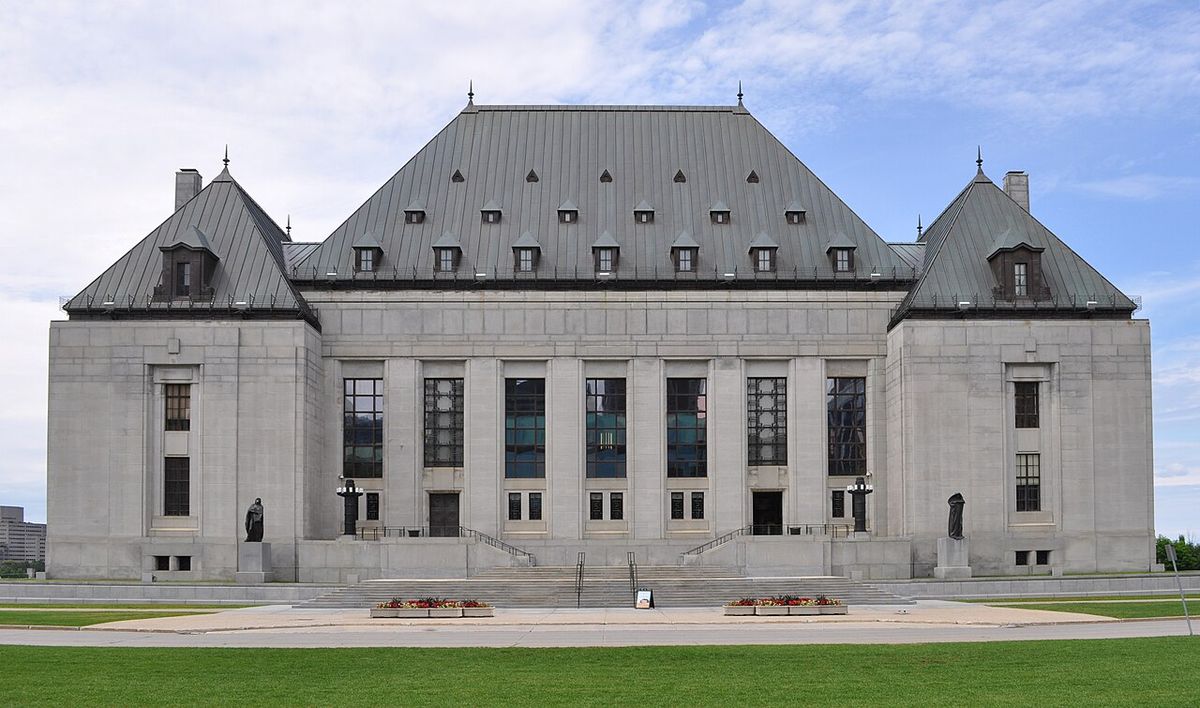
The Supreme Court of Canada, in a decision authored by Chief Justice Antonio Lamer, dismissed the Crown's appeal and upheld Parks's acquittal on August 20, 1992. The Court found the trial judge was correct in his analysis of the evidence and in his decision not to characterize sleepwalking as a mental disorder. The Court held that the evidence presented a reasonable doubt about whether Parks acted voluntarily, which is a fundamental requirement for criminal liability. The Court reaffirmed the basic principle that "absence of volition in respect of the act involved is always a defence to a crime" and that "the Crown always bears the burden of proving a voluntary act." Since the jury found Parks was sleepwalking, his actions were involuntary, and thus the actus reus was not proven beyond a reasonable doubt. Justice La Forest, writing for Justices L'Heureux-Dubé and Gonthier, agreed with the result but provided a concurring opinion focused on public policy. La Forest emphasized that the defence of mental disorder provides a criminal exception that must be weighed against the interest in public safety. He noted that the applicability of the defence must focus on the likelihood of recurrence of the condition. For a person to be exempt from criminal liability under the "disease of the mind" defence, they must be a "continuing danger" to the public, and the condition must stem from an "internal cause" linked to the accused's emotional or psychological state.
Key Legal Principles and Tests Clarified
The Parks decision clarified several important legal tests for automatism in Canadian law. The Court's reasoning helped distinguish between internal and external causes of automatism, a key factor in the "disease of the mind" analysis. The judgement outlined that non-insane automatism typically arises from an external trigger, such as a blow to the head, while insane automatism arises from an internal pathology. The Court found that sleepwalking, in Parks's case, was not an internal cause stemming from a psychological or emotional disorder but was a sleep disorder with a physiological basis. This distinction was critical in classifying it as non-insane automatism. The Court also engaged with the policy concern of recurrence, suggesting that a condition posing a continuing danger is more likely to be considered a disease of the mind. The case established these principles. The decision is a leading authority on the legal definition of automatism and its relationship to the mens rea and actus reus requirements for criminal conviction.
- The Crown bears the burden of proving a voluntary act (actus reus).
- Automatism is a defence that negates the voluntariness of an act.
- The classification of automatism as insane or non-insane is a question of law for the judge.
- A "disease of the mind" is an internal cause that poses a continuing danger.
- Non-insane automatism leads to an absolute acquittal.
- Insane automatism leads to a verdict of not criminally responsible on account of mental disorder.
- The case is cited as [1992] 2 S.C.R. 871.
Impact on Canadian Criminal Law
The R v Parks decision has had an impact on Canadian criminal law, particularly in cases involving unusual states of consciousness. It set a precedent for how courts handle defences based on sleep disorders and other conditions that may cause involuntary action. The case is frequently cited in legal discussions about the limits of criminal responsibility and the definitions of mens rea and actus reus. The public policy considerations raised by Justice La Forest regarding recurrence and public safety continue to inform judicial analysis in subsequent automatism cases. The decision showed the high threshold required for a condition to be classified as a "disease of the mind" and reinforced the principle that an acquittal is the appropriate outcome when the Crown fails to prove a voluntary act due to non-insane automatism. The case is part of the legal doctrine on automatism that includes other decisions such as Rabey v The Queen.
Subsequent Developments and Related Cases
While Parks remains a leading case, Canadian courts have continued to grapple with the defence of automatism, particularly in the context of self-induced intoxication. A significant recent development occurred with the Ontario Court of Appeal's decision in R v Sullivan, which considered the constitutionality of section 33.1 of the Criminal Code. That section had limited the defence of self-induced intoxication for violent offences. The court found section 33.1 violated the Charter of Rights and Freedoms and struck it down, marking a major shift in the law. Although Sullivan dealt with drug-induced psychosis, it engages with the same foundational principles about voluntariness and criminal responsibility that were central to the Parks decision. The Sullivan case was a consolidation of two appeals: those of David Sullivan and Thomas Chan. In 2015, Thomas Chan, after consuming psilocybin mushrooms, experienced a psychotic episode during which he killed his father and attacked his father's partner. David Sullivan, in a separate incident, abused prescription bupropion, experienced a delusion, and stabbed his mother. Both raised defences related to automatism and the constitutionality of section 33.1. The Ontario Court of Appeal's ruling in these cases declared section 33.1 to be of no force or effect, as it violated the presumption of innocence and principles of fundamental justice.
Legal and Medical Context of Automatism
Automatism sits at the intersection of law and medicine, requiring courts to interpret medical evidence within a legal framework. In Canadian criminal law, two core principles determine guilt: mens rea (the guilty mind) and actus reus (the guilty act). Automatism challenges the actus reus by asserting the act was not voluntary. The legal history of automatism involves courts wrestling with conditions ranging from epilepsy and concussions to sleep disorders and drug-induced states. The medical community often views these conditions through a diagnostic lens, while the legal system must categorize them for the purposes of assigning criminal responsibility and protecting public safety. The Parks decision is a prime example of this interaction, where medical testimony about somnambulism was translated into the legal category of non-insane automatism. The legal concept of automatism is distinct from the medical diagnosis, as the law requires a categorization that leads to specific legal outcomes such as acquittal or a finding of not criminally responsible.
Questions about R v Parks
What was Kenneth Parks charged with in R v Parks?
Kenneth Parks was charged with first degree murder for killing his mother-in-law and attempted murder for attacking his father-in-law. The incidents occurred in the early morning of May 24, 1987, at his in-laws' home in Scarborough, Ontario. He drove 20 kilometres from Pickering to their house, entered with a key, and attacked them with a tire iron. Parks was tried by a jury in Ontario, which ultimately acquitted him based on the defence of sleepwalking.
Why was Kenneth Parks acquitted?
Parks was acquitted because the jury accepted his defence that he was sleepwalking during the attacks, a state classified as non-insane automatism. Medical experts testified he suffered from somnambulism, a sleep disorder. The Supreme Court upheld the acquittal, ruling the evidence created a reasonable doubt about whether he acted voluntarily. The Crown failed to prove the actus reus, the voluntary act, beyond a reasonable doubt.
What is the difference between insane and non-insane automatism?
Non-insane automatism is caused by an external factor, like a concussion or a sleep disorder, and results in a full acquittal. Insane automatism arises from an internal cause linked to a mental disorder, making the accused a potential continuing danger to the public. This distinction, as clarified in R v Parks, leads to a verdict of not criminally responsible, which involves supervision and treatment. The Supreme Court noted the applicability of the defence must focus on the likelihood of recurrence for public safety reasons.
How did the Supreme Court of Canada rule in R v Parks?
The Supreme Court of Canada, in a decision released on August 20, 1992, dismissed the Crown's appeal and upheld Kenneth Parks's acquittal. Chief Justice Antonio Lamer held that the trial judge was correct in classifying sleepwalking as non-insane automatism. Justice La Forest, in a concurring opinion joined by Justices L'Heureux-Dubé and Gonthier, emphasized public safety and the test for a "continuing danger. The Court's citation is [1992] 2 S.C.R. 871.
What is the defence of automatism?
The defence of automatism argues an accused acted involuntarily, without conscious control, negating the required voluntary act for criminal liability. In Canadian law, it is divided into two categories. Non-insane automatism, stemming from an external cause, leads to a full acquittal. Insane automatism, caused by an internal 'disease of the mind', results in a verdict of not criminally responsible on account of mental disorder. The defence is based on the principle that the Crown must prove a voluntary act, or actus reus.
Why is R v Parks an important case in Canadian law?
R v Parks is an important case in Canadian law as a leading Supreme Court decision that established sleepwalking can be classified as non-insane automatism, resulting in an acquittal. The case clarified the legal test for distinguishing between insane and non-insane automatism, focusing on internal causes and the likelihood of recurrence. Chief Justice Antonio Lamer upheld the acquittal, and the ruling remains a foundational reference point for the automatism defence. It is a key precedent frequently cited in legal textbooks and subsequent court judgments across Canada.
Sources and further reading
- R v Parks (Wikipedia)
- R v Parks: Defence of Automatism and Public Safety (robsoncrim.com)
- "R. v. Parks: Automatism and Murder" by Laura Spitz and ... (digitalrepository.unm.edu)
- The Ontario Court of Appeal Takes a New Look at ... (jaapl.org)
Checked by the Nosy Mag desk. Last updated 2026-10-30.