Online News Act
The Online News Act, also known as Bill C-18, is a Canadian federal statute enacted in 2023. It establishes a framework for mandatory bargaining between large digital news intermediaries, such as search engines and social media services, and eligible Canadian news businesses. The goal is to require these platforms to compensate news publishers for making their content available, aiming to enhance the sustainability of the Canadian digital news market. The law's implementation led to a news blackout by Meta on Facebook and Instagram in Canada and an agreement with Google to make annual payments of approximately $100 million CAD into a collective fund.
Legislative purpose and framework
The Online News Act was designed to address a perceived bargaining power imbalance between large digital platforms and Canadian news organizations. Its purpose is to enhance the sustainability of the Canadian digital news market by creating a framework for commercial agreements between digital news intermediary operators and news businesses. The Canadian Radio television and Telecommunications Commission (CRTC) is the regulatory body responsible for enforcing the act and developing its implementing regulations. Public consultations on these regulations began in late 2023. The act is part of a series of digital media laws introduced by the Liberal government, alongside the Online Streaming Act and the proposed Online Harms Act.
The act defines a digital news intermediary as an online communications platform, such as a search engine or social media service, that reproduces or facilitates access to news content. Platforms whose primary purpose is private messaging are excluded. A platform is subject to the act if the CRTC determines it has a significant bargaining power imbalance with news businesses, based on its size, strategic advantages, and whether it holds a prominent market position in Canada. A news business is eligible if it meets one of three criteria. It can be a qualified Canadian journalism organization under the Income Tax Act. It can be a licensed community, campus, or Indigenous broadcaster. Alternatively, it can be a publisher that produces news content of public interest, employs at least two journalists in Canada, operates in Canada, and follows a code of journalistic ethics. Indigenous news outlets publishing content of general interest are also eligible. Businesses subject to certain international sanctions are excluded.
The core mechanism is a three step bargaining process. An eligible news business, acting alone or as part of a group, can initiate mandatory bargaining with a covered intermediary. If negotiations fail, the parties move to mediation. Should mediation also be unsuccessful, the dispute proceeds to final offer arbitration, where an arbitrator selects one of the parties' final proposals to become a binding agreement. The CRTC can grant an exemption order to an intermediary if it demonstrates it has entered into agreements with news businesses that meet the act's requirements for fair compensation, as specified in Section 11(1). The act also provides exemptions from the Competition Act to allow for collective bargaining by news businesses.
Implementation and key agreements
The Online News Act received royal assent on June 22, 2023. Its supporting regulations, the Online News Act Application and Exemption Regulations, came into force on December 15, 2023. The CRTC's regulatory process included publishing a bargaining code by mid 2024, with enforcement anticipated to begin by late 2024 or early 2025. The implementation timeline saw significant developments as the government negotiated directly with the largest platforms targeted by the law. The act's passage followed a similar law in Australia, the News Media Bargaining Code.
In November 2023, Google reached an agreement with the federal government to comply with the act. The deal granted Google a five year exemption in exchange for a commitment to make annual payments of approximately $100 million CAD, adjusted for inflation, into a collective fund managed by the media sector. This fund began distributing money to news organizations in March 2025. The final distribution formula allocated specific portions of the annual sum to different media sectors. Approximately $63 million was directed to online print publishers, $30 million to private broadcasting companies, and $7 million to the public broadcaster CBC/Radio Canada. Google had initially stated it was willing to pay its share but wanted to contribute to a single fund rather than pay individual publishers, and it withdrew Canadian publishers from its Google News Show program.
Meta Platforms, owner of Facebook and Instagram, took a different path. In response to the act's passage, Meta announced it would block all links to news content and accounts of news organizations for users in Canada. This block was implemented in late July 2023. Meta stated its position was that the law was unworkable and would expose it to uncapped financial liability, and that it would only restore news access if granted a full exemption without any payment obligation. The government, under then Heritage Minister Pablo Rodriguez and his successor Pascale St Onge, refused this condition and suspended all federal advertising on Meta's platforms. Other jurisdictions including British Columbia, Quebec, and the CBC also pulled advertising. By December 2023, the news ban was estimated to have cut approximately 5 million daily views from official Canadian news outlet pages on Facebook. In August 2023, a complaint was filed under the Competition Act by the CBC, the Canadian Association of Broadcasters, and News Media Canada, alleging Meta was abusing its dominant position.
Support and rationale for the law
Proponents argued the Online News Act was a necessary corrective to a broken market. They contended that dominant tech companies had built lucrative advertising businesses by leveraging news content without compensation, contributing to a severe decline in newsroom revenues and sustainability. The trade group News Media Canada supported the bill, stating it would restore fairness and ensure the sustainability of the Canadian news media ecosystem. The government framed the law as a measure to support democracy by helping fund the reliable information that is essential for civic engagement and counters disinformation.
The economic argument centred on the disproportionate capture of digital advertising revenue by major platforms. Supporters believed the act would force these companies to share a portion of this revenue with the content creators that attract and retain users on their services. The model was inspired by Australia's News Media Bargaining Code, which saw significant funds flow to Australian publishers. The Canadian government maintained that the act was designed to catalyze commercial deals, not to directly fund media, and that it upheld press independence by keeping the government out of negotiations.
Other supporters included many legacy print and broadcast news organizations, as well as labour unions like Unifor and the FTQ. They argued that the sustainability of the news sector was a public good, essential for holding power to account and informing communities. The act's eligibility criteria, which included requirements for journalistic standards and employment, were seen as a way to direct funds toward organizations committed to professional newsgathering. The goal was to support organizations devoted to news content of public interest rather than partisan or single topic outlets. The logic was that in the absence of the law, intermediaries leveraged Canadian produced news content without compensation due to their dominance and asymmetric bargaining position.
Criticisms and concerns
The Online News Act faced substantial criticism from academics, digital rights advocates, and the platforms themselves. University of Ottawa law professor Michael Geist argued the government was using big tech as an ATM to fund media rather than addressing problematic conduct through privacy or data governance laws. He noted the act's definitions would initially apply only to Google and Meta, leaving out other large companies like Apple, Microsoft, and X. Critics contended the law created new rights for publishers not found in copyright law and granted exemptions from competition law that could encourage media cartels. Ariel Katz, an associate professor at the University of Toronto Faculty of Law, argued the bill enabled drastic measures under questionable assumptions and would shield media companies from competition.
A key legal and philosophical criticism focused on the treatment of hyperlinks. Opponents pointed to the Supreme Court of Canada's ruling in Crooks v. Newton, which established hyperlinks as an indispensable part of the internet that should be facilitated, not discouraged. They argued the act effectively created a link tax by demanding payment for facilitating access to news. Critics like Sue Gardner argued the eligibility requirements would primarily benefit legacy media companies, potentially stifling innovation and failing to support newer digital native outlets. They also warned that strict non discrimination clauses could be interpreted as prohibiting algorithmic ranking of news content. Gardner also felt the law was a response to a perceived failure of legacy publishers to adapt their business models.
The practical consequences of Meta's news block amplified many concerns. Researchers found the impact was most severe for smaller and Indigenous news outlets, some of which lost more than half of their web traffic. Outlets like Ku'ku'kwes News, the Mohawk Council of Kahnawà:ke, Nunatsiaq News, and CHCO TV reported significant disruptions. During the 2023 Canadian wildfires, officials criticized Meta for blocking access to vital emergency updates. Reporters Without Borders cited the act and Meta's response as factors in Canada's drop by seven spots on the World Press Freedom Index between 2024 and 2025. Critics also argued the law did not address the emerging challenge of generative artificial intelligence models using news content without compensation, as its definition of an intermediary may not cover companies like OpenAI.
Reactions from political parties and international context
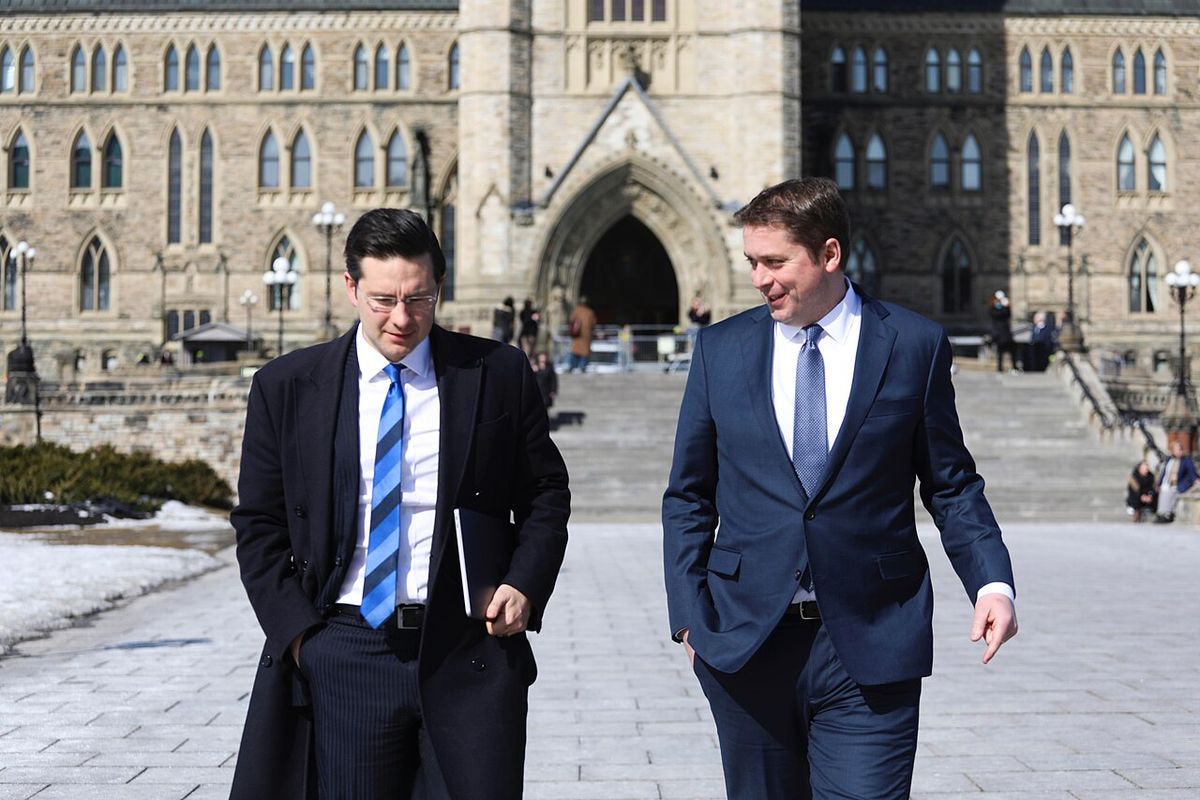
The political response to the Online News Act divided along party lines. The governing Liberal Party, under Prime Minister Justin Trudeau and Heritage Ministers Pablo Rodriguez and Pascale St Onge, championed the law as a necessary stand for Canadian journalism. The opposition Conservative Party, led by Pierre Poilievre, criticized the act, with Poilievre calling it an instrument of censorship in August 2023. This stance marked a shift from the party's position under previous leader Erin O'Toole, whose platform had included proposals for a similar compensation scheme. The New Democratic Party generally supported the law's intent to support media. The bill was introduced in the 44th Canadian Parliament.
Internationally, Canada's law is part of a global trend of governments seeking to regulate the relationship between tech giants and news publishers. A key difference is that Australia's model is designation based, where the government names covered platforms, while Canada's is criteria based, using statutory thresholds. Other jurisdictions, including the United Kingdom, France, Italy, Spain, and Brazil, have explored or implemented similar measures. In February 2024, Meta said it would not renew the deals it had struck with publishers in Australia. A former Meta head of international news partnerships predicted in April 2024 that Meta would walk away in the future when faced with a demand to pay for news links.
The Canadian experience is being watched closely by other countries considering their own laws. The agreement with Google and the stalemate with Meta provide two distinct case studies. Some observers believe the momentum from European, Australian, and Canadian legislation could influence policy in the United States, where state level efforts in California and federal proposals have been discussed. The outcome in Canada may affect the strategies of both platforms and publishers in future international negotiations over news compensation. The Computer and Communications Industry Association filed comments in October 2023 raising concerns that the law could violate provisions of the United States Mexico Canada Agreement.
Ongoing issues and future outlook
As of 2026, several key issues surrounding the Online News Act remain unresolved. The most prominent is the continued news blackout on Meta's platforms in Canada. Meta has maintained its position that it will only restore news if granted a full exemption from the act, a condition the government has rejected. Some commentators and publishers have called for the act's repeal to restore news distribution on these popular social networks. The blockade has altered the information environment, with influencers and unverified content filling the void left by professional journalism, and concerns were raised that it could result in the wider accessibility of fake news content. The restrictions had also briefly applied to the accounts of news satire website The Beaverton due to an automated classification.
The distribution of Google's $100 million annual payment continues to be a subject of discussion within the media industry. The allocation formula, which provides different per journalist funding amounts to print, private broadcast, and public broadcast sectors, has been characterized by the government as accounting for the dynamics of the news industry. Critics argue it creates inequities, while supporters see it as a pragmatic division of a limited pool of funds. Michael Geist argued that the Google agreement upended the original intent of the bill, as the government negotiated a deal on behalf of outlets after claiming it would not get involved.
Future challenges not addressed by the current act are also coming into focus. The rise of generative artificial intelligence and large language models, like ChatGPT, presents a new frontier where tech companies may use news content to train AI systems without licensing or compensation. The existing definition of a digital news intermediary in the act may not cover these AI services. The overall health of the Canadian news sector remains precarious, with continued reliance on a mix of platform payments, direct government subsidies, and advertising. The ultimate impact of the Online News Act on the diversity, innovation, and financial stability of Canadian journalism is still unfolding. After nine months of the Meta blockade, the number of people using Facebook and Instagram in Canada remained stable, leading The Economist to say Meta was emboldened by its Canadian experience.
List of eligible news business criteria
The Online News Act establishes specific legal criteria for news business eligibility under Section 27. A news business must meet one of the following pathways. It can be a qualified Canadian journalism organization as defined in the Income Tax Act. It can be a licensed campus, community, or Indigenous broadcaster under the Broadcasting Act. Alternatively, it can be a publisher that produces news content of public interest focused on general interest and current events, including coverage of democratic institutions and processes. This third pathway has several specific requirements the business must fulfil.
- The business must regularly employ two or more journalists in Canada.
- It must operate in Canada.
- It must not be devoted primarily to a specific topic or industry.
- It must be a member of a recognized journalistic association or have a code of journalistic ethics that follows principles of fairness, independence and rigour in reporting.
Indigenous news outlets that publish news content of general interest and issues specific to Indigenous peoples in Canada are also eligible under the Online News Act. Businesses subject to certain international sanctions are excluded from eligibility. The Canadian Radio-television and Telecommunications Commission, or CRTC, is mandated to designate eligible news businesses upon request if the conditions are met. These conditions include being devoted primarily to news content of public interest and following a code of journalistic ethics.
Financial impact and compensation distribution
The financial arrangements resulting from the Online News Act have created a new, though limited, revenue stream for parts of the Canadian news industry. Google's commitment to pay approximately $100 million annually, indexed to inflation, over five years totals at least $500 million. This money flows into a fund managed by the media sector, which began distributing it to eligible news businesses in March 2025. The government's final regulations established a specific formula for dividing the annual sum among different media sectors, a decision that followed the collapse of the initial plan for a 20 percent variance in individual deals. The distribution allocates approximately $63 million to print publishers, $30 million to private broadcasters, and $7 million to the CBC.
| Entity/Outcome | Financial Commitment/Action | Annual Value (CAD) | Key Condition/Impact |
|---|---|---|---|
| Exemption agreement with government | Approximately $100 million | Five year deal, payments began March 2025. Google withdrew from News Show. | |
| Meta Platforms | News link blockade on Facebook and Instagram | N/A (voluntary payments ended) | Implemented July 2023. Triggered Competition Act complaint. |
| Print Publishers | Share of Google fund | Approximately $63 million | Approximately $20,000 per journalist allocation. |
| Private Broadcasters | Share of Google fund | Approximately $30 million | Approximately $7,300 per journalist allocation. |
| CBC/Radio Canada | Share of Google fund | Approximately $7 million | Approximately $2,900 per journalist allocation. |
This allocation results in significantly different per journalist funding amounts across the sectors. The government justified this structure by stating that print publishers' dependency on digital platforms is more pronounced. The financial impact of Meta's news blockade presents a contrasting picture of loss. Research from McGill University indicated that by December 2023, the ban resulted in a loss of about 5 million daily views for Canadian news outlet pages on Facebook. The negative impact was greater for smaller sites. Despite this, Meta's user base in Canada remained stable nine months into the blockade, leading some analysts to conclude the company was emboldened by the Canadian experience. A former Meta head of international news partnerships predicted in April 2024 that Meta would walk away in the future when faced with a demand to pay for news links.
Questions about Online News Act
What is the main goal of Canada's Online News Act?
The main goal is to enhance the sustainability of the Canadian digital news market by establishing a framework for mandatory bargaining between large digital news intermediaries and eligible news businesses. This framework, enforced by the Canadian Radio-television and Telecommunications Commission, requires these platforms to compensate news publishers for making their content available. The act addresses a perceived imbalance in bargaining power between dominant tech companies and Canadian publishers. It aims to ensure fair compensation for the dissemination of news content via platforms like search engines and social media services.
Which companies are affected by the Online News Act?
The act is designed to apply to digital news intermediaries that hold a prominent market position. The government stated the law would initially apply to Google and Meta Platforms. Google reached a compliance agreement, while Meta has blocked news links. Other platforms like Apple, Microsoft, and X were not initially named but could be designated in the future if they meet the statutory thresholds set by the CRTC.
How much money is Google paying under the act?
Google has agreed to pay approximately $100 million Canadian dollars annually into a collective fund for Canadian news organizations. This agreement was reached with the Canadian federal government on November 29, 2023, to comply with Bill C-18. The fund will be managed by the media sector and distributed according to a government mandated formula. Google's payments are a commitment to provide financial support to eligible news businesses under the act.
Why is news blocked on Facebook and Instagram in Canada?
Meta blocks news links in Canada in response to the Online News Act, which it states is unworkable and exposes it to uncapped financial liability. The company began implementing these blocks in late July 2023 for Canadian users of Facebook and Instagram. Meta says it will only restore news access if granted a full exemption from the act with no obligation to pay compensation, a condition the Canadian government has refused. This action was taken even though the bill's enforcement was not scheduled to begin until late 2024 or early 2025.
Which news organizations are eligible for compensation?
Eligible news businesses include qualified Canadian journalism organizations under the Income Tax Act and licensed campus, community, or Indigenous broadcasters. Publishers are also eligible if they are devoted primarily to news of public interest, employ at least two journalists in Canada, and follow a recognized code of journalistic ethics. Indigenous news outlets that publish news of general interest and issues specific to Indigenous peoples in Canada are included as well. The CRTC is responsible for designating eligible news businesses upon request if these conditions are met.
How has the Online News Act impacted small news outlets?
Small and Indigenous news outlets have been disproportionately harmed by Meta's news blockade, with some like Ku'ku'kwes News and Nunatsiaq News losing over half of their web traffic. According to a McGill University researcher, the ban resulted in a loss of approximately 5 million views per day for Canadian news outlet pages on Facebook by December 2023. While eligible outlets will receive a share of Google's fund, the loss of distribution on major social platforms has made it harder for them to connect with readers. The blockade also hindered the distribution of emergency information during the 2023 Canadian wildfires, prompting calls from government ministers to lift the restrictions.
Sources and further reading
- Online News Act (Wikipedia)
- Online News Act ( SC 2023, c. 23) - Justice Laws Website (laws-lois.justice.gc.ca)
- What's going to happen next with Canada's Online News ... (policyalternatives.ca)
- Repeal the Online News Act to better inform Canadians (policyoptions.irpp.org)
- Question Period Note: Implementing the Online News Act (search.open.canada.ca)
Checked by the Nosy Mag desk. Last updated 2026-10-31.