Healthcare in Canada
Healthcare in Canada is delivered through provincial and territorial systems of publicly funded single-payer healthcare, informally called Medicare. It is guided by the provisions of the Canada Health Act of 1984 and is universal. Canadian Medicare provides coverage for approximately 70 percent of Canadians' healthcare needs. The remaining 30 percent is paid for through the private sector, typically for services not covered or only partially covered by Medicare, such as prescription drugs, eye care, and dentistry. The system faces ongoing challenges including wait times, workforce shortages, and adapting to an aging population.
Historical Foundations and the Path to Medicare
The roots of Canada's healthcare system stretch back to the 19th century. The modern concept of universal healthcare is linked to Tommy Douglas, the Premier of Saskatchewan from 1944 to 1961. His government introduced the Saskatchewan Hospital Services Plan in 1947, creating North America's first universal, publicly administered hospital insurance program. In 1959, Douglas announced plans for a comprehensive medical care insurance plan, which was enacted as the Saskatchewan Medical Care Insurance Act in 1963, despite a bitter doctors' strike. The success of Saskatchewan's model spurred federal action. The Medical Care Act was passed in 1966 to cover doctor visits nationally. The framework was solidified with the Canada Health Act of 1984, which established the five core principles of the system: public administration, comprehensiveness, universality, portability, and accessibility. The Act also explicitly prohibited user fees and extra billing by physicians. The 2002 Royal Commission on the Future of Health Care in Canada, known as the Romanow Report, affirmed that Canadians consider universal access a fundamental value.
Structure and Funding of the System
Canada's healthcare system is a decentralized network of 13 provincial and territorial insurance plans operating within federal guidelines. The federal government sets national standards through the Canada Health Act and provides financial support through the Canada Health Transfer (CHT). In return, provinces must ensure their plans comply with the Act's principles. Day-to-day administration and delivery are provincial responsibilities. The system is predominantly funded through general tax revenues including income, sales, and corporate taxes. In 2021, total health expenditure reached $308 billion, representing 12.7 percent of Canada's GDP. Public sources fund about 70 percent of total health spending, a split that has remained consistent since 1997. The remaining 30 percent is paid privately, with about 41% of that paid by private insurance companies and 49% through out-of-pocket spending by households in 2017. The Canada Health Act covers medically necessary hospital, physician, and surgical-dental services that require a hospital. It does not cover prescription drugs outside hospitals, home care, long-term care, or routine dental care. About 65 to 75 percent of Canadians have some form of supplementary health insurance, often through employers. Provinces provide partial coverage for specific groups like children, low-income residents, and seniors, but these programs vary widely. For example, Ontario levies a health premium on taxable income above $20,000. Each province determines what is considered essential care, leading to variance in public coverage across the country.
- Prescription drugs outside of hospitals: Only 43% of out-of-hospital medicine is covered by public insurance.
- Dental care for most adults: Canada ranks second to last in the OECD for public funding of oral healthcare.
- Vision care and eyeglasses
- Hearing aids and medical devices: Ontario's Assistive Devices Program covers 75% of costs for listed equipment.
- Physiotherapy and chiropractic services
- Psychological services and psychotherapy (unless provided by a psychiatrist)
- Long-term care and home care: Not considered medically necessary under the Canada Health Act.
- Cosmetic and elective surgeries
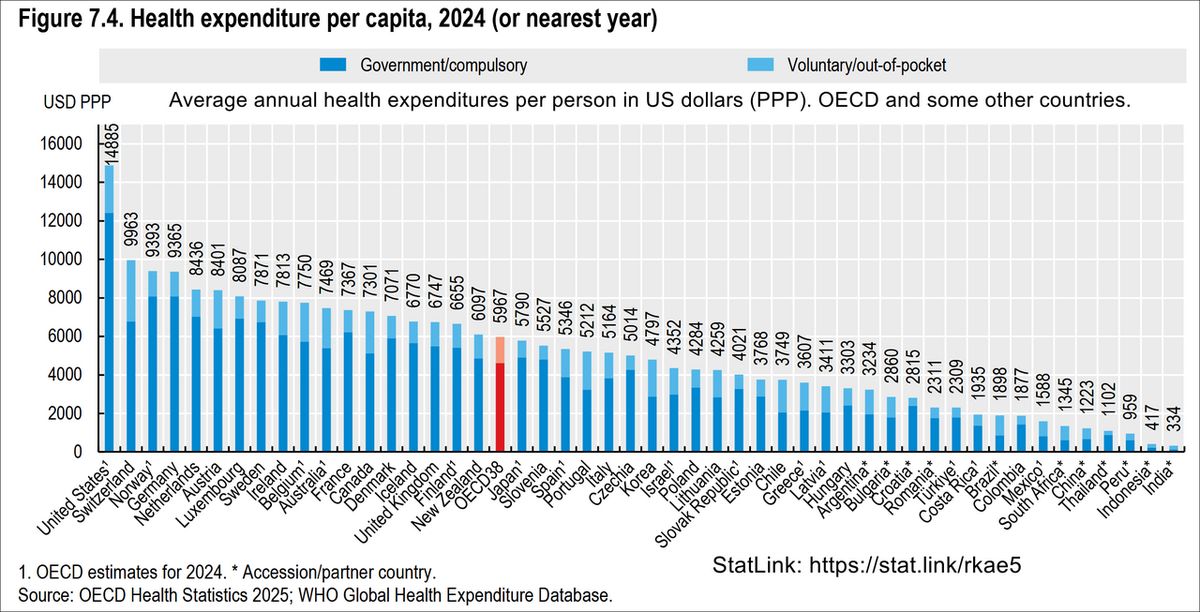
In 2022, Canada's per-capita spending on health expenditures ranked 12th among healthcare systems in the Organisation for Economic Co-operation and Development (OECD). The highest health expenditures in Canada are for hospitals, which accounted for 26.6 percent of the total spending in 2018. This was followed by spending on drugs at 15.3 percent and physician services at 15.1 percent of total health expenditures. These figures illustrate the distribution of costs within the country's publicly funded healthcare framework.
Key Institutions and Oversight
Several key organizations monitor and research the performance of Canada's healthcare system. Health Canada, the federal department, is responsible for national public health policy and overseeing compliance with the Canada Health Act. The Canadian Institute for Health Information (CIHI) is an independent not-for-profit organization established in 1994 through a merger of the Hospital Medical Records Institute and The Management Information Systems Group. It collects and publishes standardized health information, including the annual National Health Expenditure Trends report, and conducts research on wait times and health workforce trends. The Canadian Museum of Health Care in Kingston, Ontario, founded in 1991, holds Canada's largest collection of medical artifacts, approximately 35,000 items. The Health Council of Canada was an independent agency established in 2003 following a First Ministers' accord that monitored and reported on healthcare renewal until its dissolution in 2014, producing over 60 reports. Another body, the Canadian Health Services Research Foundation, was established in the 1996 federal budget to conduct research on system successes and failures.
Demographic Pressures and Health Status
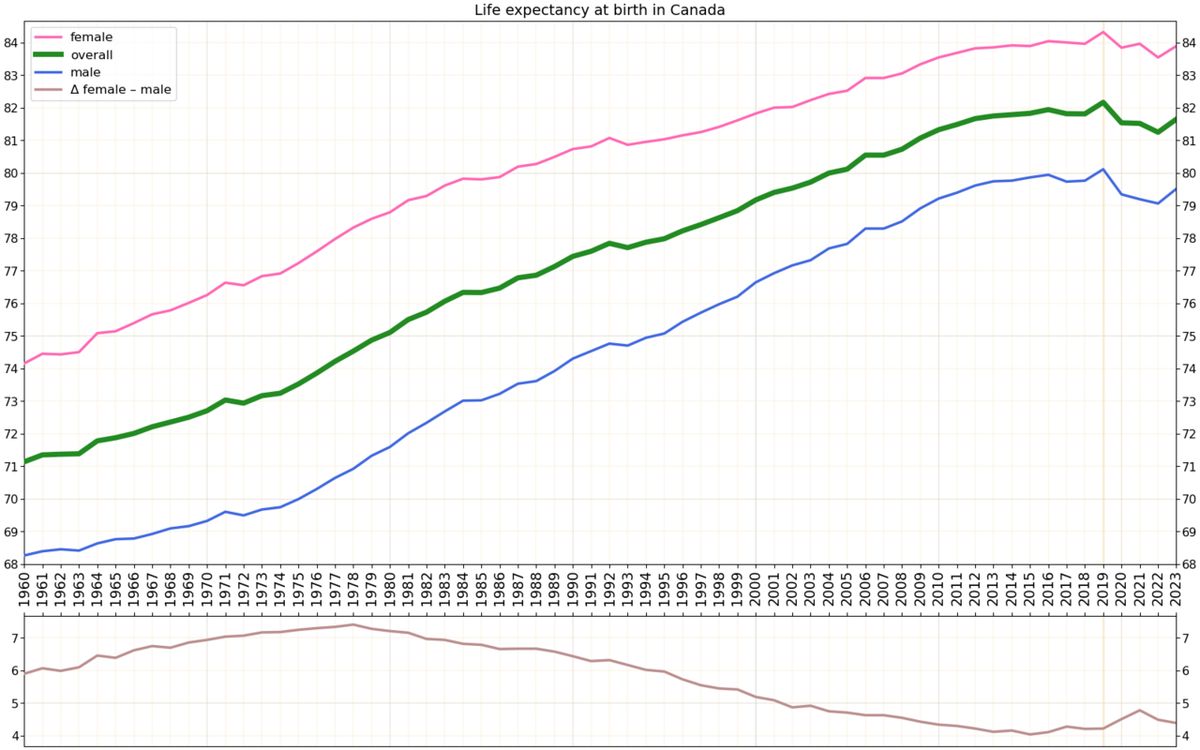
Canada's population is aging. By February 2024, the median age was 40.6 years, up from 39.5 in 2006. In July 2020, 17.5% of Canadians were 65 years and older. This aging trend influences health services and costs, with CIHI estimating it adds about one percent per year to healthcare expenditures. Chronic conditions are highly prevalent among seniors, with eight conditions affecting one in ten seniors, including high blood pressure, arthritis, back problems, eye problems, heart disease, osteoporosis, diabetes and urinary incontinence. In 2020, 69 percent of Canadians self-reported excellent or very good physical health, an improvement from 60 percent in 2018. However, in 2019, 80 percent of Canadian adults reported at least one major risk factor for chronic disease such as smoking, physical inactivity, unhealthy eating, or excessive alcohol use. Canada has one of the highest adult obesity rates in the OECD, contributing to approximately 2.7 million cases of diabetes. Chronic diseases like cancer, cardiovascular diseases, respiratory diseases and diabetes account for 65 percent of all deaths in Canada. There are approximately 8 million individuals aged 15 and older living with one or more disabilities. Life expectancy at birth in Canada is 84.1 years for women and for men at age 65 is 19.5 years. The maternal mortality rate in 2018 was 8.3 deaths per 100,000 live births.
Performance, Challenges, and Comparisons
International comparisons reveal both strengths and weaknesses. Canada ranks above the OECD average for equity and access to care. However, it performs close to or below average on many other indicators. The Commonwealth Fund's 2021 report ranked Canada's system 10th out of 11 high-income countries. Identified weaknesses included comparatively higher infant mortality rates, long wait times, poor availability of after-hours care, and a lack of prescription drugs coverage. Canada has fewer doctors per capita (2.7 per 1000 people) and hospital beds per capita than the OECD average. A 2016 Commonwealth Fund study found 29% of Canadians waited over four hours in emergency departments, and 56% waited over four weeks for a specialist appointment. Domestic challenges include long wait times for diagnostics and specialist care. The Fraser Institute's 2021 report found an average wait time of 25.6 weeks from GP referral to specialist treatment. There is a critical shortage of healthcare professionals. As of 2024, millions of Canadian adults reported not having a regular healthcare provider. Hospital capacity is strained, with temporary emergency room closures common. Canada also has a high rate of preventable deaths from treatable conditions, though this dropped from 109 to 72 per 100,000 from 2000 to 2015. Public opinion surveys indicate a crisis of confidence, with many Canadians believing the system is deteriorating.
| Performance Indicator | Canada's Position |
|---|---|
| Access to Care (Equity) | Above OECD Average |
| Doctors per Capita | 2.7 per 1000 (Below OECD Average) |
| Hospital Beds per Capita | Below OECD Average (decreased 63% since 1976) |
| Infant Mortality Rate (2020) | 4.98 deaths per 1000 live births |
| Overall System Ranking (Commonwealth Fund 2021) | 10th out of 11 Countries |
| Public Funding for Dental Care | Second-Last in OECD |
| Wait Time for Elective Surgery (2016) | 18% waited 4+ months (vs 3% in U.S.) |
| Percentage without Prescription Drug Insurance (2021) | 21% of adults |
Recent Developments and Future Directions
The Canadian healthcare system is in a period of transition marked by federal initiatives and systemic pressures. A major federal initiative launched in 2024 is the Canadian Dental Care Plan (CDCP), aimed at improving access to oral healthcare for uninsured Canadians with a household income under $90,000. The plan began a staggered enrolment rollout in December 2023. Provinces continue to experiment with pharmacare programs, though Canada lacks a national prescription drug plan. Quebec operates its own public prescription drug plan with premiums based on income, while Nova Scotia has Family Pharmacare with deductibles tied to income. In January 2025, Health Minister Mark Holland showed systemic challenges including overcrowded emergency departments, a primary care provider shortage, and workforce burnout. The federal government has negotiated bilateral agreements with provinces worth $200 billion over ten years to improve access and reduce backlogs. A key policy development is the 'CHA Services Policy' announced in January 2025, which expands the definition of insured services to include those administered by nurse practitioners and pharmacists starting April 1, 2026. Key trends shaping the future include the integration of digital health and artificial intelligence, the transformation of primary care, and urgent efforts to stabilize and grow the health workforce. Climate change is also a growing concern, with the healthcare sector responsible for 4.6% of national greenhouse gas emissions from 2009 to 2015. Legal challenges continue, such as the 2020 dismissal of Cambie Surgeries Corporation's constitutional challenge against British Columbia's healthcare laws.
Questions about Healthcare in Canada
What does Canadian Medicare actually cover?
Medicare, governed by the Canada Health Act, provides universal coverage for all medically necessary services provided by physicians and in hospitals, including surgeries and hospital stays. It covers the services of psychiatrists but excludes care in institutions primarily for the mentally disordered. It does not cover outpatient prescription drugs, routine dental and vision care, physiotherapy, psychotherapy from non-physicians, medical devices, or long-term care. These gaps mean Canadians often rely on private insurance or out-of-pocket payments for about 30 percent of total health expenditures.
How is healthcare funded in Canada?
Healthcare is primarily funded through general tax revenues collected by federal, provincial, and territorial governments. In 2021, total health spending was $308 billion, with public funds covering about 70 percent. The remaining 30 percent comes from private sources, with 41% from private insurance and 49% from out-of-pocket payments in 2017. Some provinces, like Ontario, levy a health premium on higher-income earners. The federal government provides funds to provinces through the Canada Health Transfer, conditional on compliance with the Canada Health Act.
What are the biggest challenges facing Canadian healthcare today?
The system faces several interconnected challenges. Critical shortages of healthcare professionals leave millions without a regular provider. Long wait times for specialist consultations and elective surgeries remain a top concern, with an average wait of 25.6 weeks in 2021. The system is strained by an aging population with complex chronic care needs. Hospital capacity is frequently strained, with emergency departments often overcrowded and over 1,100 temporary closures in Ontario in 2023. A significant challenge is the erosion of public trust. Other issues include the lack of a national pharmacare program and disparities in care for Indigenous, Black, and LGBTQ+ communities.
Does Canada have free dental care?
Canada does not have universal free dental care. Dental services are largely excluded from the Canada Health Act, and only about 5% of dental care is publicly financed. However, in 2024, the federal government began rolling out the Canadian Dental Care Plan (CDCP) to help eligible uninsured Canadians with a household income under $90,000. The plan is being implemented in phases, starting with seniors. Some provinces also offer limited dental coverage for specific groups like low-income children, but comprehensive universal dental care is not yet a reality. Canada ranks second to last in the OECD for public funding of oral healthcare.
How does Canada's healthcare system rank compared to other countries?
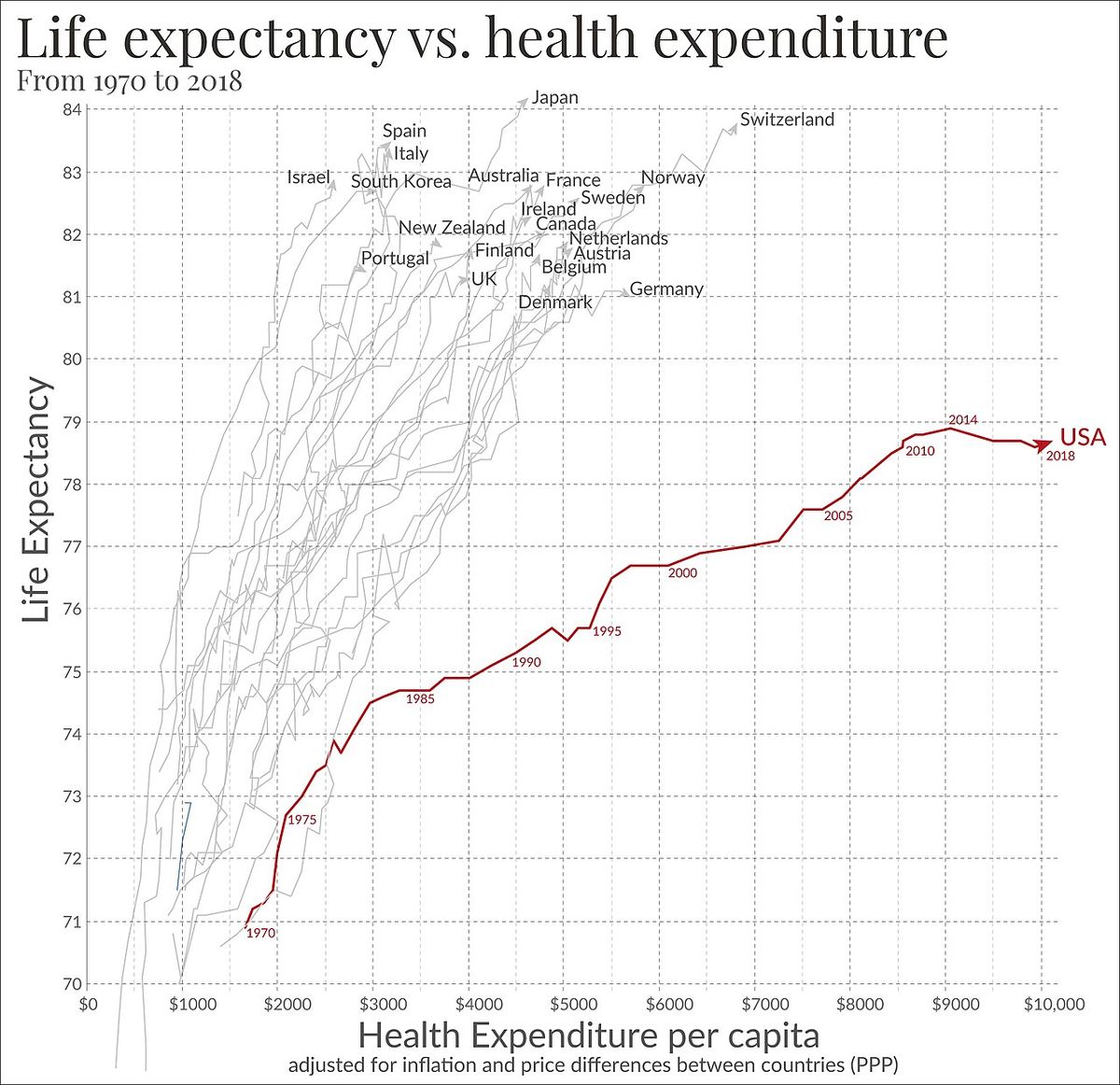
International rankings present a mixed picture. Canada performs well on equity and access, ranking above the OECD average for ensuring financial barriers do not prevent care. However, it often ranks poorly on measures of timeliness and resource availability. A 2021 report by the Commonwealth Fund ranked Canada's system 10th out of 11 high-income countries, citing long wait times, poor after-hours care access, and high chronic disease rates. Canada spends more per capita ($6,448 in 2018) than the OECD average but has fewer doctors (2.7 per 1000) and hospital beds per person than many peers. Its infant mortality rate in 2020 was 4.98 per 1000 live births.
Sources and further reading
- Healthcare in Canada (Wikipedia)
- History of Health and Healthcare in Canada (thecanadianencyclopedia.ca)
- Who started Canada's universal health care system? (cma.ca)
- Where Canada's Health History Lives! (museumofhealthcare.ca)
- Canadian Healthcare in 2026: Key Trends & Challenges (environics.ca)
Checked by the Nosy Mag desk. Last updated 2026-10-30.