Census in Canada
The Census of Population is a comprehensive national survey conducted by Statistics Canada every five years, as required by the Statistics Act. It is mandated by law to collect detailed demographic, social and economic data from every household in Canada. The data influences the allocation of federal transfer payments, determines the number of Members of Parliament for each province and territory, and guides the planning of public services like health care, education and transportation. The most recent census was conducted in 2026, with the next one scheduled for 2031, continuing a statistical tradition that dates back to the first colonial census in New France in 1666.
Purpose and importance
The Census of Population is a critical instrument for democratic representation and public policy. Data from the census is used to determine the number of Members of Parliament for each province and territory, as mandated by the Constitution Act, 1867. The information directly influences the calculation of federal transfer payments to provinces and territories, which fund programs in health care, education and social services. Municipal and regional planners rely on census data to make decisions about public transportation, school locations and community centres. For researchers and advocacy groups, the census provides the primary source of sociodemographic data for analysing the conditions of specific populations, including Indigenous peoples, immigrants, seniors and language groups. This data is also essential for assessing economic conditions, tracking labour market trends and developing socioeconomic indicators.
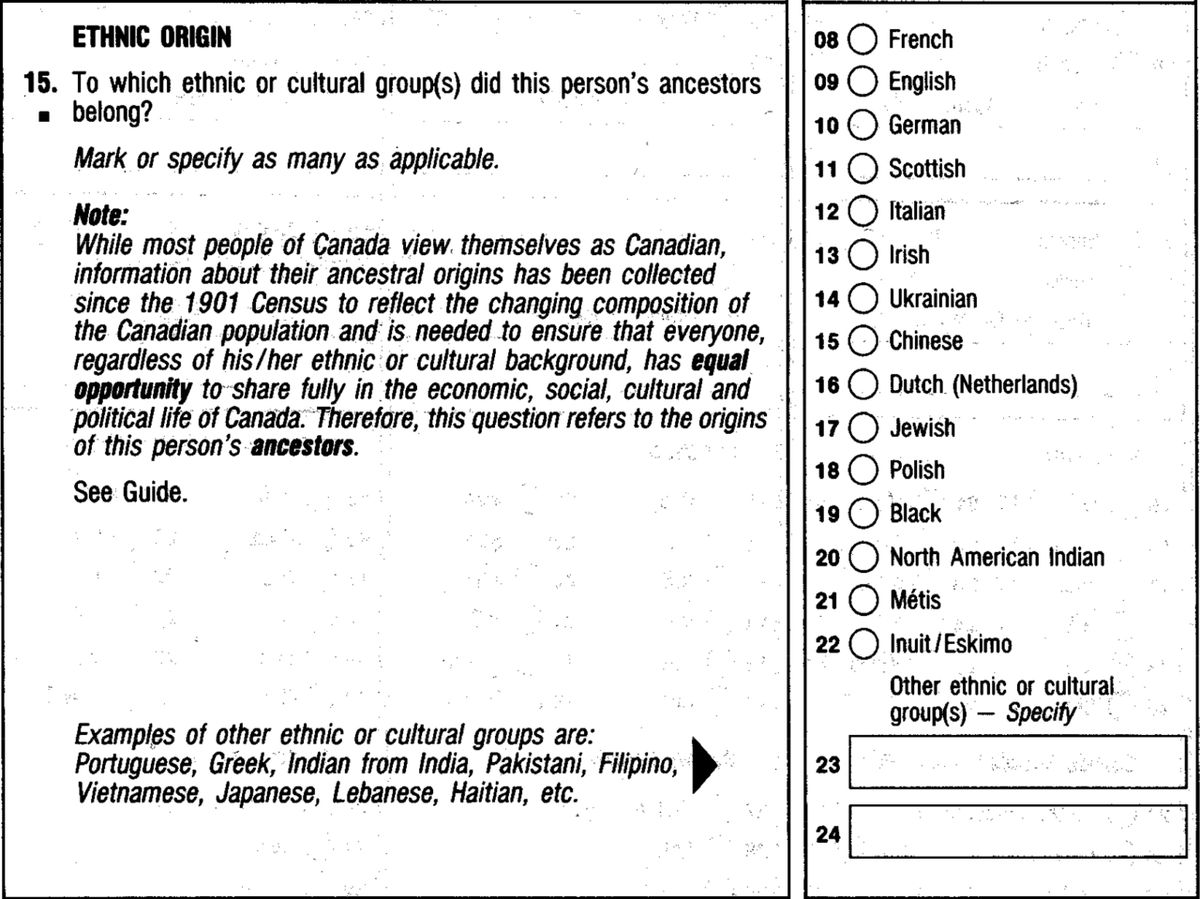
Businesses use census data for market analysis and site selection. Community organisations use the statistics to identify local needs and support funding applications. The census captures a wide range of topics including Indigenous peoples, education, ethnic diversity and immigration, families and households, income and pensions, labour market activity, languages and population demographics. Since 1871, the census has also included questions about religion, though these were asked only every ten years from 1951. The census typically undercounts the population by approximately two to four percent due to factors like people being absent from home or difficulties understanding the questionnaire.
Historical development
The history of census-taking in Canada spans over three centuries. The first census in what is now Canada was conducted in 1666 in the colony of New France under the direction of Intendant Jean Talon. This early count recorded the age, sex, marital status and occupation of 3,215 inhabitants, excluding Indigenous peoples and royal troops. French-controlled Acadia conducted its own series of censuses from 1671 to 1755. Throughout the colonial period, numerous censuses were taken at irregular intervals. Extant records commonly used for research include those from 1825, 1831, 1842, 1852 and 1861. The constitutional foundation for a modern national census was laid in 1867 with the Constitution Act, which mandated that a census must be taken every ten years to determine parliamentary representation.
The first national census of the new Dominion of Canada was taken in 1871, as required by the constitution and enabled by the Census Act of 1870. It surveyed all inhabitants, including Indigenous peoples, but only covered the four original provinces: Ontario, Quebec, New Brunswick and Nova Scotia. Manitoba and British Columbia, which had joined Confederation, were enumerated with separate censuses at that time. The results were published in a five-volume set in 1873. In 1881, the legislation was amended to require all census enumerators to take an oath of secrecy, a pledge that remains in force today, and the census was extended to include British Columbia, Manitoba and Prince Edward Island. To monitor rapid settlement and growth in the West, separate mid-decade censuses of population and agriculture began in Manitoba in 1896 and in Alberta and Saskatchewan in 1906.
Key organisational changes occurred in the early 20th century. In 1912, responsibility for the census was transferred from the Ministry of Agriculture to the Ministry of Trade and Commerce. The Dominion Bureau of Statistics was established in 1918, later renamed Statistics Canada in 1971. After Newfoundland and Labrador joined Canada in 1949, they were included in the national census beginning in 1951. That same year, the census used new mark-sense technology to generate punch cards. A major shift occurred in 1956 when the quinquennial Census of Population and Census of Agriculture was held across the entire country, replacing the earlier prairie mid-decade censuses and establishing the five-year cycle used today. The Statistics Act of 1971 legally confirmed this five-year requirement for both population and agriculture counts.
Major methodological milestones- 1871: First use of the de jure method (counting by usual residence) instead of the de facto method (counting where found on census day). First census to ask questions on religion and birthplace.
- 1901: Census content expanded to include citizenship and period of immigration.
- 1921: First collection of data on homeownership versus tenancy for Canadian households.
- 1941: First use of sampling, with one in ten households asked additional questions about their dwelling.
- 1971: Introduction of self-enumeration for most households, with questionnaires dropped off for later mail-back or pickup. The Dominion Bureau of Statistics was renamed Statistics Canada.
- 1991: First census where all respondents in self-enumeration areas were asked to return questionnaires by mail. First collection of data on common-law partners.
- 2001: First collection of data on same-sex couples.
- 2006: First option for all Canadians to complete the census questionnaire online, with 18.5% of households doing so. First request for consent to release personal information after 92 years.
- 2016: Reinstatement of the mandatory long-form census. 68.4% of responses were received online.
Conduct and methodology
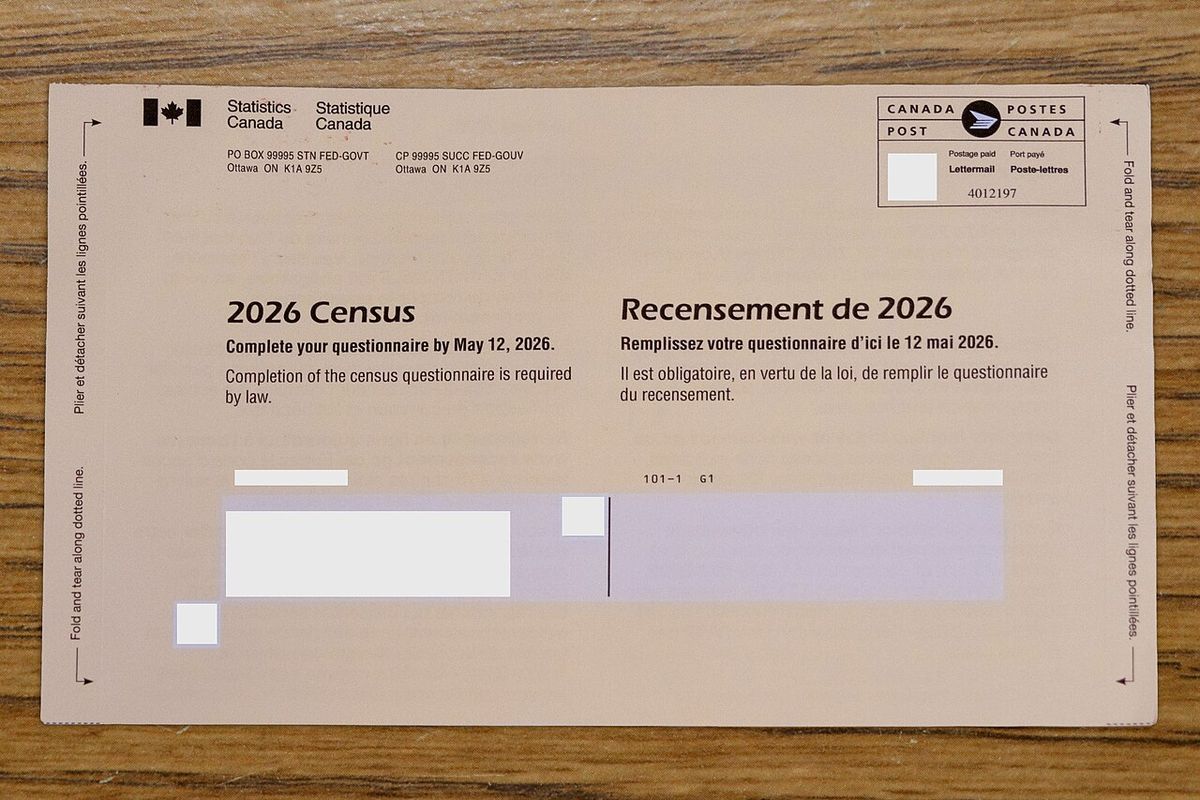
The modern census is a massive logistical operation designed to reach every household in Canada. For the 2026 census, collection began in May 2026. All Canadian households received a census invitation letter in the mail with instructions on how to complete their questionnaire. The primary method of response is through a secure online portal. For those unable or unwilling to complete the form online, paper questionnaires are available and can be returned by mail. In remote areas or where mail delivery is problematic, census enumerators may deliver and collect questionnaires in person. The 2026 census achieved a national response rate of 98.4 percent, surpassing the 98 percent rate recorded in 2021.
Statistics Canada employs a mixed methodology to ensure broad and accurate coverage. The agency may use existing administrative data sources, such as tax files, to reduce the response burden and improve data quality, but only with permission from respondents. The census uses two main questionnaire types: a short form delivered to most households and a more detailed long form delivered to a sample of households. For the 2016 census, 75 percent of households received the short form and 25 percent received the long form. Completion of the census is mandatory by law under the Statistics Act. Statistics Canada implements stringent procedures to protect the confidentiality and security of all responses, with data encrypted during transmission and stored on restricted networks.
Data confidentiality and public access
The protection of personal information is a fundamental aspect of the Canadian census. All employees of Statistics Canada are sworn to secrecy upon hiring, and access to personal data is strictly limited to those who need it to perform their work. The agency implements stringent procedures as required by the Statistics Act to ensure confidentiality. Questionnaires completed online are protected through secure login processes and encryption between the user's browser and Statistics Canada's servers. A critical aspect of public access involves the historical release of census records for genealogical and historical research. All census records up to and including the 1931 census are publicly available at Library and Archives Canada.
Legislation passed in 2005, Bill S-18, amended the Statistics Act to release personal census records to Library and Archives Canada for censuses taken between 1910 and 2005, but only 92 years after each census was taken. For the first time in the 2006 census, Canadians were asked whether they consent to the release of their personal information after this 92-year period. This means that the 2006 census records scheduled for release in 2098 will only include information for those respondents who explicitly gave their consent. Census returns from 1926 onward remain in the custody of Statistics Canada, and disclosure of personal information from these recent records is not permitted, with the sole exception being for individuals requesting information about themselves.
The 2026 census and data release
The 2026 Census of Population marked the latest iteration in Canada's quinquennial cycle. Collection for the 2026 census is now closed, following a successful campaign that began in May 2026. The national response rate reached 98.4 percent, demonstrating continued strong public participation. Statistics Canada has a detailed dissemination plan to release the wealth of data collected. The first major data releases began in 2026, and the agency plans to release all topics and 2026 census content through a series of major releases scheduled to be completed within two years after a census is conducted. This two-year lag between collection and full publication is standard, allowing time for rigorous data processing, validation and analysis.
The data from the 2026 census will update the statistical portrait of Canada, providing new insights into population growth, demographic shifts, migration patterns and housing trends. These figures will be crucial for recalculating federal transfer payments and for the subsequent electoral boundary redistribution process. Statistics Canada produces and publishes numerous free resources for the public based on census data, including data products, reference materials, geographical information and interactive data visualization tools. The information is used by all levels of government, academic researchers, private sector analysts and community organisations to understand the changing face of Canadian society and to plan for the future.
Planned 2026 census data release timeline| Release Activity | Scheduled Timeframe |
|---|---|
| Initial data release | Began in 2026 |
| Release of all topics and content | Through major releases |
| Completion of major data dissemination | Within two years after the census |
Related counts and provincial authority
While the national Census of Population is the most comprehensive demographic survey, it is not the only official count in Canada. Conducted concurrently every five years is the Canadian Census of Agriculture, which gathers detailed data on farms, farmers and agricultural production. Specific sub-national jurisdictions have the authority to conduct their own municipal censuses. The provinces of Alberta and Saskatchewan, along with the territories of Nunavut and Yukon, have legislation that allows local governments within their boundaries to undertake these local counts. Municipal censuses are often used to obtain more frequent population updates between national censuses, which can be important for local planning and for qualifying for certain per-capita-based provincial grants or revenue-sharing agreements.
These local censuses operate under provincial or territorial legislation and are separate from the national exercise conducted by Statistics Canada. They may have different questions, methodologies and timelines. The data from municipal censuses can provide valuable supplementary information for community planning but are not used for federal purposes like determining parliamentary seats or calculating major transfer payments. The national census remains the definitive and legally mandated source for key demographic variables that shape national and provincial policy, ensuring consistency and comparability across the entire country.
Questions about Census in Canada
Is completing the Canadian census mandatory?
Yes, completing the census is mandatory by law. The Statistics Act requires that every household in Canada complete a census questionnaire. The information collected is vital for planning public services, determining federal transfers and ensuring fair political representation. Failure to complete the census can result in penalties, including fines.
How often is the census taken in Canada?
The national Census of Population is conducted every five years, a cycle known as quinquennial. This frequency was established for the entire country in 1956 and was confirmed in the Statistics Act of 1971. The most recent census was in 2026, and the next one is scheduled for 2031. The five-year interval allows Canada to keep pace with rapid demographic and social changes.
How is my personal information protected when I do the census?
Statistics Canada has stringent legal and operational safeguards to protect your information. All employees swear an oath of secrecy, and access to data is strictly limited. Online responses are encrypted, and data is stored on secure internal networks. By law, your individual information cannot be shared with any other government department or agency, including the Canada Revenue Agency or police.
When will the 2026 census results be available?
Statistics Canada began releasing 2026 census data in 2026. The agency follows a detailed dissemination plan to release all topics and data through a series of major publications. The full release of 2026 census content is scheduled to be completed within two years after the census is conducted. This period allows for thorough data processing and validation.
What is the difference between the short-form and long-form census?
The short-form census questionnaire is sent to the majority of households and collects core demographic data. The long-form questionnaire is sent to a sample of households and includes all the short-form questions plus additional detailed questions. For the 2016 census, 75 percent of households received the short form and 25 percent received the long form. Both forms are mandatory, and the long form provides deeper insights for community and economic planning.
Can I access historical census records about my ancestors?
Yes, historical census records are a valuable resource for genealogical research. Under Canadian law, personal census records are transferred to Library and Archives Canada and released to the public 92 years after the census was taken. All records from the 1871 census up to and including the 1931 census are currently publicly available. For the 2006 census and later, records will only be released after 92 years if the individual consented.
Sources and further reading
- Census in Canada (Wikipedia)
- Census.gc.ca, Welcome to the 2026 Census (census.gc.ca)
- 2026 Canadian Census (middlesexcentre.ca)
Checked by the Nosy Mag desk. Last updated 2026-10-26.