Canadian Free Trade Agreement
The Canadian Free Trade Agreement (CFTA) is an intergovernmental accord governing trade between Canada's provinces and territories. It took effect on July 1, 2017, replacing the 1995 Agreement on Internal Trade (AIT). The CFTA aims to reduce internal trade barriers, enhance labour mobility, and create a more competitive economic union. Its rules apply to virtually all areas of economic activity using a 'negative list' approach where only explicitly exempted sectors are excluded.
Historical Context and Development
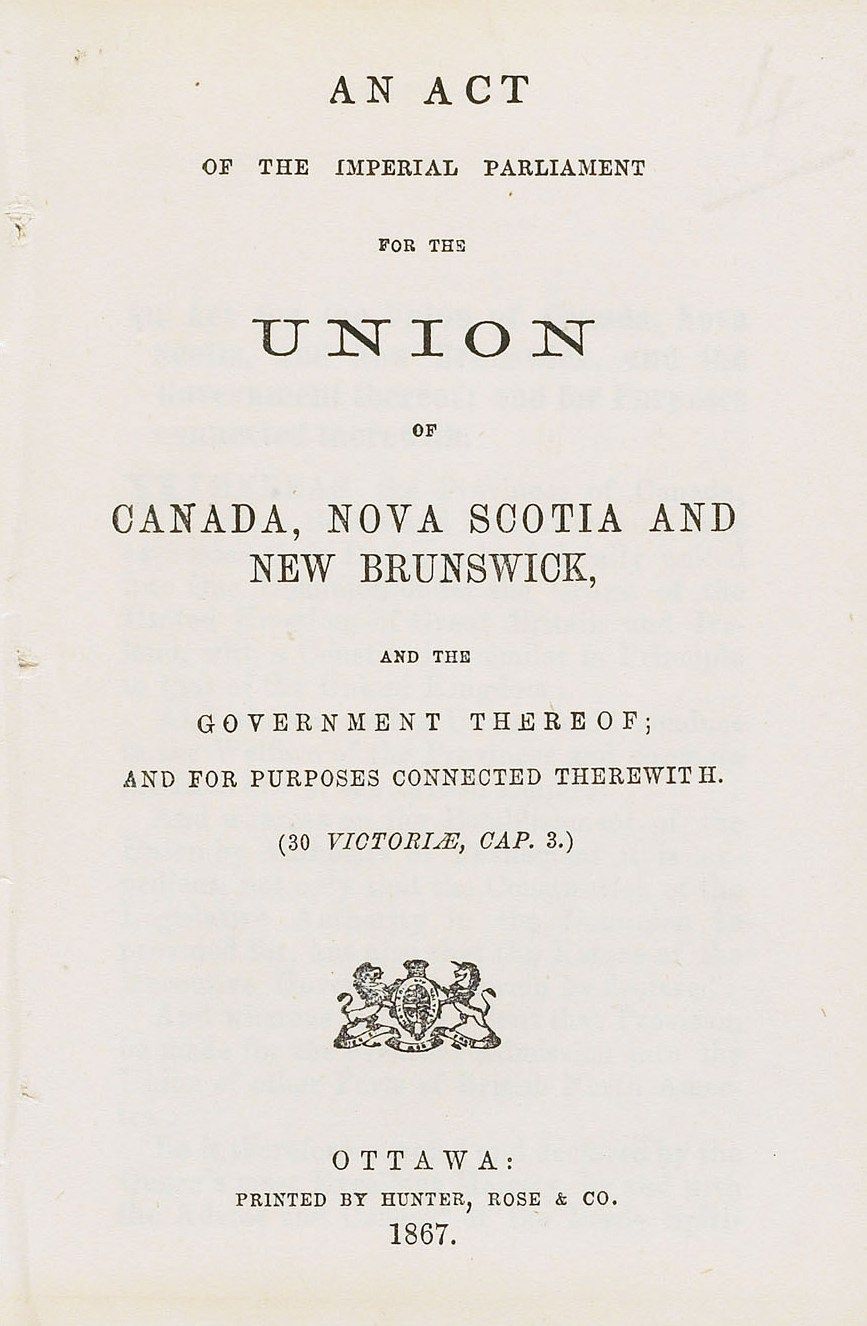
Canada's status as a highly decentralized federation has long created a patchwork of diverse provincial regulations, which act as non-tariff barriers to internal trade. Section 121 of the Constitution Act, 1867, which states that goods from any province shall be admitted free into others, did not fully prevent these barriers. The first major effort to address this was the Agreement on Internal Trade, signed in 1994 and effective in 1995. The AIT aimed to eliminate barriers to the movement of people, goods, services, and investment but was limited in scope, covering only 11 sectors of the economy. In December 2014, federal, provincial, and territorial governments launched negotiations to modernize and replace the AIT. These talks concluded with an agreement in principle announced by Canada's premiers at the July 2016 Council of the Federation meeting in Whitehorse. The resulting Canadian Free Trade Agreement officially took effect on July 1, 2017, introducing a new, more comprehensive framework for Canada's internal market.
The development of the CFTA was driven by a desire to boost Canada's economic productivity and competitiveness by reducing costly internal frictions. A 2016 Senate committee report estimated that internal trade barriers cost the Canadian economy up to $130 billion annually. The new agreement was also designed to better align with Canada's international trade commitments, such as the Comprehensive Economic and Trade Agreement with the European Union, to reduce compliance costs for businesses operating both domestically and abroad. The shift from the AIT's limited sectoral approach to the CFTA's economy-wide 'negative list' model was a central reform, intended to automatically cover new and emerging economic sectors. In 2010, the New West Partnership, a separate interprovincial free trade deal between Alberta, British Columbia, Saskatchewan, and Manitoba, came into effect, building on and going further than the AIT.
Key Provisions and Structure
The CFTA is built around several core chapters that establish rules for goods, services, investment, procurement, and regulatory cooperation. A foundational element is its application to the entire Canadian economy by default, with governments required to list any exemptions. This structure covers significantly more economic activity than the 11 sectors listed under the old AIT. The agreement includes strengthened dispute resolution mechanisms and increased monetary penalties for non-compliance, with maximum penalties for larger jurisdictions doubling from $5 million under the AIT to $10 million under the CFTA. These provisions are intended to provide stronger incentives for governments to adhere to the agreed-upon rules.
Governments also made precedent-setting commitments to open procurement practices, creating a more level playing field for companies bidding on public contracts across the country. The CFTA establishes a formal regulatory reconciliation process to address differences in rules between jurisdictions that hinder trade. It also creates a mechanism to promote regulatory cooperation, helping governments develop common approaches for emerging sectors. Importantly, the agreement preserves the right of governments to regulate in the public interest for objectives such as public health, safety, consumer protection, and environmental conservation. The CFTA also initiated several forward-looking working groups to continually strengthen Canada's economic union.
- Goods and Services: Rules to eliminate technical barriers and enhance the flow of trade.
- Investment: Provisions to protect and promote interprovincial investment.
- Procurement: Expanded coverage to create open competition for government contracts.
- Regulatory Cooperation: Processes to reconcile and align regulations across jurisdictions.
- Dispute Settlement: A formal panel process to resolve disagreements between parties.
- Exceptions: A 'negative list' where only listed sectors or measures are exempted.
Labour Mobility (Chapter 7)
Chapter 7 of the CFTA, carried forward from the AIT, is dedicated to labour mobility and is a central component of the agreement. It mandates that any worker certified to practice a regulated occupation in one Canadian province or territory must be recognized as qualified to practice that same occupation in any other jurisdiction. This eliminates the need for redundant training, testing, or certification when a certified professional moves within Canada, provided opportunities in that occupation exist. The Forum of Labour Market Ministers, composed of federal and provincial ministers responsible for the CFTA, oversees this chapter. The labour mobility provisions have been periodically strengthened, with ministers ratifying amendments to the CFTA specifically designed to further strengthen labour mobility across Canada in August 2026.
The labour mobility provisions enable any worker certified to practice a regulated occupation by one Canadian jurisdiction to be recognized as qualified to practice that occupation in any other jurisdiction, wherever opportunities in that occupation exist. According to the Forum of Labour Market Ministers, ensuring that qualifications of certified workers are recognized when they move benefits both workers and employers. This results in a wider range of employment opportunities for workers and a broader selection of candidates for employers, addressing regional labour shortages. In 2012, the RCMP led a sting operation against illegal alcohol imports across the Québec-New Brunswick border, arresting and issuing fines to seventeen people, including Gérard Comeau, who challenged the fine in court arguing it violated Section 121 of the Constitution Act, 1867.
Exemptions and Ongoing Reforms
Despite its comprehensive scope, the CFTA began with a substantial number of listed exceptions, covering approximately 160 pages and over 300 specific items. Columnist Andrew Coyne noted this would only make matters marginally better than before. Common areas for exemptions include alcohol, agriculture, and certain professional regulations. In response to criticism, governments have undertaken a multi-year process to review and remove exemptions. At a July 2019 summer meeting, premiers agreed to an immediate amendment allowing governments to unilaterally remove or narrow their exceptions and committed to reviewing their own lists by the end of that year.
This triggered a wave of reforms. Alberta, under Premier Jason Kenney, eliminated 13 of its 27 exemptions in July 2019 and another eight in September 2019, moving from the province with the third-highest number of specific exemptions to the one with the fewest. Manitoba removed six exemptions and narrowed one additional exemption in October 2019. The federal government has also made significant cuts, announcing the removal or narrowing of 17 exceptions in July 2024. In February 2025, it announced the removal of 20 of its remaining 39 exceptions, representing a 64 percent reduction in federal exceptions since the CFTA's launch. These collective actions demonstrate a political commitment to gradually realizing the agreement's full potential.
Economic Impact and Analysis
Internal trade is a major component of the Canadian economy, representing roughly one-fifth of the annual GDP. Studies have consistently pointed to the economic cost of internal barriers. A 2018 study found that trade barriers between provinces had declined by 15 percent over the previous 20 years, indicating some success of the AIT framework. The Organization for Economic Co-operation and Development has also linked reducing non-tariff barriers to improved productivity.
However, analyses suggest significant work remains. A 2019 working paper from the International Monetary Fund found that internal trade barriers continued to impact Canadian GDP despite the CFTA, claiming that removing them could increase Canada's GDP per capita by as much as 3.8 percent. The agreement has been praised for creating a framework for future liberalization, but groups like the Canadian Constitution Foundation have argued it should not be confused with real free trade due to the remaining exemptions. The CFTA's value is seen not only in immediate rule changes but in establishing processes for continual regulatory improvement and reconciliation. Initial reactions to the agreement were largely positive, with supporters pointing to the increased liberalization in trade and the possibility to further decrease remaining barriers in the future.
Recent Developments and Future Direction
The CFTA is designed as a living agreement, with processes for periodic review and amendment. A landmark development was the ratification of amendments to strengthen labour mobility in August 2026. A major regulatory milestone was achieved by June 2026, when all governments agreed that all goods except food and alcohol approved for sale in one jurisdiction could be sold in any other without additional testing or approval. This 'mutual recognition' approach for goods significantly reduces technical barriers for businesses operating across provincial lines. Public opinion continues to favour greater internal free trade, with a 2019 Ipsos poll finding that 87 percent of Canadians believed they should have the right to bring any legally purchased product from one province to another.
In November 2018, the Alberta government launched a complaint under the agreement against Ontario over its regulation of Albertan alcoholic beverage sales in Ontario. The CFTA increases the maximum monetary penalties for governments that act inconsistently with the agreement, with penalties for larger jurisdictions doubling to a maximum of $10 million. The agreement introduces a mechanism to promote regulatory cooperation, equipping governments to develop common regulatory approaches for emerging sectors like clean technology. The CFTA better aligns with Canada's commitments under international trade agreements such as the Canada-European Union Comprehensive Economic and Trade Agreement, reducing compliance costs for Canadian firms. In July 2018, the premiers agreed in principle to significantly increase or remove personal exemption limits to allow Canadians to bring more alcohol with them when crossing provincial boundaries.
Comparison with International Agreements
While the CFTA governs internal trade, Canada is also active in securing international free trade agreements, with 15 such agreements covering 51 countries as of 2026. These international FTAs provide preferential access to 61 percent of global GDP and over 1.5 billion consumers. Federal Minister Navdeep Bains once stated that the CFTA was more ambitious in scope than the Canada-European Union Comprehensive Economic and Trade Agreement. The CFTA's design intentionally incorporates principles and approaches from modern international agreements, such as negative listing and regulatory cooperation chapters, to reduce complexity for firms that trade both within Canada and abroad. This table illustrates how the CFTA operates alongside Canada's international trade portfolio.
| Agreement Type | Primary Partners | Key Date |
|---|---|---|
| Internal Trade | All Canadian Provinces & Territories | Effective July 1, 2017 |
| Canada-United States-Mexico Agreement (CUSMA) | United States, Mexico | Replaced NAFTA July 1, 2020 |
| Comprehensive Economic and Trade Agreement (CETA) | European Union | Entered force September 21, 2017 |
| Comprehensive and Progressive Agreement for Trans-Pacific Partnership (CPTPP) | 10 Asia-Pacific nations | Entered force December 30, 2018 |
| Canada-UK Trade Continuity Agreement (CUKTCA) | United Kingdom | Entered force April 1, 2021 |
| Canada-Indonesia CEPA | Indonesia | Signed September 24, 2025 |
| Canada-Ecuador FTA | Ecuador | Signed July 24, 2026 |
On September 21, 2026, the government tabled a notice of intent to initiate negotiations toward a Canada-Türkiye Free Trade Agreement. Canada currently has 15 free trade agreements in force with 51 different countries around the world, and more in varying stages of negotiation. The Canadian Free Trade Agreement provides a foundation of domestic regulatory coherence that supports international competitiveness. This relationship between internal and external trade policy is a key feature of Canada's economic strategy, helping Canadian firms reach new customers and grow internationally.
Questions about Canadian Free Trade Agreement
What is the Canadian Free Trade Agreement (CFTA)?
The Canadian Free Trade Agreement is an intergovernmental pact that governs trade between all of Canada's provinces and territories. It took effect on July 1, 2017, replacing the older Agreement on Internal Trade. The CFTA uses a 'negative list' approach, meaning its rules automatically apply to all areas of the economy unless a specific exemption is listed. Its main goals are to reduce internal trade barriers, enhance labour mobility, and create a more competitive and unified Canadian economic union.
How does the CFTA affect workers moving between provinces?
Chapter 7 of the CFTA deals specifically with labour mobility. It requires that any worker certified in a regulated occupation in one province or territory must be recognized as qualified to practice that same occupation in any other jurisdiction in Canada. This means professionals like engineers, nurses, and electricians do not need to get re-certified when they move, as long as opportunities exist. Amendments to further strengthen these labour mobility provisions were ratified by ministers in August 2026.
Can I bring alcohol from one province to another under the CFTA?
Alcohol remains one of the most notable exemptions under the CFTA. While the agreement has liberalized trade in many areas, provincial regulations on the interprovincial transport of alcohol for personal use largely remain in place. In July 2018, premiers agreed in principle to significantly increase or remove personal exemption limits. A 2019 Ipsos poll found 87 percent of Canadians believe they should have the right to bring any legally purchased product across provincial borders.
What are the penalties for not following the CFTA?
The CFTA includes a dispute settlement process and monetary penalties for governments that act in a manner inconsistent with the agreement. The maximum penalties are based on provincial population. For larger jurisdictions, the maximum penalty under the CFTA is $10 million, which is double the $5 million maximum that existed under the previous Agreement on Internal Trade. These penalties are designed to encourage compliance with the agreed-upon trade rules.
How many exemptions are there in the CFTA and are they being removed?
When the CFTA first took effect, it contained over 300 specific exemptions listed across approximately 160 pages. Since then, there has been a concerted effort by federal, provincial, and territorial governments to review and remove these exceptions. For example, Alberta eliminated 21 exemptions in 2019, and the federal government removed 20 of its 39 remaining exceptions in February 2025, a 64 percent reduction since the CFTA's launch. This process of removing exemptions is ongoing.
How does the CFTA relate to Canada's international free trade agreements?
The CFTA is designed to complement Canada's international trade agreements. It incorporates similar modern trade principles, such as regulatory cooperation and open procurement, which helps reduce compliance costs for Canadian businesses that operate both domestically and abroad. The federal government has stated that the CFTA's scope is more ambitious than some international deals, like the Canada-EU trade agreement. Having a strong internal trade framework makes Canadian businesses more competitive globally. Canada has 15 international free trade agreements covering 51 countries.
Sources and further reading
- Canadian Free Trade Agreement (Wikipedia)
- Canadian Free Trade Agreement (cfta-alec.ca)
- Canada-Türkiye Free Trade Agreement (international.gc.ca)
- Canada's Free Trade Agreements (pfcollins.com)
Checked by the Nosy Mag desk. Last updated 2026-10-30.