Affordable housing in Canada
Affordable housing in Canada refers to living accommodations that are financially accessible to households with a median income, typically defined as costing less than 30% of a household's gross income. This concept spans a continuum from market-based rental and ownership options to non-market, government-subsidized housing such as public housing and shelters. The issue is a central economic and social challenge, affecting both homebuyers and renters, with implications for household financial stability, economic growth, and social equity. Canada's housing affordability crisis is considered among the most severe in the developed world, driven by factors including high prices, rising rents, and a chronic shortage of supply.
Definitions and the Housing Continuum
Definitions of affordable housing in Canada vary among jurisdictions but commonly use a shelter-cost-to-income ratio (STIR) benchmark of 30%, as employed by the Canada Mortgage and Housing Corporation. This means housing is considered affordable if a household spends less than 30% of its gross income on shelter costs. The concept encompasses a broad continuum of housing options, ranging from non-market social housing to market-based rentals and home ownership. Social housing is specifically targeted to low-income households and offered at below-market rents, often through rent-geared-to-income (RGI) subsidies provided by governments or non-profit organizations. According to a 2025 Parliamentary Budget Officer analysis, Canada's social housing stock is estimated at 600,000 to 700,000 units, a figure that has remained largely stagnant for three decades. Most of this housing was constructed before 1994 and is supported by long-term federal operating agreements. As of 2024, social and community housing represented only about 3 to 4 percent of Canada's total housing stock, with the vast majority of households relying on the private market for ownership or rental.
The market-based housing system accounted for approximately 80% of Canadian households' housing acquisitions as of 2018. About two-thirds of Canadian households are homeowners, while one-third are renters occupying both market-rate and non-market units. To restore affordability across the continuum, analyses suggest Canada needs to dramatically increase its rate of housing construction. Estimates indicate the country must double housing starts from approximately 250,000 to between 430,000 and 480,000 units annually through 2035 to address the supply shortage and meet demand. This target shows the scale of the challenge in creating enough housing across all tenures to improve accessibility and cost.
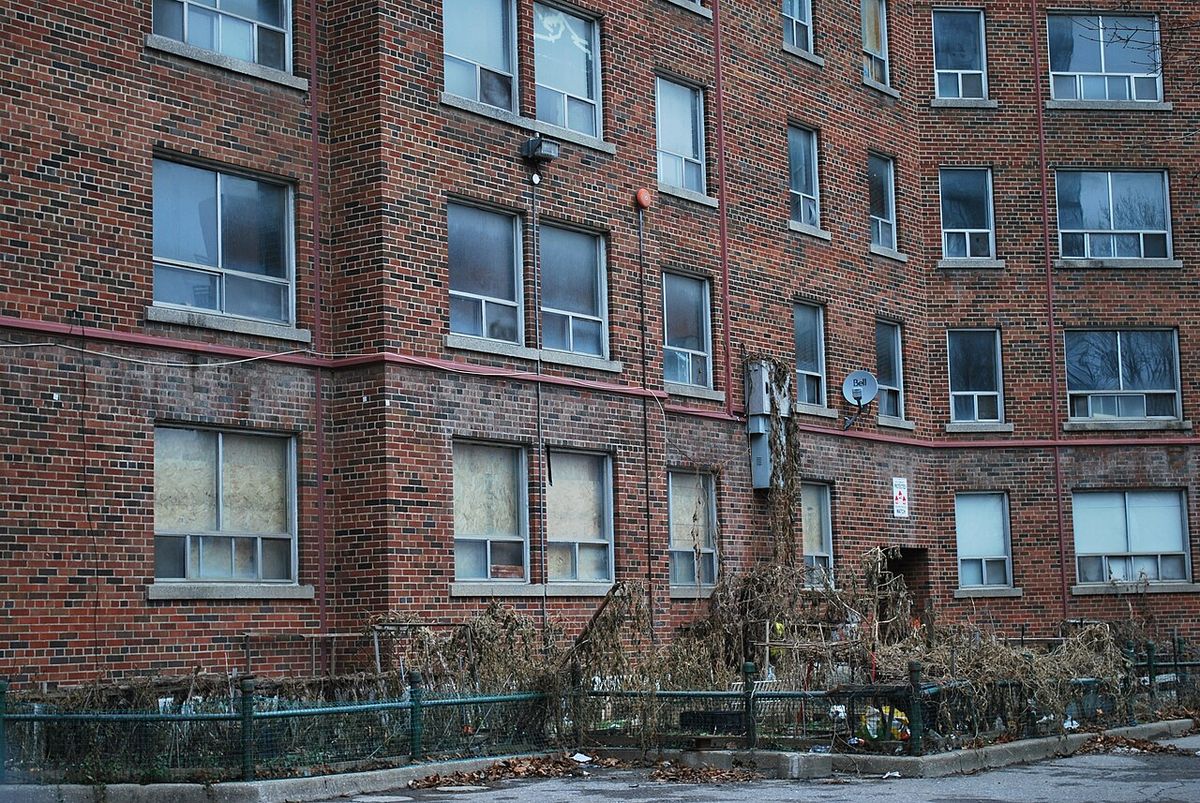
Measuring Affordability and Current Challenges
Measuring housing affordability is complex due to Canada's diverse geography and income disparities. The most common benchmark is the shelter-cost-to-income ratio (STIR), though the specific costs included can vary. The 30% rule was adopted in the 1980s, replacing previous benchmarks of 20% and 25%. Financial institutions and mortgage providers still use this rule, but academics like University of Toronto professor J. David Hulchanski have challenged its adequacy, arguing it may not capture the true burden on lower-income households. Banks often require a much higher qualifying income for mortgage approval than the 30% rule suggests. Other indicators used to gauge housing insecurity include vacancy rates, eviction filings, demand for housing assistance, and core housing need, which measures households living in unsuitable, inadequate, or unaffordable dwellings.
The current affordability situation is severe. By December 2023, the Bank of Canada reported its Housing Affordability Index showed the worst conditions since 1982, driven by increased mortgage rates and high home prices. Since the start of the COVID-19 pandemic in 2020, house prices increased by over 34%. A low supply of both ownership and rental units has also caused rents to soar across the country. International observers, including the BBC, have noted Canada faces some of the world's worst housing affordability issues. OECD data highlights a dramatic disconnect, with the average Canadian home price around $817,000 representing over nine times the average household income. This imbalance places immense pressure on both aspiring homeowners and renters.
The Financialization of Housing
The financialization of housing, where residential real estate is treated primarily as a financial investment vehicle, has become a significant factor in Canada's affordability crisis. This involves large-scale acquisitions of rental apartments by real estate investment trusts (REITs), private equity firms, and large corporations like Avenue Living and MainStreet. Research by housing expert Steve Pomeroy indicates that between 2011 and 2016, over 300,000 private rental units disappeared from the market due to financialization, while fewer than 20,000 new subsidized units were added. These financialized landlords often purchase undervalued properties, upgrade them, and re-lease them at higher rents, reducing the stock of housing affordable to lower-income households. In May and June 2024, Federal Housing Advocate Marie-Josée Houle testified during House of Commons hearings that the financialization of housing is widespread, increasing, and has very little oversight, contributing to deteriorating conditions, displacements, and evictions.
An investigation by CBC's Fifth Estate identified the financialization of the rental sector as a major factor in Canada's rental crisis, which affects about a third of the population. The investigation found municipal systems sometimes view these practices as a beneficial revenue stream. Michael Brooks, CEO of the Real Property Association of Canada (REALPAC), which represents large commercial real estate companies, stated in an interview that the private sector's primary obligation is to its investors, not to providing public goods like affordable housing. REITs and financial landlords thrived during the pandemic, posting hundreds of millions in profits, benefiting from historically low interest rates and CMHC-backed financing to acquire and refinance multi-family buildings. The Brookings Institution lists REITs and large Canadian banks among the most reliable dividend payers, recommending them to pensioners as investments.

Government Roles and Policy Levers
Housing policy in Canada involves all levels of government, creating a complex web of jurisdiction and funding. Constitutionally, housing is primarily a provincial responsibility, but the federal government plays a major role through funding, national strategies, and Crown corporations. Municipalities hold significant power in setting zoning and land-use bylaws, which directly affect what can be built and where. Their primary funding source for housing strategies is often property taxes. In response to the federal government's $4-billion Housing Accelerator Fund launched in 2023, many municipalities have amended zoning bylaws to allow greater density and flexibility to access federal funding tied to such changes. Provincial and territorial governments provide the most funding for housing and establish the regulatory frameworks that limit municipal action.
The federal government provides funding to provinces, territories, and sometimes directly to municipalities through bilateral agreements. A 2022 report from the University of Toronto's Institute on Municipal Finance and Governance called for greater cooperation between these levels of government to address the crisis. Research has also shown a disconnect between urban planning principles and affordability outcomes. For example, promoting density and mixed-use zoning in cities like Toronto has, as an unintended consequence, decreased affordability for lower-income workers in sectors like manufacturing and trades, while higher-income earners in management and technology have seen improved affordability. A February 2026 CMHC study of over 400 municipalities found a direct link between municipal land-use regulation and higher home prices, indicating that a 10% increase in a city's regulatory restrictiveness was associated with an approximately 14% increase in house prices.
- Federal: Provides major funding, sets national strategy (e.g., National Housing Strategy), operates CMHC.
- Provincial/Territorial: Primary constitutional responsibility. Provides most funding. Sets regulatory framework.
- Municipal: Controls zoning, land use, and building permits. Funded largely by property taxes.
Housing economists have cautioned against attributing housing unaffordability primarily to immigration levels. Following renewed political attention to record immigration rates amid the housing crisis, a January 2024 CBC News analysis found that economists and housing experts identified high interest rates, increasing construction costs, and municipal red tape slowing housing approvals as concurrent pressures on the housing market. David Hulchanski, a professor of housing and community development at the University of Toronto, questioned whether policy should require newcomers to settle only where housing supply exists, since immigrants are free to choose where they live. This analysis highlighted that these factors, not immigration alone, were key pressures on the housing market.
Historical Development of Housing Policy
Federal involvement in housing began in earnest after the Great Depression and World War II. The 1935 Dominion Housing Act established a market-oriented focus, providing joint government-private lender mortgage loans but no subsidized low-rental housing. In 1946, the Central Mortgage and Housing Corporation (now CMHC) was created, administering the National Housing Act to provide grants, loans, and mortgage insurance. From the late 1940s to the 1970s, the federal government was heavily involved in funding social housing, covering 75% of costs with provinces adding 25% for low-income families. The 1950s saw federal grants for urban renewal projects that included rent-geared-to-income (RGI) developments. The 1960s and 1970s represented a peak in social housing construction, with amendments to the National Housing Act in 1973 leading to the building of about 20,000 social housing units annually. For nearly two decades starting in the early 1970s, approximately 16,000 non-profit or co-op homes were built or acquired each year. The legacy of this history is a system where most affordable housing was built before 1994, with ongoing support focused on maintaining existing units through long-term operating agreements. Public policies since the 1970s favoured market solutions, and tools like inclusionary zoning used in the United States were not adopted at the same rate in Canada.
In the 1980s, under Prime Minister Brian Mulroney, significant cuts to federal housing programs were initiated, effectively ending many national initiatives for affordable housing. The concept of core housing need was developed by CMHC in 1986 as a basis for evaluating eligibility for federal funding. In the 1990s, responsibility for social housing was transferred to provinces, which in turn downloaded some responsibilities to municipalities without adequate funding. Real estate investment trusts (REITs) emerged in Canada after the Canadian Income Tax Act allowed them in 1995, with the first REIT established in Toronto in 1997.

Recent Federal Initiatives and Political Context
The launch of Canada's first National Housing Strategy (NHS) in November 2017 marked a significant reinvestment in housing policy. It is a 10-year plan initially valued at $40 billion, with commitments growing to over $75 billion by 2022. The second National Housing Strategy was launched in April 2024 with a budget of over $82 billion. The NHS aims to build more affordable, accessible, and sustainable homes, with a focus on vulnerable populations. It includes programs like the Canada Housing Benefit (CHB) to provide direct rental assistance and the Rental Protection Fund to help non-profits preserve affordable homes. The 2024 federal budget also committed to a Renter Bill of Rights and a $15 million Tenant Protection Fund over five years to support tenant advocacy. Housing affordability was a top issue in the 2025 federal election, with strong public support for treating homelessness as an urgent human rights priority.
The Liberal government promised to establish a new entity, Build Canada Homes (BCH), to act as a developer and build affordable housing at scale, including on public lands. During the campaign, 67% of Canadians in a 2025 Abacus poll recognized homelessness as an issue needing immediate action. The 2022 Canadian Housing Survey revealed stark disparities, with 23% of renters in core housing need compared to only 6.5% of homeowners. The latest census data shows renting is growing twice as fast as homeownership, and twice as many renters live in unaffordable or overcrowded homes. These figures show the acute pressure on the rental market and the need for policies that address both supply and tenant protections, including potential rent controls and expanded investment in social housing with rents geared to income.
Key Affordability Metrics and Data
Various indexes are used to track housing affordability in Canada's market-based housing sector. The Bank of Canada's Housing Affordability Index (HAI), the Royal Bank of Canada's Housing Affordability Measure, and the National Bank of Canada's Housing Affordability Monitor are prominent examples. These typically calculate the percentage of disposable income needed to cover mortgage payments and utilities for a representative household. The deterioration in these metrics in recent years highlights the growing crisis. The following table illustrates core housing need data from the 2021 census and 2022 survey, showing the disproportionate burden on renters. The core housing need metric, defined by CMHC, considers whether a household lives in an unsuitable, inadequate, or unaffordable dwelling and would have to spend 30% or more of its income to access acceptable local housing.
| Metric | Homeowners | Renters |
|---|---|---|
| Households in Core Housing Need (2021 Census) | Part of 1,644,900 total | Part of 1,644,900 total |
| Rate in Core Housing Need (2022 CHS) | 6.5% | 23% |
| Growth Rate (Recent Census) | Slower | Twice as fast as homeownership |
The data confirms that renters are far more likely to experience housing insecurity and affordability challenges than homeowners. This disparity informs policy focus on rental supply and protection. The financialization of the rental market and the lack of a strong social housing pipeline continue to exacerbate these conditions, making the achievement of the 30% affordability benchmark an elusive goal for millions of Canadians. A 2012 Macdonald-Laurier Institute report argued for longer mortgage amortization for young buyers and criticized CMHC's mortgage insurance for generating revenue from first-time buyers while suggesting affordability metrics should consider net income and actual expenses.
Questions about Affordable housing in Canada
What is considered affordable housing in Canada?
In Canada, housing is generally considered affordable if it costs less than 30% of a household's gross before-tax income, a benchmark known as the shelter-cost-to-income ratio (STIR). This definition is used by the Canada Mortgage and Housing Corporation (CMHC) and encompasses a wide range of housing types. It includes not only government-subsidized social housing but also market-based rental units and home ownership options that meet this cost threshold. The term is broad and applies across all forms of housing tenure, including rental, ownership, and co-operative housing.
How many social housing units are there in Canada?
According to a 2025 analysis by the Parliamentary Budget Officer, Canada has an estimated 600,000 to 700,000 social housing units. This stock has changed very little over the past 30 years, with most units built before 1994. Social housing is defined as housing targeted to low-income households and offered at below-market rents, typically through rent-geared-to-income (RGI) subsidies. As of 2024, social and community housing accounted for only about 3 to 4 percent of Canada's total housing stock, highlighting its limited scale relative to the overall market.
What is the National Housing Strategy?
Launched in November 2017, Canada's National Housing Strategy (NHS) is the country's first comprehensive long-term housing plan. It is a 10-year strategy initially funded at $40 billion, with committed investments growing to over $75 billion by 2022. A second NHS was launched in April 2024 with a budget of over $82 billion. The NHS aims to reduce housing need and homelessness by building more affordable, accessible, and sustainable homes. Its primary focus is on vulnerable populations, including seniors, Indigenous peoples, people with disabilities, and women and children fleeing violence. The strategy includes various programs like the Canada Housing Benefit for rental assistance and funding to preserve existing affordable housing.
What is the financialization of housing?
The financialization of housing refers to the treatment of residential real estate primarily as a financial asset and investment vehicle for maximizing profit, rather than as a place to live. In Canada, this involves large corporations, real estate investment trusts (REITs), and private equity firms purchasing rental apartment buildings en masse. Research indicates over 300,000 private rental units disappeared from the market between 2011 and 2016 due to this trend. These entities often upgrade the properties and raise rents, reducing the stock of housing affordable to lower-income tenants. Federal Housing Advocate Marie-Josée Houle has stated this practice is widespread, has little oversight, and contributes to deteriorating conditions, displacement, and evictions.
What level of government is responsible for housing in Canada?
Housing responsibility is shared but primarily falls to provincial governments under the Canadian Constitution. However, the federal government plays a major role through funding, national strategies like the NHS, and operating the CMHC. Municipalities control critical levers like zoning, land use, and building permits, which directly affect housing supply. Provinces provide most of the funding and set the regulatory framework that municipalities operate within. This division means solving the affordability crisis requires cooperation and aligned policies across all three levels of government.
What is Build Canada Homes (BCH)?
Build Canada Homes (BCH) is a new federal entity promised by the Liberal government during the 2025 election campaign. It was proposed to get the federal government directly back into the business of building homes. The agency is intended to act as a developer to construct affordable housing at scale, including on public lands. This initiative is described as part of Canada's most ambitious housing plan since the Second World War, aiming to increase the supply of affordable housing through direct federal development and construction activity.
Sources and further reading
- Affordable housing in Canada (Wikipedia)
- Canada's housing affordability dilemma (bankofcanada.ca)
- About Affordable Housing in Canada (cmhc-schl.gc.ca)
- Alternative federal budget 2026: Affordable housing and ... (policyalternatives.ca)
- Canada's affordable housing crisis (habitat.ca)
Checked by the Nosy Mag desk. Last updated 2026-10-30.