The Maple Leaf Forever
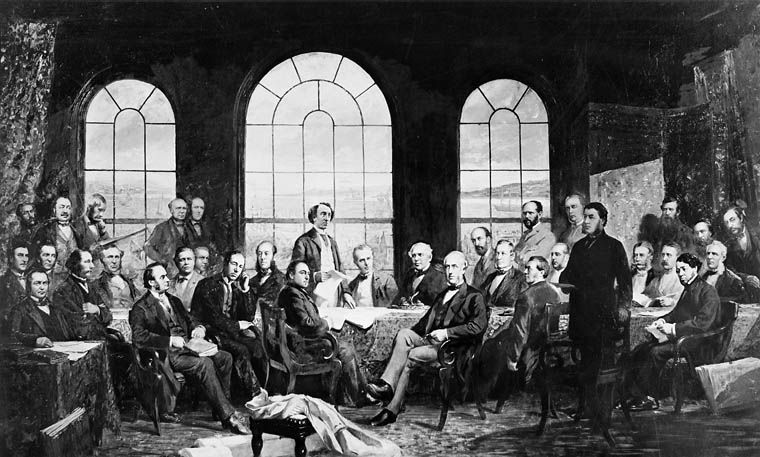
"The Maple Leaf Forever" is a Canadian patriotic song composed by Alexander Muir in 1867, the year of Confederation. Written as a celebration of British military history in Canada, it gained widespread popularity in English Canada and served for many years as an unofficial national anthem. Its strongly British perspective made it unpopular among French Canadians, preventing its adoption as an official anthem. The song's legacy is preserved through its music, numerous lyrical revisions, and the cultural artefacts created from the famed maple tree that inspired it.
Origins and Composition
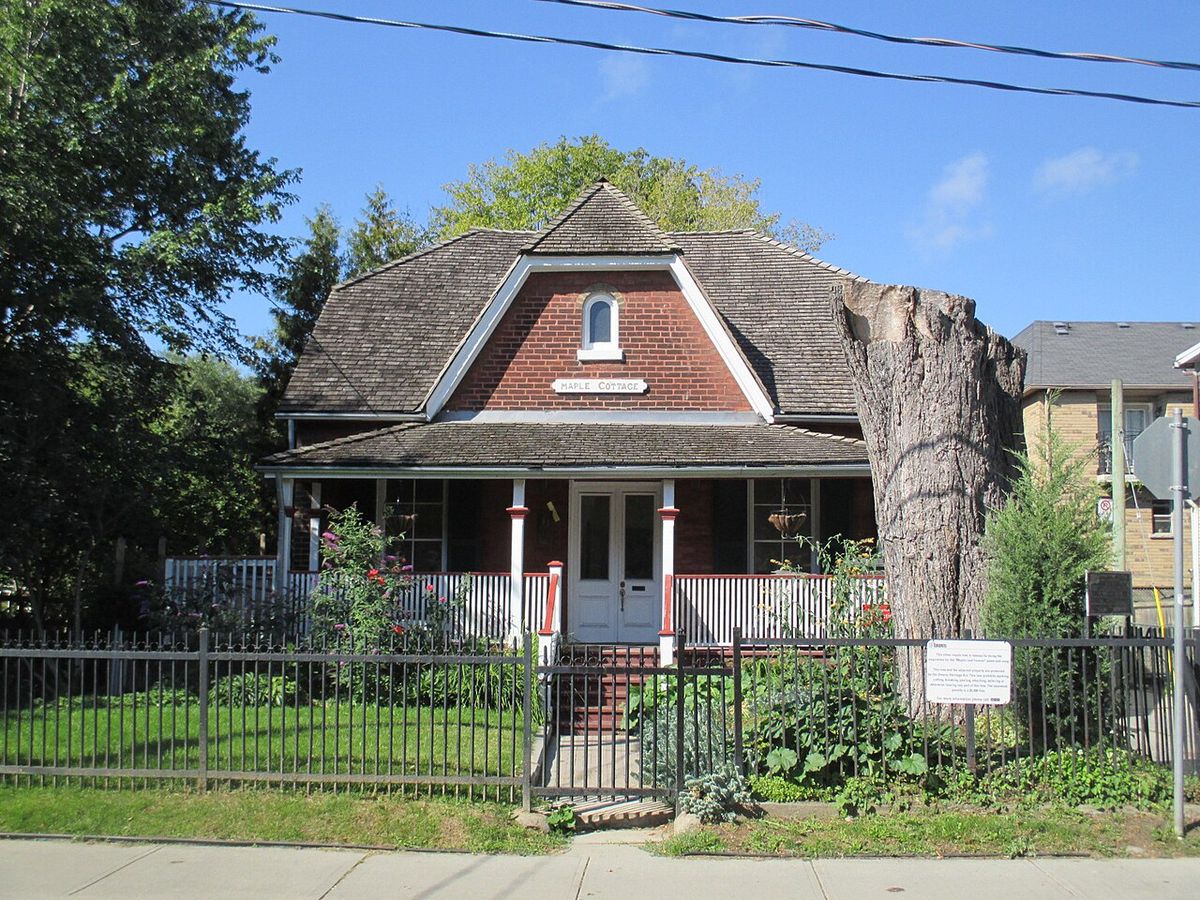
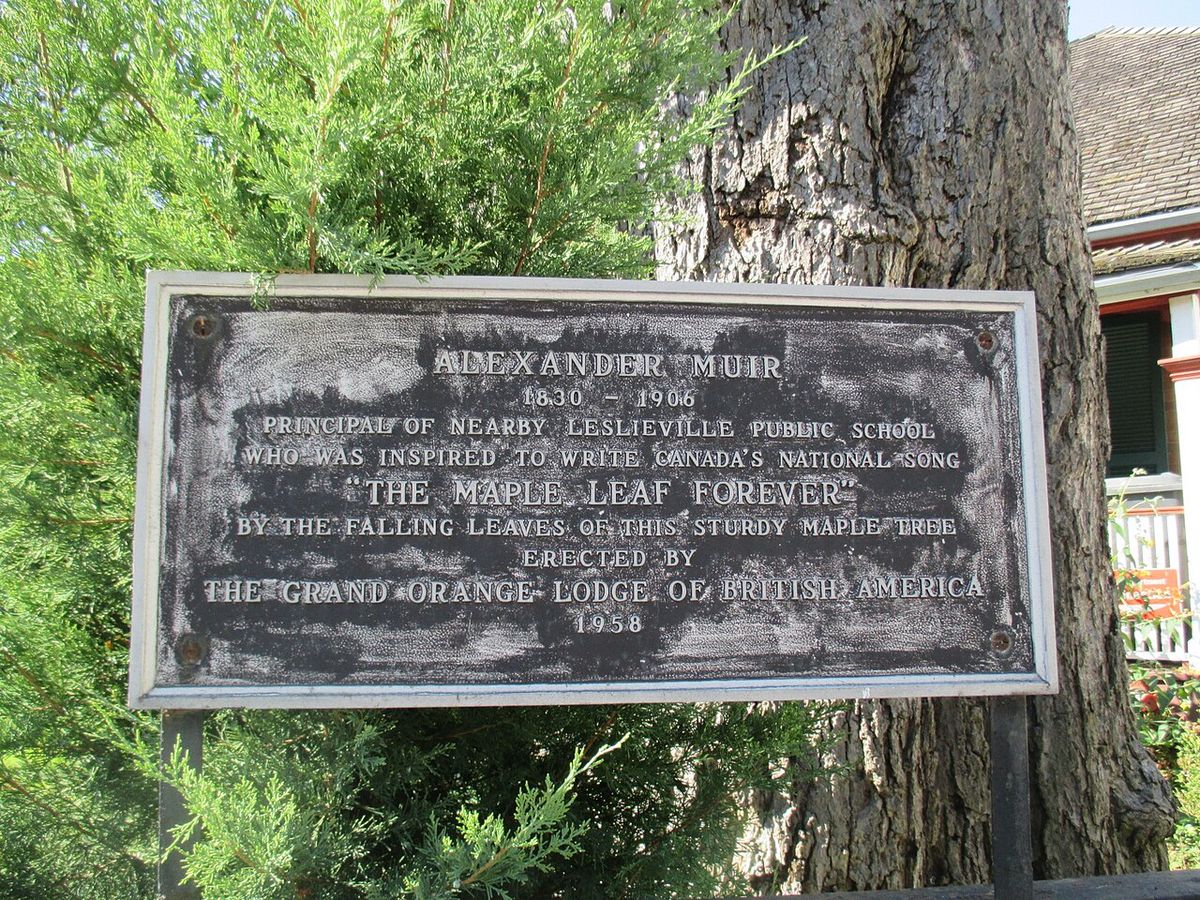
The creation of "The Maple Leaf Forever" is rooted in a specific moment in post-Confederation Toronto. Alexander Muir, a schoolteacher and veteran of the Queen's Own Rifles who had served in the 1866 Battle of Ridgeway, was inspired to write the poem after a walk with his friend, horticulturalist George Leslie. According to accounts by Muir’s widow and George Leslie, a fallen maple leaf clung persistently to Leslie's coat sleeve during their walk near Leslie's Gardens, and Leslie declared that the maple leaf was the emblem of Canada and should be the text for Muir's poem. Muir wrote the poem rapidly to meet a deadline for a patriotic poetry contest held by the Caledonian Society of Montréal, where it won second prize. Unable to find a suitable existing tune in local music stores, Muir composed the music himself, completing the song in 1867. The large silver maple tree that reportedly inspired the song stood in front of Maple Cottage at Memory Lane and Laing Street in Toronto's Leslieville neighbourhood, an area named for George Leslie. Muir was an elementary school teacher in Newmarket, Ontario, in the early 1870s. The story that Muir paid thirty dollars to have the first thousand copies printed and recouped less than half that amount is considered plausible by historians.
Historical Context and Lyrical Content
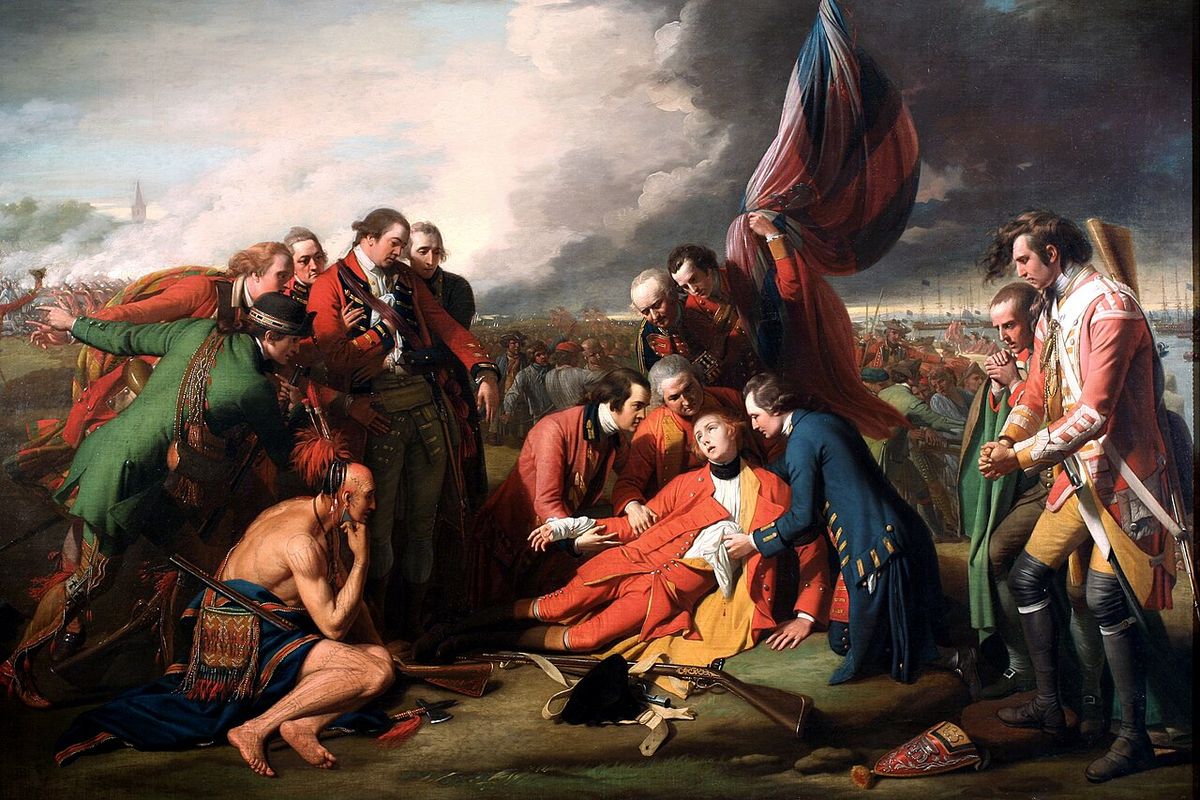
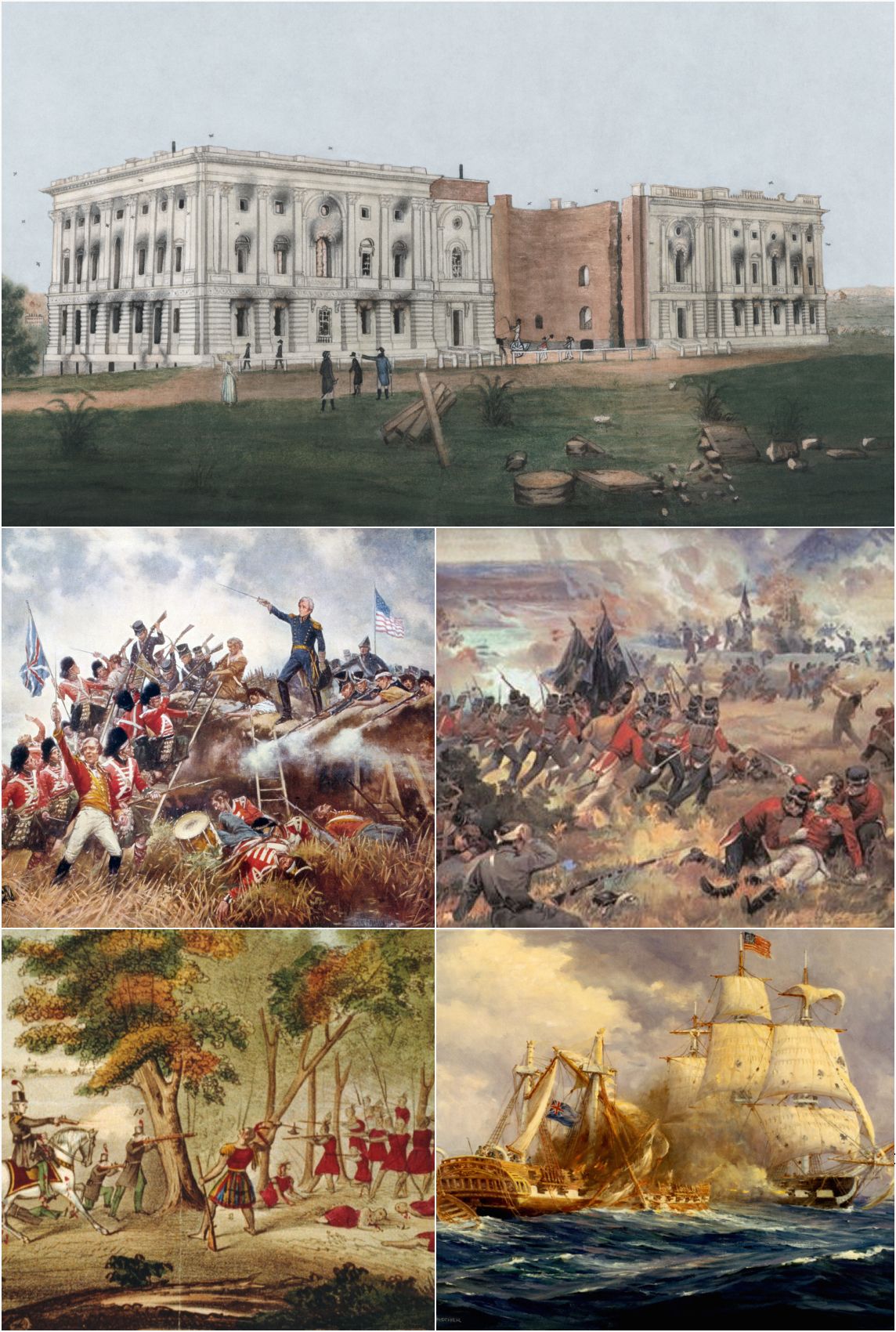
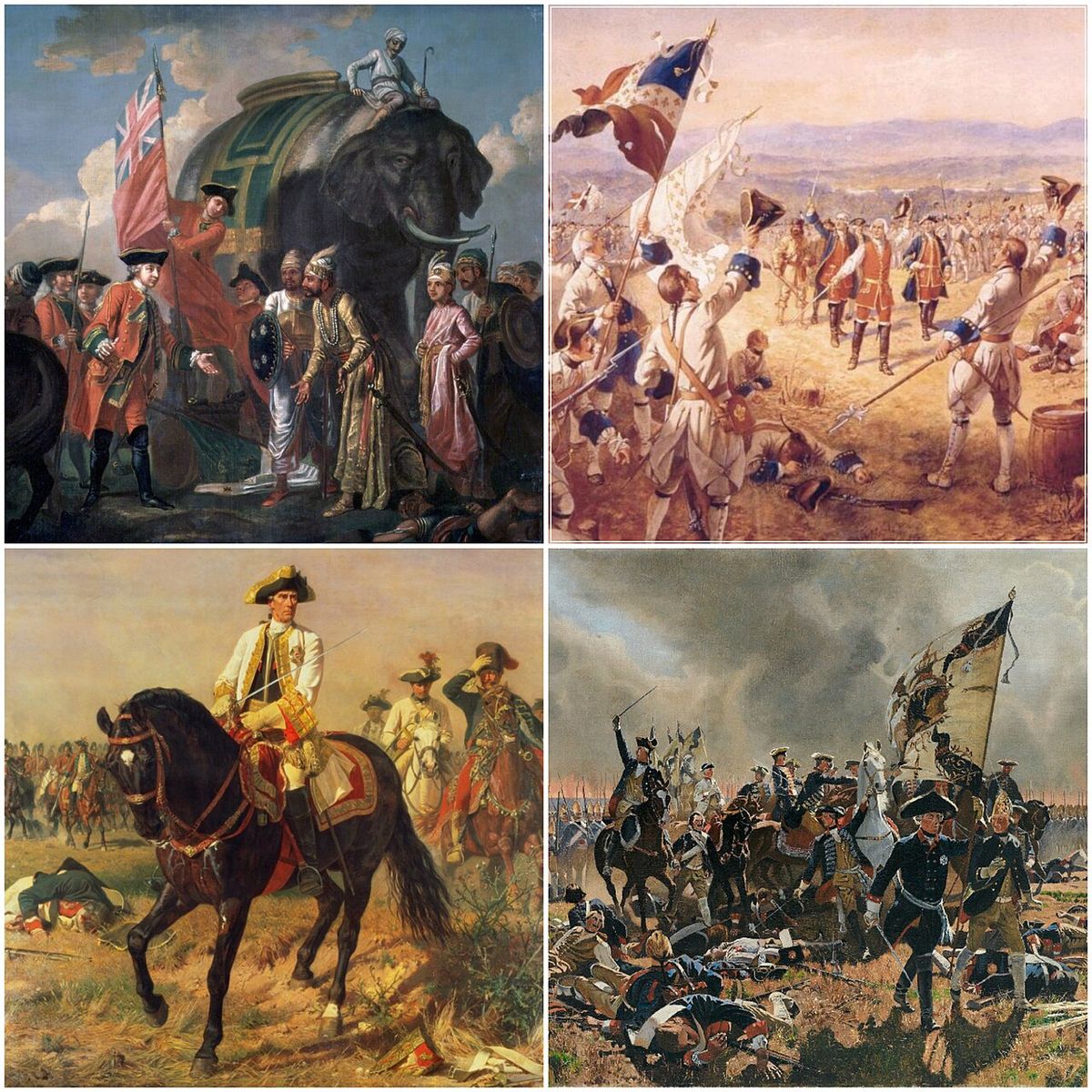
The song's lyrics explicitly celebrate key British military victories in Canadian history, framing them as events that united the country. The first verse references General James Wolfe's conquest of Québec at the 1759 Battle of the Plains of Abraham during the Seven Years' War. It also pledges allegiance by uniting the floral emblems of Scotland (thistle), Ireland (shamrock), and England (rose) under the Maple Leaf. The second verse commemorates British triumphs during the War of 1812, specifically the Battle of Queenston Heights and the Battle of Lundy's Lane. This overtly British imperial perspective made the song a natural favourite in English Canada, where it was sung at public events and in schools for decades. Its popularity led to its serious consideration as a national anthem, but its failure to resonate with French Canadians, for whom the referenced battles represented conquest, ultimately barred it from official status. The original edition of the song, with no date or copyright notice, was printed at the Guardian Office in Toronto in a run of roughly 1,000 copies, published for the author. Anecdotes suggest Muir paid thirty dollars for the printing and recouped less than half that amount initially. The first copyrighted edition was published by the Nordheimer music company in 1871, which advertised on its cover that the song was sung with great applause by J.F. Hardy in his popular entertainments.
Revisions and Alternate Versions
Alexander Muir himself revised the lyrics of "The Maple Leaf Forever" several times throughout his life. On an early copy preserved at the National Library of Canada, he changed the chorus line from The Maple Leaf, the Maple Leaf, the Maple Leaf for ever! to The Maple Leaf, our emblem dear, the Maple Leaf for ever! In a significant 1894 revision, published in the Toronto newspaper The Empire, Muir presented a new five-stanza version with an altered opening line, though the original four-stanza version remained the popular choice. Later editions attempted to be more inclusive by revising the line The thistle, shamrock, rose entwine to The lily, thistle, shamrock, rose, adding the fleur-de-lis (lily) as a symbol of French heritage. In 1997, CBC Radio's Metro Morning in Toronto held a contest to write new lyrics, won by Romanian-born mathematician and songwriter Vladimir Radian. His version removed British-centric references and added a nod to Quebec's fleur-de-lis. This version received its first full orchestral treatment by the Toronto Symphony Orchestra on June 27, 1997. Other notable versions include one by the vocal trio Finest Kind on their 2003 album Silks & Spices, which acknowledges Aboriginal, French, English, and new Canadian contributions and highlights Canada's role as peacekeepers. That version was performed at a ceremonial planting in Ottawa of silver maple seedlings descended from the original tree on November 2, 2014. Modified versions have also been performed by notable Canadian artists like Anne Murray at the final Toronto Maple Leafs game at Maple Leaf Gardens and by Michael Bublé at the 2010 Winter Olympics closing ceremony. Padre G. E. Benton, a former Canadian army chaplain, also wrote a revised version. The melody has been paired with the French poem Salut, ô ma belle patrie! by Octave Crémazie in the songbook Choix de chansons.
- Muir's 1894 revision: A five-stanza version published in The Empire newspaper with the opening line In days of yore, the hero Wolfe Britain's glory did maintain.
- 1997 CBC Contest Winner: Vladimir Radian's inclusive lyrics, first performed by the Toronto Symphony Orchestra.
- Finest Kind version (2003): Co-written by Shelley Posen and Ian Robb, referencing peacekeeping and John McCrae's In Flanders Fields.
- Padre G. E. Benton's version: A revised lyric set written by a former Canadian army chaplain.
- Octave Crémazie pairing: The melody was paired with the French poem Salut, ô ma belle patrie! in the songbook Choix de chansons.
The Maple Leaf Forever Tree and Its Legacy
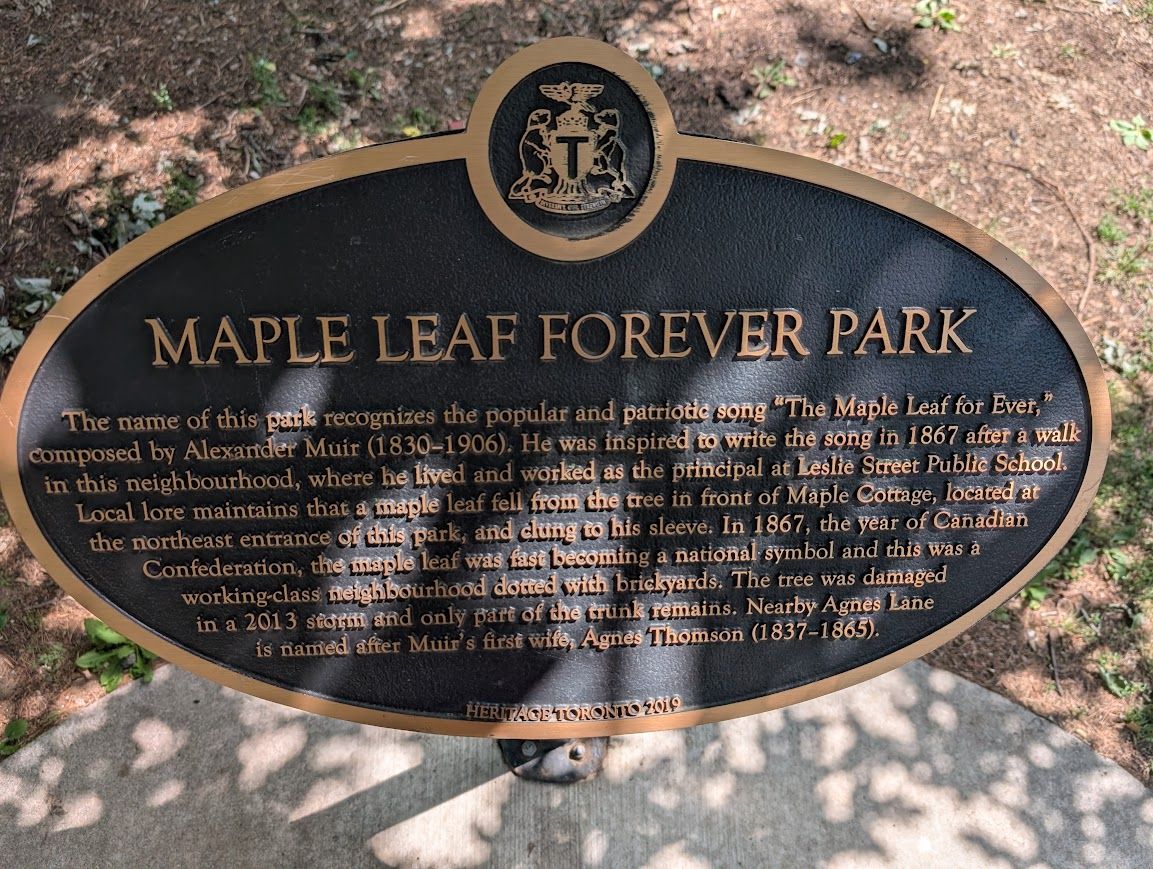
The City of Toronto officially designated the site at 62 Laing Street, including Maple Cottage, as a historic site in 1992, later creating Maple Leaf Forever Park around it. The famed tree was felled during a severe windstorm on the night of July 19-20, 2013. Determined to preserve its cultural significance, the City of Toronto salvaged the wood and commissioned artisans to create community art and cultural pieces for institutions across Canada. Approved projects included items for the House of Parliament, the Museum of Civilization (now the Canadian Museum of History), the Royal Ontario Museum, the Ontario Science Centre, and the Queen's Own Rifles. Specific creations from the wood include the speaker's podium for Toronto City Council and the Maple Leaf Forever Guitars. City staff estimated there was enough lumber-quality wood from the tree to make over twenty-five dining room tables. The legacy of the tree was further honoured on November 2, 2014, when two silver maple seedlings descended from the original tree were planted in Ottawa during a ceremony attended by dignitaries and military veterans, where Finest Kind performed their version of the song. Residents expressed hope that a new tree could be started from one of the branches. The City continues to promote the urban wood utilization movement, highlighting the potential of wood from the nearly 200,000 trees that come down in Toronto each year.
Cultural and Ceremonial Use
The Maple Leaf Forever has been woven into the fabric of Canadian military and public ceremony for generations. It is the authorized regimental march of The Royal Westminster Regiment and serves as the regimental slow march of the Fort Henry Guard in Kingston, Ontario. The song's association with national identity was highlighted during the Great Flag Debate of 1964, where the desire for a purely Canadian symbol like the maple leaf, distinct from British emblems, led to the adoption of the current flag in 1965. The song itself remains a touchstone for discussions of Canadian identity. The Maple Leaf Forever brand and symbolism continue to be used for contemporary patriotic projects, such as representing Nova Scotia at the 2026 Royal Nova Scotia International Tattoo and being featured on a 2026 commemorative three-hundred-dollar pure platinum coin that combines a red maple leaf with pulsating technology. The song was also released as The Maple Leaf Forever (Epic Anthem of Canada) by Anthem Nations on June 10, 2026, as part of an album of the same name.
Maple Leaves Forever Organization
Separate from the song, the charity Maple Leaves Forever is dedicated to promoting and planting native Canadian maple trees. Founded by Ken Jewett, who passed away on November 26, 2025, at age 95, the organization has supported the planting of over 138,178 native maples, equivalent to approximately 1,271 kilometres of maple-lined roadside, a distance comparable to driving from Toronto to Thunder Bay. Its core mission is to enhance public awareness of the benefits of native maples and support their planting through a rebate program, educational materials, and partnerships. The charity offers a 25 percent rebate for eligible maple tree plantings, with applications for fall planting due by November 4, 2026. Maple Leaves Forever also sponsors environmental initiatives like the Ontario Envirothon, One Bench One Tree, Grand Trees Climate Change Solutions, and the Highway of Heroes Tribute. The organization continues to host community events, such as dedicating a memorial maple grove in honour of its founder during the Township of Mulmur's 175th anniversary celebration on September 26, 2026. As a registered Canadian charity, donations to Maple Leaves Forever are eligible for charitable tax receipts, and the organization encourages partnerships with nurseries, landscapers, and government bodies to promote native maple planting policies.
- Ontario Envirothon: An environmental education competition for students.
- One Bench One Tree: A program linking public benches with tree planting.
- Grand Trees Climate Change Solutions: Focused on the role of large trees in carbon sequestration.
- Community Celebrations: Such as the memorial maple grove dedication in Mulmur Township in September 2026.
- Educational Partnerships: Including features with the University of Guelph Arboretum.
Publication, Performance History and the Flag Debate
The early publication history of The Maple Leaf Forever involves some contradiction. The first unsigned, undated edition of about 1,000 copies was printed at Toronto's Guardian Office, likely in early 1868. The first copyrighted edition was published by the Nordheimer music company in 1871, which advertised on its cover that the song was sung with great applause by J.F. Hardy, esq., in his popular entertainments. This challenges another account that the first public performance was on July 24, 1874, when Muir directed schoolchildren in Newmarket during a ceremony for the foundation stone of a church, attended by the Earl of Dufferin. The song was regularly performed in patriotic entertainments and school events throughout the late 19th and early 20th centuries. Its melody has also been paired with a French language poem, Salut, ô ma belle patrie! by Octave Crémazie, in the songbook Choix de chansons, though no direct French translation of Muir's lyrics has been found. The music is most commonly published in the key of B flat. The song's symbolic connection to the maple leaf made it a reference point during the Great Flag Debate of 1964, as Canadians argued over replacing the Canadian Red Ensign. The House of Commons ultimately voted 163 to 78 in favour of the new maple leaf flag on December 16, 1964, and it was first raised in Lindsay, Ontario, in a sparsely-attended ceremony in February 1965.
Enduring Symbolism and Modern Interpretations
The Maple Leaf Forever occupies a complex space in Canadian cultural history as both a celebrated patriotic artefact and a symbol of historical divisions. Its evolution from Muir's original pro-British verses to more inclusive modern lyrics mirrors Canada's own journey toward a broader national identity. The song's direct link to a physical tree and the subsequent preservation of that tree's wood into public artefacts provides a unique, tangible connection to the Confederation era. Organizations like Maple Leaves Forever have extended the symbolism of the maple leaf from song into active environmental stewardship and community building, promoting the planting of native species across the country. The ongoing use of the melody and title for new artistic works, such as the 2026 epic anthem recording and commemorative coin, demonstrates its enduring resonance. The song's role in regimental traditions ensures it remains part of living military heritage, performed at ceremonies from local tattoos to national events. The story of The Maple Leaf Forever, therefore, is not just about a single song from 1867 but about how a national symbol is created, contested, and continually reimagined across generations, reflecting the ongoing dialogue about Canadian identity and unity.
Questions about The Maple Leaf Forever
Are there modern versions of the song?
Yes, there have been several modern revisions. The most prominent came from a 1997 CBC Radio contest won by Vladimir Radian, whose lyrics removed British references and added a nod to Quebec. The folk trio Finest Kind recorded another inclusive version in 2003 that acknowledges Aboriginal and new Canadian contributions. Padre G. E. Benton, a former army chaplain, wrote a revised version. Modified versions have been performed by notable Canadian artists like Anne Murray at the final game at Maple Leaf Gardens and by Michael Bublé at the 2010 Winter Olympics closing ceremony. A 2026 orchestral epic anthem version was also released.
How is the song used in the Canadian military and other ceremonies?
The Maple Leaf Forever holds official ceremonial roles within the Canadian Armed Forces. It is the authorized regimental march of The Royal Westminster Regiment. It serves as the regimental slow march for the Fort Henry Guard, a ceremonial unit based at Fort Henry in Kingston, Ontario. The song has also been used in major public ceremonies, including the 2010 Olympics closing ceremony and the 2026 Royal Nova Scotia International Tattoo, where it represented the province of Nova Scotia.
Who wrote 'The Maple Leaf Forever' and when?
The song was written by Alexander Muir, a Toronto schoolteacher and veteran of the Queen's Own Rifles. He composed both the lyrics and the music in 1867, the year of Canadian Confederation. According to accounts by his widow and his friend George Leslie, Muir was inspired during a walk when a maple leaf stuck to Leslie's coat sleeve, prompting Leslie to suggest it as the poem's theme. Muir wrote the poem quickly for a contest and, unable to find a suitable tune, composed his own music. The song won second prize in the patriotic poetry contest of the Caledonian Society of Montréal.
Why was 'The Maple Leaf Forever' never made the official national anthem?
It was never made the official national anthem primarily due to its strongly British perspective, which was unpopular among French Canadians. The lyrics celebrate British military victories, such as James Wolfe capturing Quebec in 1759 and battles from the War of 1812, which were seen as symbols of conquest. This prevented the song from achieving the necessary pan Canadian consensus, even though it was seriously considered for the role and served as an unofficial anthem in English Canada for many years. Muir later revised the lyrics to include the French lily symbol, but the song's fundamental historical references remained a barrier to its official adoption.
What happened to the tree that inspired the song?
The original silver maple tree that inspired the song fell during a windstorm on the night of July 19 to 20, 2013. This tree had stood in front of Maple Cottage at 62 Laing Street in Toronto's Leslieville neighbourhood, a site designated as historic in 1992. The City of Toronto salvaged the wood to create cultural objects that preserve its legacy, including the speaker's podium for Toronto City Council and Maple Leaf Forever Guitars. These items, along with others, are destined for public institutions across Canada such as the House of Parliament and the Royal Ontario Museum. Residents hoped a new tree could be grown from a branch.
Sources and further reading
- The Maple Leaf Forever (Wikipedia)
- "The Maple Leaf Forever" | The Canadian ... (thecanadianencyclopedia.ca)
- The Maple Leaf Forever (lindsayadvocate.ca)
- Maple Leaves Forever (mapleleavesforever.ca)
- Maple Leaf Forever, Toronto (yourleaf.org)
Checked by the Nosy Mag desk. Last updated 2026-10-30.