Coat of arms of Canada
The coat of arms of Canada, formally known as the Arms of His Majesty The King in Right of Canada, is the official heraldic symbol representing the Canadian monarch and the sovereignty of the state. Adopted by royal proclamation on 21 November 1921, the design is closely modelled on the royal arms of the United Kingdom but incorporates distinct Canadian elements, most notably three red maple leaves on a silver field. It is a central emblem of national identity, used by the federal government under the Federal Identity Program to denote authority and appears on currency, official documents, and military insignia. The arms have evolved through official updates in 1957 and 1994, reflecting Canada's growing autonomy and national character.
Historical Development and Adoption
Prior to Canadian Confederation in 1867, the royal coat of arms of the United Kingdom served as the symbol of royal authority in British North America. The first step toward a distinct Canadian symbol came in 1868 when Queen Victoria authorized the arms of the four original provinces, Ontario, Quebec, Nova Scotia, and New Brunswick, to be quartered for use on the Great Seal of Canada. This quartered shield, though not officially granted as national arms, became the de facto emblem used on the Canadian Red Ensign, including the flag carried by troops at Vimy Ridge in 1917. As new provinces joined Confederation, unofficial versions of the shield became increasingly crowded with up to nine quarterings, a complexity that heraldists argued was unsuitable for a national symbol.
By 1915, a movement began to design a proper coat of arms for Canada, leading to the formation of a federal committee in 1919 that included Dominion Archivist Arthur Doughty. The committee's work involved extensive consultation and debate over the design's symbolism. Early proposals, such as one from Edward Marion Chadwick in 1917, suggested featuring First Nations figures as supporters, but this was rejected by officials like Joseph Pope. The committee eventually agreed on a design that referenced the royal arms of England, Scotland, Ireland, and France, with the addition of maple leaves to represent Canada. Negotiations with the College of Arms in London faced resistance over the use of the UK's royal arms and concerns that the fleurs-de-lis might imply a Canadian claim over France. The Canadian Commissioner-General in Paris discreetly confirmed with French officials that the coat of arms would not spark a diplomatic spat. After some manoeuvring, including the personal intervention of Winston Churchill, the new arms of Canada were formally requested by an order-in-council on 21 April 1921 and adopted on 21 November of the same year, by proclamation of King George V. The adoption of the arms coincided with Canada's evolving constitutional status, and the Statute of Westminster in 1931 granted full sovereignty to Canada and other Dominions.
This shift changed the legal status of the Canadian coat of arms from deputed colonial arms to the full royal arms of the King in right of the country. It was visually marked by the replacement of the British arms with the Canadian arms on the Great Seals of King George VI and later Queen Elizabeth II. The arms of Canada have undergone two major official updates to their emblazonment. The first update occurred in 1957 when Alan Beddoe redrew the arms to have red maple leaves and to change the royal crown to one more resembling St Edward's Crown, as preferred by Queen Elizabeth II. A more substantial change followed a campaign to mark the 1982 patriation of the Canadian constitution, led by Bruce Hicks, who proposed adding the motto of the Order of Canada around the shield. After continued advocacy, the Queen approved the new design for general use in 1994, though the Canadian Heraldic Authority had begun to allow for its limited use beginning in 1987 on letters patent granting new arms.

Heraldic Description and Symbolism
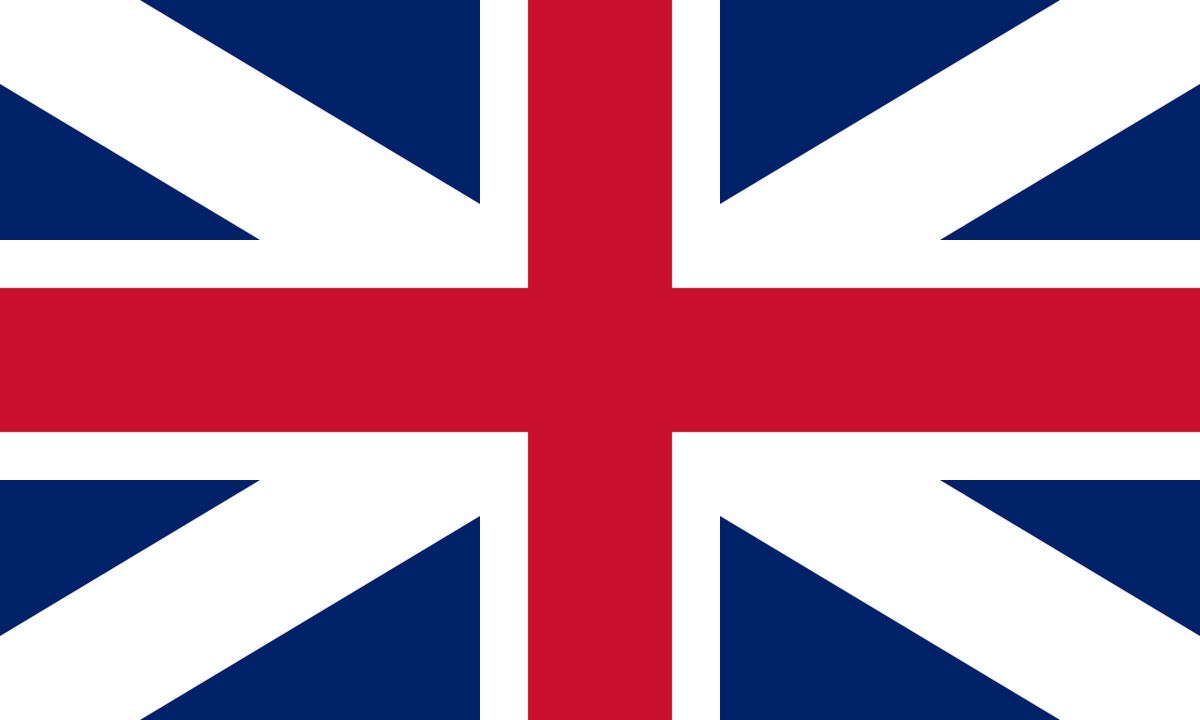
The heraldic blazon of Canada's coat of arms, as declared in the 1921 proclamation, describes a shield tierced in fesse, meaning divided into three horizontal sections, with the first and second divisions containing a quarterly coat. The first quarter is gules with three lions passant guardant in pale Or for England, the second is Or with a lion rampant within a double tressure flory-counter-flory gules for Scotland, the third is azure with a harp Or stringed argent for Ireland, and the fourth is azure with three fleurs-de-lis Or for France, while the third division is argent with three maple leaves conjoined on one stem proper. Upon a royal helmet mantled argent doubled gules is the crest, which is on a wreath of the colours argent and gules a lion passant guardant Or imperially crowned proper and holding in the dexter paw a maple leaf gules, and for supporters on the dexter is a lion rampant Or holding a lance argent flying the Union Flag, and on the sinister is a unicorn argent armed crined and unguled Or, gorged with a coronet of crosses-patée and fleurs-de-lis, holding a like lance flying a banner azure charged with three fleurs-de-lis Or. The whole is ensigned with the Imperial Crown proper and below the shield upon a wreath composed of roses, thistles, shamrocks and lilies is a scroll azure inscribed with the motto A mari usque ad mare, and the circlet of the Order of Canada was added around the shield for limited use in 1987 and for general use in 1994.
The symbolism of the arms is multilayered, reflecting Canada's history as a monarchy and its founding European cultures. The inclusion of the arms of England, Scotland, Ireland, and France acknowledges the nations that played foundational roles in Canadian settlement and governance. The three maple leaves are the primary distinctly Canadian element, symbolizing the land and its people. Their original colour was drawn as green but was changed to red in 1957. The use of the royal crown, helmet, and mantling shows the Canadian monarch's role as the fount of honour and authority. The colours of the mantling, argent (white) and gules (red), were later suggested by military historian Archer Fortescue Duguid as the origin of Canada's official colours, though there is no record of the King or the committee giving much importance to this. The royal proclamation makes no mention of national colours. The supporters and their banners signify the historical ties to the United Kingdom and the French royal heritage, while the crest's crowned lion holding a maple leaf represents the sovereign's guardianship of Canada. The motto A Mari Usque Ad Mare expresses the national aspiration of a country stretching from the Atlantic to the Pacific.
Official Use and Applications
The coat of arms, being those of the sovereign and the state, is used to signify national sovereignty and ownership. The federal government uses the arms to represent the state under the Federal Identity Program and as a mark of authority for various government agencies and representatives, including Cabinet and the prime minister within it, and the Supreme Court. In the Canadian Armed Forces and Royal Canadian Mounted Police, the most senior non-commissioned ranks wear the 1957 version of the arms as a badge of rank, representing the fact that they have received the King's warrant, as opposed to the King's Commission for officers. The arms of Canada are also present on all pre-polymer denominations of Canadian banknotes, printed on each bill as a security feature, as well as on the 50¢ coin and on the cover of Canadian passports. Permanent resident cards issued from 2009 to 2015 feature a holographic representation of the 1957 version of the coat of arms.
The banner of the arms was in 2023 made the sovereign's flag, for use by the monarch in Canada and when representing Canada abroad. Between 1962 and 2022, the banner of arms defaced with a variant of the Queen's cypher formed the Queen's Personal Canadian Flag, for use by Queen Elizabeth II. Six additional personal flags for other members of the Canadian royal family were created in the 2010s, all using a similar design with the banner of the arms as their base. The personal flag of the governor general has, since 1981, featured the crest of the royal arms of Canada on a blue background. The full achievement of the coat of arms has been used by the Canadian government on occasion on a plain red flag, such as in 1967 for the country's centennial celebrations, and in military ceremonies like Canadian Armed Forces Tattoo performances.
With the support of former Speakers of the House of Commons John Fraser and Gilbert Parent, Bruce Hicks campaigned for the Canadian Parliament to have a distinct heraldic symbol. In response, Member of Parliament Derek Lee tabled a motion calling for a committee to be struck, which passed. Hicks and Robert Watt, the first Chief Herald of Canada, were called as expert witnesses. The Commons' Speaker, Peter Milliken, then asked the Canadian Heraldic Authority to design such a symbol. On 15 February 2008, the Governor General authorized the House of Commons to begin using a badge, consisting of the shield of the royal arms superimposed on the ceremonial mace assigned to the House of Commons. Following the Commons example, the Senate then requested and obtained, exactly two months later, a similar badge for itself, with the shield of the royal arms surmounted on the mace assigned to the Senate.
Legal Protection and Copyright
The coat of arms is a state symbol whose use for commercial purposes is prohibited in most instances. As a royal arms personal to the sovereign, they cannot be used without the King's consent. Under Crown copyright, permission is always required when the work is being revised, adapted, or translated, regardless if the purpose of the reproduction is for personal or public non-commercial distribution. Historical and current versions of the coat of arms, such as the 1921 to 1957 and 1957 to 1994 iterations, remain legally protected under Section 9 of Canada's Trademarks Act, registered as official marks. The arms are also protected under Canada's Copyright Act, and globally under Article 6ter of the Paris Convention for the Protection of Industrial Property. Further, marks and designs similar to the official symbols are pursued as a copyright or trade-mark infringement. The Trade-marks Act states that no person shall adopt in connection with a business, as a trade-mark or otherwise, any mark consisting of, or so nearly resembling as to be likely to be mistaken for the arms, crest, or flag adopted and used at any time by Canada. The arms are also protected under Canada's Copyright Act, and globally under Article 6ter of the Paris Convention for the Protection of Industrial Property.
Proposals for Modernization and Indigenous Representation
Throughout its history, the coat of arms has been the subject of proposals to modernize its symbolism. The earliest such proposal came in 1917 from heraldist Edward Marion Chadwick, who had designed the crest, supporters, and motto of the coat of arms of Ontario. Chadwick sparked a discussion about featuring First Nations figures as supporters. Though Chadwick had depicted the clothing and regalia accurately, Joseph Pope rejected the idea, stating he did not see any necessity for commemorating the Indians at all. The concept resurfaced in June 2008 when Member of Parliament Pat Martin introduced a motion into the House of Commons calling on the government to amend the coat of arms to incorporate symbols representing Canada's First Nations, Inuit, and Métis peoples.
After the coronation of King Charles III and Queen Camilla on 6 May 2023, the Canadian Heraldic Authority revealed a new Canadian Royal Crown. This crown features maple leaves, a snowflake, and symbols with meaning to Canada's Indigenous peoples. The authority stated changes will take place in due course. This development follows historical proposals to incorporate Indigenous symbolism into the country's heraldry.
Key Designers and Artistic Contributors
The evolution of the coat of arms has involved several key artists and heraldic authorities. The original 1921 design was the product of a committee that conferred with the College of Arms in London. The first major artistic revision was undertaken in 1957 by Alan Beddoe, who redrew the arms to have red leaves and to change the royal crown design. The campaign for the addition of the Order of Canada circlet was led by Bruce Hicks, a journalist who recast the change as something worth doing to commemorate the 25th anniversary of the Order of Canada's founding. The present design of the arms of Canada was drawn by Cathy Bursey-Sabourin, Fraser Herald at the Canadian Heraldic Authority, following the Queen's approval of the new design for general use in 1994.
- Alan Beddoe (1957 Revision): Redrew the arms with red maple leaves and a St Edward's Crown style.
- Bruce Hicks (Campaign Lead): Advocated for the addition of the Order of Canada circlet from 1987 to 1994.
- Cathy Bursey-Sabourin (Current Design): Fraser Herald who created the authoritative artwork for the 1994 version.
- Robert Watt (Expert Witness): The first Chief Herald of Canada, called as an expert during parliamentary discussions on heraldic symbols.
- Canadian Heraldic Authority (Oversight): Established by the Queen in 1988, the authority grants and registers all official heraldry in Canada.
The establishment of the Canadian Heraldic Authority in 1988 marked a significant milestone. It moved the grant and regulation of heraldry from the United Kingdom to Canada. This body now oversees all official heraldic matters. It ensures the coat of arms and other symbols are maintained and used according to Canadian law and tradition.
Questions about Coat of arms of Canada
When was the Canadian coat of arms adopted?
The coat of arms of Canada was officially adopted by royal proclamation of King George V on 21 November 1921. This adoption followed a formal request from the Canadian government made through an order-in-council on 21 April of that same year. The design process was initiated by a federal committee formed in 1919 to develop a distinct national symbol. This committee's work led to the creation of the arms, which were closely modelled after the royal coat of arms of the United Kingdom but with Canadian elements.
What do the symbols on the coat of arms mean?
The symbols represent Canada's history and monarchy. The shield quarters feature the royal arms of England (three lions), Scotland (a lion within a double tressure), Ireland (a harp), and France (three fleurs-de-lis), acknowledging the founding European nations. The three maple leaves on a silver base are the distinctly Canadian element, symbolizing the land. The supporters, a lion with the Union Flag and a unicorn with a banner of fleurs-de-lis, and the crest of a crowned lion holding a maple leaf all show Canada's status as a constitutional monarchy. The motto A Mari Usque Ad Mare translates to 'From Sea to Sea'.
Why were the maple leaves changed from green to red?
The maple leaves on the shield were changed from green to red during a redrawing of the arms in 1957 by artist Alan Beddoe. In the original 1921 design, the leaves were blazoned as 'proper', or natural colour, and were initially drawn as green (vert). The 1957 revision changed them to a red (gules) colour. This artistic update also included altering the design of the royal crown to one more resembling St Edward's Crown, which was preferred by Queen Elizabeth II.
What is the circle around the shield on the coat of arms?
The circle around the shield is the circlet of the Order of Canada, the country's highest civilian honour for merit. It was added for limited use in 1987 and for general use following Queen Elizabeth II's approval in 1994. The circlet bears the Order's Latin motto, Desiderantes Meliorem Patriam, meaning 'They Desire a Better Country'. Its addition brought the Canadian royal arms into line with other historic royal arms that display the symbol of a national order of chivalry.
Where can you see the coat of arms in daily life?
The coat of arms is a ubiquitous symbol of the state. It appears on all pre-polymer Canadian banknotes as a security feature and on the 50-cent coin. It is displayed on the cover of Canadian passports and is used by all federal government departments under the Federal Identity Program. The arms are also present in courtrooms, on government buildings, and as a badge of rank for senior non-commissioned officers in the Canadian Armed Forces and the Royal Canadian Mounted Police.
Are there plans to change the coat of arms to include Indigenous symbols?
There have been proposals to incorporate symbols representing First Nations, Inuit, and Métis peoples. A formal motion was introduced in Parliament in 2008, echoing a 1917 suggestion. Following the 2023 coronation of King Charles III, the Canadian Heraldic Authority revealed a new Canadian Royal Crown design that includes Indigenous symbols, a snowflake, and maple leaves. The authority stated that heraldic changes would be implemented in due course.
Sources: Wikipedia and current public reporting, checked by the Nosy Mag desk. Last updated 2026-10-28.