Tony Wakeham
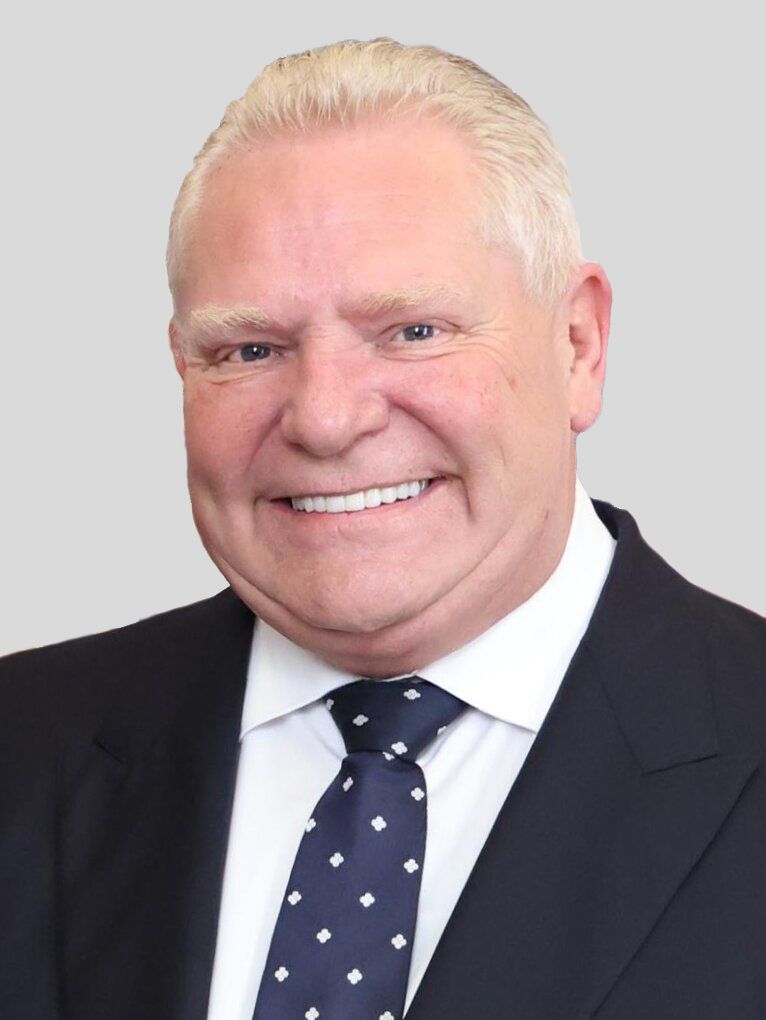
Tony Wakeham is the 16th premier of Newfoundland and Labrador, having led the province's Progressive Conservative Party to a majority government in the 2025 general election. A former health authority CEO and businessman, Wakeham entered provincial politics in 2019 as the member for Stephenville-Port au Port. His premiership has been defined by a major renegotiation of the Churchill Falls energy agreement with Quebec and a focus on affordability, healthcare, and economic development. Wakeham's leadership represents a significant political shift in the province, marking the return of a Progressive Conservative government after a decade of Liberal administration.
Early Life and Pre-Political Career
Tony Wakeham was born on July 16, 1956, in Placentia, Newfoundland and Labrador, to James and Mary Wakeham. His father worked at the nearby Naval Station Argentia while his mother was a teacher. He attended Laval High School in Placentia before pursuing higher education at Memorial University of Newfoundland, where he graduated with a Bachelor of Arts in 1979. During his university years, Wakeham was an active basketball player. His professional career prior to politics was diverse, spanning the public, private, and non-profit sectors.
He worked as a senior executive within the provincial Department of Health. Later, he served as the President and Chief Executive Officer of the Labrador-Grenfell Health Authority. In the business world, Wakeham was a franchisee for several KFC restaurants. His commitment to basketball extended far beyond playing. He became a dedicated coach and administrator, coaching Newfoundland and Labrador's men's basketball teams at multiple Canada Winter Games and achieving one of the province's best finishes at the time.
Prior to entering politics, Tony Wakeham served as the president of both the Newfoundland and Labrador Basketball Association and Basketball Canada. He coached several basketball teams, including two of the Newfoundland and Labrador men's teams at the Canada Winter Games. One of those teams achieved the province's best finish up to that point. For these contributions, he was inducted into the Newfoundland and Labrador Basketball Hall of Fame. He has also worked as a public servant in the provincial government.

Entry into Politics and Rise to Party Leader
Tony Wakeham first sought elected office by running for the leadership of the Progressive Conservative Party of Newfoundland and Labrador in 2018. He was defeated by St. John's lawyer Ches Crosbie, with the final tally showing Crosbie earning 2,298.92 points to Wakeham's 1,701.08 in the party's weighted voting system. Undeterred, Wakeham successfully ran as a candidate in the 2019 provincial election, winning the district of Stephenville-Port au Port and entering the House of Assembly as a member of the Official Opposition. He used his time in opposition to develop his political profile and critique the governing Liberals on issues like healthcare delivery and fiscal management. On January 17, 2023, Wakeham announced his candidacy in a new PC leadership election, following the resignation of Ches Crosbie.
Wakeham won the party leadership on October 14, 2023, automatically becoming the Leader of the Opposition in the provincial legislature. His victory positioned him to directly challenge the incumbent Liberal government led by Premier Andrew Furey ahead of the next fixed election date. As opposition leader, Wakeham focused his criticism on government spending, healthcare wait times, and the handling of major resource projects like the Churchill Falls memorandum of understanding. He built a platform centred on three main promises: improving healthcare, lowering taxes, and creating safer communities. This messaging was designed to contrast with what he portrayed as the previous government's focus on larger, less tangible projects. The 2023 Progressive Conservative Party of Newfoundland and Labrador leadership election confirmed his position as party leader.
The 2025 Election and Forming Government
In the 2025 Newfoundland and Labrador general election, Tony Wakeham led the Progressive Conservatives to a surprise majority government victory, ending a decade of Liberal rule in what was widely described as a major political upset. He was re-elected in his home riding of Stephenville-Port au Port, maintaining his strong local support base. The campaign was heavily focused on issues of affordability and healthcare, with Wakeham also promising a rigorous, independent review and a referendum on the Churchill Falls Memorandum of Understanding signed by the previous government. Following the election, he was sworn in as the province's 16th premier on October 29, 2025, forming the Wakeham ministry and becoming the first Progressive Conservative premier since 2015.
His government's early substantive actions included advancing the Bay du Nord offshore oil project, announcing a major agreement with Equinor and BP on March 3, 2026, to move the development forward. The agreement addressed three key areas: life-of-field benefits for the province, royalty structures, and a provincial equity option. However, the defining issue of his first term became the renegotiation of the Churchill Falls energy agreement, a file he had heavily criticized while in opposition. Wakeham ultimately abandoned his earlier campaign commitment to hold a referendum on any final Churchill Falls deal, opting instead for a legislative review in a special session of the House of Assembly, a decision that drew criticism from political opponents. He primarily campaigned on affordability and healthcare.
Churchill Falls: From Opposition to Renegotiation
The Churchill Falls file became the central policy challenge of Tony Wakeham's early premiership. The previous Liberal government, under Premier Andrew Furey, had signed a historic Memorandum of Understanding (MOU) with Hydro-Québec and CFLCo on December 12, 2024, announced jointly with Quebec Premier François Legault. The Progressive Conservatives, then in opposition, left the legislative chamber in protest before a vote to continue negotiations in January 2025, arguing the deal required more independent scrutiny. Upon taking office, Premier Wakeham acted swiftly on his campaign promise by establishing the Churchill River Independent Review Committee (IRC) on December 15, 2025.
The committee, chaired by former Emera executive Chris Huskilson and including experts Guy Holburn and Michael Wilson, was tasked with a comprehensive assessment of whether the MOU served the province's long-term interests. The IRC delivered its final report on April 30, 2026, and its conclusions deeply reshaped the public conversation and the government's negotiating position. The committee concluded that the 2024 MOU in its current form is not in the public interest, identifying critical flaws including limited long-term power access for Newfoundland and Labrador after 2041, a lack of guaranteed transmission rights through Quebec to reach external markets, problematic pricing structures, and governance arrangements that continued to provide significant influence to Hydro-Québec. The committee estimated the real net present value of the deal was approximately $31 billion, far below the $227 billion nominal figure frequently highlighted by the previous government's communications.
In response, Wakeham stated the province would not abandon development but would seek material improvements, and he appointed a new negotiating team consisting of Barry Perry, Jerome Kennedy, and Jennifer Williams. Discussions resumed with Hydro-Québec during the summer of 2026, with one of the most significant issues being the province's inability under the original MOU to secure guaranteed transmission rights. During meetings between Premier Wakeham and Quebec Premier Christine Fréchette, negotiators focused heavily on addressing this specific deficiency. By August 2026, reports emerged that a revised agreement was close to completion, with a key provision being guaranteed transmission access of approximately 985 MW through Hydro-Québec's network, a provision former deputy minister Ron Penney described as a significant departure from the original MOU. The IRC acknowledged that the proposed agreement could generate meaningful benefits if significant improvements were made.
The 2026 Definitive Cooperation and Implementation Agreement
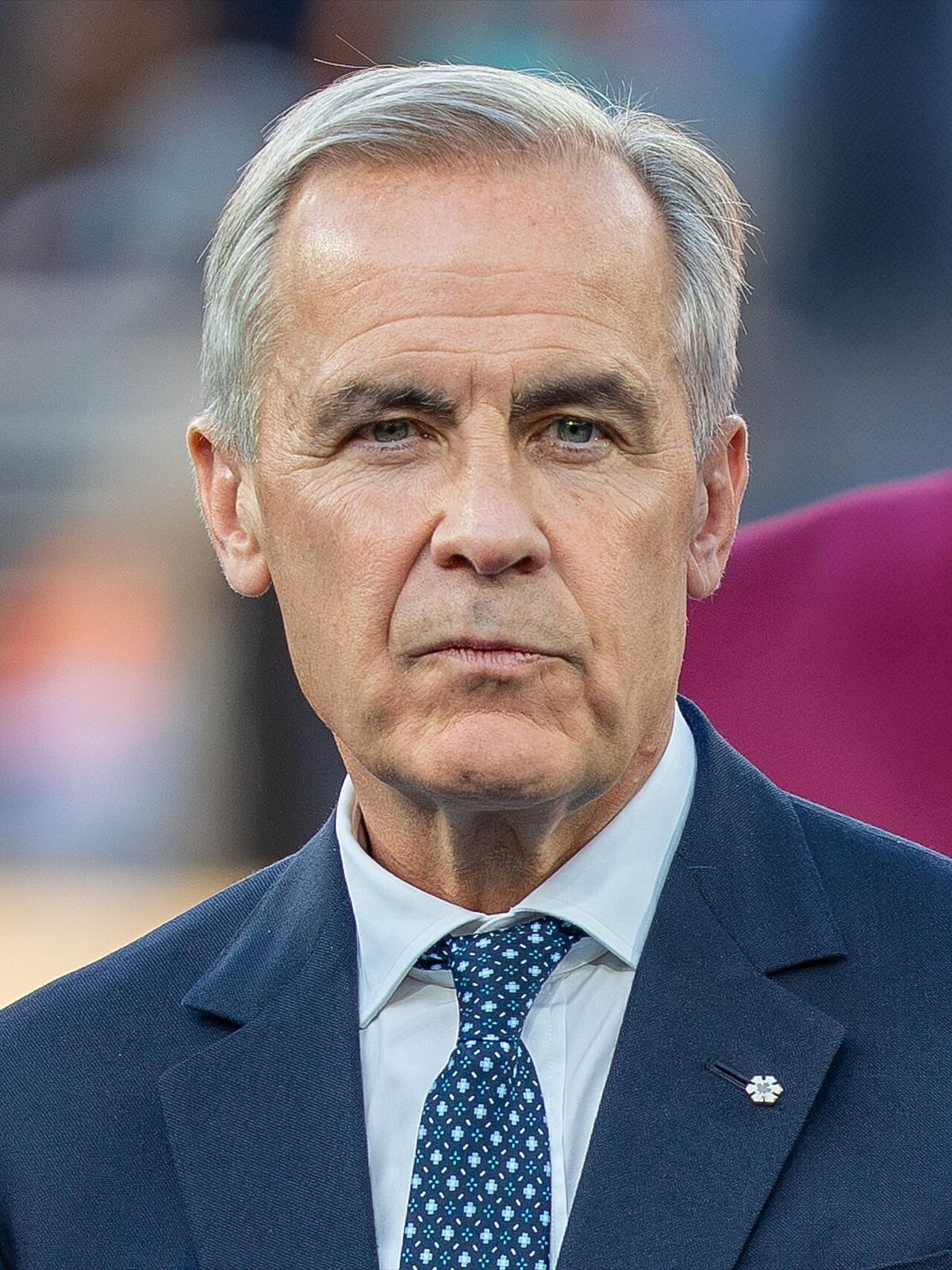
This process culminated in the official announcement of a substantially revised agreement on August 17, 2026. The Definitive Cooperation and Implementation Agreement (DCIA) was signed by Newfoundland and Labrador, Quebec, and the Government of Canada. Premier Wakeham, alongside Prime Minister Mark Carney and Quebec Premier Christine Fréchette, unveiled the package at a public event in St. John's, with Carney describing it as one of the largest clean-energy investments in North American history. The new deal represented a significant overhaul of the terms from the 2024 MOU, combining hydroelectric upgrades, transmission infrastructure, mining-related investments, and a major proposed wind-energy project in Labrador into a package projected to deliver approximately 14,000 MW of renewable electricity and support more than 20,000 construction jobs. The key components of the agreement, which Wakeham described as a win for all parties, included several major advancements for the province.
- Economic Value: The province's share was valued at $49 billion in 2026 net present value, a $13 billion increase over the 2024 MOU, with $10 billion in earlier cash flows before 2041. In nominal terms, the package was valued at approximately $273 billion.
- Power Access: Newfoundland and Labrador secured access to up to 2,350 MW from Churchill Falls and Gull Island, plus 400 MW from a proposed 2,000 MW Labrador wind project. Hydro-Québec agreed to purchase unused provincial allocations at premium pricing, reported as 150 percent above base PPA pricing.
- Transmission Guarantee: A landmark guarantee of 985 MW of transmission access through Quebec's grid, including 240 MW to New York via the Champlain Hudson Power Express and 200 MW to New England via the New England Clean Energy Connect.
- Federal Financing: The federal government committed approximately $10 billion in support, with $3.5 billion in direct net present value support for provincial projects including investments in Labrador West transmission infrastructure and wind-energy development support.
- Consumer Benefit: A 15 percent Churchill River Electricity Rebate on the first 2,000 kWh monthly, saving an average household $351 per year.
- Employment Priority: A guarantee that 85 percent of Gull Island construction person-hours go to provincial workers, prioritizing Labrador Innu first, followed by Labrador residents and Newfoundlanders.
The development plan itself underwent important changes, with the previously contemplated Churchill Falls Expansion (CFX) project removed from the binding commercial agreement, though a feasibility study would continue. Attention shifted toward upgrading the existing Churchill Falls facility to increase its generating capacity by approximately 1,275 MW and expanding the proposed Gull Island project to roughly 2,700 MW, substantially larger than originally envisioned. Federal participation became a defining element, with the federal government committing approximately $10 billion in financing support for Churchill Falls upgrades, Gull Island development, transmission infrastructure, and the Labrador wind project. Newfoundland and Labrador's share of direct federal support was estimated at approximately $3.5 billion in 2026 net present value.
The agreement also contained specific provisions aimed at stimulating Labrador's mining sector and ensuring Indigenous participation. The federal government announced support for projects in the Labrador Trough, a critical minerals region, including a transmission line to Labrador West, work on the Kami Iron Ore Project, pre-construction for the Lac Knife project, and infrastructure expansion at SFP Pointe-Noire. Governments estimated that as many as 5,000 workers could be employed at Gull Island during peak construction, with the broader package supporting over 20,000 jobs. On September 17, 2026, the House of Assembly approved the DCIA by a vote of 21-18, with the PC caucus and Independent MHA Eddie Joyce supporting it and the Liberal and NDP caucuses, along with Independent MHA Keith Russell, opposing. The agreement remains non-binding, with definitive agreements expected before the end of 2026 and parties allowed to withdraw before final execution.
Policy Focus and Political Challenges
Premier Tony Wakeham's governing philosophy is encapsulated in his frequent public call to choose to be positive and his stated vision to put people first in order to build a stronger future. His policy agenda is built around the three core pillars that defined his 2025 election campaign: healthcare, affordability, and community safety. On healthcare, his government has prioritized the construction of more urgent care centres across the province to alleviate pressure on emergency rooms and improve access. For affordability, he has implemented measures such as making a reduction to the provincial gas tax permanent and has pledged to eliminate provincial income tax on the first $15,000 of income, arguing these steps provide direct relief to families and seniors struggling with the cost of living.
His approach to economic development is characterized by a focus on leveraging the province's natural resources for maximum provincial benefit and direct household gain, as evidenced by the hardline stance on Churchill Falls renegotiation and the advancement of the Bay du Nord oil project. Wakeham frequently emphasizes the need to build a stronger economy to fund public services, stating in a 2026 address that the list of needs runs long, but the money runs short. He connects major resource agreements directly to consumer benefits, such as the promised electricity rebate tied to the Churchill Falls deal. His political style often involves contrasting his government's outcomes with those of the previous Liberal administration, framing his decisions as delivering more where others settled for less.
- Churchill Falls Referendum: Abandoned a campaign promise for a referendum, opting for a legislative vote instead.
- Affordability Measures: Promised income tax elimination on the first $15,000 and a permanent gas tax cut, but acknowledged high costs persist.
- Innu Nation Relations: Faced criticism from the Innu Nation that the 2026 DCIA reduced their benefits compared to the 2024 MOU.
- Opposition Critique: Liberals questioned the Churchill Falls power allocation and the lack of withdrawal penalties in the new deal.
- Governing Record: Critics accused his government of failing to deliver on all promises within its first year in office.
Opposition Liberals have questioned several aspects of the revised Churchill Falls agreement. They questioned the relative allocation of additional power between Newfoundland and Labrador and Quebec and the absence of withdrawal penalties. The agreement guarantees that 85 percent of all person-hours associated with Gull Island construction will remain within Newfoundland and Labrador, with priority given first to qualified Labrador Innu workers. Newfoundland and Labrador and Canada also identified opportunities for Labrador Innu participation in future transmission and wind-energy assets.
Personal Life and Electoral Record
In his personal life, Tony Wakeham is married to his wife, Patricia, and the couple has two children and grandchildren. They make their home in the community of Kippens, near his electoral district of Stephenville-Port au Port. His biography notes that his greatest joy is spending time with his children and grandchildren. This grounding in family and community, combined with his varied career in health, business, and sports, is presented as the foundation for his understanding of the everyday concerns of Newfoundlanders and Labradorians and his drive to address them through provincial leadership.
Tony Wakeham's electoral history demonstrates his rise within the Progressive Conservative Party and his connection to the district of Stephenville-Port au Port. His first foray into seeking party leadership in 2018 was unsuccessful, but he secured a seat in the legislature in the subsequent general election. His victory in the 2023 leadership contest set the stage for the party's return to power in 2025. The following table outlines his key electoral contests.
| Election | Role | Result |
|---|---|---|
| 2018 PC Leadership | Leadership Candidate | Defeated by Ches Crosbie |
| 2019 Provincial | Candidate in Stephenville-Port au Port | Elected as MHA |
| 2023 PC Leadership | Leadership Candidate | Elected as Party Leader |
| 2025 Provincial | Party Leader & Candidate in Stephenville-Port au Port | Led PCs to majority government. Re-elected as MHA |
Tony Wakeham has represented the district of Stephenville-Port au Port in the Newfoundland and Labrador House of Assembly since the 2019 provincial election. He has served as the leader of the Newfoundland and Labrador Progressive Conservative Party since winning the party's leadership election on October 14, 2023. In that role, he became the Leader of the Opposition in the provincial legislature. Wakeham led his party to a majority government victory in the 2025 general election, becoming the province's premier.
Questions about Tony Wakeham
What did Tony Wakeham do before becoming premier?
Before entering politics, Tony Wakeham was the CEO of Labrador-Grenfell Health Authority and a franchisee of many KFC restaurants. He has also worked as a public servant in the provincial government. A passionate basketball advocate, Wakeham coached provincial teams at the Canada Winter Games and served as president of both the Newfoundland and Labrador Basketball Association and Basketball Canada, earning him induction into the provincial basketball hall of fame. He played basketball during his time at Memorial University of Newfoundland.
How did Tony Wakeham become premier of Newfoundland and Labrador?
Tony Wakeham became premier by leading the Progressive Conservative Party to a majority government victory in the 2025 provincial election. He had previously won the party's leadership in October 2023, becoming Leader of the Opposition. In the 2025 campaign, he focused on affordability, healthcare, and reviewing the Churchill Falls energy deal, which resonated with voters. Following the election win, he was sworn in as the province's 16th premier on October 29, 2025, forming the Wakeham ministry. He is the first Progressive Conservative premier of the province since 2015.
What is the Churchill Falls deal negotiated by Premier Wakeham?
The Churchill Falls deal, known as the Definitive Cooperation and Implementation Agreement (DCIA), was announced on August 17, 2026, after Wakeham renegotiated a 2024 memorandum of understanding. The new agreement significantly increases benefits for Newfoundland and Labrador, valued at $49 billion in net present value and $273 billion nominally. Key features include guaranteed transmission access through Quebec to U.S. markets, more provincial power allocations from Churchill Falls and Gull Island, substantial federal financing support, and a promised consumer electricity rebate. The House of Assembly approved the deal in September 2026 by a vote of 21-18. The agreement guarantees Newfoundland and Labrador independent ability to export electricity through Quebec to U.S. markets.
What are Tony Wakeham's main policy priorities?
Premier Wakeham's main policy priorities are improving healthcare, increasing affordability, and creating safer communities. On healthcare, his government is working to build more urgent care centres. For affordability, he has made a gas tax cut permanent and pledged to eliminate income tax on the first $15,000 earned. He also connects major resource projects like Churchill Falls to direct consumer benefits, such as a promised electricity rebate saving households an estimated $351 yearly. His broader economic goal is to leverage resource developments to strengthen the provincial economy and fund public services, including advancing the Bay du Nord offshore oil project.
Did Tony Wakeham hold a referendum on the Churchill Falls deal as promised?
No, Tony Wakeham did not hold a referendum on the final Churchill Falls agreement despite earlier campaign rhetoric suggesting one. After renegotiating the deal, he abandoned the referendum commitment. Instead, he called a special session of the House of Assembly in September 2026 for elected representatives to publicly debate and vote on the Definitive Cooperation and Implementation Agreement. The agreement was approved by the legislature on September 17, 2026, with a vote of 21-18. The motion to continue negotiations on the original MOU in January 2025 passed with support from Liberal, NDP, and Independent members, while PC members left the chamber before the vote.
What is Tony Wakeham's background in sports?
Tony Wakeham has an extensive background in basketball as a player, coach, and administrator. He played basketball during his studies at Memorial University of Newfoundland. He later coached Newfoundland and Labrador's men's basketball teams at the Canada Winter Games, achieving one of the province's best finishes. He served as president of the Newfoundland and Labrador Basketball Association and as president of Basketball Canada, the sport's national governing body. For these contributions, he was inducted into the Newfoundland and Labrador Basketball Hall of Fame. He coached two of the province's men's teams at the Canada Winter Games.
Sources and further reading
- Tony Wakeham (Wikipedia)
- One year after election win, Wakeham says he's 'delivering' ... (cbc.ca)
- Office of the Premier (gov.nl.ca)
Checked by the Nosy Mag desk. Last updated 2026-10-30.